Week 5 Challenge
Aim: To design a plate girder
Introduction :
A plate girder is a deep built-up beam consisting of plates (or plates and angles) meant for carrying heavy loads on large spans. For heavily loaded girders of large spans single I-sections even with cover plates do not provide the necessary moment of resistance and shear resistance. A rolled steel beam may be suitable for spans not exceeding 15 m. For spans from 15 m to 20 m I-section with cover plates may be workable.
A plate girder has enormous flexural strength. The resistance to bending and shear can be increased by increasing the distance between the flanges. The web plate which is thin is liable to buckle and to protect the thin web from buckling stiffeners are provided at supports and load points.
Components of Plate Girder:
A welded plate girder consists of following components:
(i) The web plate.
(ii) Flange plates – There may also be cover plates which may be curtailed at an appropriate section.
(iii) Stiffeners – Bearing stiffeners, intermediate stiffeners, and longitudinal stiffeners.
(iv) Splices for web and flange plate
(v) End connections.
Procedure:
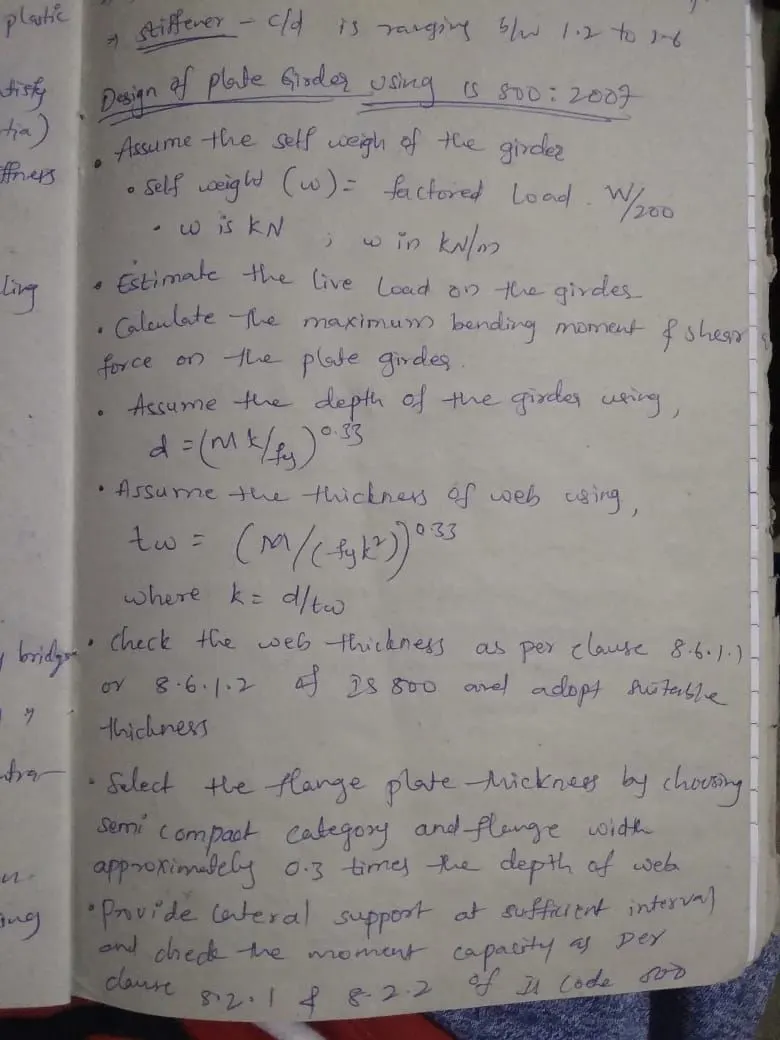
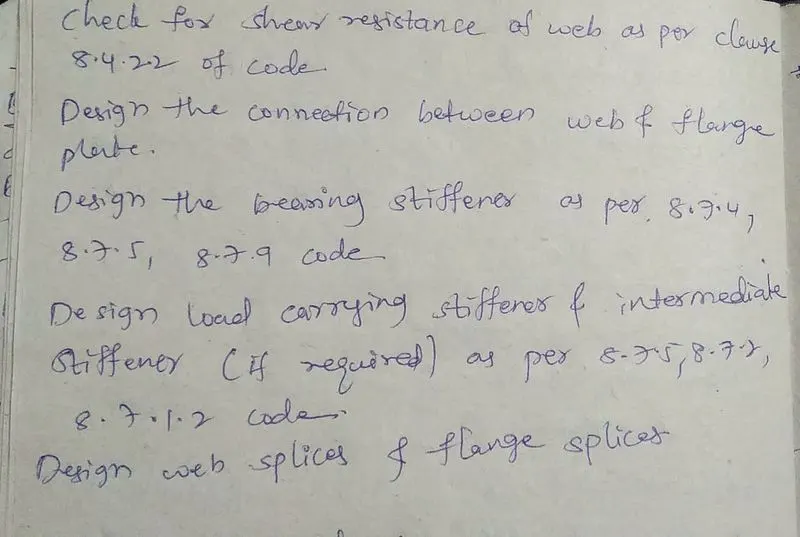
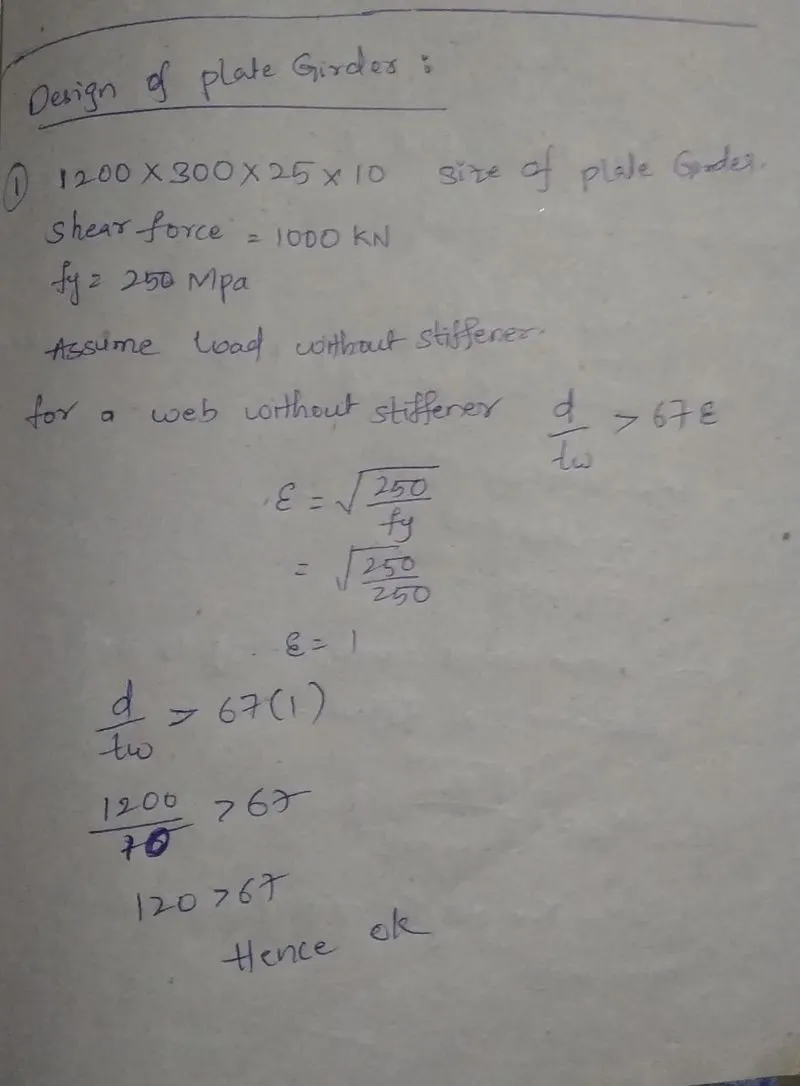
1. Shear resistance of web problem
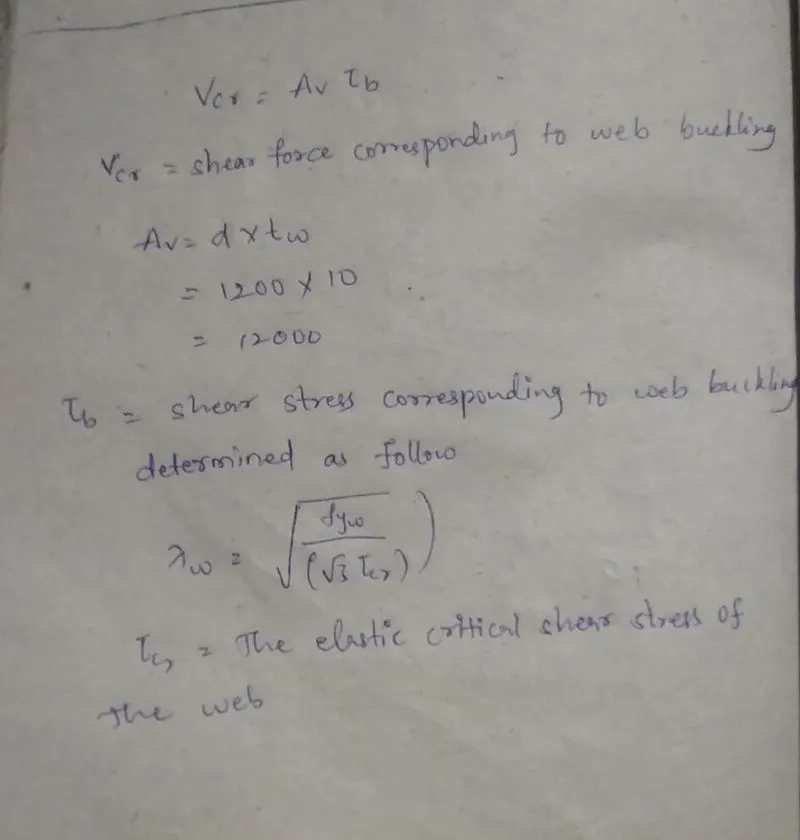
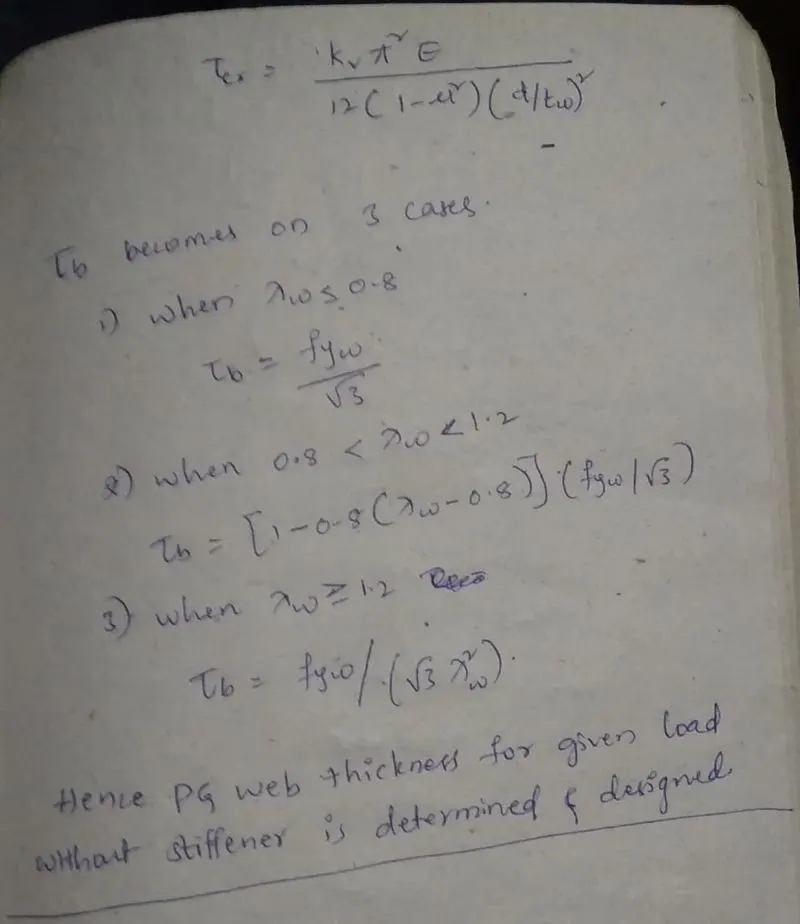
Determine PG Web thickness for given load without stiffener
For a PG of size 1200 x 300 x 25x 10, Check if the web is adequate to carry a factored shear force of 1000 kN. Yield strength of plate fy is 250 Mpa.
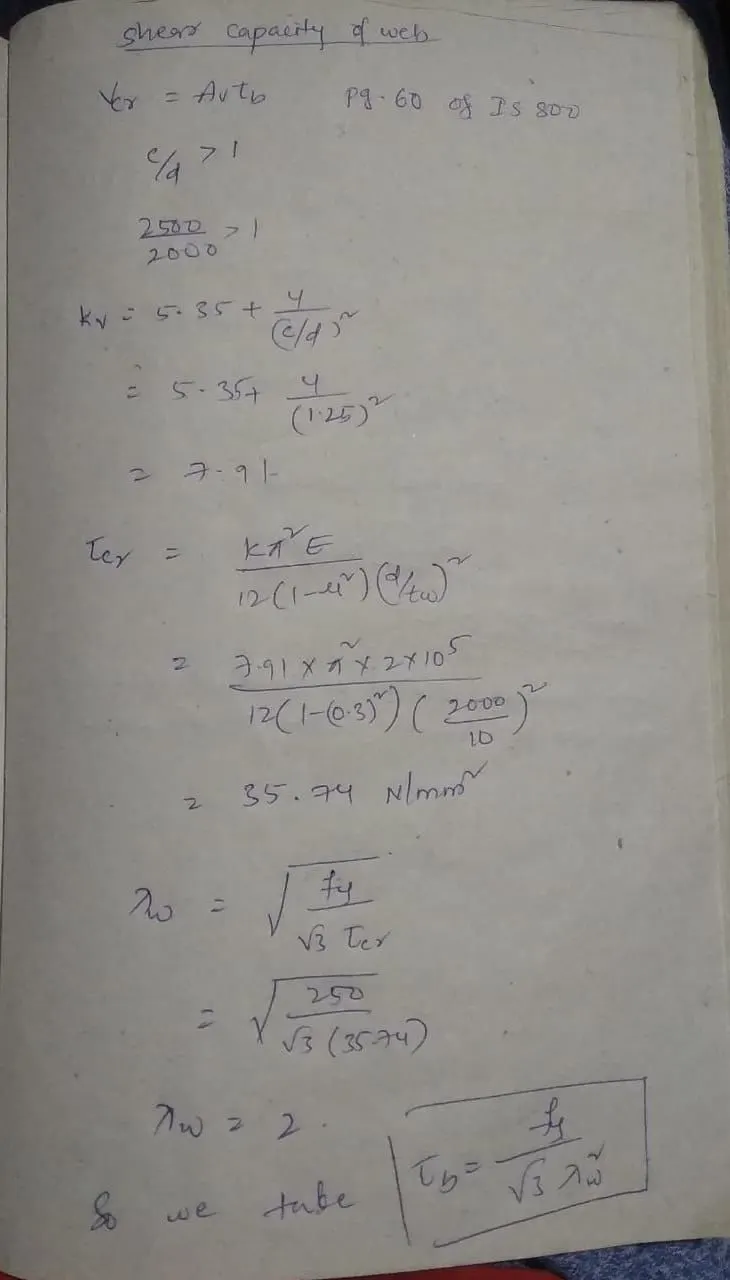
2. Check whether intermediate stiffener required for given load
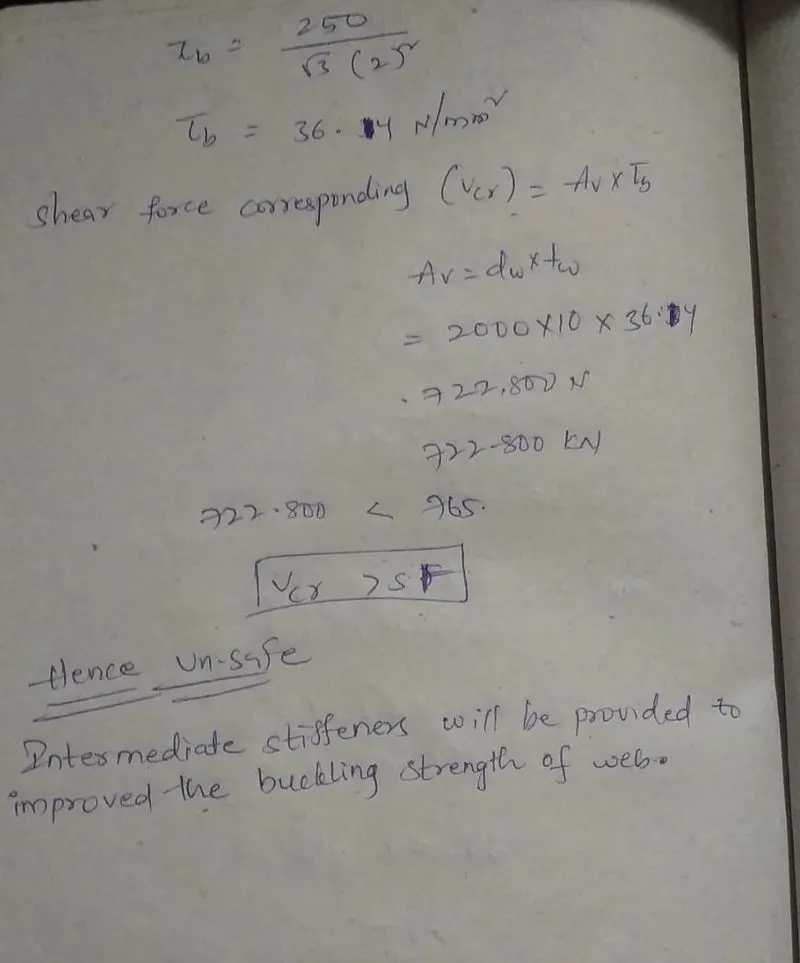
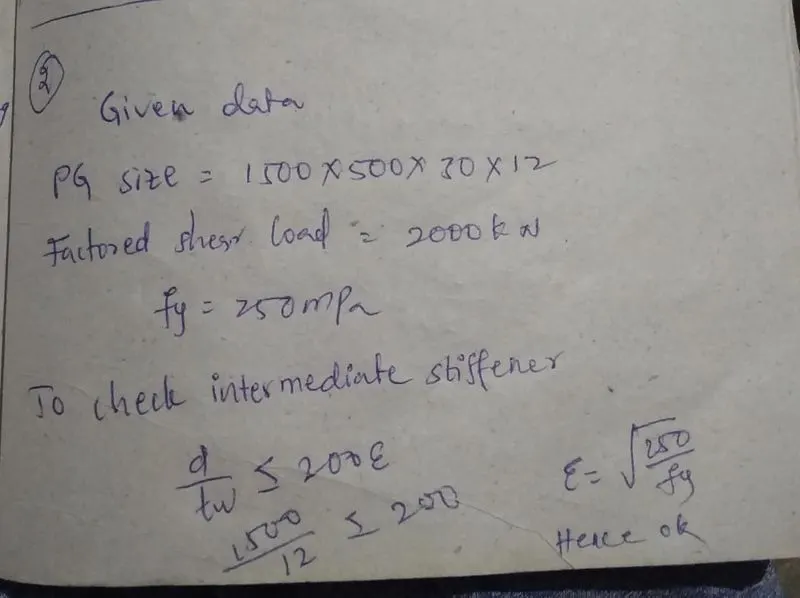
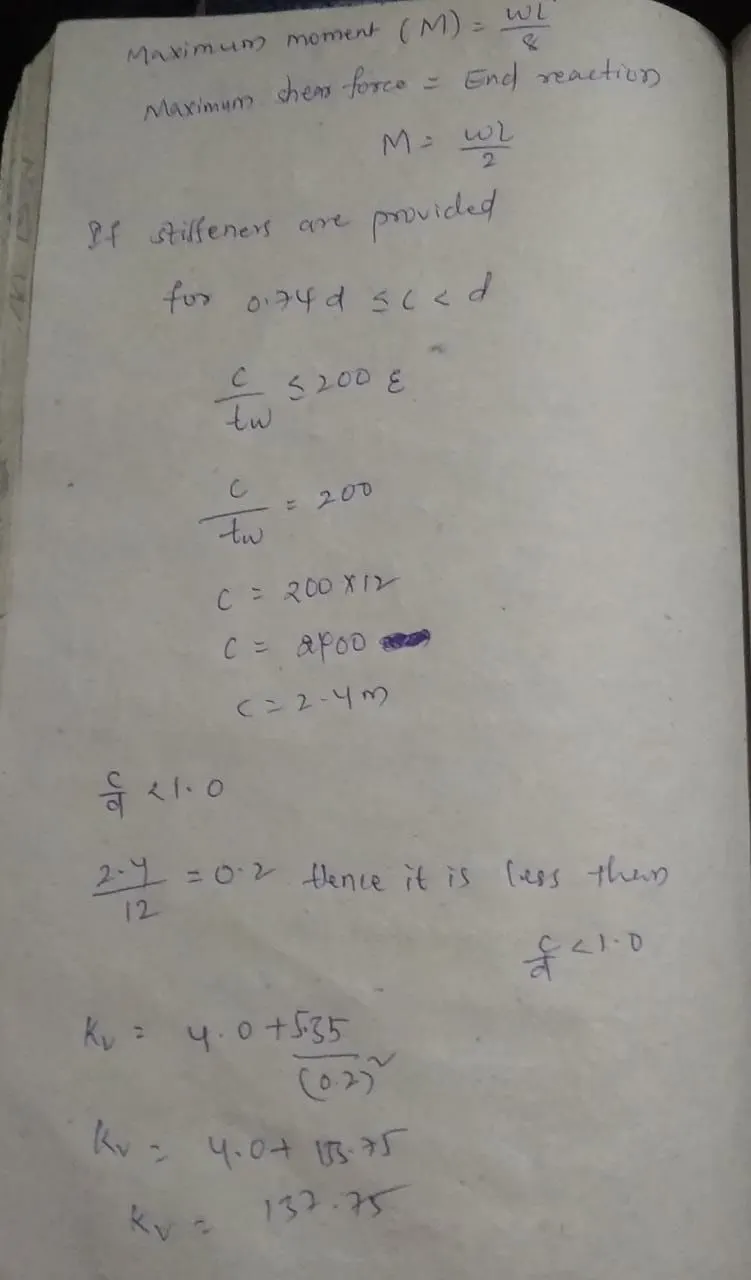
For a PG of size 1500 x 500 x 30 x 12,check if the intermediate web stiffener is required to carry a factored shear force of 2000 kN, if required, find the spacing of stiffener. Yield strength of plate fy is 250 Mpa.
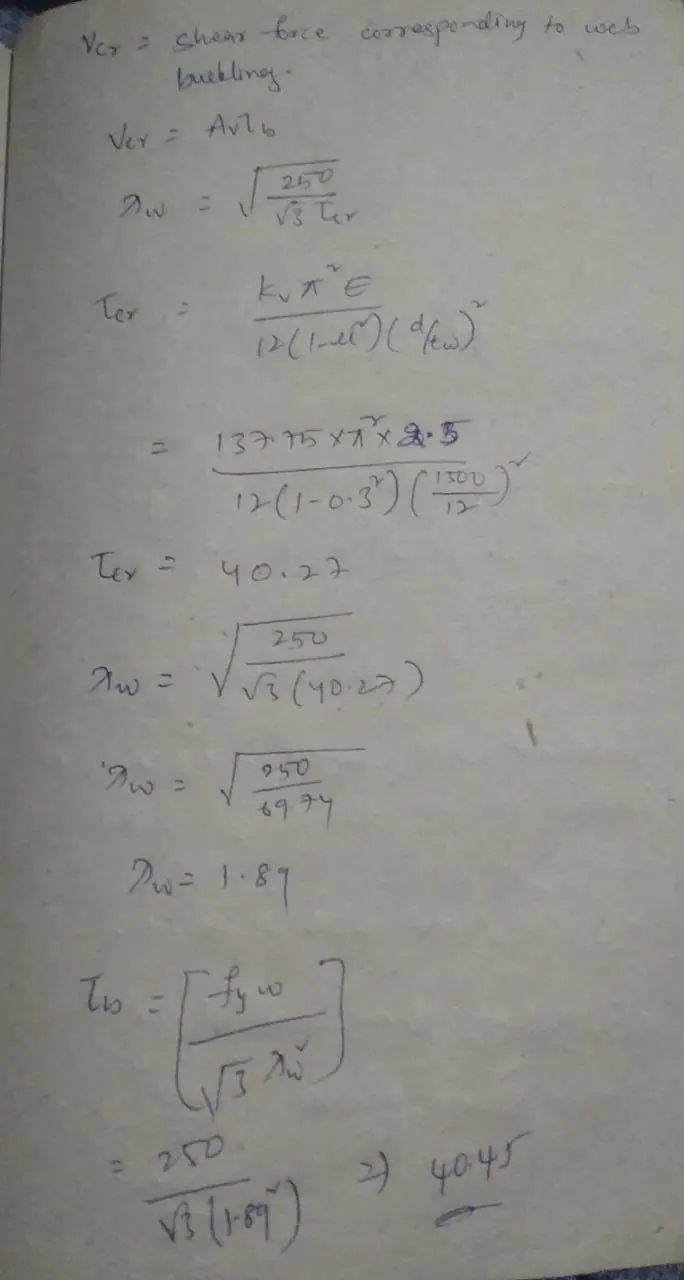
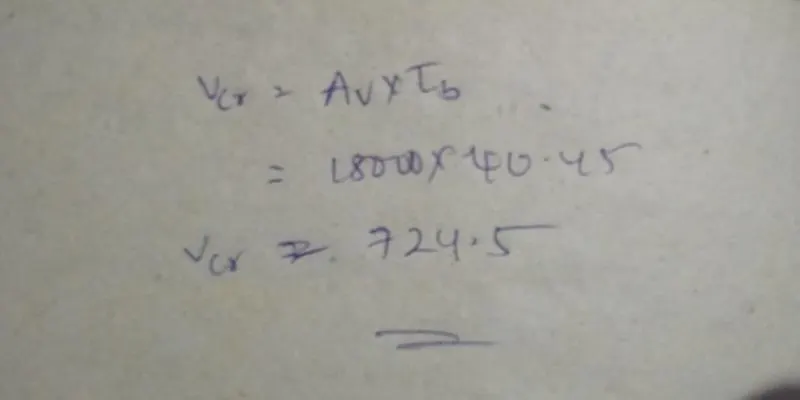
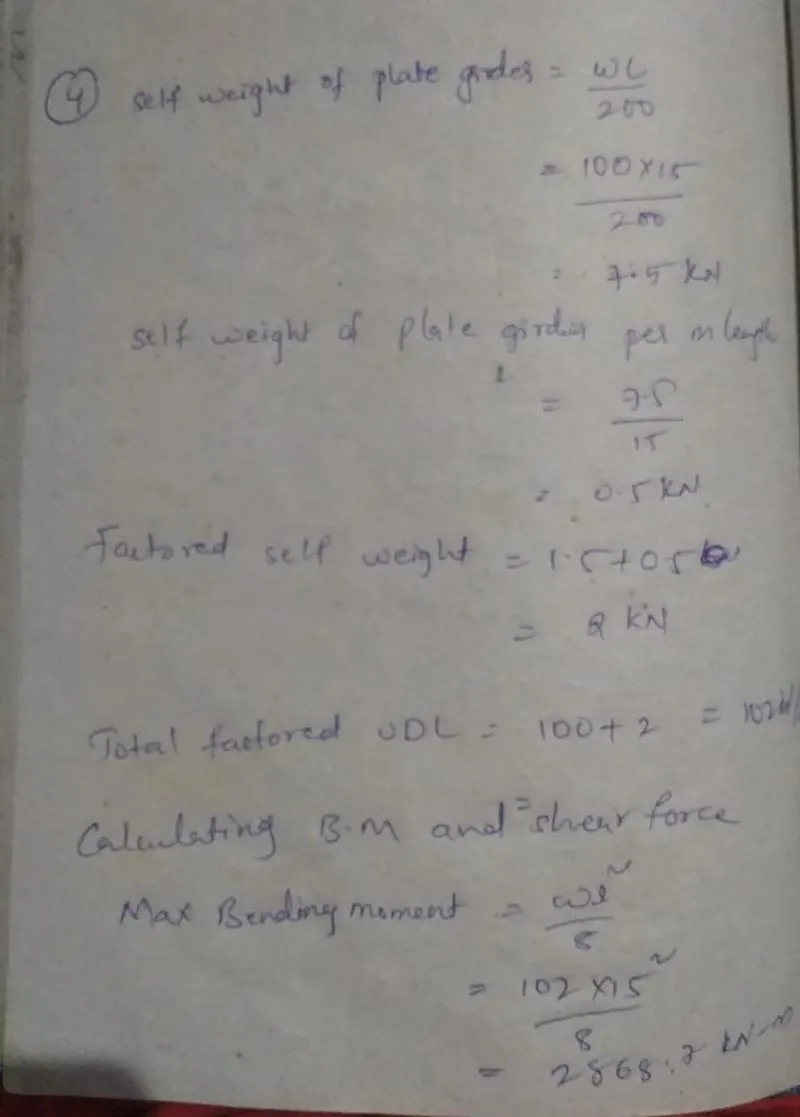
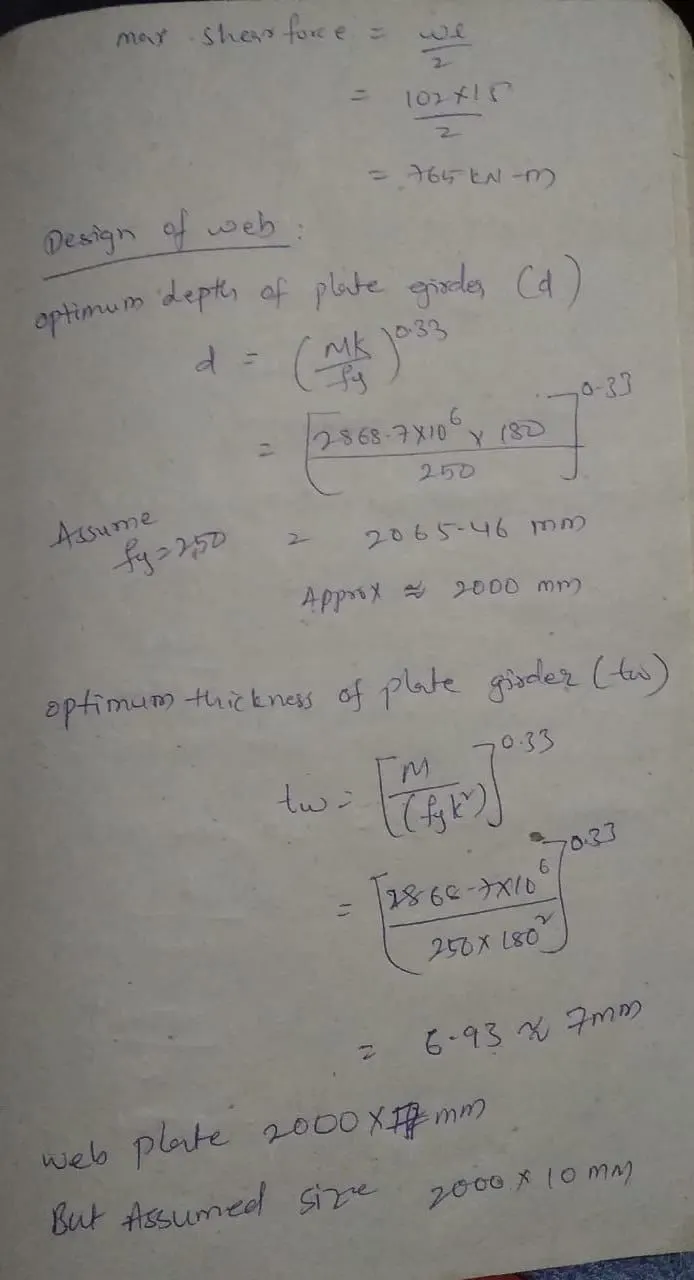
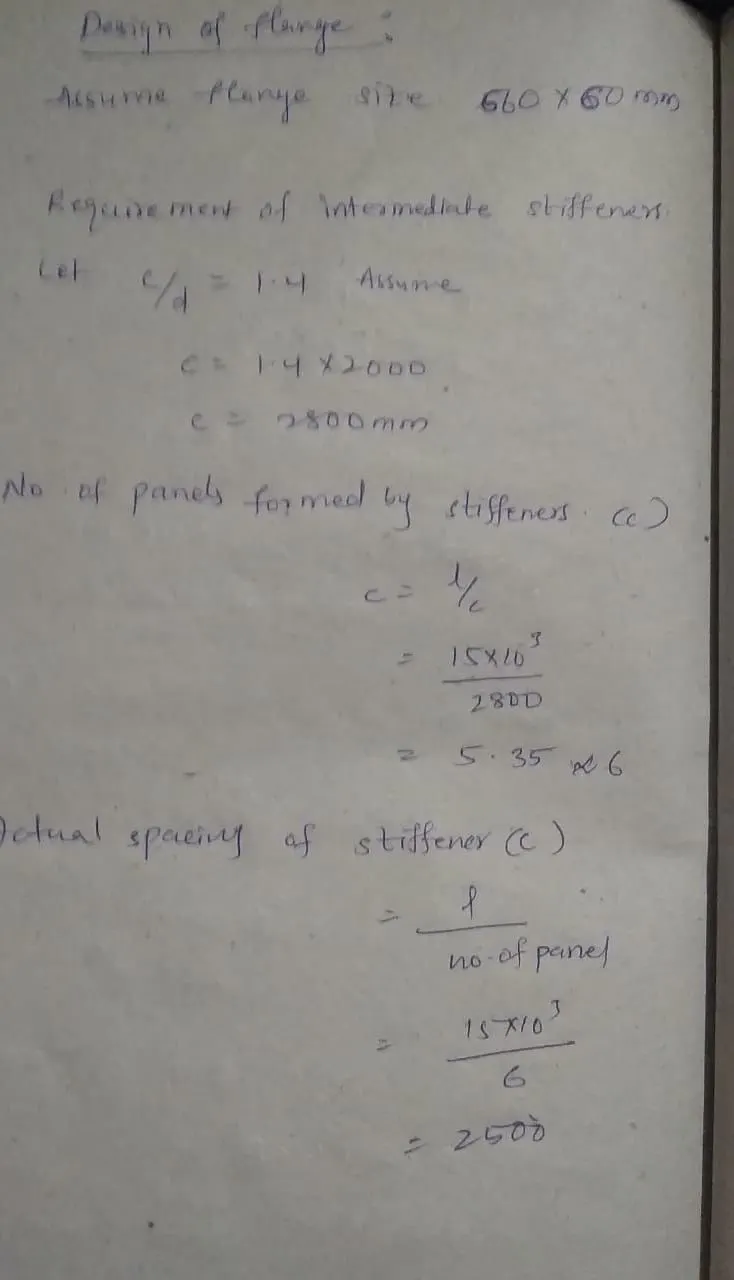
4. Proportioning problem
Calculate the minimum depth & web thickness requirement of a beam of span 15 m to carry a UDL of 100 kN/m. Also calculate the flange depth & thickness considering section to be plastic and check if the assumed size is adequate to carry the moment.