Week 5 Bending of iPhone
AIM
To simulate the bending of iPhone in structural analysis with two different cases.
OBJECTIVE
This challenge is to simulate the bending of the iPhone using Ansys workbench with two different cases.
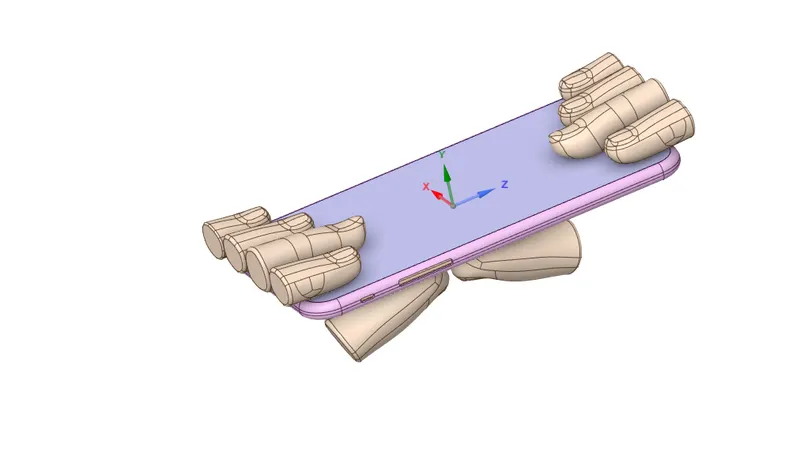
Case 1: The setup and geometry would be at the same position mentioned in the video.
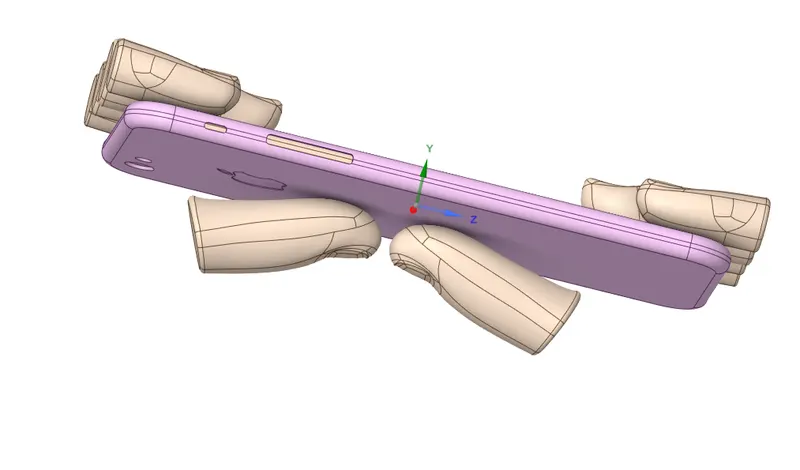
Case 2: Move the fingers from their defined position to the given position x = 22.5mm & z = 10mm and obtain the result for the simulation. Also, define the S-N curve for the aluminum alloy material as per the given values.
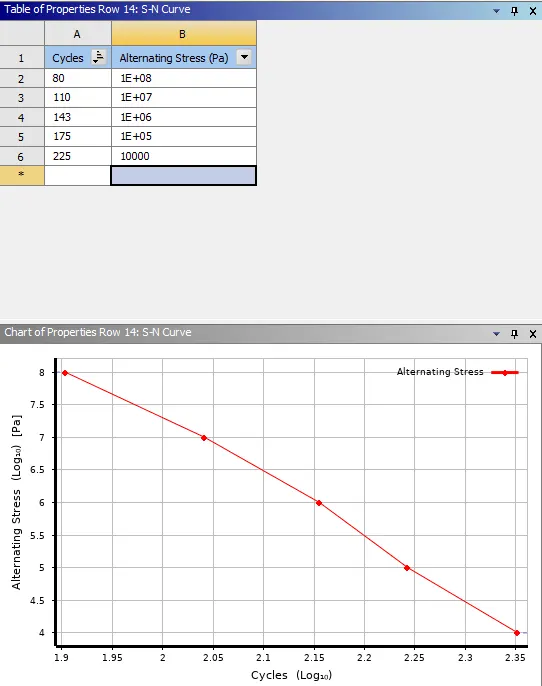
| Stress, MPa | Number of Cycles, N |
| 225 | 10000 |
| 175 | 100000 |
| 143 | 1000000 |
| 110 | 10000000 |
| 80 | 100000000 |
MATERIAL PROPERTIES
Aluminium Alloy
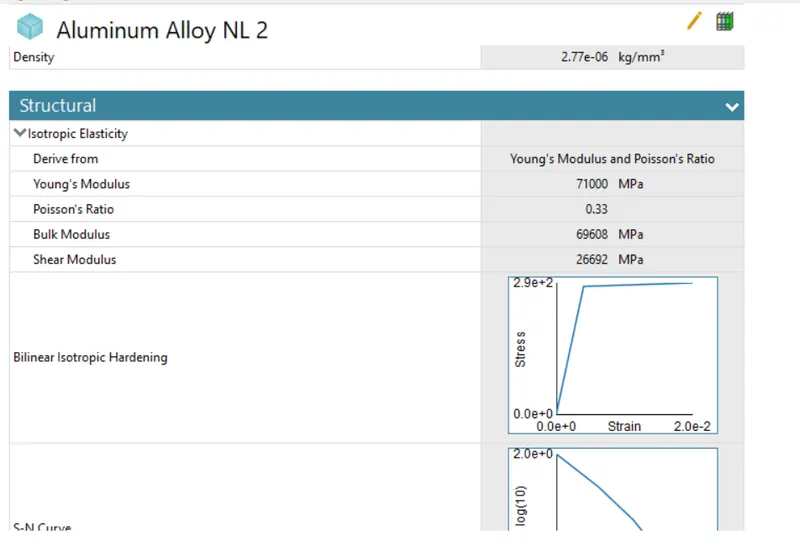
S-N Curve
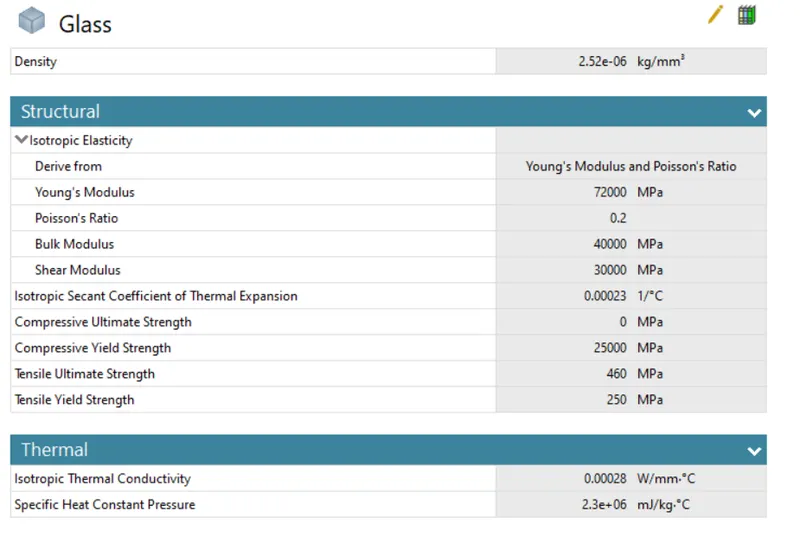
Glass
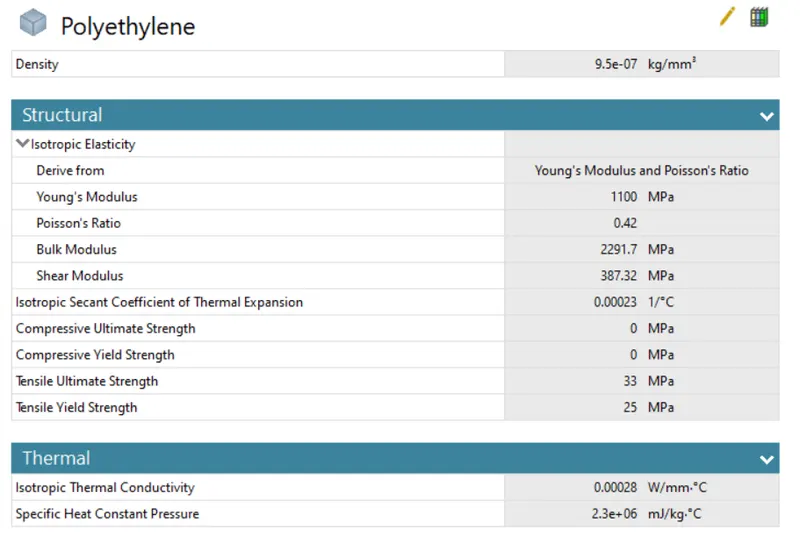
Polyethelene
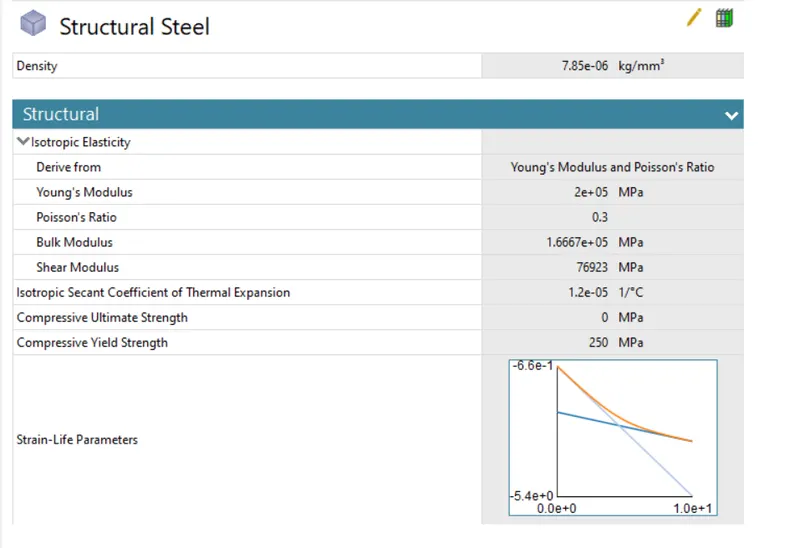
Structural Steel
PROCEDURE
Setup
Importing the geometry in the space claim to check each part of the iPhone geometry and to check the surface damages for Case 1 and for Case 2 changing the position of the pushing fingers towards x = 22.5mm & z = 10mm.
Case 1
Case 2
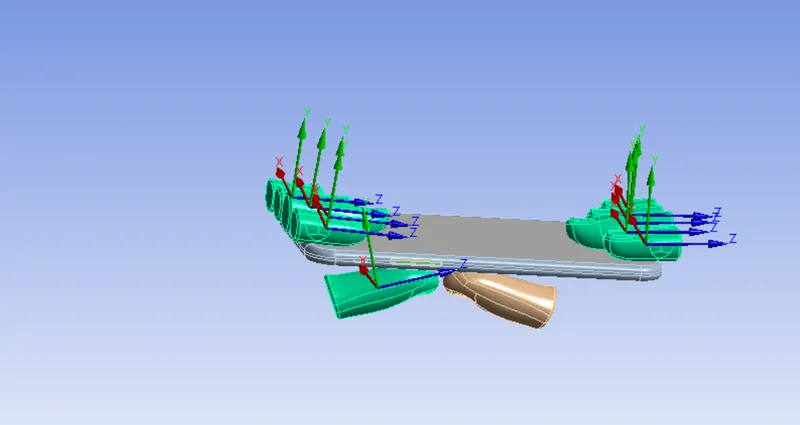
- Rename each of the geometry as a frame, Display, Insides, Pushing fingers 1 and 2 and other all top faces as fingers also assigning the materials to the frames as Aluminium alloy, Display as Glass, Insides as the Polyethelene, and the fingers as the structural steel.
- For the fingers and the pushing fingers, the stiffness behavior is Rigid.
Connections
Contacts
- Two contacts between the fingers are unknown, so this connection is deleted and the other connection Rename based on the definition and the define the contacts for a display to frame as the type to be bonder and other all contacts to be frictionless.
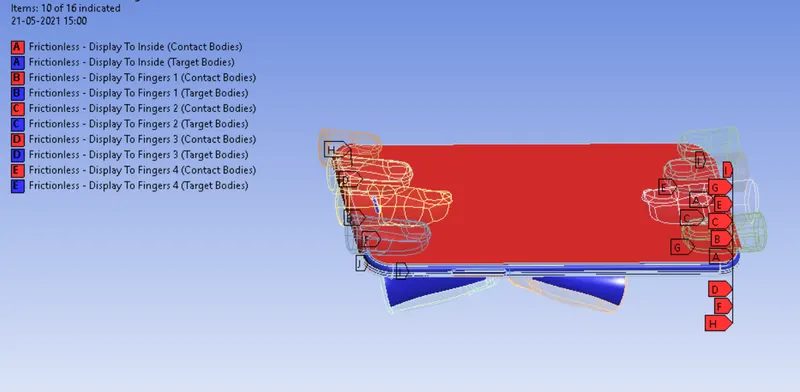
Joints
- The body-to-ground fixed type joint is given between the fingers and the translation joints to the pushing fingers from the body to the ground.
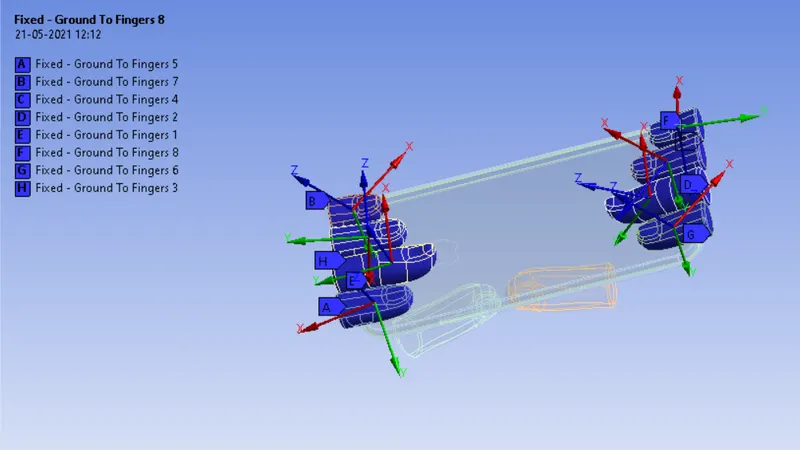
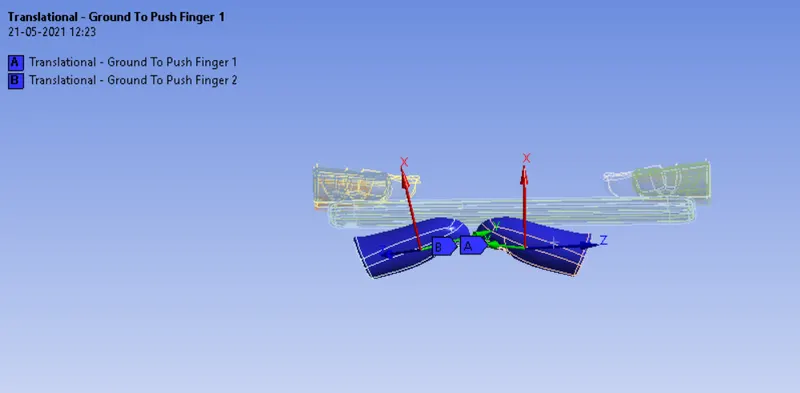
Mesh
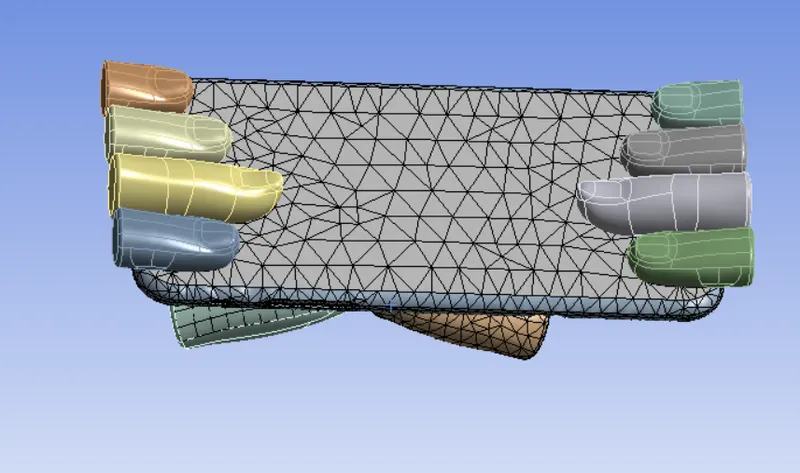
Selecting the faces of the pushing fingers as the 7 faces with default size and the mesh is generated with nodes obtain as 23085.
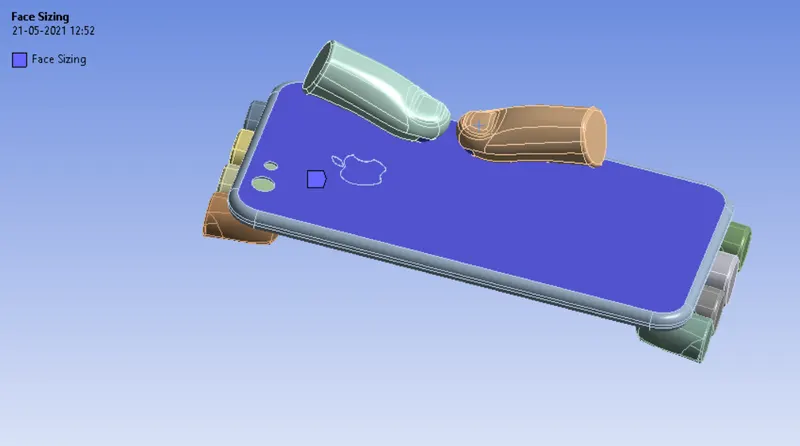
Analysis settings
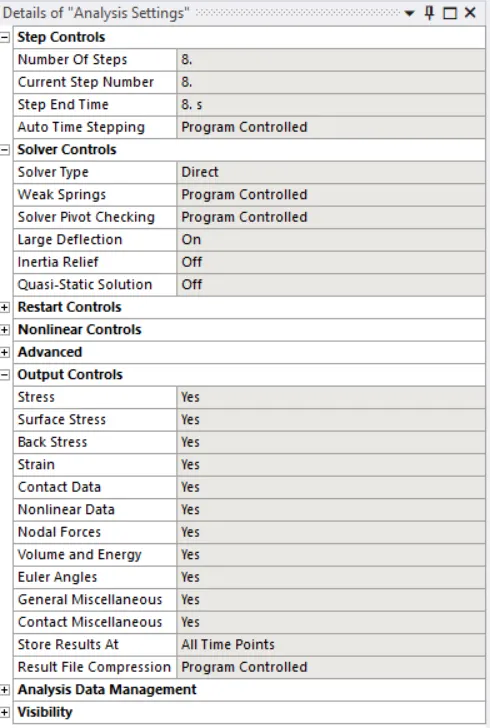
The 8 septs are given to the simulation of the iPhone bending, for the solver type as direct and the large deflection is ON, with the stabilization is constant and the energy dissipation as 0.1. All the output controls to be ON.
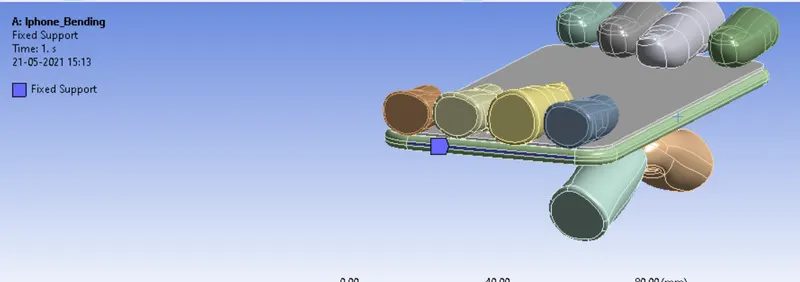
- The fixed support is given to the insides and the 4 faces of the frame with x and z constant and y-direction to be free in nature.
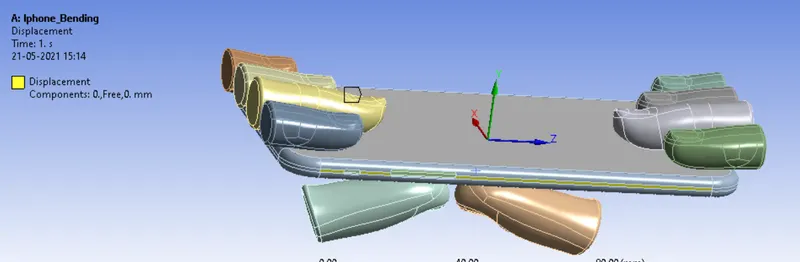
- Two displacements are provided for the pushing fingers at the distance of (0, 2, 4, 6, 8, 4, 6, 4, 2, 0) for each step to be followed.
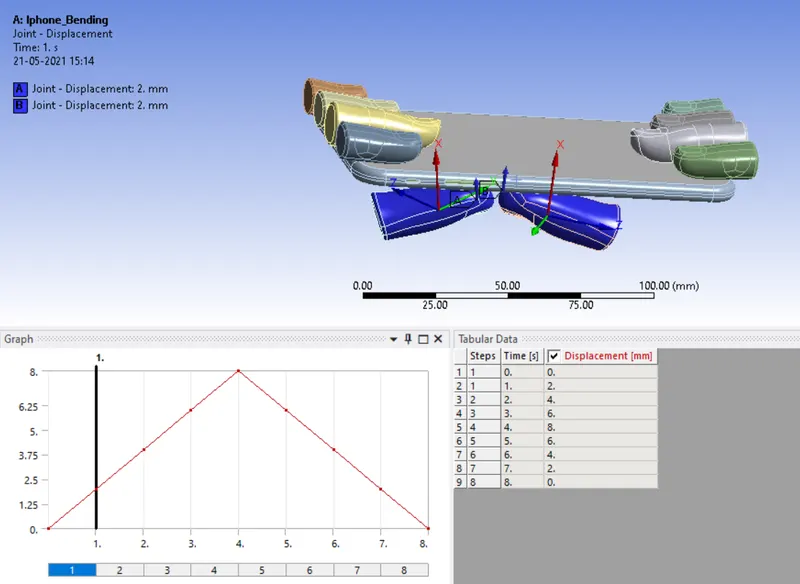
RESULTS
Case 1: Boundaries condition as per the video
Directional Deformation
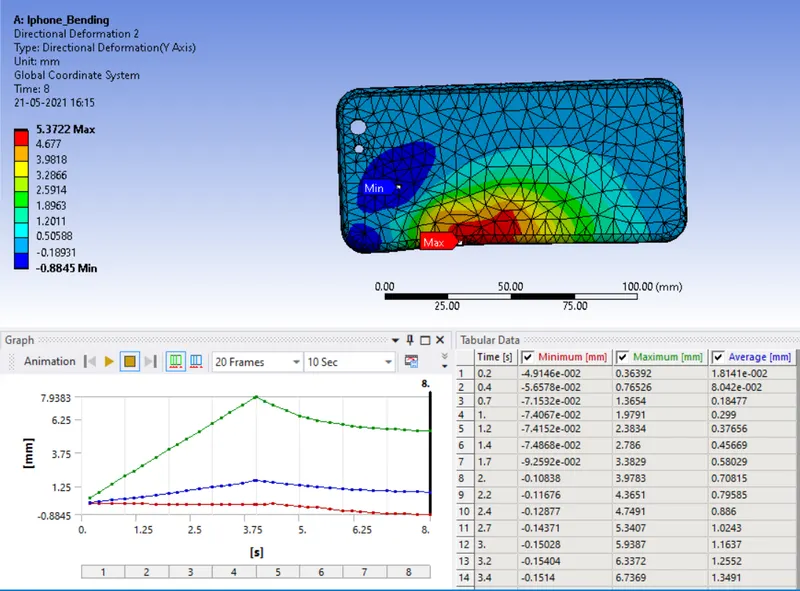
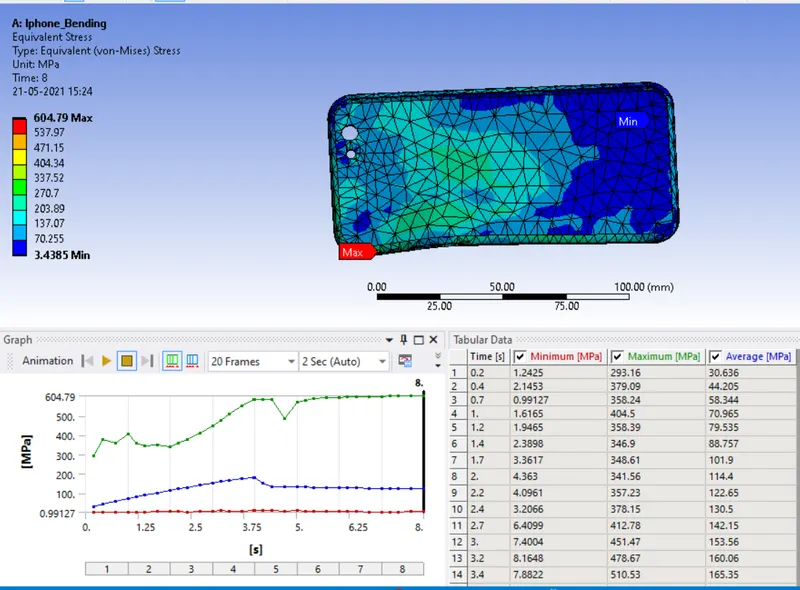
Equivalent von mises stress
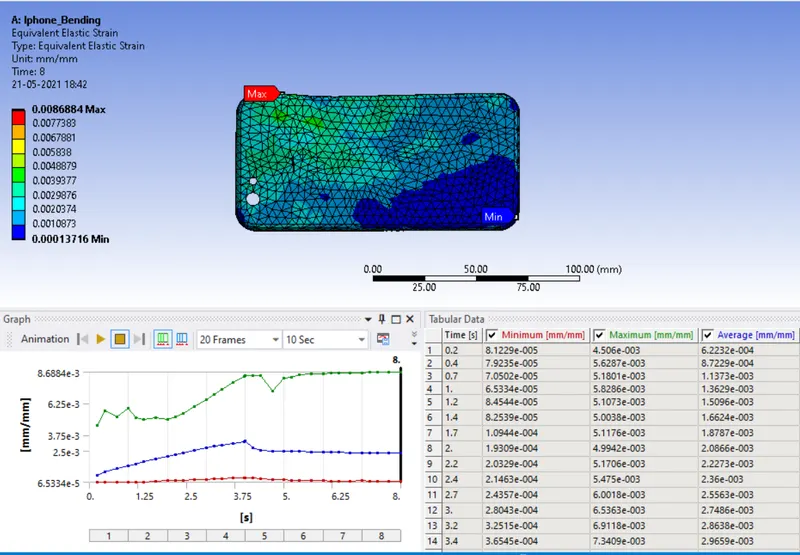
Equivalent elastic strain
Fatigue Life
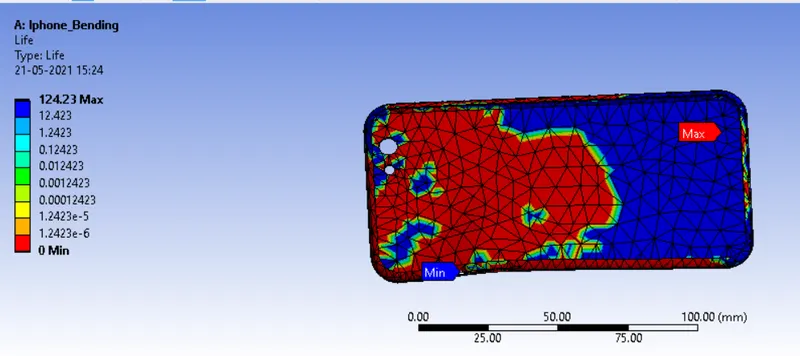
factor of safety-Frame:
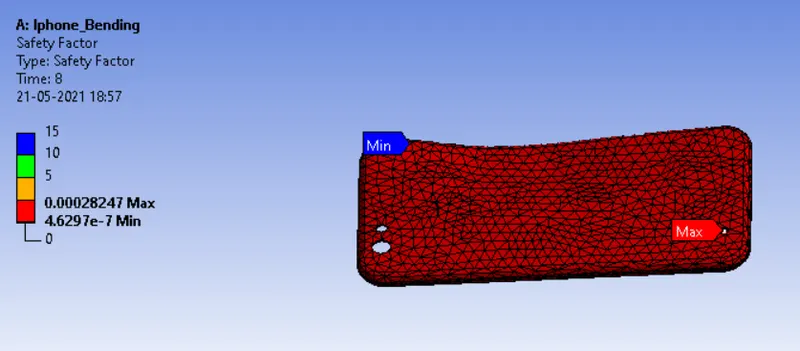
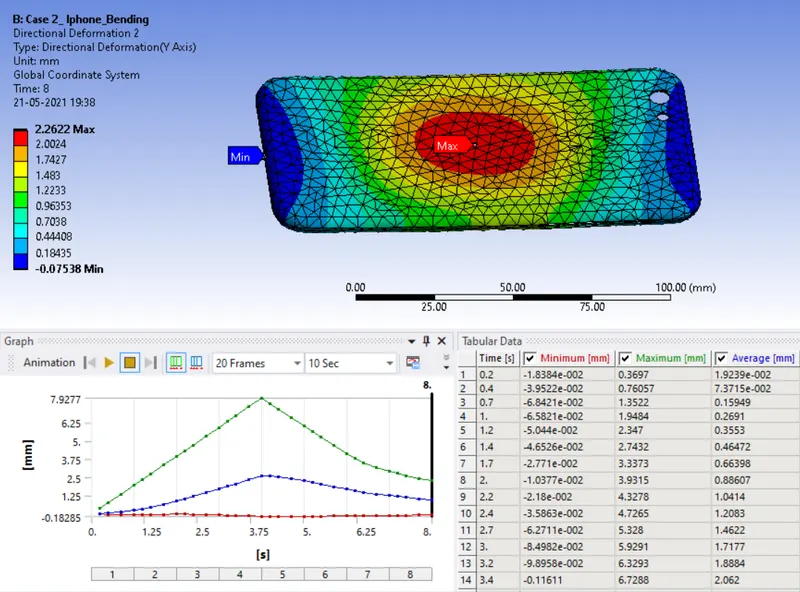
Case 2: Boundaries condition as per S_N curve and geometry change
Directional deformation
Equivalent von mises stress
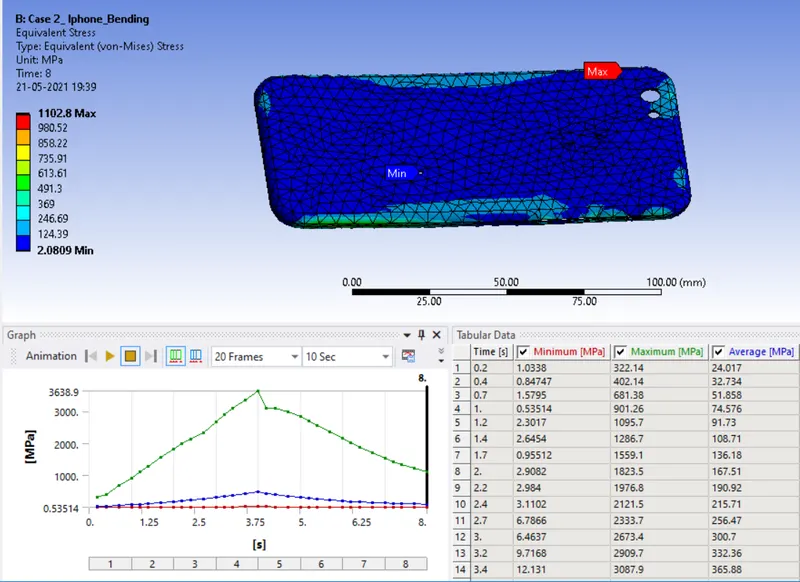
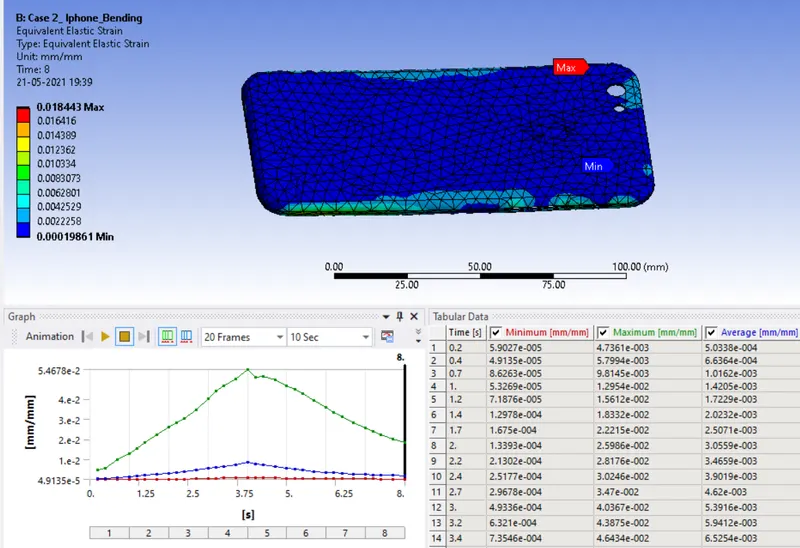
Equivalent von mises strain
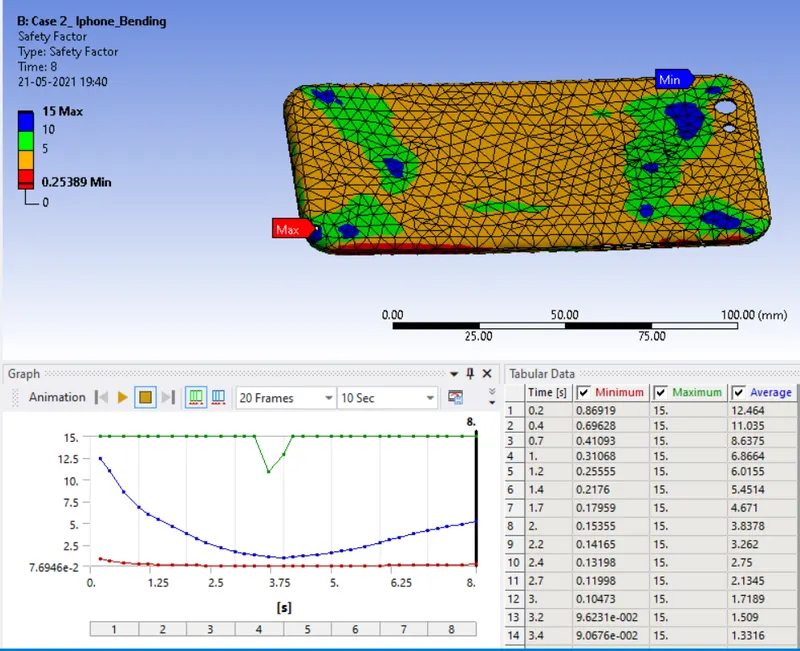
factor of safety-Frame:
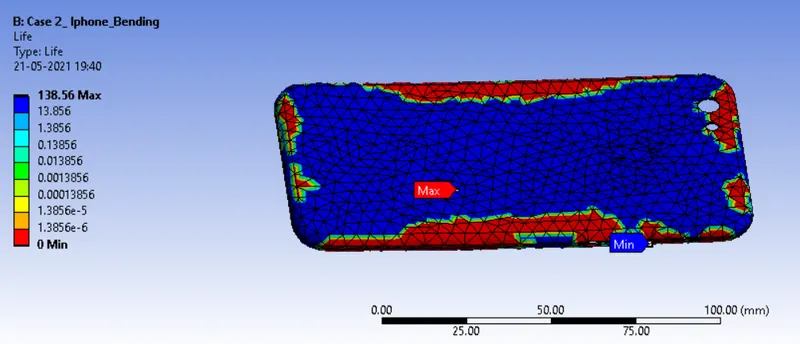
Fatigue Life
CONCLUSION
| Total Deformation (mm) | Max Equivalent strain | Max Equivalent stress (MPa) | Life | |
| Case 1 | 5.5404 mm | 8.6884e-003 mm/mm | 604.79 MPa | 124.23 |
| Case 2 | 2.2622 mm | 5.3443e-003 mm/mm | 376.5 MPa | 120.3 |
- From the above stimulation, the life of the frame is 128 and the safety factor of the frame is 15, the max stress is greater when the fingers are at the corner than the middle and the strain in both cases is found to be greater.
- Simulation of bending process of iPhone carried out using Ansys workbench. From the analysis, it is found that the application of the 8mm displacement load at different locations produces plastic deformation in the Aluminium Alloy Frame. As the point of load, the application is at different locations, the effect of the deformation is different in both cases. The Aluminium Alloy frame is not able to withstand the 8mm bending load.