Week 5 Bending of iPhone
iPHONE 6S BENDING SIMULATION
Why bending of an iPhone??
Internal Apple documents (revealed by Judge Lucy Koh as part of an ongoing lawsuit against Apple regarding touchscreen failure due to bending) have revealed that Apple knew that the iPhone 6 and 6 Plus phones were more likely to bend than previous models. Apple still refused to publicly acknowledge the fact that there were any iPhone 6 bending issues. Apple then later began to make internal changes to the iPhone 6 and 6 Plus design, adding extra epoxy to strengthen the area underneath that chip.
OBJECTIVE-
Simulate the bending of iPhone as per the given cases below:
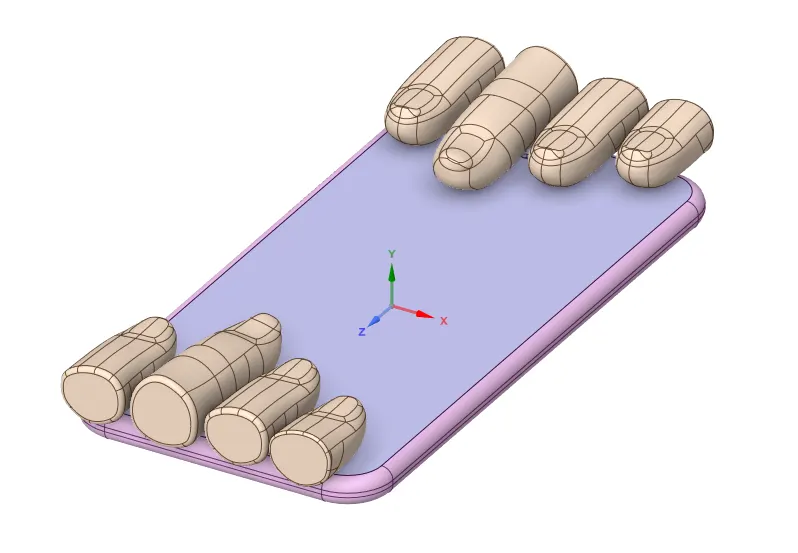
Case 1: Simulate the model for the defined position of the fingers.
Case 2: Move the bottom fingers from their defined position to the given position X=22.5mm & Z=10mm and obtain the results for the simulation. Also define the S-N curve for the Aluminium Alloy material as per values given below-
| Stress (MPa) | Number of Cycles (N) |
| 225 | 10000 |
| 175 | 100000 |
| 143 | 1000000 |
| 110 | 10000000 |
| 80 | 100000000 |
PROCEDURE-
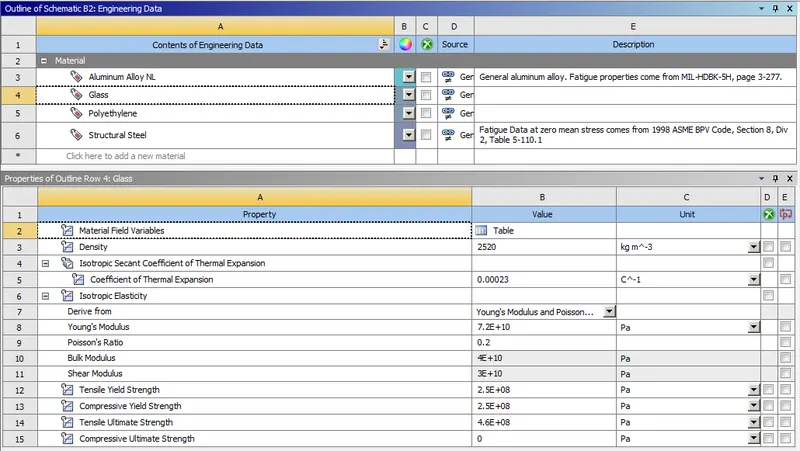
- The Display is assigned with glass material, the frame with Aluminium alloy NL and the inner body is assigned with Polyethylene.
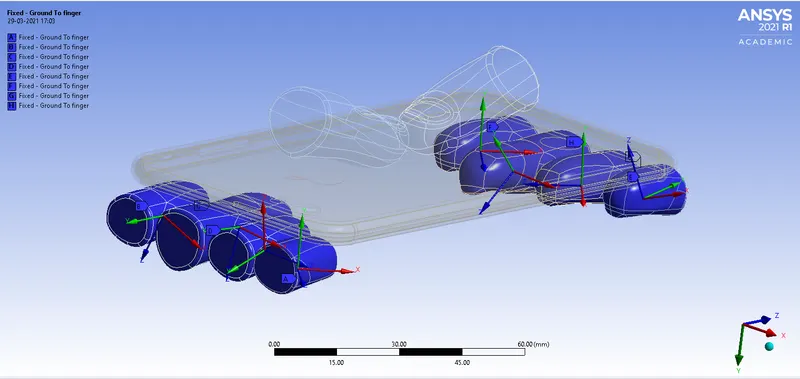
- Stiffness behaviour is set to rigid for eight fingers and one pushing fingers.
CONNECTIONS
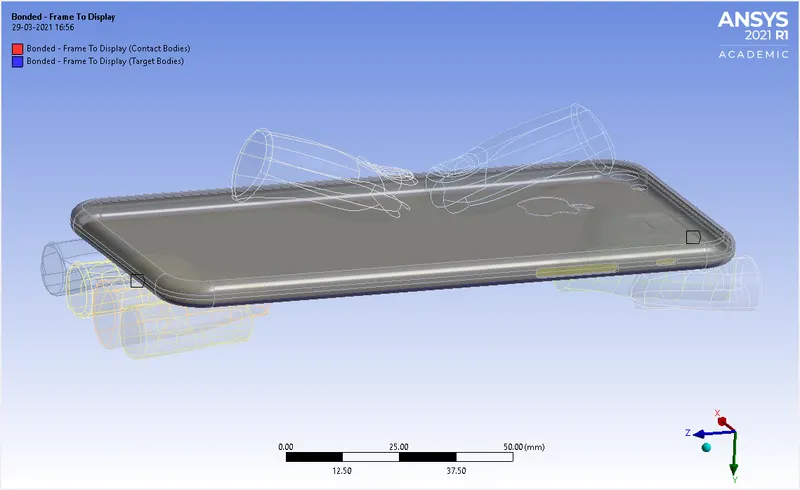
- Bonded contact is created between the frame and the display.
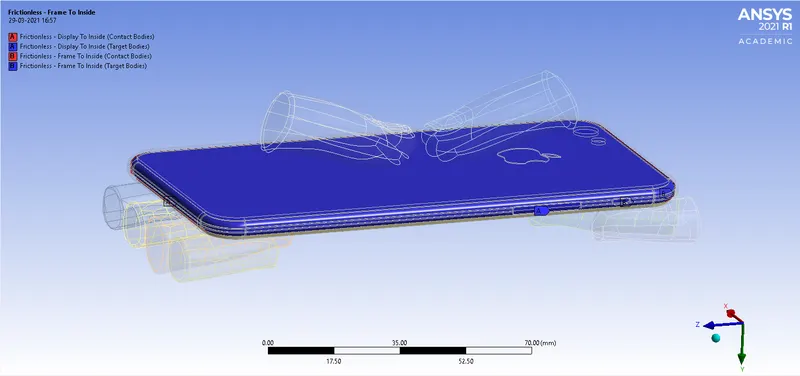
- The inside portion of the phone is connected with the frame and the display. Contact type is set to frictionless for these bodies.
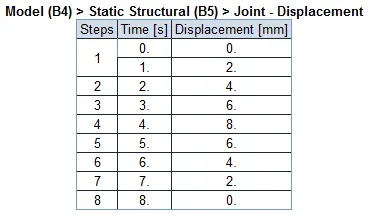
- Displacement is applied to both the pushing fingers along the Y-axis
BOUNDARY CONDITIONS
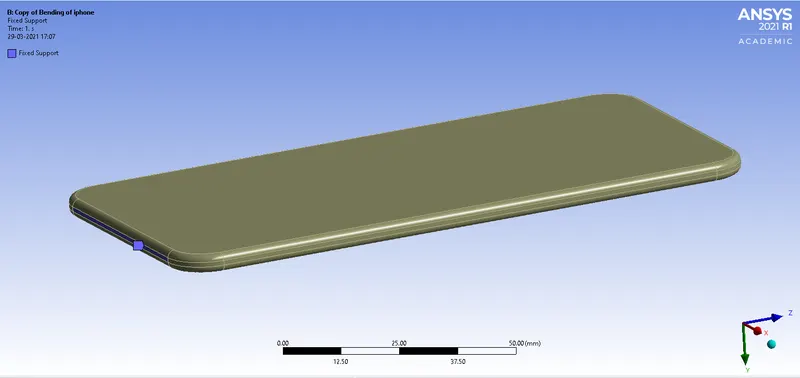
- Fixed support is assigned to the Inside component of the iphone.
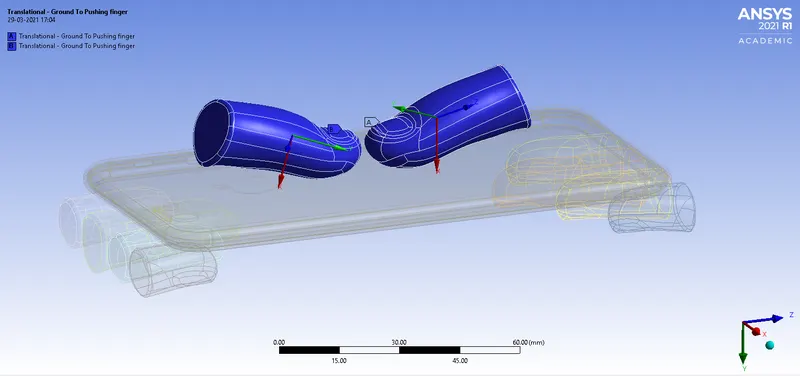
- Translational joint is provided to the pushing fingers
ANALYSIS SETTINGS-
- The analysis is set to run for 8 steps.
- Large deflection is turned on in account for large deflections.
- Solver type is set to direct.
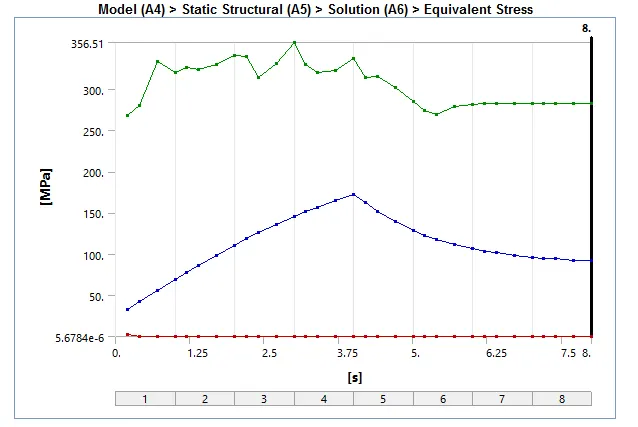
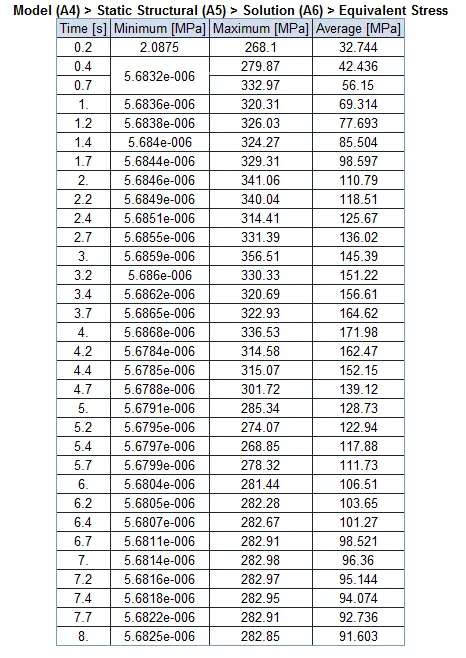
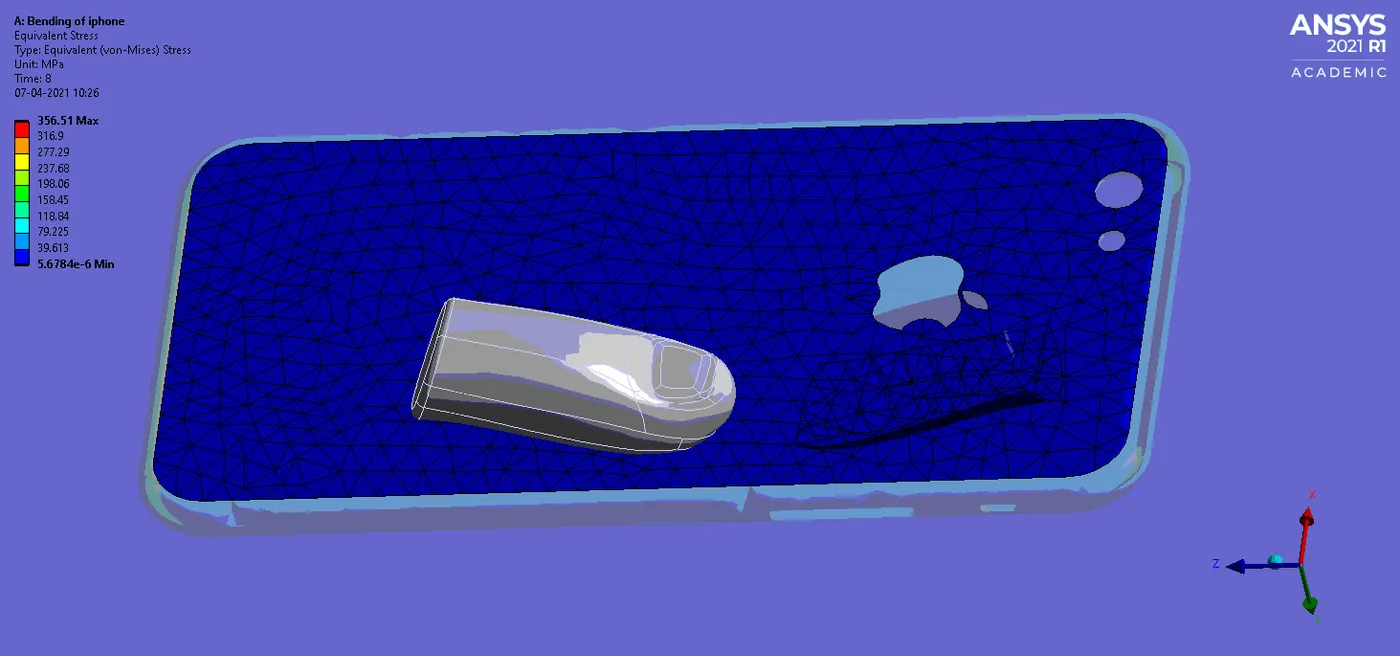
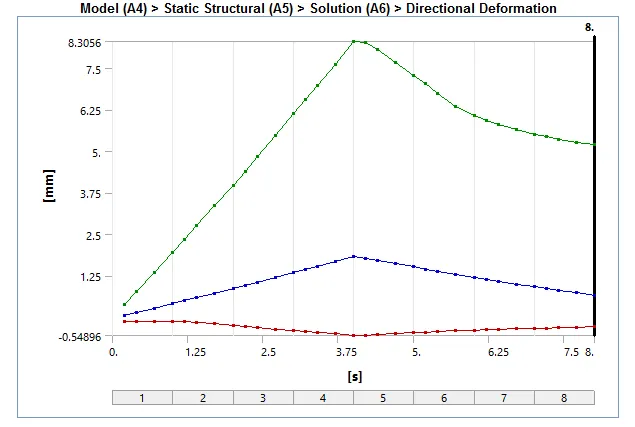
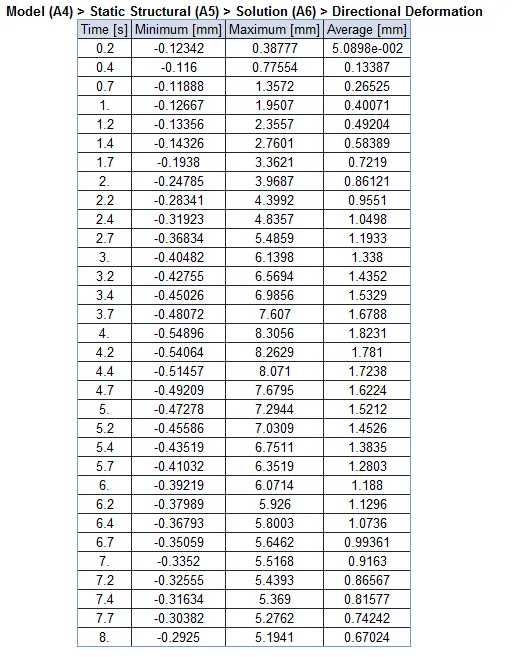
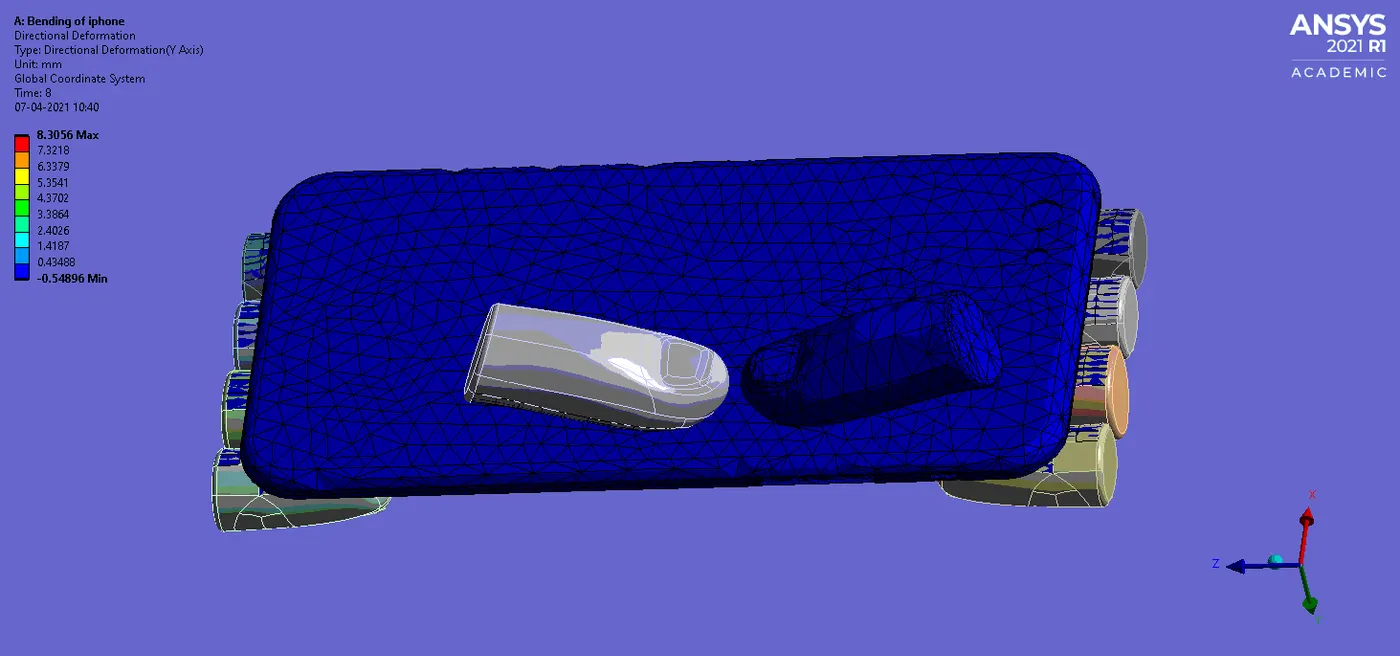
RESULTS
CASE II-
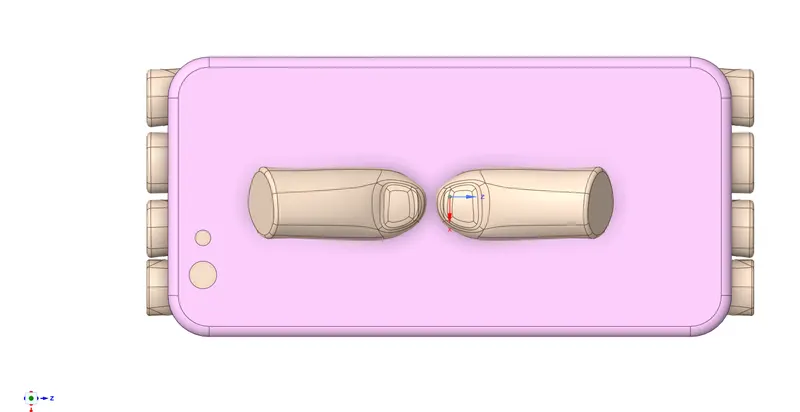
For the analysis of 2nd case the fingers are moved along X=22.5mm & Z=10mm to position the fingers at the center.
MESHING-
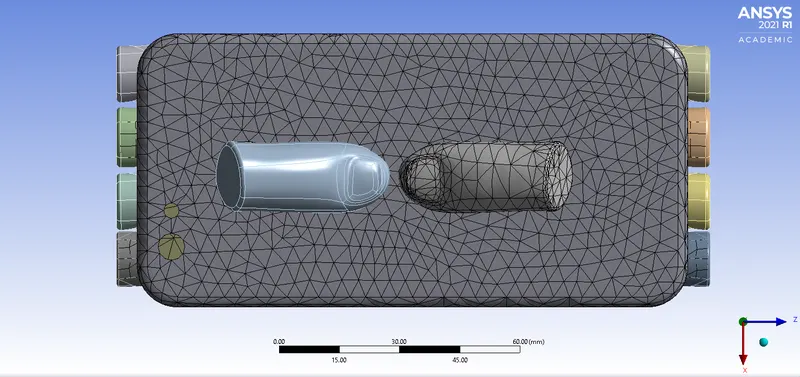
- A Sizing is applied on the contact surfaces of pushing fingers.Adaptive mesh size is turned off.
RESULTS-
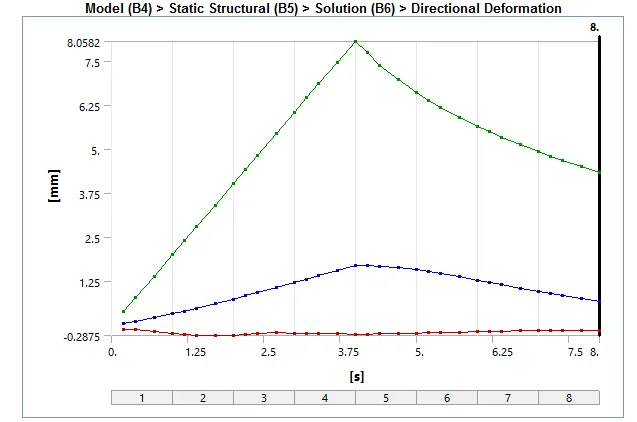
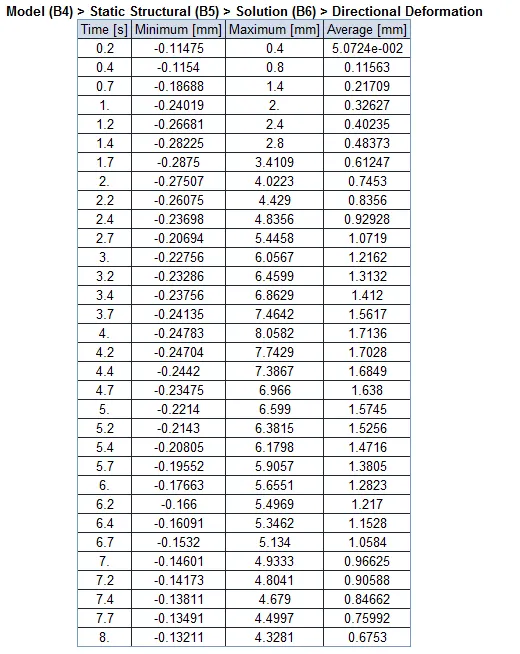
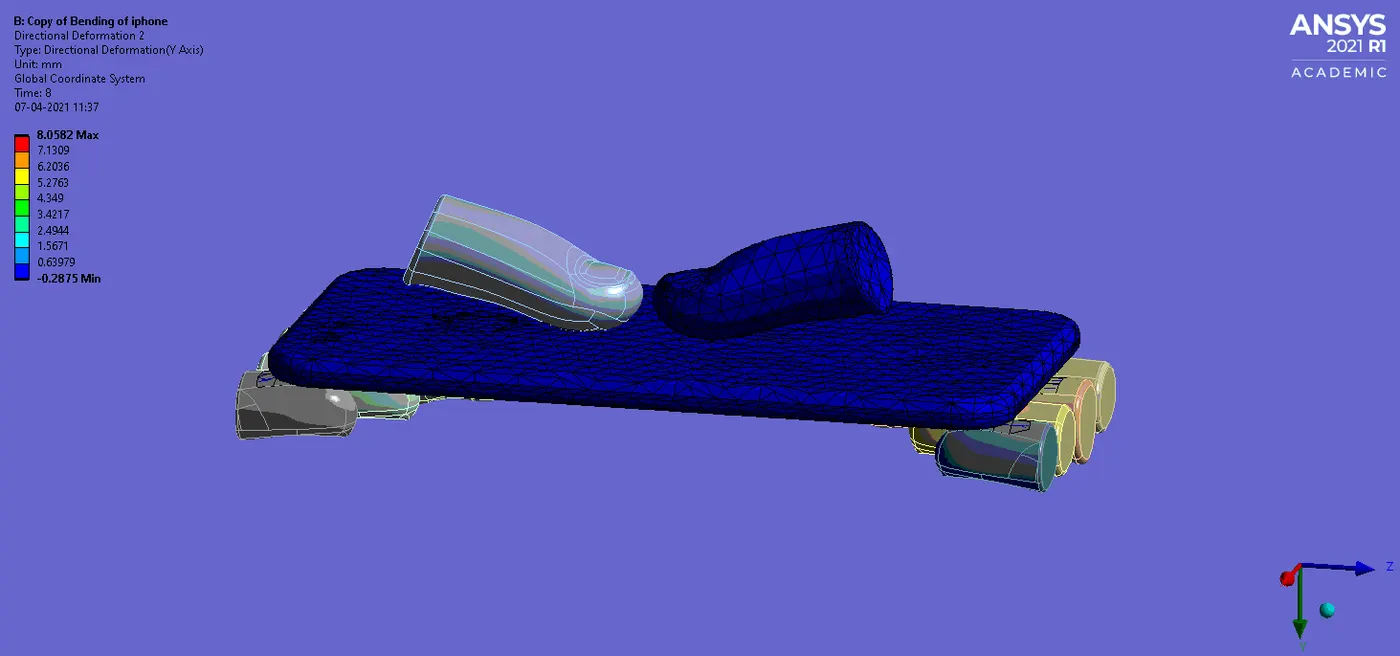
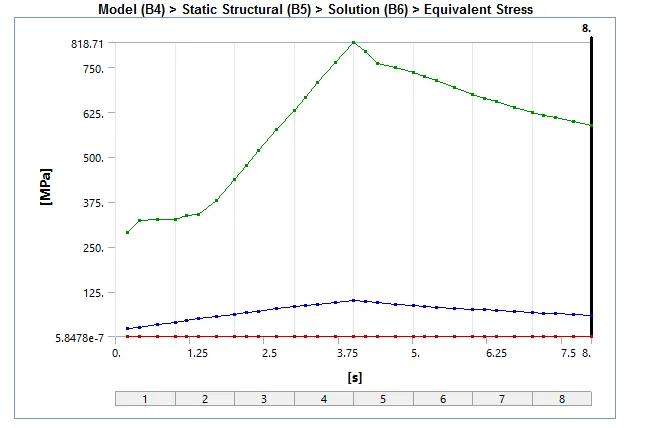
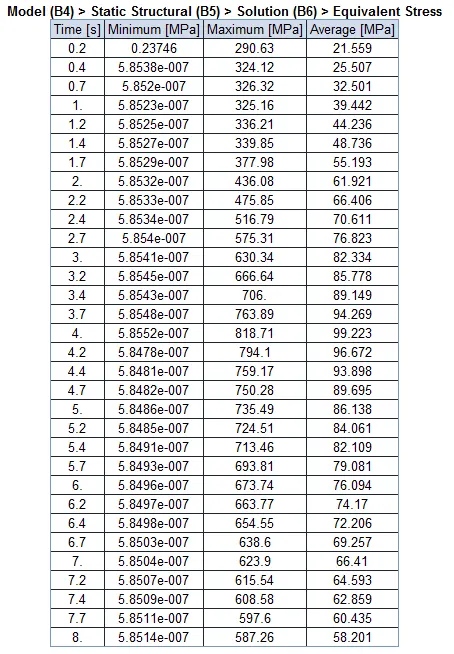
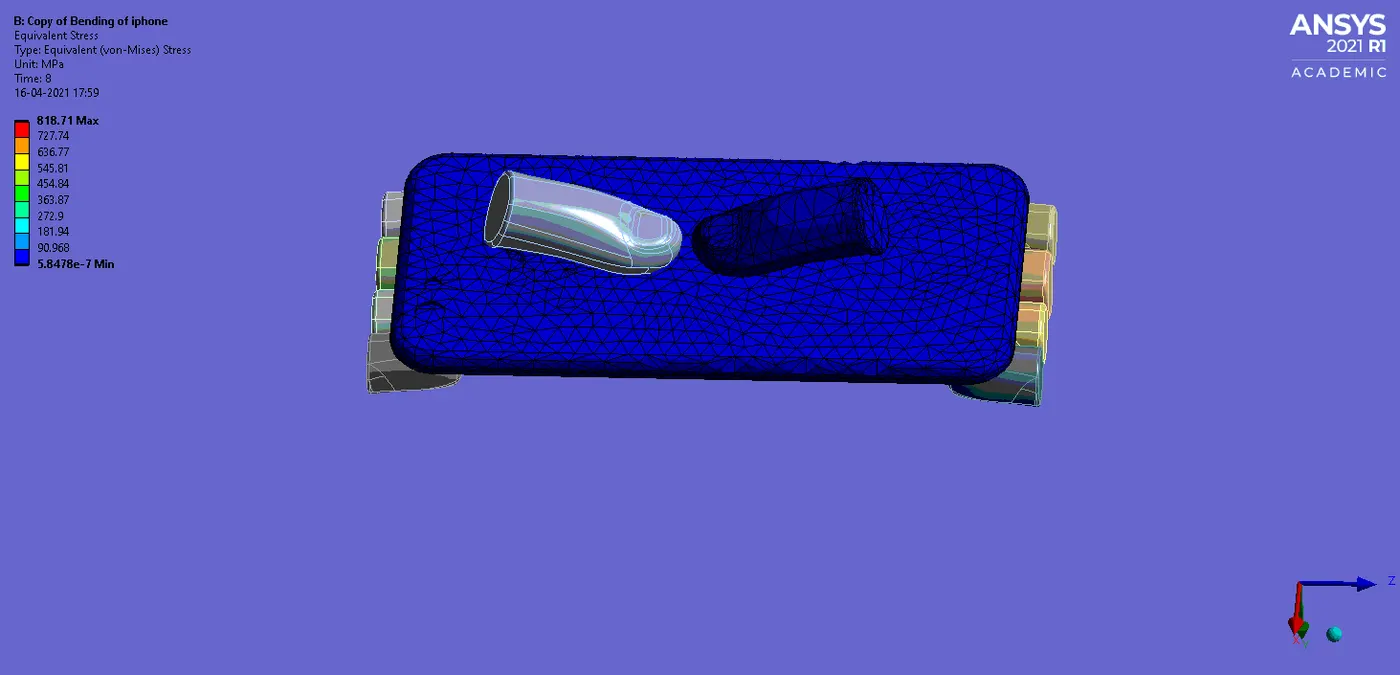
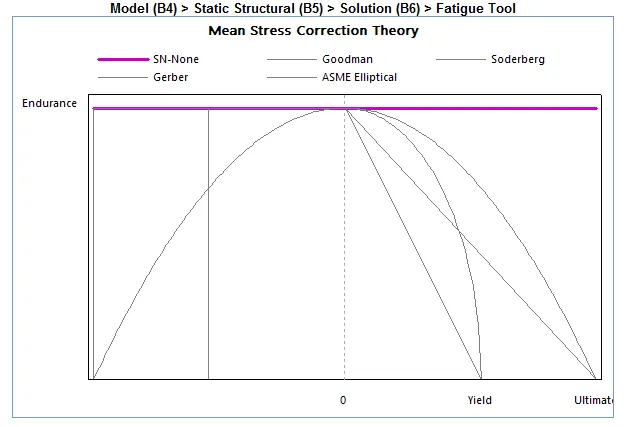
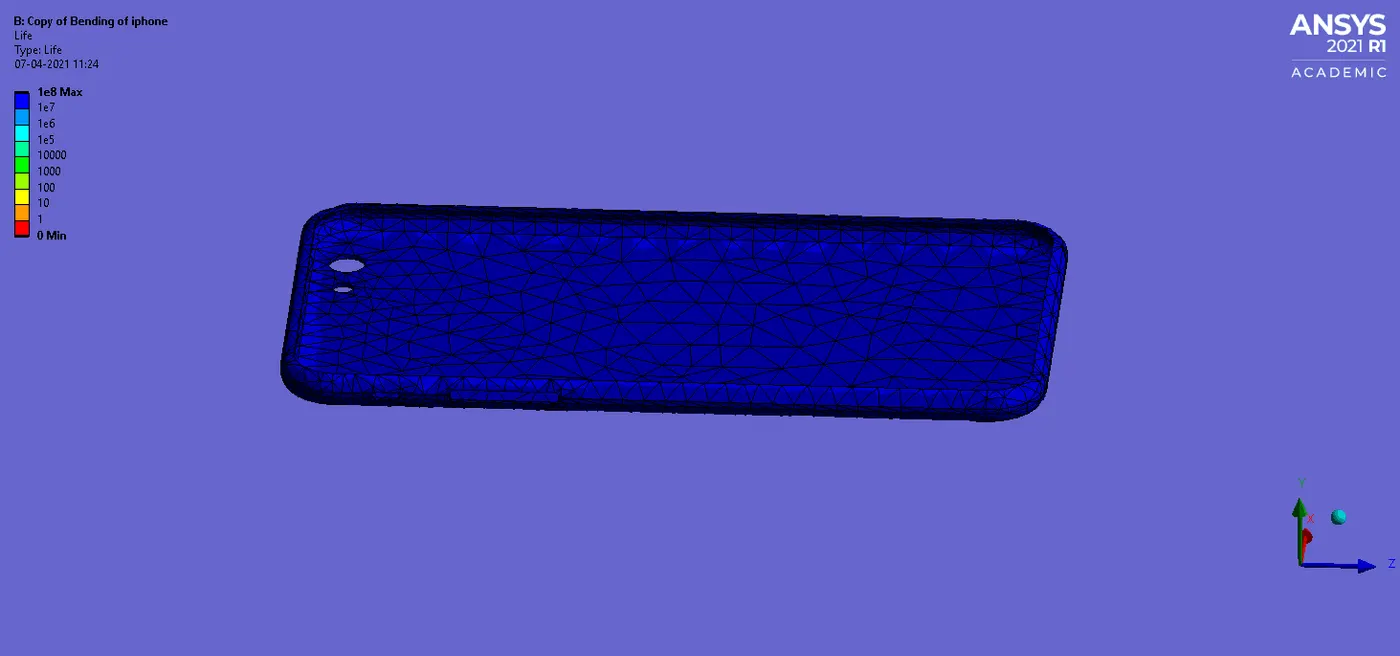
The observed results can be summed up in below table: -
| CASES | Position of Pushing Fingers | Maximum Equivalent stress (MPa) | Directional deformation, Y Axis (mm) |
| Case I | Pushing fingers near to the Edge | 356.51 | 8.3056 |
| Case II | Pushing Fingers at the Center | 818.71 | 8.0582 |
CONCLUSION -
- The Equivalent Stress will significantly increase for the second case since we moved the pushing fingers at the center.We can also observe from the results that their is not much change in deformation along Y-axis.
- The life Cycle for the iPhone is 1e8.