Week - 5 - 2D meshing for Plastic components
Aim:- For the given Plastic Bottle Cap model, check for the geometrical errors and take the mid surface by suitable mid surfacing techniques. PID and Thickness assignment has to be done for all the mid surfaces. Mesh the same with the given element Quality criteria.
Objective:- To take check the geometrical quality of the given model. Taking the midsurface of the given model after checking for the geometrical errors. Extracting midsurface of the given model with proper thickness. Generating a mesh with proper flow. Checking if there is any errors and correcting that errors to generate proper and mesh with minimum tria percentage.
Quality Criteria:-
|
S.No |
Quality Criteria |
Value |
|
1 |
Target/Average length |
1 |
|
2 |
Minimum Length |
0.5 |
|
3 |
Maximum Length |
3 |
|
4 |
Aspect |
3 |
|
5 |
Warpage |
15 |
|
6 |
Skewness |
45 |
|
7 |
Jacobian |
0.7 |
|
8 |
Minimum Quad Angle |
45 |
|
9 |
Maximum Quad Angle |
135 |
|
10 |
Minimum Tria Angle |
30 |
|
11 |
Maximum Tria Angle |
120 |
|
10 |
Tria Percentage |
15 |
Procedure:-
1. Open the giving model in Ansa software using open tab in file menu.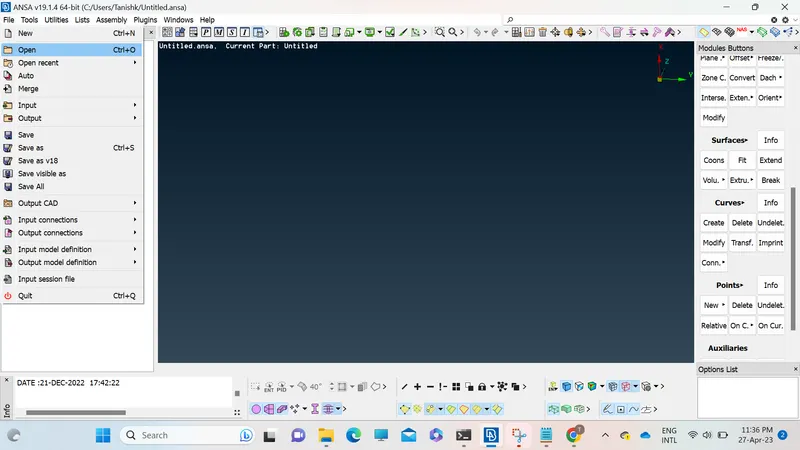
2. Do the check geometry on the given model using checks tab for checking if there is any geometrical issues in the model.
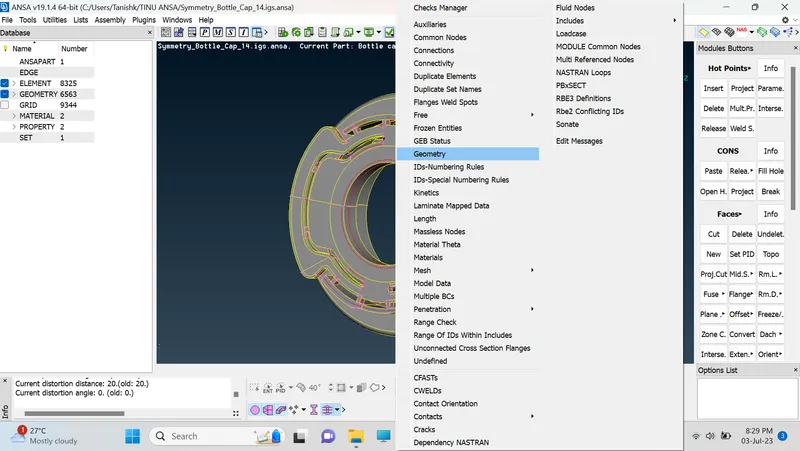
3. After checking the geometry fix the issues if any otherwise move on to the next step.
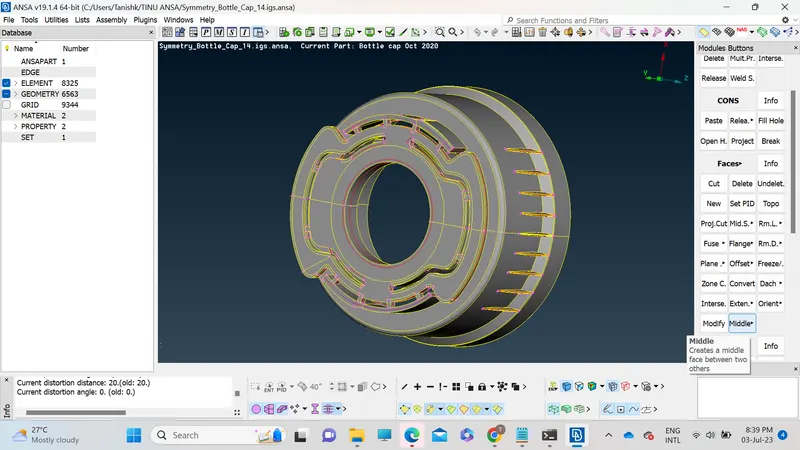
4. After checking the geometry of the model the next step is to extract the midsurface from the model. For extracting the midsurface there are several methods that we can use first is offset in the faces button second is Midsurface from faces buttons and Middle button in faces option.
In the offset method we have to manually give the thickness at which we need to extract the midsurface. In the given model the thickness of the model varies so we have to put half of the models actual thickness with proper direction.
The second method is automatic midsurface in that the saftware autodetects the thickness of the model and create midsuface acording to the model and its thickness. In automatic midsurfacing we do not have to provide thickness of the model.
The another method is Middle in that we have to select front and back side of the face and ansa will extract the middle of that face without giving the thickness or direction.
Meshing :
For meshing we select the midsurface of the model. After selecting the midsurface we have to give the perimeter length to the midsurface and check if each and every component is greater that that given length/ perimeter. If some of them is less than that perimeter/ length we have to correct it in a manner that model is not destructured or deformed. After checking every component and resolving every error we can move on with the Quality Criteria. Quality Criteria for meshing is as follows:
|
S.No |
Quality Criteria |
Value |
|
1 |
Target/Average length |
1 |
|
2 |
Minimum Length |
0.5 |
|
3 |
Maximum Length |
3 |
|
4 |
Aspect |
3 |
|
5 |
Warpage |
15 |
|
6 |
Skewness |
45 |
|
7 |
Jacobian |
0.7 |
|
8 |
Minimum Quad Angle |
45 |
|
9 |
Maximum Quad Angle |
135 |
|
10 |
Minimum Tria Angle |
30 |
|
11 |
Maximum Tria Angle |
120 |
|
10 |
Tria Percentage |
15 |
We have to put the above quality criteria and apply them to the given model.
Press fn+ f11 to open the Quality parameter tab
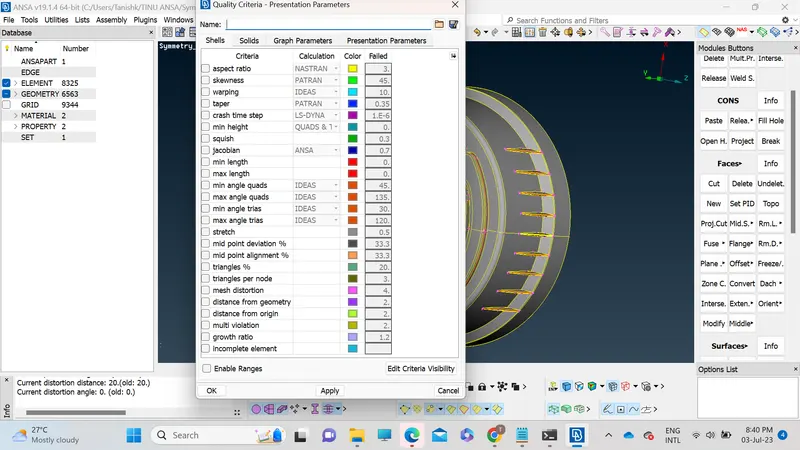
Now open the presentation parameters tab in quality criteria, turn on Elements% in graphics. Also set details on demand effect to all details and hit apply button.
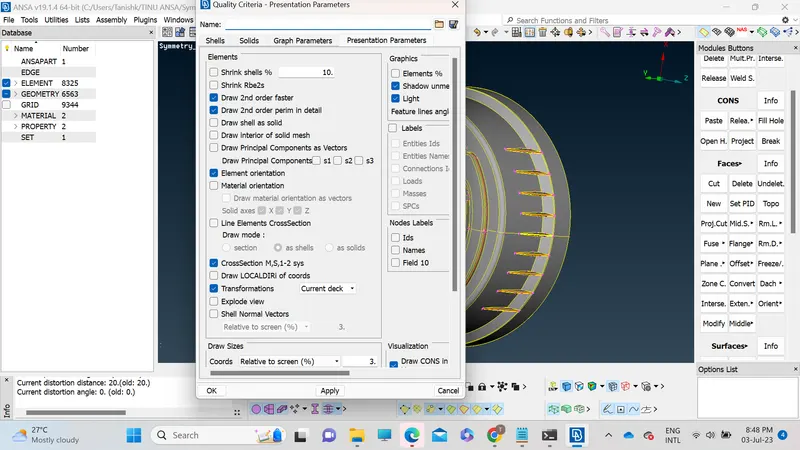
For the given model we do the midsurfacing part wise so we extract midsurface of one part do the meshing on that part and repeat the same procedure throughout the model.
For meshing we have to go to the mesh generater option in that select best. Firstly we have to mesh difficult parts cause they consume most of the time. Make sure to turn on the hidden mode cause that where we can see where the issues are at. Try to get as less trias as possible cause that affects the flow of the mesh. Do the mesh for whole model following the same method.
Conclusion:
We have successfully completed midsurfacing and meshing of the given model.