Week 4 - CHT Analysis on Exhaust port
Conjugate Heat Transfer (CHT) analysis is employed in engineering simulations to understand and predict the coupled heat transfer mechanisms between solids and fluids. It is particularly useful in scenarios where heat conduction in solids and heat convection in fluids are interlinked. Common applications include:
1. Electronics Cooling:
Analyzing the thermal behavior of electronic components such as processors, graphics cards, and circuit boards to prevent overheating.
2. Aerospace:
Evaluating heat transfer in components subjected to high-speed airflow, like aircraft wings or engine components.
3. Automotive Industry:
Studying the thermal performance of engine components, brakes, and other parts influenced by both conduction and convection.
Y+ Value :
The y+ value is critical in CHT simulations, especially when using turbulence models. It represents the distance of the first cell centroid from the wall normalized by the molecular viscous length scale. Maintaining an appropriate y+ value is crucial for accurate predictions using wall functions or near-wall treatments in turbulence modeling.
- A low y+ (close to 1) implies a fine mesh near the wall, suitable for resolving viscous sublayer details.
- A high y+ (greater than 30) is suitable for wall functions, where the turbulent boundary layer is approximated without resolving its details
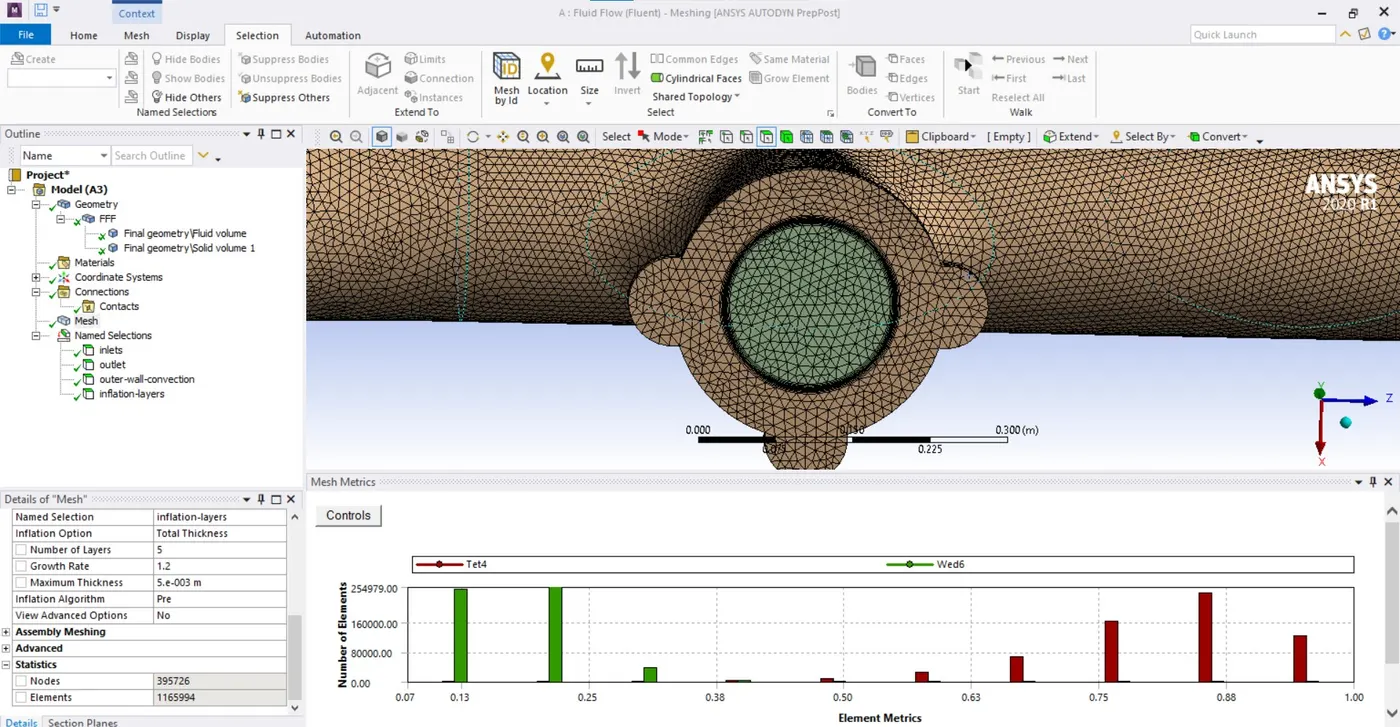
Meshing of the geometry :

Meshing details :
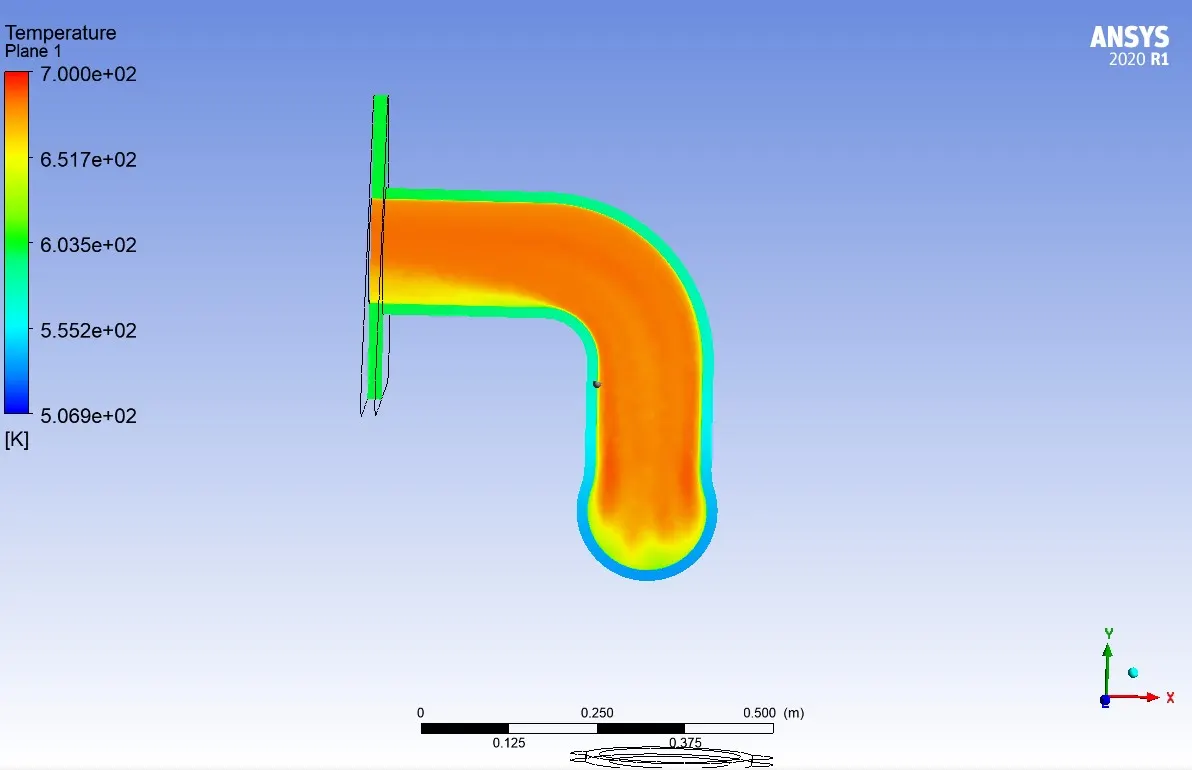
Temperature contour :
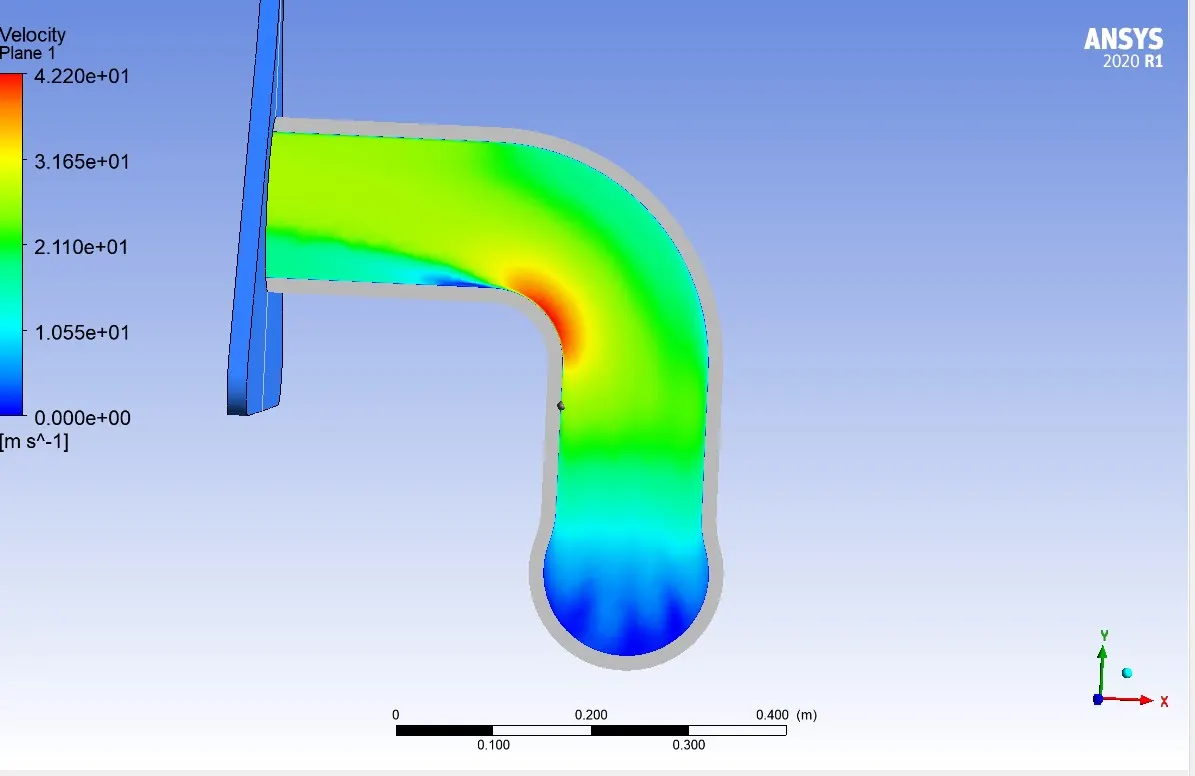
Velocity Contour :
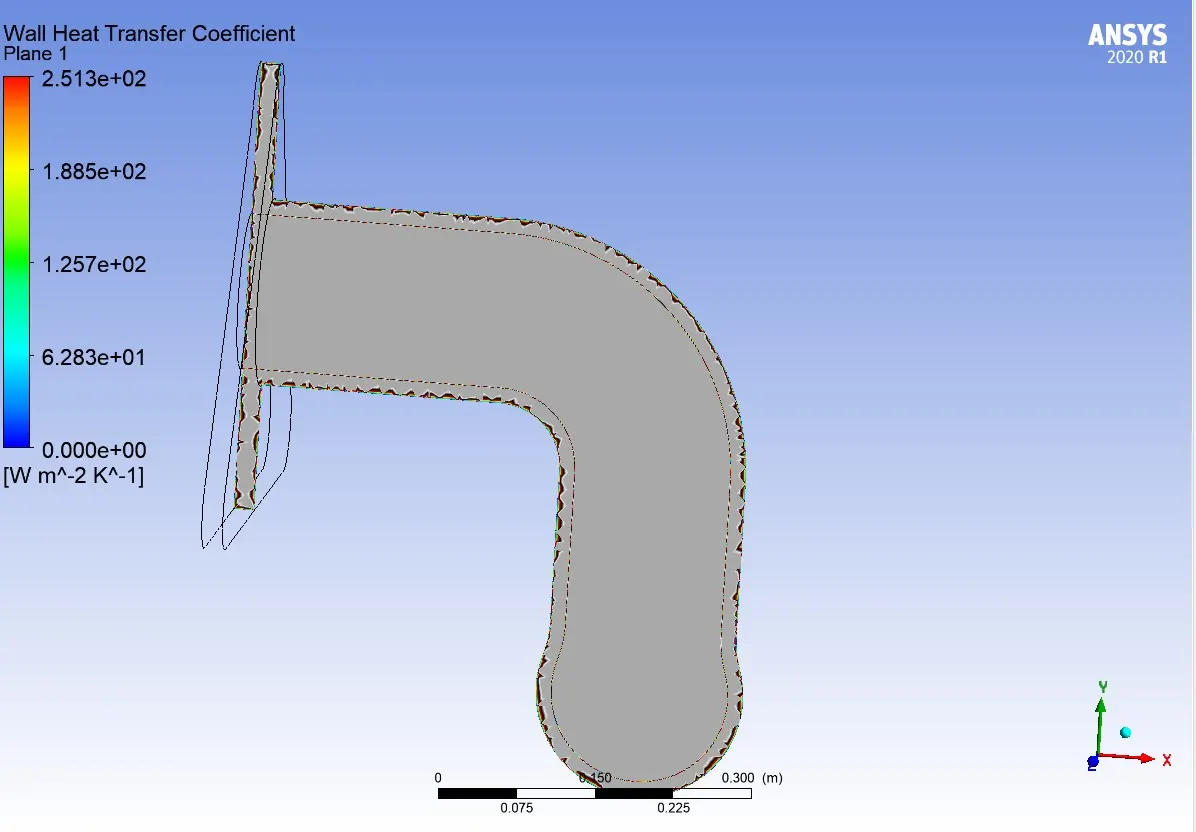
The wall heat transfer coefficient is 251.3 W/(m^2*k)
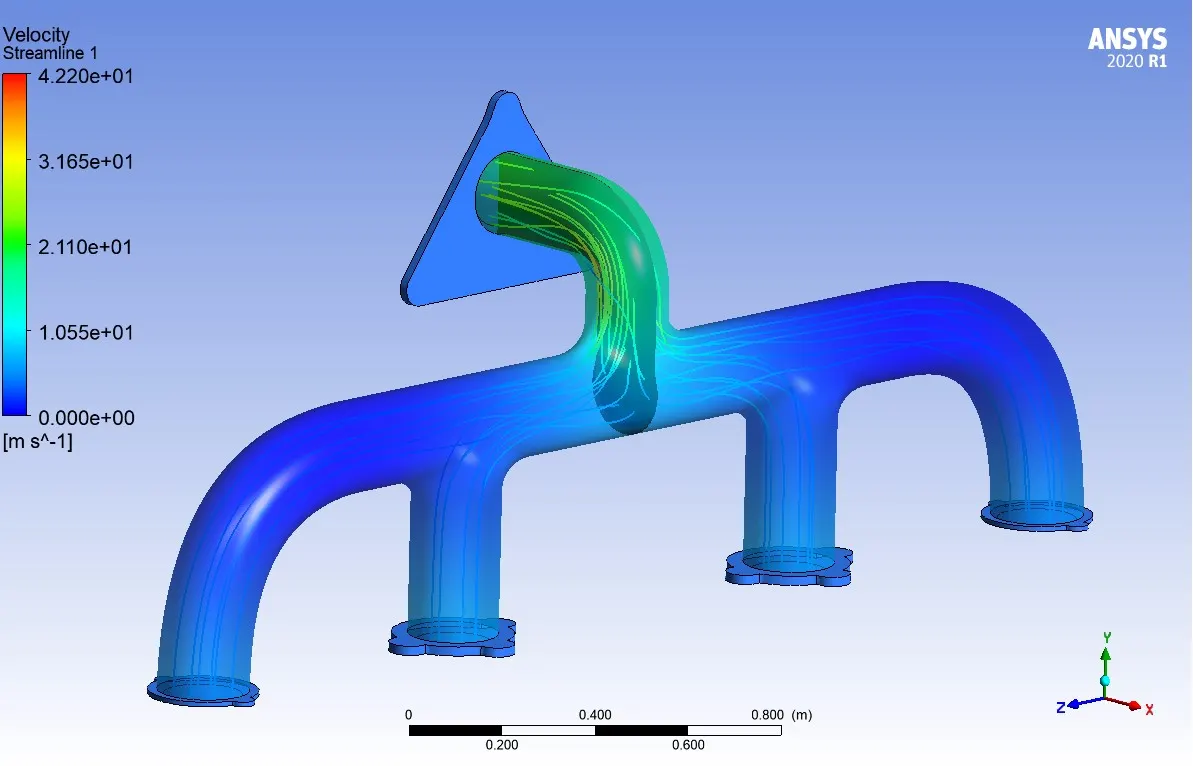
Velocity streamline:
Factors Affecting Accuracy:
1. Mesh Quality:
A fine mesh near the walls is crucial for accurate predictions.
Mesh independence studies help ensure that results are not significantly affected by changes in mesh size.
2. Boundary Conditions:
Accurate specification of inlet, outlet, and wall boundary conditions is essential.
3. Turbulence Model:
The choice of turbulence model impacts accuracy. Validate with experimental data and choose a model suitable for the specific flow conditions.
4. Material Properties:
Accurate definition of material properties, especially thermal conductivity, affects the accuracy of heat transfer predictions.
5. Solver Settings:
Convergence criteria and numerical setting play a role in the accuracy of results.