Week 4 - CHT Analysis on Exhaust port
Objective
- Describing the importance of conjugate heat tranfer analysis
- Simulating the exhaust port model and maintaining y+ value according to the turbulence model
- Calculating wall/surface heat transfer coeefecient on the internal solid surface and show thw velocity and temperature contours in appropriate areas
Conjugate Heat Transfer Analysis
Conjugate heat transfer analysis is the phenomena of analysing the heat transfer between in solid and fluid by exchanging the thermal energy.In solids conduction mode of heat reanfere occurs and in liquid phase convection mode of heat tranfer takes place.
Application conjugate heat transfer
CHT is used in heat exchangers , heaters, coolers, Engine equipments, HVAC ,elecronic cooling etc and in all cooling and heating systems.
Advantage of conjugate heat transfer analysis
CHT provides temperature variation distribution and hotspot region in solid-lfluid interface . It also provides the velocity and pressure distribution of fluid.
Simulation of Exhaust Port
Exhaust port is the opening in the IC engine by which burnt gas comes out released during combustion
1)Geometry
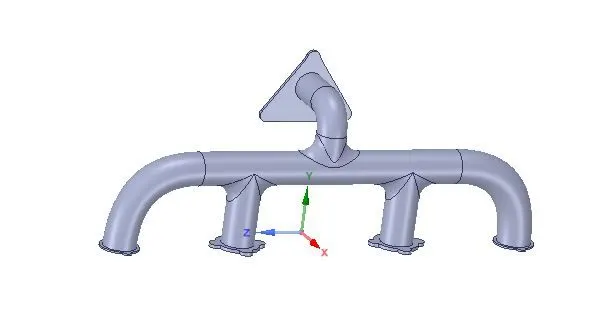
- In this case readily avilable geometry is imported to the space claim and extra edges are removed from the model
- Peroformed the volume extraction to seperate the solid and fluid surface
- Set the share topology option to share between thhe solid and fluid surface
2)Mesh
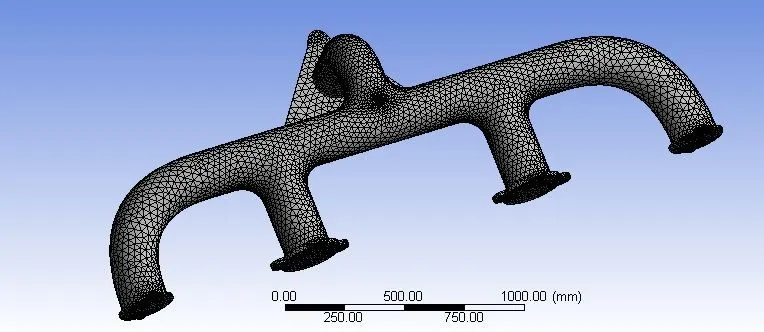
- Appropriate naming of different part of the model
- Mesh is generated over the model
- Checking the quality of mesh accordingly changing the mesh size.
3)Case setup
- Pressure based steady state solver is used
- viscous model -K-Epsilon with energy equation
- In material air for fluid and aluminum for solid is used
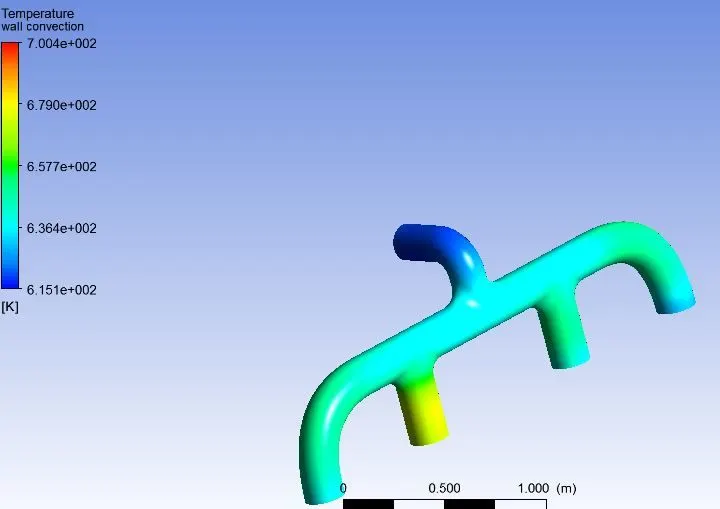
- Velocity inlet with 5m/s at 700k temperature and outer wall with convection thermal condetion with 20w/m^2k at 300k temperature
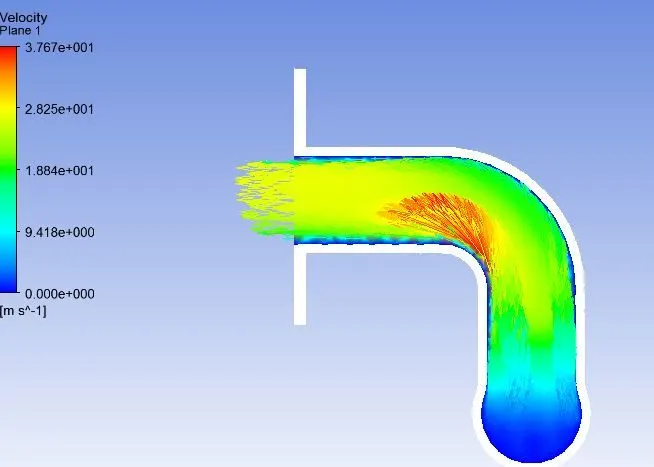
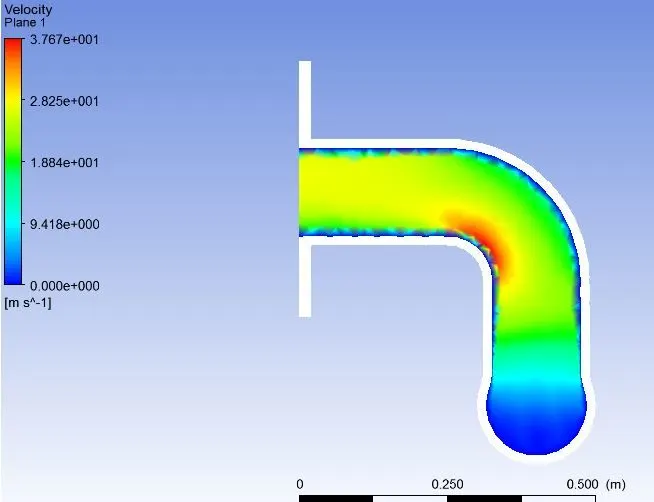
CASE-1-BASE LINE MESH
Msh size-150mm
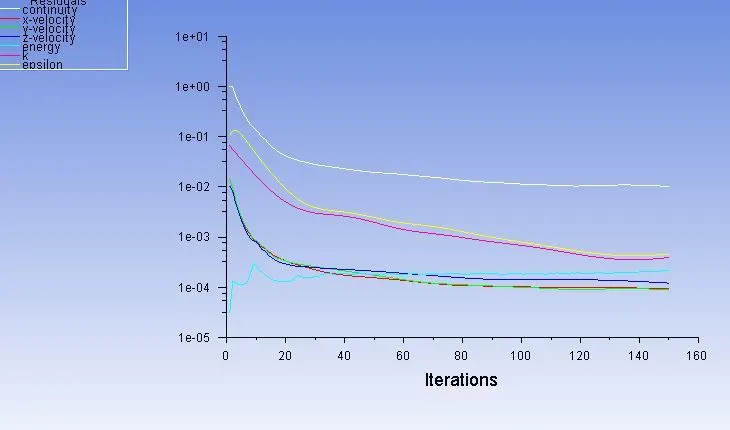
Recidual
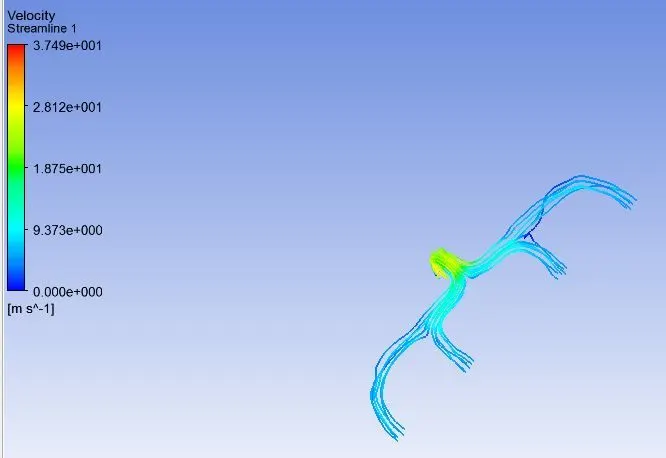
Velocity Stream line
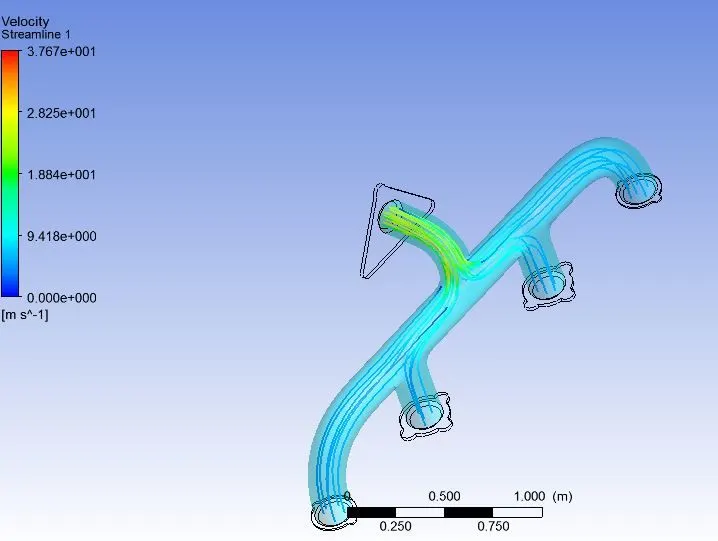
Velocity VECTOR
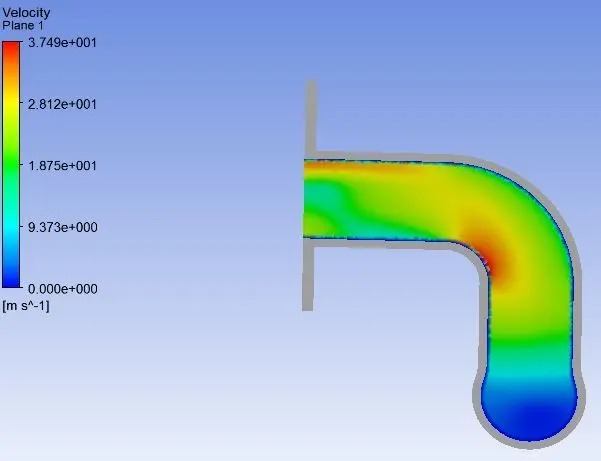
CASE-2 Refined Mesh
Temperature Plot
Velocity
Velocity Stream Line
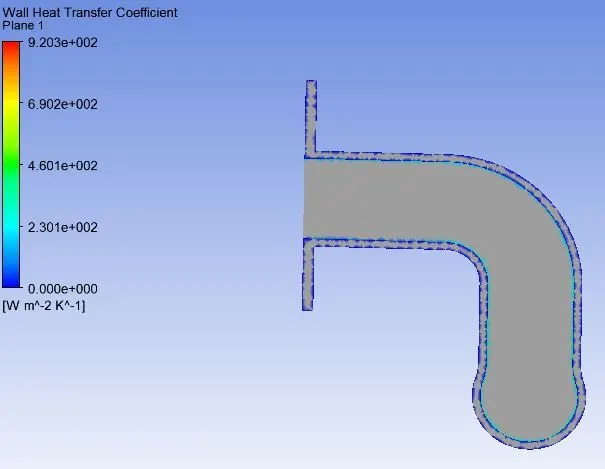
Heat Transfer Coeffecient
Conclusion
- The results are more accurate in second case compared to the first case because of mesh refinement
- Wall heat transfer coeffcient increases in second case
- Highest heat transfer takes place at outlet because of higher velocity at outlet
Factor affects the accurecy of the Heat transfer Prediction
- Nusselt Number: It is a dimension less parameter used to calculate the heat transfer between the moving fluid and a sold body. It is defined as the ratio of convection heat tranfer in fluid to the conduction heat transfer in solid.
- Mesh sizing
- Number of iteration
- Inflation Layers