Week 4 - CHT Analysis on Exhaust port
AIM
FLOW OF HOT EXHAUST FROM SOLID MANIFOLD
WE CALCULATE HEAT TRANFER FROM HOT EXHAUST TO SOLID BODY THROUGH CONVECTION
WHICH IS CONJUGATE HEAT TRANSFER, BY GIVING RESULT OF TEMPERATURE, VELOCITY AT DIFFERENT POINT.
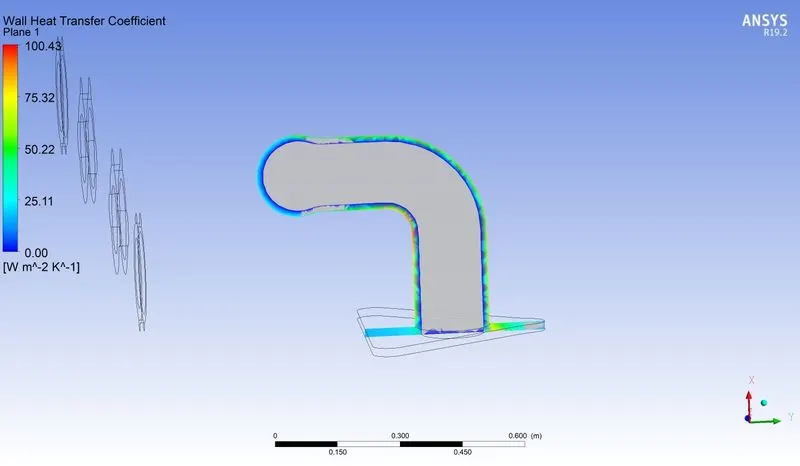
WE ALSO CALCULATE, HEAT TRANSFER COEFFICIENT AT BODY , BY CONSIDERING VELOCITY AT DIFFERENT SECTION.
IMPORTANCE OF PRACTICAL
- IT IS WIDELY USED IN CHEMICAL INDUSTIRES ,FLOW THROUGH ANALYSIS OF PIPES
- USED IN THERMAL POWER PLANT , NUCLEAR POWER PLANT , TRANFER OF HEAT FROM HOT WATER TO COLD WATER .
- USED IN CARES ENGINES, FOR EXHAUSED
- USED IN STEAM TURBINE POWER PLANT
- USED IN AEROSPACE INDIUSTRIES FOR CALCULATING OF ENGINE EXHAUST AT BURNER AND AFTER BURNER PART
- WIDELY USED IN CALCILATON OF ROCKET NOZZEL TEMPERATURE FOR MATERIAL BEARING
- CALCULATING THE TEMPERATURE OF AIR PLANE / MISSILE AND ROCKET BODY AT RUNNING AT DIFFERENT ALTITUDE AT DIFFERENT LOCATIONS
- USED IN TERBOCHARGER FOR CALCULATING TURBINE ROTATIONS ANALYSIS
- USED IN ANALSYING IN COMPUTER MANUFACTURING INDUSTRIES FOR CPU FAN AND FIN TEMPERATURE MEASUREMENT.
- WIDELY USED IN ANALYSIS OF CAR RADIATOR FINS AIR COOLING.
SOLVING METHOD AND PROCEDURE
- After importing geometry, from repair we removed the un wanted cuts in body , then we set the defined volume of air body , both solid and gas are separated , shared both the body
- In mashing given refine mash of 70mm , with inflation layer having growth rate of 5 mm, by providing proper names of body , checked elements and sizes of mesh
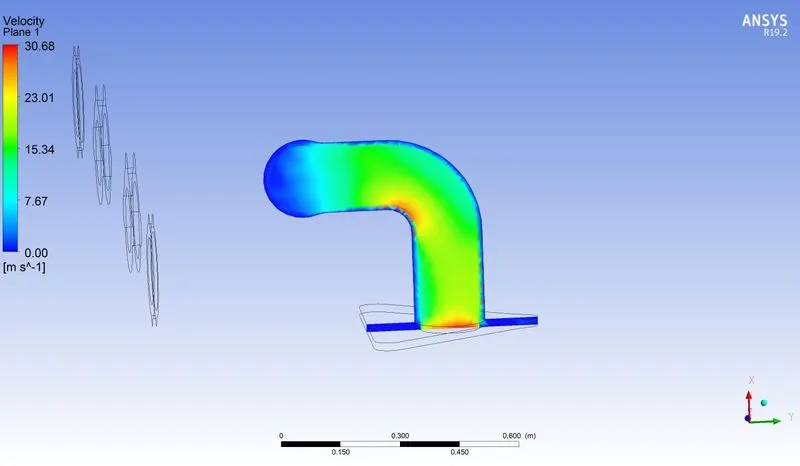
- In solver section first check the mesh, given pressure based solver due the less velocity, given energy k epsilon method, with proper boundary and sections ,given velocity 5 m/s and temp 700k , and measure temperature and velocity couture after initializing , check the residual cure convergence after providing 250 iterations , curve is in downward positions from initial sections
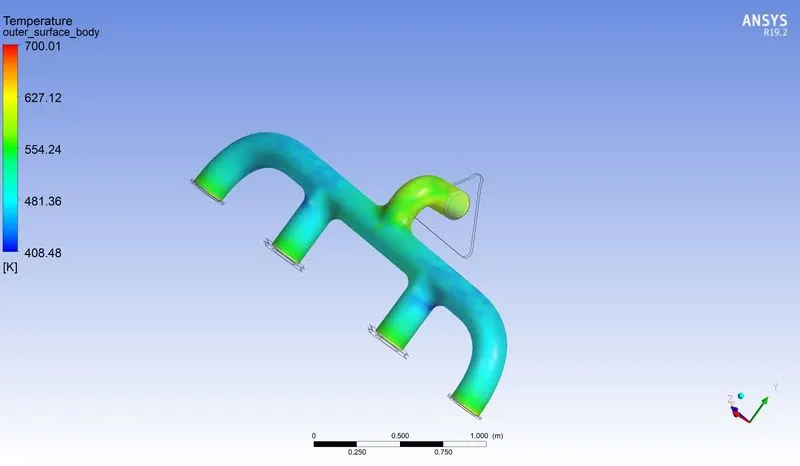
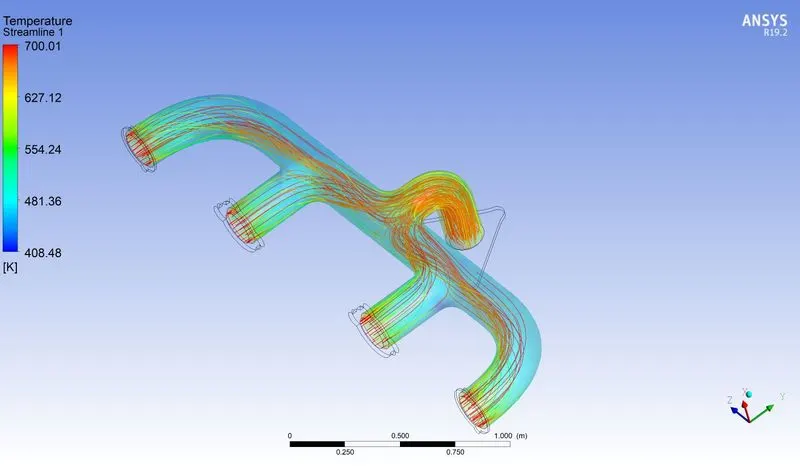
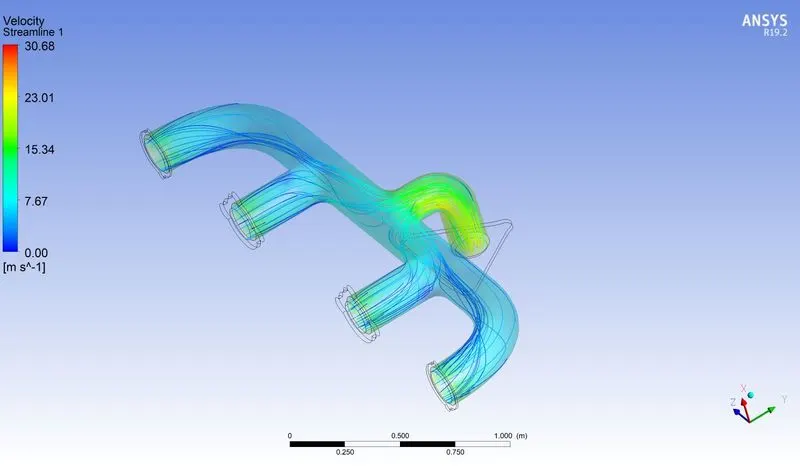
- After solver in result section we calculated temperature and velocity details on outer surface of body , photo attached of stream line and section plane , measured heat transfer coefficients at different section
- All the details are attached in photos form.
Heat transfer coefficient is obtain from experimental deta , or by doing particular simulation for HTC
ACCURACY IS OBTAIN BY REFINNING MESH OFTHE BODY AND PROVIDING ACCURATE INFLATION LAYER.
SOLUTION RESULTS
EXHAUST TEMPERATURE PLOT EXHAUST TEMPERATURE STREAM LINE
VELOCITY PLOT VELOCITY PLOT WITH STREAM LINE
WALL HEAT TRANSFER COEFFICIENT