Week-4 Challenge WOT Condition Part-2
Week-4 Challenge WOT Condition Part-2
- What is the difference between mapped and dynamic model of engine, motor and generator? How can you change model type?
- How does the model calculate miles per gallon? Which factors are considered to model fuel flow?
- Run the HEV Reference Application with WOT drive cycle. Change the grade and wind velocity in the environment block. Comment on the results.
- Keeping all other parameters same, compare the simulated results of hybrid and pure electric powertrains.
Answer: -
Q1. Difference between mapped and dynamic model of engine, motor & generator.
Mapped model: -
This model is used when we have set of data of the required parameters. This data is given in the form of look up tables configured with operational parts and then used for analysis and simulation. Simulation can be easier and faster if detailed parameters or specifications are available to form a lock-up table data set. For this more data has to be collected and some assumptions also has to be made.
Dynamic model: -
This model refers to one which breaks down a system or sub-system into its components. The output of these components combined is taken as the output of the system. This type of model can be used when we need to have the component level data as we will need to give input to each of the components and take their output and is used to analyse the impact of individual components on the overall performance.
We can see step by step how to change the model
-Fistly, we can click on the help Button in matlab then open the new page and click on the Simulink and search ‘powertrain blockset’
-Then we can select the ‘Getting Started with powertrain blockset’
-Next we can click on the ‘Full Electrical vehicle application’ & then open the Full Electrical vehicle model and open the new page we can see
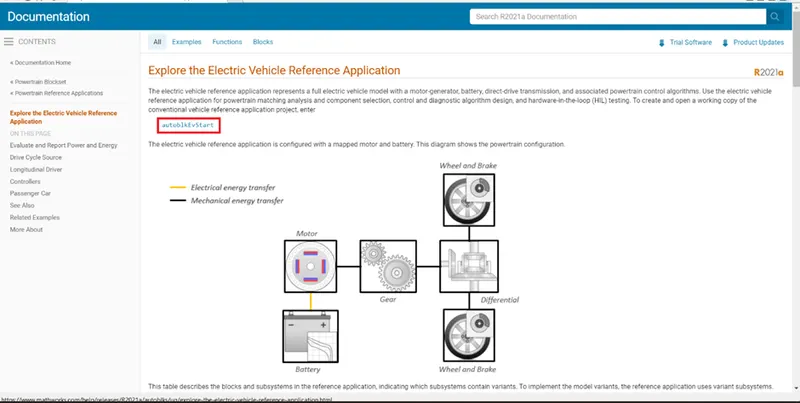
-Then we can click on the ‘autoblkEvStart’ and then open the full EV model.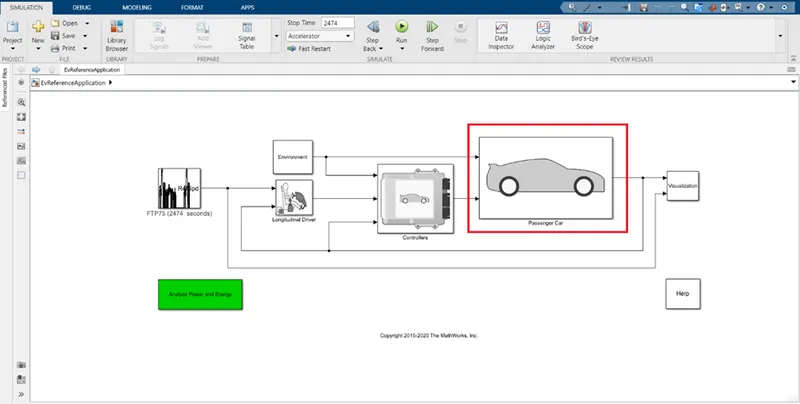
-open the passenger car – then open Electric plant – open the Motor and we can see the two block MotGenEV Mapped And MotGenEV Dynamic.
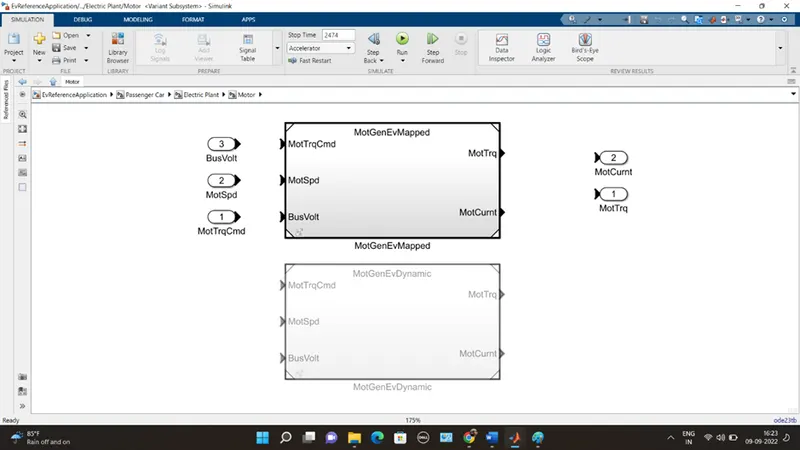
Then after we have to select the Variant Manager after choosing one tab new windows open then we selected want we want to choose so we have to right-click on that then Set as Lable Mode Active Choice 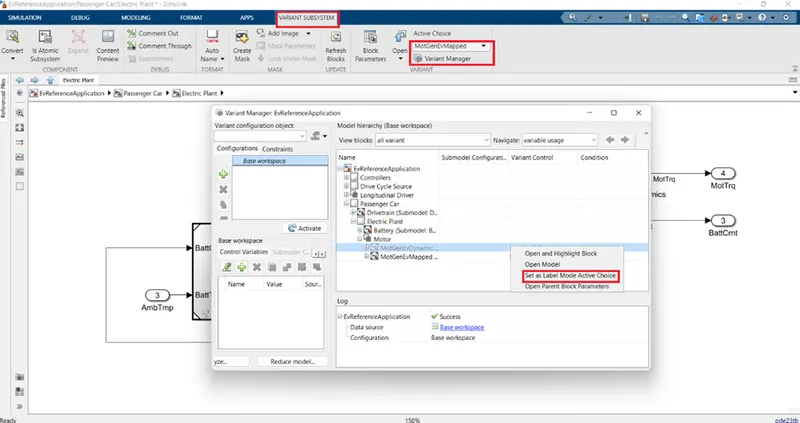
If we can see all process for changing the model.
How does the model calculate miles per gallon? Which factors are considered to model fuel flow?
Calculation of miles per gallon:
-Miles per Gallon is a fuel economy rating determined by how far a car can travel on a gallon of petrol or Diesel for an Engine powered car.
-In the case of an electric vehicle, it recognises the energy which is equivalent to that of an engine-powered car to propel the car through a distance.
-The amount of Fuel Energy required to move an engine-powered car through a distance is determined and then it is compared to the equivalent amount of electric energy required to move the car through the same distance and is expressed as the miles per gallon.
-The powertrain block set has a model that calculates the miles per gallon for all kinds of vehicles.
The transformation from a Mile per Gallon to Fuel Flow is mentioned below step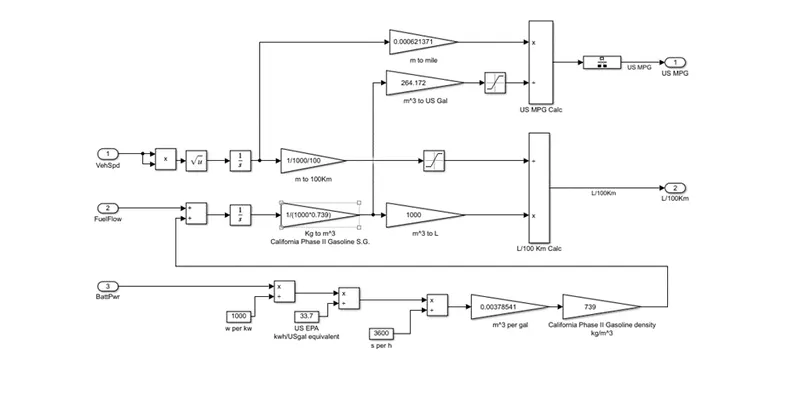
Conversion from Cubic Meter to Gallon (m^3 to a gallon),
As we know 264.172 US Gallons is 1000L
The reference model taken here for consideration is HEV and as it operates on both the Battery and the Fuel Injection Engine.
The final output/Fuel Efficiency is calculated by keeping into consideration of the Battery Output. Fuel Output and the Vehicle Speed/Kilometres are Driven. Therefore, the fuel efficiency is calculated and it is converted after the saturation thus the FE is calculated.
factors are considered to model fuel flow are three factors
1. Vehicle speed
2. Fuel Flow
3.Battery power
- Run the HEV Reference Application with WOT drive cycle. Change the grade and wind velocity in the environment block. Comment on the results
Hybrid Electric Vehicle:
We can see this vehicle for series parallel connection.
In this vehicle fuel and battery are used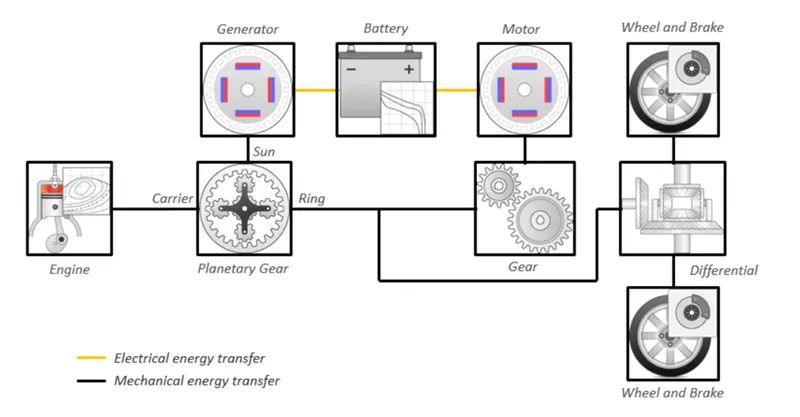
We can see the model of hybrid electric vehicle
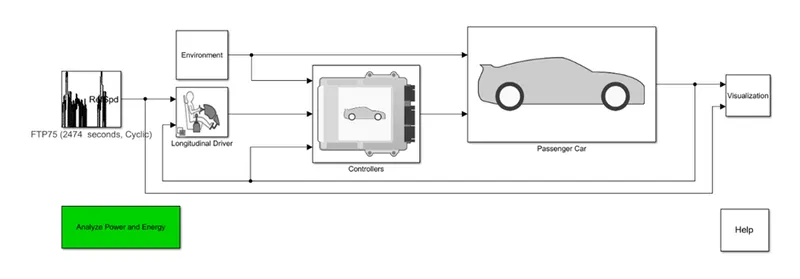
We can change the Grade Velocity & Wind Velocity
Simulation – 1
First, we can select the WOT in Drive cycle source and change another parameter
Total cycle time=100 seconds
The Top speed of this cycle = 70 mph
Time to start deceleration =40seconds
The Grade angle =0 degrees
The wind velocity=0 m/s
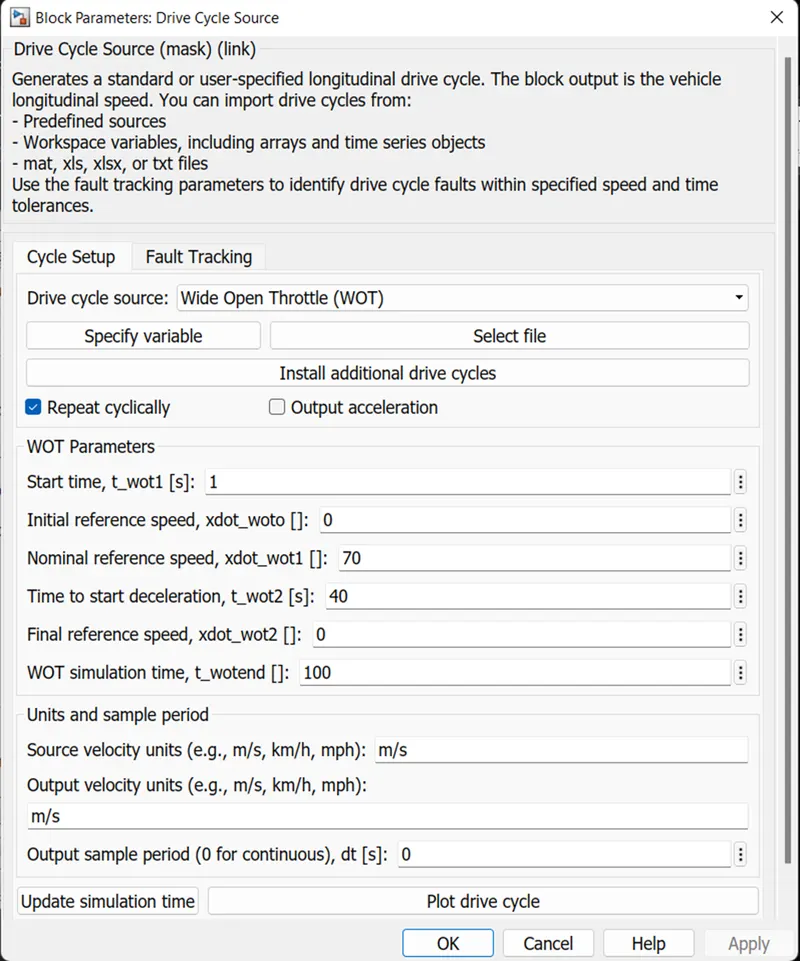
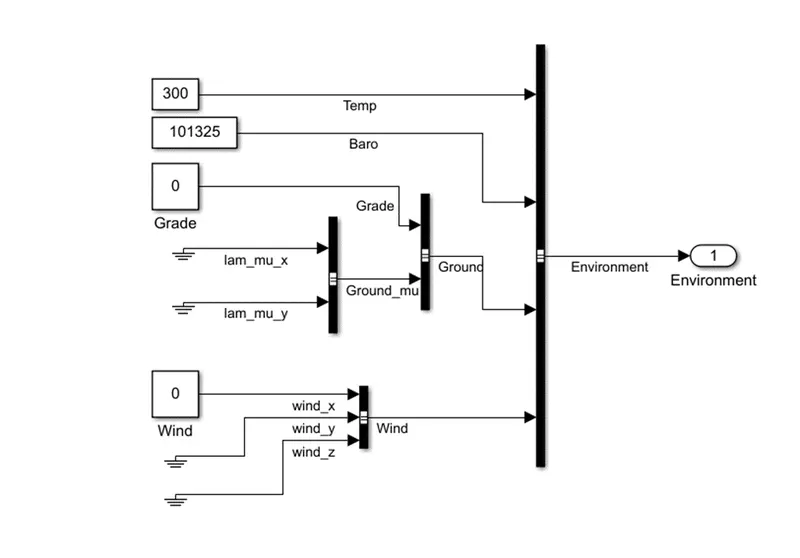
Then we can run the model and gate the result
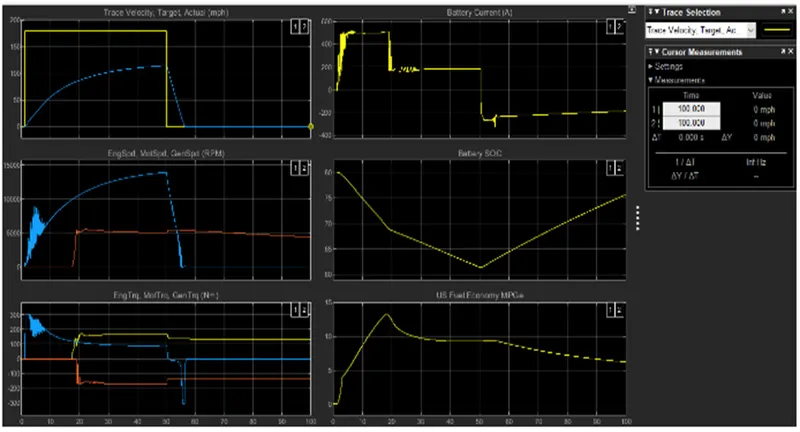
Plot 1:
The acceleration time to reach 70 mph =16.7 seconds
The deceleration time from 70 to a minimum of 6.2 seconds
Plot 2:
Peak Engine speed=4780 Rpm
Peak Motor speed =5497 Rpm
Peak Generator speed =13690 Rpm
Plot 3:
Peak Engine torque = 138.7 Nm
Peak Motor torque = 206.7 Nm
Peak Generator torque-42.2 Nm
Plot 4:
The peak current discharge from the battery =163.5A
The peak current charging to the battery=-150.86 A
Plot 5:
the driving The state of charge decreased from 60% to 39.6% of charge in a time period of 49.1 seconds, for the specified driving conditions.
Plot 6:
Shows the Fuel Economy as Mile per Gallons for the corresponding conditions The maximum miles that the car can run per gallon of fuel equivalent 46 Miechothe given vehicle at the specified diving conditions.
Part: - 2
For second condition we can change only Grade Velocity=6 & Wind Velocity=8.
Other all parameter are same and then run the model.
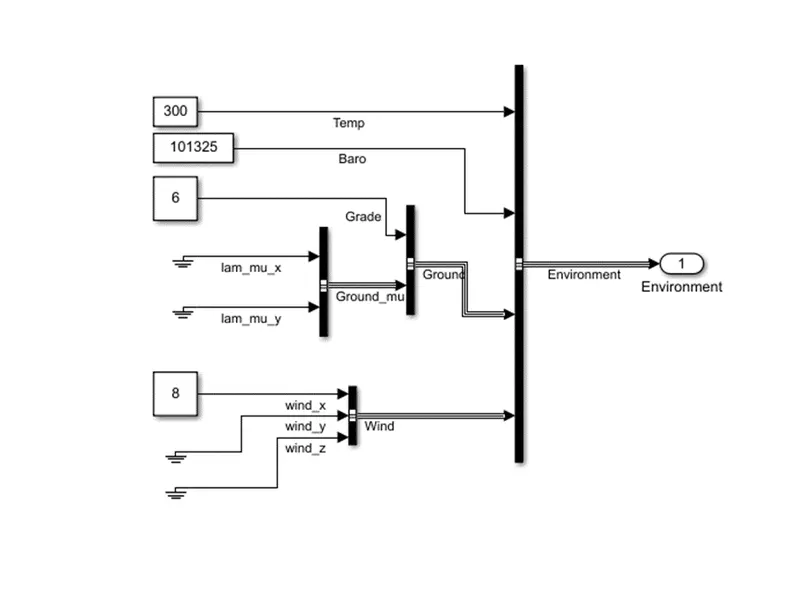
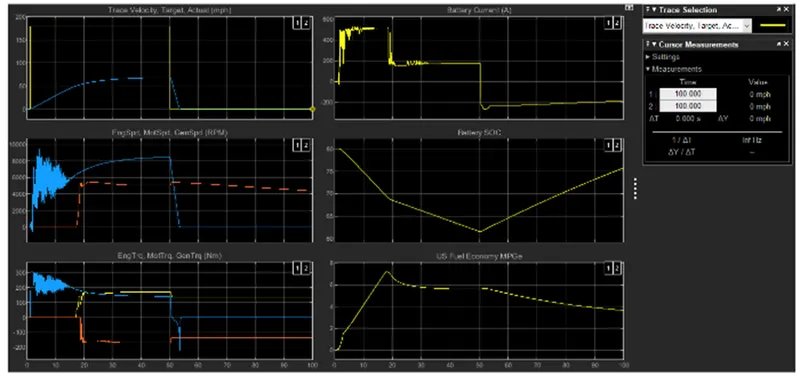
Plot 1:
The top speed of 70 mph cannot be achieved as we have some additional forces acting and so the car can only run up to 57.2 mph
The acceleration time s reach a top speed of 47.2 mph=405 seconds
The deceleration the from 70 to a minimum of 4.06 seconds
Plot 2:
Peak Motor speed=81005 Rpm
Peak Generator speed 12758.5 Rpm
Peak Engine speed= 4555 Rpm
Plot 3:
Peak Engine Torque=129.6 Nm
Peak Motor torque=202.4 Nm
Peak Generator torque-482 N
Plot 4:
The peak current discharge from the battery-165.6A
The peak current charging to the battery=-150.46 A
Plot 5:
The state of charge decreased from 40% to 20.98 % of charge in a time period of 40.3 seconds, for the specified driving conditions
Plot 6:
The maximum miles that the car can run per gallon of fuel equivalent to 15.33 Miles. the given vehicle at the specified driving conditions.
As per given requirement if the compare the pure Electric vehicle & hybrid vehicle
Pure Electric Vehicle: -
- A battery electric vehicle or pure Electric vehicle is an EV that exclusively uses chemical energy stored in rechargeable battery packs with no secondary source of propulsion (eg. hydrogen fuel cell, internal combustion engine, etc.) of energy
- BEVS use electric motors and motor controllers instead of a conventional Internal combustion engine for propulsion. They derive all power from battery packs.
- So they don't produce any emission of waste gas and they are eco friendly
- They also have their own limitations such as range etc.
- Example of a Pure EV.
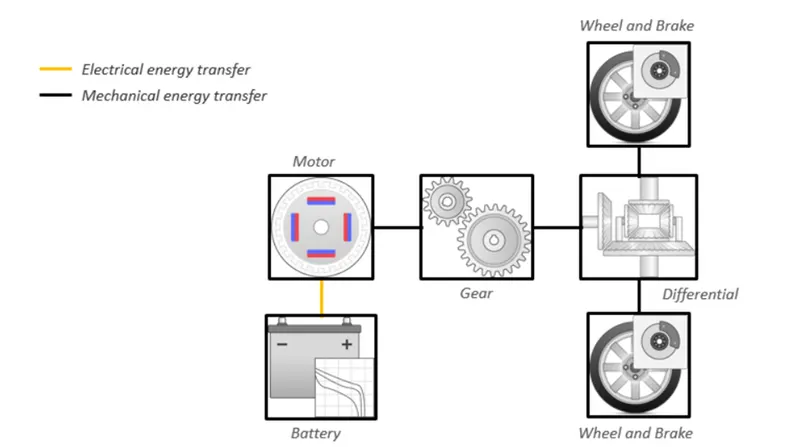
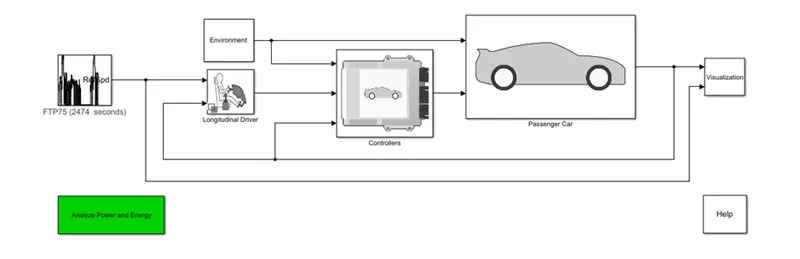
Pure Electric VS Hybrid Vehicle with Same Load Conditions
-The electric vehicle when contrasted and a mixture of electric vehicles with the equivalent ecological and Drive cycle conditions brings about less maximum velocity accomplishment. The electric vehicle delivers more upsides of Motor speed and engine force contrasted with the half breed vehicle's engine alone, however, crossover vehicle when it joins the force of both engine and its motor it is higher than the electric vehicle's force. This is capable to pull the Hybrid vehicle at a higher maximum velocity contrasted with the unadulterated electric
-As the unadulterated electric vehicle here utilizes a Lithium-particle battery contrasted with the Nickel-metal hydride battery the releasing limit and the pace of charging is higher in the unadulterated electric vehicle. As it can release at a quick rate the engine can deliver a high measure of force immediately contrasted with the mixture vehicle. Likewise, the condition of charge shows the battery productivity of the unadulterated electric to be higher than the mixture vehicle and this is additionally because of the battery type utilized in these vehicles/
-The effectiveness of the Electric vehicle is higher than the crossover vehicle which is apparent from the miles per gallon quantities of both of these vehicles.
-The electric vehicle produces zero outflows while the half breed one's produce squanders gas discharges. These are a portion of the perceptions from the examination of the above recreations utilizing Powertrain Blockset