Week-4 Challenge WOT Condition Part-2
1.what is difference between mapped and dynamic model of engine motor and generator ? how can you change model type?
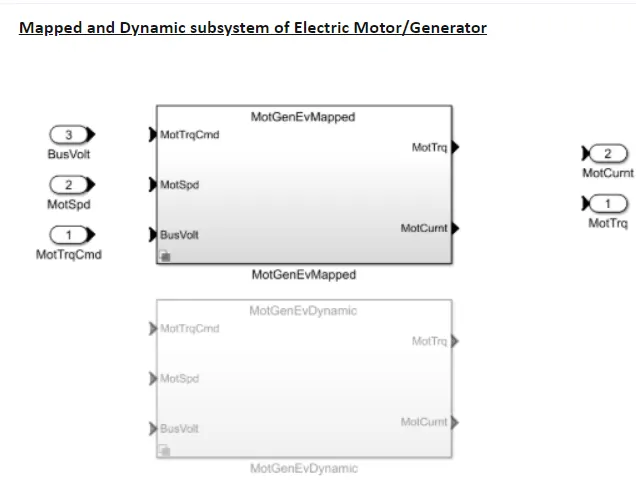
mapped model:
*the mapped model is one type where the data points are assigned lookup table
*the engine or motor torque required is sesnsed and the motor or engine block generater the required output as required simple without considering real time motor or engine parameter
*the output values as are stored for the corresponding given input values of the engine motor and generator
*the accuracy of this types is not that high but the simulation will be done in much less time as it does not run by real time parameter
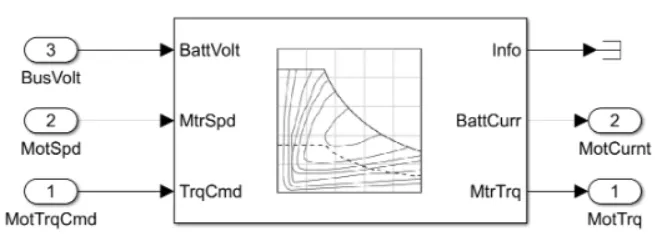
copyright 2015-2018 the mathawork.lnc
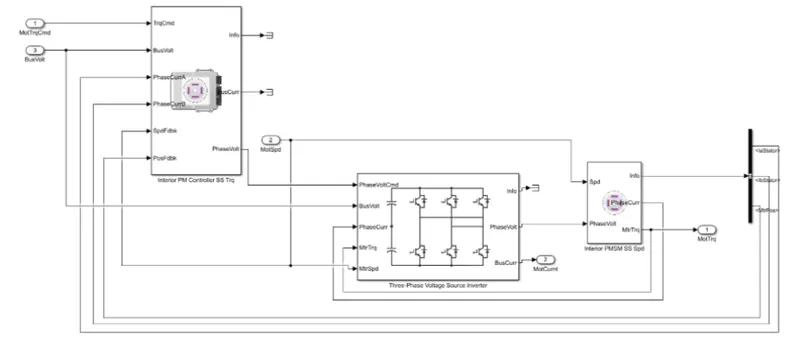
dyanamic model:
* the dyanamic model in other hand uses the combination of the output from various subysystem to generate the output
* it runs by real time simulation where the required input from the drive cycle is taken and for that individual real time simulation gets performed and summing all the result of the subsystem given the output the simulation
*as per the drive cycle requirments the intial bus vlotage current given along with the vehicle feedback so that it runs the actual simulation at that particuclar moment through the drive cycle
steps to select the model type:
1.in the power train blockset model we first need to select the vehicle type first it is full electric full engine or the types of hybrid vehicle
2.after that the simulink model appears by showing the work flow of the model
3.in the we need to go passenger block electrical plant *EV motor /generator block
4. after this just right click and go to variance label model active choice motor gen EV mapped or dyanamic.
2. How does the model calculate miles per gallon ? which factor are considered to model ful flow?
MILES PER GALLON:
* miles per gallon is a ful economy rating deteminrd by how far a car travel on a gallon of petrol or diesel for a engine powered car.
*in case of an electri vehicle it tells us the energy which is equivalent that of a engine powered carto propel the car through a distance eqivalent amount of electric enctric energy requied to move the car through the same distance and is expressed as the milles per gallon
*the power train blockset has a model that calculates the miles per gallon for all kinds of vehicle
2.how does the model calculate miles per gallon ? which factor are considered to model fuel flow?
miles per gallon:
*miles per gallon is a fuel economy rating determind by how far a can travel on a gallon of petrol or diesel for a engine powered car
*in case of an electric vehicle it tells us the energy which is equivalent that of a engine powered car carto propel the car through a distance eqivalent amount of electric energy required to move the car same distance and is expressed as the miles per gallon
*the power train blockset has a model that calculates the miles per gallon for all kinds vehicle.
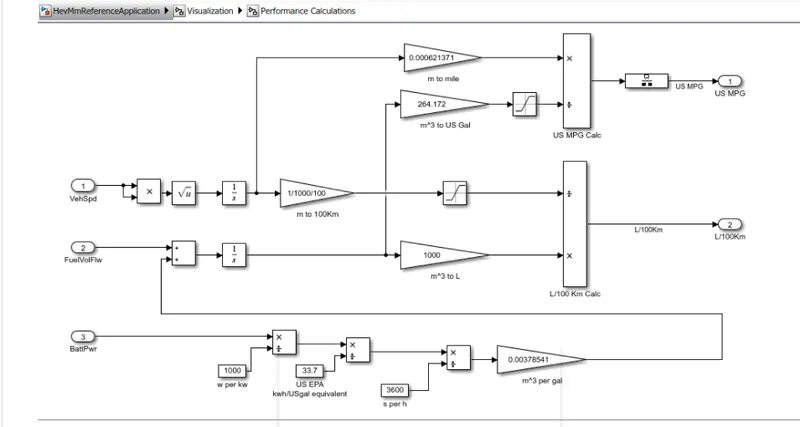
the above model takes the input of the vechicle speed fuel flow and battery power to calculate the fuel consumption and the equivalent battery consumption and calculates the miles per gallon.
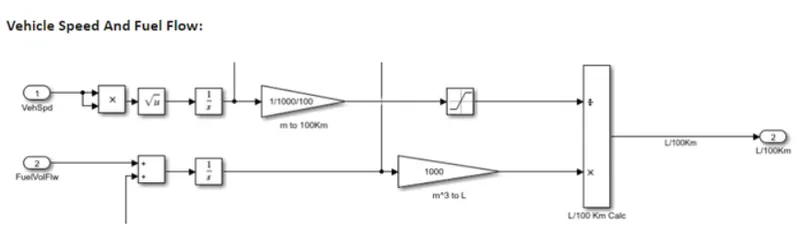
* the vehicle speed is a important factor while considering the fuel consumption at that particular time so to determine the fuel consumption throughout the cycle .
then the fuel flow expressed as the mass flow rate the amount of fuel at each moment in kg /sec .now integreting this will result the mass of fuel and by using this 1we convert it to the volume and by multiply by 1000to get it litres
by comparing the two result we can the amount of litre consumed to run for 100km:
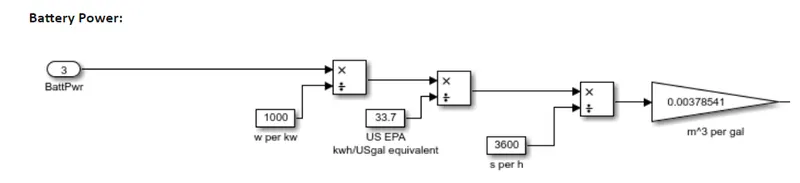
* the amount of energy from battery required to prople the vechicle equivalent to that engine is calculate here
* the battery power is given in wattws and it is converted to kw by dividing with 1000.
* then we convert the power into energy by multipling with the time into kwh
*then we convert the energy from kwh to equivalent energy in us gallon of automotive gasoline by dividing 33.7 since we get the energy in us gallons equal kwh we are trying to get the energy of equivalent LIS gallons per seconds and we do this by dividing with 3600 and we convert the hour to seconds
*then multiplying with 0.00378541 we convert the us gallons per sec to the volume of the fuel in ma3/s and then we multiply with 739 ma3/which given the result as mass flow rate kg;
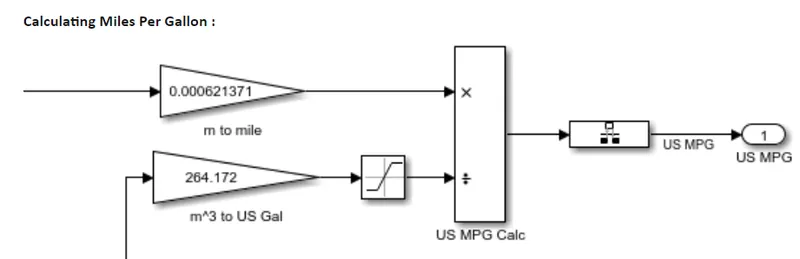
then the inputs from the vehicle speed the distance we found ( in meter ) is taken into the calculation and it is converted to the miles by multiply ing with 0.000621371.
* then the input from fuel flow ( battery energy ) + fuel energy +fuel energy taken in ma3 and is converted into us gallons by multiplying with 264.172
* then the two inputs miles converted and equivalent us gallons is further and the result is got in miles /gallons
3.Run the HEV REferenc appliction with WOT drive cycle . change the grade and wind velocity in the environment block . comment on the result.
Hybrid electric vehicle :
* A hybrid electrical vehicle (HVE)is a type of hybrid type that combines a conventional internal combustion engine (iICE) system with an electricalpropulsion system .
* the presence of the electric power train is intended to achieve either better fuel economy than a conventional vehicle or better performance /
*example of HEV is toyota prius:
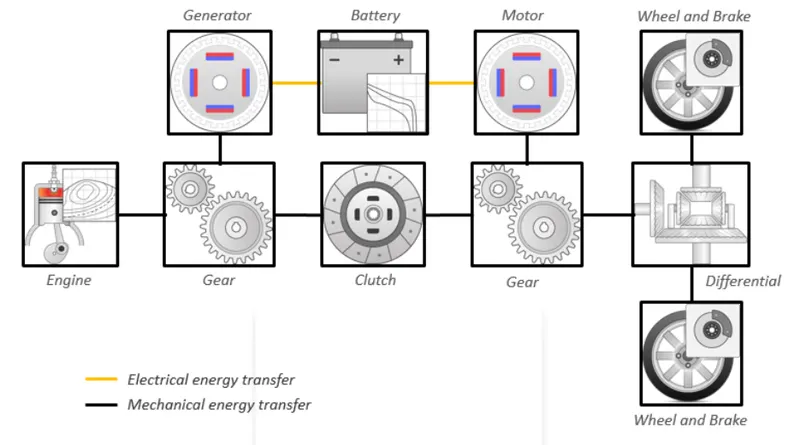
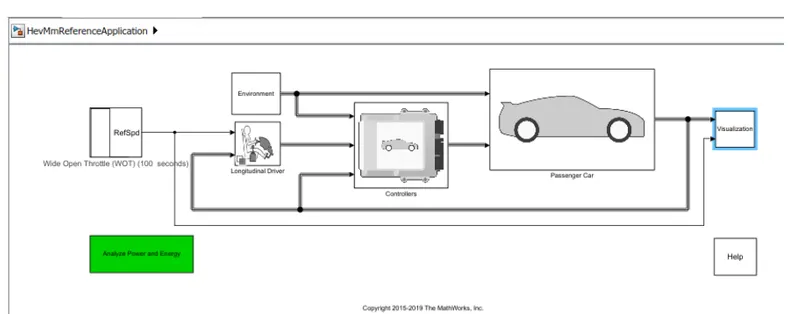
* in the power train blockset we have selected the hybride electric vehicle is the simulink model:
*here we can select the input parameter as we wish and we can run the simulation to check the results.
Case1
simulation condition :
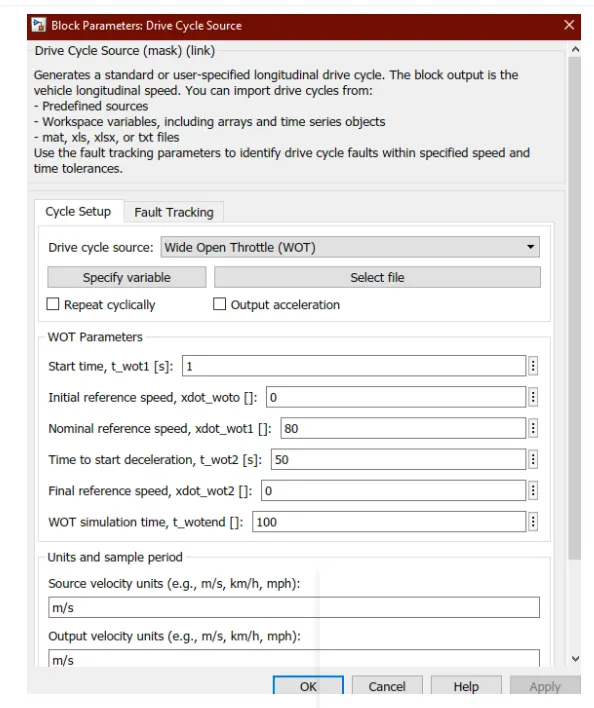
the simulation is done for hybrid electric vehicle with wide open throttel drive cycle. the total cycle time =100 seconds
the top speed of this cycle =80mph
time to start deceleration =50seconds
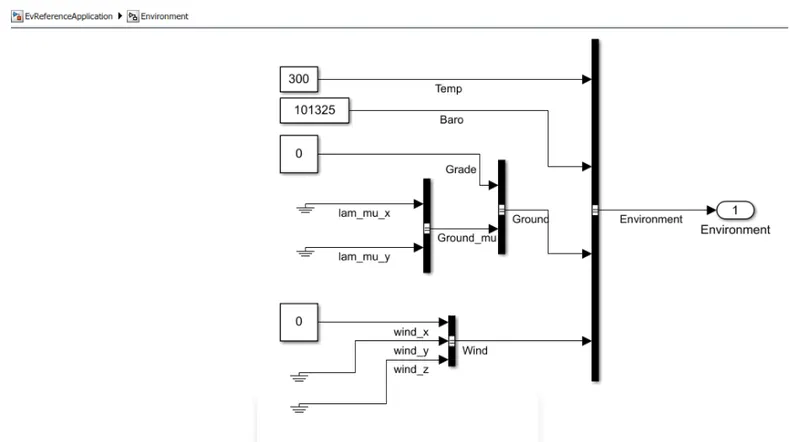
the grade angle =0degrees
the wind velocity =0m/s
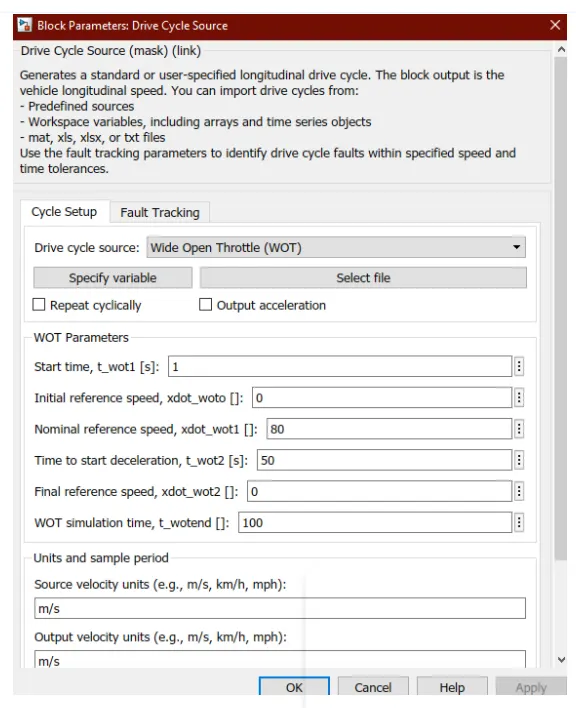
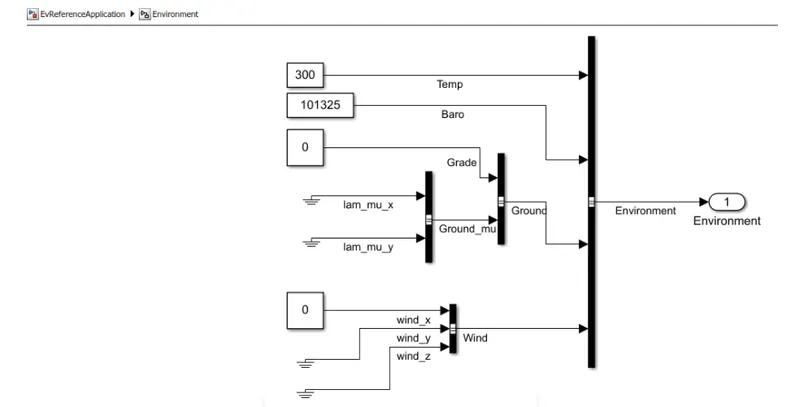
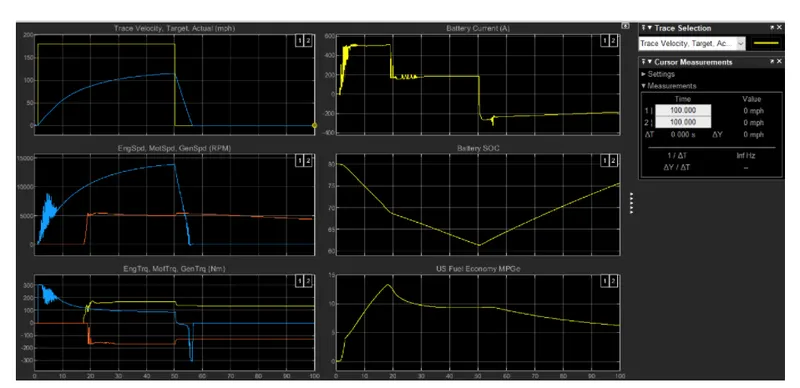
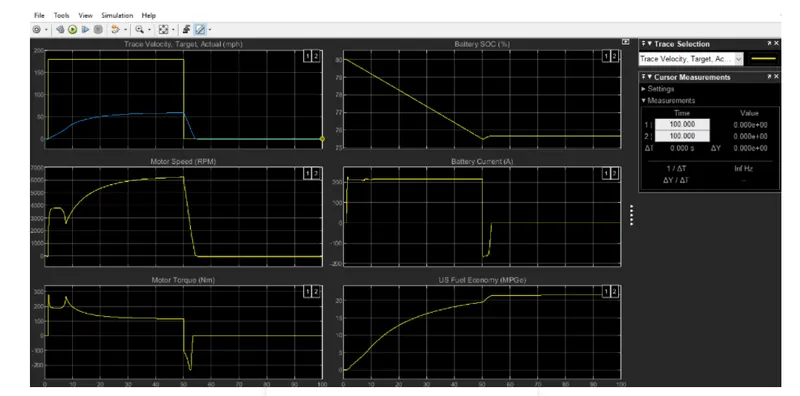
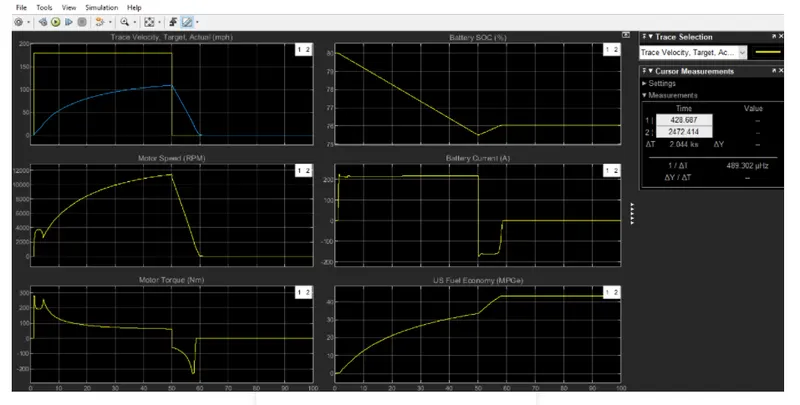
*the above fig show the result for the simulation and there totally six plots in them
* each plot show a particular result and the plots are made in such way that ,there is a cursor measuredment and if we change the cursor on one plot the cursor moves on the otherplots too which paves way to study the result a battery way.
* the cursor enables us to study the behaviour of other result parameter corresponding to the acceleration of the vehicle.
case-2:
simulation condition:
the simulation condition is done for hybrid electrical vehicle with wide open throttle drive cycle:
the total cycle time =100 sec
the top speed of this cycle =80mph
time to start deceleration =50sec
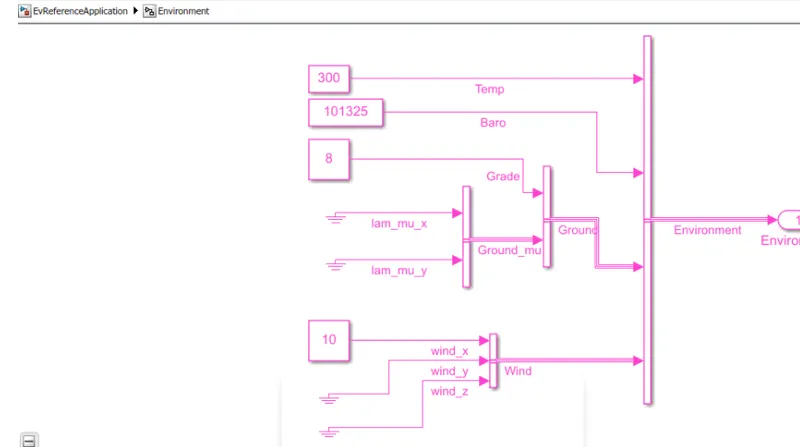
the grad angle=8degree
the wind velocity =10m/s
observation:
the simulation result for both the cases is found and we can see that the simulation 1 without the inclusion of hill climbing conditions and the wind deag velocity is much more efficient when of fuel comparaed the simulation which includes the hill climbing condition and the wind drag velocity:
4.kpeeing all other parameter same ,compare the simulated resulated result of hybrid and pure electric powertrains.
pure electric vehicle:
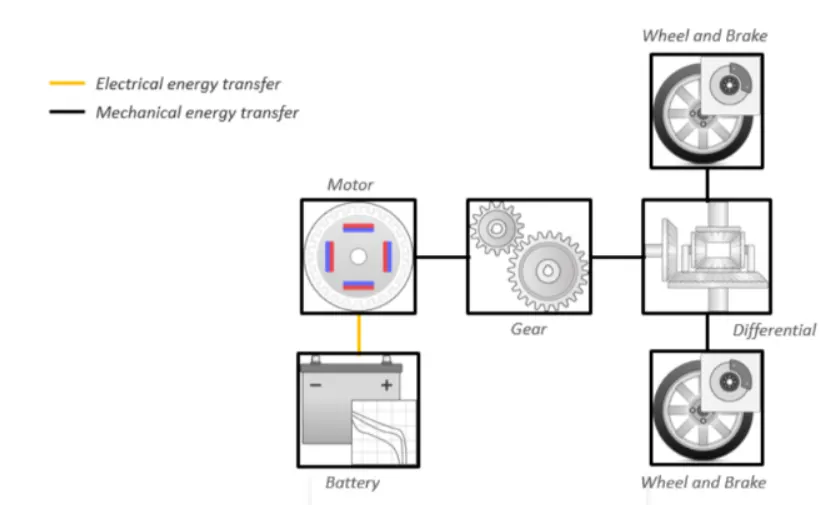
*A battery electric vehicle or pure electric vehicle is a EV that exclusively uses chemical energy stored in rechargable battery packs with no secondary source of propulsion
*BEVS use electric motors and controllers instead of an convention internal combustion engines for propulsion . they derive all power from battery packs
*so they dont produce any emission of wast gas and they are eco friendly
*they also have their own limitations such as range etc
*example of pure EV is nissan leaf
case-1
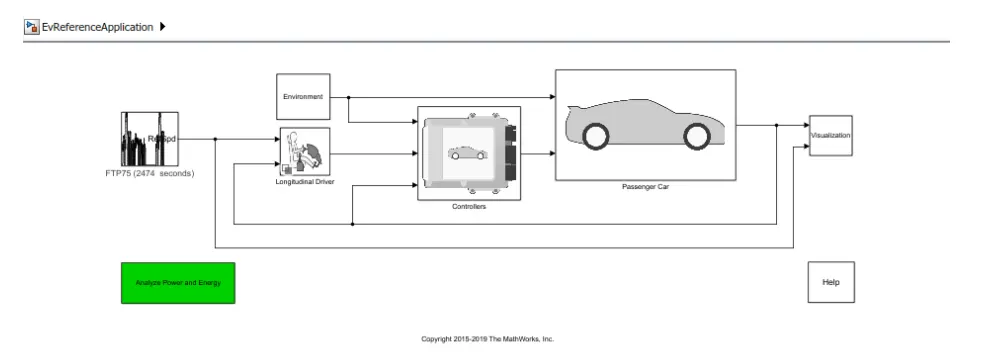
simulaion is done for pure electric hybrid electric vehicle with wide open throttle (WOT)drive cycle
the total cycle time =100 sec
the top speed of this cycle =80 mph
the to start deceleration =50sec
the grade angle =0 degree
the wind angle =0m/s
observation (pure electric vs hybrid vehicle with same condition :
.the electric vehicle when comared with hybrid electric vehicle the same environmental and drive cycle condition result in less top speed achievement the electrical vechicle produce more value of motor speed and motor torque comparaed the hybrid vechicle motor alone but hybrid vehicle when it combines the torque of both motor and its engine it is higher than electric torque this is responsible hybrid vehicle car at higher top speed compared to the pure electric