Week-4 Challenge WOT Condition Part-2
ANSWER 1:
Mapped model v/s Dynamic model:
In mapped model, the data is given as input in the form of lookup tables whereas the Dynamic model calculates input from the various other components or sub-systems of the model.
In order to change the model type:
1. in the EV model, open the following subsystem: EvReferenceApplication > Passenger Car > Electric Plant > Motor
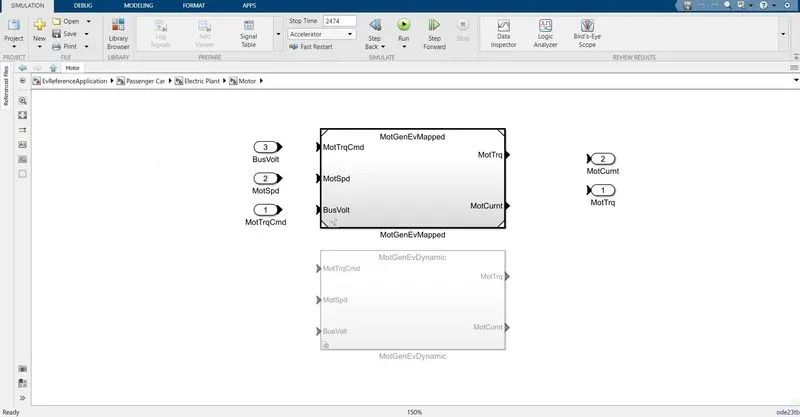
From the above image we can see that the Mapped model is active.
2. To switch to the Dynamic model, select the dynamc model by single left clicking on it and then from the variant subsystem open the variant manager.
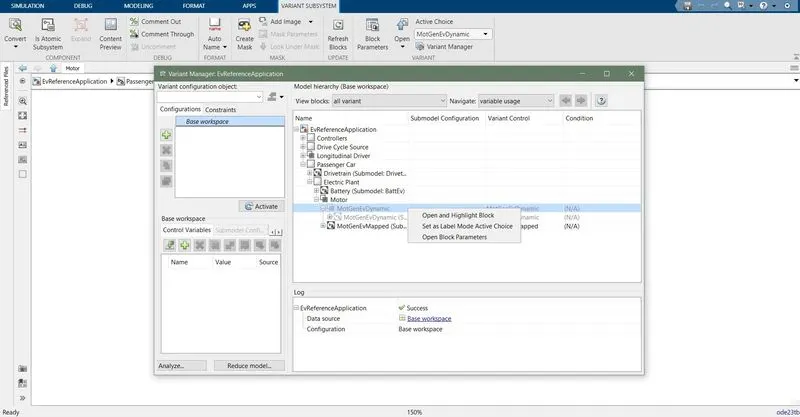
3. In the variant manager, right click on the Dynamic model and select the "Set as Label Mode Active Choice" option.
The model has been changed from Mapped to Dynamic.
ANSWER 2:
In order to calculate the miles per gallon for the model, following steps are performed:
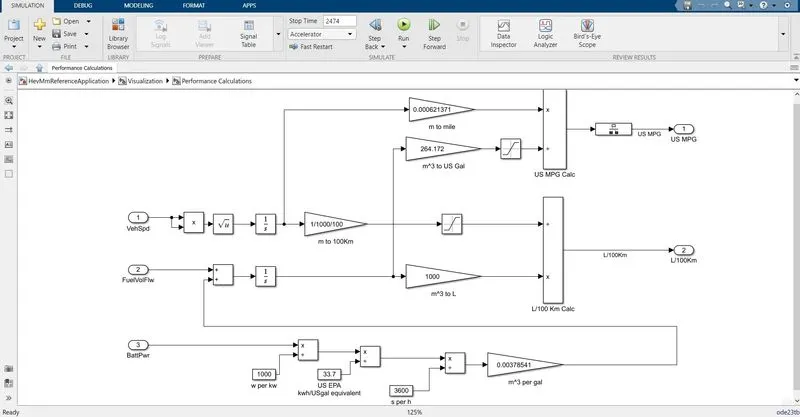
The various factors considered while modelling the fuel flow are:
1. Vehicle speed
The vehicle speed is given as input in meter per second, from which the distance travelled is calculated in meters. This distance is then converted into miles by dividing it by 0.000621371.
2. Battery capacity
The battery capacity is given as input in watts, which is converted into kilowatts and then divided by the US EPA value of 33.7. This value is then divided by 3600 to convert time. Finally, it is converted into cubic meter per gallon by dividing by 0.00378541 to give the equivalent fuel consumption.
3. Fuel consumption
The calculated equivalent fuel consumption of the battery is added into the fuel consumption of the engine. The total consumption is integrated to give volume in cubic meter, which is then converted into US gallons by multiplying it with 264.172.
ANSWER 3:
Firstly, we will run the simulation for WOT(Wide Open Throttle) without varying any parameters. The result is as shown:
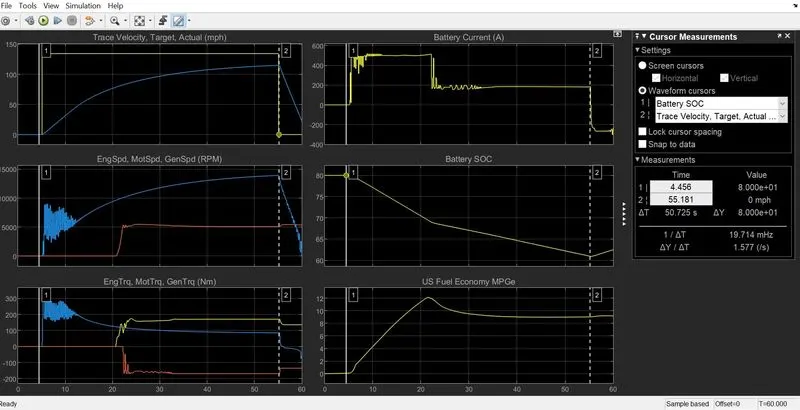
Now, the parameters for the grade and wind are altered.
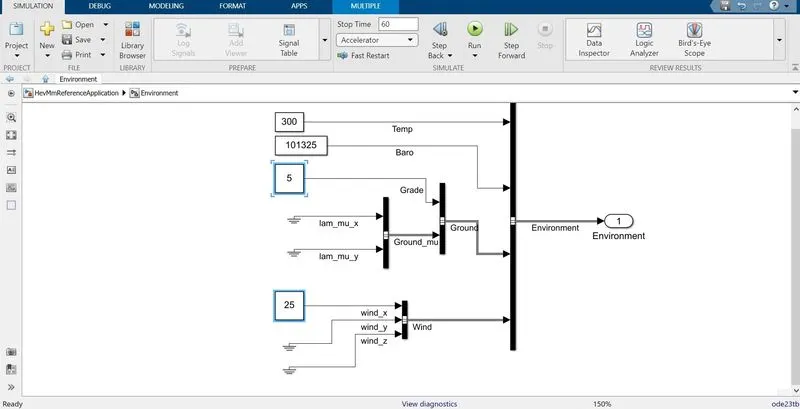
The result on running the simulation with the altered parameters are:
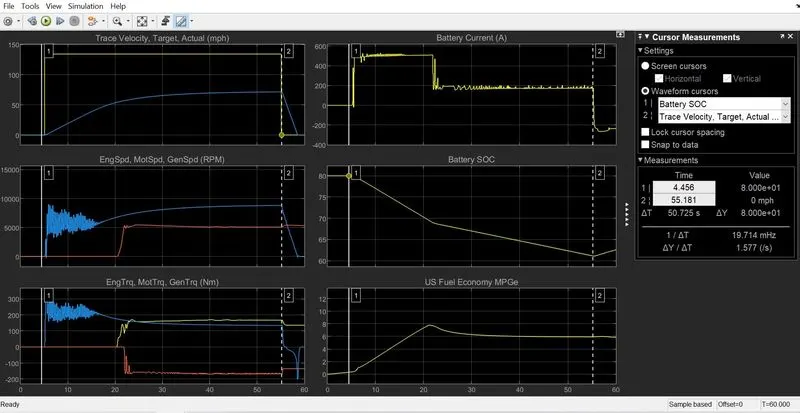
On comparing the two situations using the performance outputs for the two conditions, following observations are made:
1. Even though the vehicle did not achieve the theoretical top speed in any of the two cases but still the top speed obtained by the vehicle without any external disturbances is higher than the top speed obtained by the vehicle accelerating on a graded surface and under the influence of wind.
2. The engine speed of the vehicle on graded surface and under the influence of wind is significantly lower than the vehicle without these two factors.
3. The engine torque and the motor torque follow the same pattern in both the cases with a slightly lower values in the vehicle undergoing graded acceleration under wind influence.
4. The battery current in case of the vehicle undergoing graded acceleration under wind influence experience significant amount of fluctuation throughout the test whereas in the case of other vehicle, it becomes constant after a certain time.
5. The battery SOC follows same depletion trend in both the cases.
6. The fuel economy of the vehicle undergoing graded acceleration under wind influence is significantly lower the vehicle without these influences.
ANSWER 4:
For comparing the EV and HEV while keeping the parameters same, the below model of EV has been used:
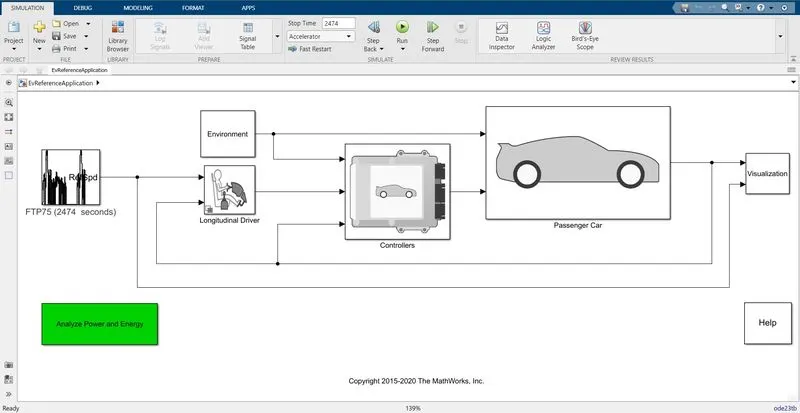
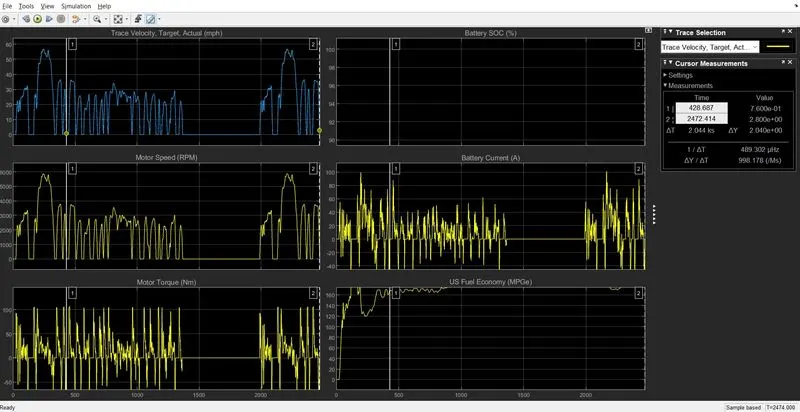
On running the simulation following result is obtained:
The HEV model used for the same is as shown below:
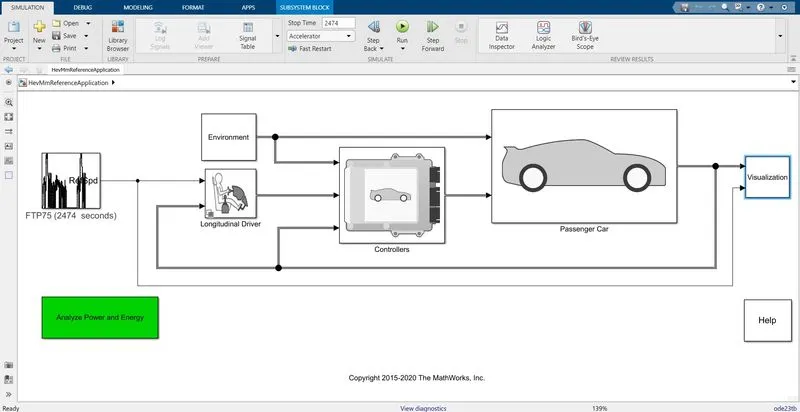
On running the simulation following result is obtained:
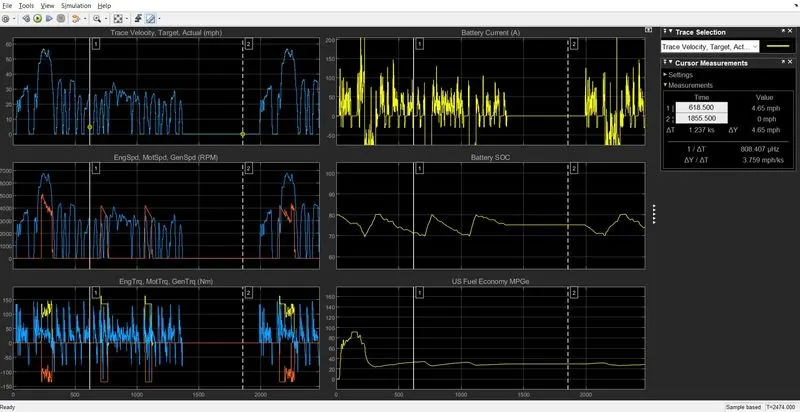
On comparing the results of the two models' simulation, following observations are made:
1. The motor characteristics remain similar in both the cases.
2. The fluctuation in the battery current is observed in both the simulations but its intensity is much higher in pure EV.
3. The US Fuel Economy of the HEV tends to increase at the onset of the simultion and the it decreases to a more stable figure. While in the case of EV, the equivalent US Fuel Economy is very much higher than the HEV.