Week-3 Challenge: ADVISOR Tool
ANSWER 1:
We are required to use the ADVISOR Tool and simulate the "EV_defaults_in" vehicle model with a cargo mass of 500 Kg and with the"FTP" drive cycle as the simulation cycle.
So, setting up the model according the abovesaid conditions,
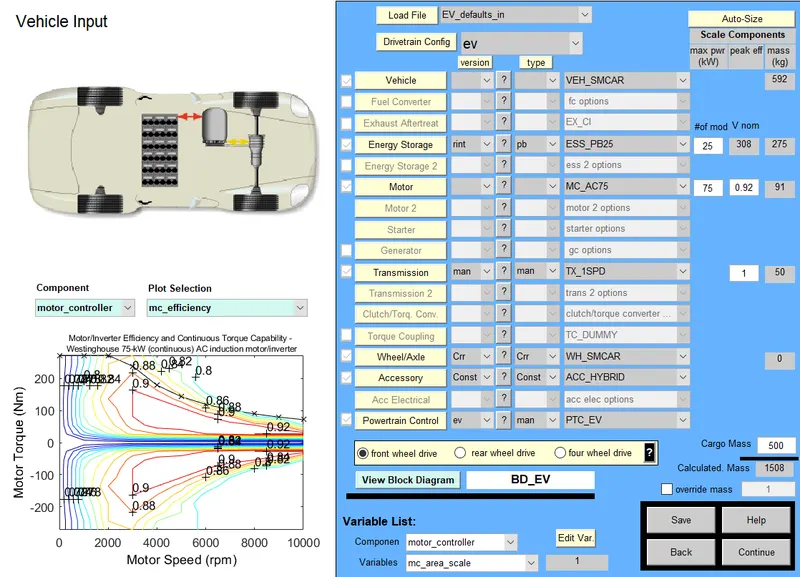
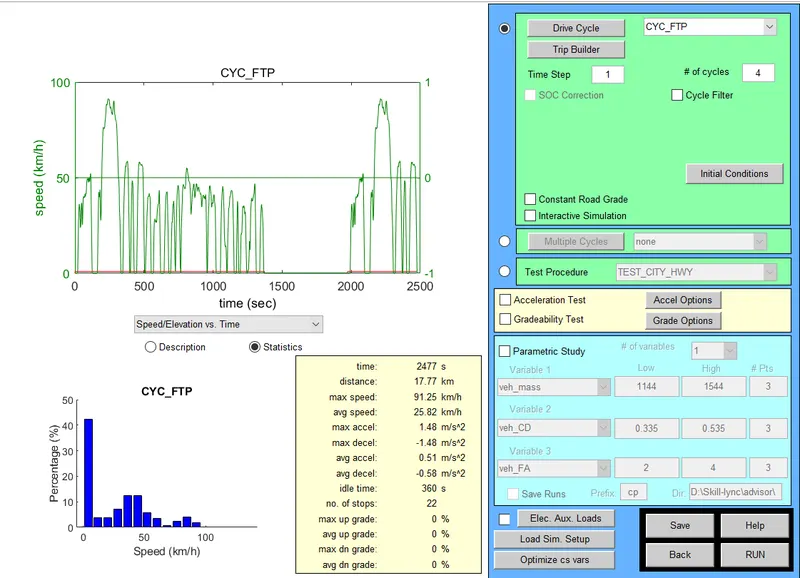
As required, the model, its load and drive cycle have been set accordingly. The number of drive cycles was set to 4 by trial method until the SOC dropped to zero.
On simulating, the result is as shown,
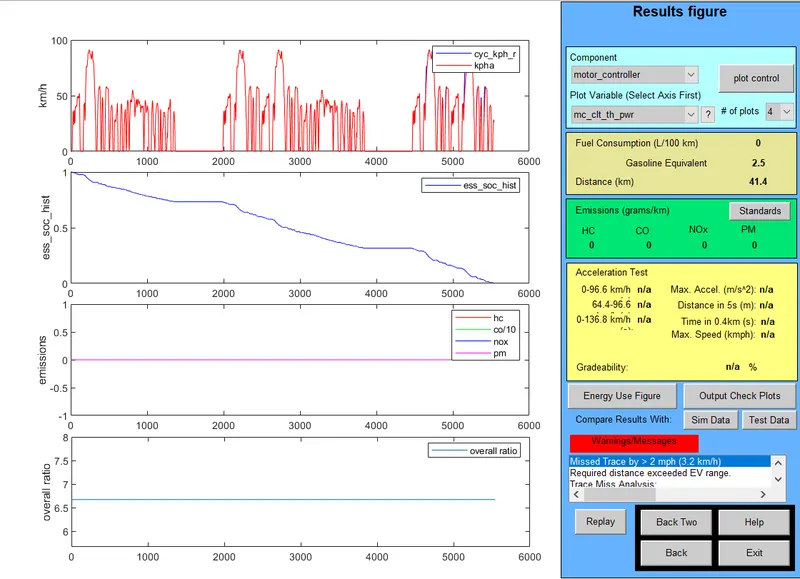
From the result it can be seen that under the above conditions, the model vehicle covered a distance of 41.4 Km.
Hence, the vehicle cannot cover 45 Km, as inquired.
ANSWER 2:
Now, we are required to simulate the above model with varied battery capacity while keeping other parameters the same.
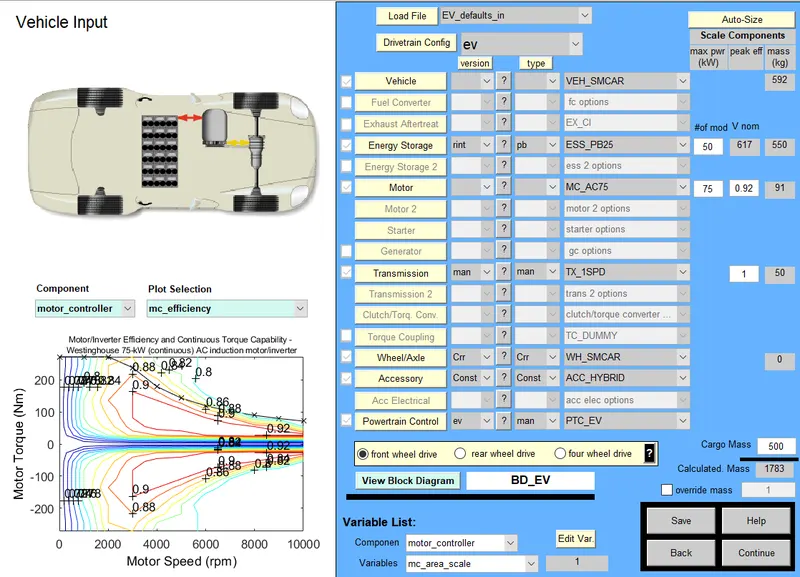
In this case, we have doubled the battery capacity.
The nominal voltage and the mass of the battery have been changed accordingly by the tool.
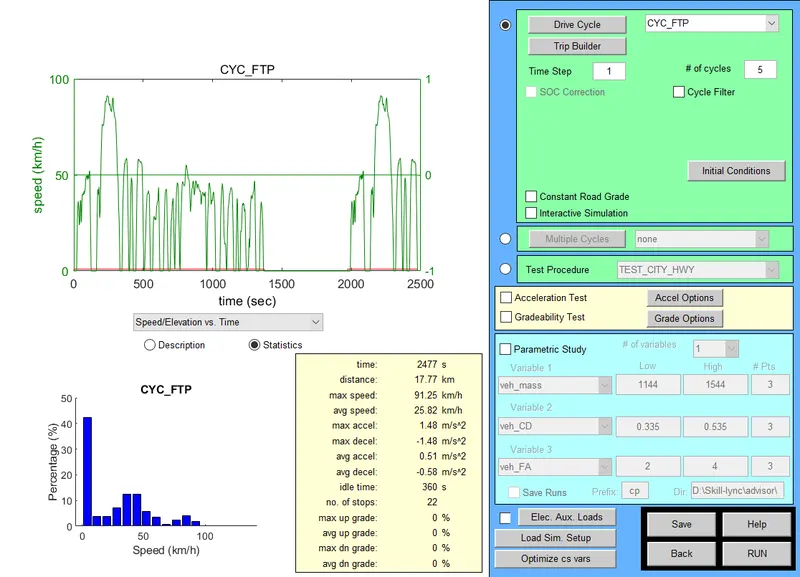
The number of drive cycles have been set to 5 by trial method until the SOC dropped to zero.
On simulating the model, the result is as shown,
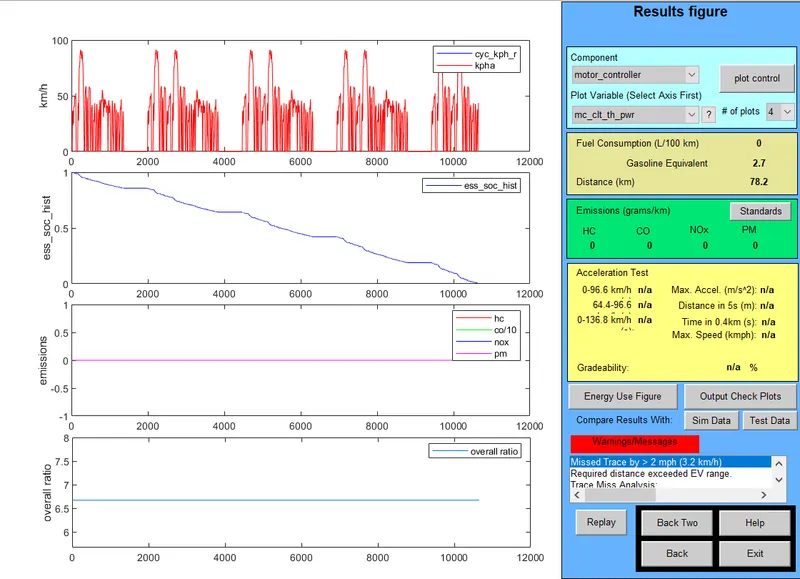
From the result it can be inferred that the range of the vehicle increased to 78.2 Km by doubling the battery capacity.
ANSWER 3:
In this question, we are reuired to perform gradeability test on the "PRIUS_Jpn_defaults_in" vehicle model and tabulate the outcome.
The model for the required test is,
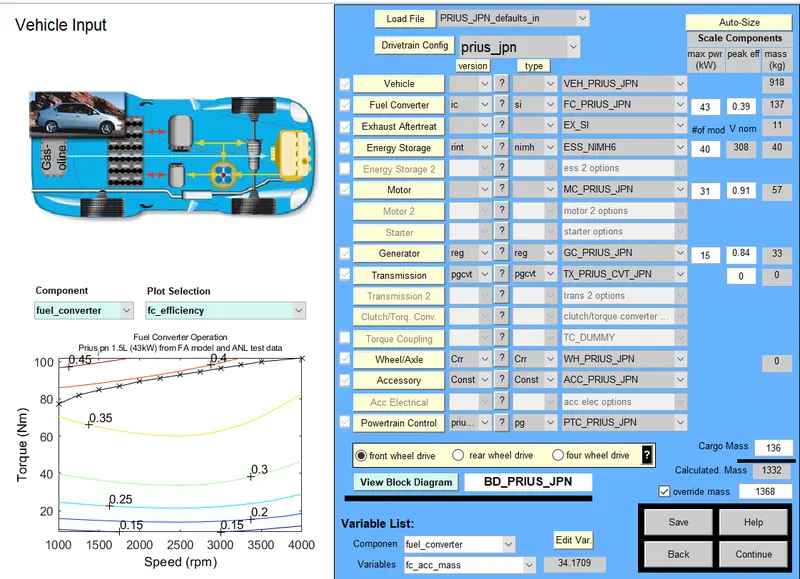
Now, setting up the greadability,
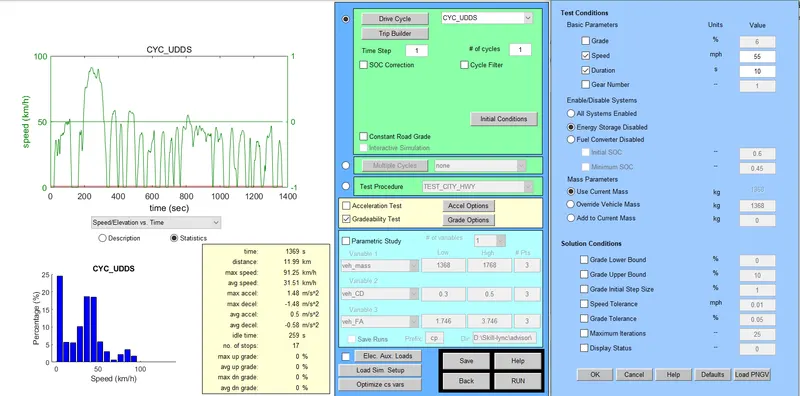
On running the test,
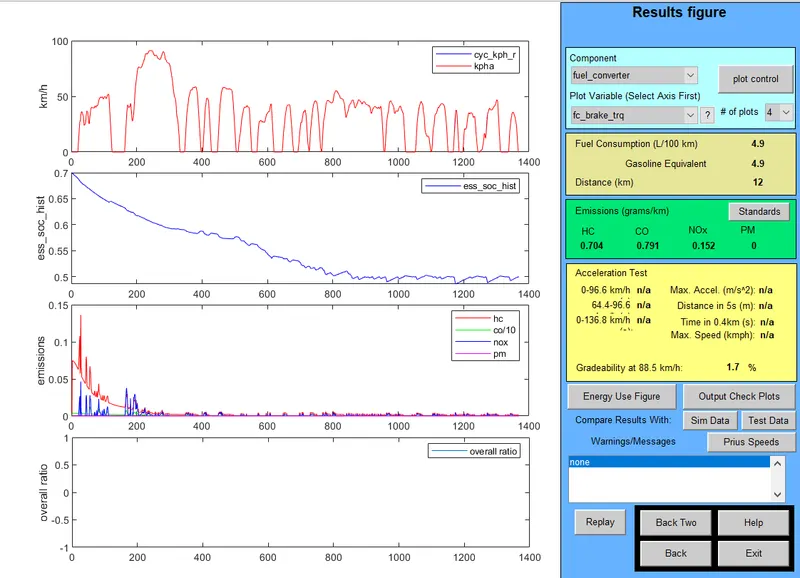
The gradeability of the model is found to be 1.7% at a speed of 88.5 kmph.
Again testing the gradeability at increased speed and tabulating the outcomes,
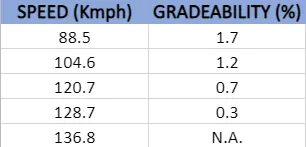
From the above table, we can infer that speed and gradeability are inversely proportional to each other.
The value of gradeablility cannot be calculated at speed of 136.8 Kmph because the speed it too high, i.e. the vehicle cannot move on the graded surface at this speed without failing or without any external supportive factor.