Week-4 Challenge WOT Condition Part-2
1. Mapped and dynamic model
Theory :-
Mapped Motor :-
Model uses a set of steady-state lookup tables to characterize engine performance.
The tables provide overall engine characteristics, including actual torque, fuel flow rate, BSFC, and engine-out exhaust emissions.
-
If you have engine data from a dynamometer or a design tool like GT-POWER.
-
For quasi steady-state engine simulations.
Dynamic motor :-
Model decomposes the engine behavior into engine characteristics that are separated into lower-level components. By combining components in this way, the models capture the dynamic effects.
-
If you need a more detailed dynamic model and have component-level data.
-
To analyze the impact of individual engine components on the overall performance.
Model :-
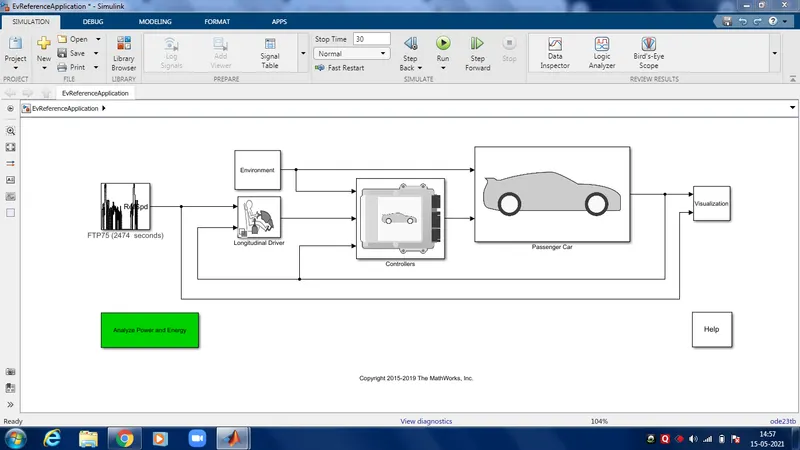
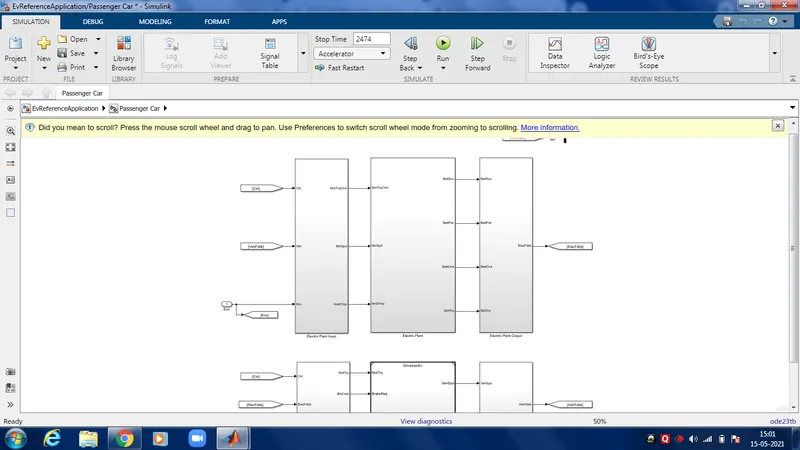
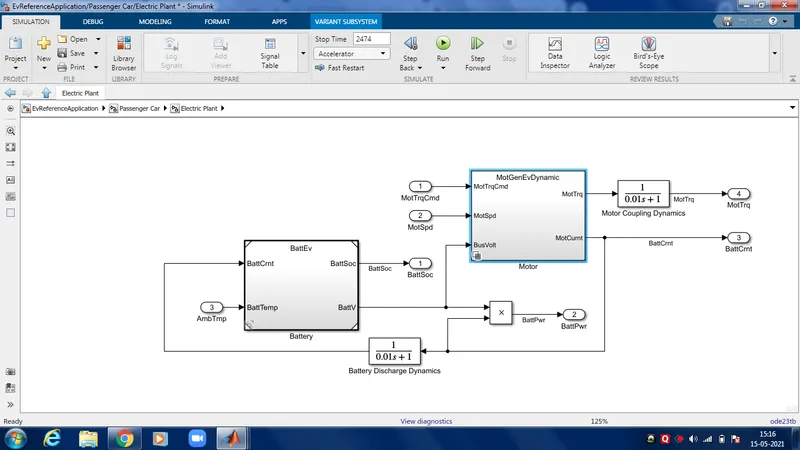
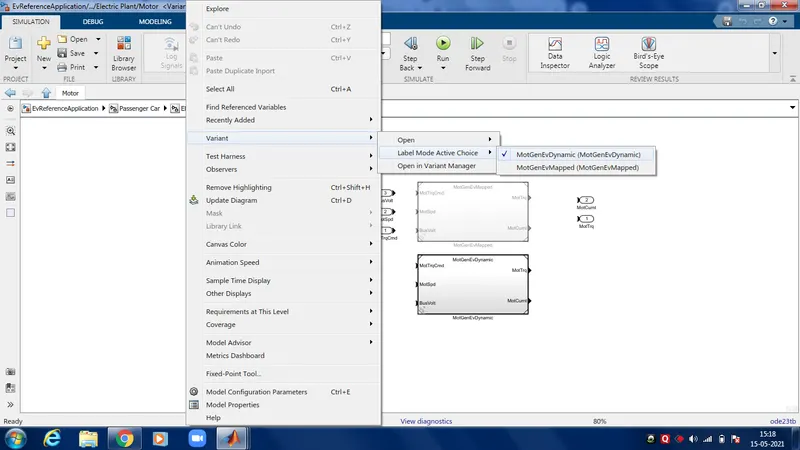
 2.How does the model calculate miles per gallon? Which factors are considered to model fuel flow?
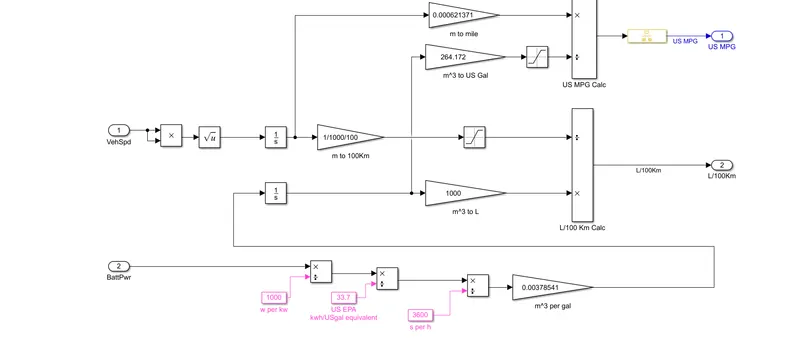
Model fuel flow :-
1.one gallon is equal to 33.7KW hours of electricity
2.vehicel speed and battery power are main force of MPGe.
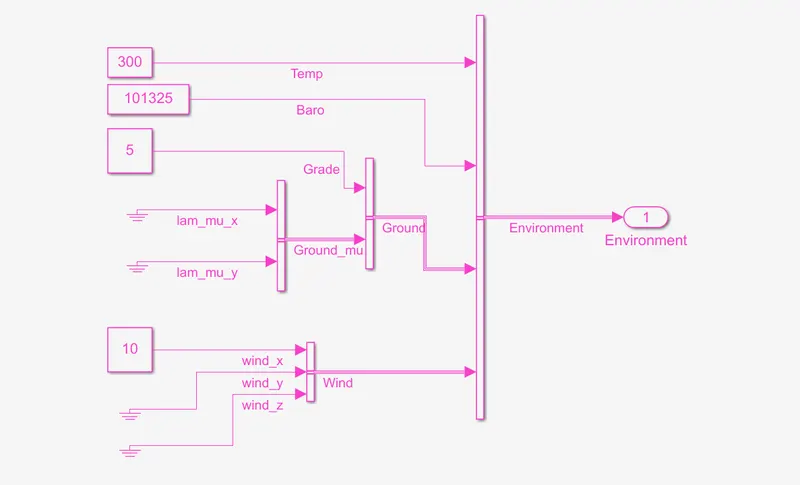
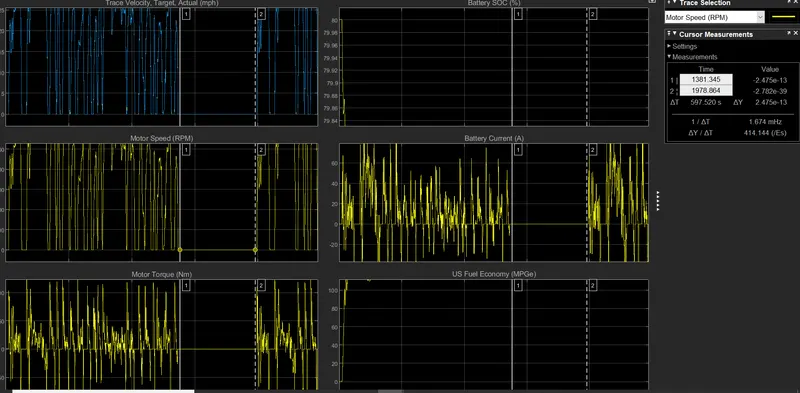
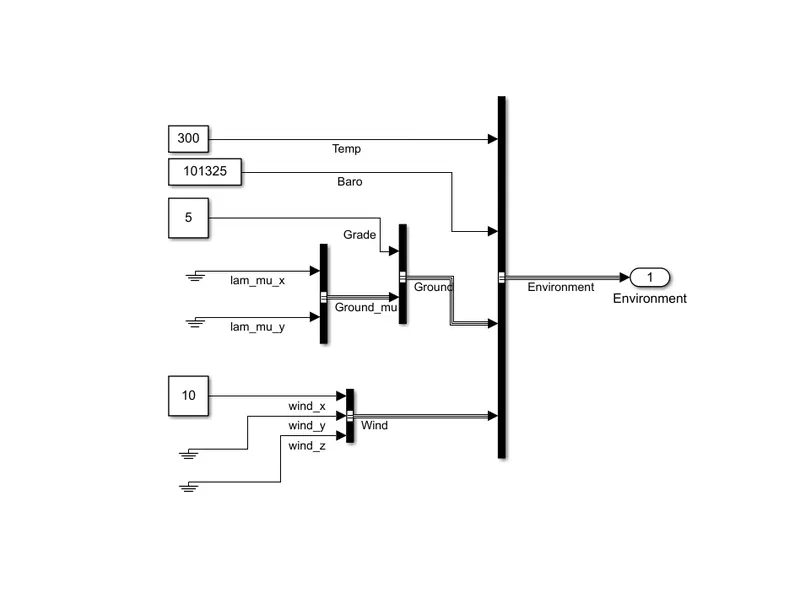
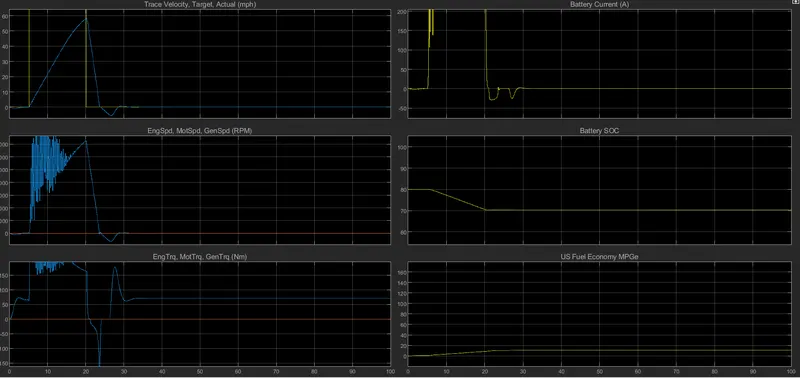
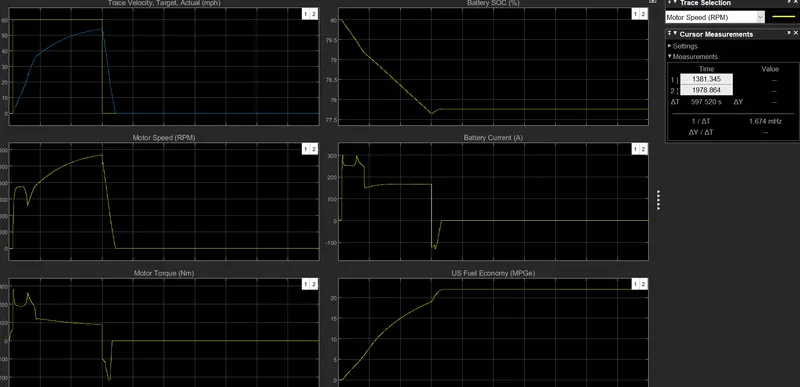 3.Run the HEV ReferenceApplication with WOT drive cycle. Change the grade and wind velocity in the environment block. Comment on the results.
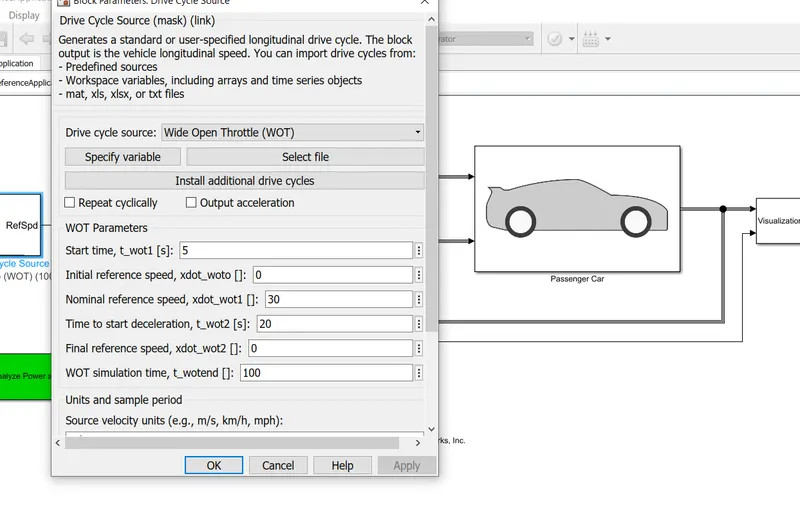
Open HEV reference model change drive cycle to WOT condition with 100 sec
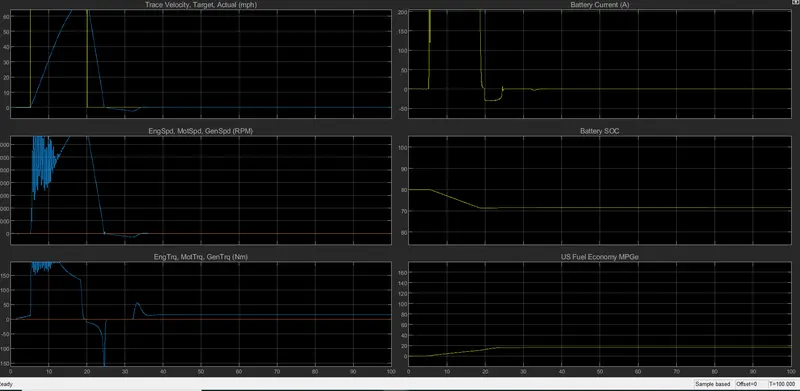
Change the grade and velocity as 5 and 10
4.Keeping all other parameters same, compare the simulated results of hybrid and pure electric powertrains.
Open EV reference model :-
open environment system and change velocity 10 and grade 5 and plot the result
open HEV model :-
change the parameters same as in EV and run the simulation