Week-4 : Basic Calibration of Single cylinder CI-Engine
Aim:Basic calibation of single cylinder CI-Engine
Objective: 1)Comparing SI and CI
2)Commenting on following parameters
- BSFC
- Exhaust Temperature
- A/F Ratio
3)Change MFB 50 and observe impact on performance
Comparission of SI vs CI Engine
SI engine also known as petrol engine operates in Otto cycle or constant volume heat adition cycle whereas, a CI engine also known as diesel engine works in Diesel cycle or constant pressure heat addition cycle
2)Type of Fuel
In SI engine petrol is used as working fuel,petrol is a highly volatile fuel and has a high self ignition tempearature where as, C.I engine uses diesel as the working fuel.Diesel is a non volatile fuel with a low self ignition temperature
3)Fuel Injection Method
In S.I Engines a mixture of air and fuel is introduced in the suction stroke, Thus it consists of a carburetor for mixing the air and fuel.while in CI engine,fuel is injected directly in to the combustion chamber at high pressure.
4)Compression Ratio
In SI engine compression ration varies 6 to 10 but in CI engine compression ratio varies from 16 to 20
5)Speed
S.I. Engines are high speed engines, due to their light weight and homogeneous combustion. whereas C.I engines are low speed engines due to their heavy weight and heterogeneous combustion
6)Thermal Effeciency
Due to lower compression ratio, maximum value of thermal eefecieency is lower in an SI engine compared to that of CI
7)Weight
S.I engines are lighter in weight due to their lower peak presssure as compare to C.I engines that are generally heavier due to higher peak pressure.
Simulation Model
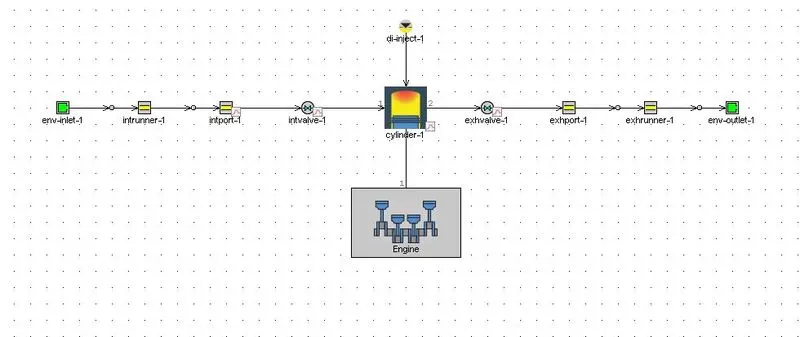
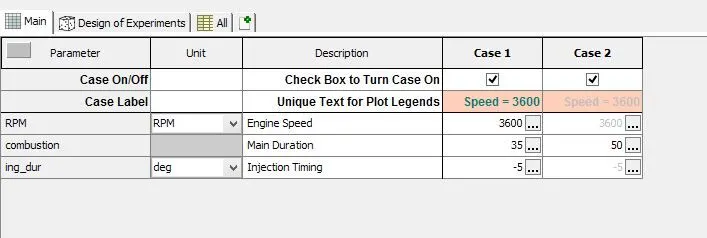
Case Setup
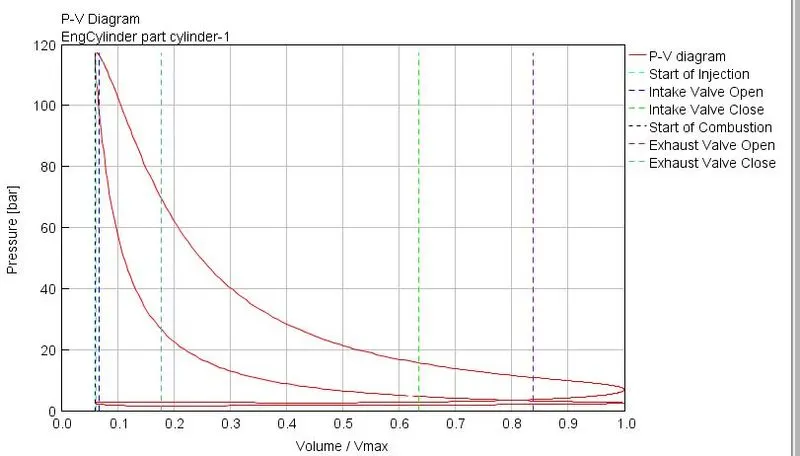
PV Diagram
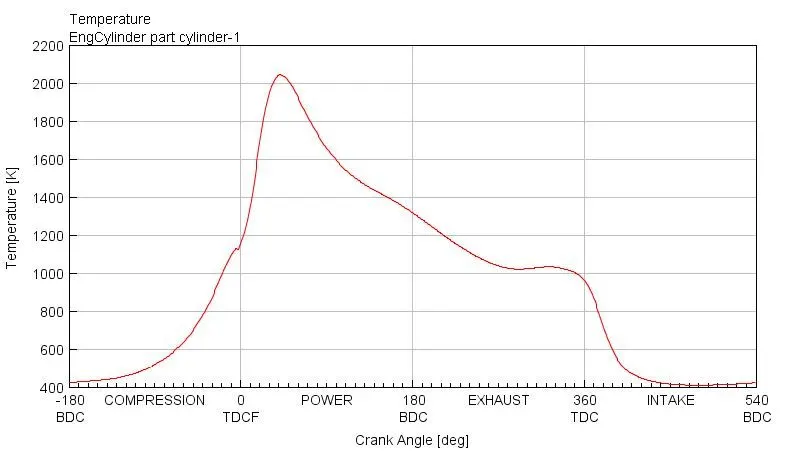
Temperature Variation
Engine Performance
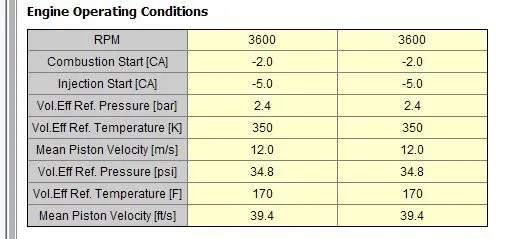
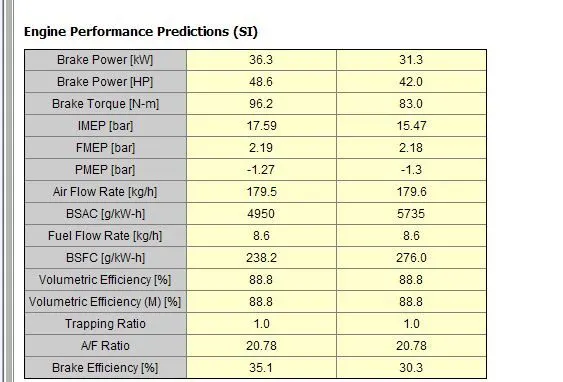
From the engine performace it is seen that with increase in combustion duration, the BP of engine decreases. The break effeciency increases with combustion duration.
Conclusions
- The simulation of basic calibration for sngle cylinder C.I engine is successfully done.