Week - 4
OBJECTIVE;
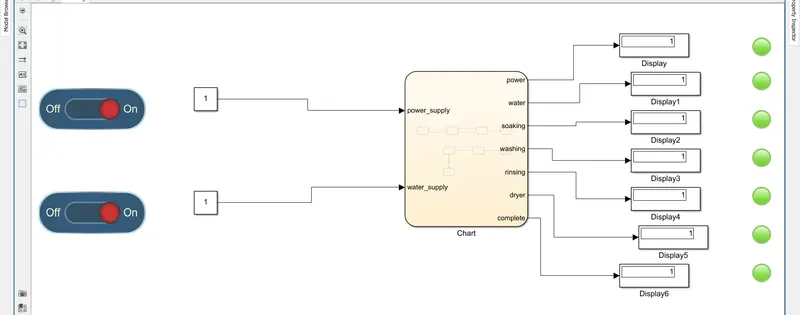
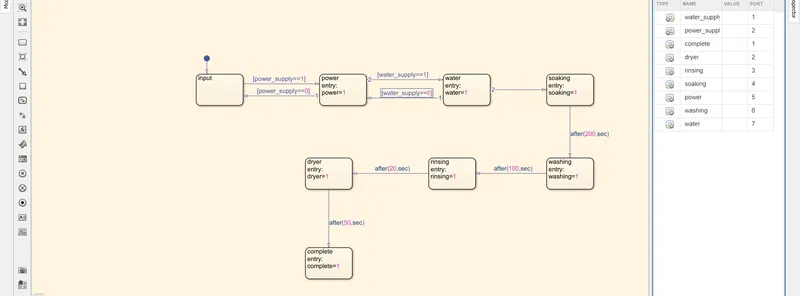
1. Implement control logic of a “washing machine” using Stateflow as per given sequence:
- If the power supply is available, the system gets activated
- If the Water supply is not available, stop the process & indicate through LED
- Soaking time should be 200s followed by Washing time of 100s.
- Then rinsing happens for next 20s & dryer runs for 50s
After all the processes have completed turn on the finished LED
SOLUTION;
How Does a Washing Machine Work?
Washing machines make the household tasks so much easier, especially if you have a big family and lots of laundry to do. While using a washing machine may seem so much more straightforward than washing those loads by hand, there is a complex mechanism inside your washer, so find out more about how a washing machine works and more!
Meet the parts of the washing machine
The washing machine concept is pretty simple – it agitates your clothes in a soapy suds and water to remove any dirt and stains before spinning to drain the water after the cycle. The main components of a washing machine is the drum, which fills up with water, but did you know that washing machines actually have two drums, not one? Your average washing machine is made up of:
-
An inner drum. This is where you put the clothes when you’re ready to wash. You’ll notice this drum rotates a bit when you touch it and there are a lot of holes punched into the drum. These allow the water to come in and wash the clothes.
-
Paddles. These are ridges that lie on the edge of the drum and help move your clothes around while being washed.
-
Agitator. These are more common in top load machines and is a paddle in the middle that helps turn the clothes around in the soapy water.
-
The outer drum. This is not obvious when you look inside the washer, but there is another drum that holds the water while the inner drum or agitator rotates. This part is completely water tight to prevent your machine from leaking all over the bathroom or kitchen!
-
Thermostat and heating element. These control the temperature of the water and heats up the water to the specified temperature.
-
Pump. This removes the water from the drum after the wash.
-
Programmer. This controls the washing machine through all the steps from washing to rinsing and spin drying.
-
Pipes and valves. These allow the water in and out of the washer.
Programs and why do you need them
Programs, such as delicate wash, colour wash or pre-soak, are one of the features of washing machines, particularly fully-automatic washing machines, which gives you the choice when it comes to how you want to wash your clothes. If you need a certain temperature or you’re washing with a certain fabric, then programs help you find the optimal washing conditions for your laundry needs from selecting the right wash temperature to setting up your washing timing.
Semi- vs fully-automatic washing machines
There are many washing machines out there, and the one you choose really depends on your uses for a washing machine, as well as factors such as cost and convenience. A fully-automatic washing machine, like the name says, does everything automatically at the push of a button. A semi-automatic washing machine may be a step up from hand washing, but you may need to do some of the process yourself, like move the wet clothes into the spin dryer.
- If the power supply is available, the system gets activated
-
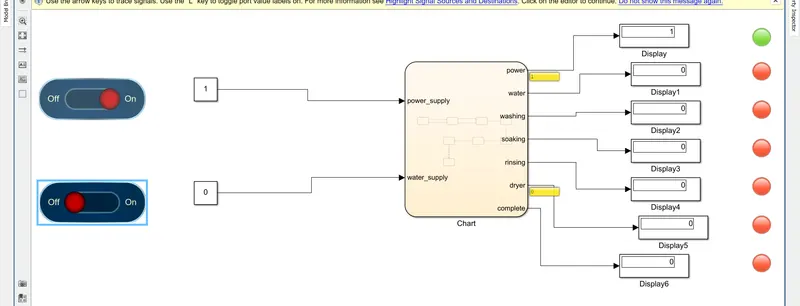
- If the Water supply is not available, stop the process & indicate through LED
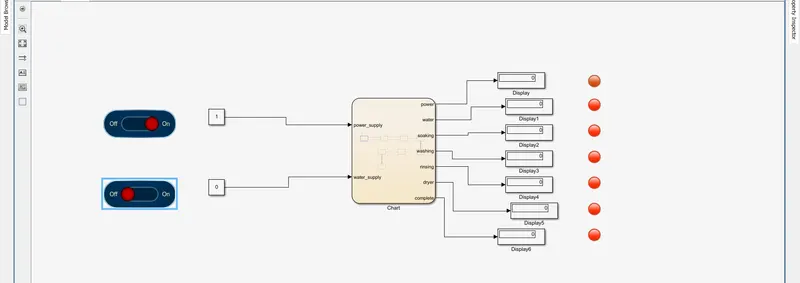
- Soaking time should be 200s followed by Washing time of 100s.
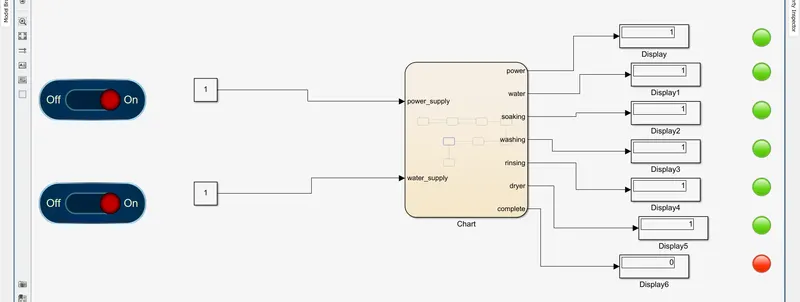
- Then rinsing happens for next 20s & dryer runs for 50s
WHY WE USED CHART BLOCK?

Description
A finite state machine is a representation of an event-driven (reactive) system. In an event-driven system, the system responds to an event by making a transition from one state (mode) to another. This transition occurs if the condition defining the change is true.
A Stateflow® chart is a graphical representation of a finite state machine. States and transitions form the basic elements of the system. You can also represent stateless flow charts.
For example, you can use Stateflow charts to control a physical plant in response to events such as a temperature and pressure sensors, clocks, and user-driven events.
You can also use a state machine to represent the automatic transmission of a car. The transmission has these operating states: park, reverse, neutral, drive, and low. As the driver shifts from one position to another, the system makes a transition from one state to another, for example, from park to reverse.
washing machine;
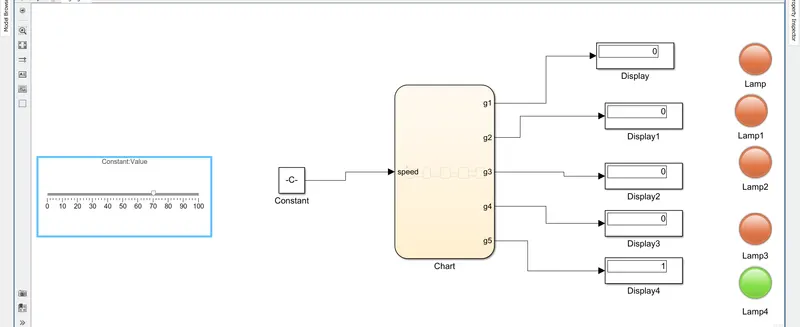
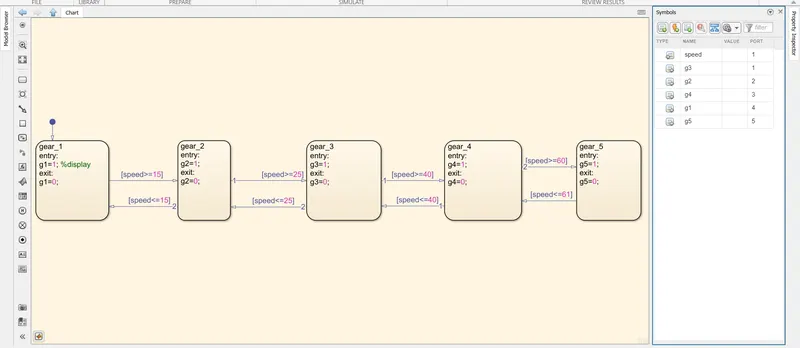
2. Make a Simulink chart for the “Gear shift” logic as per below conditions:
Speed Range(kmph) Gear
0 to 15 1
16 to 25 2
26 to 40 3
41 to 60 4
Above 61 5
Give speed input while the simulation is running & display the gear number.
SOLUTION;
How Transmission System Works?
The working of the transmission system varies depending on the type of transmission. Typically, the transmission system allows the gear ratio between the drive wheels and the engine. It can be adjusted as the car slows down and increases speed.
Once you start your car and reach your destination, now you have to stop, in this scenario, the transmission disconnects the engine from the drive wheels so that the engine can remain idling when the wheels are not in motion.
The transmission can also provide more responsive acceleration from a stop and enables the engine to run more slowly while the vehicle is running at a normal speed. So, now let’s see what are the different types of transmission systems available.
Types of Transmission
Following are the types of transmission used in automobile vehicles:
- Manual Transmission
- Intelligent manual transmission (IMT)
- Automated manual transmission (AMT)
- Automatic transmission (AT)
- Continuously variable transmission (CVT)
- Semi-automatic transmission
- Dual-clutch transmission
- Sequential transmission
- Torque converter transmission
- Tiptronic transmission
1. Manual Transmission
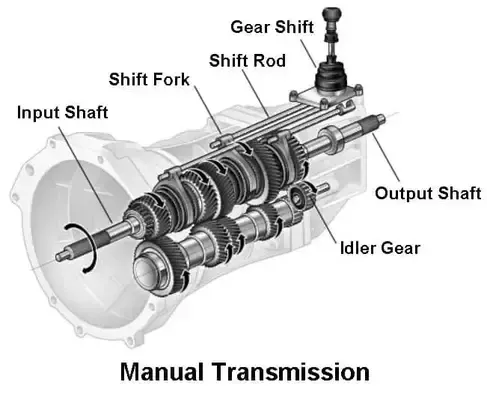
A manual transmission is a system that requires the driver to manually select a gear by operating a gear stick and clutch to change gears. This transmission system is consists of a set of gears (different sizes) along with a pair of shafts.
The input shaft is connected to the engine and the output shaft is continuously coupled to the input shaft and consists of several gears. In this, the driver has to select gears manually and engage or disengage the clutch pedal.
This transmission uses a flywheel, pressure plate, and clutch to engage and disengage the engine from the transmission. The flywheel and pressure plate are attached to the engine and the clutch is mounted between them.
The word push in clutch means to release the pressure plate which detaches the clutch from the engine every time you do a shift, you have to push in the clutch first.
Advantages of Manual Transmission
- Manual transmission is considered better for off-road purposes.
- This type of transmission system provide high torque load.
- These are much more reliable and easier to service than other types.
Disadvantages of Manual Trasmission
- Not everyone can drive
- Higher learning curve.
- These are require more work during driving.
Gear shift chart;
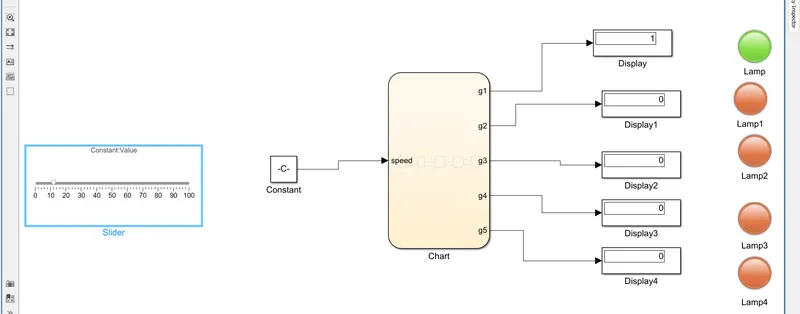
Speed Range(kmph) Gear
0 to 15 1
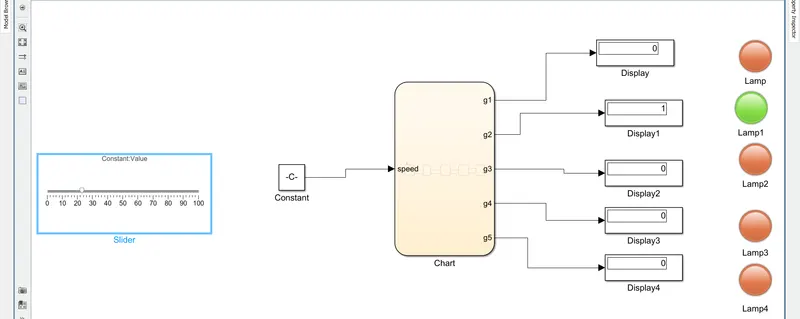
Speed Range(kmph) Gear
16 to 25 2
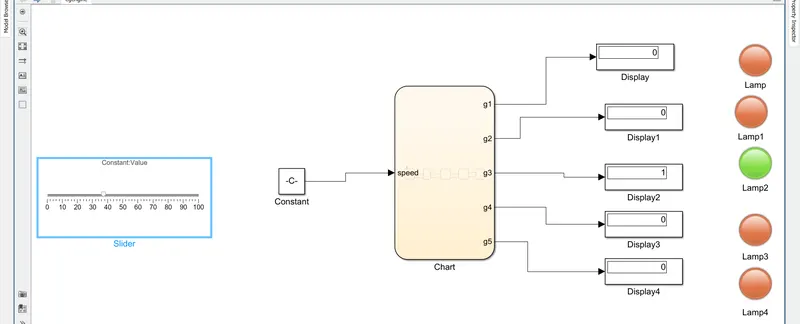
Speed Range(kmph) Gear
26 to 40 3
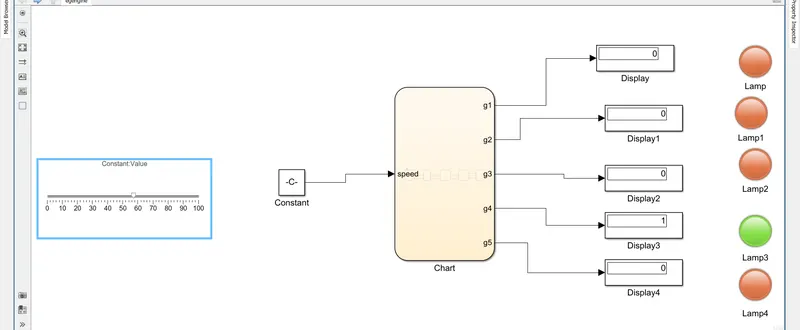
Speed Range(kmph) Gear
41 to 60 4
Speed Range(kmph) Gear
Above 61 5