Project 1 - Parsing NASA thermodynamic data
AIM;
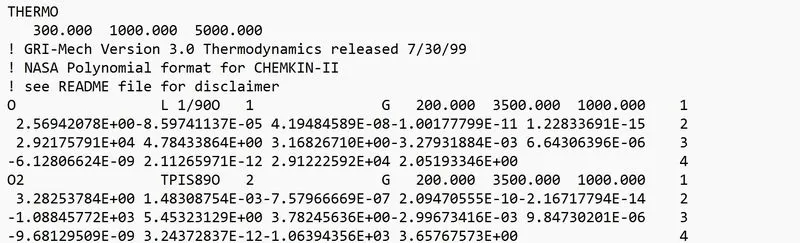
TO Write a code inmatlab to parsing the nasa thermodynamic data file and calculate the thermodynamic properties of various gas species
OBJECTIVES;
- TO write a function that extract the co-eff and calculate the specific heat(cp),enthalpy(h) and entropy(s) for all the species in the data file
- To calculatye the molecular weight of each species and display in the command window
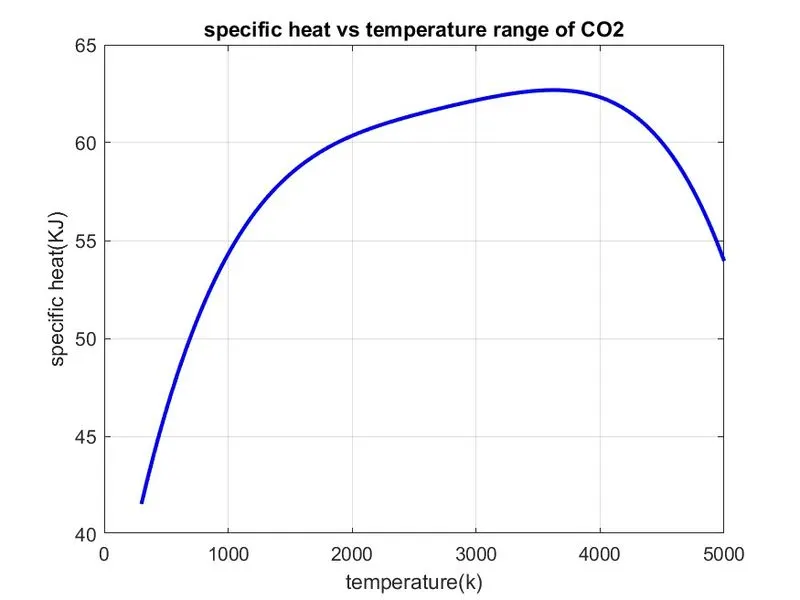
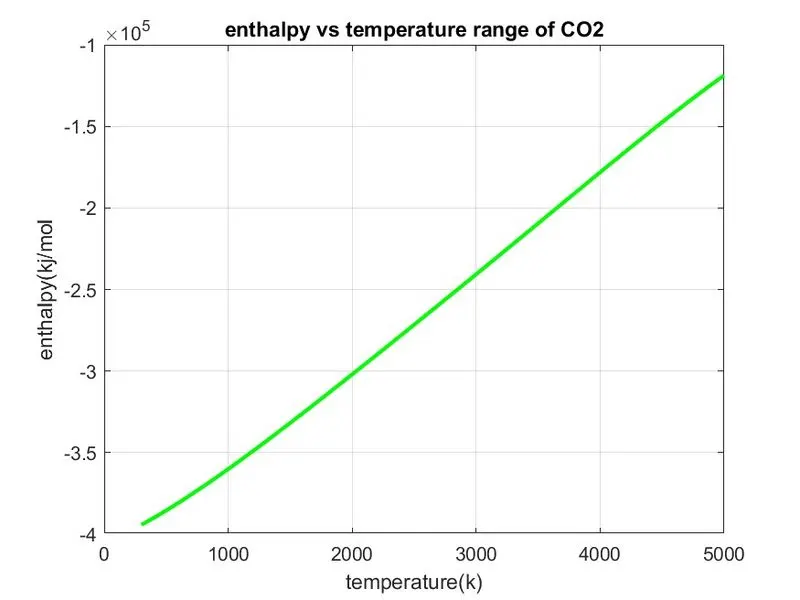
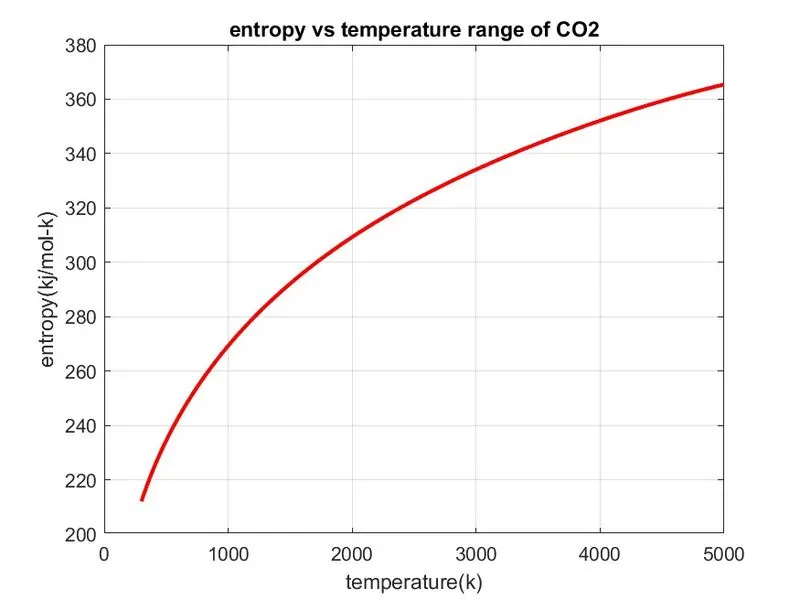
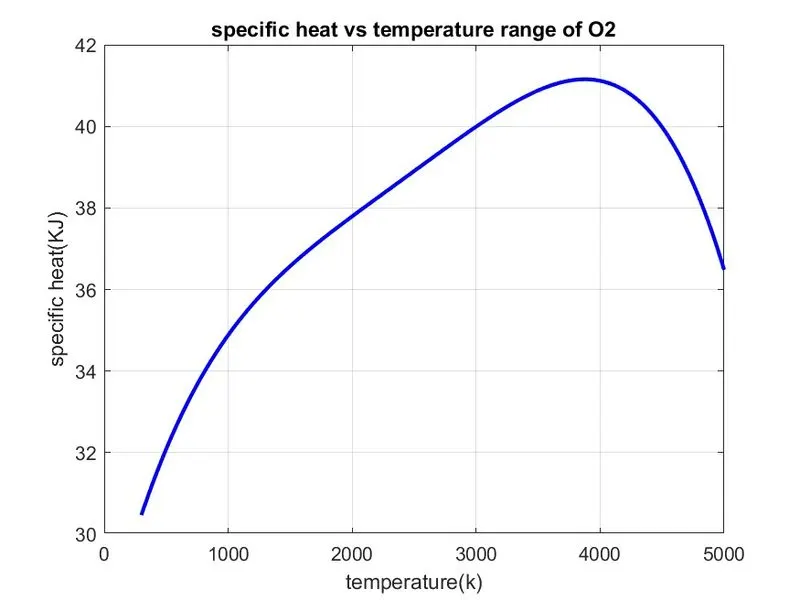
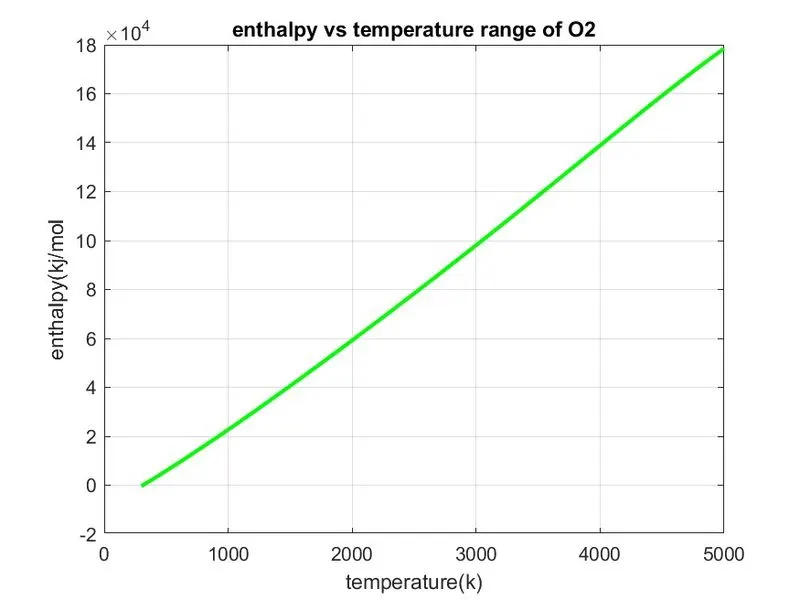
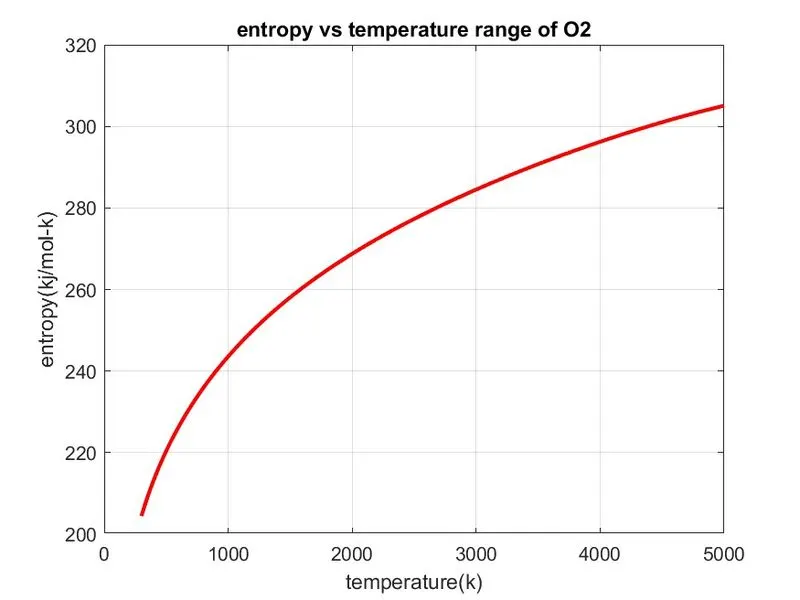
- And plot cp,enthalpy and entropy for local temperature renge(low temp : high temp)
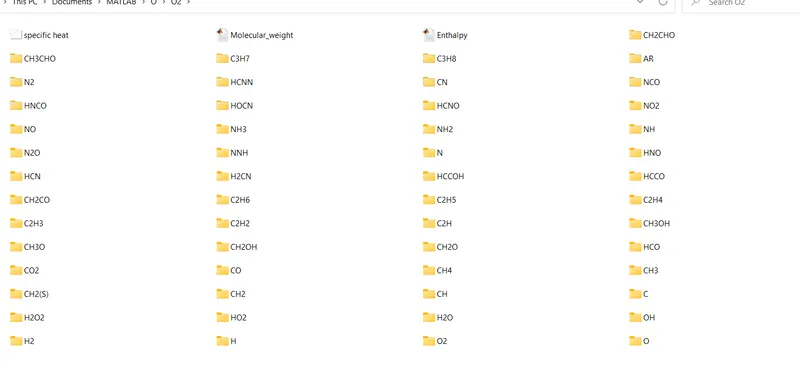
- To save the plots a image with appropriate namesand dump them in separate folders for each species with suitable name and all these should be done automatically
- The mane program just take the 'THERMO.dat' file as input and generate cp,H,S plots
FILE PARSING DEFINITION;
Parsing: Parsing a file means reading in a data stream and building a memory model of the content of that data. This aims at facilitating perfoming some kind of transformation on the data. Parsing splits a file or other input into pieces of data that can be easily stored or manipulated.
specific heat;
specific heat, the quantity of heat required to raise the temperature of one gram of a substance by one Celsius degree. The units of specific heat are usually calories or joules per gram per Celsius degree. For example, the specific heat of water is 1 calorie (or 4.186 joules) per gram per Celsius degree.
Cp/R = a1 + a2 T + a3 T^2 + a4 T^3 + a5 T^4
function of (Cp)
Enthalpy is a thermodynamic property of a system. It is the sum of the internal energy added to the product of the pressure and volume of the system. It reflects the capacity to do non-mechanical work and the capacity to release heat.Enthalpy is denoted as H; specific enthalpy denoted as h. Common units used to express enthalpy are the joule, calorie, or BTU (British Thermal Unit.) Enthalpy in a throttling process is constant.
H/RT = a1 + a2 T /2 + a3 T^2 /3 + a4 T^3 /4 + a5 T^4 /5 + a6/T
function of (H)
clear all
close all
clc

f1 = fopen('THERMO.dat','r');
get = fgetl(f1);

%noe reading temperature from this file
 temp = fgetl(f1);
%spliting

s = strsplit(temp);

%converting string cells into numbers
templow = str2double(s{2});
tempmid = str2double(s{3});
temphigh = str2double(s{4});

%temperature range
T = linspace(templow,temphigh,1000);

%skipping comment lines
 for i = 1:3
     get=fgetl(f1);
 end

 %reading the species
for j = 1:53;
 tline=fgetl(f1);

 A=strsplit(tline,' ');
 species = (A{1});

 %converting string to number
 lowtemp = str2double(A{end-3});
 midtemp = str2double(A{end-2});
 hightemp = str2double(A{end-1});


 tline1 = fgetl(f1);
 a = strfind(tline1,'E');

 %finding higher coefficients
 a1 = tline1(1:a(1)+3);
 a1 = str2double(a1);

 a2= tline1(a(1)+4:a(2)+3);
 a2 = str2double(a2)

 a3 = tline1(a(2)+4:a(3)+3);
 a3 = str2double(a3)

 a4 = tline1(a(3)+4:a(4)+3);
 a4 = str2double(a4)

 a5 = tline1(a(4)+4:a(5)+3);
 a5 = str2double(a5)

 tline2 = fgetl(f1);
 b = strfind(tline2,'E');
 a6 = tline2(1:b(1)+3);
 a6 = str2double(a6);

 a7 = tline2(b(1)+4:b(2)+3);
 a7 = str2double(a7);

 a8 = tline2(b(2)+4:b(3)+3);
 a8 = str2double(a8);

 a9 = tline2(b(3)+4:b(4)+3);
 a9 = str2double(a9);

 a10 = tline2(b(4)+4:b(5)+3);
 a10 = str2double(a10);

 tline3 = fgetl(f1);
 c = strfind(tline3,'E');
 a11 = tline3(1:c(1)+3);
 a11 = str2double(a11);

 a12 = tline3(c(1)+4:c(2)+3);
 a12 = str2double(a12);

 a13 = tline3(c(2)+4:c(3)+3);
 a13 = str2double(a13);

 a14 = tline3(c(3)+4:c(4)+3);
 a14 = str2double(a14);


 %inputs
 R = 8.314;%gas constant

%calaulate specfic_heat (cp)
 Cp = specific_heat(a1,a2,a3,a4,a5,a8,a9,a10,a11,a12,T,R,tempmid);

%calculate entropy (S)

 S = entropy(a1,a2,a3,a4,a5,a7,a8,a9,a10,a11,a12,a14,T,R,tempmid);

%calaulate enthalpy
H = Enthalpy(a1,a2,a3,a4,a5,a6,a8,a9,a10,a11,a12,a13,T,R,tempmid);

%calculate molecular weight

W = Molecular_weight(species);

Mw_file = fopen('Molecular_weight.txt','w');
fprintf(Mw_file,'Molecular weight of %s is %d',species,W);
fclose(Mw_file);


%plotting cp,H,S with temperature

%saving in folder
cd('C:\Users\lakshmipathy\Documents\MATLAB\O\O2')
mkdir(species);
cd(species);

%plot 1 cp vs T
figure(1)
plot(T,Cp,'linewidth',2,'color','b');
xlabel('temperature(k)');
ylabel('specific heat(KJ)');
title(sprintf('specific heat vs temperature range of %s',species));
grid on
saveas(figure(1),'specific heat.jpg');

%plot 2 S vs T
figure(2)
plot(T,S,'linewidth',2,'color','r');
xlabel('temperature(k)');
ylabel('entropy(kj/mol-k)');
title(sprintf('entropy vs temperature range of %s',species));
grid on
saveas(figure(2),'entropy.jpg');

%plot 3 cp vs T
figure(3)
plot(T,H,'linewidth',2,'color','g');
xlabel('temperature(k)');
ylabel('enthalpy(kj/mol');
title(sprintf('enthalpy vs temperature range of %s',species));
grid on
saveas(figure(3),'enthalpy.jpg');

cd('C:\Users\lakshmipathy\Documents\MATLAB\O\O2')

W = Molecular_weight(species)

endstrsplit( splits str,delimiter)str at the delimiters specified by delimiter.
If str has consecutive delimiters, with no other characters between them, then strsplit treats them as one delimiter. For example, both strsplit('Hello,world',',') and strsplit('Hello,,,world',',') return the same output.
str2double ( converts the text in str)str to double precision values. str contains text that represents real or complex numeric values. str can be a character vector, a cell array of character vectors, or a string array.
cd - Change or view current folder on SFTP or FTP server
mkdir - Make new folder on SFTP or FTP server This MATLAB function makes the specified folder on the SFTP or FTP server associated with s.
RESULTS;
screenshot of the directory
plot for o2;
Molecular weight of O2 :- 15.999000
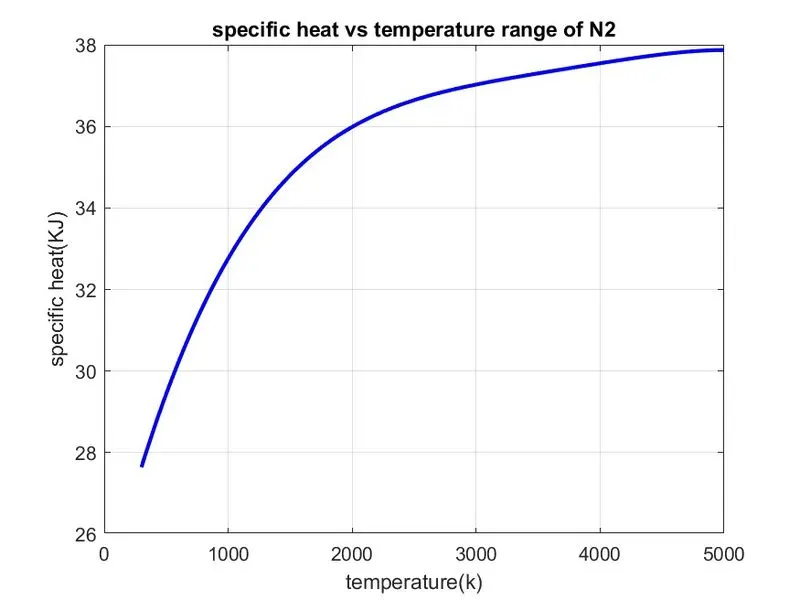
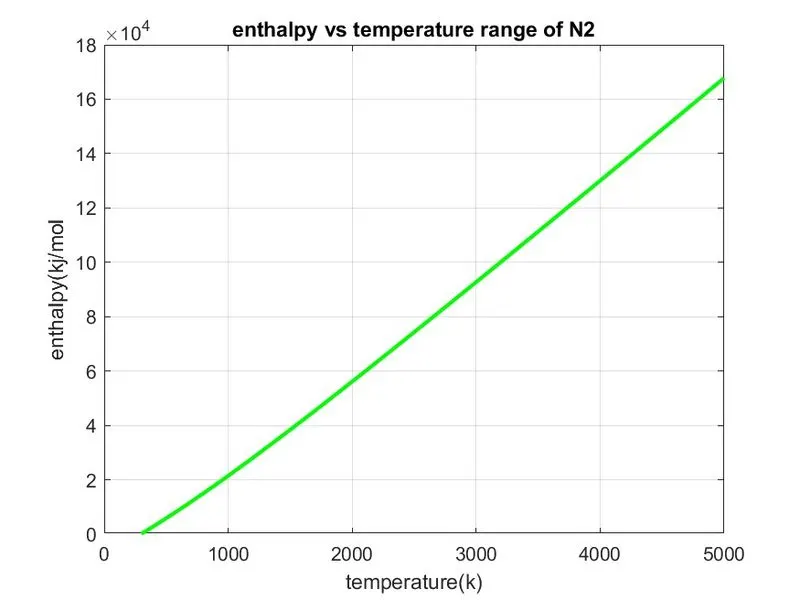
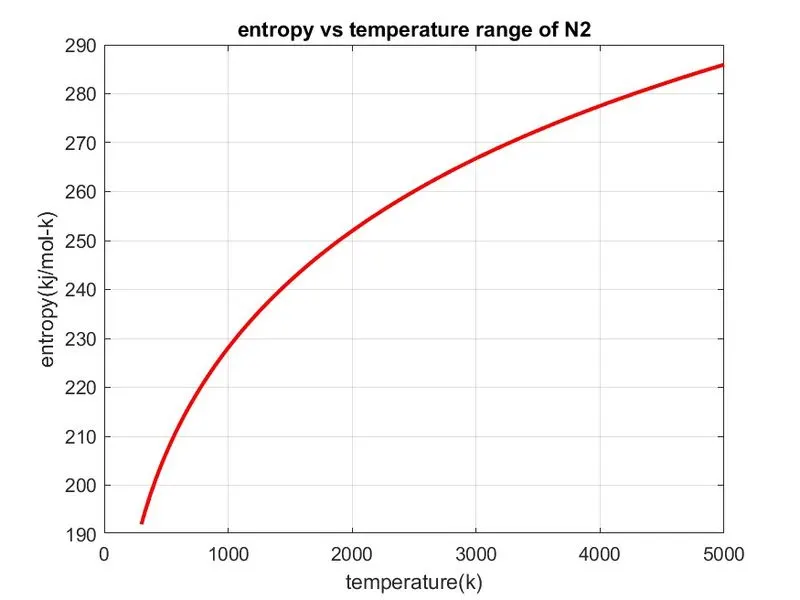
plot for n2;
Molecular weight of N2 :- 14.007000
plot for co2;
Molecular weight of CO2 :- 28.010000