Week - 4
AIM:
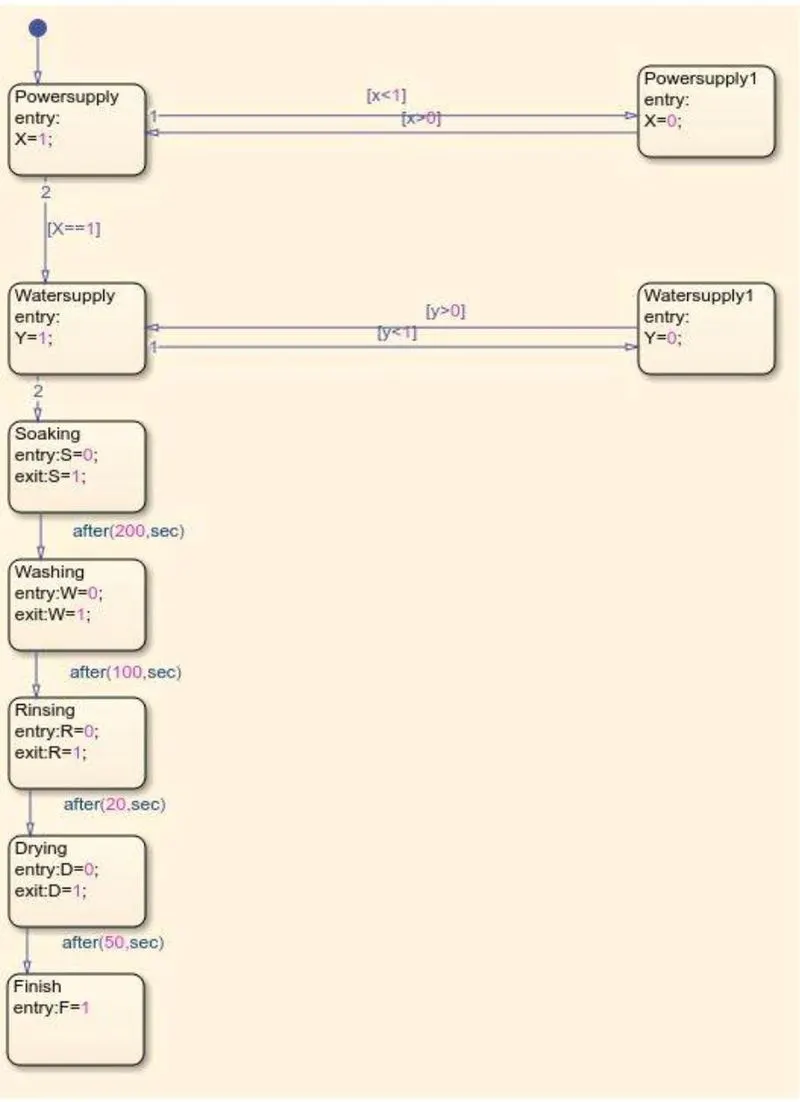
1. implement control logic of a "washing machine" using state flow as per given sequence
- if the power supply is available the system gets activated
- if the water supply is not available, stop the process and indicated through LED
- soaking time should be 200s followed by washing machine time is 100s
- then rinsing happens for next 20s and dryer runs for 50s
after all the processes have completed turn on the finished LED
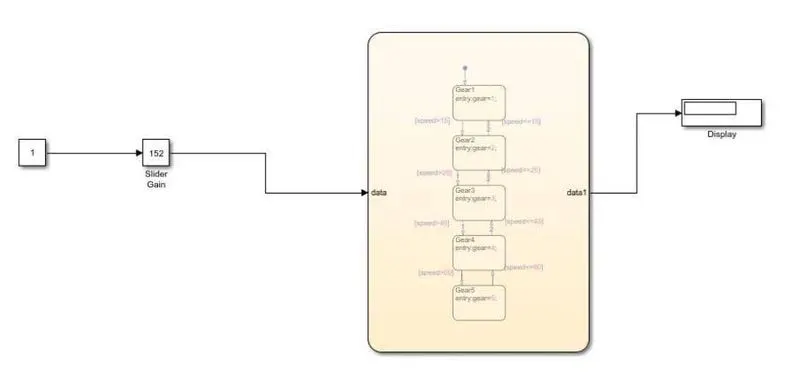
2. make a simulink chat for the "gear shift" logic as per below conditions
speed range gear
0 to 15 1
16 to 25 2
26 to 40 3
41 to 60 4
above 60 5
give speed input while the simulation is running & display the gear number
PROCEDURE:
working principle of a washing machine:
a washing machine by spinning at 800-1600rpm helps soap and dirt to leave the surfac of the cloth via centrifugal force and into outlet pipes hence utilizing centrifugation to both clean and partially dry the clothes loaded in it. thus the processes are electrically controlled, such as the drum, valves, pumps, motor, and heating. the valve opens again and the dirty water drains out of the drum. the pump works to help get rid of the water. the valves lets clean water in again into the drums the four processes are
SOAKING:
it is used to dip the clothes in detergent water to remove dirt from the cloths. in this function, customers need to select soak from a panel soak. soak this function is available with wash timer, in 42m of washing 27m of soak and 15m machine will wash the cloths
WASHING:
during the wash cycle, a large plastic agitator turns around, moving your clothes through the water. when the wash is finished. the pump drains the water from the outer drum
RINSING:
the dirty, soapy water drained, then the washing machines is refilled and your clothes are rewashed in clean water.
DRYER:
the work by pushing warm dry air through your wet washing to extract moisture, then cooling now humid air in a heat exchanger to condenser the moisture, which is collected in a tank or pumped down the drain.
STATE FLOW:
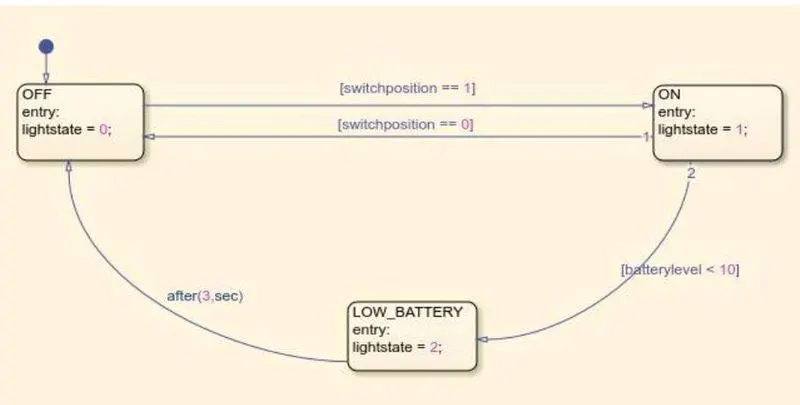
systematic solution of a problem is possible with the sequential, unambiguous, and realizable finite process step set. this set is called an algorithm and it is one of the most important parts of the programming languages. in this study, it is represented how to learn algorithms by using Simulink Stateflow. inflow diagram-based algorithm learning
CONTROL LOGIC OF A WASHING MACHINE:
It checks for the next extent of dirt and grease, the amount of soap and water to add, direction of spin, and so on. the machine rebalances washing load to ensure correct spinning else, it reduces spinning speed if an imbalance is detected. even distribution of washing load reduces spinning noise.
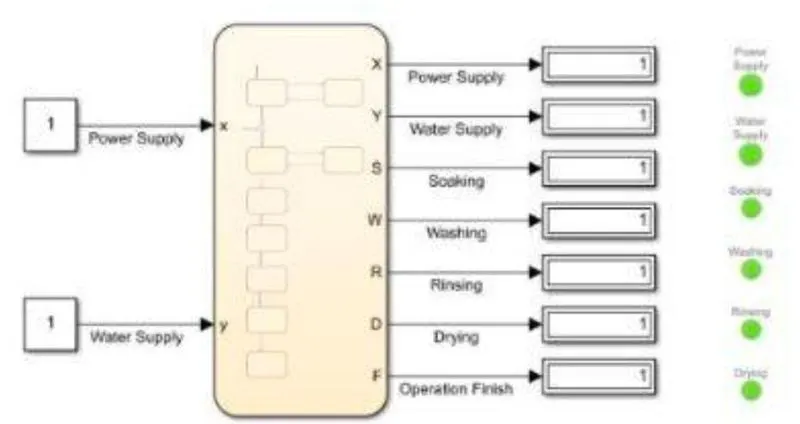
the two inputs are given for the power and water supply. once the inputs are given outputs are displayed by the flow chart as per the given sequence. the system is observed for sometimes then it is checked and the process is completed by green light is displayed.
2.GEAR SHIFT LOGIC:
a gear shift mechanism for a manual transmission includes a shaft axially movable for selecting shift planes and rotatable for engaging the gears defining the shifting plane. the shaft is held in a referance shift plane by two helical springs.
RESULT:
1. thus the control logic of a washing machine suing state flow is processed as per given sequence and LED lights are turned on to the green color and the system is completed
2. a Simulink model is created for the gear shift logic and using slider gain are obtained.