Week 3 Verification of Weld Joints
AIM:
Simulate three different types of welding using three different weld materials
OBJECTIVE:
Case 1. Stainless Steel: In this case, the material of the plates must also be the same. Use Stainless steel for both weldments and plates. No need to add flux to the weldments.
Case 2. Aluminium Alloy: The material to be chosen for this case is Aluminium alloy(high strength, wrought). [Plate material to be used is stainless steel]
Case 3.Bronze: In order to simulate "Brazing", you should be using bronze as the weld material. Assign Stainless Steel to both plates and Copper to the "Ribs".
PROCEDURE
Properties
- The proprieties are added to the engineering data (library).
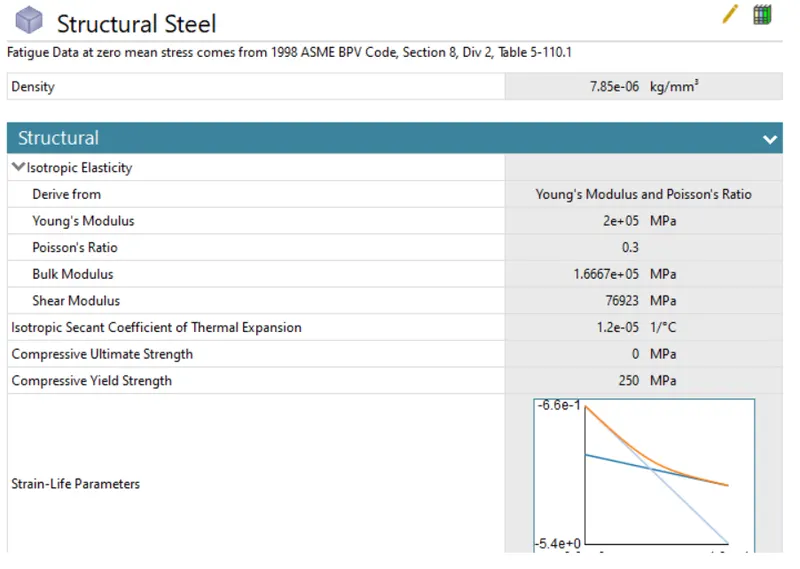
- Stainless steel
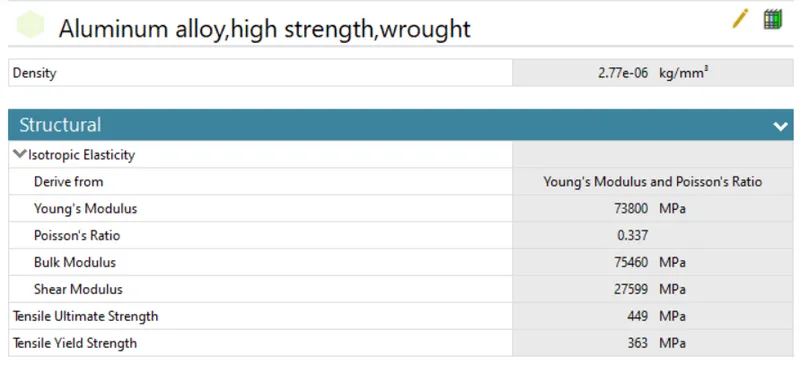
Aluminum Alloy
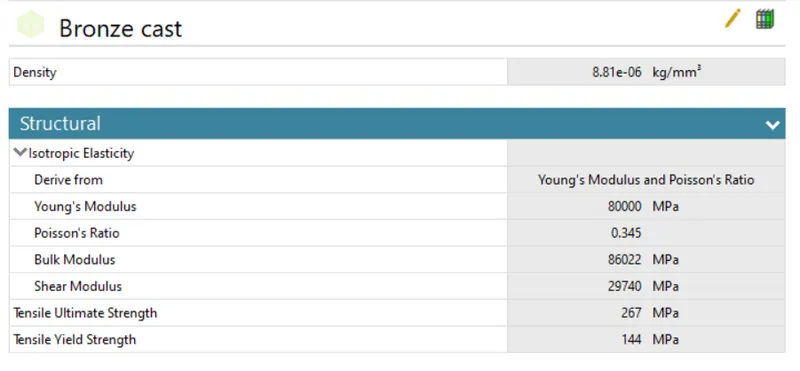
Bronze:
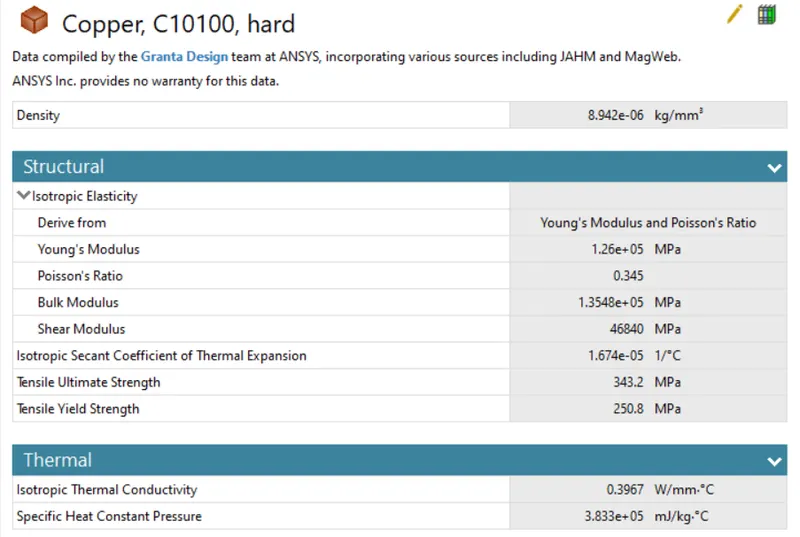
Copper
Geometry
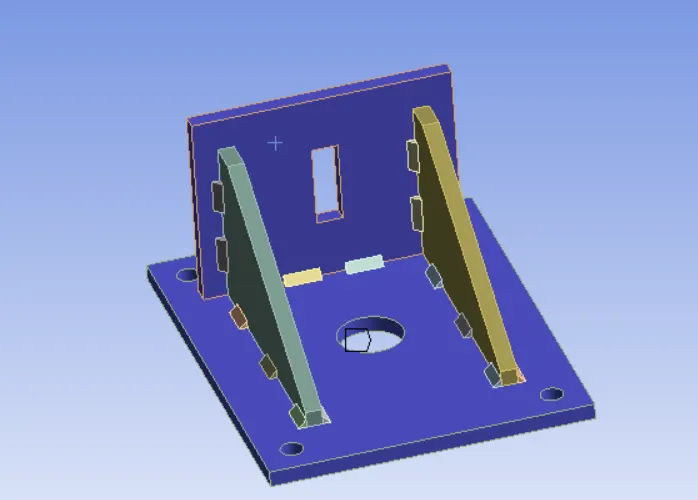
- Import the geometry in the SpaceClaim to check improper surface or damaged surface, if there any irregularities in the geometry.
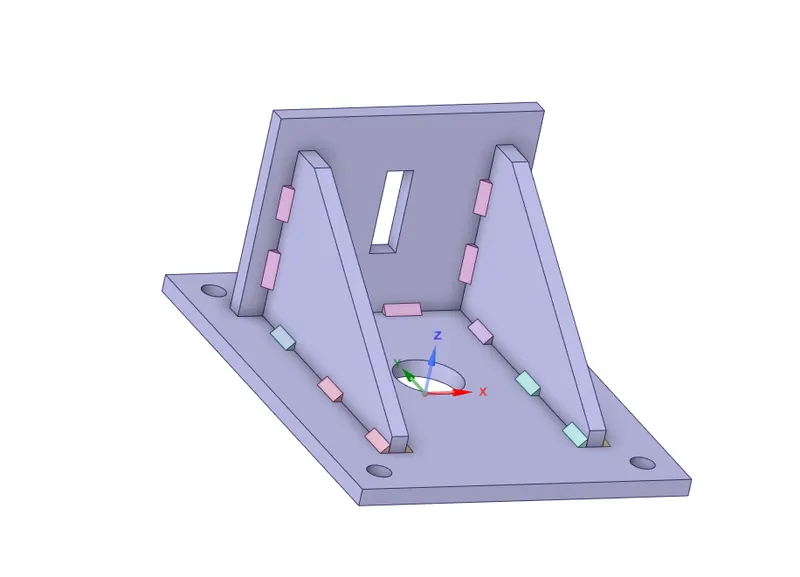
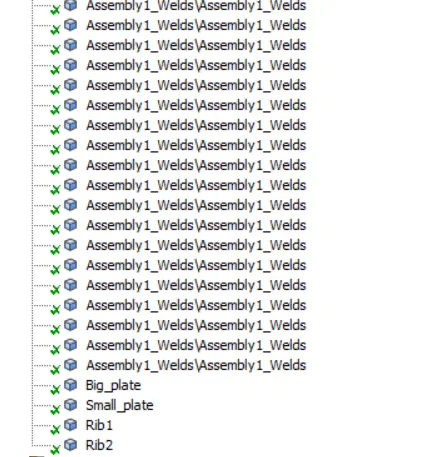
- After opening the geometry in the mechanical, the name is assigned for plates and the ribs.
Contacts
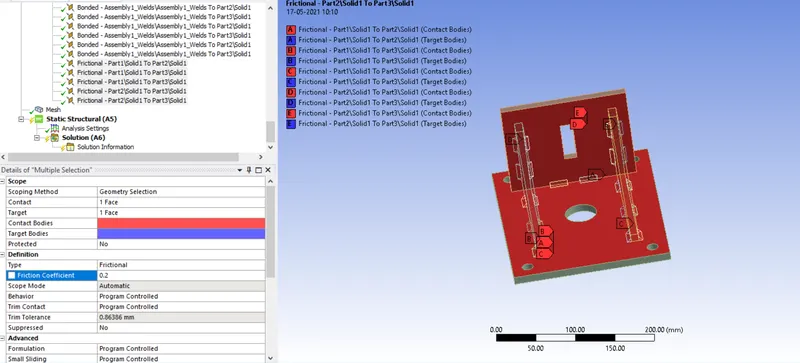
- The materials are assigned as per case and the results are evaluated. Further, the contact is renamed based on the definition to visualize the parts and the names and their connection. Also, the type is given the frictional with friction coefficient 0.2.
Mesh
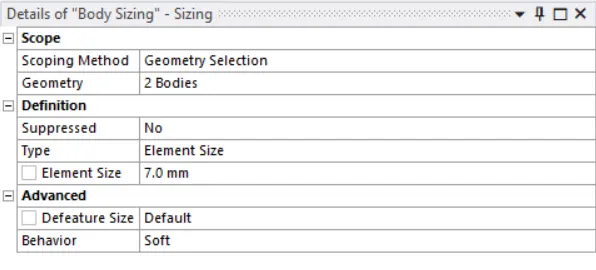
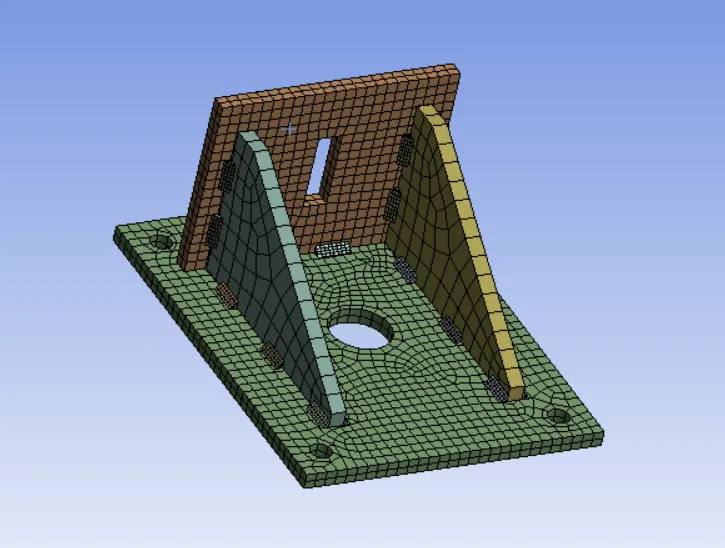
- The default mesh is deployed on the weld joint but to obtain accurate results on the force applied to the big plate and small plate, the sizing gives with size 7mm as refining the mesh.
After Meshing:
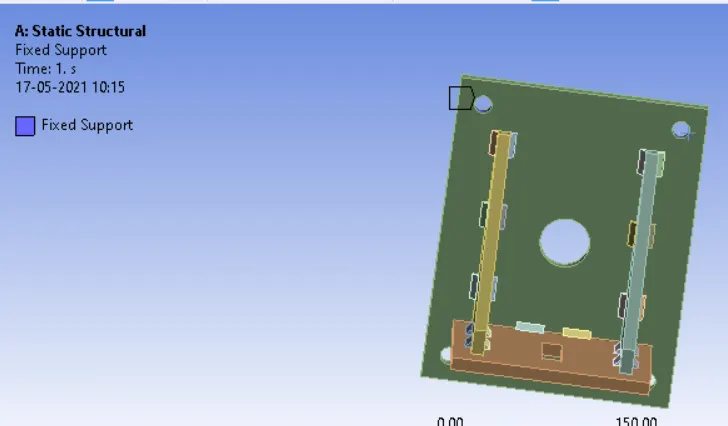
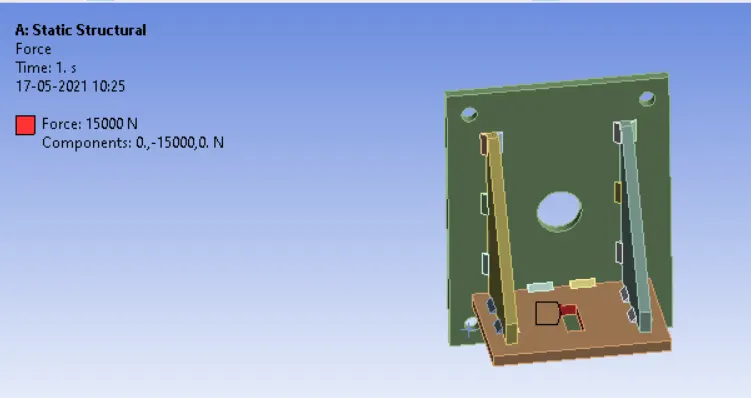
- In the Analysis setting, the large deflection is ON, to capture the non-linearities in the result. For the simulation process, few steps are followed the big plate is provided with fixed support, and the small plate is applied with the force of 15000 N in the Y-axis direction.
Fixed Support:
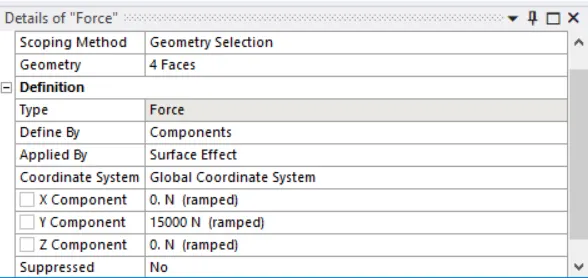
Force:
To evaluate the result
1) Equivalent von misses stress.
2) Direction deformation.
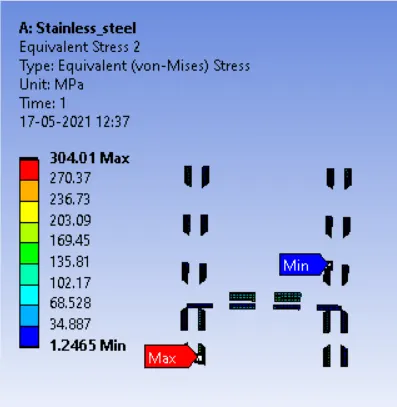
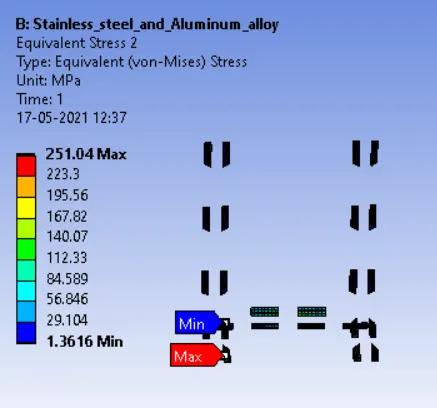
3) Equivalent von misses stress 2 on the welds.
4) Equivalent Elastic strain.
5)Equivalent Elastic strain(ribs)
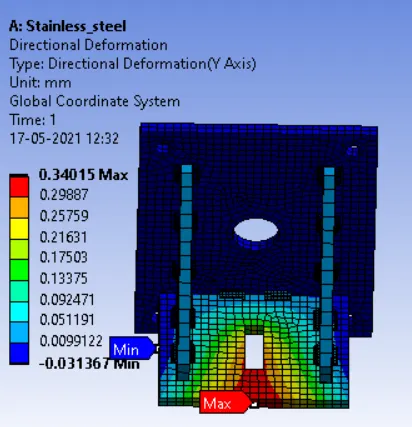
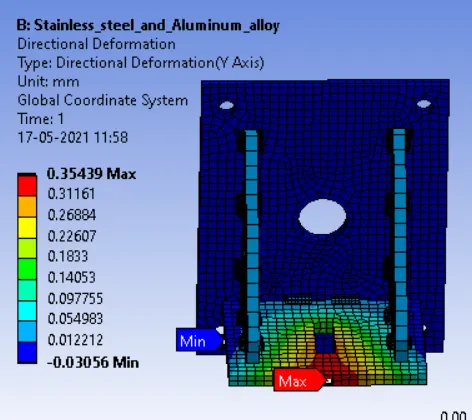
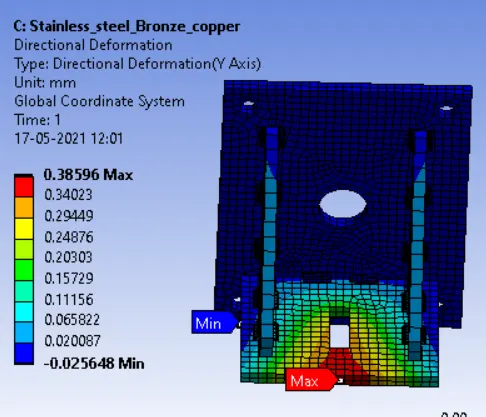
Direction deformation
Case 1 Case 2 Case 3
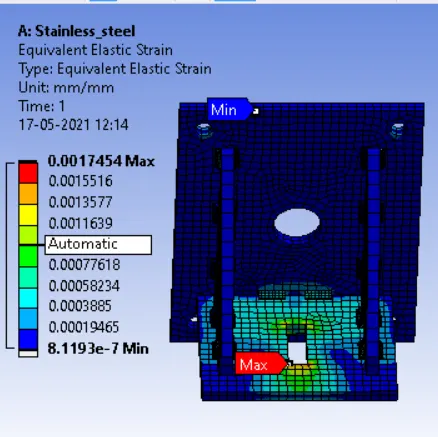
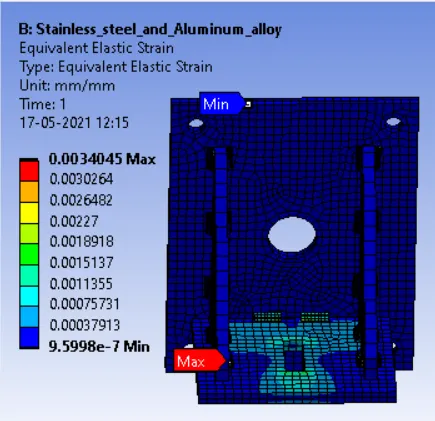
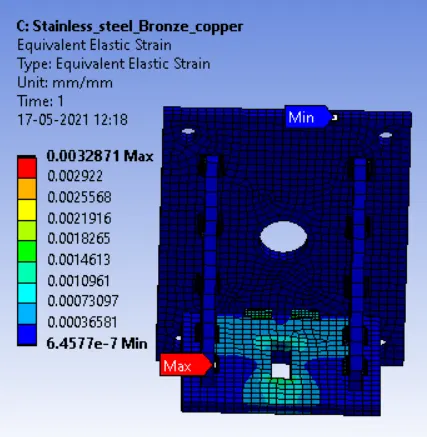
Equivalent Elastic strain
Case 1 Case 2 Case 3
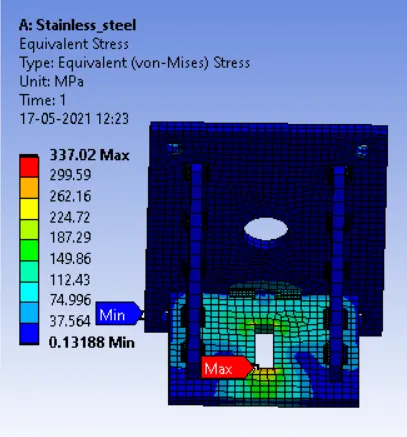
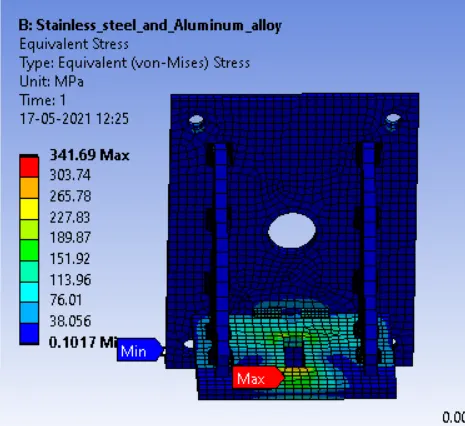
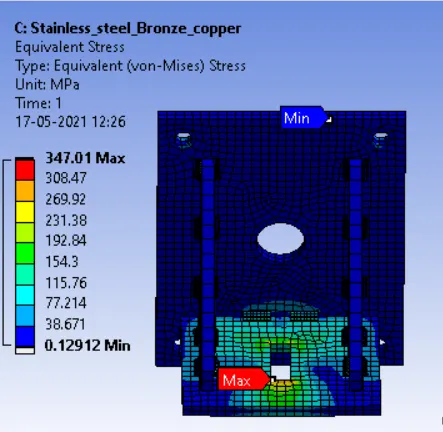
Equivalent von misses stress
Case 1 Case 2 Case 3
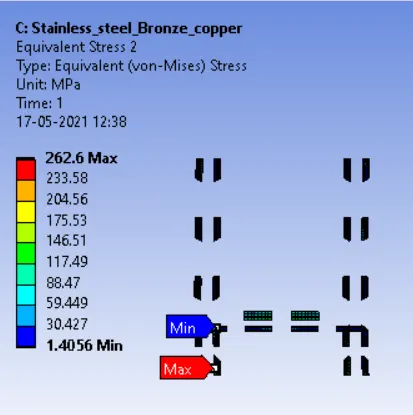
Equivalent von misses stress 2 on the welds.
Case 1 Case 2 Case 3
Equivalent Elastic strain(ribs)
Case 1 Case 2 Case 3
Result comparison on all the cases for directional deformation
| Sr.No | Stainless steel | Aluminum Alloy | Bronze |
| Directional deformation minimum (mm) | -3.14E-02 | -0.03056 | -0.025648 |
| Directional deformation maximum (mm) | 0.34015 | 0.35439 | 0.38596 |
| Directional deformation average (mm) | 2.71E-02 | 0.0286 | 0.031732 |
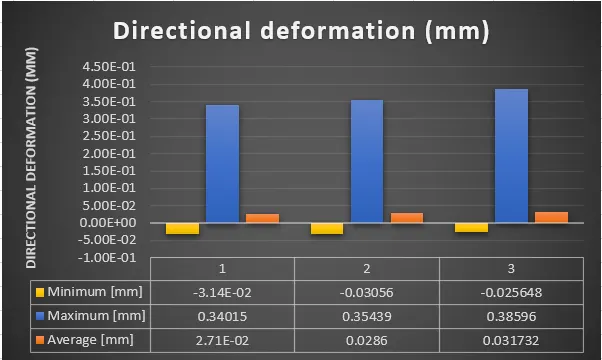
- As a result, shows stainless steel has more capability to handle deformation than the aluminum average value of 2.71E-02, and the large deflection shows on the aluminum alloy with an average value of 0.0286 and the bronze with average deformation is 0.031732.
Result comparison on all the cases for Equivalent elastic strain
| Sr.No | Stainless steel | Aluminum Alloy | Bronze |
| Equivalent elastic strain min (mm/mm) | 8.1193e-007 | 9.5998e-007 | 6.4577e-007 |
| Equivalent elastic strain max (mm/mm) | 1.7454e-003 | 3.4045e-003 | 3.2871e-003 |
| Equivalent elastic strain Avg (mm/mm) | 1.4001e-004 | 2.09e-004 | 2.0473e-004 |
- Equivalent elastic strain the minimum occurs on the big plate and maximum occurs on the small plate, the stainless steel has more elasticity properties compare to the other two materials.
Result comparison on all the cases for Equivalent von misses stress
| Sr.No | Stainless steel | Aluminum Alloy | Bronze |
| Equivalent von misses stress(MPa) | 0.13188 | 0.1017 | 0.12912 |
| Equivalent von misses stress(MPa) | 337.02 | 341.69 | 347.01 |
| Equivalent von misses stress(MPa) | 26.58 | 24.754 | 25.162 |
- Most stress occurs on the stainless steel component and more stiff material said to be bronze material as the least average stress is 25.162MPa.
Result comparison on all the cases for Equivalent von misses stress 2
| Sr.No | Stainless steel | Aluminum Alloy | Bronze |
| Equivalent von misses stress(MPa) | 1.2465 | 1.3616 | 1.4056 |
| Equivalent von misses stress(MPa) | 304.01 | 251.04 | 262.6 |
| Equivalent von misses stress(MPa) | 37.913 | 31.133 | 31.448 |
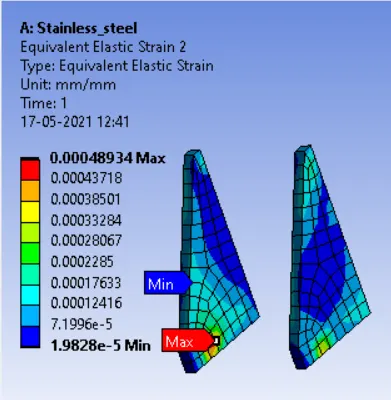
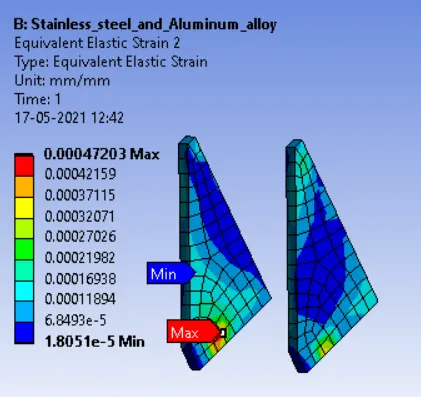
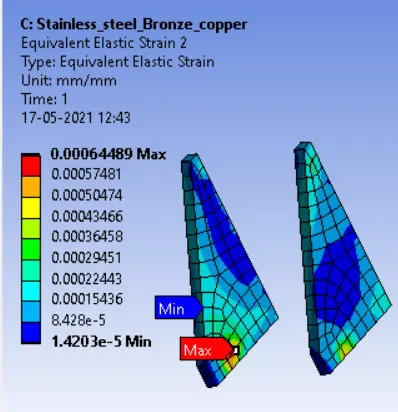
Result comparison on all the cases for Equivalent elastic strain(Ribs)
| Sr.No | Stainless steel | Aluminum Alloy | Bronze |
| Equivalent elastic strain min (mm/mm) | 1.9828e-005 | 1.8051e-005 | 1.4203e-005 |
| Equivalent elastic strain max (mm/mm) | 4.8934e-004 | 4.7203e-004 | 6.4459e-004 |
| Equivalent elastic strain Avg (mm/mm) | 1.1008e-004 | 1.0835e-004 | 1.44e-004 |
CONCLUSION ON ALL CASES:
- So it can be observed that Case 3 having stainless steel as plate and copper as ribs experience the highest directional deformation in the y-axis, strain the ribs and stress in the body while Case 1 having stainless steel as plates and ribs experience the least directional deformation in the y-axis, strain and stress in the body but as weldments aluminum alloy experience the least stress and stainless steel experience the highest.
CONCLUSION:-
- So it can be inferred from the analysis that stainless steel as a weldment experiences the highest stress in comparison to aluminum alloy and bronze whereas aluminum alloy experience the least.