Week 3 Verification of Weld Joints
VERIFICATIONS OF WELD JOINTS
Objective: -
- Simulate three different types of welding using three different weld materials-
Weld Material used:
Case 1. Stainless Steel: In this case, the material of the plates must also be the same. Use Stainless steel for both weldments and plates.
Case 2. Aluminium Alloy:The material to be chosen for this case is Aluminium alloy(high strength, wrought). Plate material to be used is stainless steel.
Case 3. Bronze: In order to simulate "Brazing", you should be using bronze as the weld material. Assign Stainless Steel to both plates and Copper to the "Ribs".
ii. Mark the weld joint that experiences the highest equivalent stress in each case and compare the results for all three cases.
Procedure: -
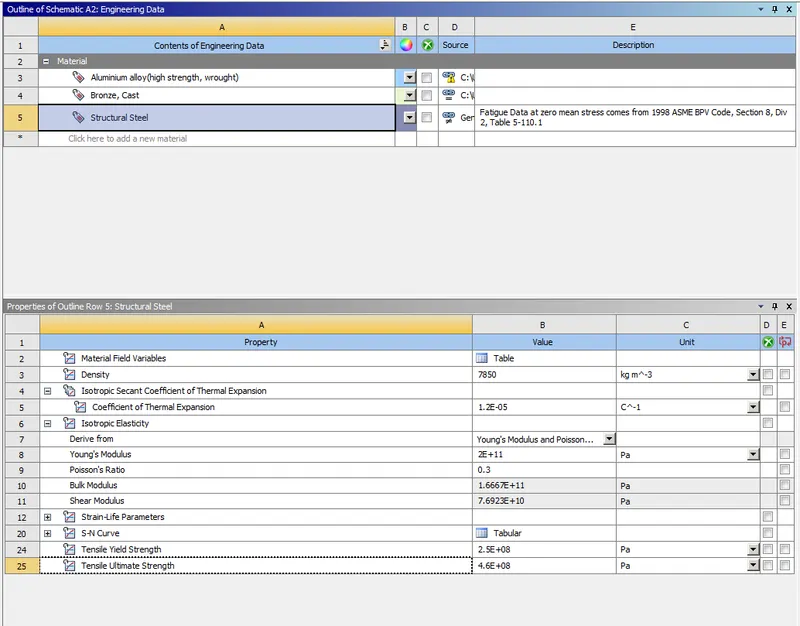
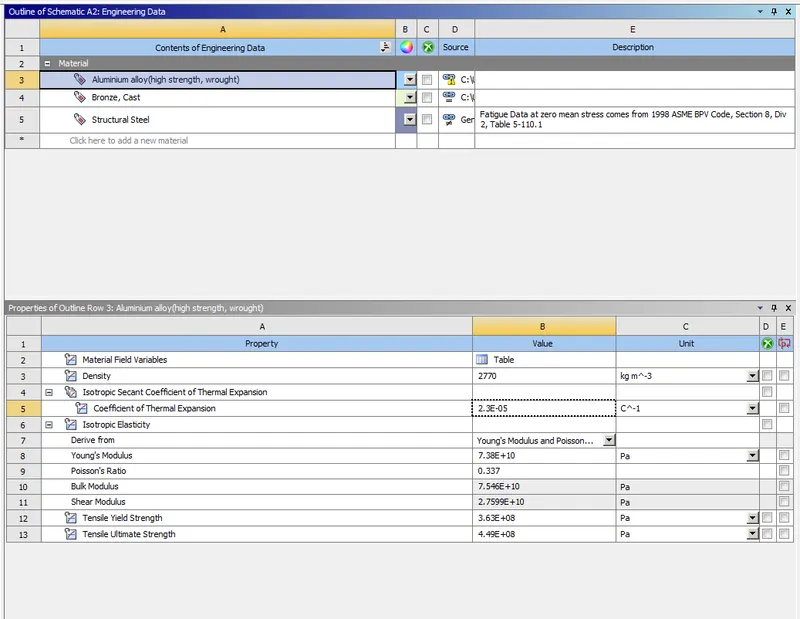
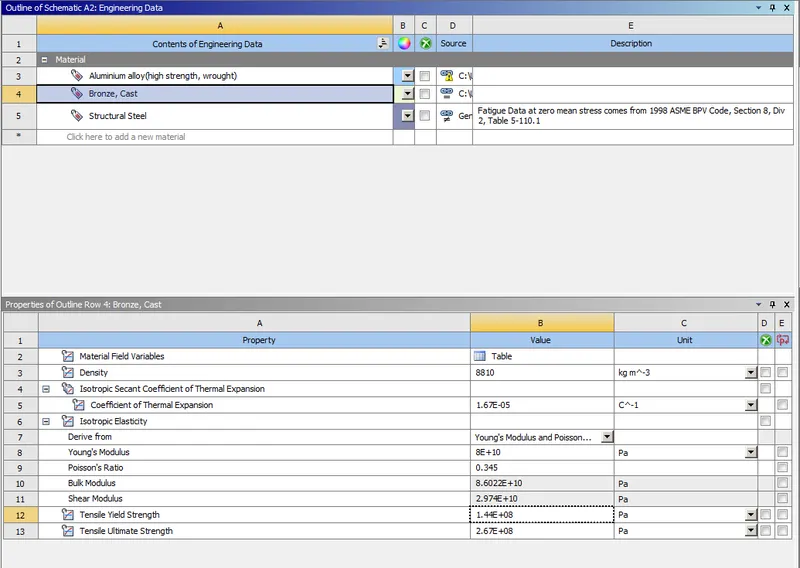
- The engineering materials we will use here are Stainless steel,Aluminium alloy,Bronze,Copper and structural steel.We can load the materials from the engineering data source and for aluminium alloy and bronze, we have feed the data manually.
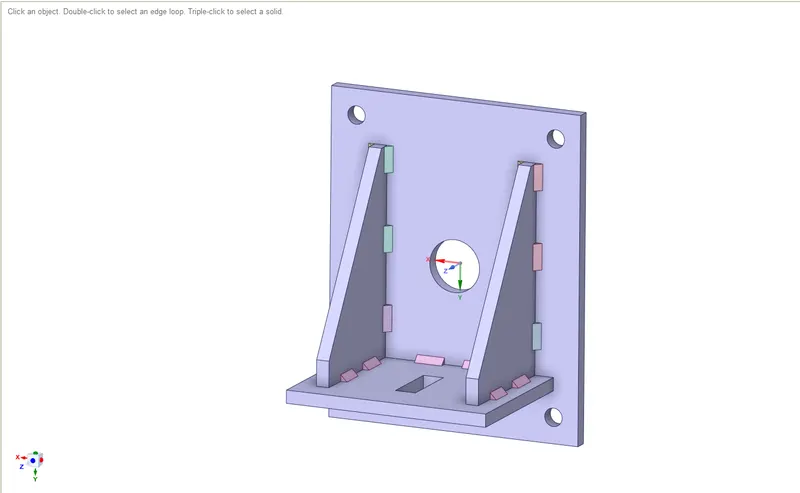
Geometry-
Connections-
- All the five joints among the plates and the ribs will have a frictional contact with a friction coefficient of 0.2.The weld joints will have bonded contacts.
Boundary conditions-
- Fixed support is provided to the five holes, as the plate will held to the walls with bolts through these holes.
- A load of 15000N is provided to the other plate through the holes.
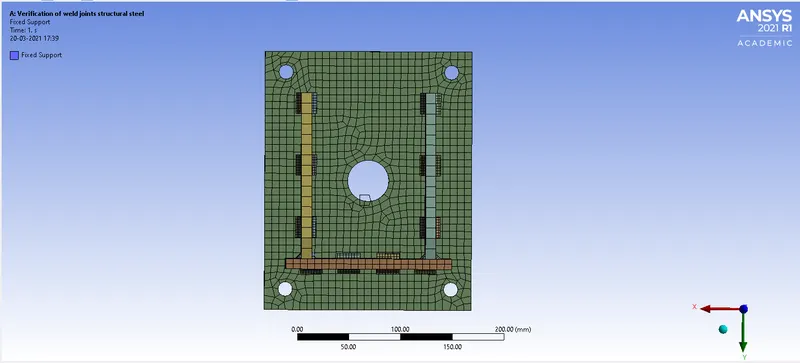
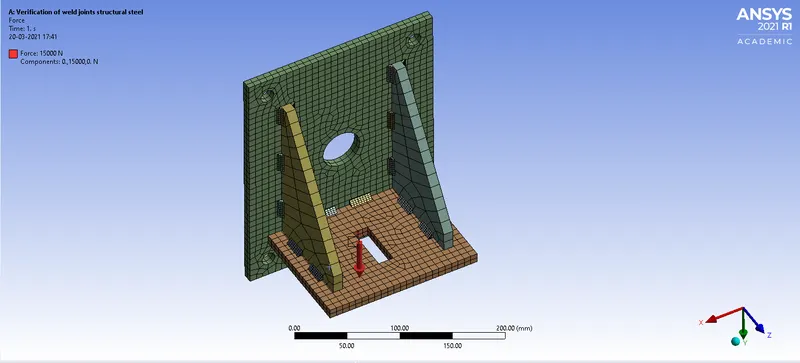
Meshing-
A sizing mesh of 7mm is provided to both of the plates and for the for the ribs and weld joints default mesh is used.
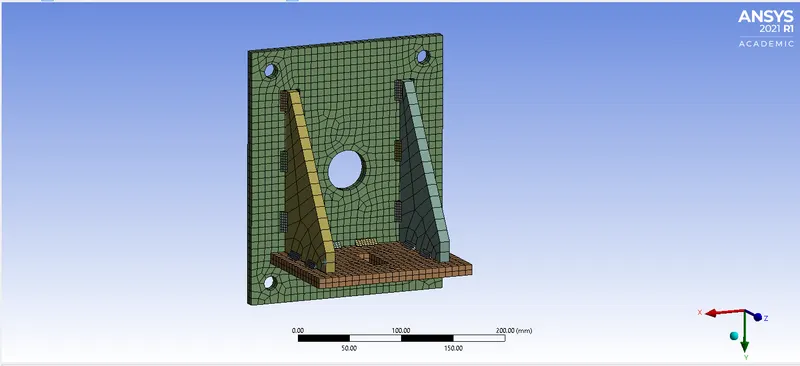
Results-
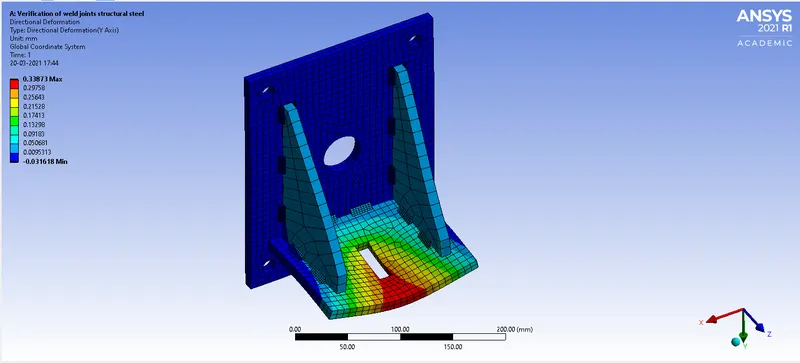
Equivalent stress plot when we used structural steel as the working material.
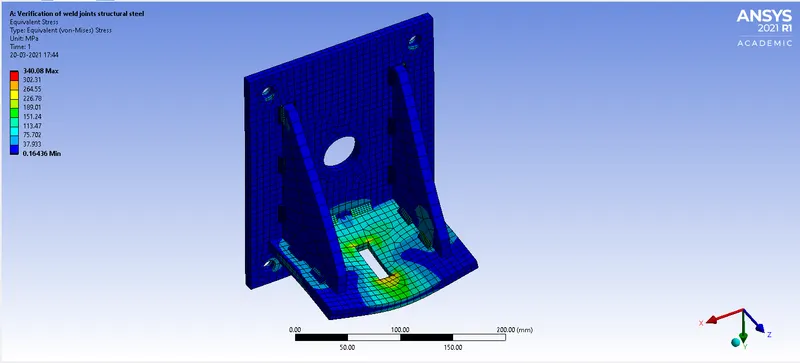
Directional deformation of 0.33mm is observed in the Y-direction.
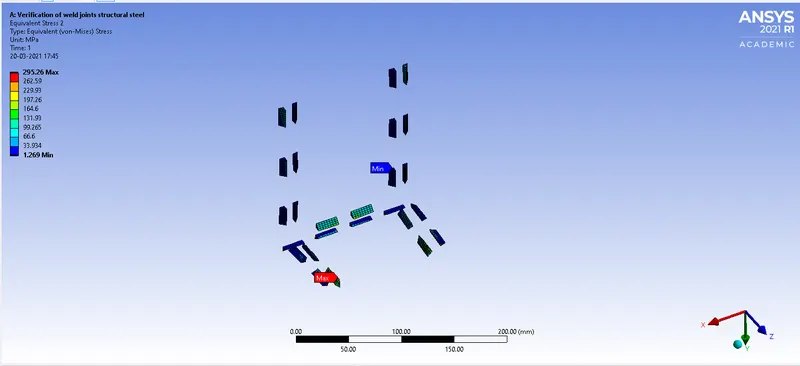
Maximum stress experienced by the weld joint-
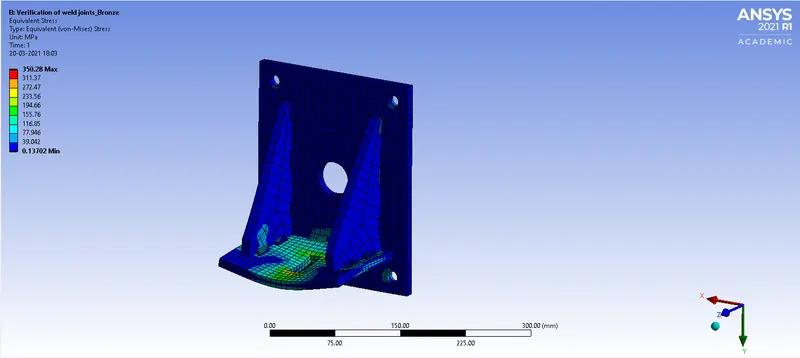
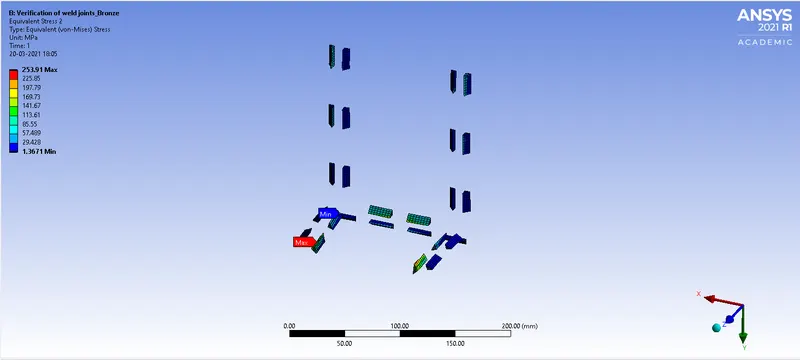
Equivalent stress plot when we used Bronze as the working material.
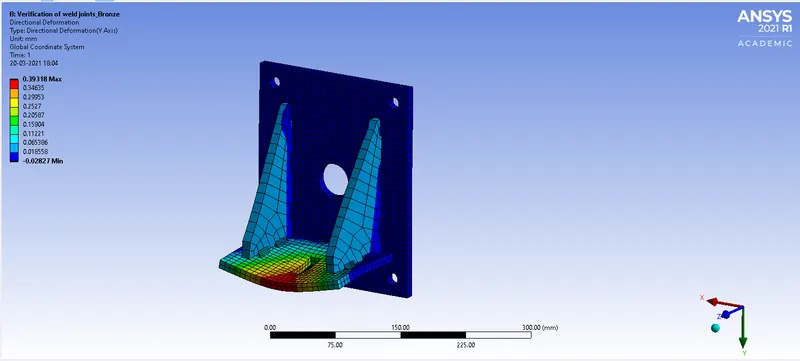
Directional deformation of 0.39mm is observed in the Y-direction.
Maximum stress experienced by the weld joint-
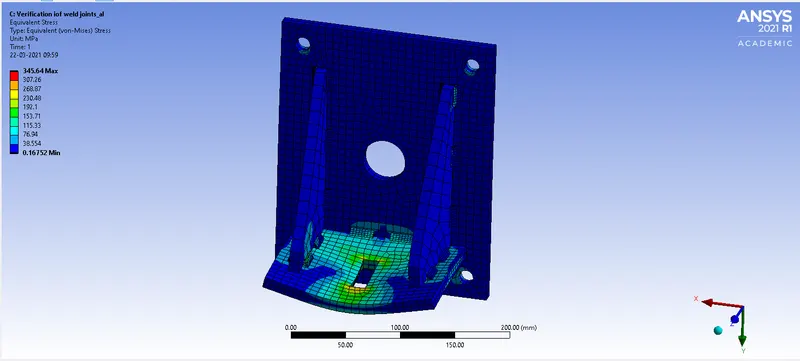
Equivalent stress plot when we used aluminium alloy as the working material.
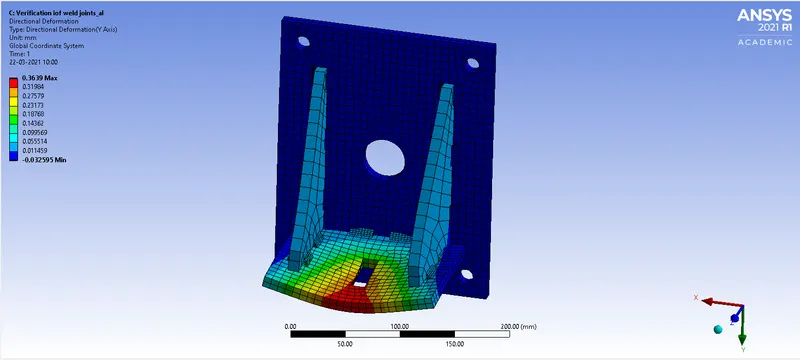
Directional deformation of 0.3639mm is observed in the Y-direction.
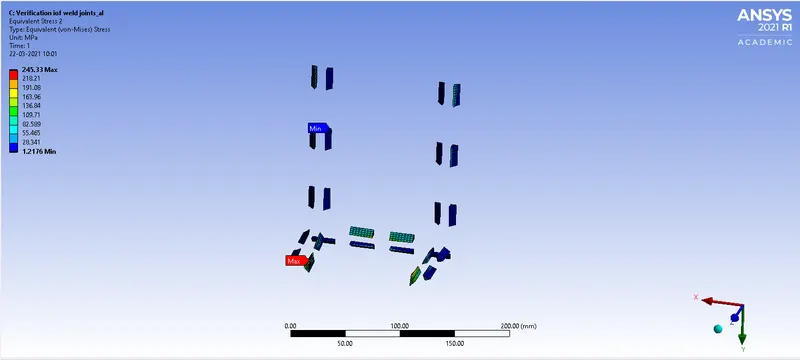
Maximum stress experienced by the weld joint-
The below table sums up all the observations for the three different material cases: -
| Sr.No | Material | Maximum Equivalent stress(Von-mises) | Directional deformation | Equivalent elastic strain |
| 1 | Structural steel | 340.08 MPa | 0.3387 mm | 0.001803 |
| 2 | Bronze, Stainless steel, copper | 350.28 MPa | 0.3931 mm | 0.0019244 |
| 3 | Aluminium alloy, Stainless steel | 345.64 MPa | 0.3639 mm | 0.001898 |
Conclusion: -
- The above analysis suggests us that maximum stress experienced in the second case of bronze,Stainless steel and copper as the working material.
- Maximum directional deformation of 0.3931mm is also observed in the second case.