Week 3 Verification of Weld Joints
- Objective: Simulate three different types of welding using three different weld materials.
Procedure:
- Setting Up: We will open ANSYS Workbench and proceed with Static Structural Analysis. We will rename the project as Welding Verification:
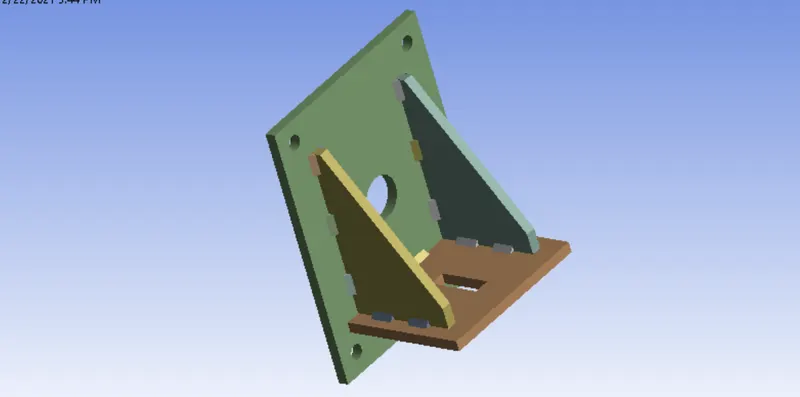
- Importing: We will import the given file into the model, we will open Spaceclaim and check Geometry for any error, the given model was free of any errors, the below image shows the same. In this model we will rename the features to Big and Small Plate and Rib1 and rib2 for better understanding:
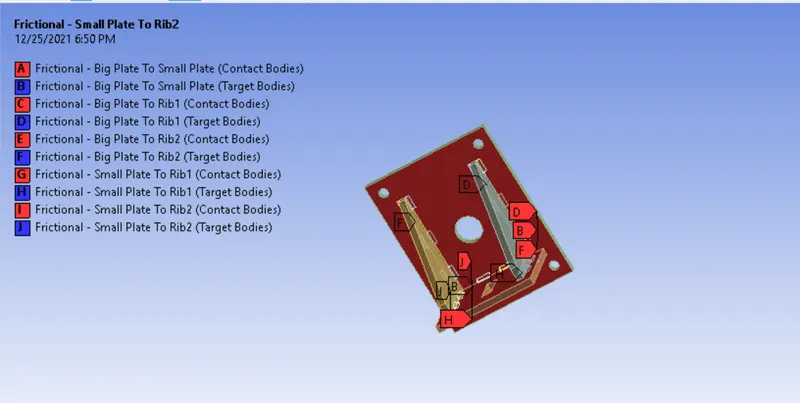
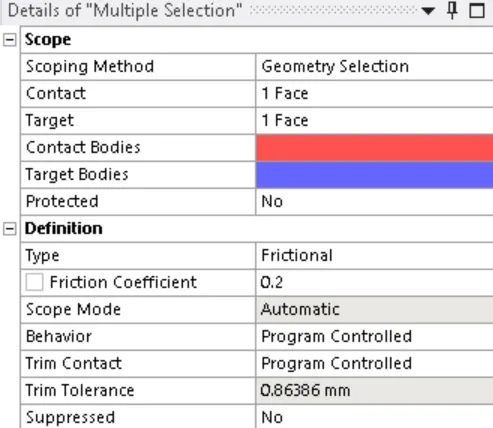
- Setting Up Contacts: In this setup we have we will have Frictional Connection between the Big and Small PLates and between two ribs, we have 5 such connections and we will change the connection type between these to Frictional Connection, with a coefficient of friction of 0.2. The below images shows the same:
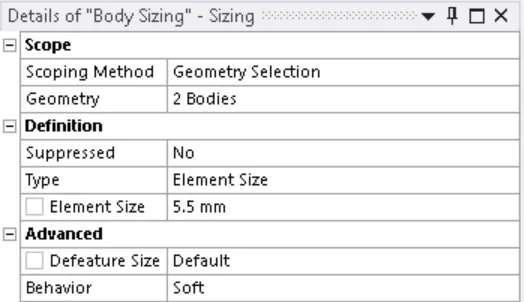
- Mesh: Here we have assigned a mesh size of 10mm to all the faces. And for Plates, we have selected the sizing of 5.5mm in order to keep the nodes under the limit. The below image shows the same:
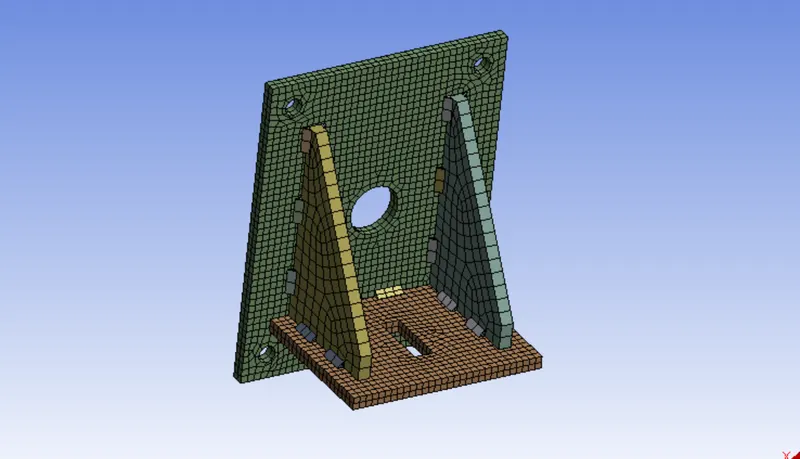
Face Sizing with 5.5 mm:
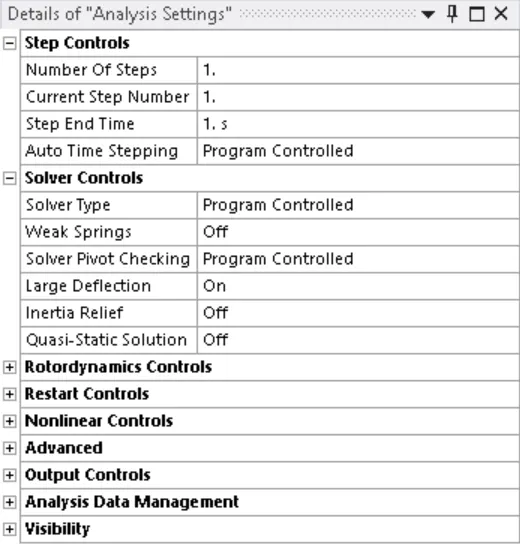
- Analysis Settings: For this analysis, we will select the Single Step analysis, we will turn on the large deflection keeping the non-linearities in consideration:
Boundary Conditions:
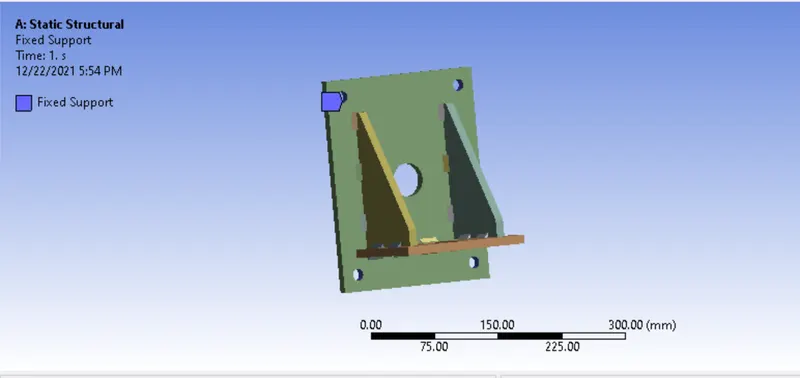
Fixed Support: Here e have fixed the Big Plate with four holes on each corner:
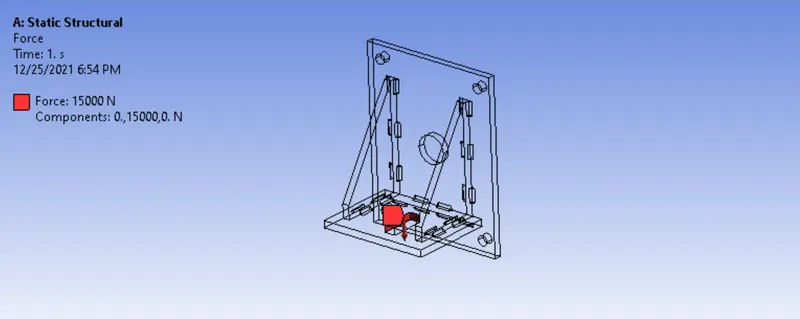
Force: We will assign the force of 15000N on the small plate in Y Direction, the force will be applied on the rectangular hole in the center of a small plate, the below image shows the same:
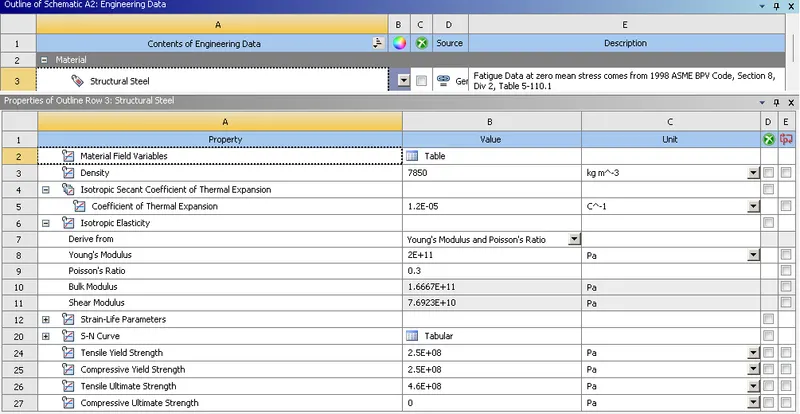
- Case 1: Stainless Steel: In this case, the material of the plates must also be the same. Use Stainless steel for both weldments and plates. No need to add flux to the weldments
Solution:
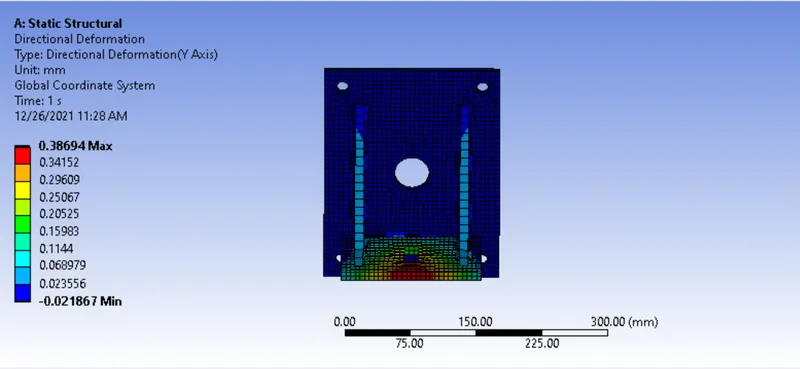
Directional Defroamtion(Y-axis):
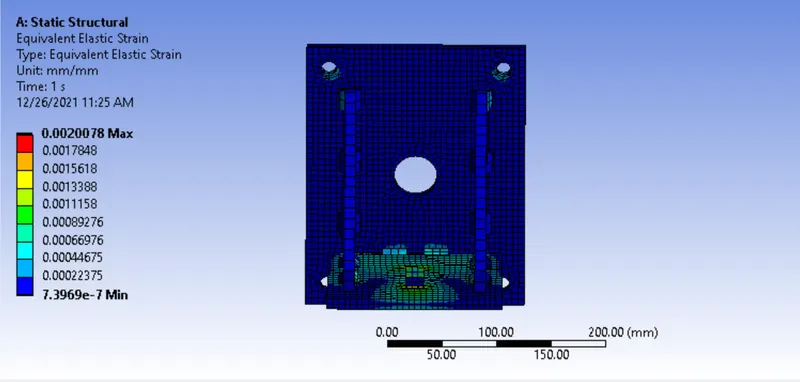
Equivalent Strain:
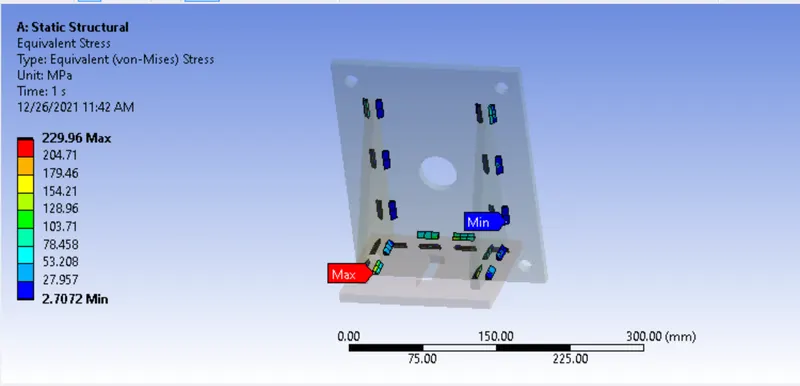
Equivalent Stress(On weld):
- Case 2: Aluminium Alloy:The material to be chosen for this case is Aluminium alloy(high strength, wrought). Plate material to be used is stainless steel
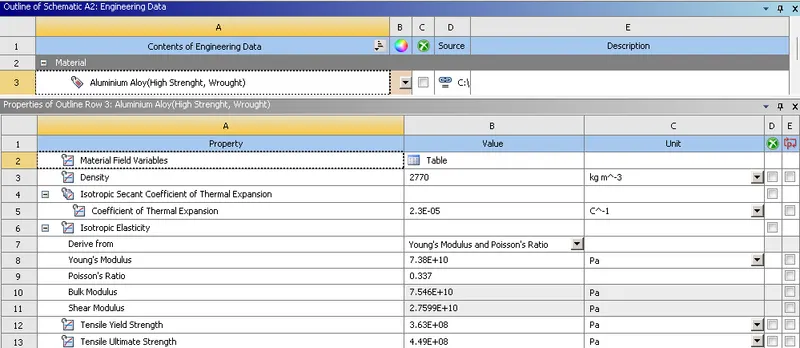
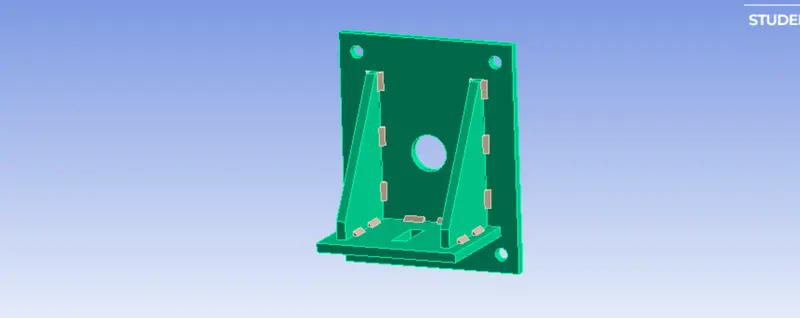
Below image shows Alluminium Assigned to the weld joints:
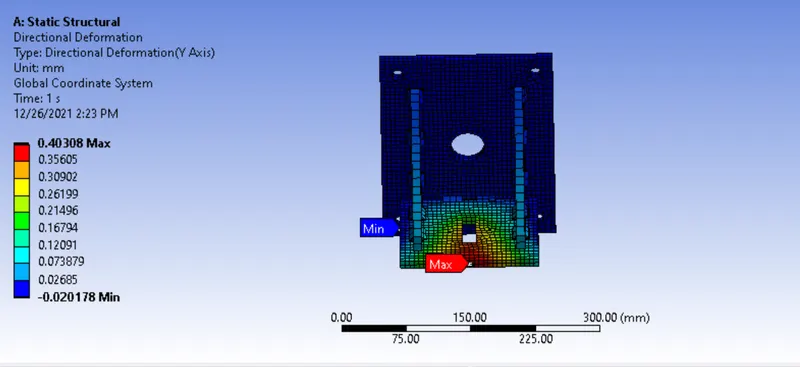
Solution:
Directional Defroamtion(Y-axis):
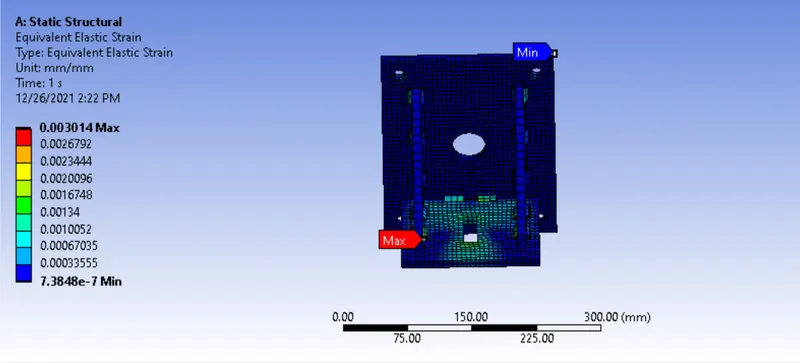
Equivalent Strain:
Equivalent Stress(On weld):
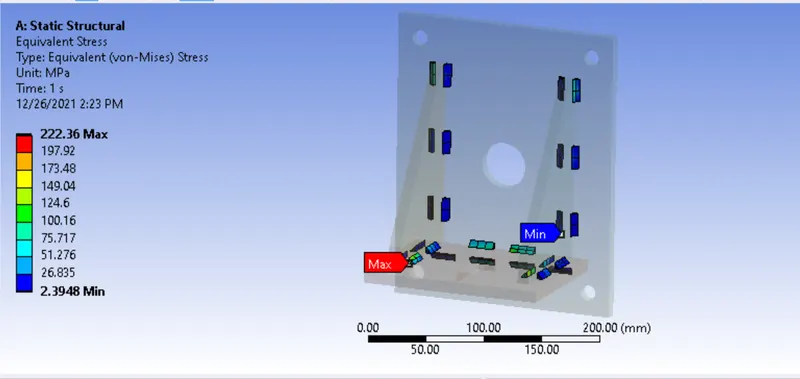
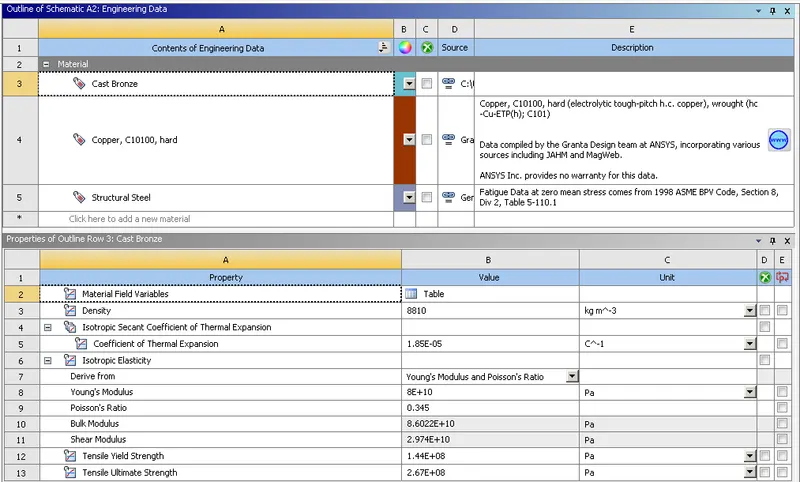
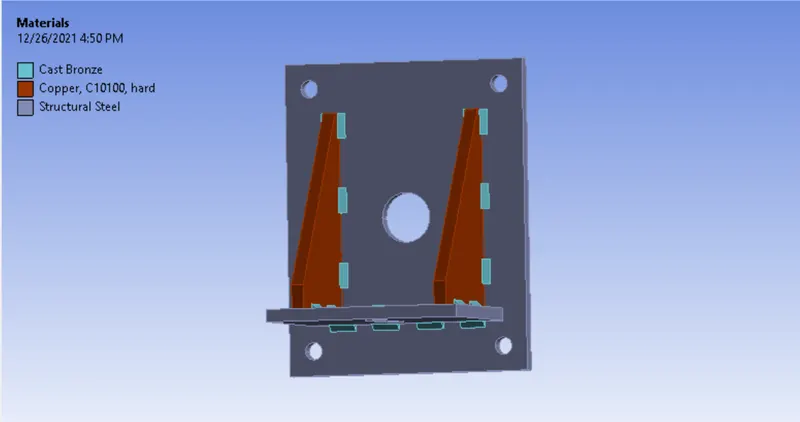
- Case 3: Bronze: In order to simulate "Brazing", you should be using bronze as the weld material. Assign Stainless Steel to both plates and Copper to the "Ribs".
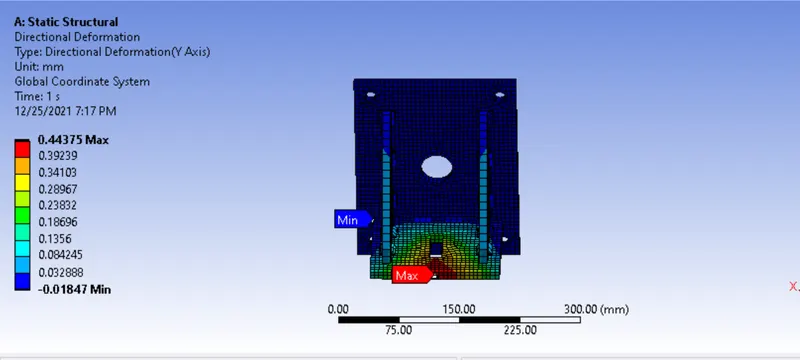
Directional Defroamtion(Y-axis):
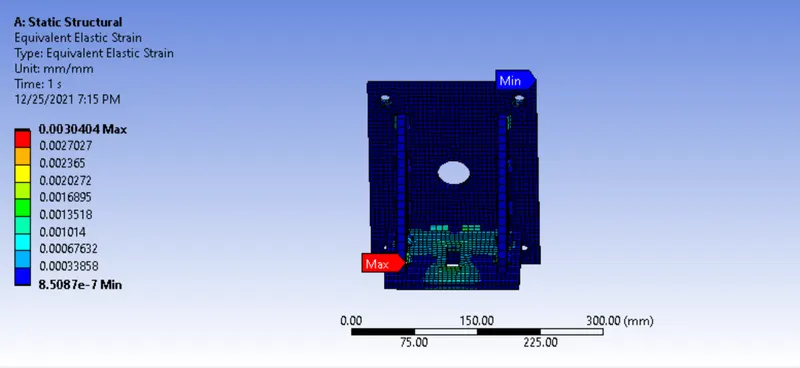
Equivalent Strain:
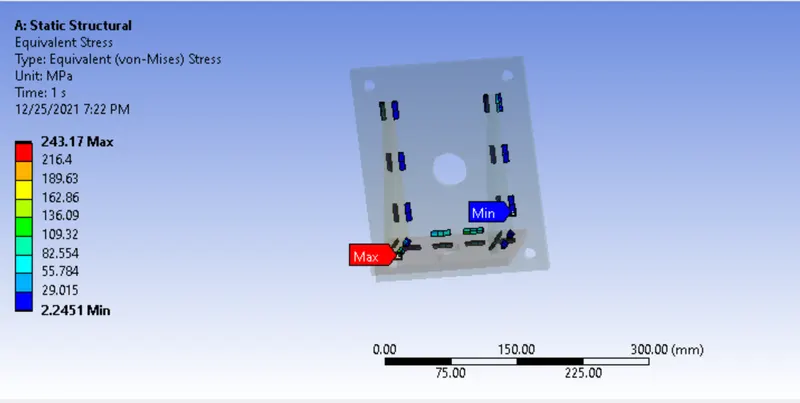
Equivalent Stress(On weld):
- Conclusion:
| Directional Defroamtion(Y-axis): mm |
Equivalent Strain: (mm/mm) |
Equivalent Stress(On weld):MPa |
| min | max | min | max | min | max | |
| Stainless Steel | -2.1867e-002 mm | 0.38694 mm | 7.3969e-007 mm/mm | 2.0078e-003 mm/mm | 2.7072 MPa | 229.96 MPa |
| Alluminium Alloy(Wought, Strenght) | -2.0178e-002 mm | 0.40308 mm | 7.3848e-007 mm/mm | 3.014e-003 mm/mm | 2.3948 MPa | 222.36 MPa |
| Bronze Cast & Copper | -1.847e-002 mm | 0.44375 mm | 8.5087e-007 mm/mm | 3.0404e-003 mm/mm | 2.2451 MPa | 243.17 MPa |
From the results above we can see that stresses developed are highest in Bronze as weld material, similarly the directon defromation and Equivalent strain is also highest in Bronze. Hence it will be the least preferred material of the three forthis application
We can see the weld nearest of the Rectandular hole where Force is applied has highest stresses and lest safety factor.