Week 3 Sheet metal Bending challenge
OBJECTIVE:
Sheet metal bending is to be performed for 3 different materials mentioned below. Variation of certain settings is also to be performed and your conclusions are to be added to the report
Note: Please read the instructions carefully
Run the analysis for the material :
Case 1:Aluminium Alloy 1199( mentioned in the course video),Copper Alloy NL and Magnesium Alloy NL. Find out the Equivalent stress, Equivalent elastic strain and Total Deformation in Y direction and compare the results for the three materials.
Case 2:With the material as Aluminium Alloy, change the friction coefficient to 0.19 and run the analysis as mentioned in Case 1. Compare the results with that in case 1.
Case 3: Refine the mesh on the plate such that it doesn't cross the academic limit. With Aluminium alloy as material, run the analysis as in Case 1 and compare the results
Case1:
- go to engineer data<edit
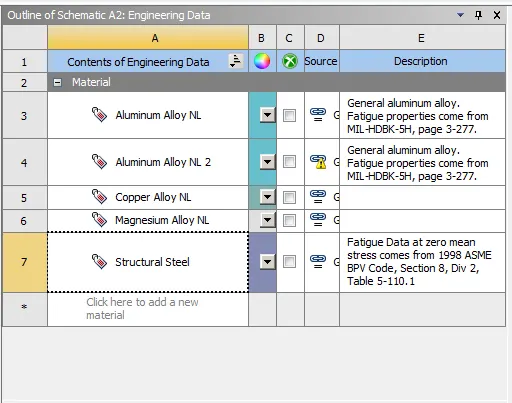
- Right click on geometry
- right click on model <edit
- for sheet assign alluminium alloy
Connections:
- Right click on contacts <insert
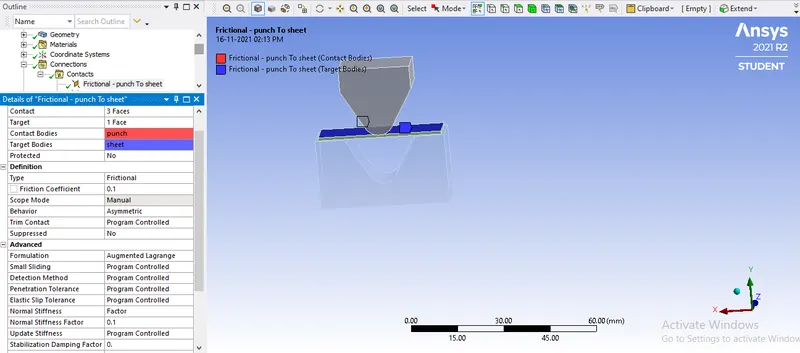
- create another contact by selecting bottom surface of the sheet
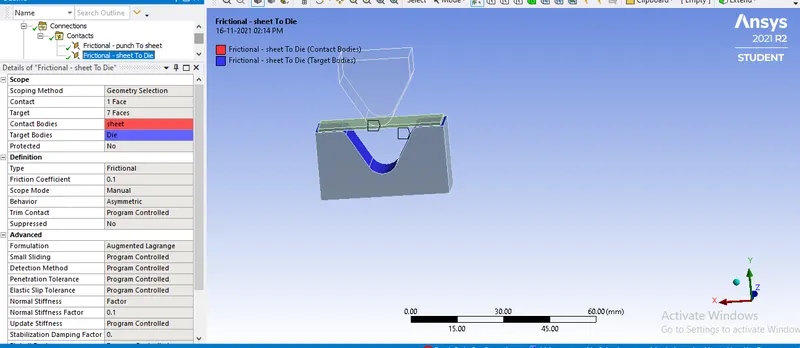
- now select both contacts<type=frictional
Meshing:
- go to mesh<insert<sizing
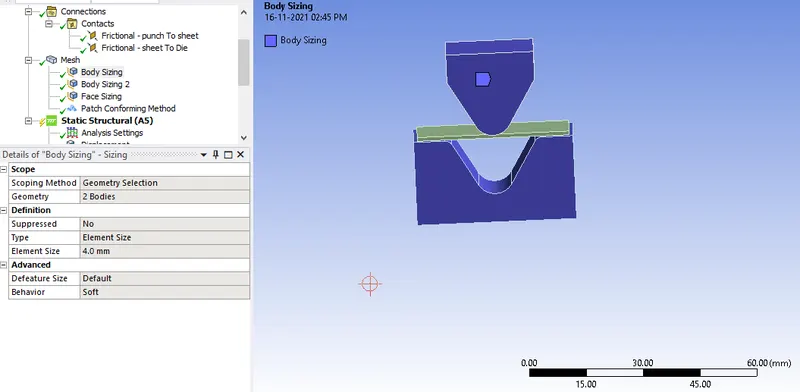
- right click on mesh<insert<sizing
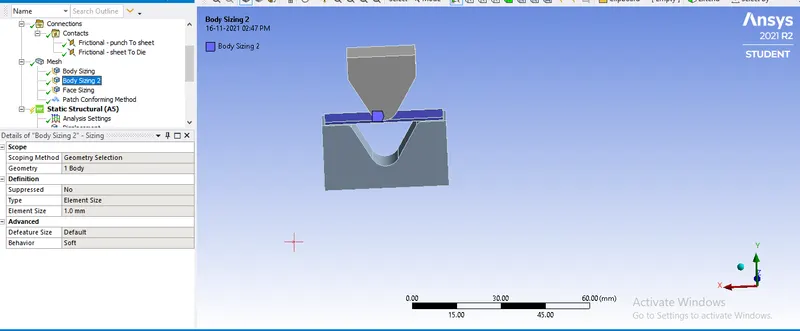
- right click on mesh <insert<method
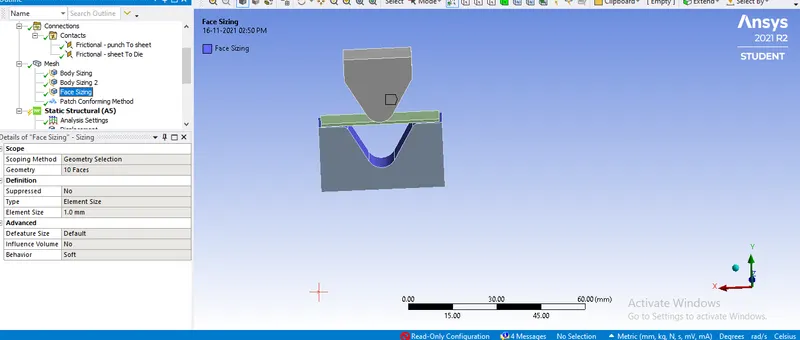
Analysis setup:
- Go to analysis settings
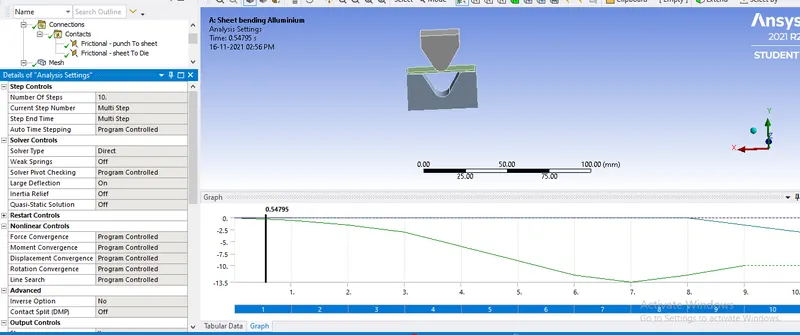
- use face filter
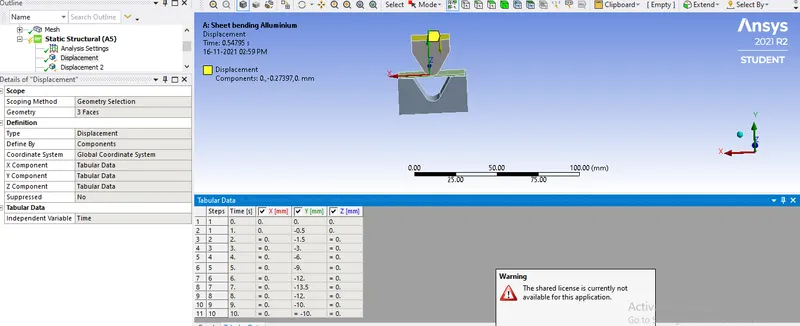
- give displacement for sheet in z-direction as tabular and give values as 0
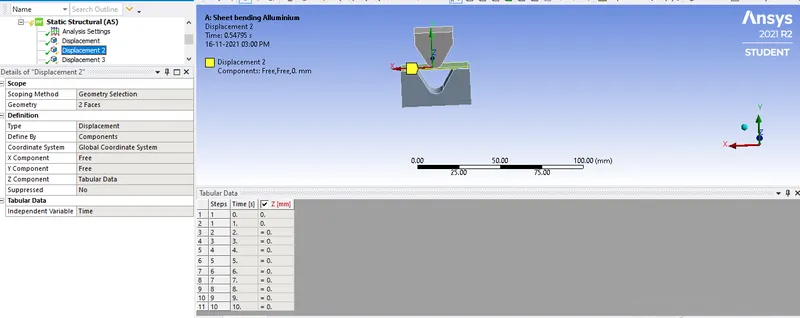
- give displacement for the die selecting die faces and give values in ydirection
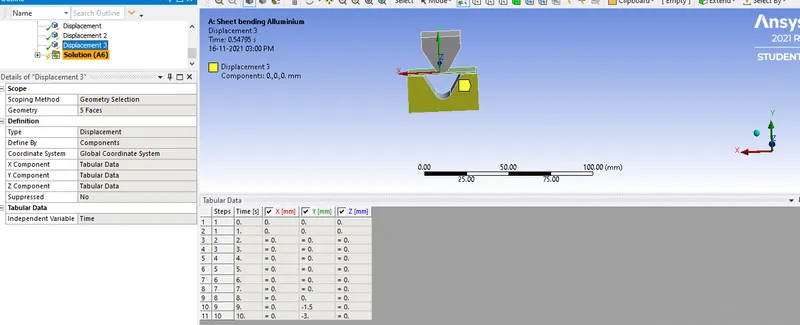
- right click on solution <insert
- Run the analysis
Results:
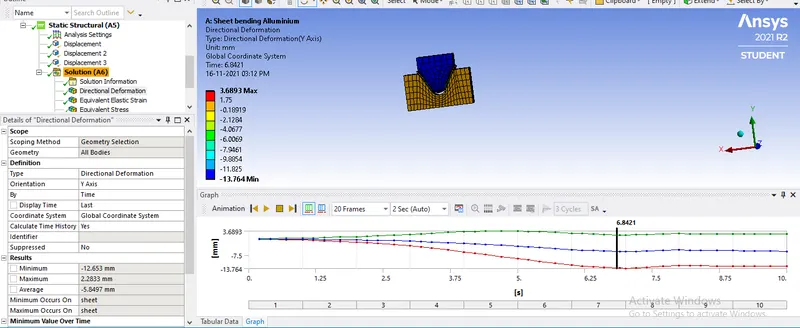
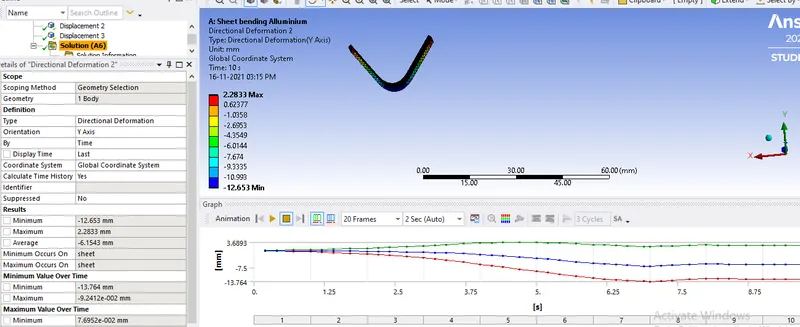
Directional deformation:
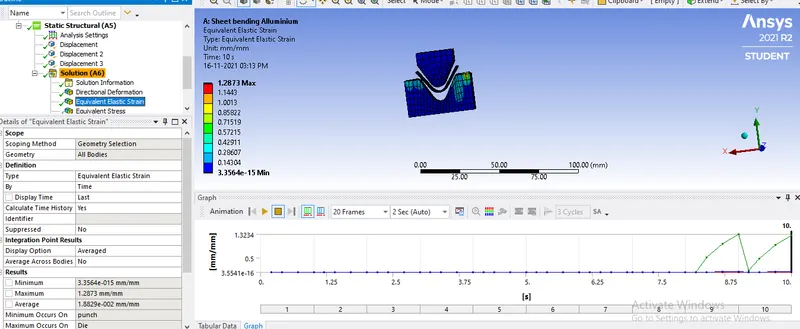
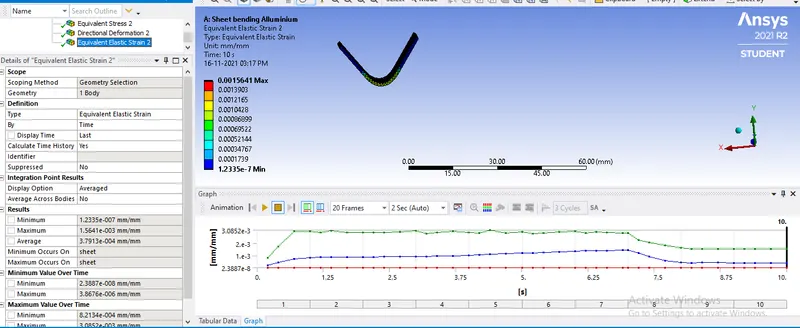
Equivalent Elastic strain:
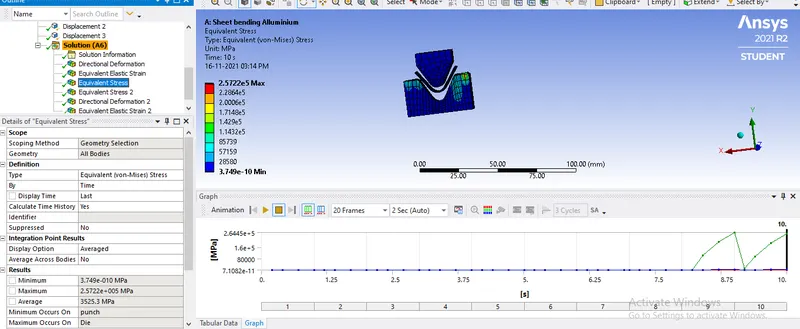
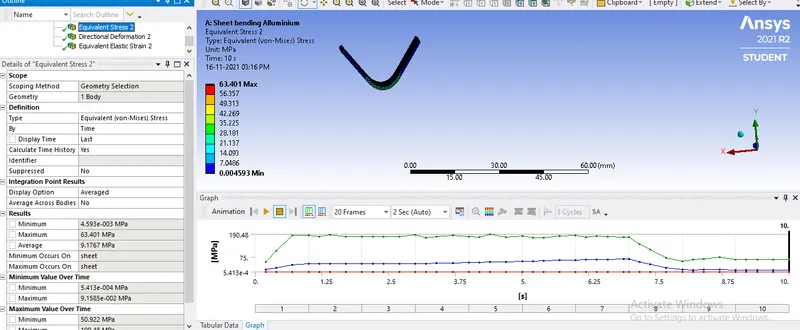
Equivalent stress:
Directional deformation of sheet:
Eqivalent stress in sheet:
Equivalent strain in sheet:
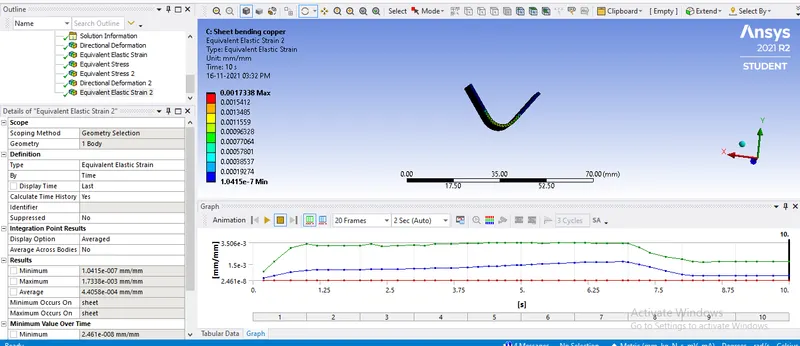
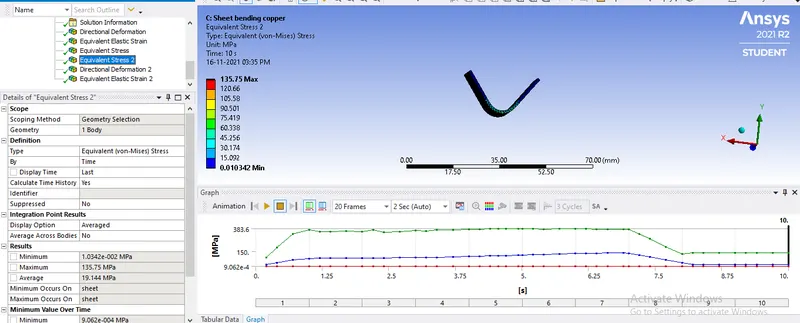
Now change the sheet material as copper alloy then run the simulation:
Results:
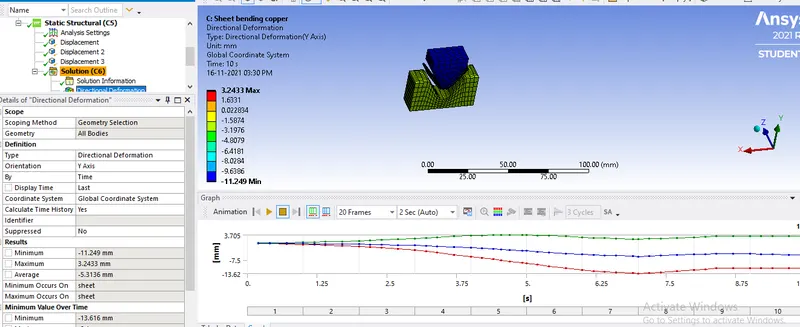
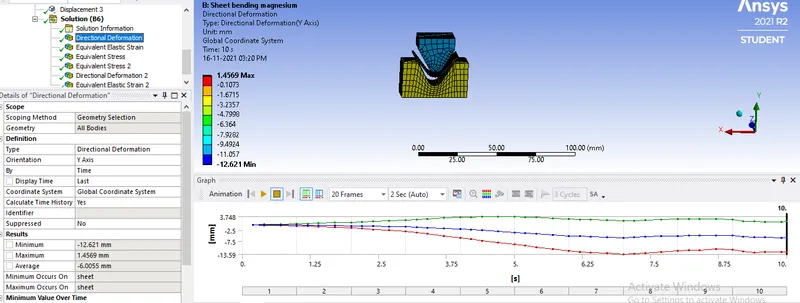
Directional deformation:
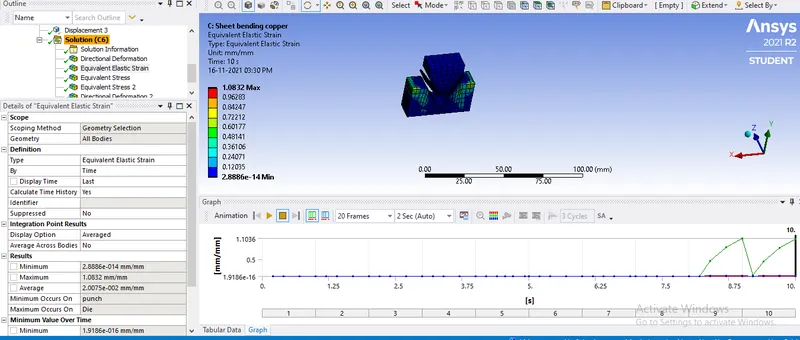
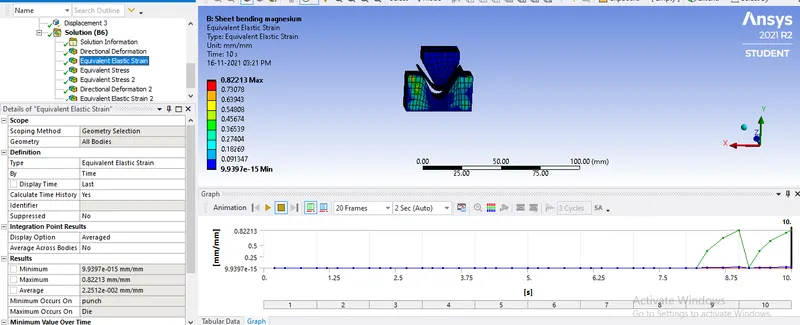
Equivalent Elastic strain:
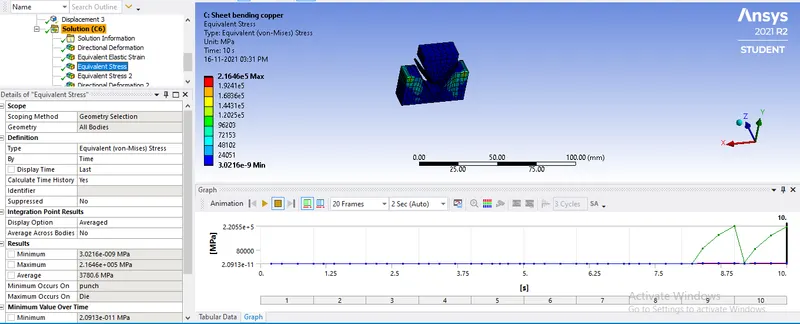
Equivalent stress:
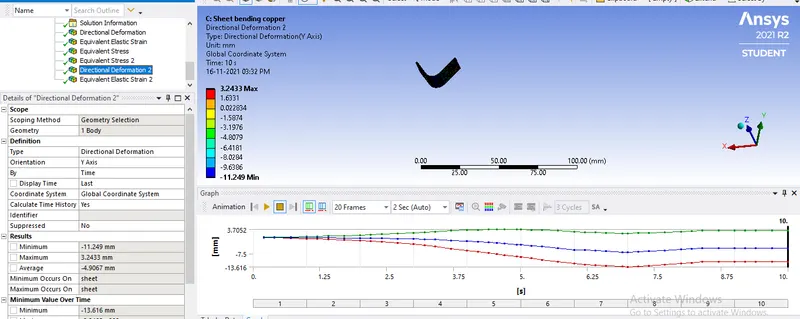
Directional deformation of sheet:
Equivalent Elastic strain of sheet:
Equivalent stress of sheet:
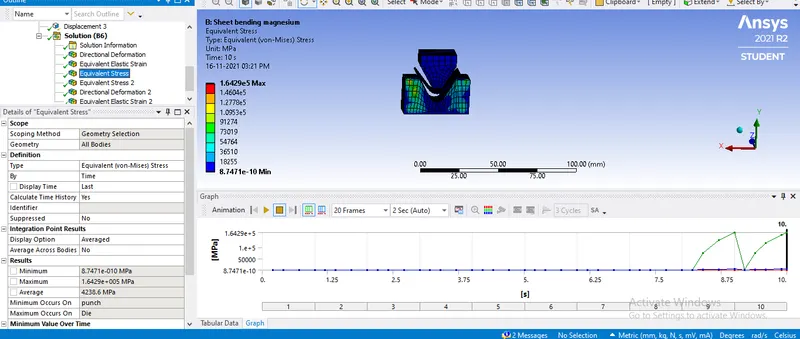
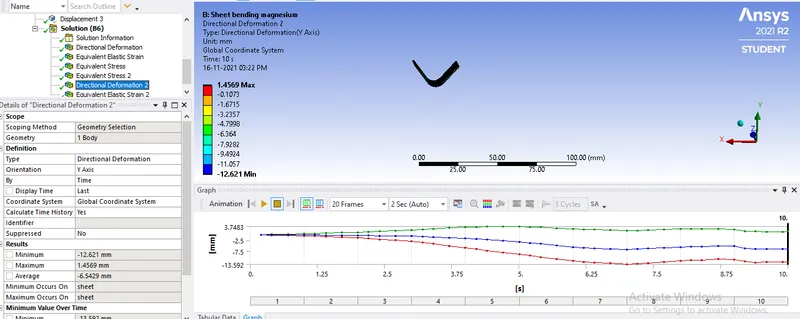
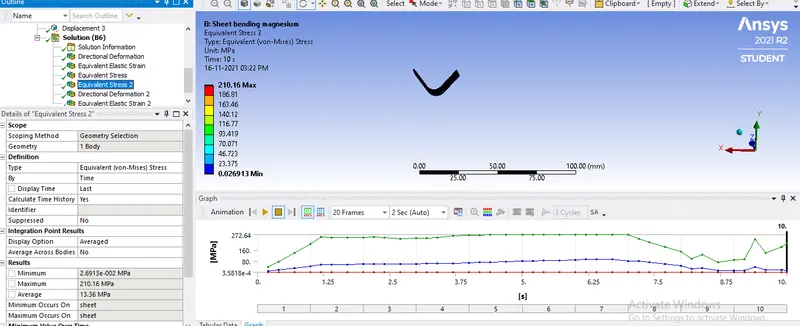
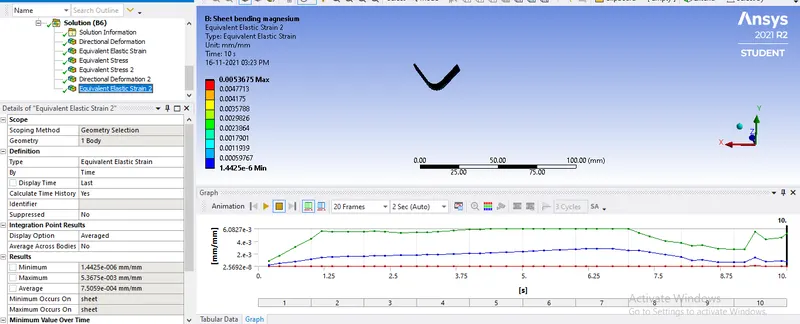
change the sheet material as magnesium alloy and run the analysis:
Case2:
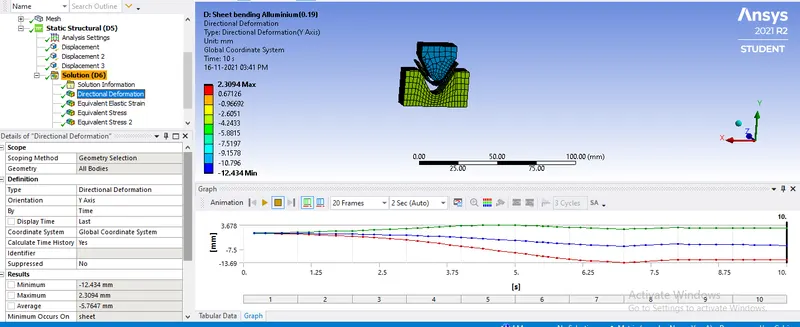
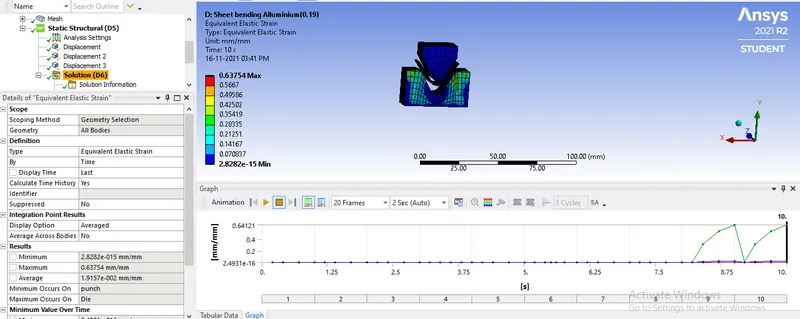
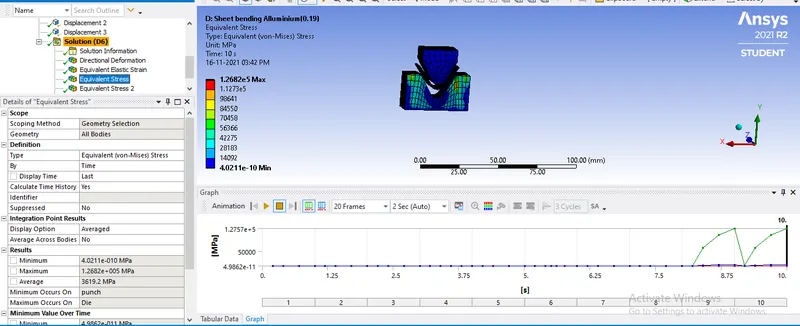
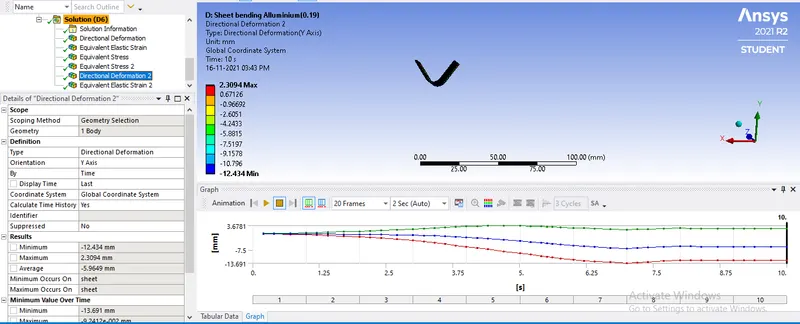
for this case same as sheet material is alluminium alloy change the friction coefficient is 0.19 and run the analysis
Results:
Directional deformation:
Equivalent Elastic strain:
Equivalent stress:
Directional deformation of sheet:
Equivalent Elastic strain of sheet:
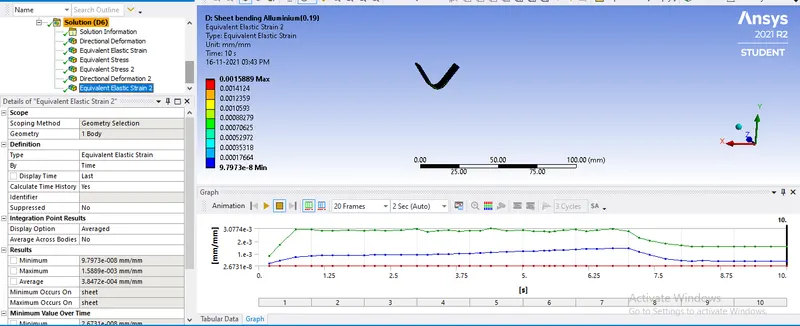
Equivalent stress of sheet:
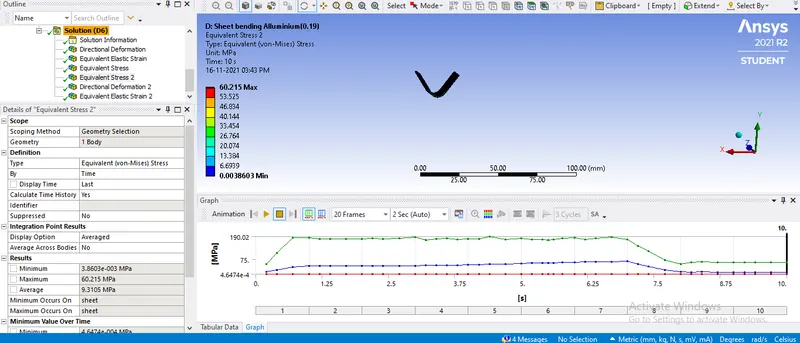
Case3:
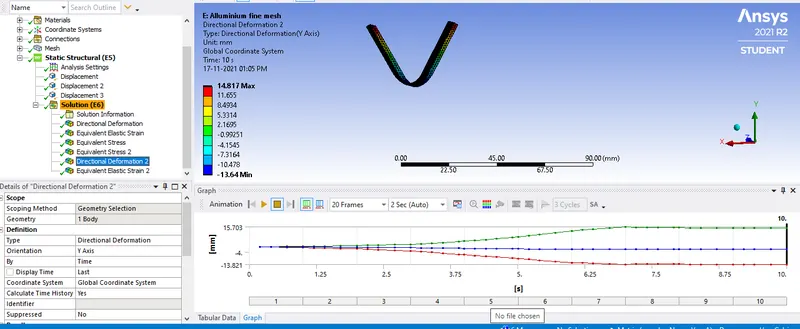
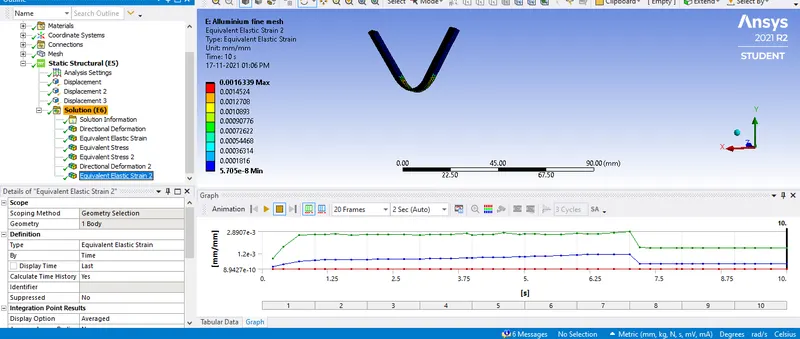
For this case refine the mesh on the plate run the simulation
Results:
Directional deformation:
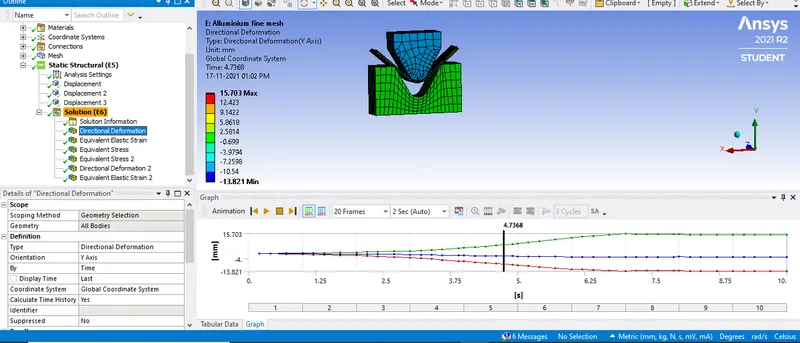
Equivalent Elastic strain:
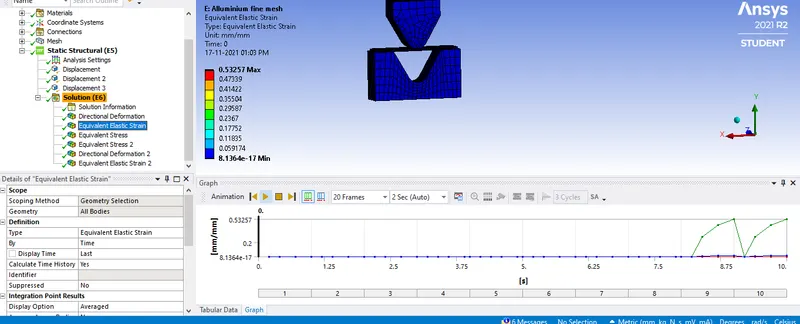
Equivalent stress:
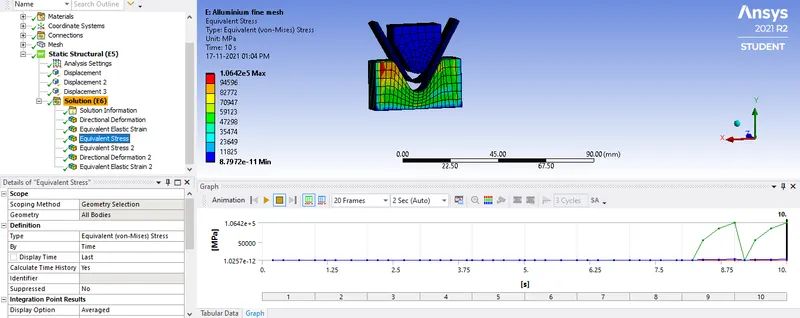
Directional deformation of sheet:
Equivalent Elastic strain of sheet:
Equivalent stress of sheet:
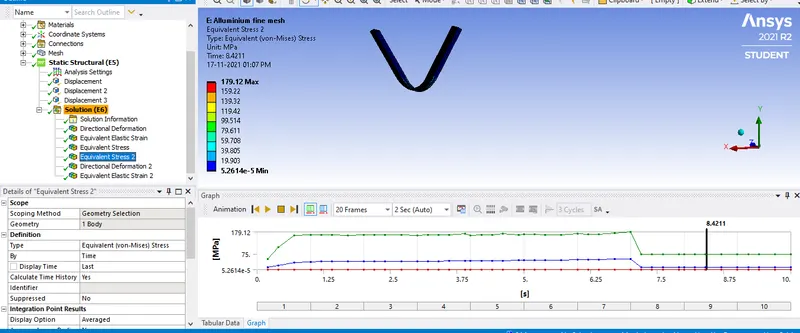
Result comparisson:
| Alluminium | copper | magnesium | friction coefficient 0.19 | Using finemesh of 0.6mm | |
| Directional deformation(mm) | 13.76 | 11.249 | 12.621 | 12.434 | 13.821 |
| equivalent stress(Mpa) | 2.57E+005 | 2.16E+005 | 1.64E+005 | 1.26E+005 | 1.06E+005 |
| Equivalent strain | 1.2873 | 1.0632 | 0.822 | 0.637 | 0.5327 |
| sheet directional deformation(mm) | 13.76 | 11.249 | 12.621 | 12.434 | 13.821 |
| sheet equivalent stress(Mpa) | 63.40 | 135.75 | 210.16 | 60.21 | 179.12 |
| sheet equivalent strain | 1.5E-3 | 1.73E-3 | 5.36E-3 | 1.58E-3 | 1.6E-3 |
conclussions:
- In first case using alluminium,copper alloy and magnesium alloy .Magnesium alloy sheet experiance more stress as 210.16Mpa than copper and alluminium alloys.
- yield strength of the alluminium is less than the copper and magnesium so less force is required to deform the alluminium.so the amount of stress developed is less in alluminium compared to copper and magnisium
comparisson of case1 alluminium material with case2 having friction coefficient is 0.19:
- in case 2 due to increasing of friction coefficient to 0.19 the amount of stress developed is reduced.
- The coefficient of friction is a meassure of the ammount of friction existing between two surfaces.
- low value of friction coefficient means less force required for sliding than more coefficient of friction.so with high coefficient of friction more amount of punch force required.Equivalent stress will be reduced due to increased friction coefficient
comparisson of Case1_alluminium alloy and case3 refined mesh of 0.6mm :
- Due to refining mesh the accuracy of the sollution will increase but the simulation time will increase.
- The amount of stress developed is increased due to fine mesh