Week 3 Sheet metal Bending challenge
SHEET METAL BENDING SIMULATION
OBJECTIVE:
To perform a sheet metal bending operation on 3 different materials - Aluminum alloy, Copper Alloy NL, Magnesium Alloy NL and to determine the Equivalent stress, Equivalent elastic strain and Total Deformation.
PROCEDURE:
- Create a new static structural simulation
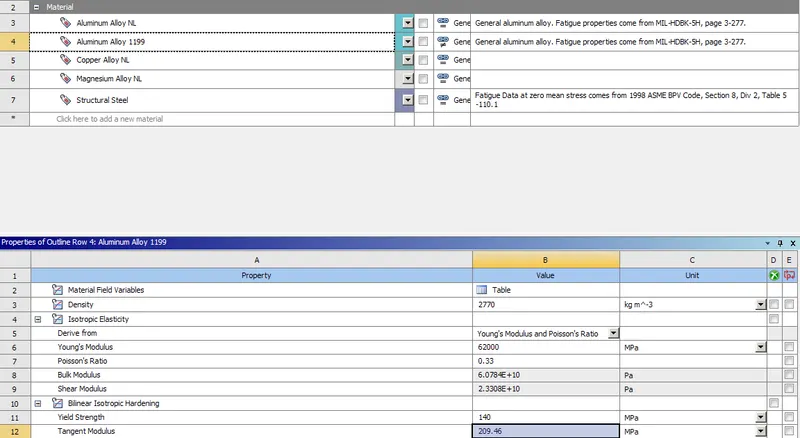
- For the materials, select all individual materials in the engineering data tab. The Aluminum alloy 1199 is made by modification of material properties of aluminum alloy NL with the following data
- Import the paramteric .x_t file onto the Spaceclaim GUI
- Then the model module of static structural is again updated.
- Open the model in ansys mechanical module.
Material assignment
- The respective materials are applied to each individual components with al alloy 1199 for the sheet metal.
- The other two cases would involve material assignment of Copper and magnesium alloy (NL) for the sheet component.
Contact region
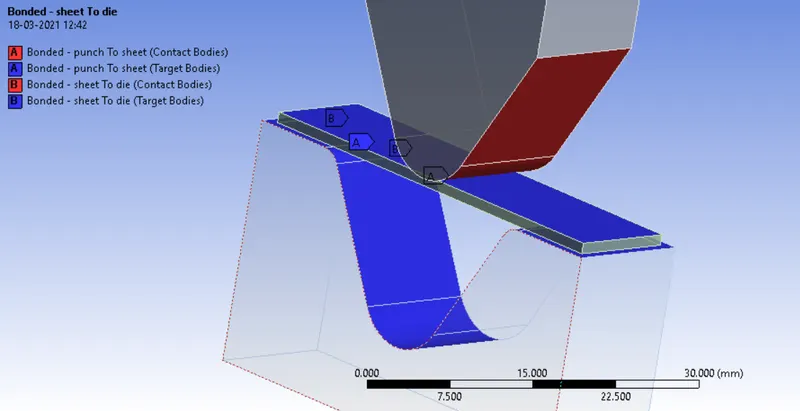
- Two contact sets are established between the punch and sheet and the other one for the sheet to come in contact with the die
Analysis settings
- Set large displacement = ON
- Create 10 time steps.
- Set stability = constant and set energy dissipation factor as 0.1
- Direct solver
Mesh
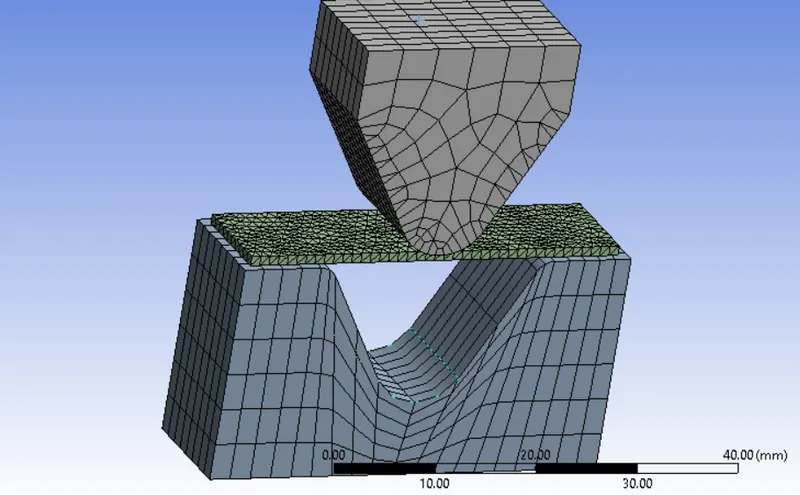
- Create a sizing of 4mm for both the punch and die
- ANother sizing of 1mm for the sheet
- Refine the mesh by selecting the faces that come in contact and set these to 1mm
- Specify the type of mesh under methods for the sheet to the tetrahedron
Loading condition
- Specify a displacement along the -y axis for the die using a tabular data. The die is meant to go down and revert back after the 7th time step.

- Fix the sheet so that it does not go along the z-direction due to the action of loading. i.e set y component to 0 (ramped)
- To move the die after the 7th time step, the x and z components are set to constant 0 and the y is set as a tabular data such that it retraces after the 7th time step by a factor of 1.5mm
RESULTS:
The following results were obtained
Case1:
Aluminium Alloy 1199
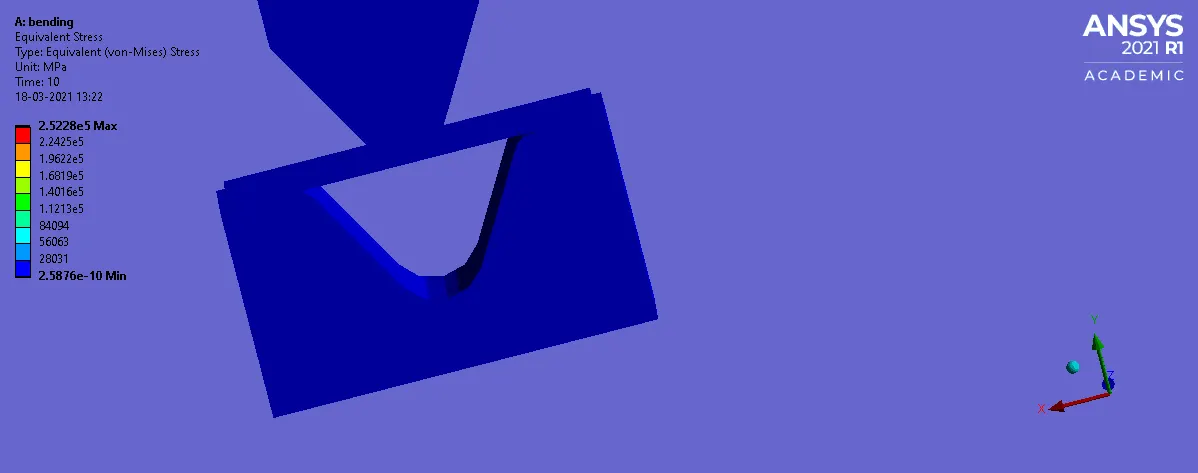
Equivalent stress
Equivalent strain
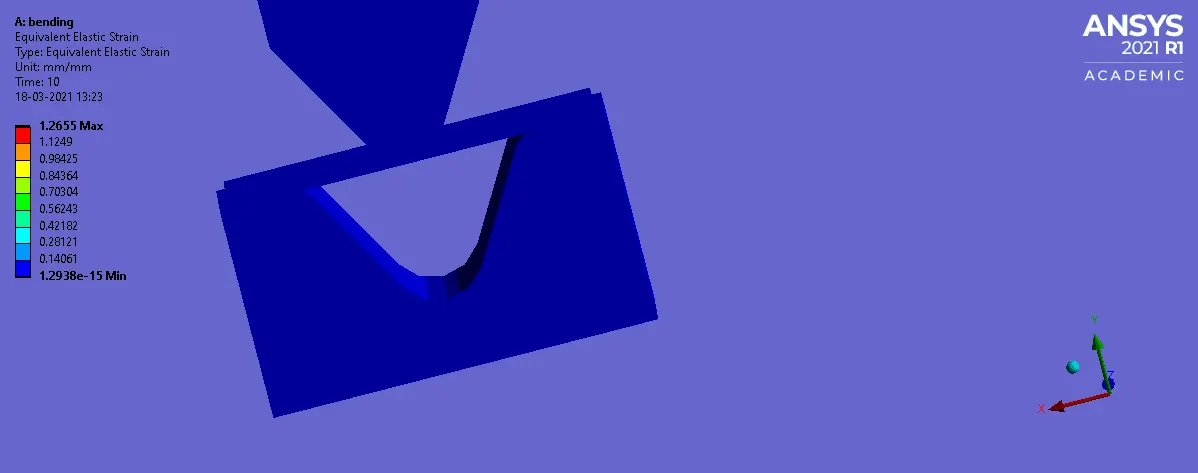
Deformation along Y
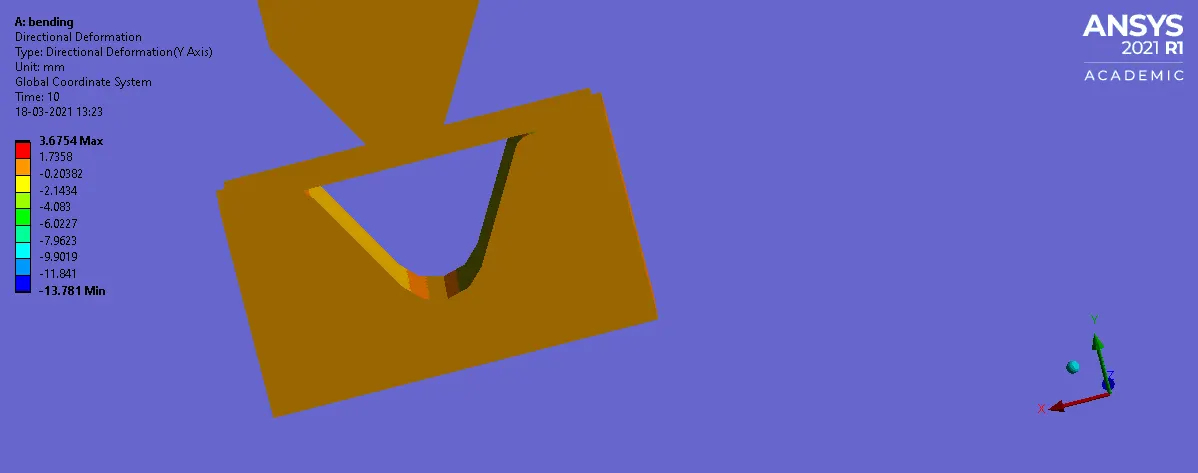
Copper alloy NL
Equivalent stress
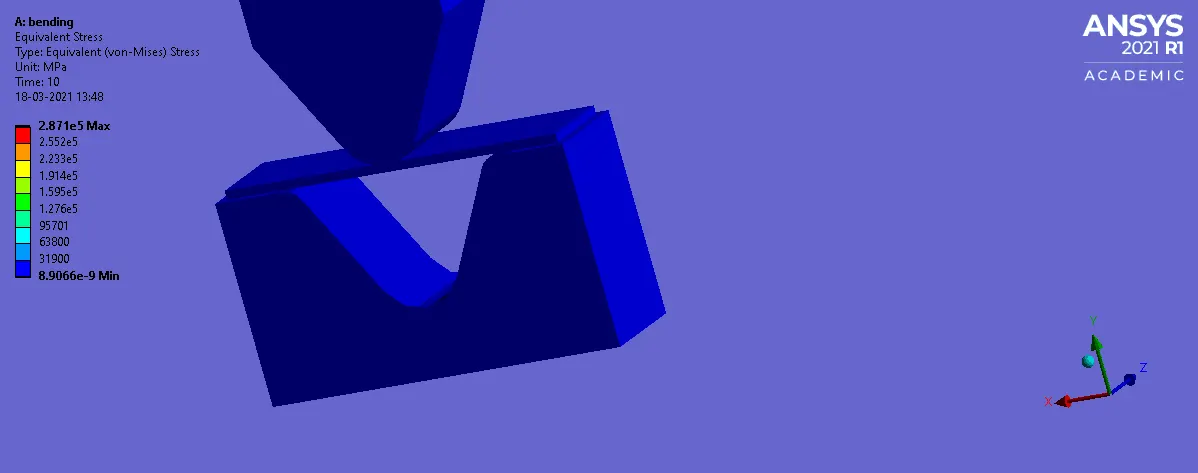
Equivalent strain
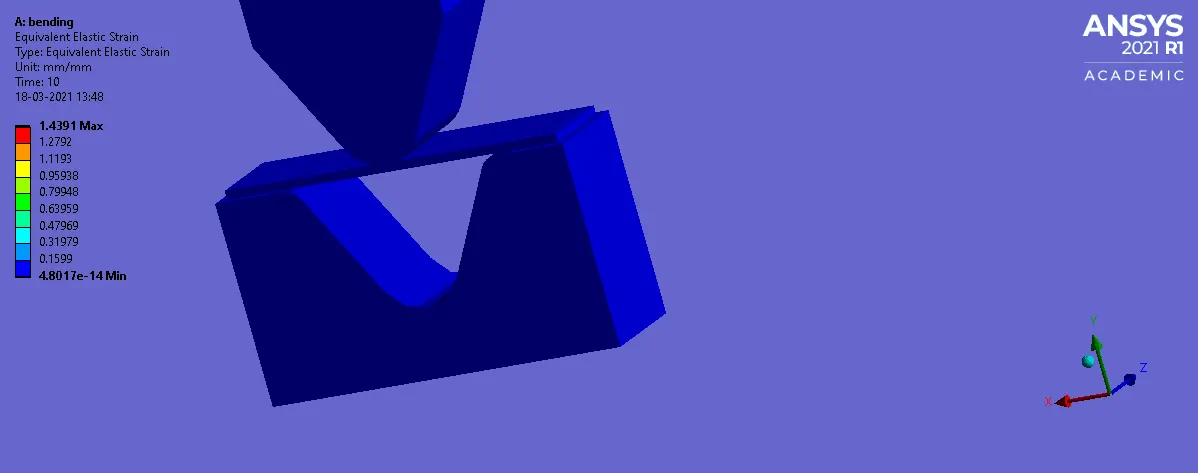
Deformation along Y
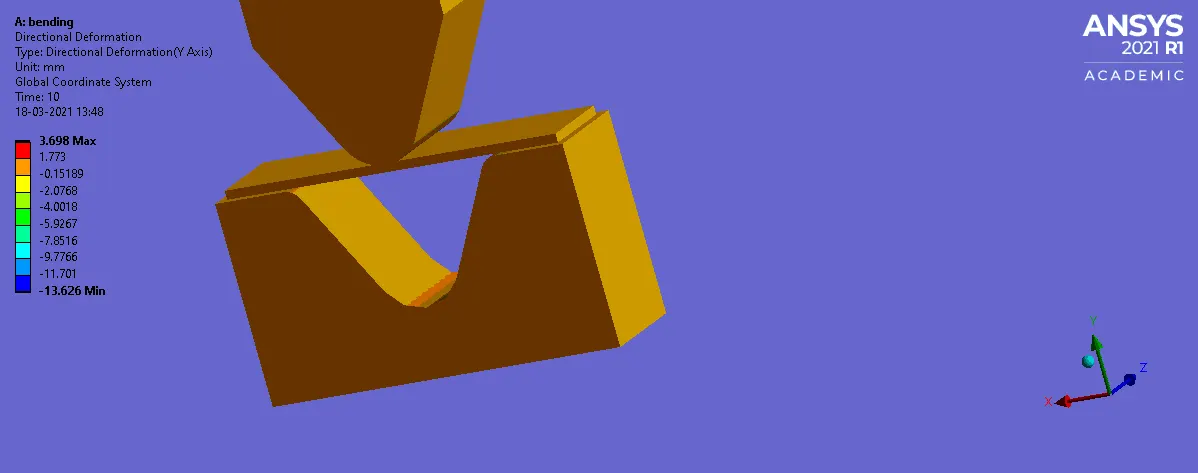
Magnesium alloy NL
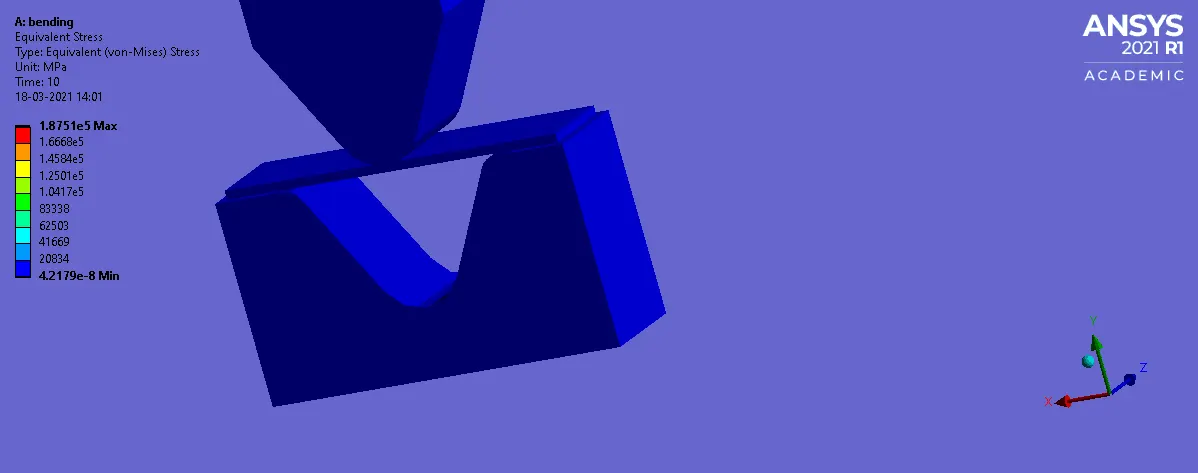
Equivalent stress
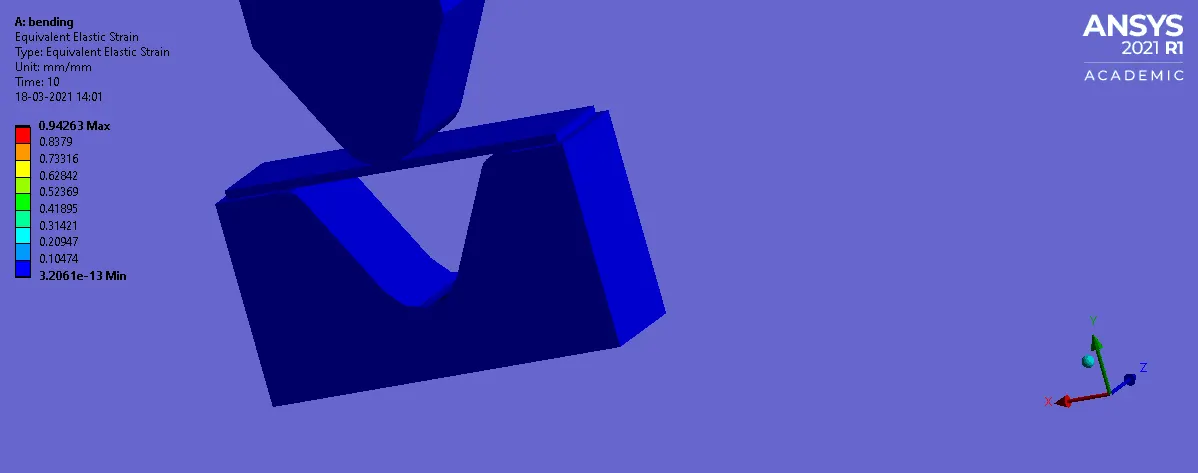
Equivalent strain
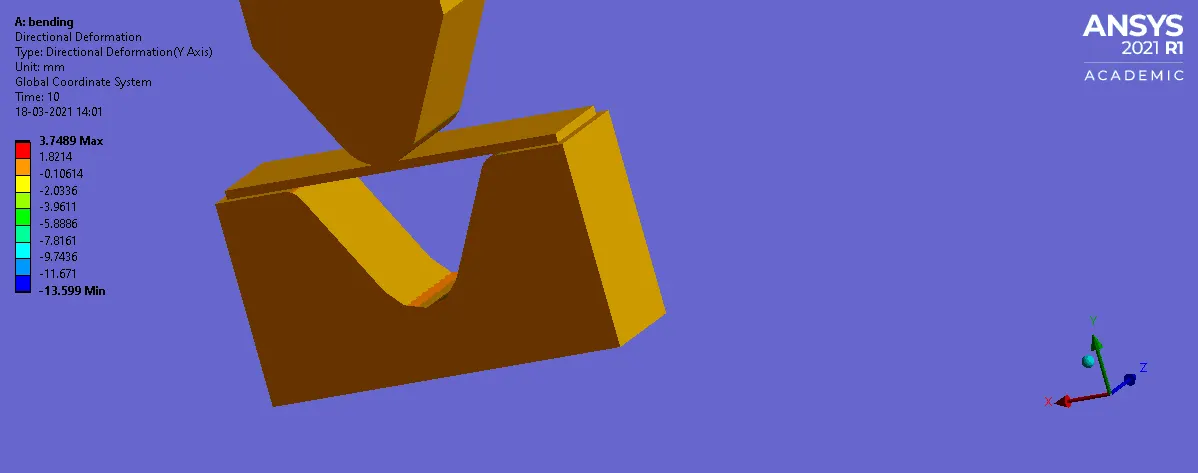
Deformation along Y
Case 2:
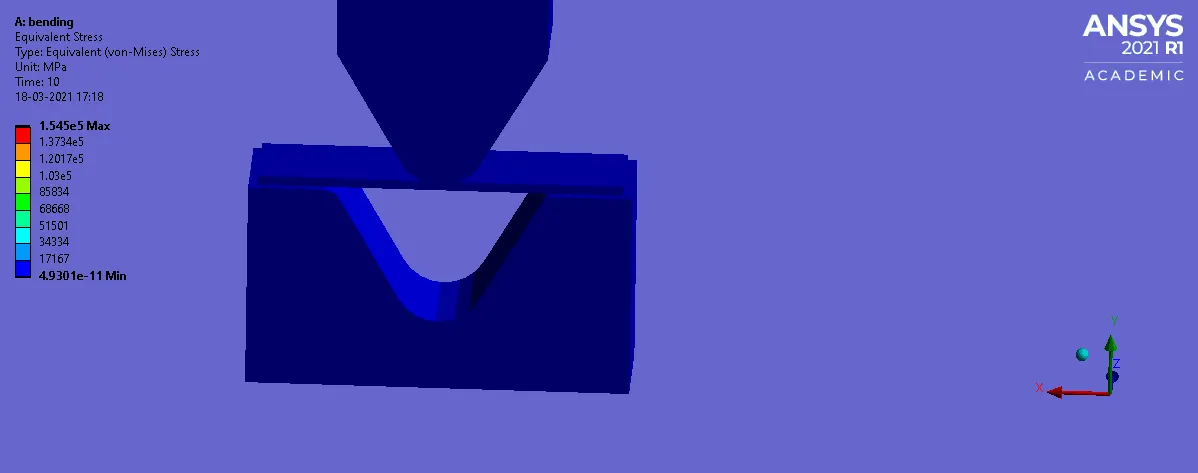
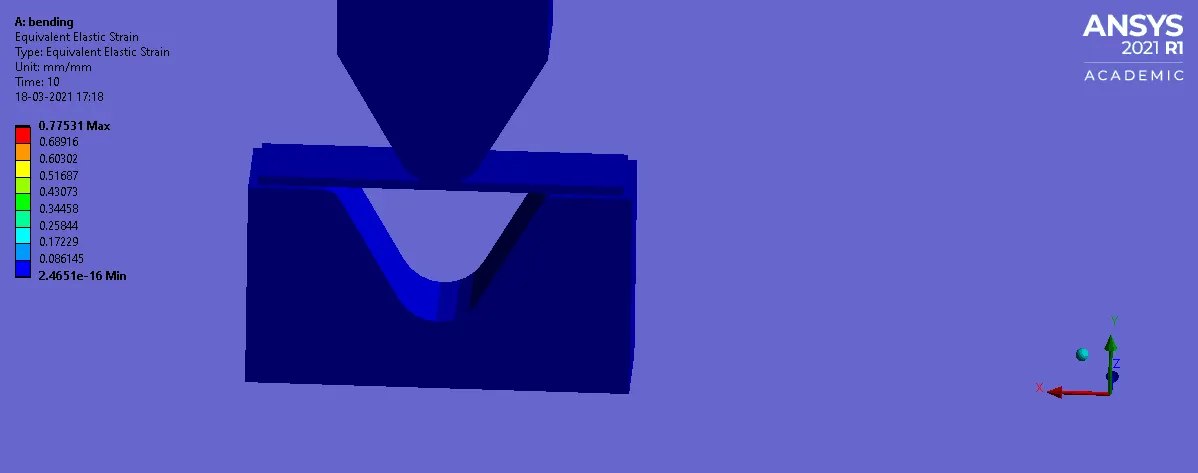
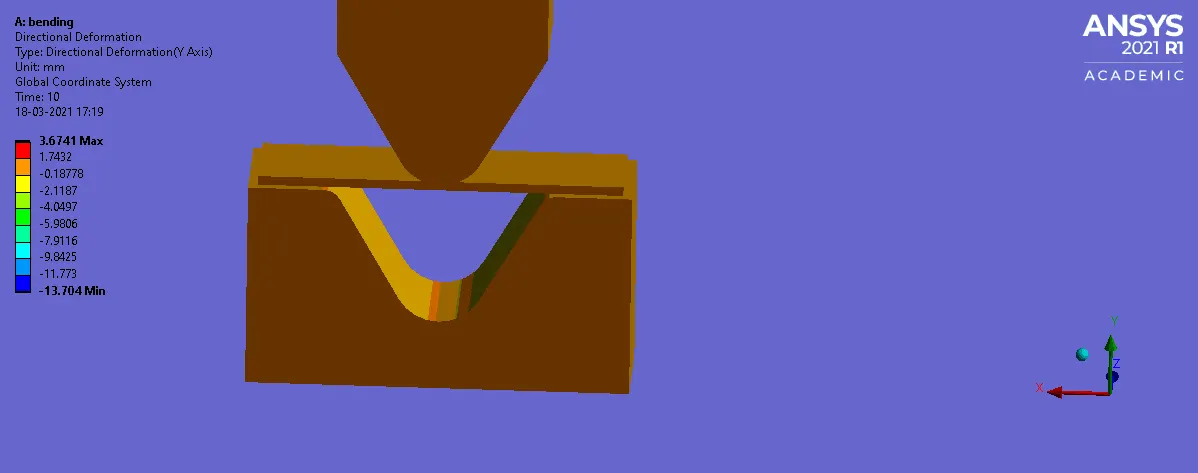
In this stage, the coefficient of friction is set from 0.1 to 0.19 for both the contacts and the model is again simulated using the aluminum alloy as the material for the sheet component.
The following results were obtained.
Equivalent stress
Equivalent strain
Deformation along Y
Case 3
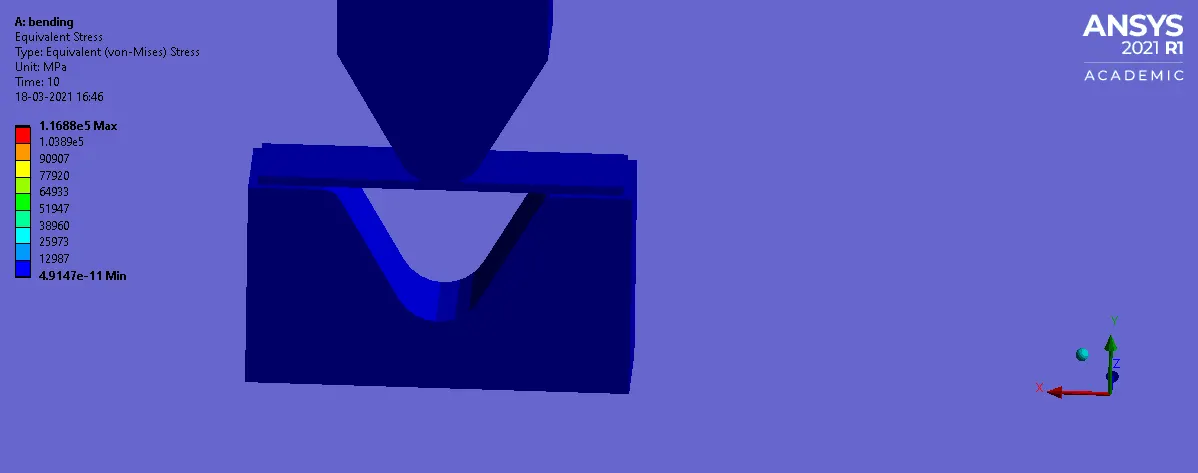
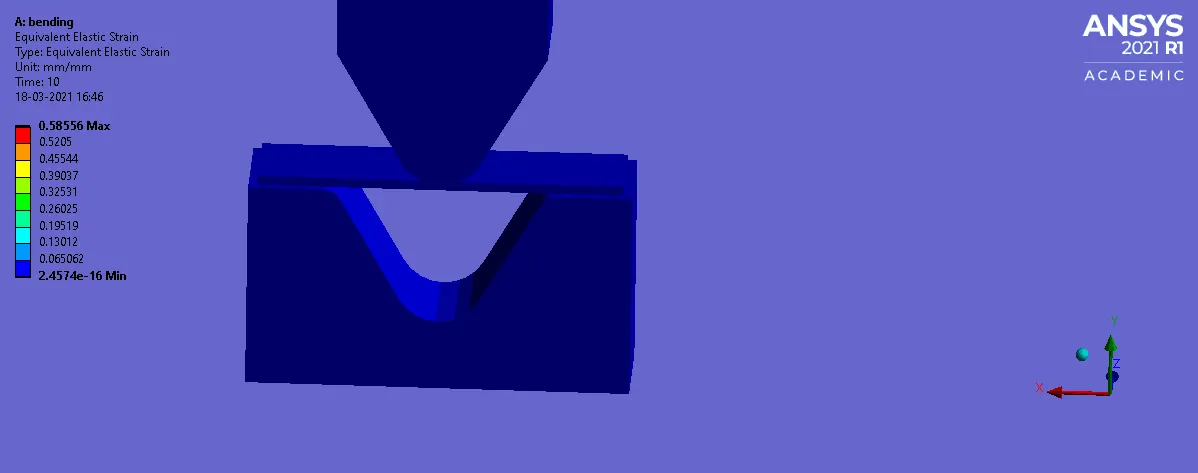
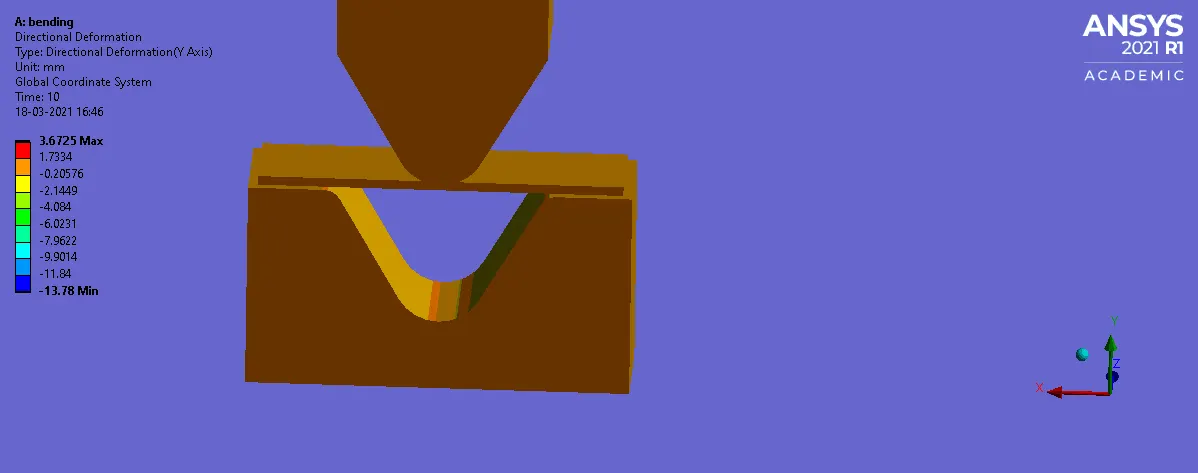
The mesh is refined to 1mm at contact regions and 2mm target length for other areas. The mesh is also maintained at a limit well within the academic version limit of about 120k nodes/elements.
The following results were obtained
Equivalent stress
Equivalent strain
Total deformation along Y
CONCLUSION:
Hence from case 1, we can conclude that the deformation along the Y direction is highest in case of magnesium alloy component followed by copper alloy and then aluminum alloy. Moreover, the maximum stress and strain generated is higher in the case of the copper alloy component and the lowest for the magnesium alloy.
From case 2, we can conclude that while the directional deformation along Y dosent change much upon comparison, there isa small change in the stress and strain generated on the models with the case being high for the model with coeff of friction 0.1
From case 3, it is obvious that a finer mesh would result in a much accurate result. From the above results, the difference is at a large scale since the original mesh size was 4mm. Hence we can also conclude that further mesh convergence test can be performed on the model such that the change in acquired results are less compared due to a finer mesh.