Week 3 Session 7
2 types of motors are used in electric cars: DC motor and AC motor
AC Motors:-
Induction motor
Induction motors are considered the most cost-effective and reliable ones among the industry. The control of these motors is quite simple to implement. Because of its simple design, induction motors don’t require high maintenance.
Synchronous motor
In synchronous motors, the rotor turns at the same speed as that of the rotating magnetic field unlike an i.e slip introduced between stator and rotor is zero induction motor where it turns at a lower speed than that of the field. PM motors offer an advantages of induction motors including higher efficiency, high torque and power density, high torque at low speed, and compact and low weight.
DC motors:-
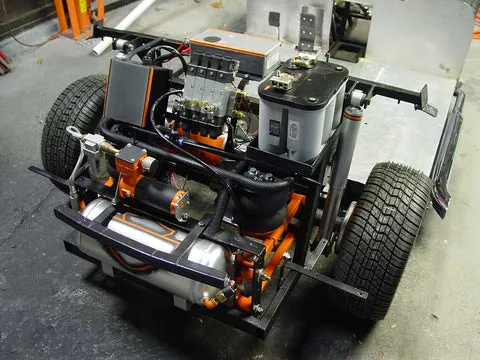
A DC motor runs on the voltage that lies between 96 and 192 volts( which is not applicable in case of IM ) In addition, more torque is generated from DC motors which is economical
DC motors are classified into three categories namely brushed DC motor, BLDC or brushless DC motor, and stepper. Brushed DC motors are widely used in electric vehicles . These motors are suitable for many uses because of their low cost. However, the commutators and brushes tend to wear relatively quickly because of their continued contact, leading to periodic maintenance and frequent replacement.
A BLDC motor doesn’t use brushes and employs an electronic commutator instead, which increases its efficiency and reliability by eliminating the source of power and wear loss. In addition, these motors boast of some significant advantages over induction motors and brush DC motors like higher speed ranges, noiseless operation, faster dynamic response, better speed versus torque characteristics etc.
the ratio of torque delivered relative to the size of the motor is higher, which makes it a good choice for electric vehicles, where high power is required but lightness and compactness are critical factors as well. While BLDC motors are mechanically simple relatively, they do require regulated power supplies.
Advantages of AC motors over DC motors
Both AC and DC motors fall under the same category of powering electric cars .But there’re some key advantages, which is perhaps the key reason why major electric car manufacturers prefer AC electric car motors.
- A DC controller can be programmable, but generally it isn’t. AC inverters are just the perfect match for the motor all other software parameters can be easily adjusted by driver in case of AC drives.
- Because of the nice set up of the AC system, it’s capable of taking energy back from braking and giving it out under acceleration. So, a huge amount of battery power can be recovered during the normal driving process. Though a few DC systems can also do that, it makes them more expensive and complex.
- AC electric car motors generate favorable torque, thus helping the transmission to last longer. With them, you can be rest assured of avoiding expensive issues like twisted shafts, broken gear teeth, and damaged CV joints, among others.
- Unlike DC electric car motors where reversing is more complicated, all it takes for the inverter (in AC motor) is to swap the sequence of 2 phases, and the rotor starts running in opposite direction.i.e regenerative braking/ plugging is comparatively easier in AC motors than DC
- Absence of motor brushes eliminates issues like commutator arcing, brush damage, and self-destroying at high RPM, among others.
- AC motors come with only one moving part, which makes them quiet, low-cost, and relatively trouble-free
Advantages of DC motors over AC
DC Motors have Higher Starting Torque
Because DC motors have higher starting torque compared to AC motors , they are preferred for applications like electrical traction.
Easy Speed Control
DC motors are capable to control speed above/below the rated levels. For example, the DC shunt motors are easy to vary the speed safely.
DC Motors do not have Harmonic Effect
The Motors are Easy to Promptly Control
you can use DC motors for applications that require immediate start, reverse movements and stopping for optimal performance.
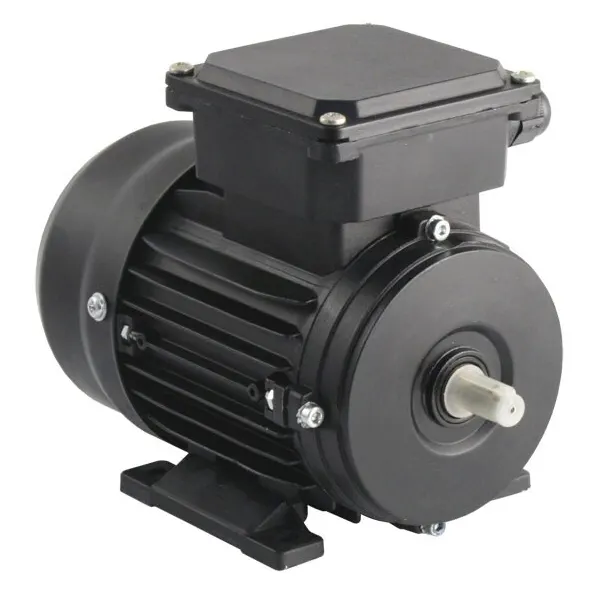
DC Motors are better for Low-Cost Operations
Many people opt for DC motors as opposed to others because they are cheaper. This is especially true when dealing with fractional HP applications. you are assured of easily getting a technician to diagnose and repair your DC motor at a low cost.
DC Motors have Fewer Rectification and Electronics Needs
When you install a DC motor, it requires less electronic and rectification on power electronics system circuit compared to the AC inverters. This means that you can directly fit the motor and start using it by feeding directly from the power source.
Easy Speed regulation
One of the primary reasons that make DC motors popular for commercial and home operations is the ease of speed regulation. You simply need to adjust the voltage terminal using a potentiometer. Therefore, if you need higher speed control, it is advisable to go for DC motor.