Week 3 - Pitot tube
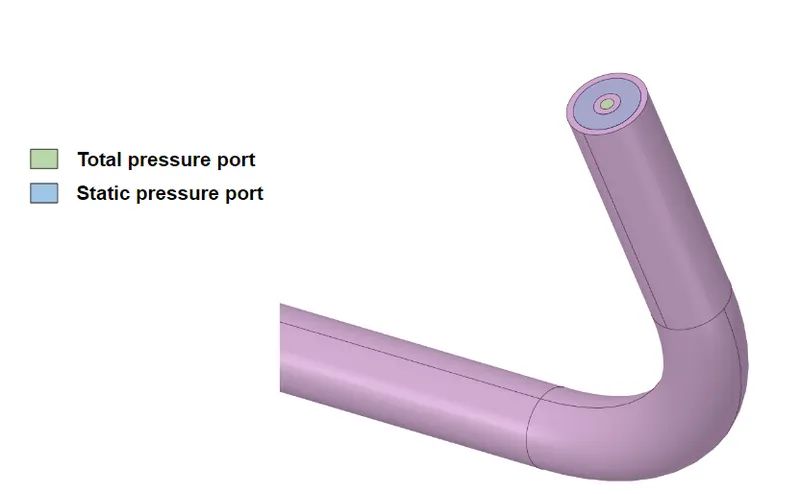
1. Introduction
A Pitot tube (or Pitot probe) is a widely used device for measuring fluid flow velocity. It was originally developed by Henri Pitot in the 18th century and later improved by Henry Darcy in the 19th century. In aviation and industrial applications, Pitot tubes are extensively used to measure air velocity, boat speed, and gas flow in pipelines.
The Pitot tube does not directly measure velocity; instead, it measures pressure, which is used to calculate velocity using Bernoulli’s equation.
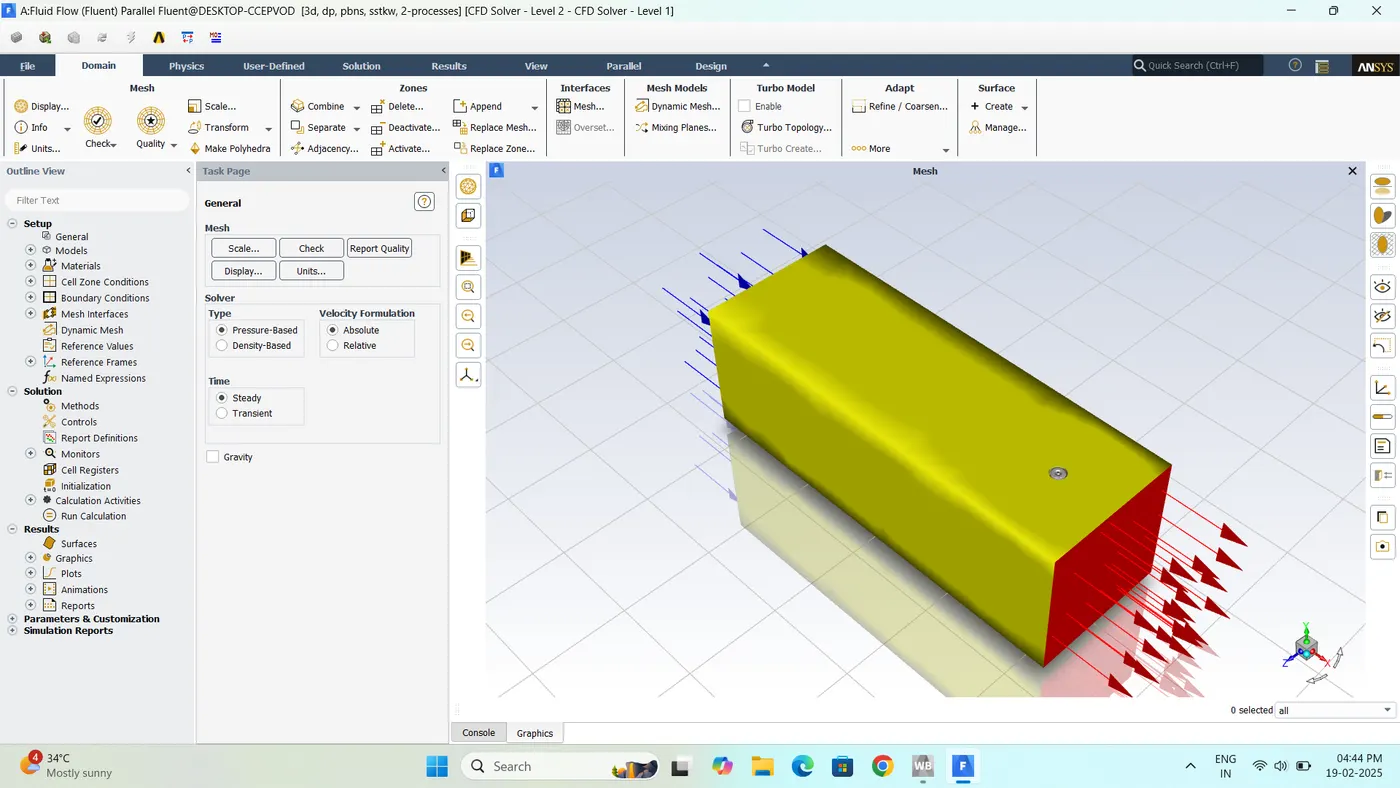
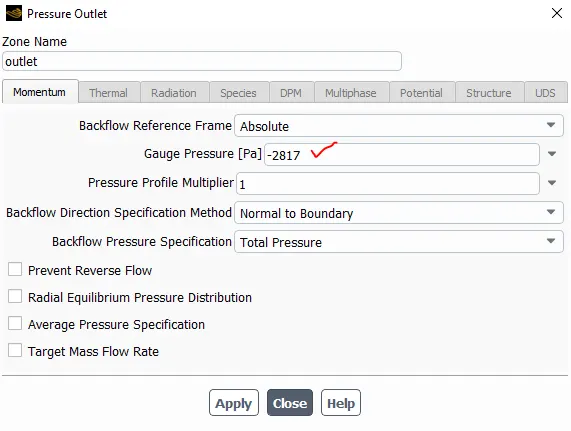
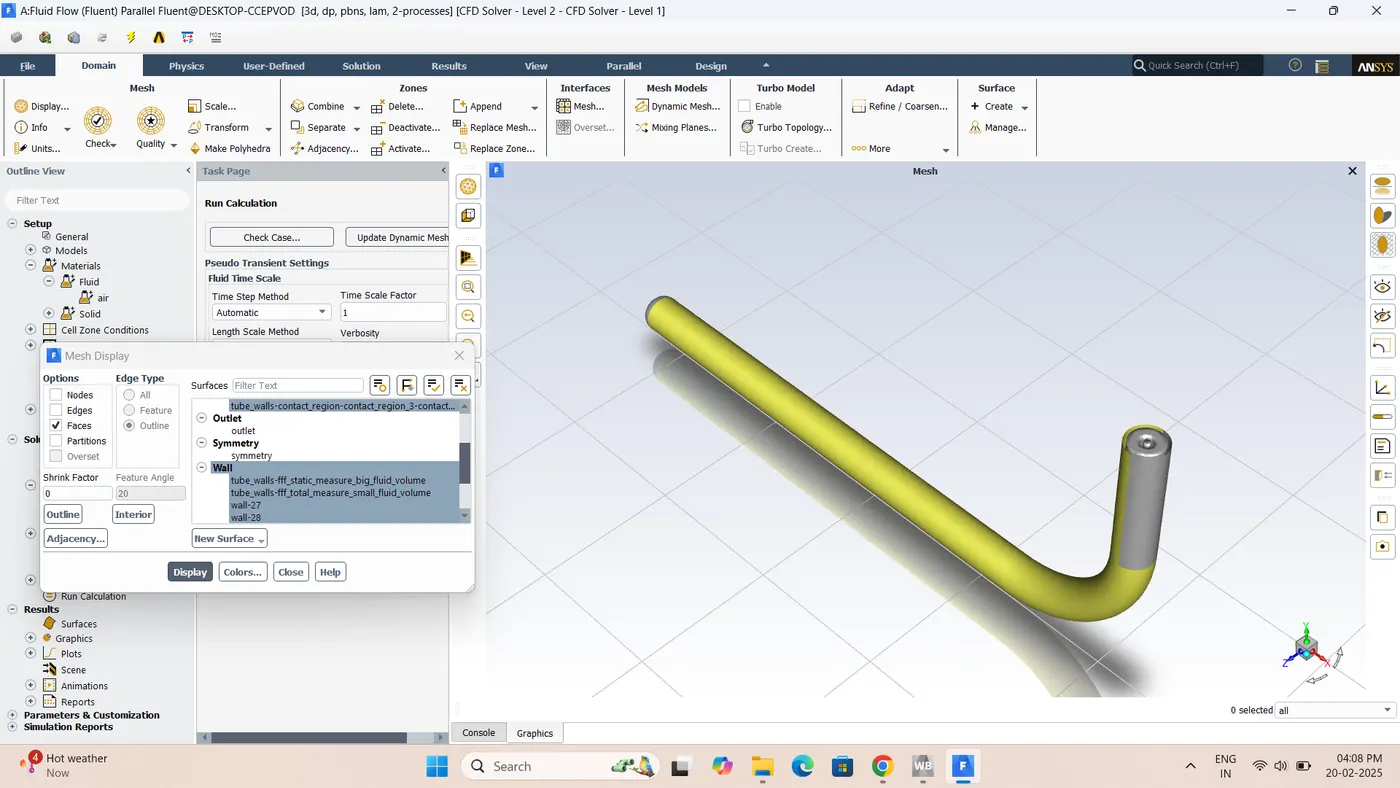
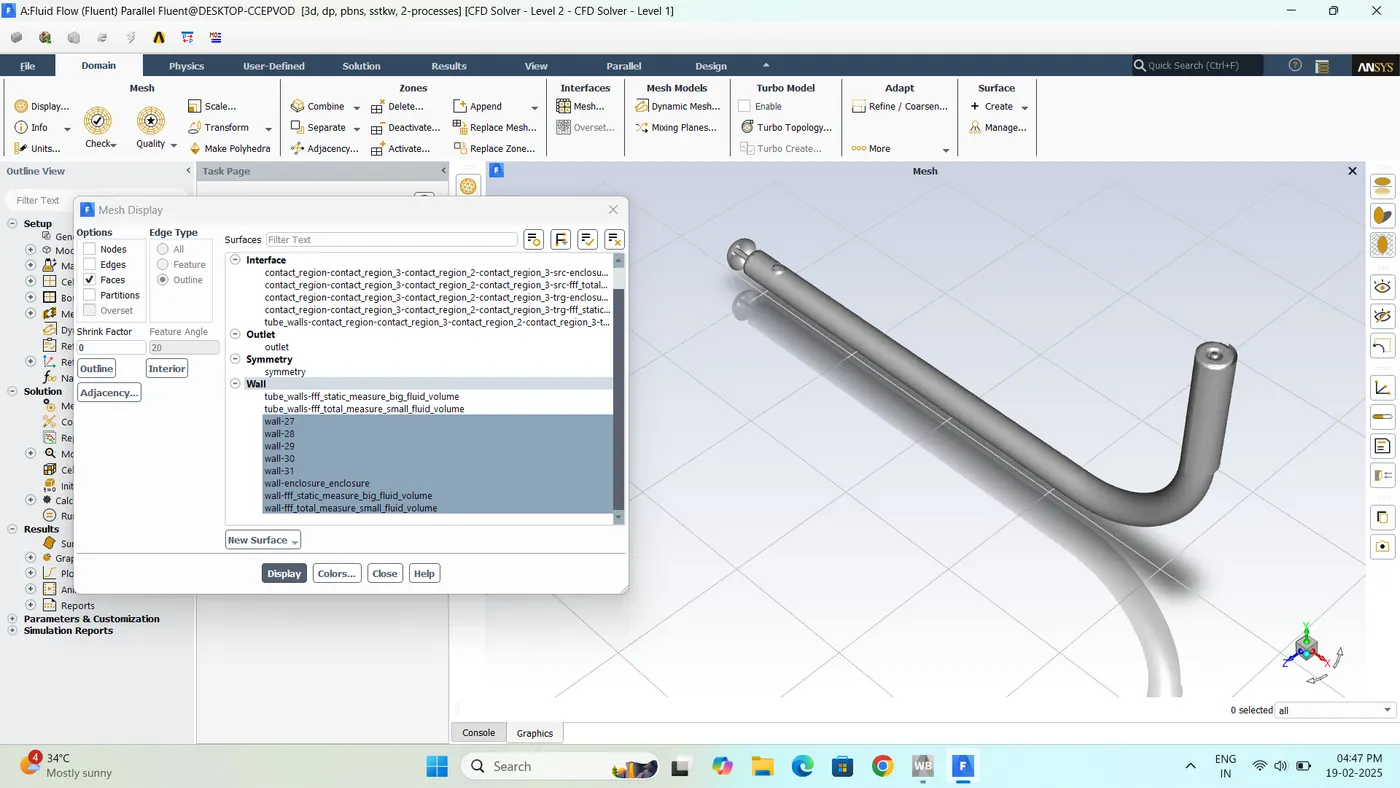
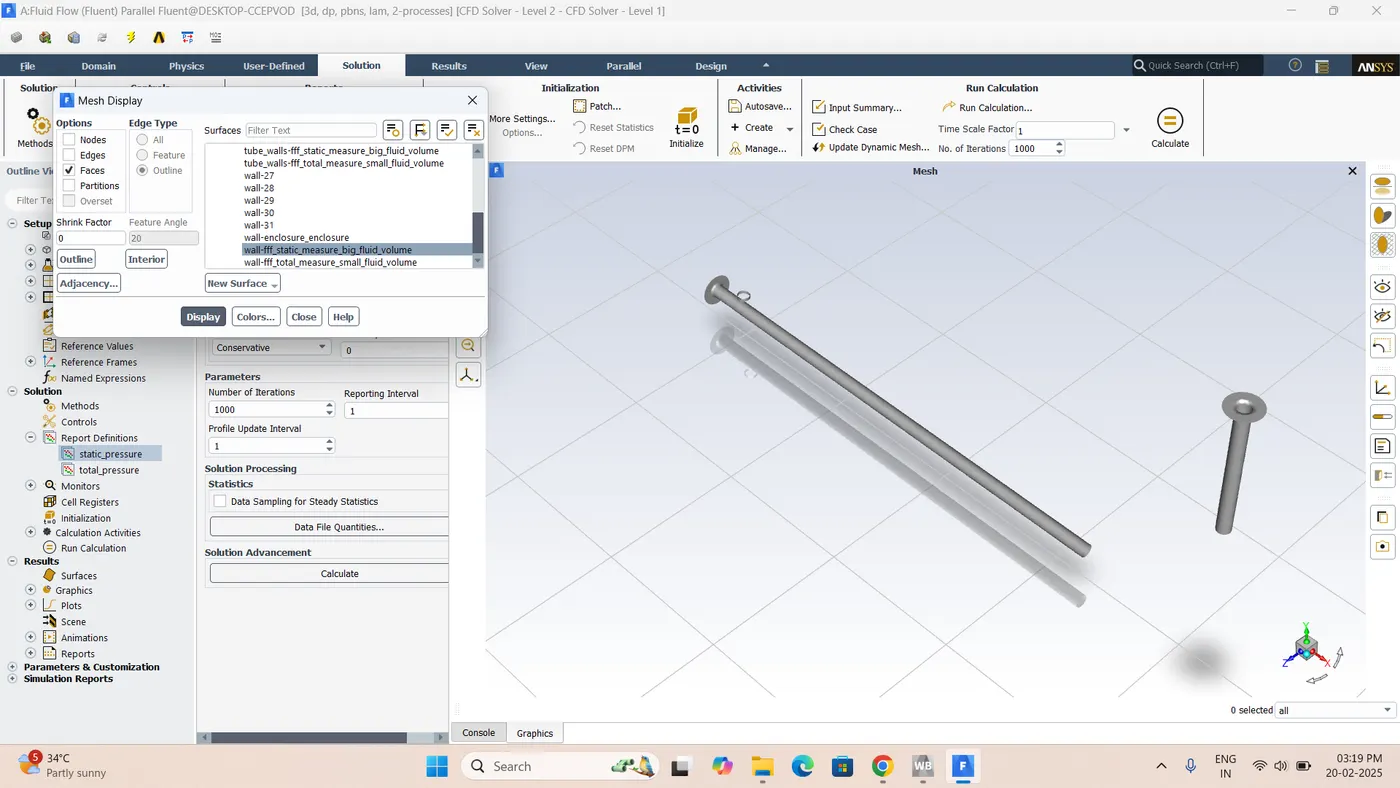
settings:-
3. CFD Simulation Setup
The CFD simulation was carried out to evaluate the static and total pressures at the outlet for different flow velocities using a Pitot tube. The obtained pressure values were used to calculate velocity, and the results were compared with analytical values.
Assumed fluid density: ρ=0.863kg/m³

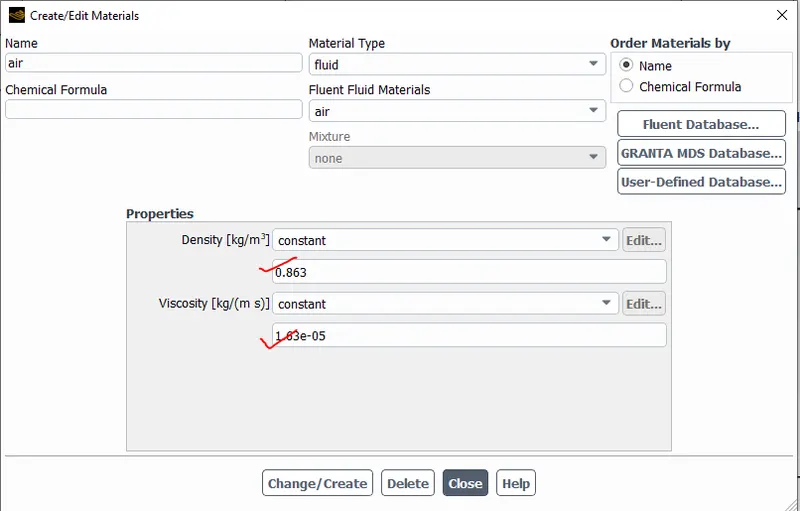
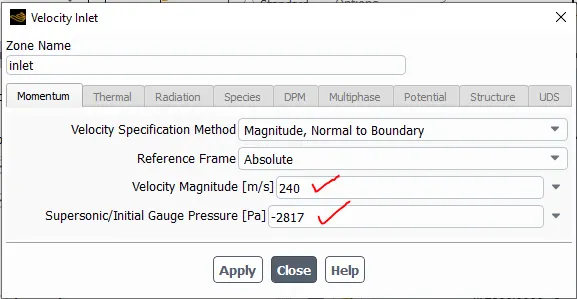

Pitot tube formula
2. Principle of Operation
The Pitot-static tube is a common type of Pitot tube used in engineering measurements. It consists of:
- Inner Tube (Stagnation Point) – Measures total pressure (Pₜ).
- Outer Tube (Static Ports) – Measures static pressure (Pₛ) via small holes on the side.
Using Bernoulli’s equation:
V=ρ2(Pt−Ps)
Where:
- V = Velocity (m/s)
- Pt = Total Pressure (Pa)
- Ps = Static Pressure (Pa)
- ρ = Fluid Density (kg/m³)


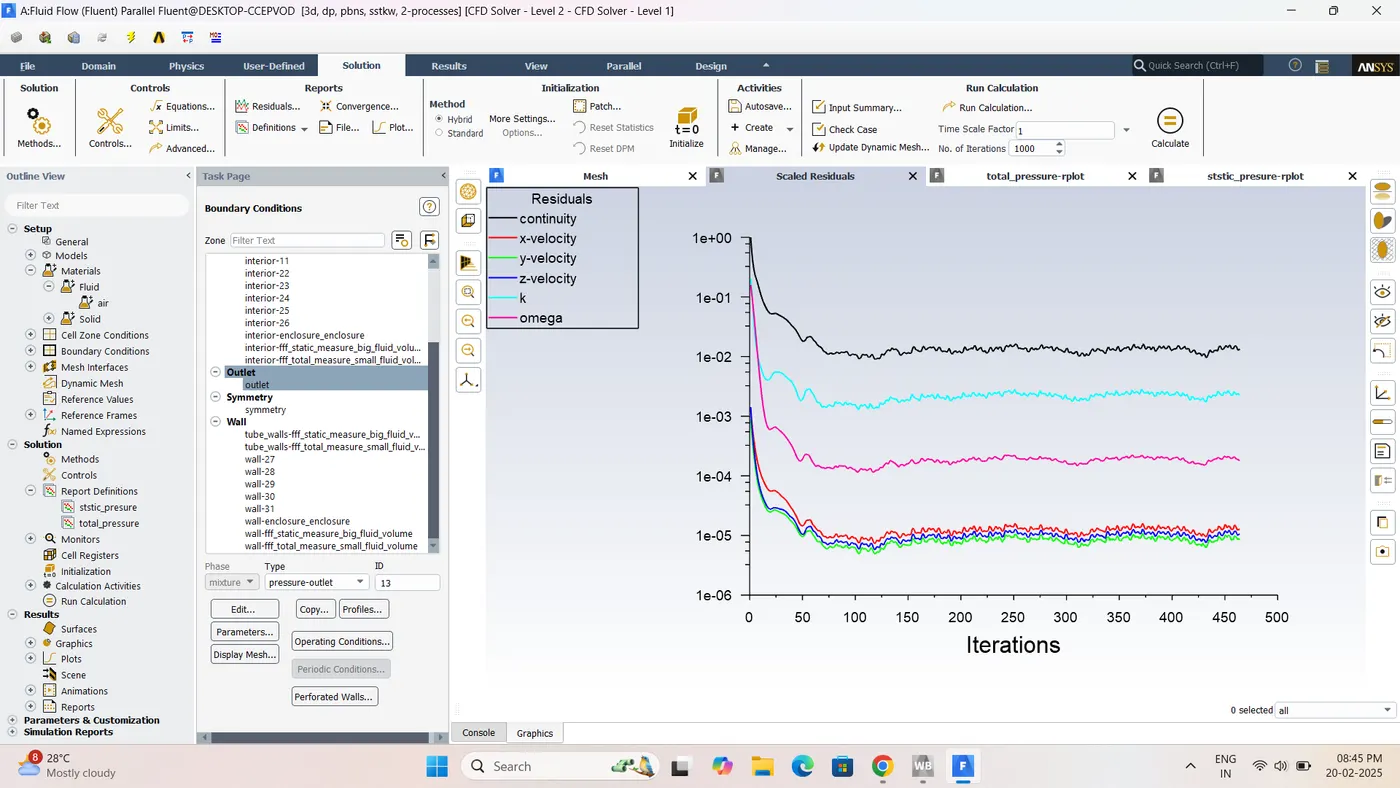
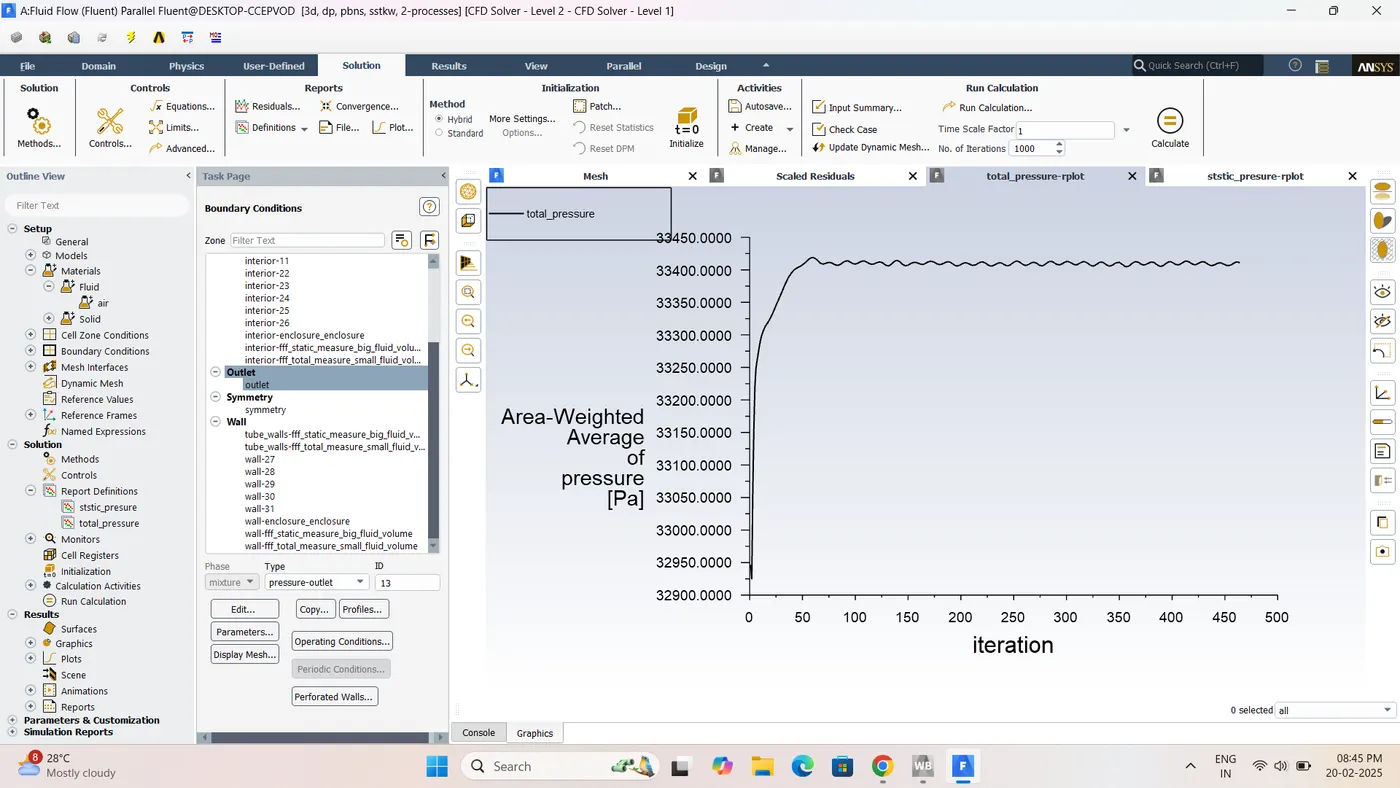
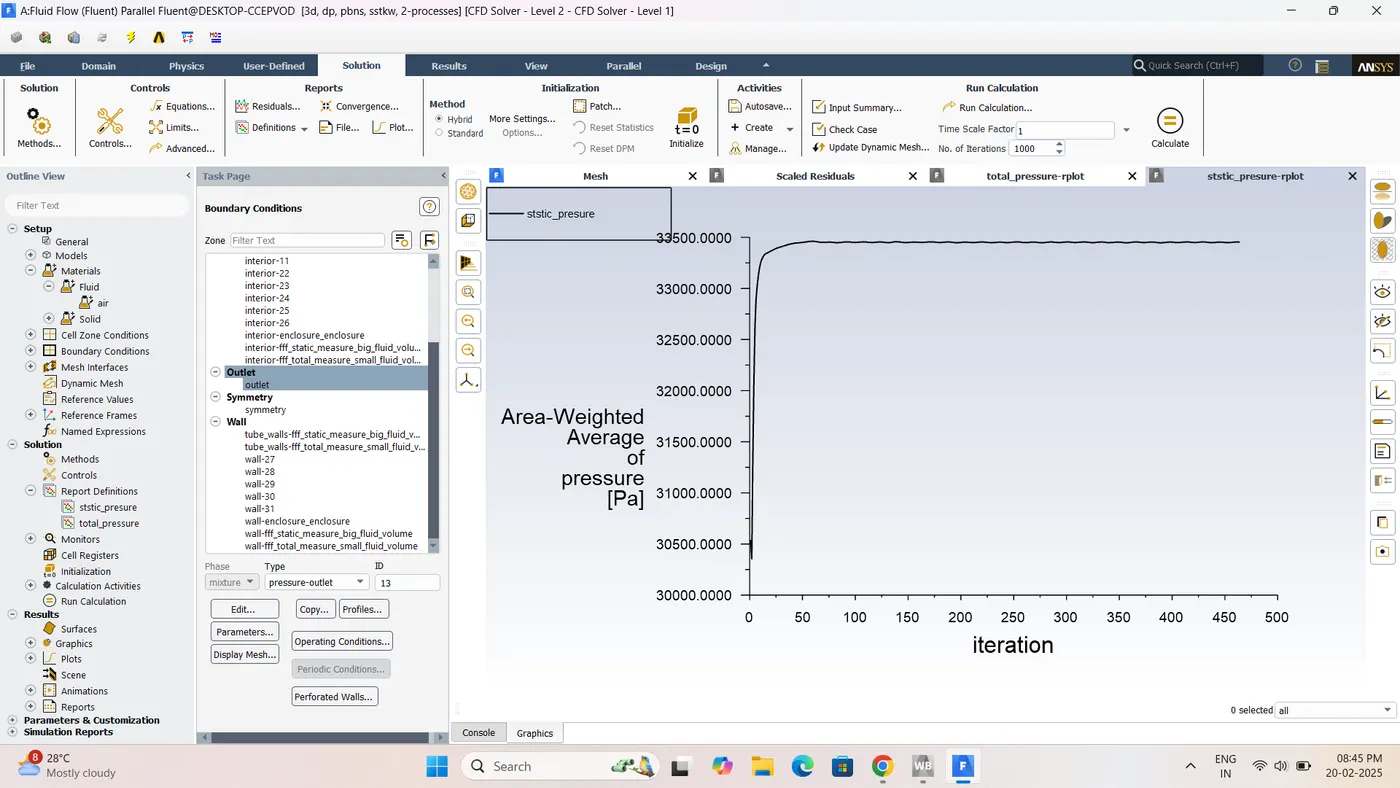
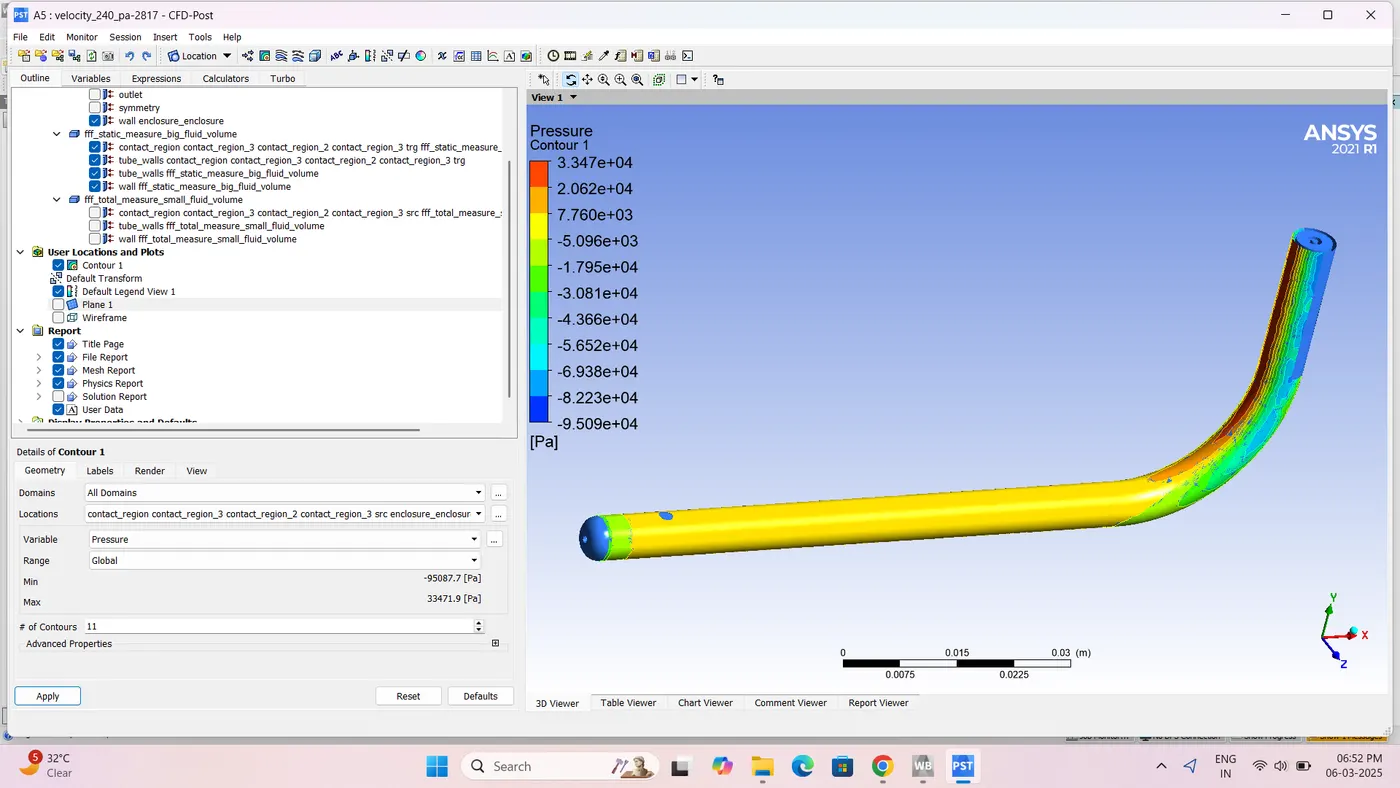
Case 1:-
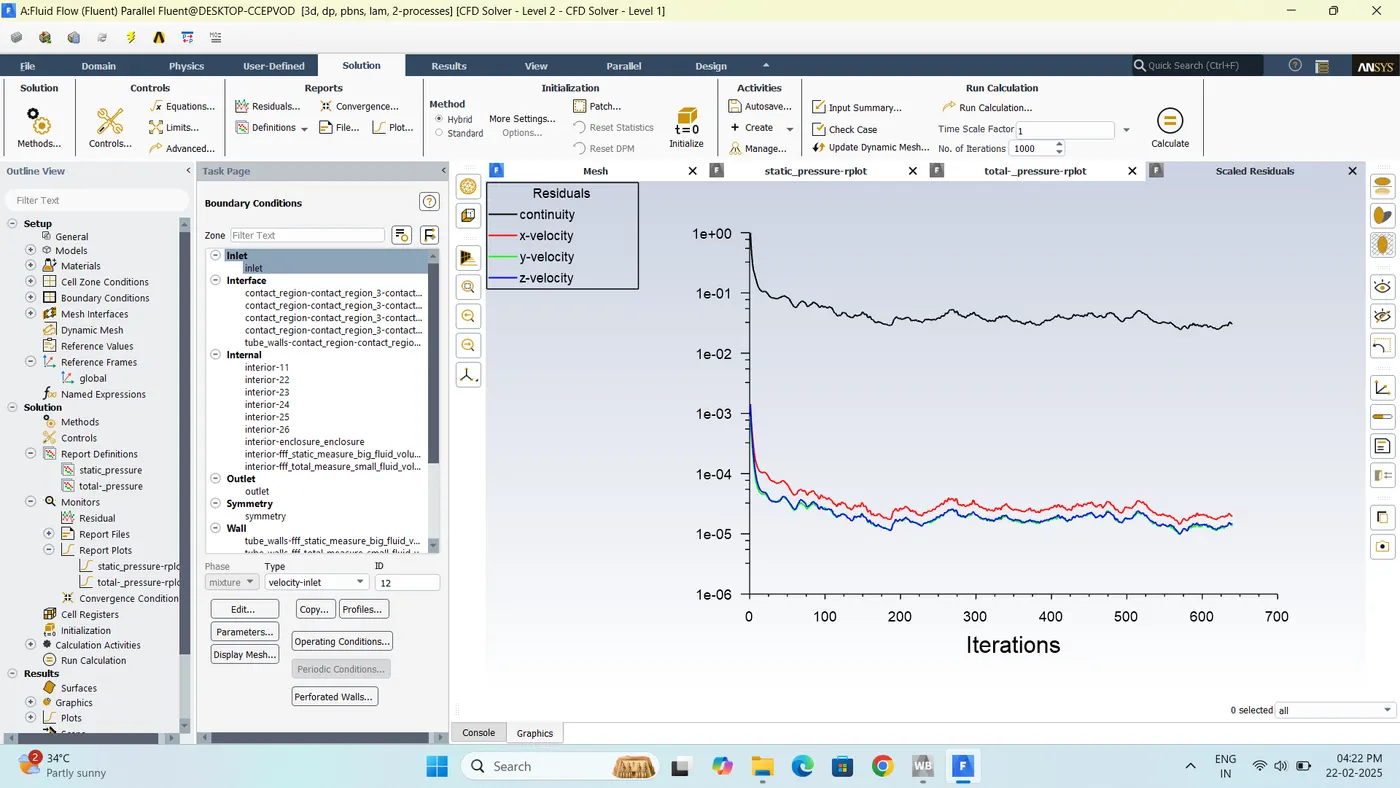
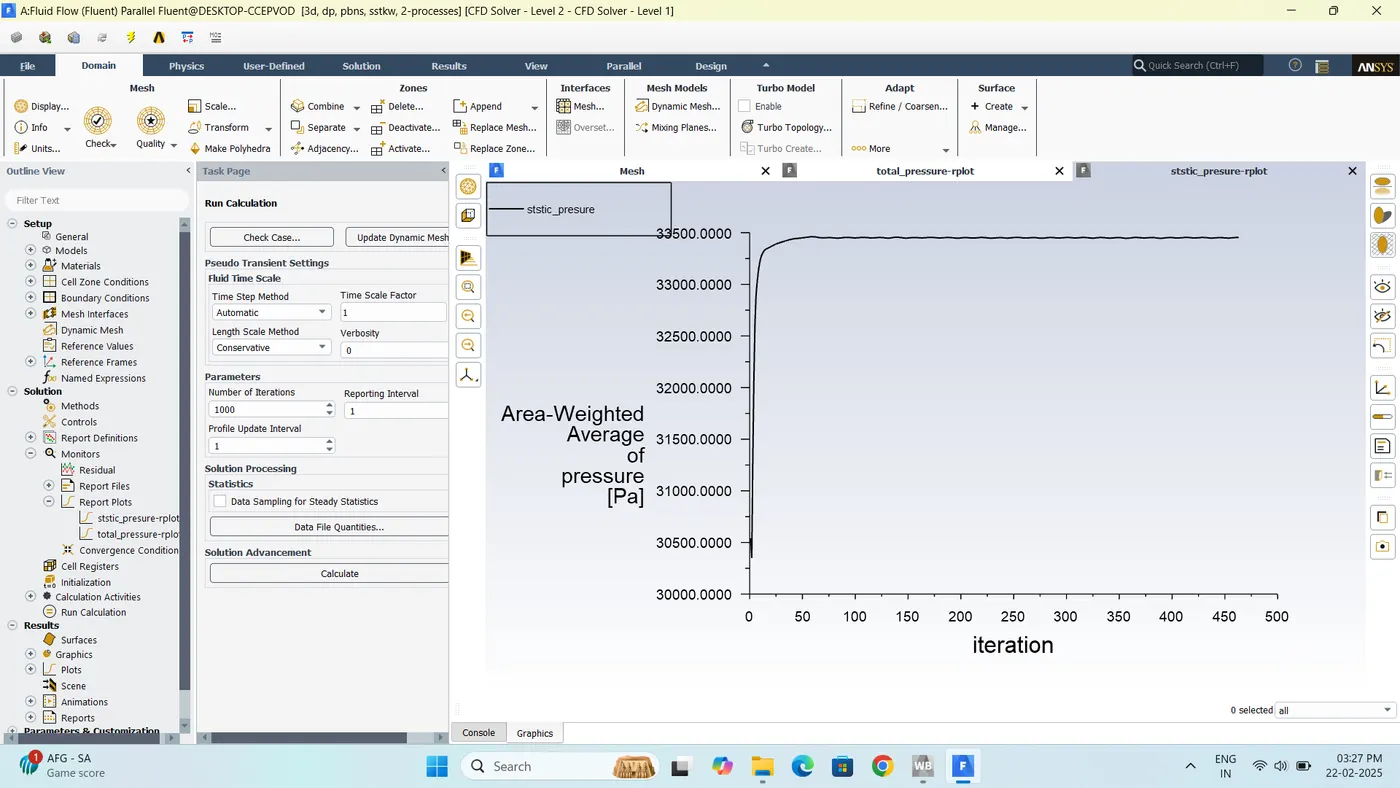
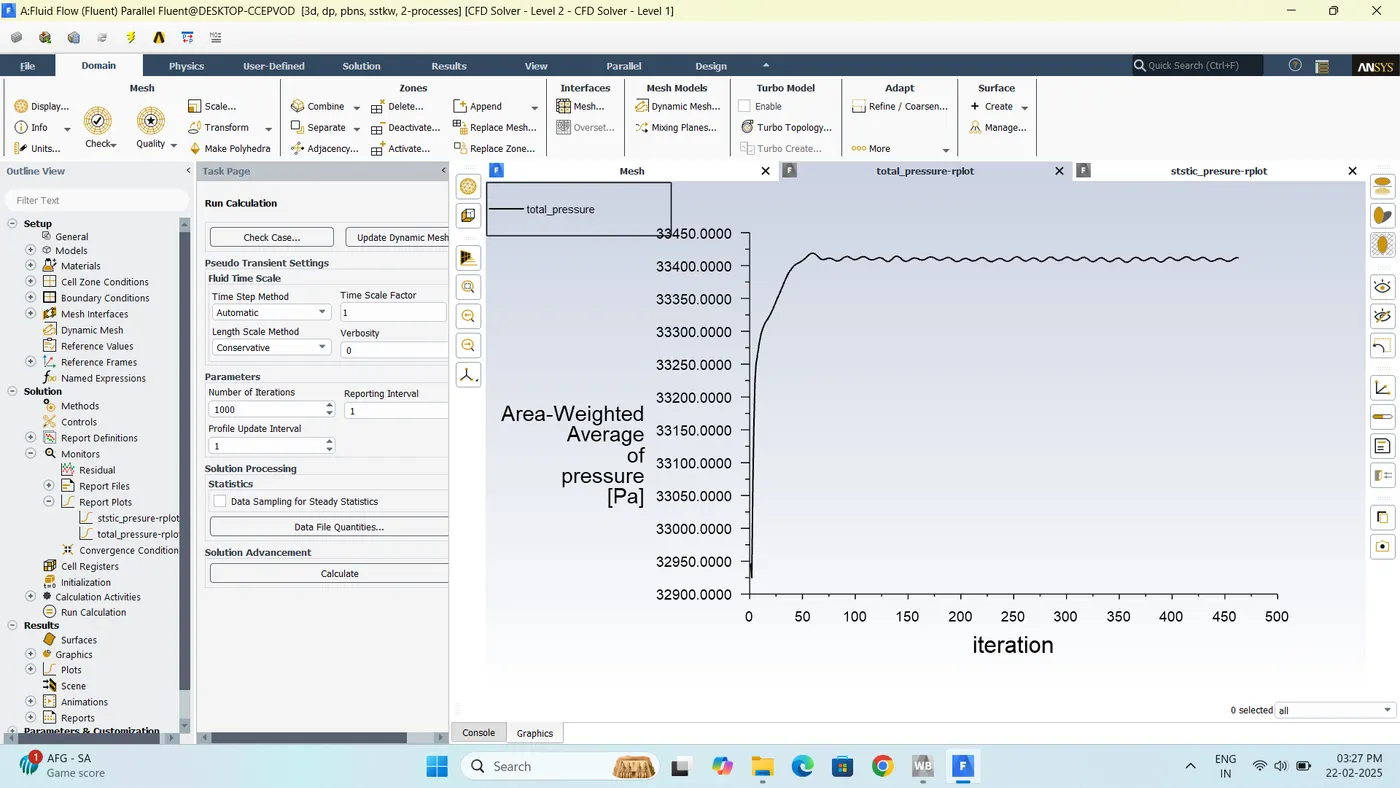
ase2:-
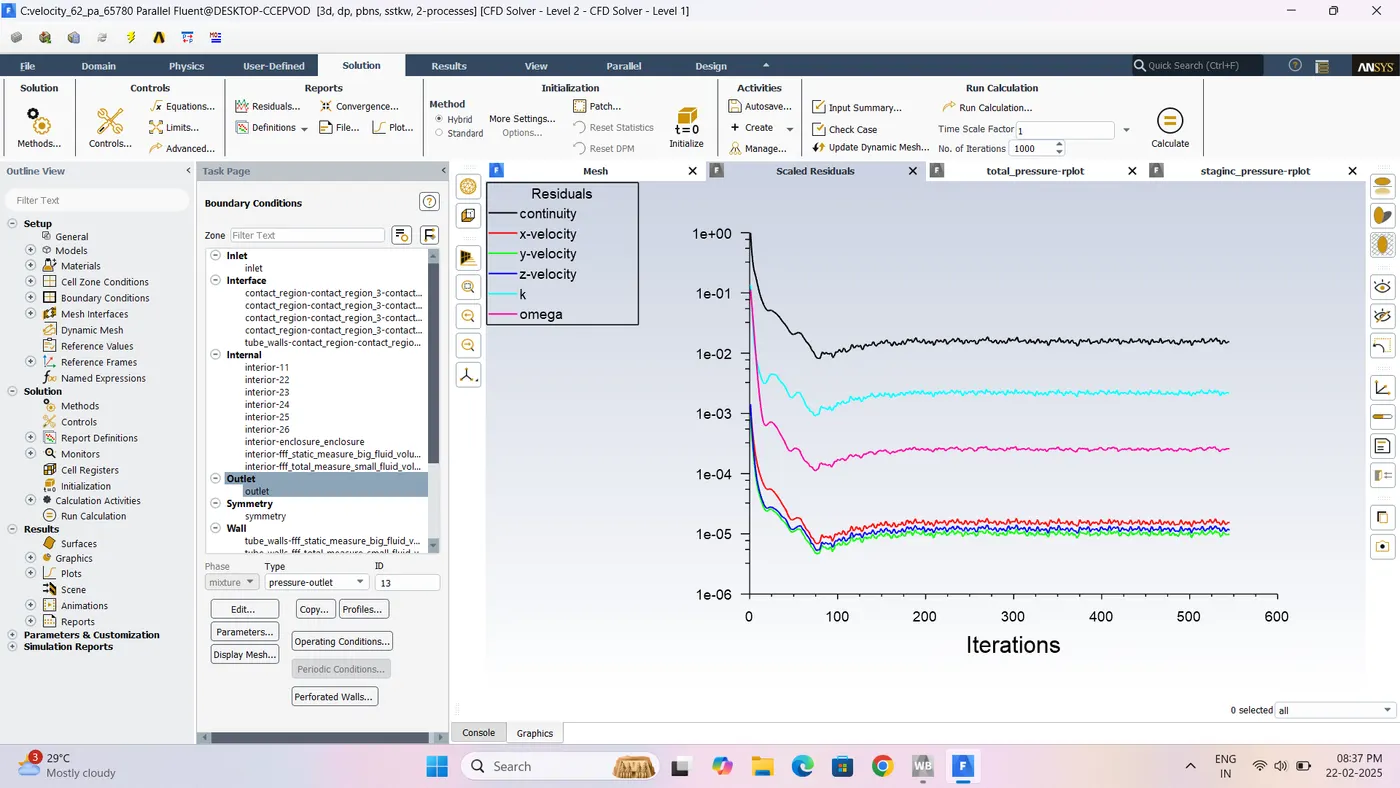
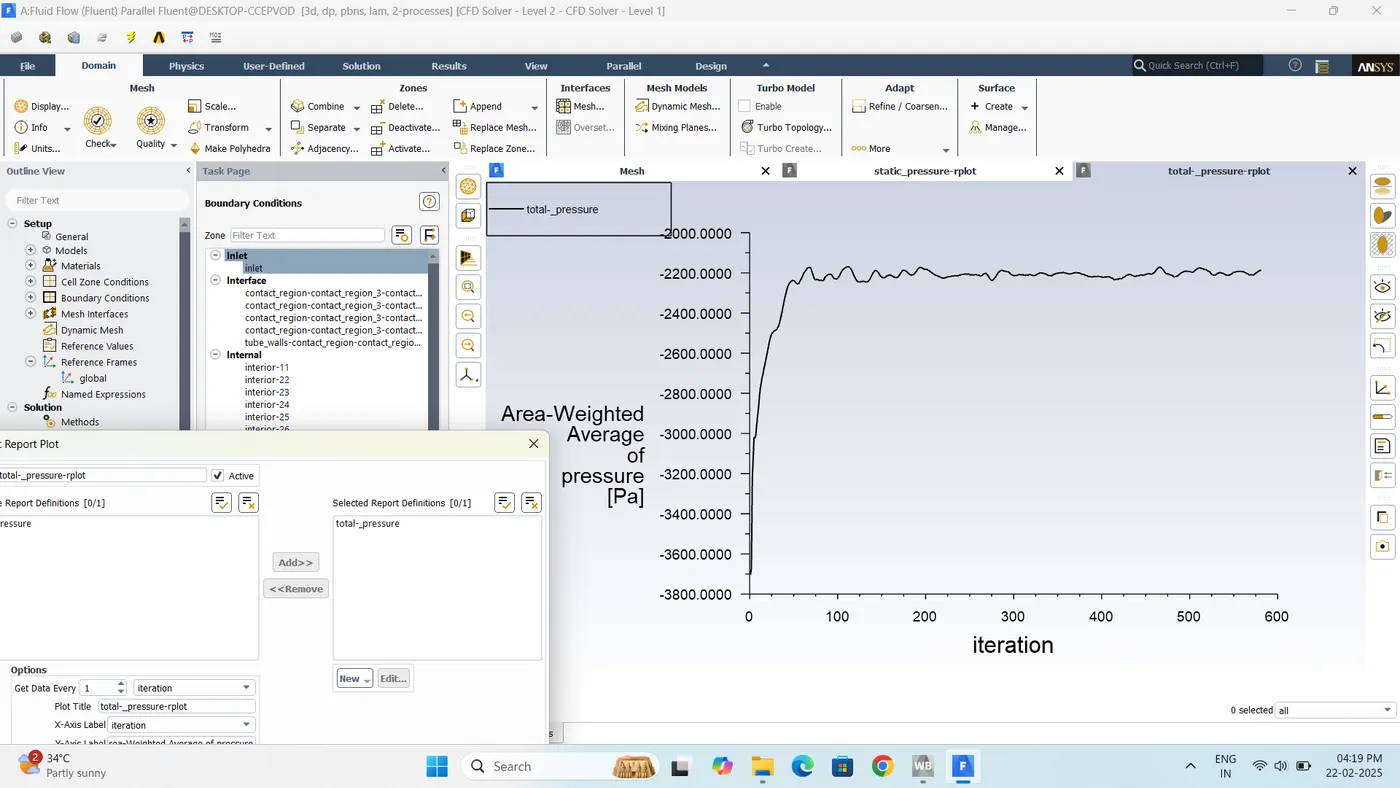
ase3:-
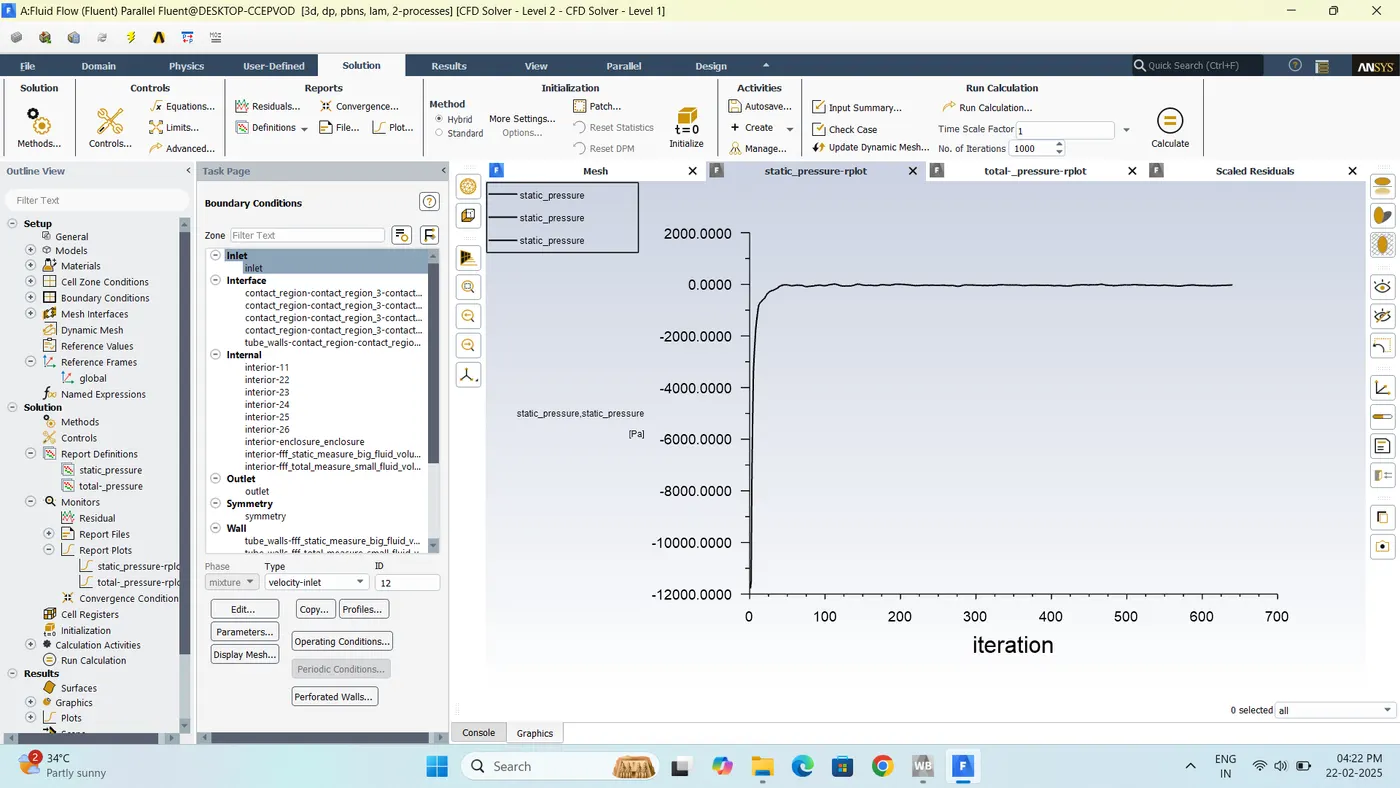
4. Calculation and Results
Case 1:
- Total Pressure = 22127.264 Pa
- Static Pressure = -2262.4144 Pa
- Dynamic Pressure = 24389.6784 Pa
V=0.8632⋅24389.6784=237.745m/s
Case 2:
- Total Pressure = 37630.729 Pa
- Static Pressure = 33288.593 Pa
- Dynamic Pressure = 4342.136 Pa
V=0.8632⋅4342.136=100.313m/s
Case 3:
- Total Pressure = 67544.552 Pa
- Static Pressure = 65870.067 Pa
- Dynamic Pressure = 1674.485 Pa
V=0.8632⋅1674.485=62.294m/s
5. Comparison of Results
| S.No. | Gauge Pressure (Pa) | Analytical Velocity (m/s) | CFD Velocity (m/s) | Error (%) |
|---|---|---|---|---|
| 1 | -2817 | 240 | 237.745 | 0.939 |
| 2 | 33287 | 100 | 100.313 | 0.313 |
| 3 | 65780 | 62 | 62.294 | 0.294 |
6. Conclusion
- The CFD simulation of the Pitot tube successfully demonstrated the relationship between total pressure, static pressure, and velocity.
- Velocity was calculated using the pressure difference based on Bernoulli’s equation.
- The simulated velocities showed good agreement with analytical values, with minimal errors (<1%).
- This confirms the accuracy and reliability of the Pitot tube model and the CFD method used in this experiment.