Week 3: Flow over a backward facing step
Aim:
To Simulate the flow over a backward facing step using converge.
Objectives:
- To run the case for three different mesh grid
dx = dy = dz =2e-3m
dx = dy = dz =1.5e-3m
dx = dy = dz =1.0e-3m
- To show mesh for all three grid sizes.
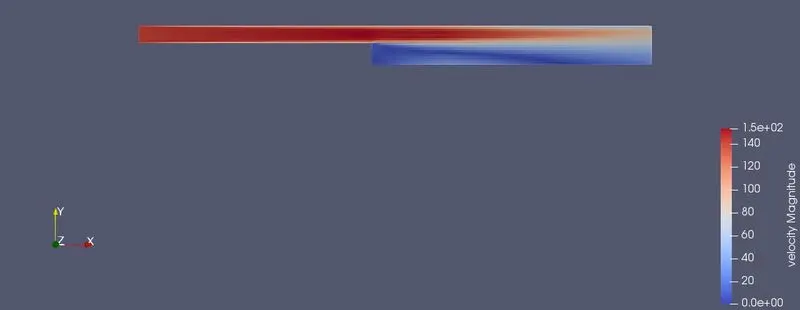
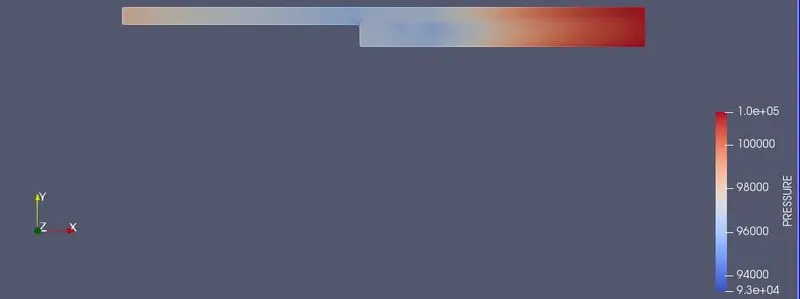
- To Show pressure and velocity contours ,the plots of velocity, pressure, mass flow rate and total cell count for all the 3 base mesh sizes
- Explain Why separation takes place.
Introduction:
Separation and reattachment of turbulent flows occur in many practical engineering applications. It is seen both in internal flow systems such as diffusers, combustors and channels with sudden expansions, and in external flows like flow around airfoil and building.The flow over a backward facing step provides an example of above said flow field.
Model:
Case Setup:
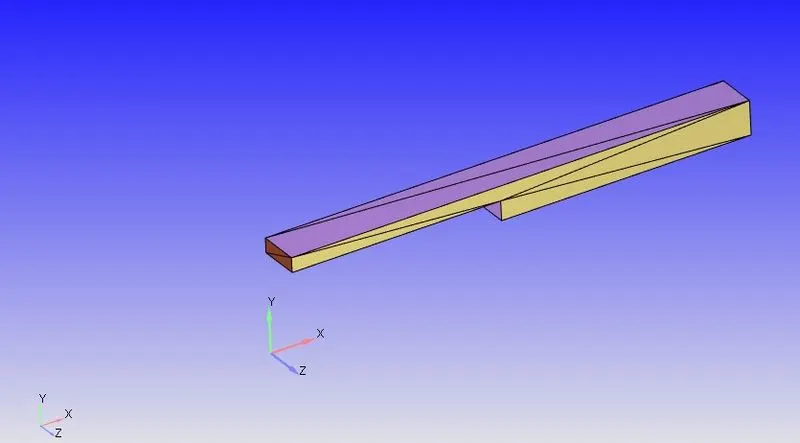
1) A geometry for the channel flow is imported in converge studio.
2) The necessary boundary conditions are defined.
3)The necessary steps are then followed in setting up the case where materials, simulation parameters, initial conditions, physical models etc are all specified.
4) Base gride sizes are also specified
The boundary conditions are applied to the surfaces as follows:
Inlet :
Pressure:110325 Pa
Outlet :
Pressure:101325 Pa
The front and back faces are given a 2D boundary condition.
The Top and Bottom suffaces are given as Wall
Case 1:
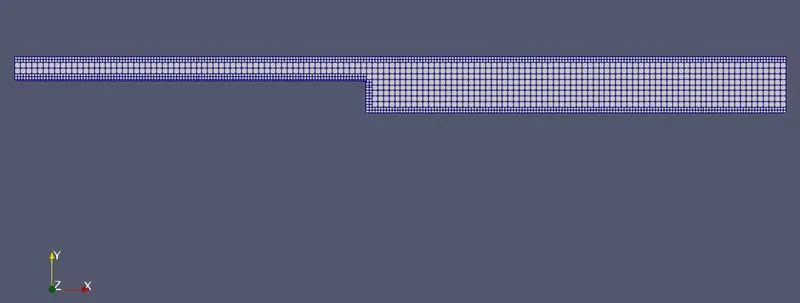
Base Grid size - dx = dy = dz =2e-3m
Case 2:
Base Grid size - dx = dy = dz =1.5e-3m
Case 3:
Base Grid size - dx = dy = dz =1.0e-3m
Geometry:
Case 1:
Base Grid size - dx = dy = dz =2e-3m
Mesh:
Contours:
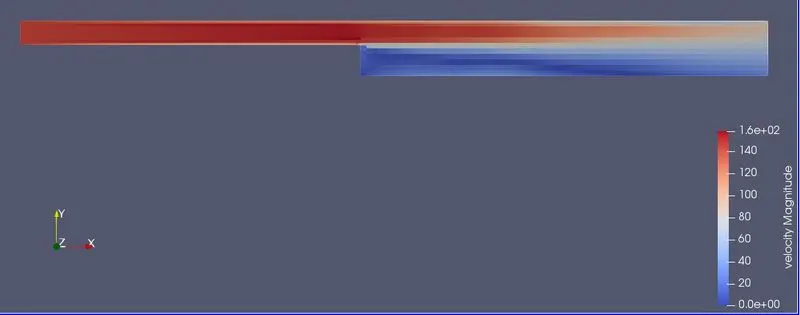
Velocity contour:
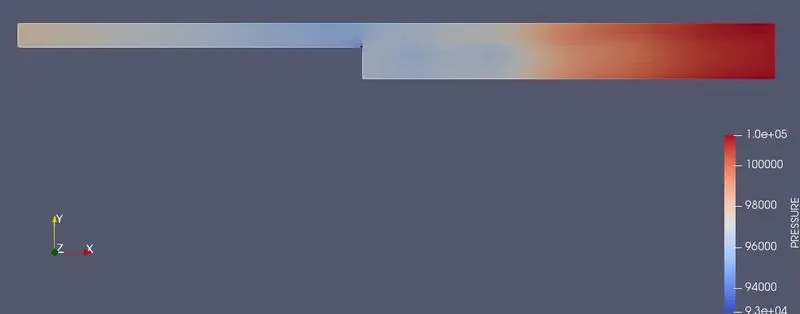
Pressure contour:
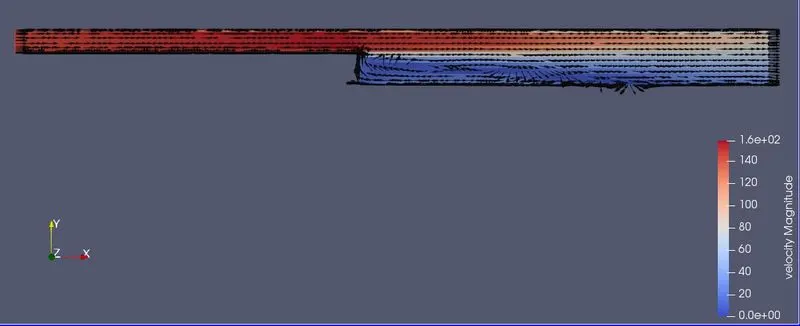
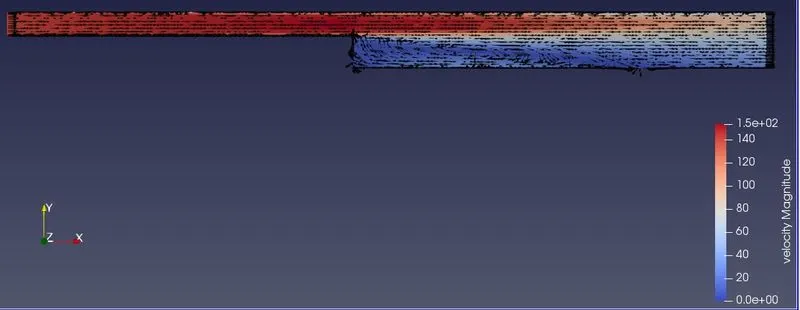
Velocity vector:
Plots:
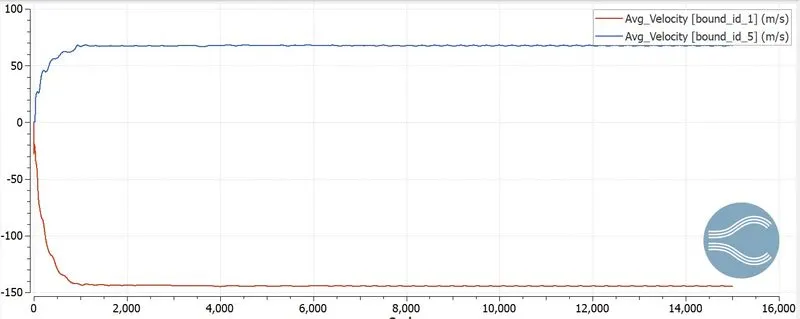
Velocity:
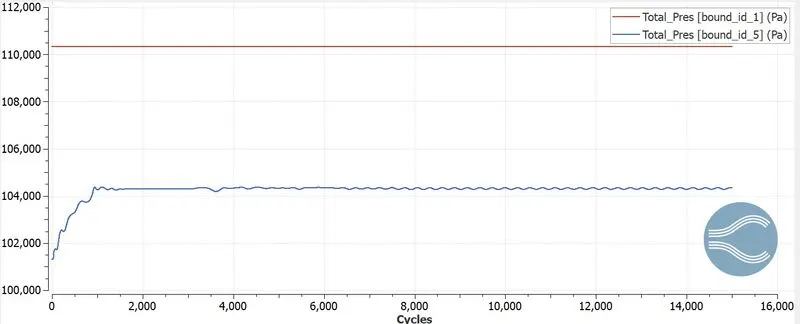
Pressure:
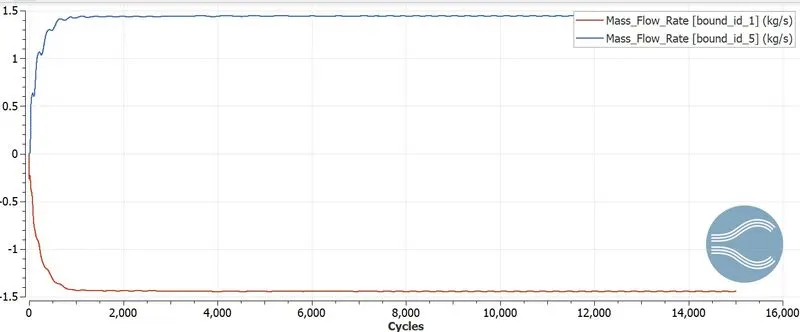
Mass flow rate:
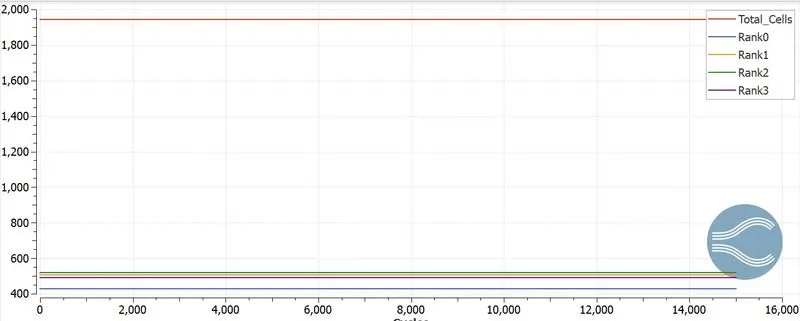
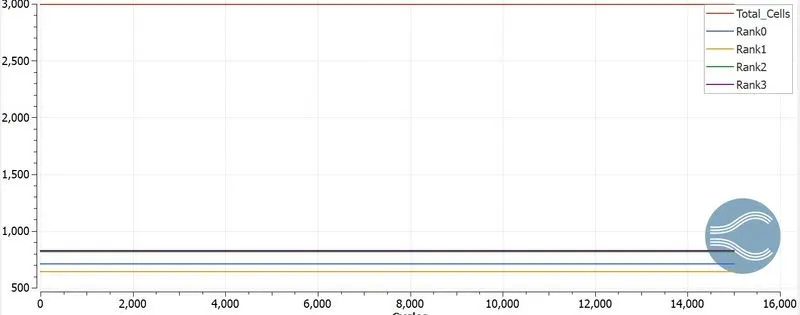
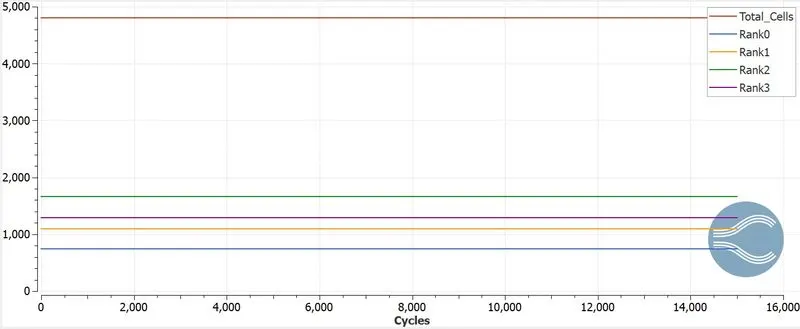
Total cells:
Case 2:
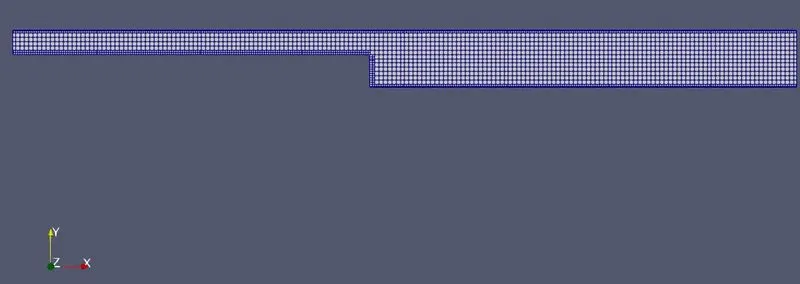
Base Grid size - dx=dy=dz= 1.5e-3m
Mesh:
Contours:
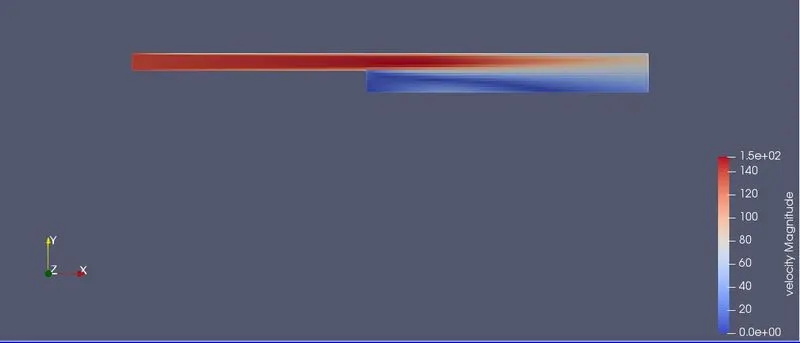
Velocity contour:
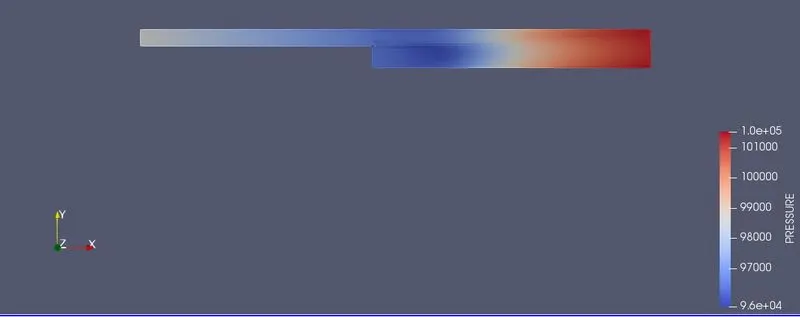
Pressure contour:
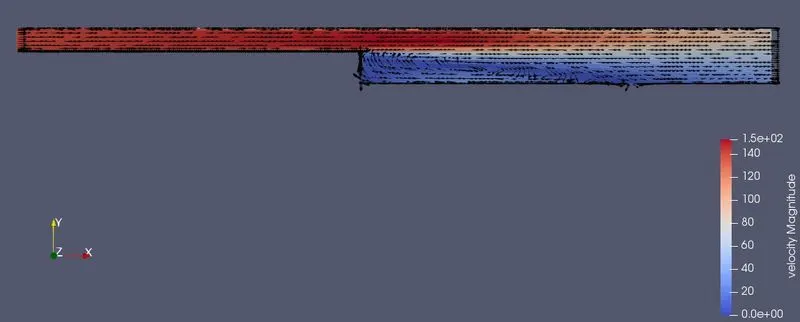
Velocity vector:
Plots:
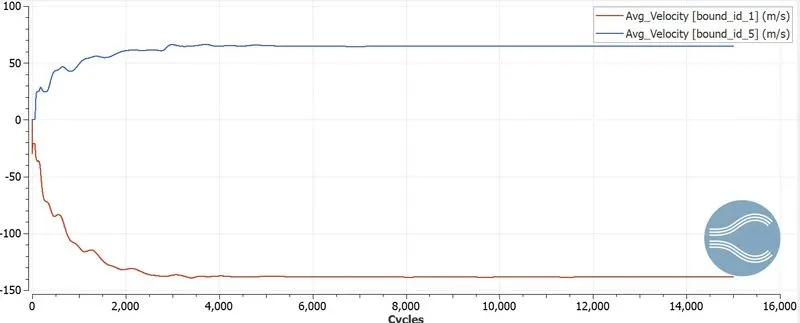
Velocity:
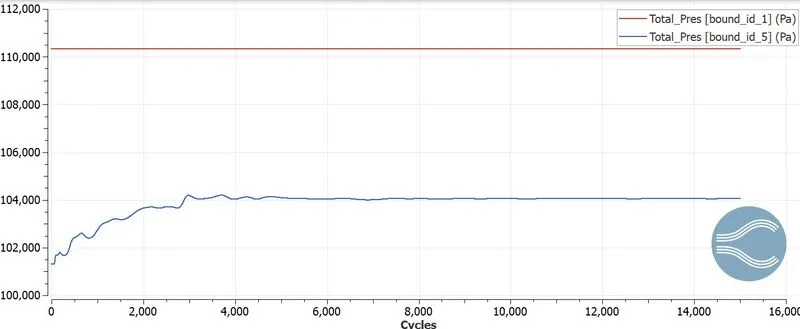
Pressure:
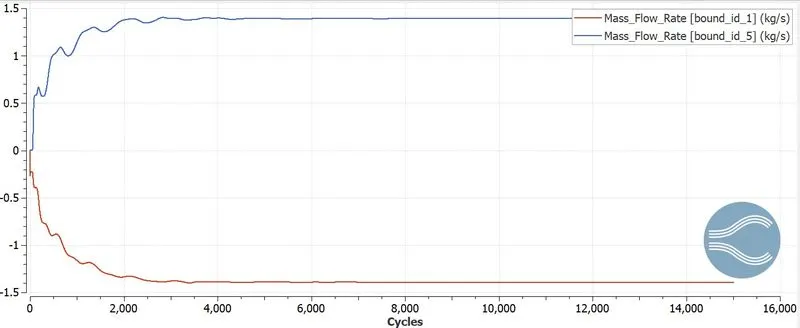
Mass flow rate:
Total cells:
Case 3:
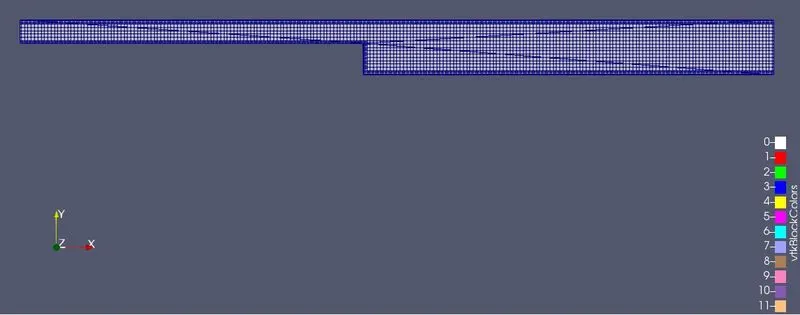
Base Grid size - dx=dy=dz= 1.2e-3m
Mesh:
Contours:
Velocity contour:
Pressure contour:
Velocity vector:
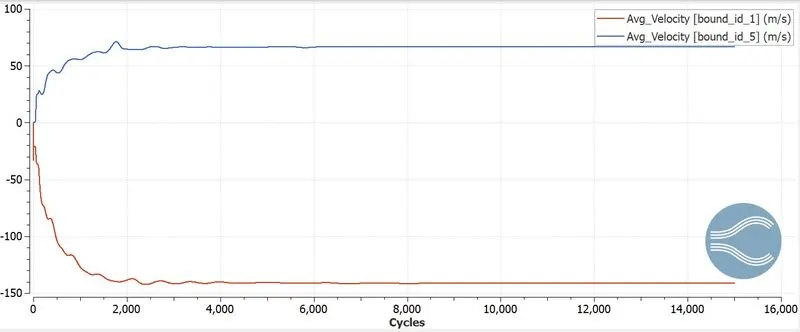
Plots:
Velocity:
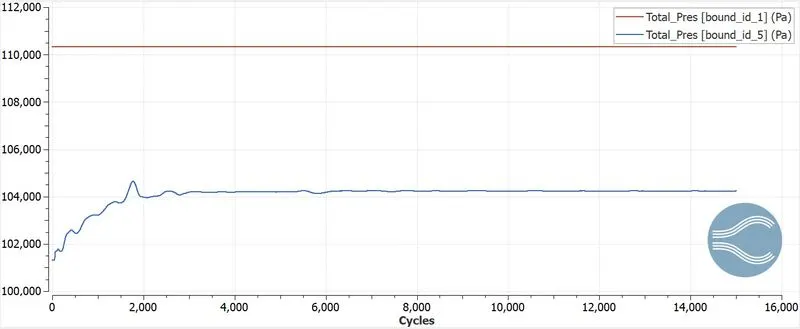
Pressure:
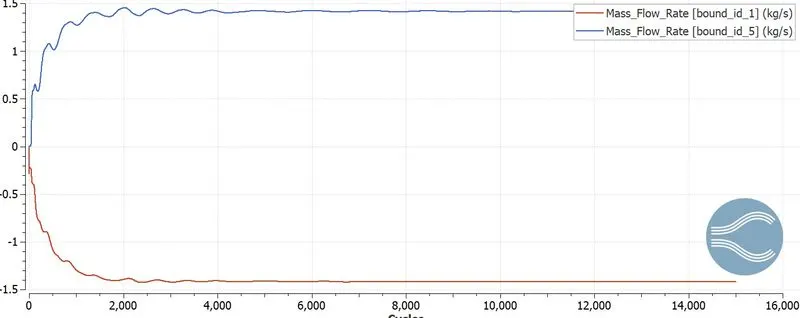
Mass flow rate:
Total cells:
Separation of flow:
Fully developed flow enters the domain from left. When the flow reaches the step, because of expansion of flow channel, pressure gradient exists, it detaches and a recirculation zone is formed. A turbulent boundary layer encounters a sudden back step, causing flow separation. Later the flow eventually reattaches to the bottom wall.Flow separation or boundary layer separation is the detachment of a boundary layer from a surface into a wake. Separation occurs in flow that is slowing down, with pressure increasing, after passing the thickest part of a streamline body or passing through a widening passage.The separation takes place when the flow reaches step because of expansion of flow it detaches from boundary and reattaches to wall region.
Conclusion:
Thus the flow over a backward facing step using converge is simulated for different mesh size.