Week - 3 Drop test Challenge
Aim:
To perform a drop test for a mobile phone onto steel platform.
DESCRIPTION:
The test consists of dropping a device on its back, corner, and front from 1 meter. If a device survives the first three drops, it enters the bonus round where it's dropped up to 10 additional times from 1.5 meters. The device with the highest score after all four "rounds" is declared the winner. A drop test is a test designed to examine the structural integrity of a product. Drop tests usually involve an object being dropped from a predefined height onto a second object or surface. The object being tested can be either the dropped object or the object/surface that an object is being dropped on to.
PROCEDURE:
Open the Drop_testk.file in LS dyna Prepost.
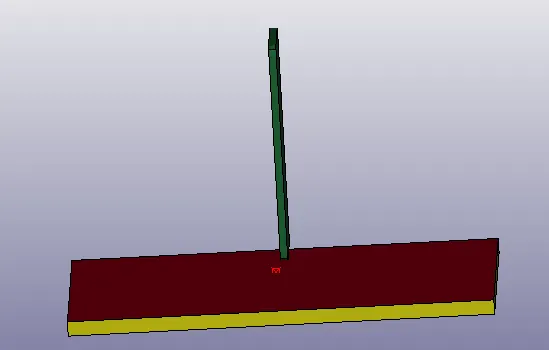
- Using the edit elements option we delete the red color 2D
- Create boundary conditions for the rigid plate by constraining the nodes in all DOF by using create entity command.
- Create a solid section using keyword manager with element formulation=1 We assume unit system as g mm ms.
- Create material ID 020-rigid & 024- piecewise linear plastic for rigid plate made of steel & mobile phone respectively with appropriate given values.
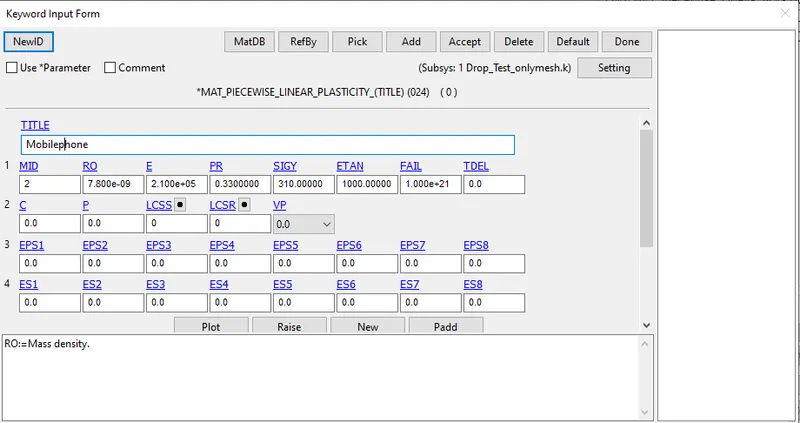
- Create 2 part ID for rigid plate & mobilephone specify respective material ID by using keyword manager.
- Create initial velocity for the nodes on the mobilephone 10
- Create a contact using keyword manager on automatic surface to surface. Select the mobile phone part as slave & rigid plate as master.
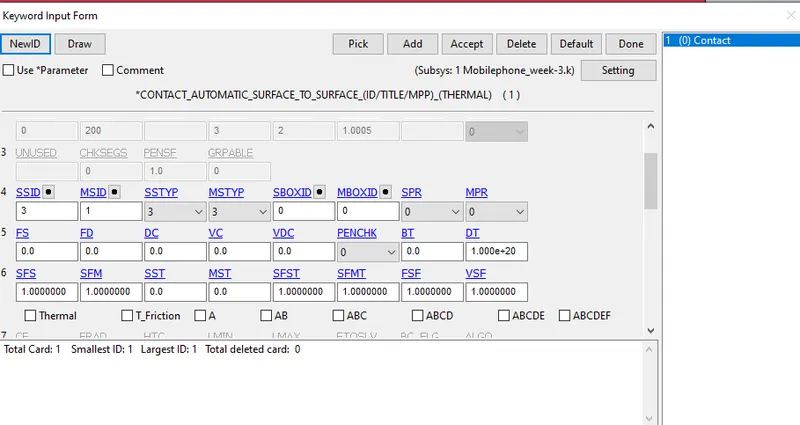
- Set control termination
- Database-ASCll select GLSTAT, ELEOUT, RCFORC with DT 0.00001 & Database - Binary D3plot - DT 0.00001
- Then active keyword file is saved & we run the model in LS dyna manager.
- Open LS-Dyna Prepost & open the binary d3plot file & run the animation.
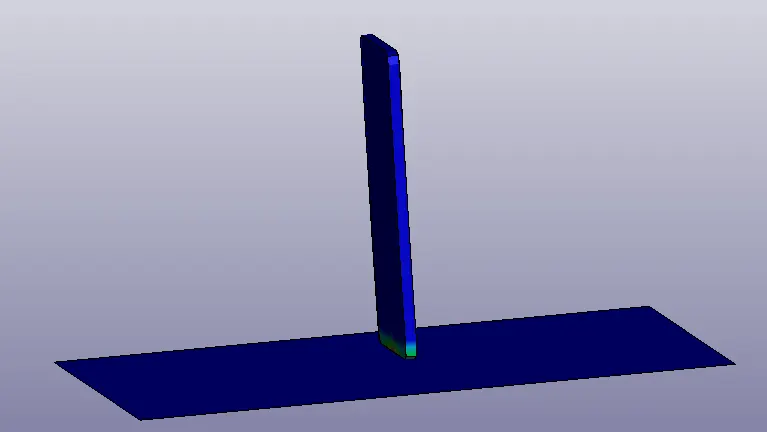
By using fringe components for post processing, we check animation for von misses.
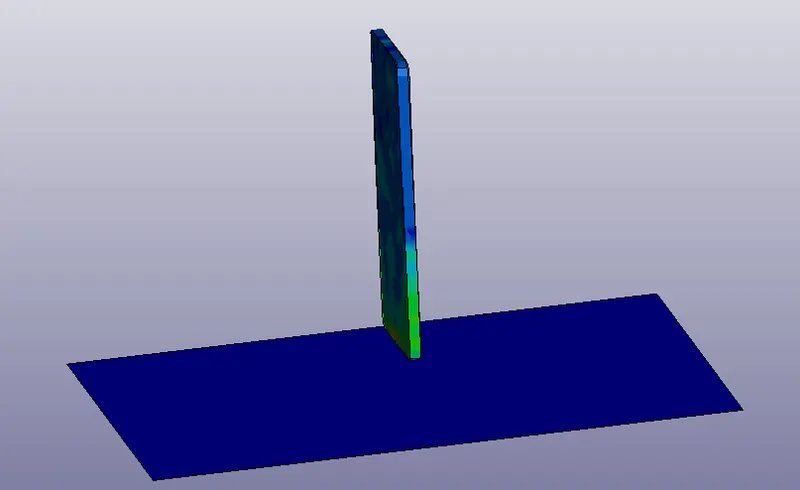
By using fringe components for post processing, we check animation for effective plastic strain.
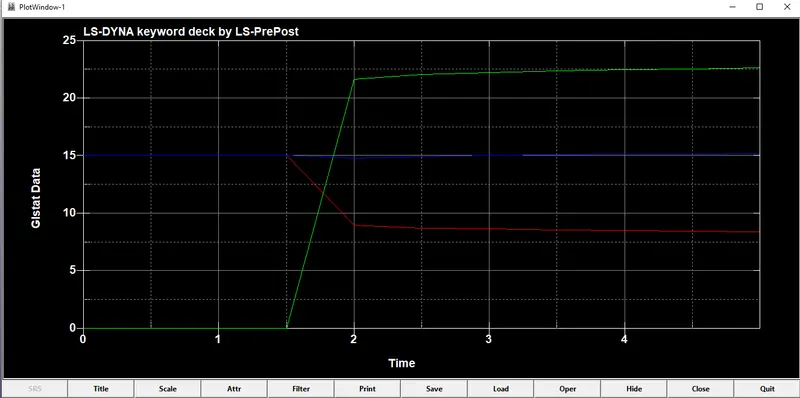
Then we plot graph for energies.
Then we plot the graph for resultant velocity.
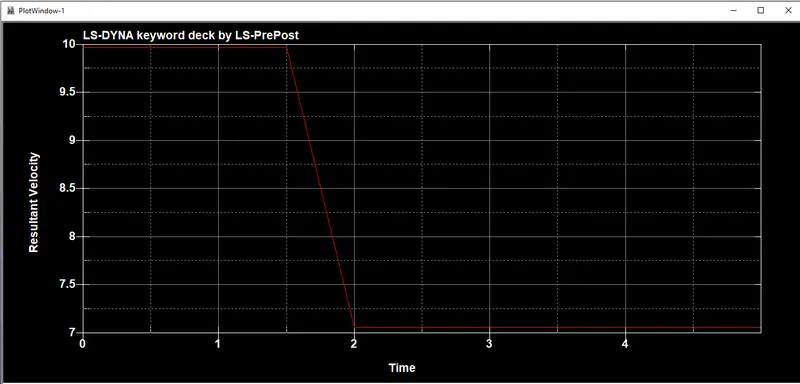
Thus velocity drops when the phone hits steel plate.
CONCLUSION:
- Material, initial velocity, boundary conditions & contacts are assigned as per the given parameters.
- Then by using firange components for pre processor, we create animation for von misses stress & effective plastic strain.
- We have plot graphs for energies & resultant velocity.