Week - 3 Drop test Challenge
Objective:
To perfom a drop test analysis on the given meshed model. by providing a appropriated velocity and boundary conditions using LS dyna software and conclude the result.
If we accidental drop of mobile phone in our daily life is probably the most common failure.Mobile phone is expected to continue functioning after suffering a drop with minimal cosmetic damage. In the last years,work is already done on the mobile phone to develop highly impact tolerant. Several forces and accelerations acts on mobile when it falls, forces depends on the drop height, material, weight, shape and orientation at impact surface and several other factor.
Therefore it is important for designer point of view that what actual facts of drop test on mobile phone at the end of the design stage. Physical drop test may be conduct for feedback to little change in product. Inside the assembly of mobile it is also difficult to understand what the component changes taken place. Recently, significant attention and research efforts have been devoted to improve the both board-leveland product-level drop reliabilities of mobile phone.
Therefore, the interest has turned toward finite element analysis. FEA can conduct starting on the development cycle and helpful in improvement of product. Drop test is also important because of it is less time consuming and less expensive.
LS- DYNA is a general-purpose finite element program capable of simulating complex real world problems. It is used by the automobile, aerospace, construction, military, manufacturing and bioengineering industries. LS-DYNA combined Implicit/Explicit solver. One scalable code for solving highly nonlinear transient solution of coupled multi-physics and multi-stage problems.
Procedure :
Import the model by clicking the pre processor and select open, LS - Dyna .k keyword file.
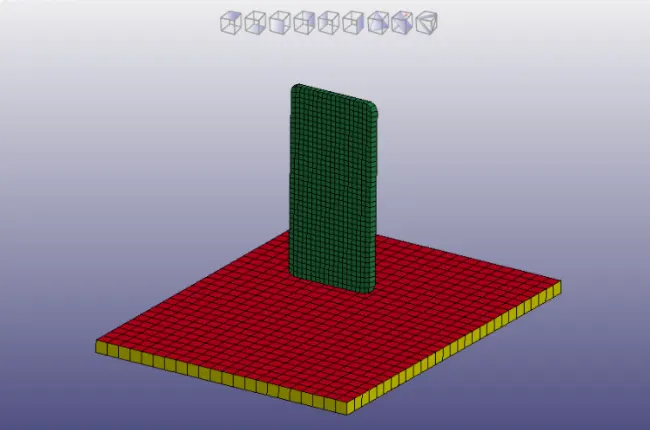
The .k file contains three parts. Here we are considering only two parts in this challange.The bottom part and cell phone model is solid, we have to apply the boundary contrained in such a way that the phone should fall on the rigid wall with certain velocity which is -10 mm/ms and we have to observe the deformation on the cellphone.
Boundary condition:
ln LS-Dyna to provide boundary condition it is the motion given to the body in term of displacement. Velocity or Acceleration. It is used to represent coordinate in x,y,z direction.
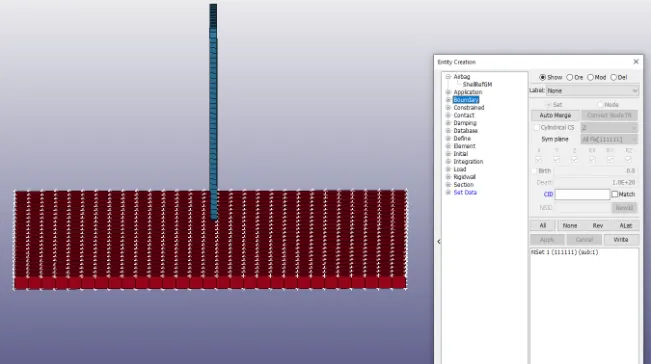
In LS-prepost move to Modeland part >create entity>boundary>single point constraint on the rigid wall>create>pick by part>Apply.
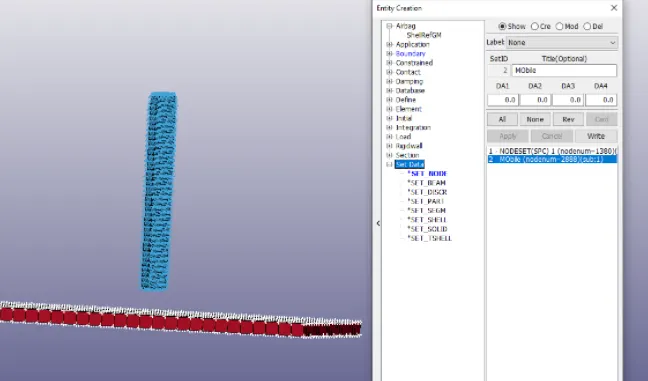
Modeland part >create entity>set data>create>pick by part>Apply, for mobile phone
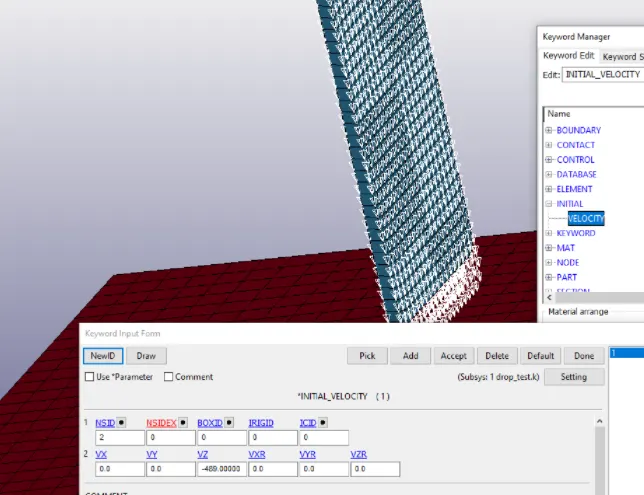
Creating the intial velocity click keyword manager and select the velocity now give the velocity for the phone. create the node set id for which the elements to be in velocity.in the negative z direction so that the drop phenomenon is taken under consideration.
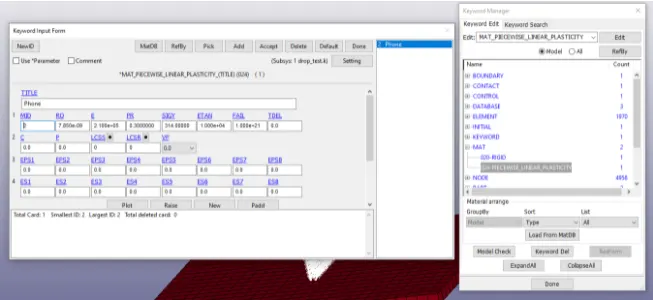
Assign the material id for the parts in the model, for the phone as *MAT_PlECEWISE_LINEAR_PLASTICITY. Here I assigned R0=7.850e-09, E=2.100e+05, PR=0.3000000, SIGY=314.00000
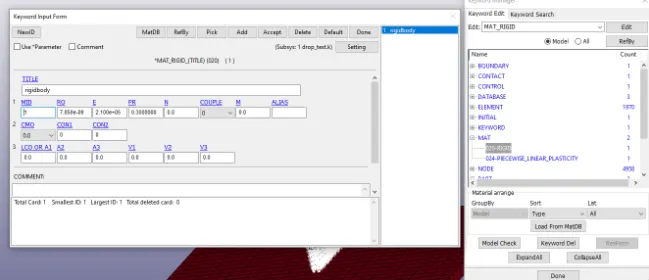
material id for the parts in the model. for Rigidwall as *MAT_ RIGID. Here I assigned R0=7.850e-09, E=2.100e+OS, PR=0.3000000.
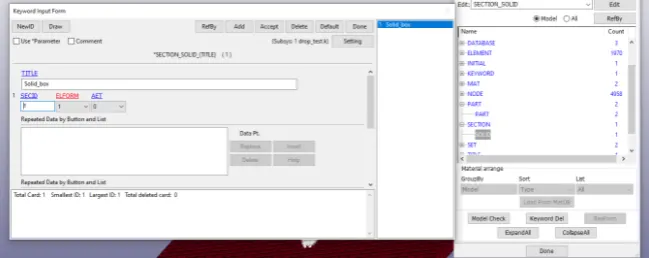
Create the section id for the material by clicking section in keyword manager and select the solid.
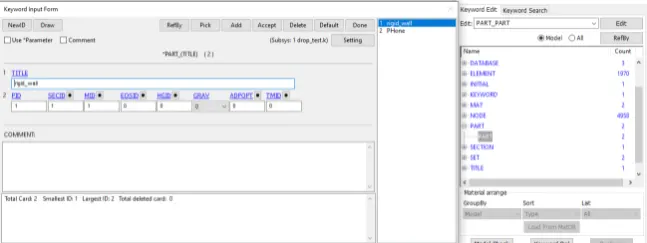
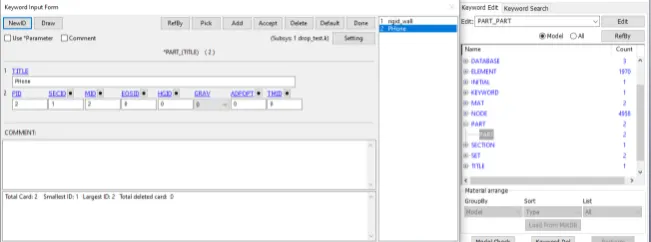
After defining the sections, open the part tab in the key-word manager assingining of material id's and section id's was done already for both rigid_walland phone.
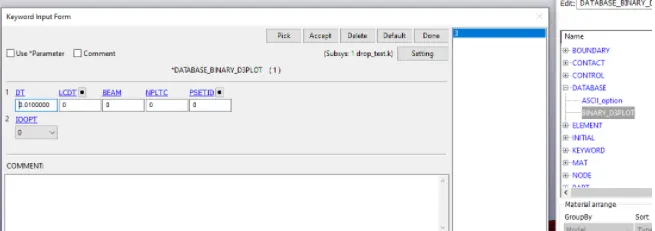
Create the output file by clicking the database and select the binary d3 plot.
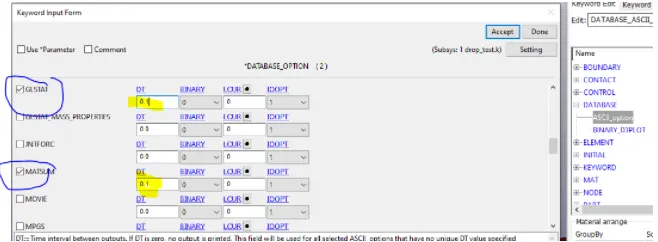
Create outfile by clicking Database>ASCll_option>select the glstat and matsum.
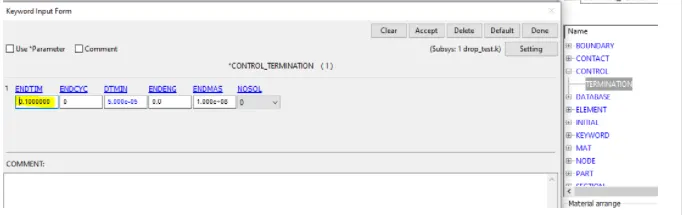
Next in control card select the termination for animation time for the model.
Create the contact surface for the phone and plate. make plate as a master node and phone as a slave node.
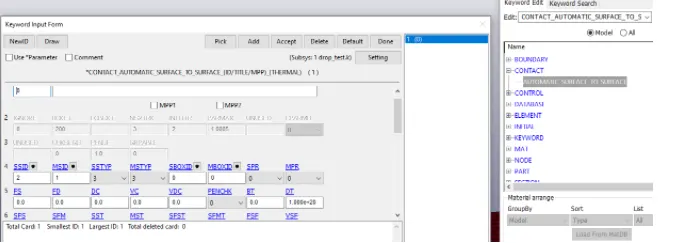
Save these file and run it in ls - run
Problem time = 1.0000E-01
Problem cycle = 207331
Total CPU time = 256 seconds (0 hours 4 minutes 16 seconds)
CPU time per zone cycle = 626.772 nanoseconds Clock time per zone cycle= 626.361 nanoseconds.
Results and Analysis:
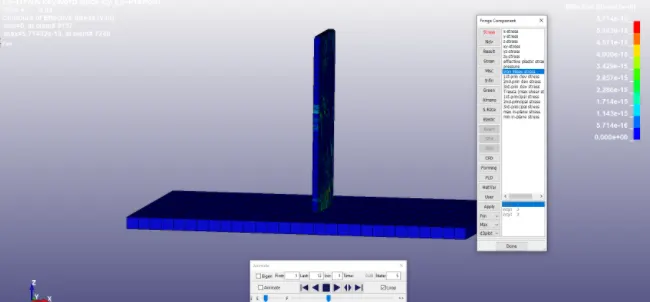
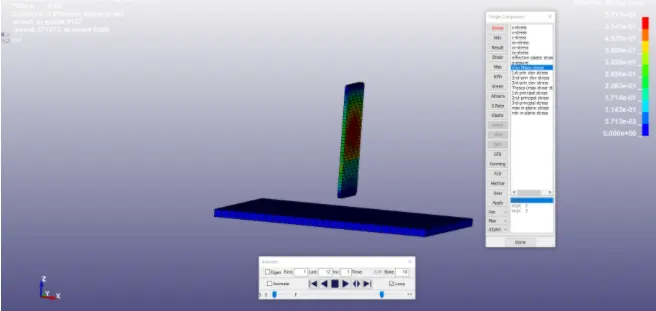
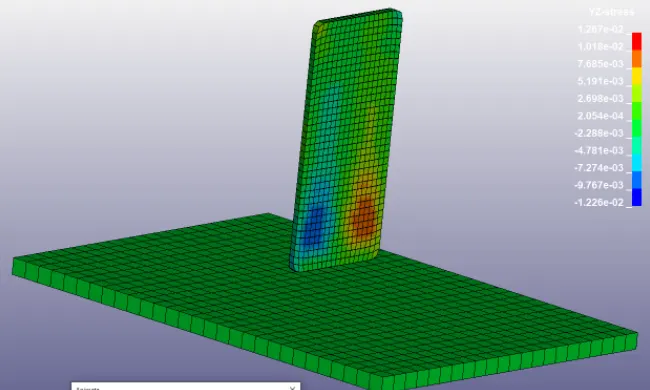
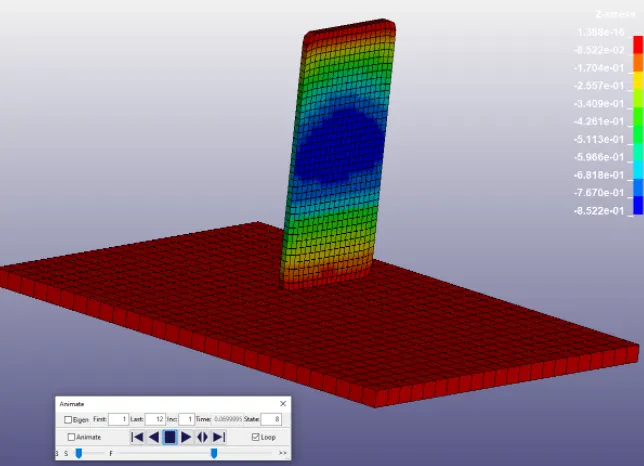
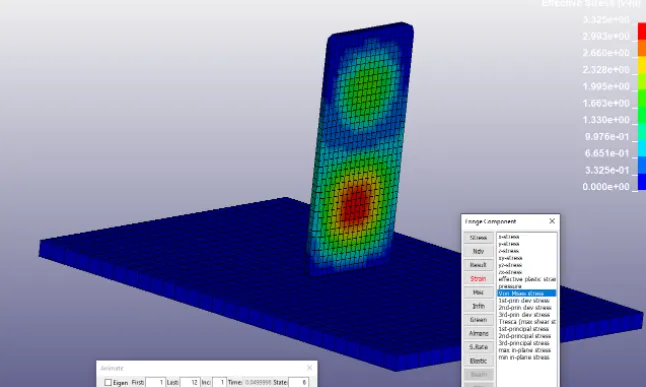
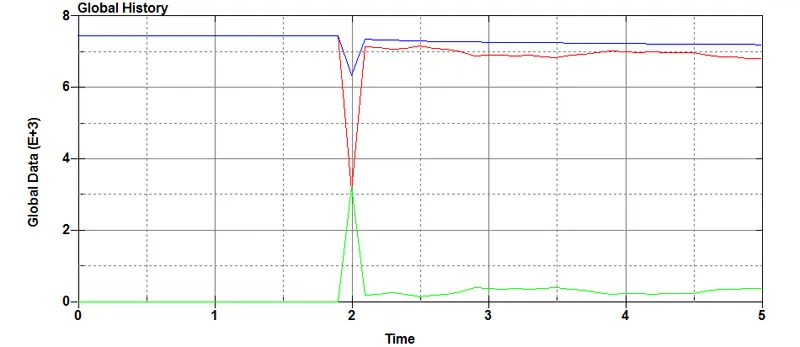
Conclusions:
FEA has become a solution to the task of predicting failure due to unknown stresses by showing problem area in a material, thus allowing designer to see all of the theoretical stresses within the product failure criteria and help to select the correct materials, component, shape and failture methods. This method of product design and testing reduces the manufacturing costs by eliminating actual prototype testing.