Week 3 Challenge : CFD meshing on Turbocharger
Objective: To generate volume meshes for the given Turbocharger geometry.
Procedure:
To begin with, Geometrical Check was performed on the model.
1) Cleaning the model:
The model consists of several overlapping and intersections between surfaces, and incomplete geometries. These must be corrected before preparing surface meshes of the model. This can be accomplished using several cleaning methods such as deleting duplicate/overlapping surfaces, creating new surfaces and such.
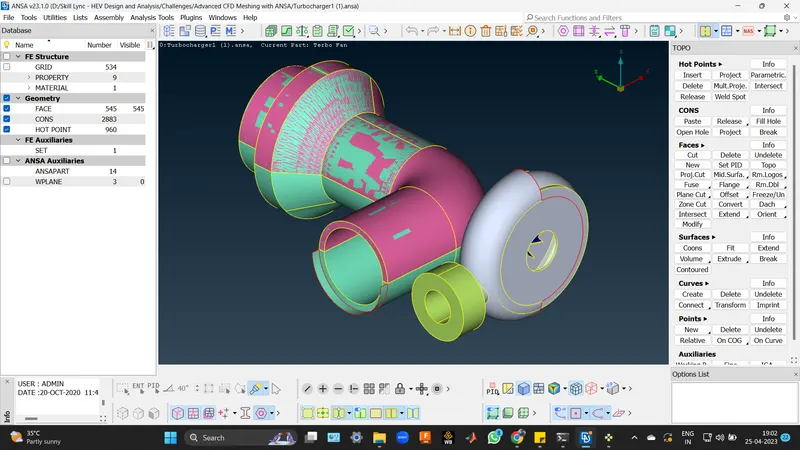
For instance, the pink-coloured PID appeared to be an incomplete duplicate of the green-coloured PID. Hence, it was deleted using the delete tool under the Faces toolbar.
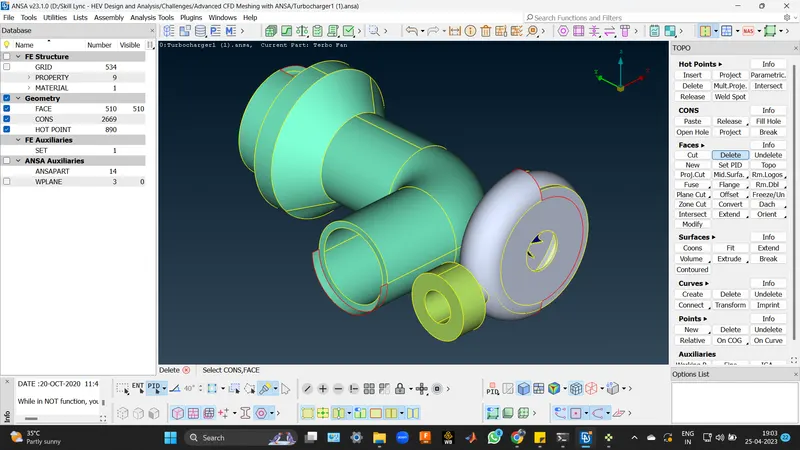
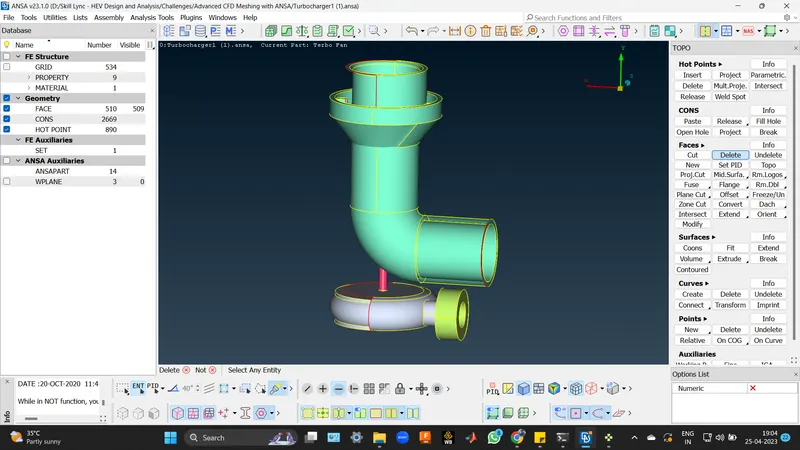
The model also consists of several incomplete geometries, which were rectified using the New and Fill Hole tools under the Faces and Cons Toolbars respectively.
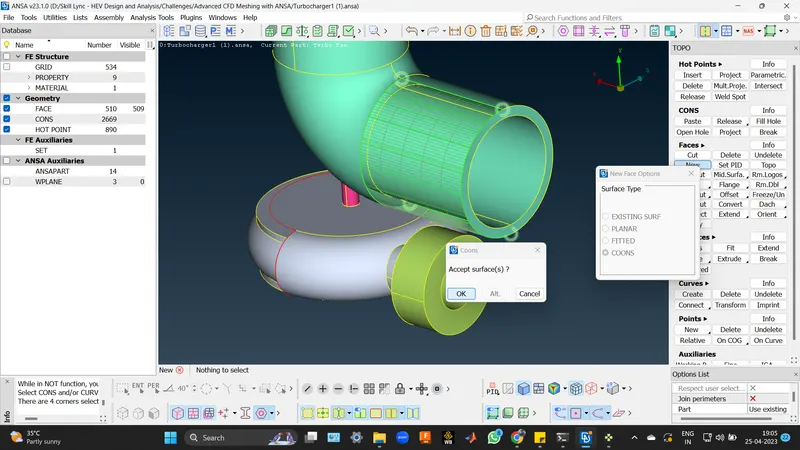
Some geometries such as the turbocharger casing had to be corrected in several steps by creating multiple hot points.
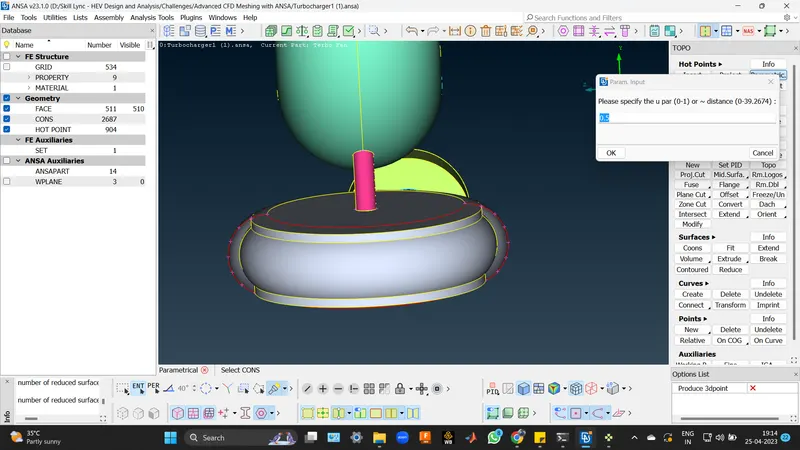
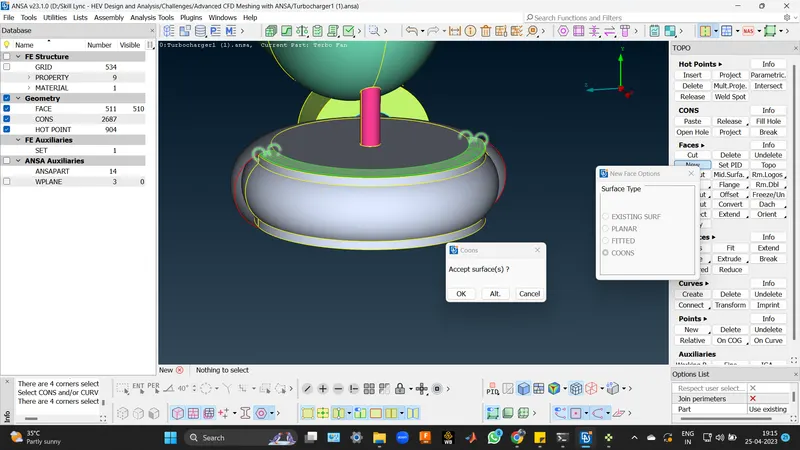
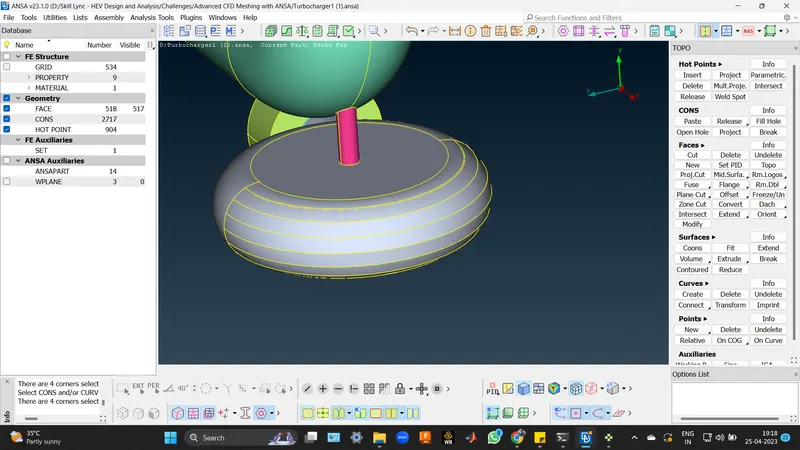
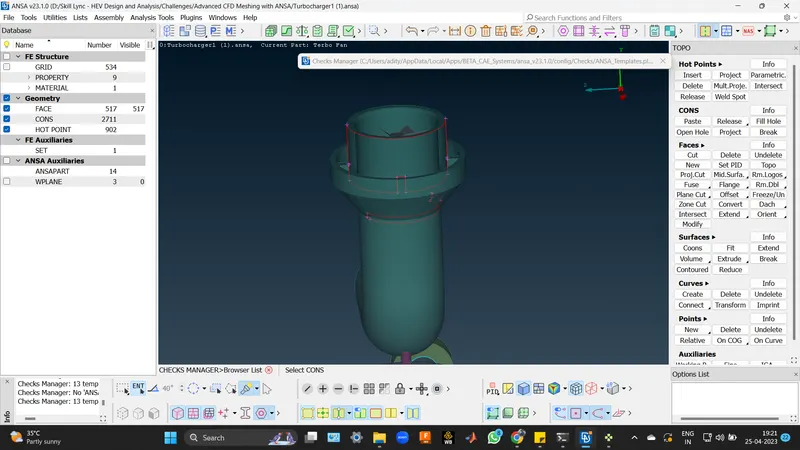
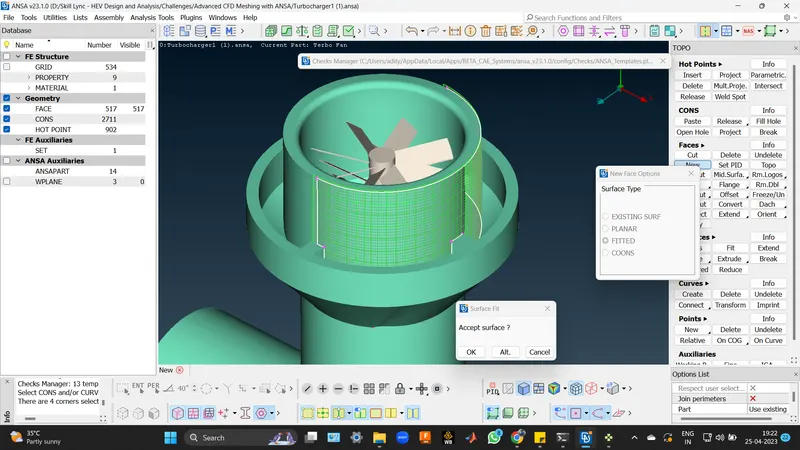
Intersections between macros were corrected using the Intersect tool under the Faces toolbar.
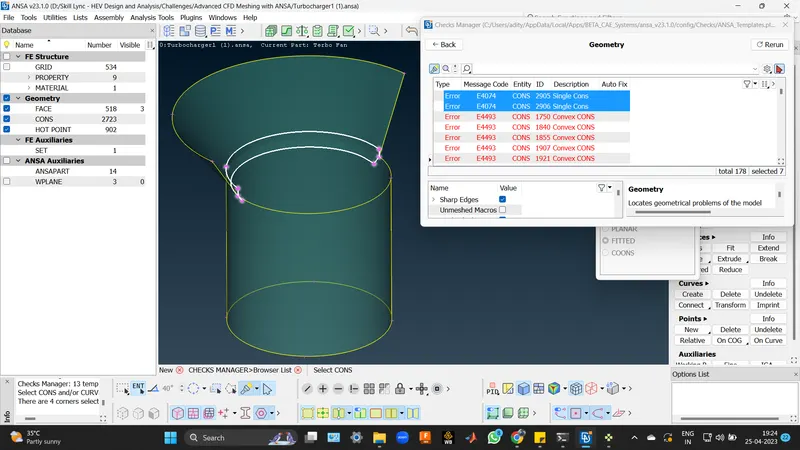
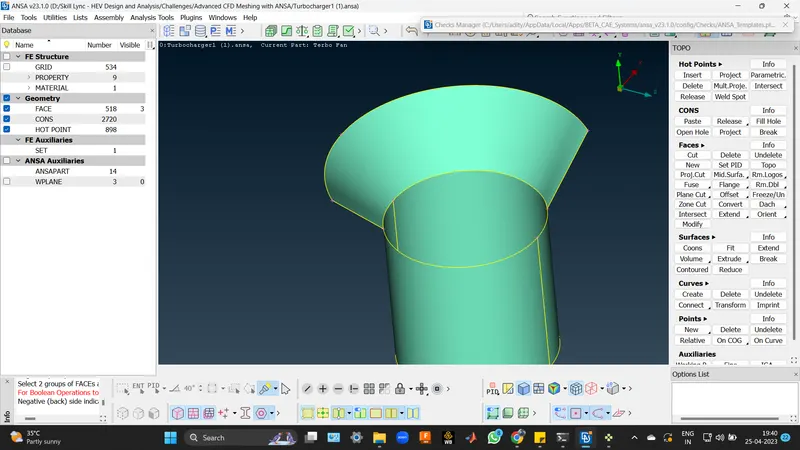
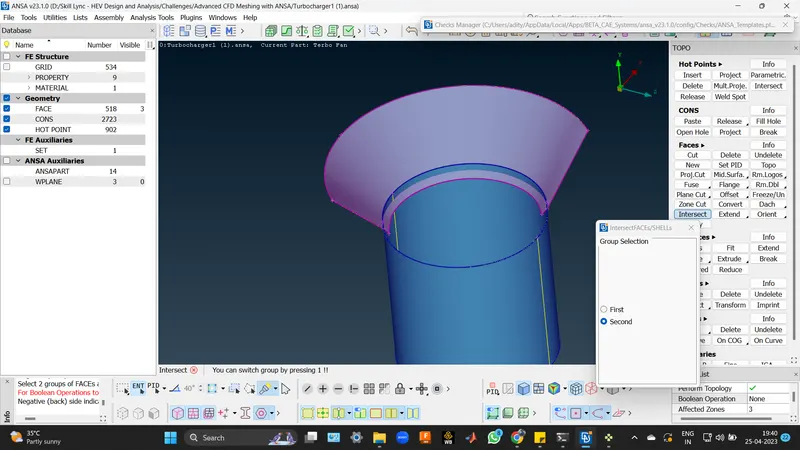
Finally, closed volumes were defined for the model by closing up the inlets and outlets with newly created macros.
2) Creating Surfaces meshes:
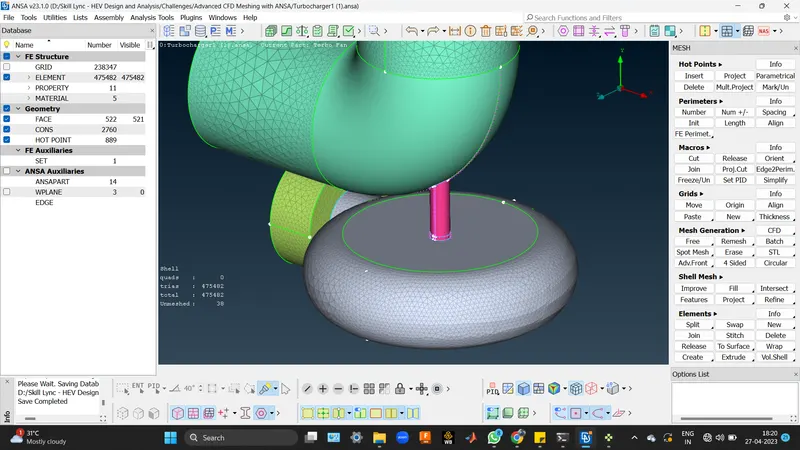
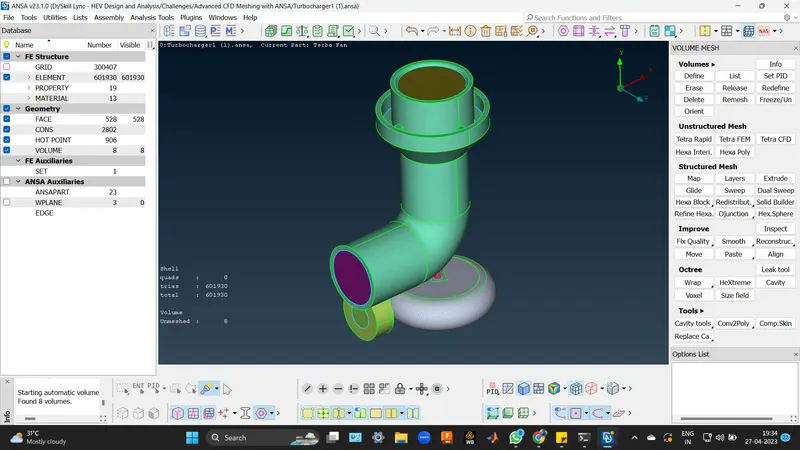
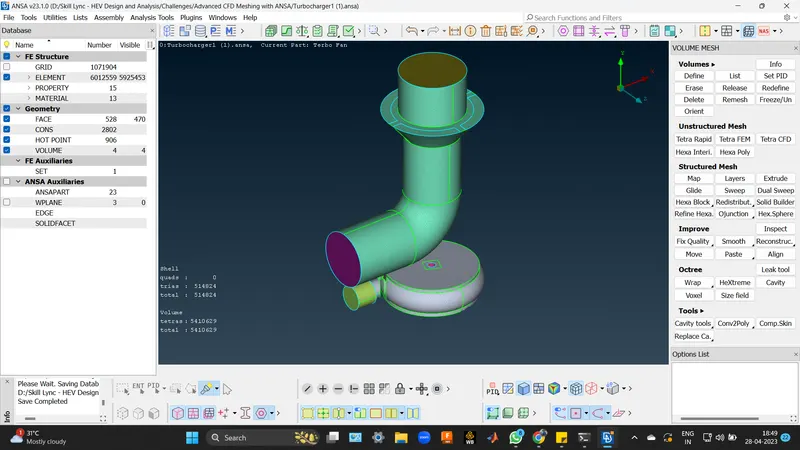
After cleaning up the geometry, meshes were created for the surfaces using the CFD option. Target Lengths, Mesh Parameters and Quality Criteria were set individually for different components as per the requirements.
Under the mesh parameters, CFD Mesh and Tria element options were selected.
Due to mismatches between target lengths of components, meshes were locally getting deleted, which was attended by remeshing the surfaces with modified length settings for parameters macros.
3) Creating Volume Meshes:
Once surface meshing was completed for the model, the workspace was switched to the v.mesh workspace. Define Option under the Volume toolbar was used to auto-detect volumes.
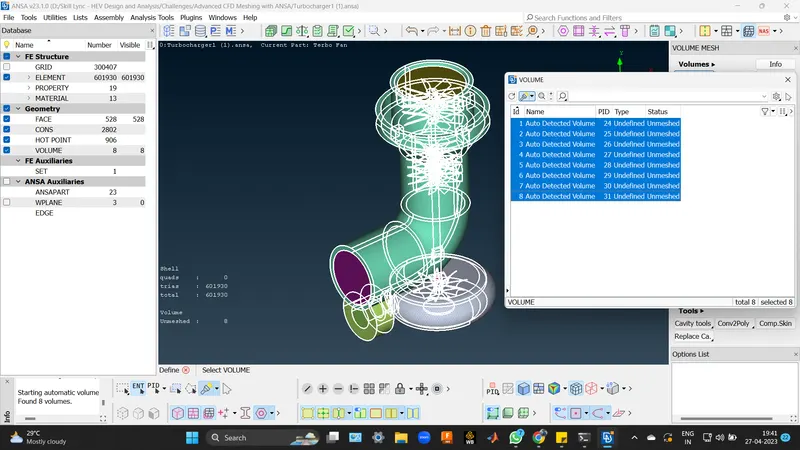
Only Volumes where fluid would flow were retained, and the rest were deleted.
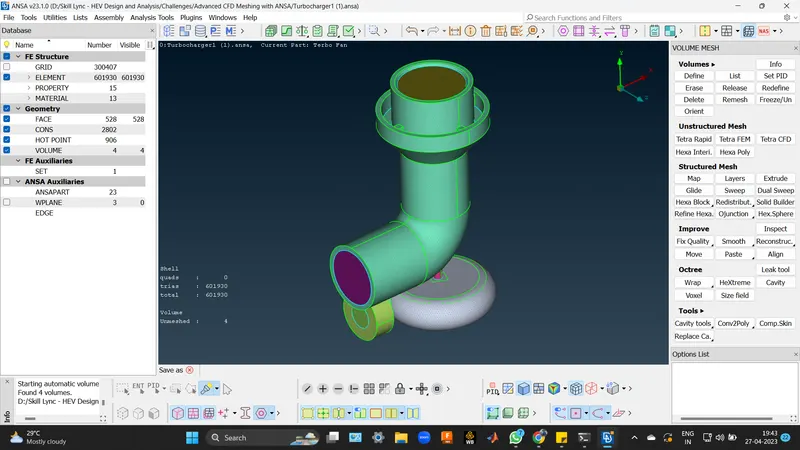
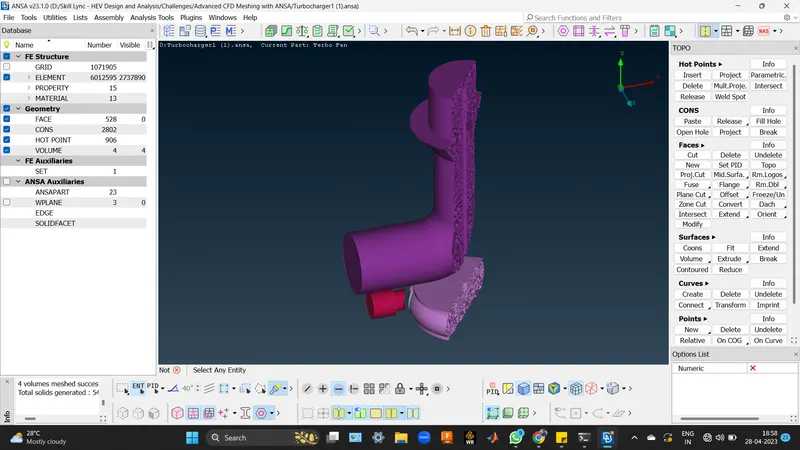
The volumes were meshed using the Tetra CFD option under the Unstructured Mesh
Learning Outcomes: Volume Mesh Workspace was introduced, under which Define and Tetra CFD tools were introduced. Also, cleaning a more complex model was practically learnt.
Result: Volume mesh for the Turbocharger model was successfully created.
Conclusion: How to volume mesh a geometry was successfully learnt.