Week-3 Challenge: ADVISOR Tool
Aim : 1. For EV_defaults_in file, if cargo mass is 500 kg with all other default conditions, can the vehicle travel for 45 km with FTP drive cycle? Conclude your observations.
Theory :
ADVISOR, NREL’s ADvanced VehIcle SimulatOR, is a set of model, data, and script text files for use with Matlab and Simulink. It is designed for rapid analysis of the performance and fuel economy of conventional, electric, and hybrid vehicles. ADVISOR also provides a backbone for the detailed simulation and analysis of user defined drivetrain components, a starting point of verified vehicle data and algorithms from which to take full advantage of the modeling flexibility of Simulink and analytic power of MATLAB.
You may benefit from using ADVISOR if you want to:
estimate the fuel economy of vehicles that have not yet been built
learn about how conventional, hybrid, or electric vehicles use (and lose) energy throughout their drivetrains
compare relative tailpipe emissions produced on a number of cycles
evaluate an energy management strategy for your hybrid vehicle’s fuel converter
optimize the gear ratios in your transmission to minimize fuel use or maximize performance, etc.
The models in ADVISOR are:
1 . mostly empirical, relying on drivetrain component input/output relationships measured in the laboratory, and
2 . quasi-static, using data collected in steady state (for example, constant torque and speed) tests and correcting them for transient effects such as the rotational inertia of drivetrain components.
Advisor tool have three windows.
A . vehicle input window.
B . simulation parameter window.
C . result window.
How to? Start advisor tool.
First, launch MATLAB and first set default location folder to the advisor.
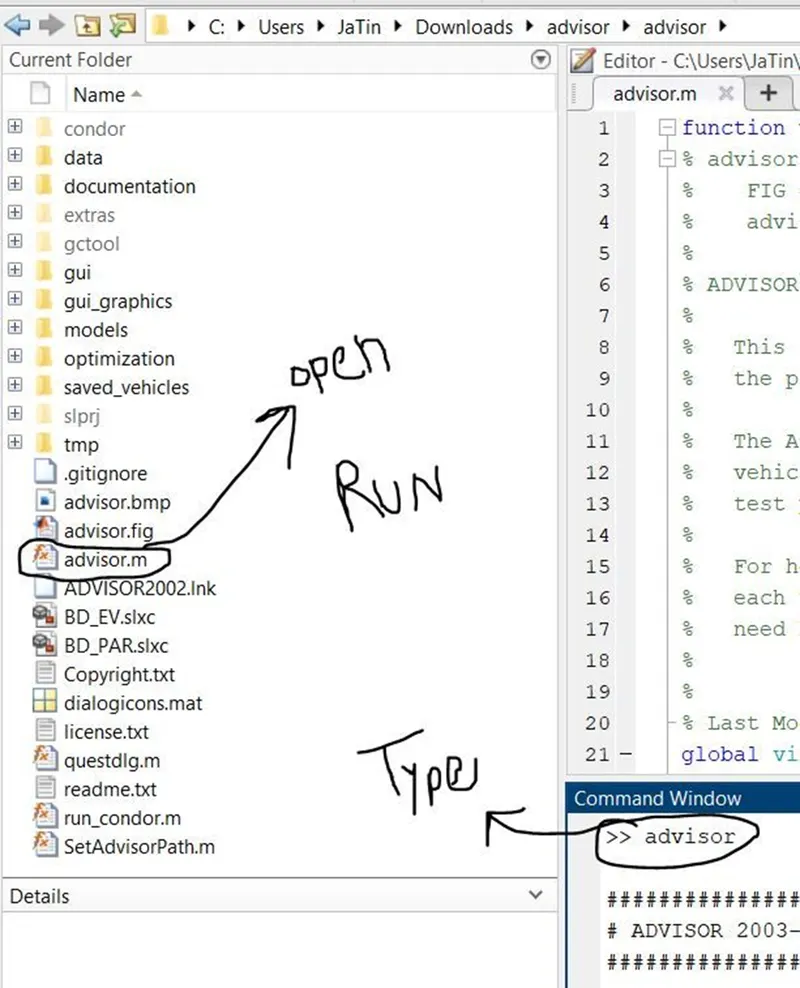
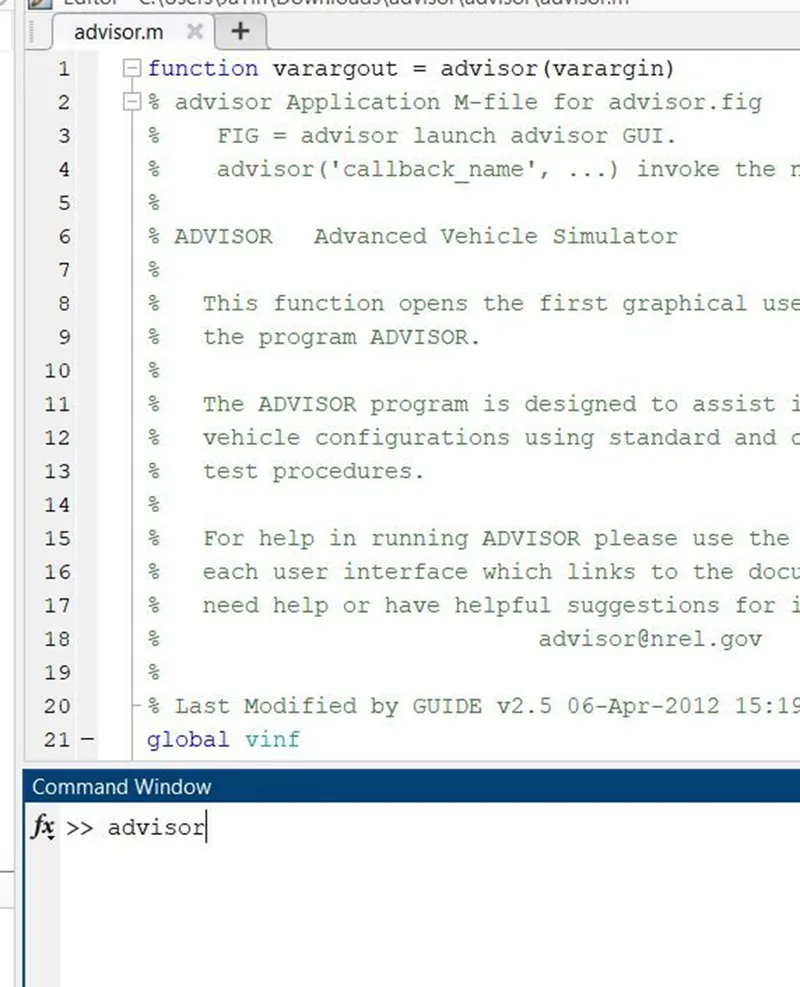
Second, now in the command window of Matlab type "advisor" and press enter.
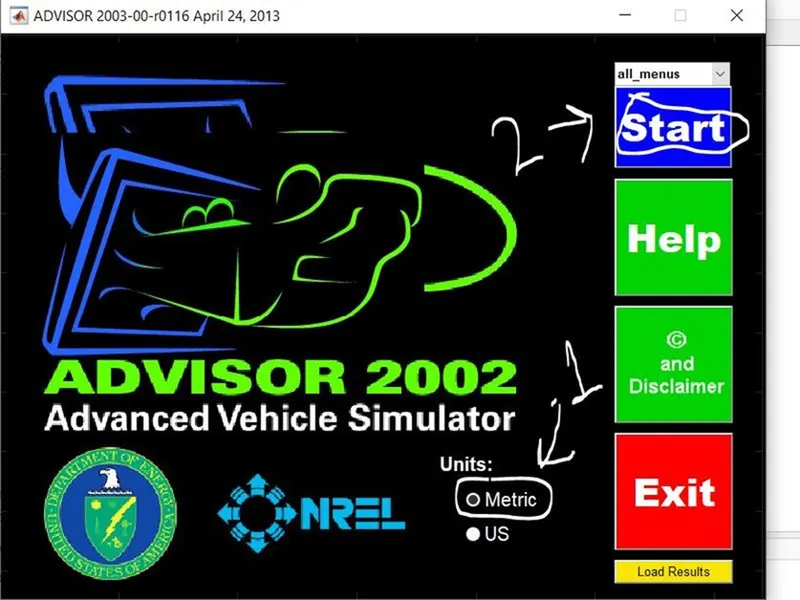
Third, a new window will open. And then set metric for unit and start advisor.
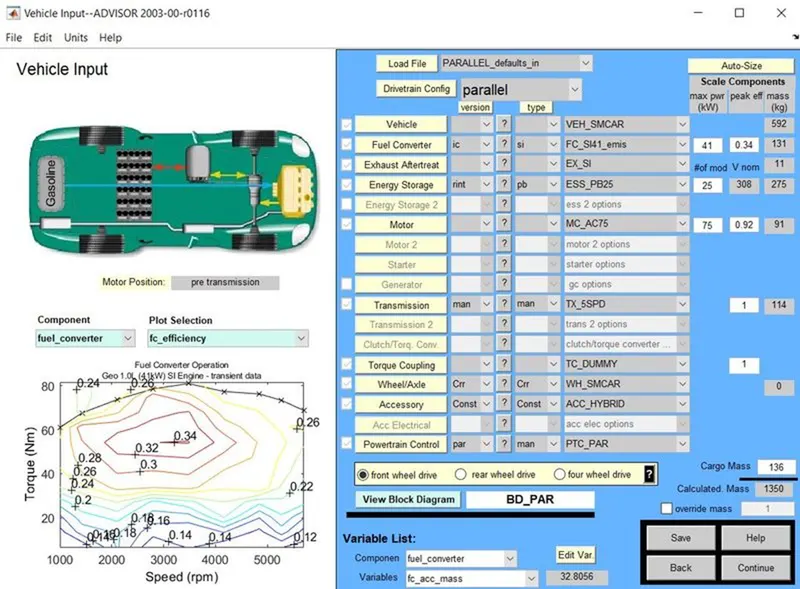
It will launch a new Default window.
Step 1 .
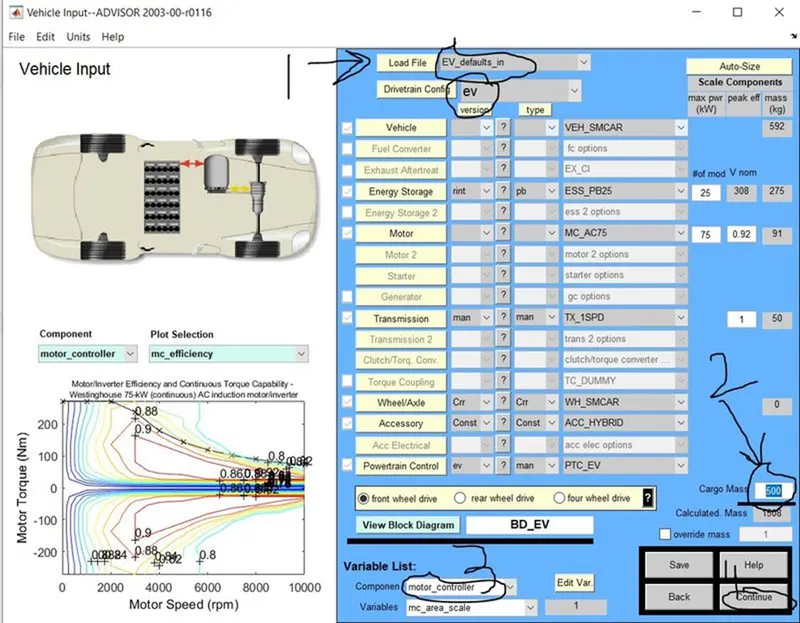
Load the advisor tool from the Matlab command window and select matrix system. And load EV_default_in file and
Change the cargo weight to 500 And
keeping the remaining variable same and
hit continue to load the drive cycle page.
Step 2 .
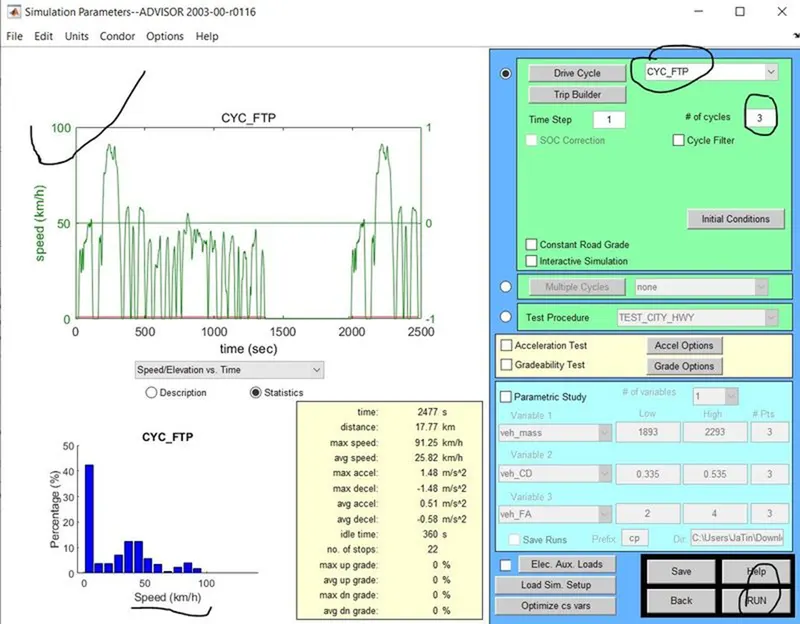
For our requirement we need to use FTP based cycle And hit to run.
Step 3.
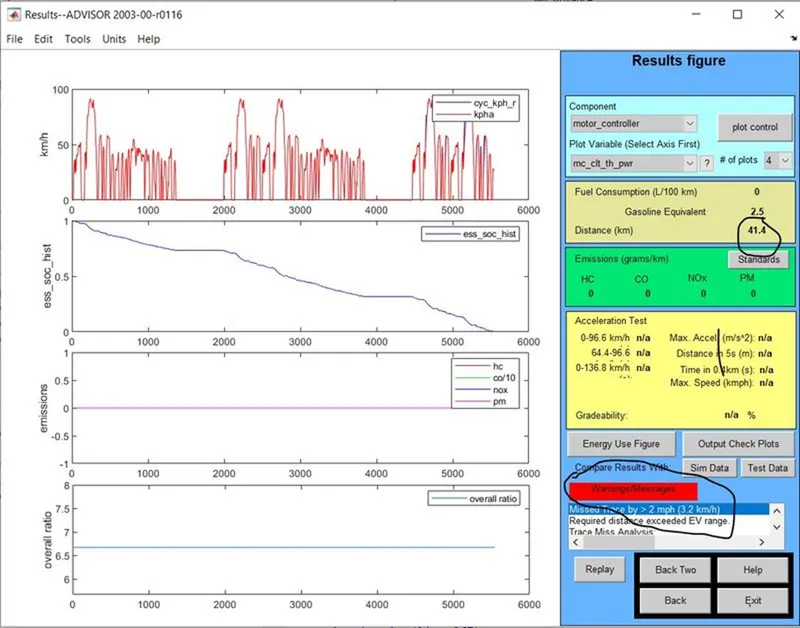
As we need total distance cover to be 45 kilometer and this drive cycle can only complete 41.1km . So we need more than one drive cycle to complete more than 45 kilometres, so we can use more than three drive cycle.
Step 4.
As we can see, warning sign popups in which, It means that the distance is more than the range of the current battery, so the vehicle cannot travel 45 kilometer, but it will be showed by 3.2 kilometers before.
Observation result :
if we increase the no. of drive cycle then we may travel above 45km.
==============================================================================================================================================================================
Aim: 2. In the above case, try changing the battery capacity and repeat the simulation.
keeping all parameters unchanged we just have varied the battery capacity from 25 to 60 (which is 2.4 times )
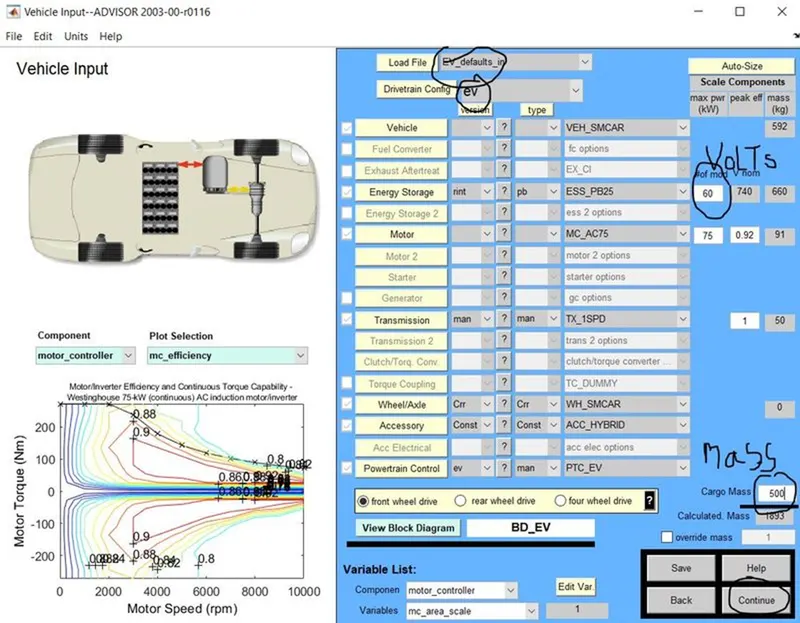
after changing the battery capacity to 60 and then pressing continue
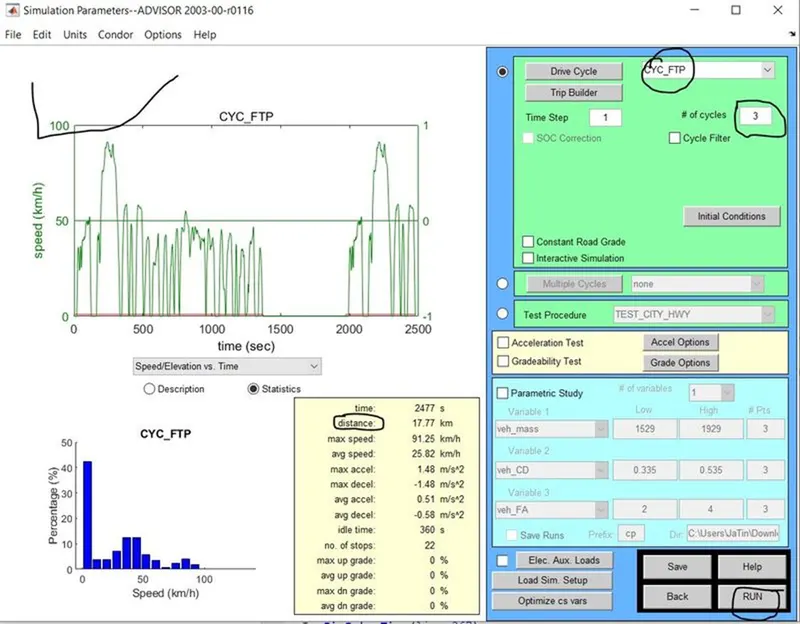
Same cycle of 3 as it was before
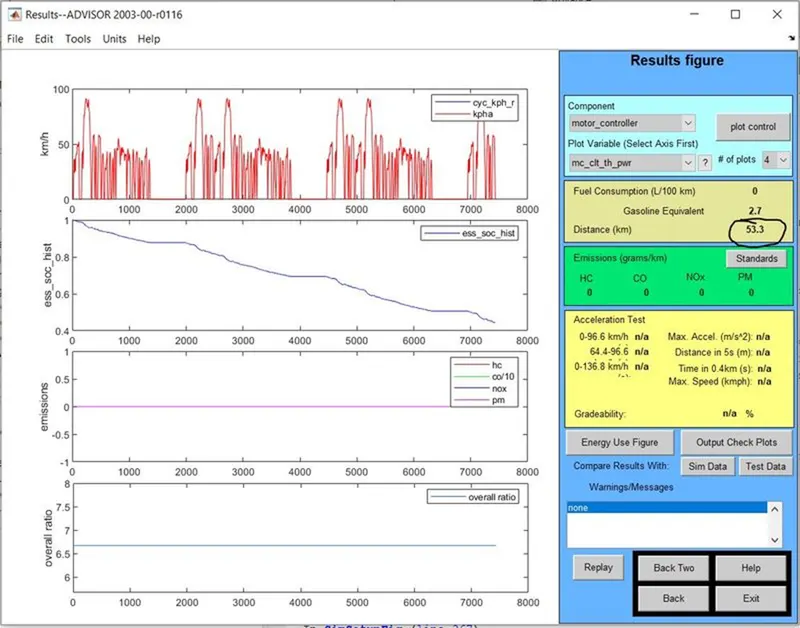
By incresing the battery capacity , the vehicle can travel more than 45km in the same cycle (3cycle same as before ) which is the distance is 53.3 km (more than our range ) .
==============================================================================================================================================================================
Aim : 3. Perform gradeability test with PRIUS_Jpn_defaults_in file. Compare your results in table and conclude.
Step 1. Select the Prius_Jpn_defaults_in then hit continue button .
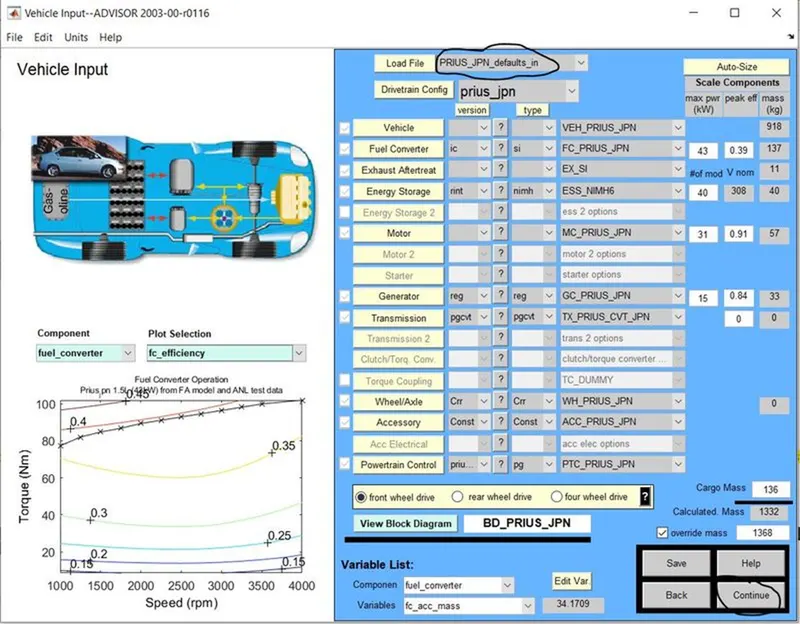
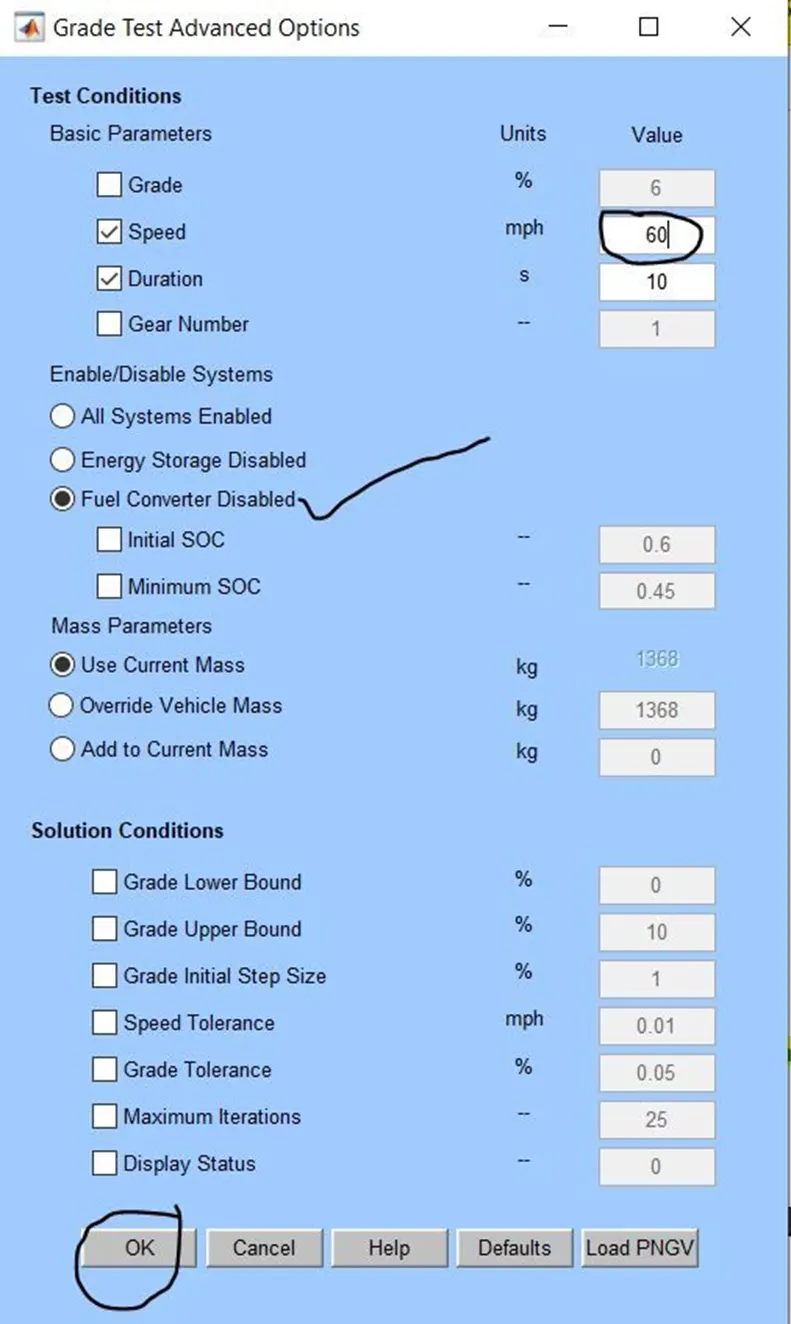
Step 2 . Select the grade Option the new window will popup
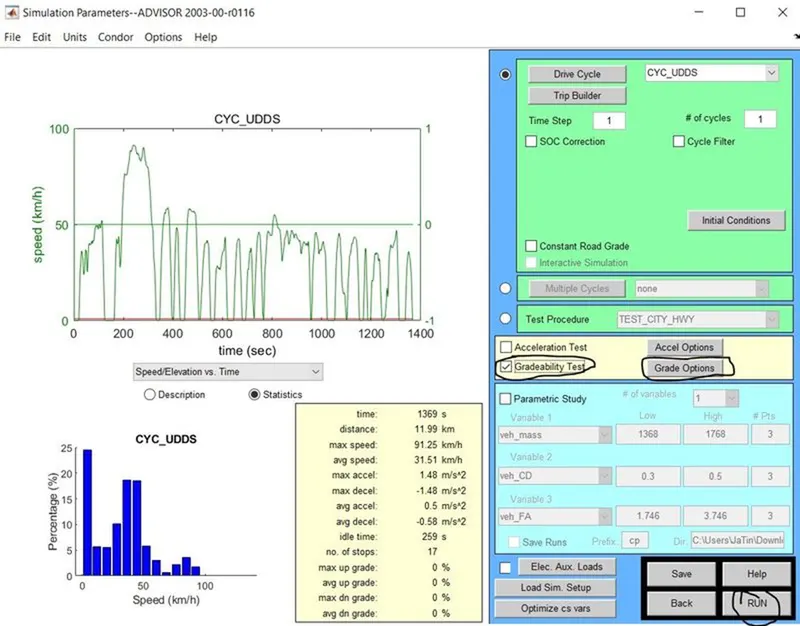
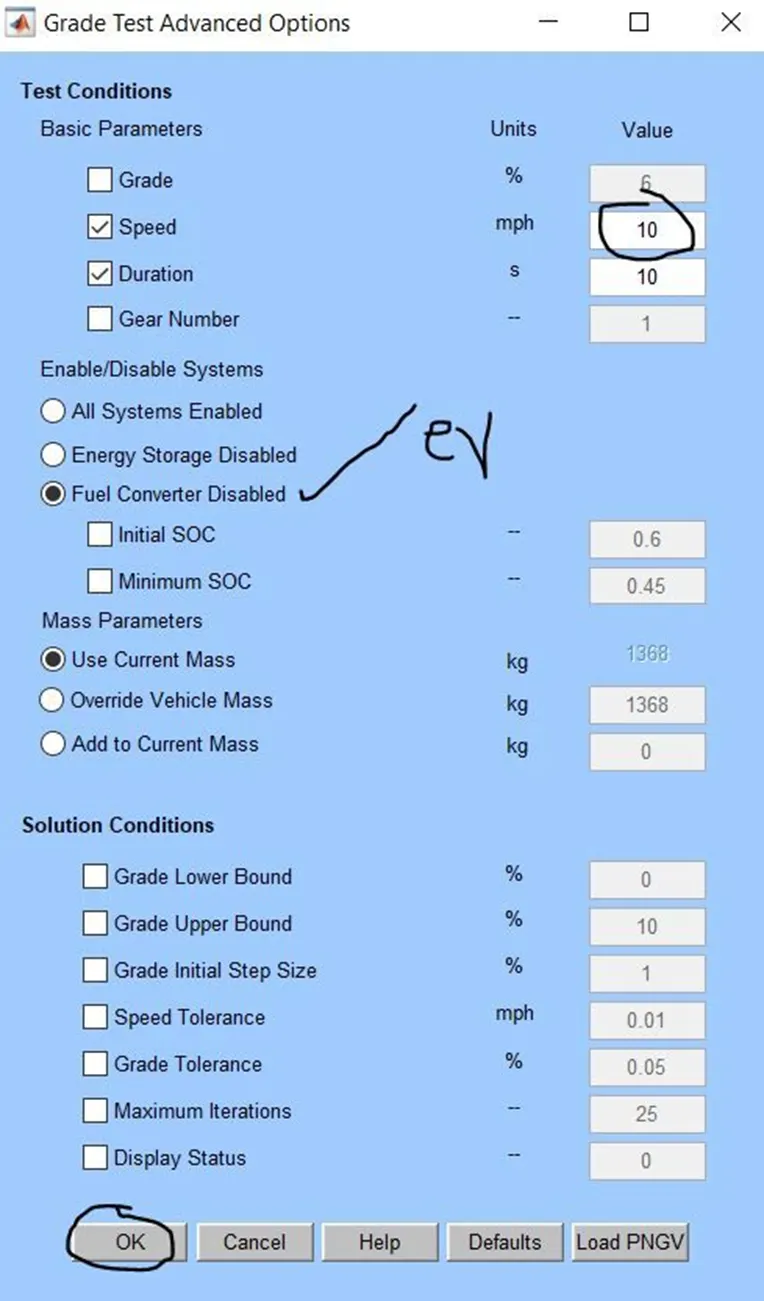
Step 3. Change the speed value here I choose 60 for example. then select fuel converter disabled , that means our vehicle is Fully electric . hit ok button then next...
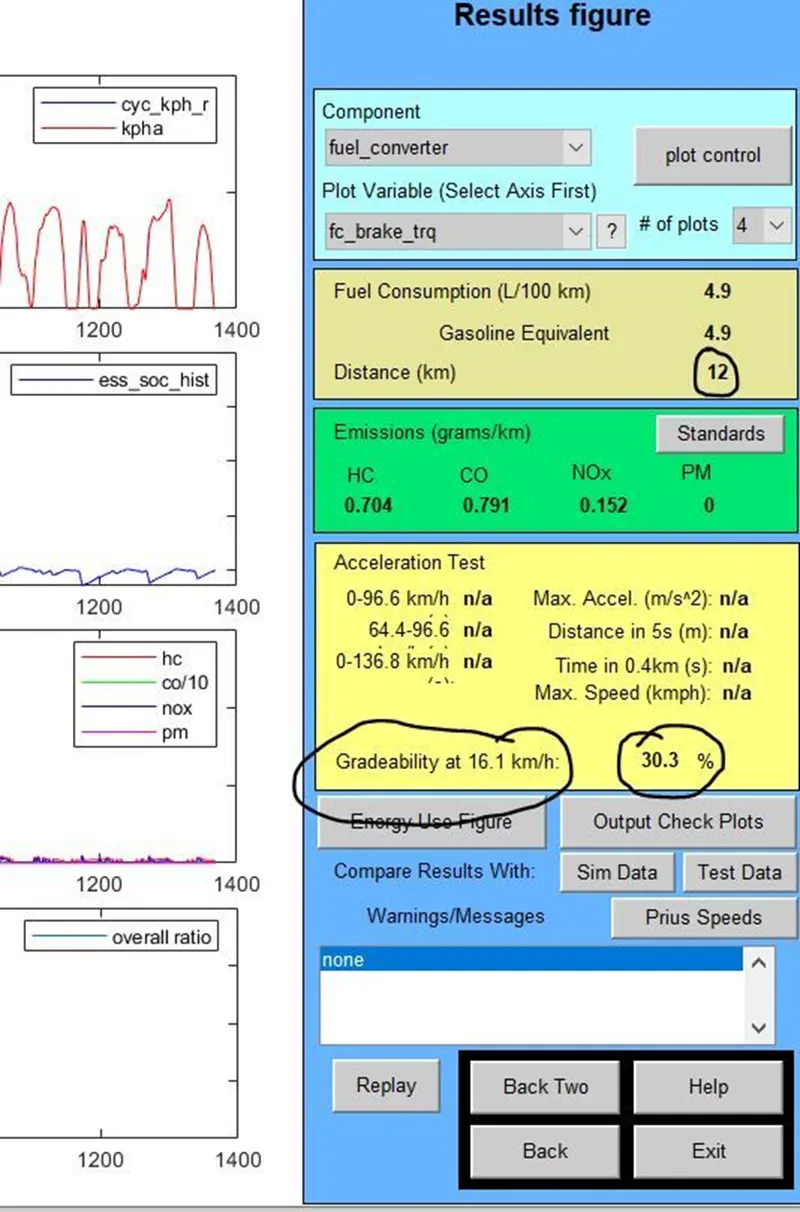
Step 4 . Here , you can see , the greadibility is 8.1% at a speed of 96.6km/h covering the distance of 12km
. 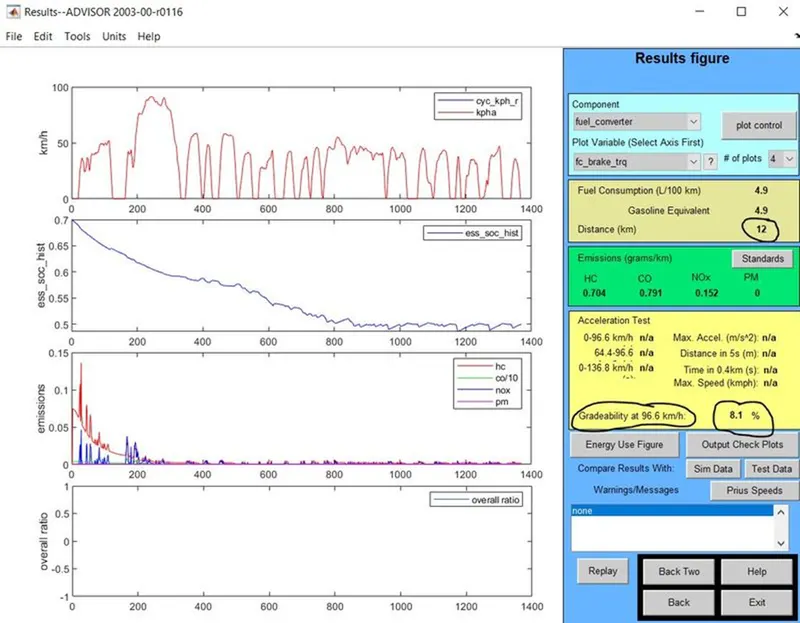
Similarly , we can repeat the above process with different values of speed and carry out the table for each speed and its greadibility test
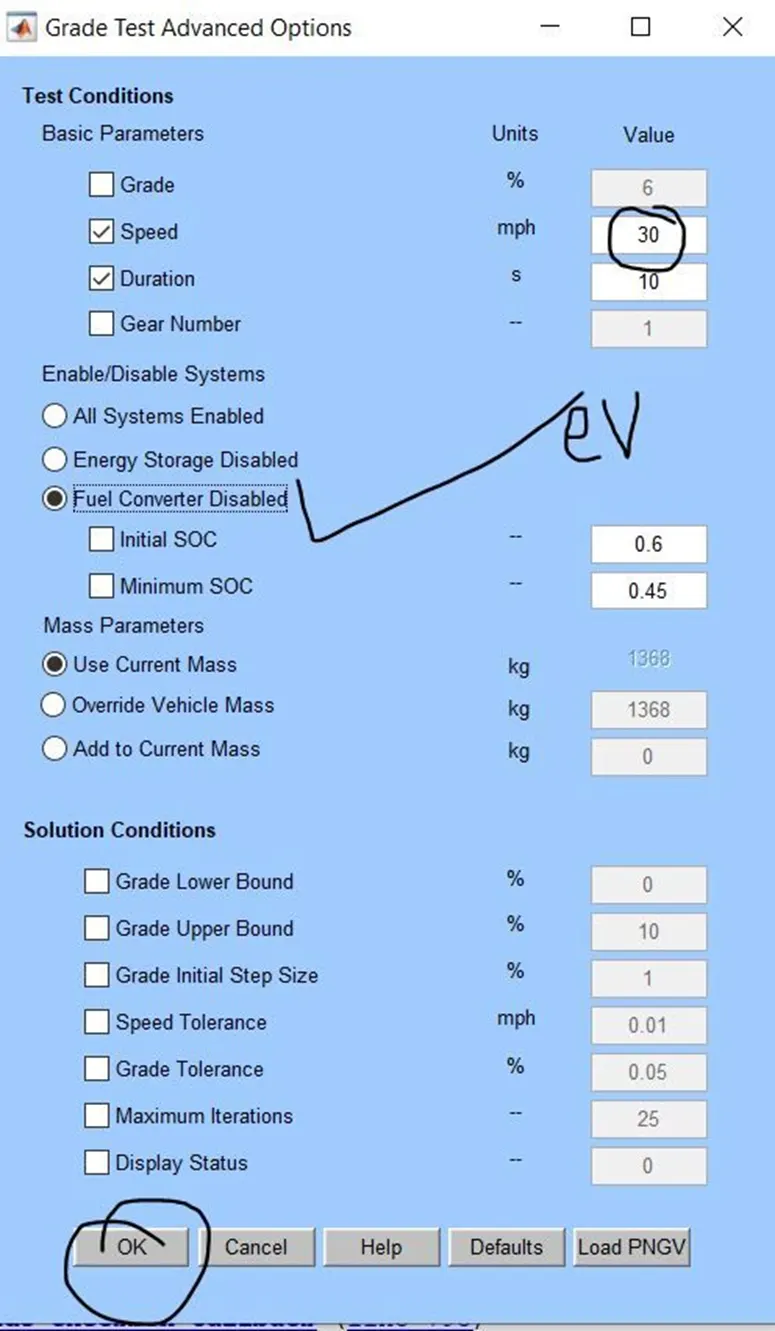
At speed 30mph the greadibility is shown
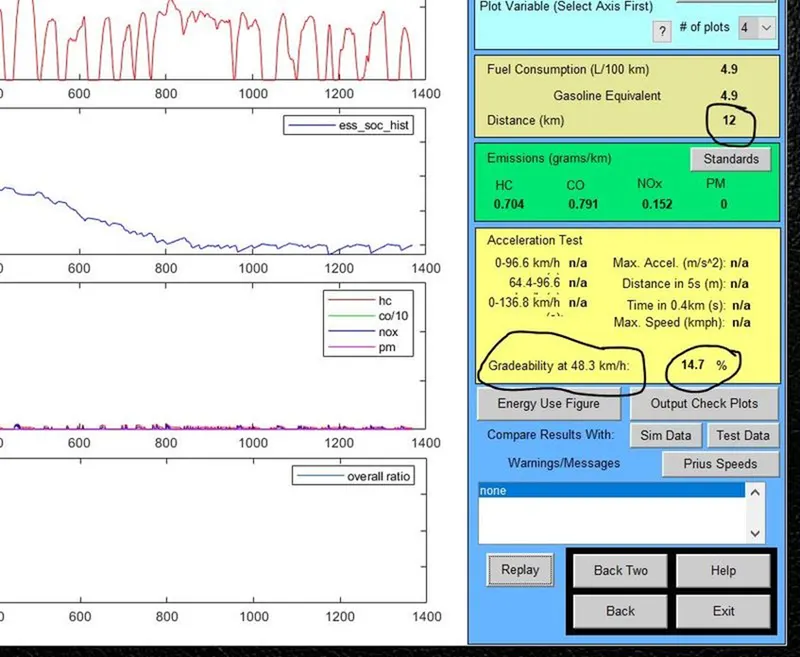
at speed 10 miles /h
|
S.no : |
Speed (mph) |
Speed at Greadibility(km/h) |
Greadibility(%) |
distance (km) |
vehicle type |
|
1 |
60 |
96.8 |
8.1 |
12 |
electrice |
|
2 |
30 |
48.3 |
14.7 |
12 |
electric |
|
3 |
10 |
16.1 |
30.3 |
12 |
electric |
Conclusion :
Through this table we can conclude that when the speed increases the greadibility decreases and vice versa .
Result : The greadibilty are 8.1,14.7,30.3 for the speed 60,30,10 respectively .