Week-3 Challenge: ADVISOR Tool
Week-3 Challenge: ADVISOR Tool
Use ADVISOR tool and simulate the following
- For EV_defaults_in file, if cargo mass is 500 kg with all other default conditions, can the vehicle travel for 45 km with FTP drive cycle? Conclude your observations.
- In the above case, try changing the battery capacity and repeat the simulation.
- Perform gradeability test with PRIUS_Jpn_defaults_in file
Compare your results in table and conclude.
Answer: -
ADVISOR (ADvanced VehIcle SimulatOR) is a set of model, data, and script text files for use with Matlab and Simulink. It is designed for rapid analysis of the performance and fuel economy of conventional, electric, and hybrid vehicles. ADVISOR also provides a backbone for the detailed simulation and analysis of user defined drivetrain components, a starting point of verified vehicle data and algorithms from which to take full advantage of the modeling flexibility of Simulink and analytic power of MATLAB.
Advantages of using ADVISOR tool are:
- estimate the fuel economy of vehicles that have not yet been built
- learn about how conventional, hybrid, or electric vehicles use (and lose) energy throughout their drivetrains
- compare relative tailpipe emissions produced on a number of cycles
- evaluate an energy management strategy for your hybrid vehicle’s fuel converter
- optimize the gear ratios in your transmission to minimize fuel use or maximize performance, etc.
The models in ADVISOR are:
- mostly empirical, relying on drivetrain component input/output relationships measured in the laboratory, and
- quasi-static, using data collected in steady state (for example, constant torque and speed) tests and correcting them for transient effects such as the rotational inertia of drivetrain components.
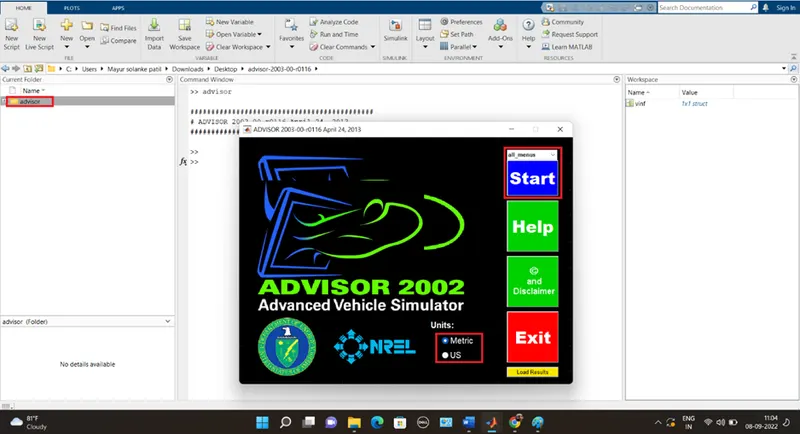
To initiate the ADVISOR tool, type advisor in the command window of MATLAB. ADVISOR GUI will open, select units are Metric and hit the START option.
After selecting START option the GUI will get open showing parameters like, Vehicle Input, Torque Speed characteristics, simulation parameters selection and modification menu.
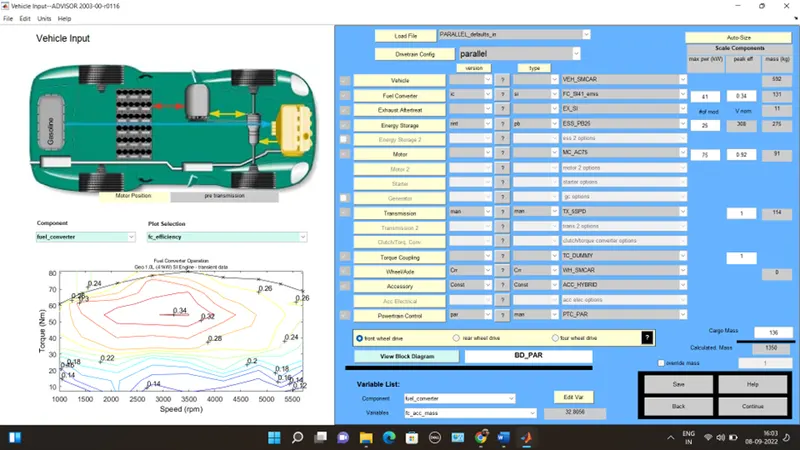
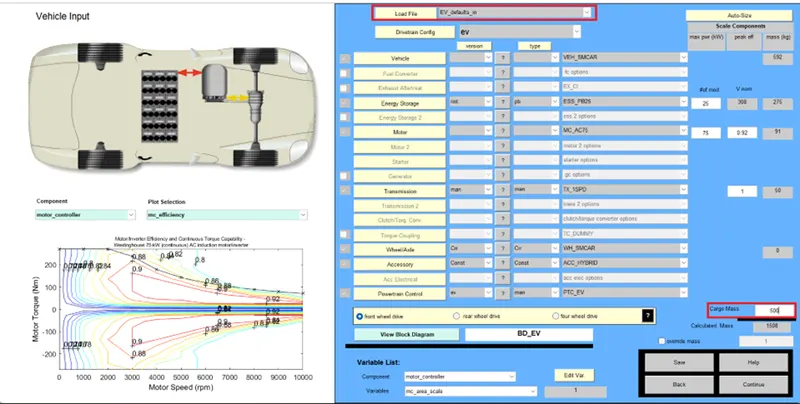
For the given data in equation EV_defaults_in file, if cargo mass is 500 kg with all other default conditions, can the vehicle travel for 45 km with FTP drive cycle.
-Fistly, we can select the Load file EV_defaults_in file.
-Then for given condition we can select the cargo mass 500 kg.
- Click on the Continue Butten.
Next GUI opens for the selection of required drive cycle. Here, select CYC_FTP drive cycle as per given condition and hit the RUN option.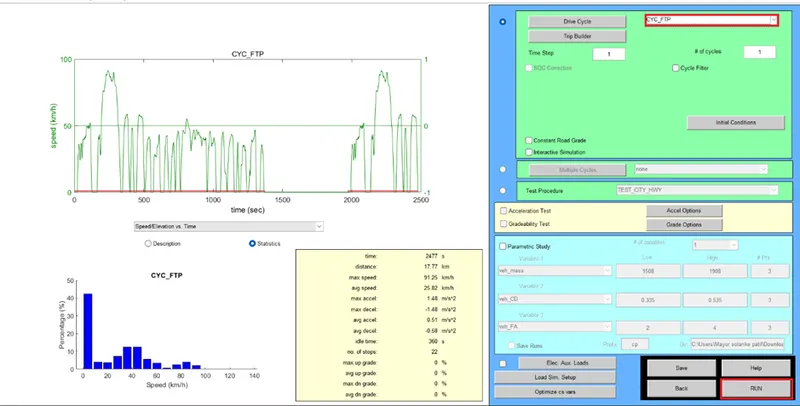
Aften running, we can obtain the results.
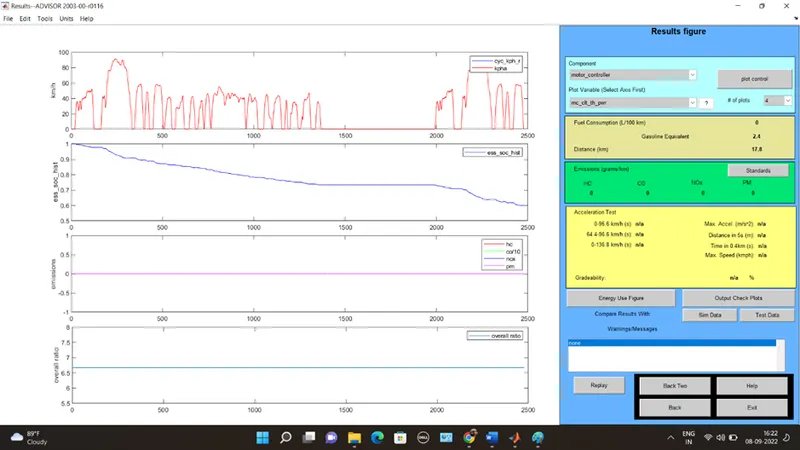
2 FTP Drive cycle result:
with 2 drive cycles, at the end of 5000 sec, vehicle has travelled 35.5 km
Again, one more drive cycle can be implemented and results obtained are,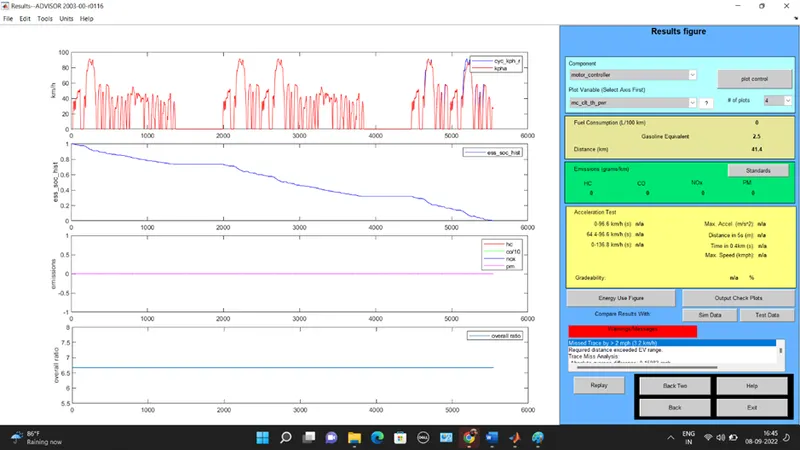
So, if the 3 FTP drive cycles, SOC has become zero at near about 5500 sec and vehicle has travelled the distance of 41.4 Km.
The vehicle cannot travel for 45 km with an FTP drive cycle. Because in increases of cargo mass to 500 kg, the vehicle can only travel up to 41.4 km
Part-2
In the above case, try changing the battery capacity and repeat the simulation.
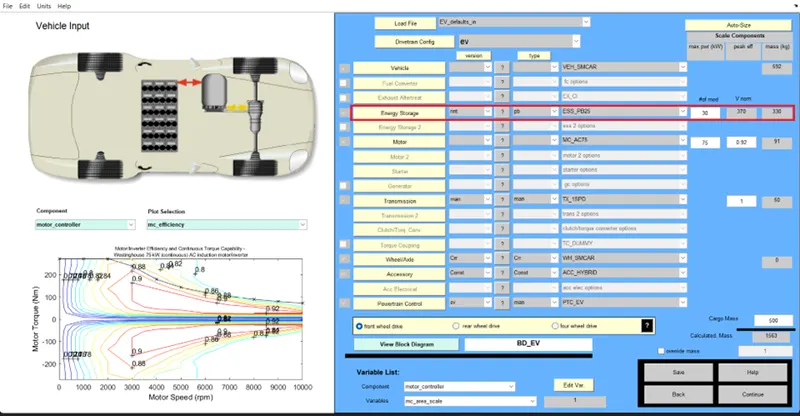
As Given requirement we can change the Battery capacity ESS_PB25.
parameter are : pb, No of module : 25, Nominal voltage : 308V
Now, we can change the model input
model input are 30, then we can run and find the result
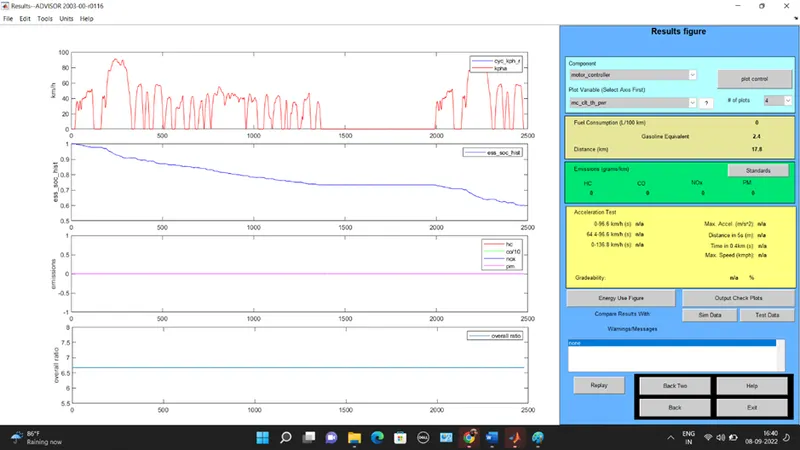
implementing FTP drive cycle, for 1 drive cycle
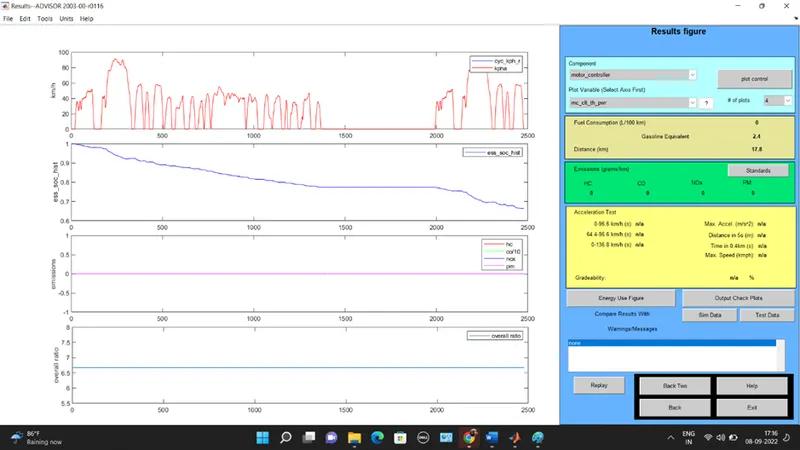
Vehicle has travelled the same distance of 17.8 km at the end of 1 drive cycle of 2500 sec, but the remaining SOC percentage is about 68%, which is more than that of previous case.
Now, applying 3 drive cycles, results can be obtained as,
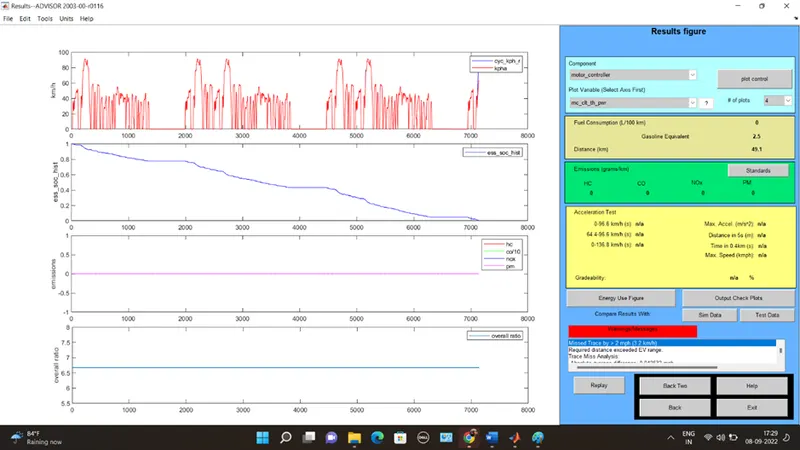
Here, SOC has become zero at about 7100 sec and distance travelled by the vehicle is 49.1 Km, which is again greater than previous case with 3 FTP drive cycle.
Also, instead of ESS_PB25, other battery ESS_PB85 can be selected, parameters of the battery gets updated as, no. of modules: 46, Nominal Voltage: 549 V, results can be obtained as,
with 1 FTP drive cycle, distance travelled = 17.8 km.
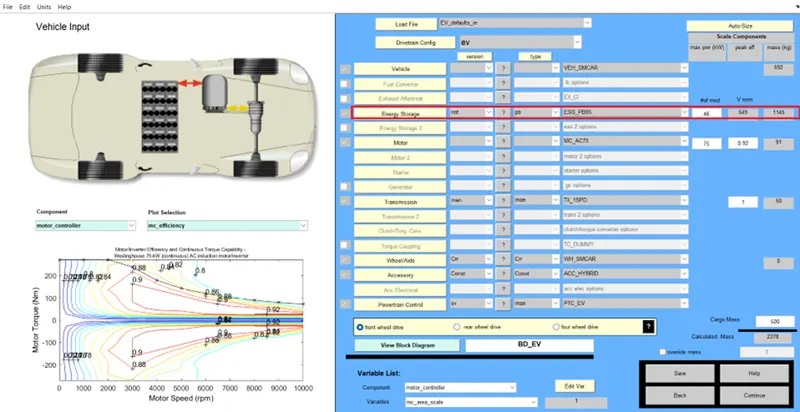
We can see the 1 FTD result
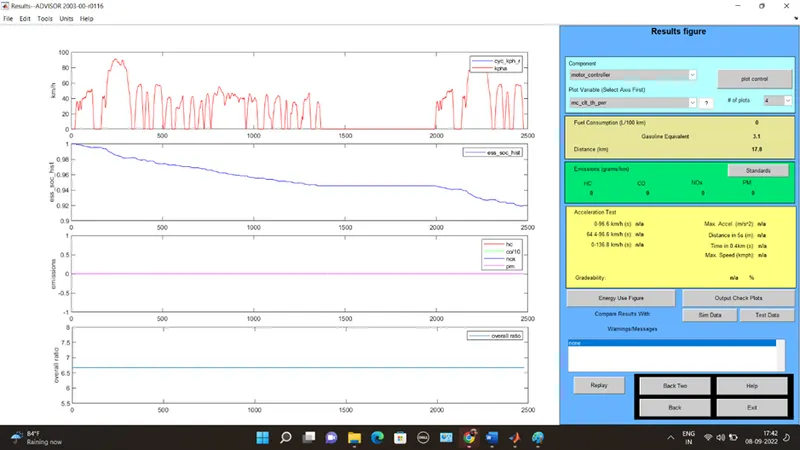
with 3 drive cycles, distance travelled = 53.3 km, SOC remaining = 75%
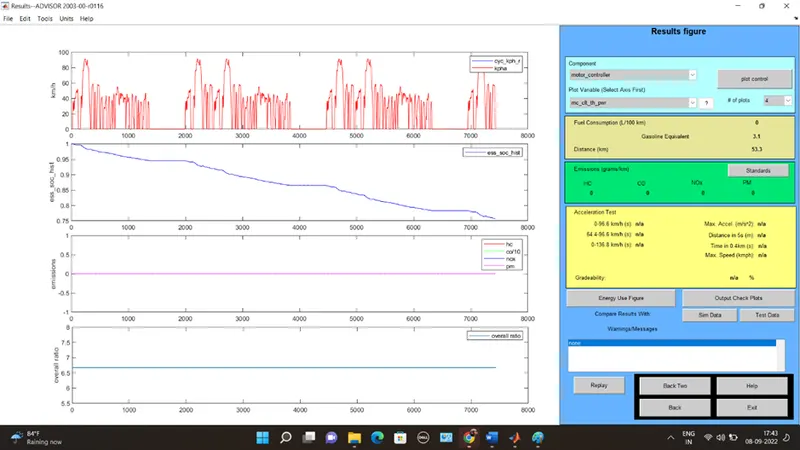
So, as capacity of the battery increases, it can store more amount of enegy and vehicle can cover even more distance in the single charge with keeping all other parameters same
- Perform gradeability test with PRIUS_Jpn_defaults_in file
Compare your results in table and conclude.
PRIUS_Jpn_defaults_in file can be selected with Load File option from the menu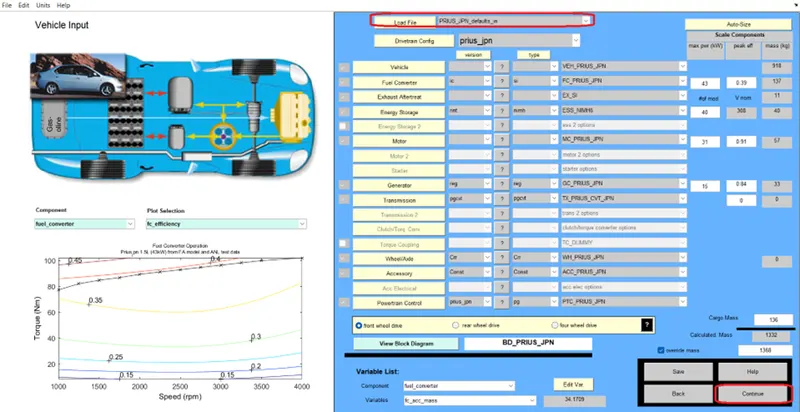
by keeping all other parameters as defult, selected the continue option and selected the same cyc_FTP driev cycle. Also, checked the gradeability test and opened the Grade options. with default condition as energy storage disable option with speed set at 55 mph.
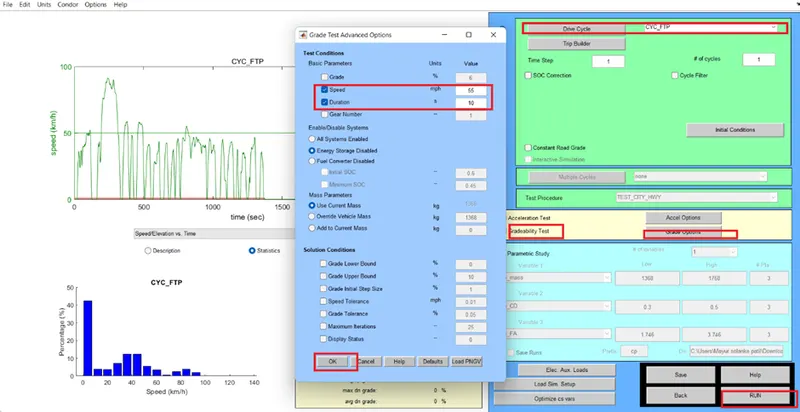
After hitting the RUN option, results can be obtained as
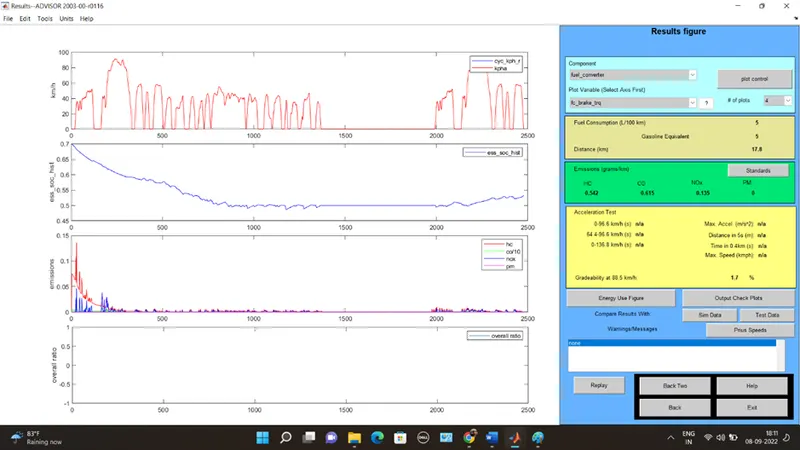
At 55 mph, gradeability value is 1.7%.
now, if speed is changed to 40mph, gradeability value is 2.5%
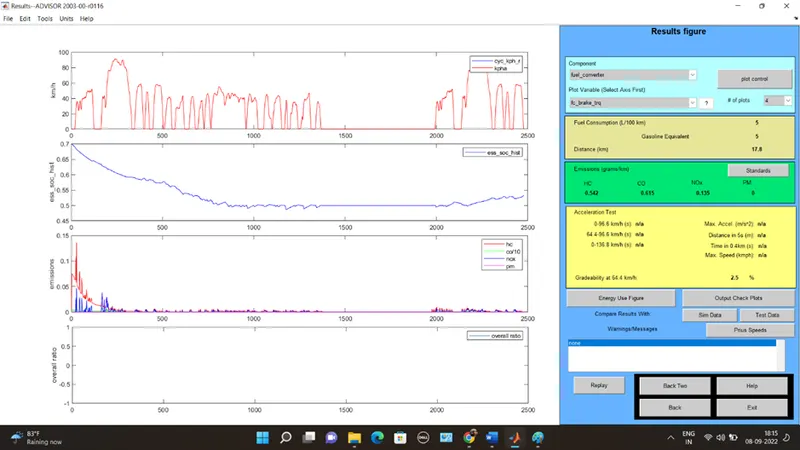
now, if the speed is increased to 70mph, gradeability value obtained is 0.9%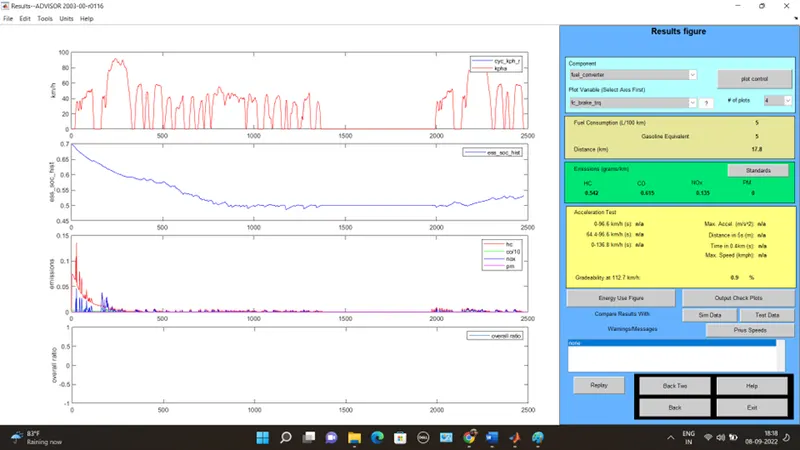
Vehicle Speed (mph)
|
Vehicle Speed (mph) |
Gradeability |
|
70 |
0.9 |
|
40 |
2.5 |
|
55 |
1.7 |
So, we can assume the for the above table and all operation vehicle speed is increase then the Gradeability are decrease, in this Speed of the vehicle and Gradeability are inversely proportion to each other.