Week-3 Challenge: ADVISOR Tool
ADVISOR
Accurate component and vehicle simulations are critical to efficient development
of advanced vehicles, particularly to making intelligent choices about energy
management. Simulating vehicle and component performance helps engineers
determine how to increase the life of components, improve vehicle performance,
optimize vehicle system designs, and reduce development times.
The U.S. Department of Energy (DOE) and the National Renewable Energy
Laboratory (NREL) have worked with industry partners to develop a
sophisticated systems analysis tool that can answer crucial questions about
specific component and vehicle designs. ADVISOR (Advanced Vehicle
Simulator) is a model written in the widely used MATLAB/Simulink
software environment. It can be used to simulate and analyze conventional,
advanced, light and heavy vehicles, including hybrid electric and fuel cell
vehicles. ADVISOR tests the effect of changes in vehicle components (such as
motors, batteries, catalytic converters, climate control systems, and alternative
fuels) or other modifications that might affect fuel economy, performance, or
emissions. The user can alter simulation results by selecting vehicle component
types, sizes, and parameters. ADVISOR uses basic physics
calculations and measured component performance to model conceptual
vehicles. The user defines a vehicle using overall vehicle data and prescribes
a speed-versus-time trace, along with road grade, that the vehicle must follow.
ADVISOR then puts the vehicle through its paces, making sure it meets the cycle
to the best of its ability. It calculates predicted torque, speed, voltage, current,
and power passed from one component to another. ADVISOR allows the user
to answer questions such as:
• What are the optimal drivetrain
component sizes that provide the
best fuel economy?
• Was the vehicle able to follow the
speed trace?
• How much fuel and/or electric energy
were required in the attempt?
• What was the peak power and
efficiency delivered by the drivetrain
components?
• What was the distribution of torque and
speeds that the engine delivered?
• At what road grade can the vehicle
maintain 55 mph with or without the
batteries?
ADVISOR is flexible enough to operate on most computer platforms in
the commercially available MATLAB/Simulink graphical/
object-oriented program. The model is continuously updated with actual
component test data by users and through university validation efforts. It is flexible
enough to model specific components and vehicle configurations for the needs of most users.
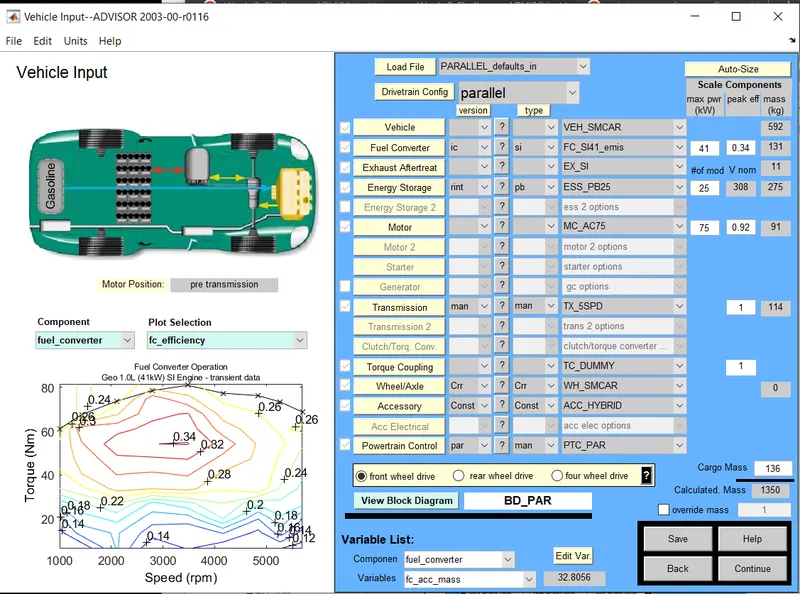
The benefits of Advisor are :
• Reduces testing time to evaluate various
vehicle powertrain alternatives
• Provides a shared simulation tool
for government and industry
• Assists the automotive industry to
develop fuel-efficient vehicles and
components
1.For EV_defaults_in file,if cargo mass is 500Kg with all other default conditions, can the
vehicle travel for 45 Km with FTP drive cycle?Conclude your observations.
ans.
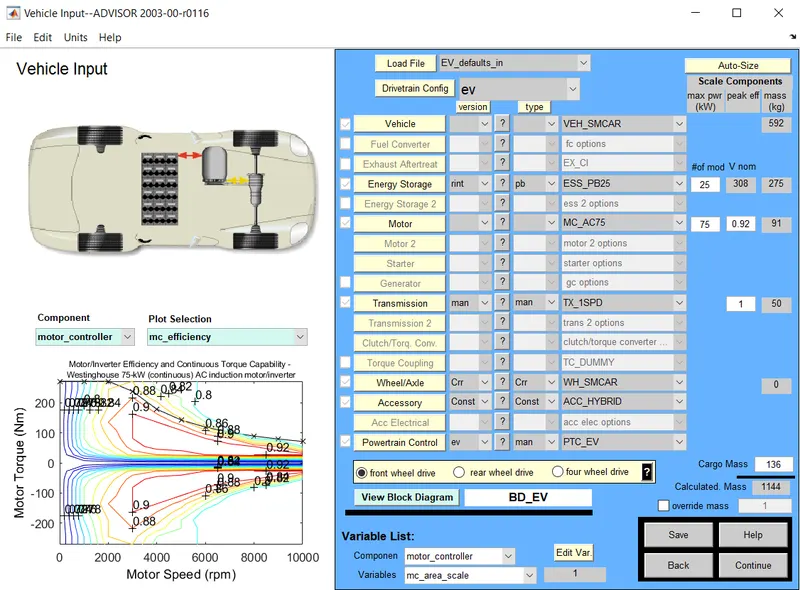
Changing the cargo mass to 500Kg
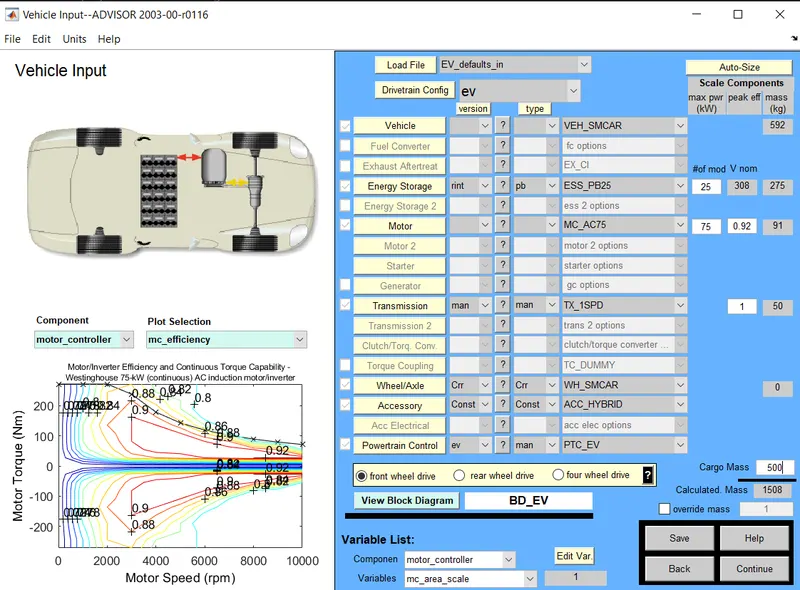
click on continue
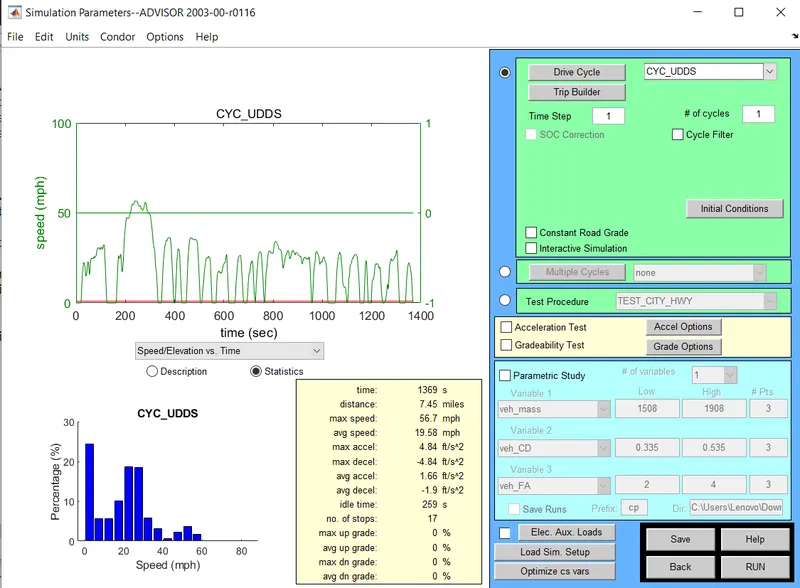
change the drive cycle to CYC_FTP
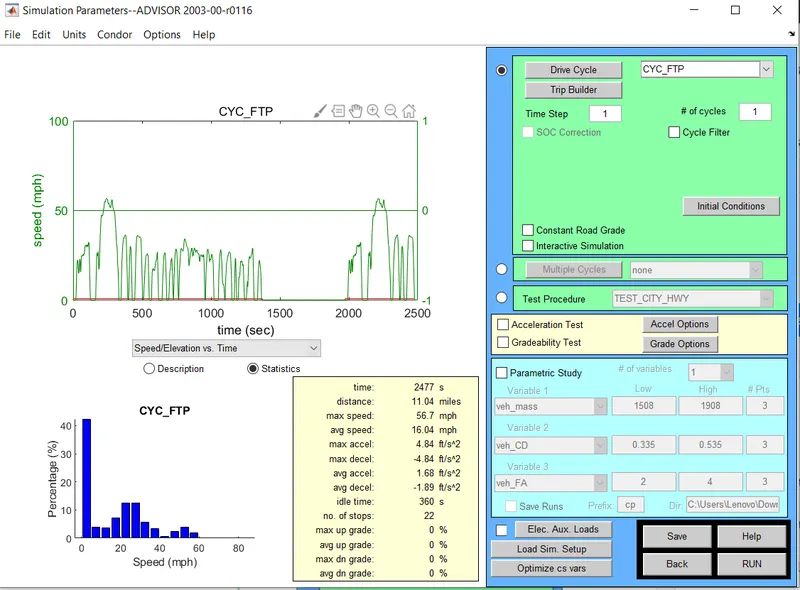
Now keeping no. of cycles 1 Run the model
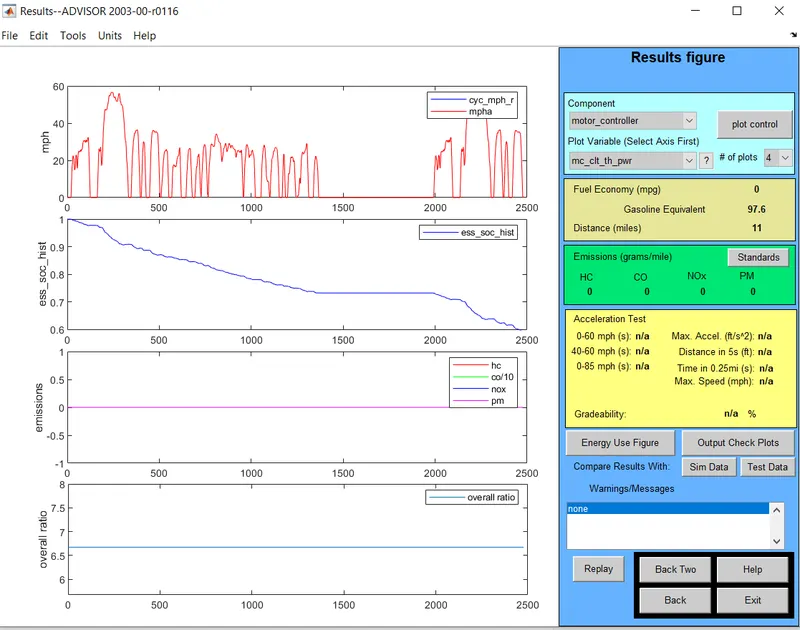
After running the following results are achieved
The distance travelled is 11 miles ie. 17.7Km
Now keeping no. of cycles 2 again run the model
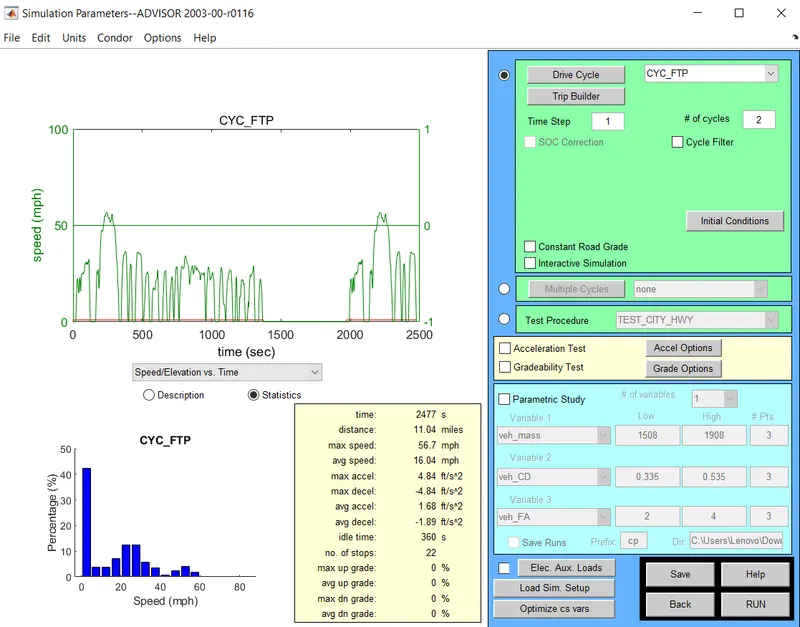
After running following results are achieved
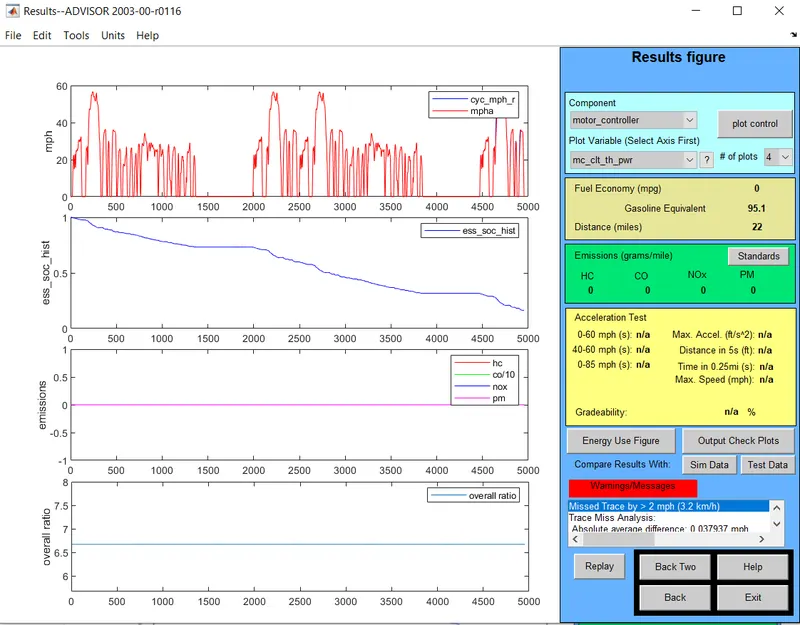
The distance travelled is 22 miles ie. 35.4Km
Now keeping no. of cycles 3 again run the model
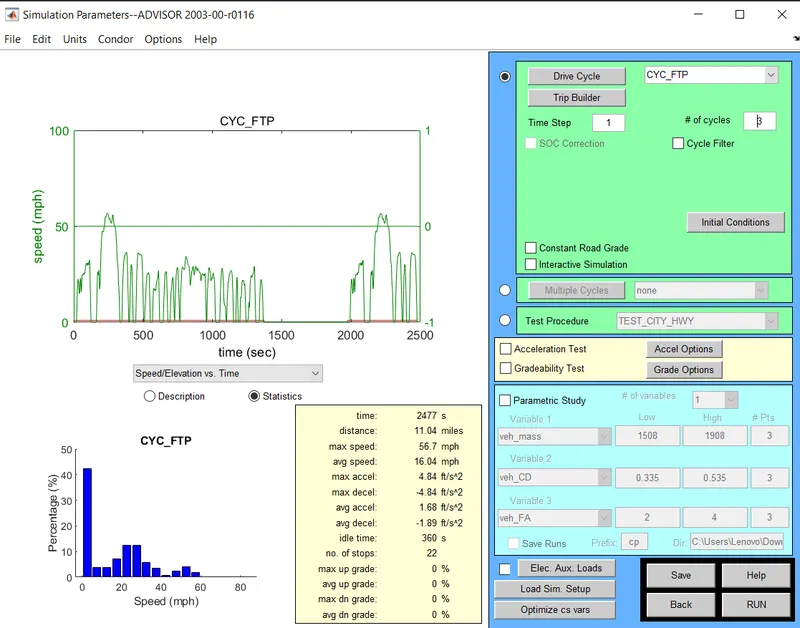
After running following results are achieved
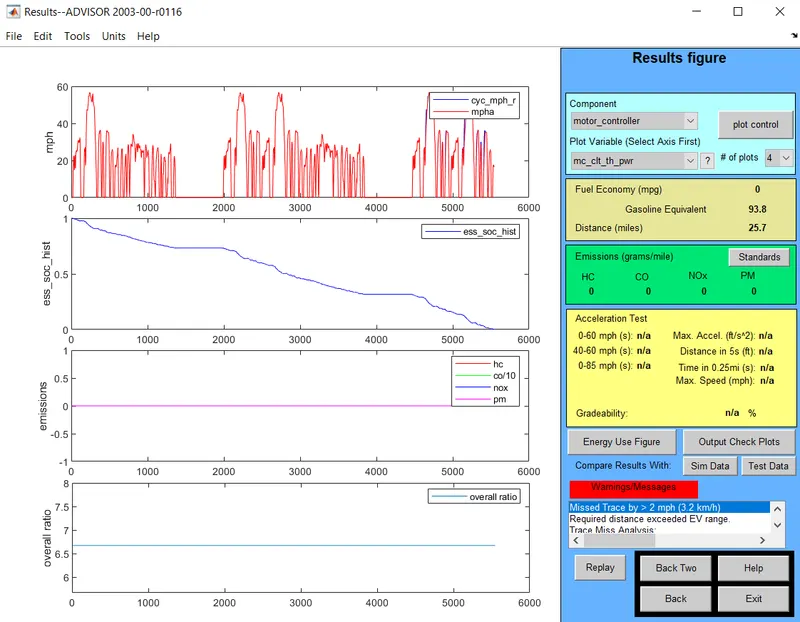
The distance travelled is 25.7 miles ie. 41.36Km
Now the SOC has reached zero before completion of the cycle
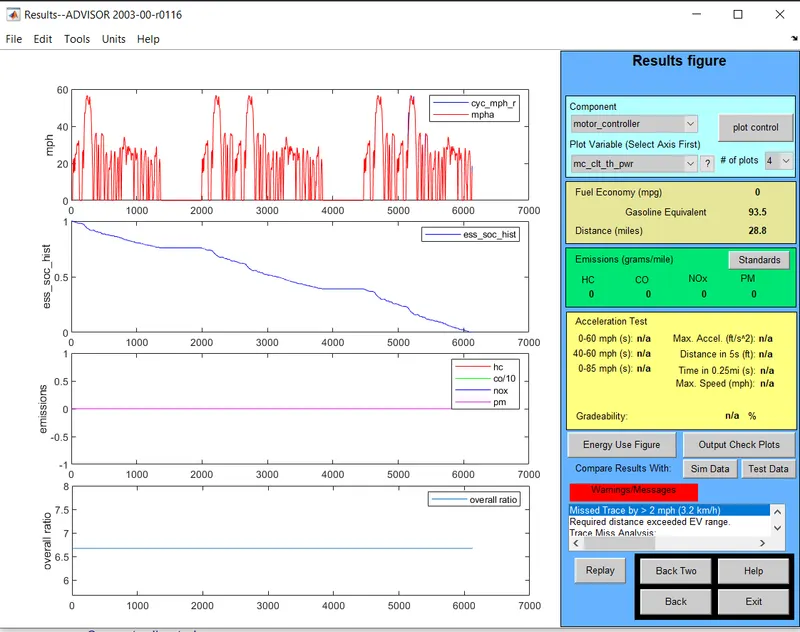
If we keep the number of cycle 4 and then run it,
Following results are achieved
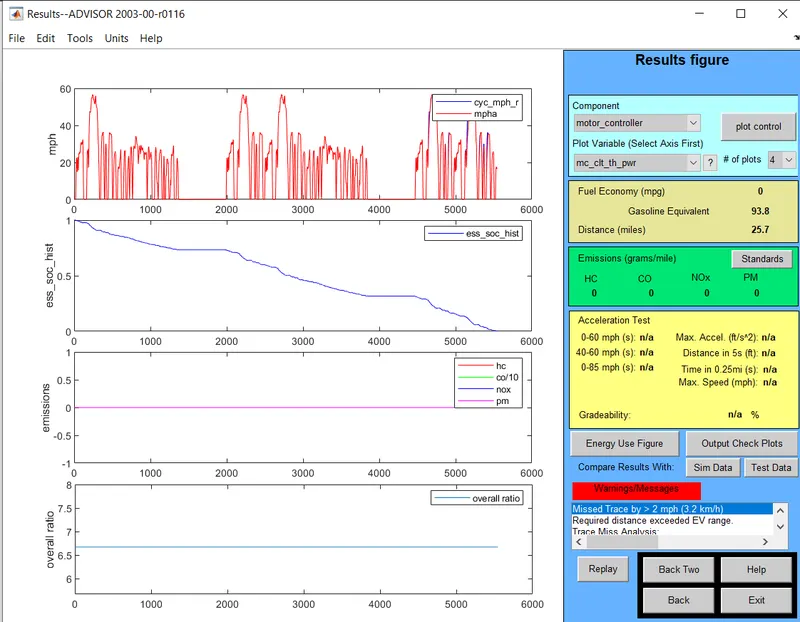
And you can see that SOC has reached zero before completion of the cycle,
so it can be concluded that the vehicle can't go till 45 Km with the
current FTP drive cycle , maximum it can go till 41.3Km.
2.In the above case, try changing the battery capacity and repeat the simulation.
ans.
Changing the battery capacity
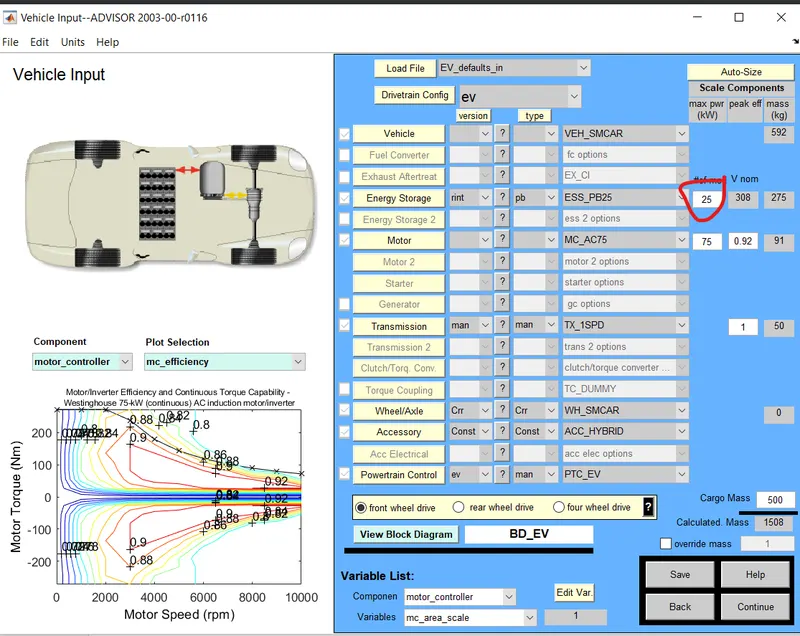
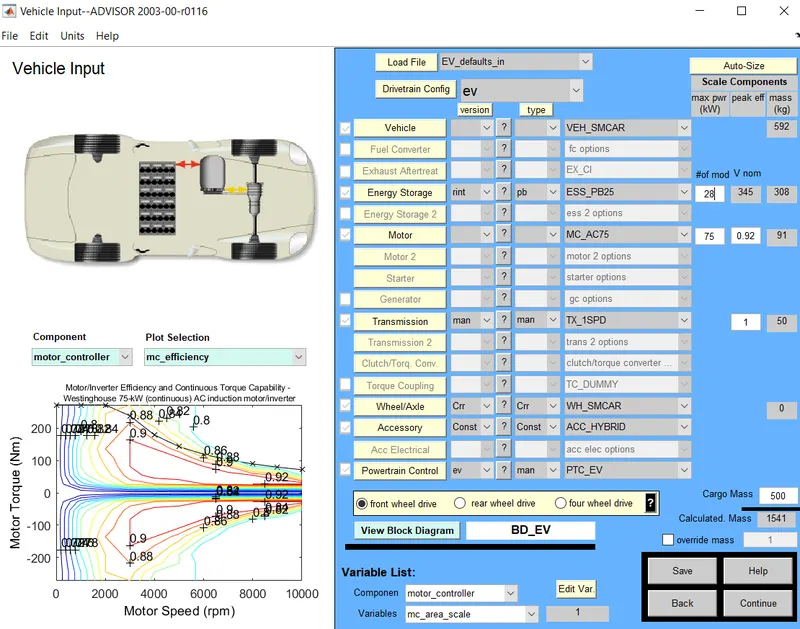
The battery modules are increased from 25 to 28, hence increasing Vnom we get the following results of range
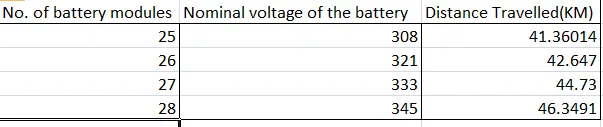
Hence to cover 45Km distance we need a 28 module 345 volt battery.
3. Perform gradeability test with PRIUS_Jpn_defaults_in file.Compare your results in the table and conclude.
ans. PRIUS_Jpn_defaults_in is as follows
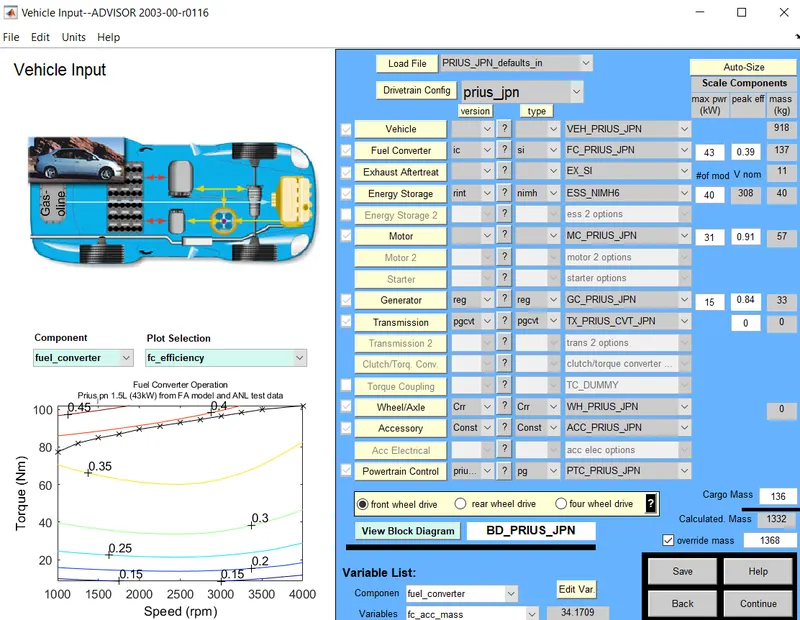
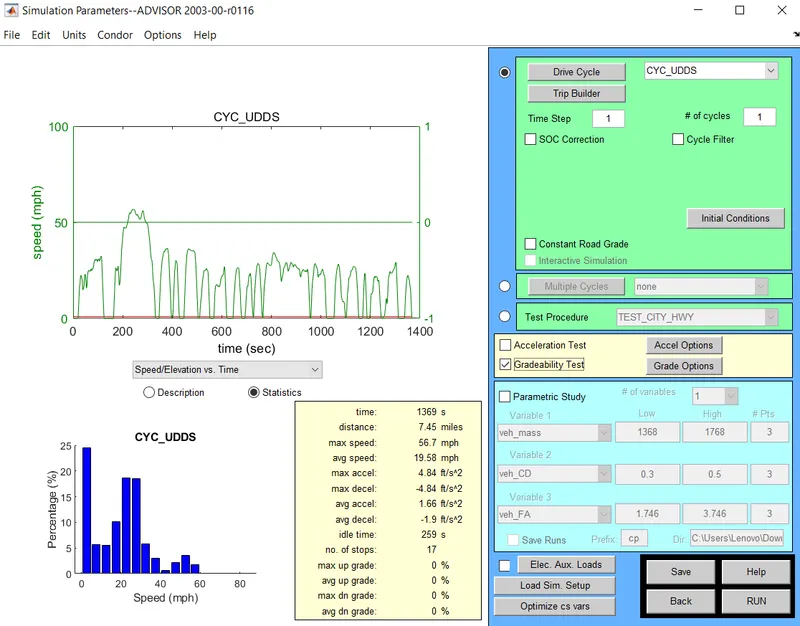
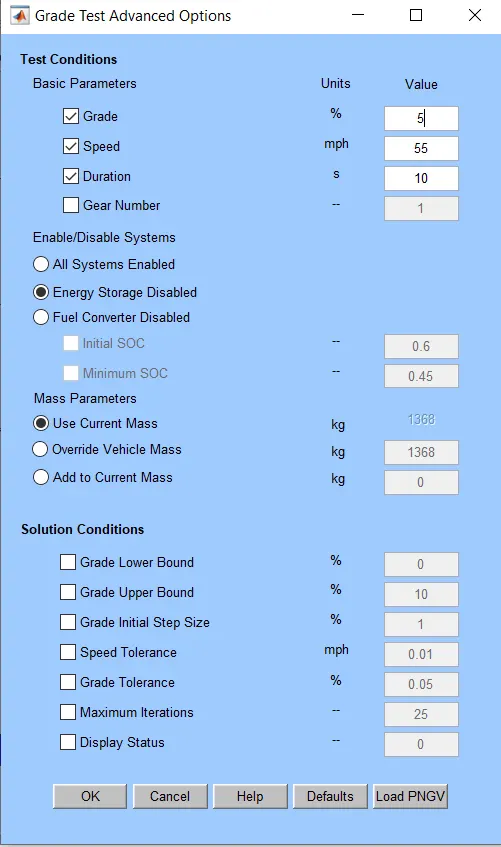
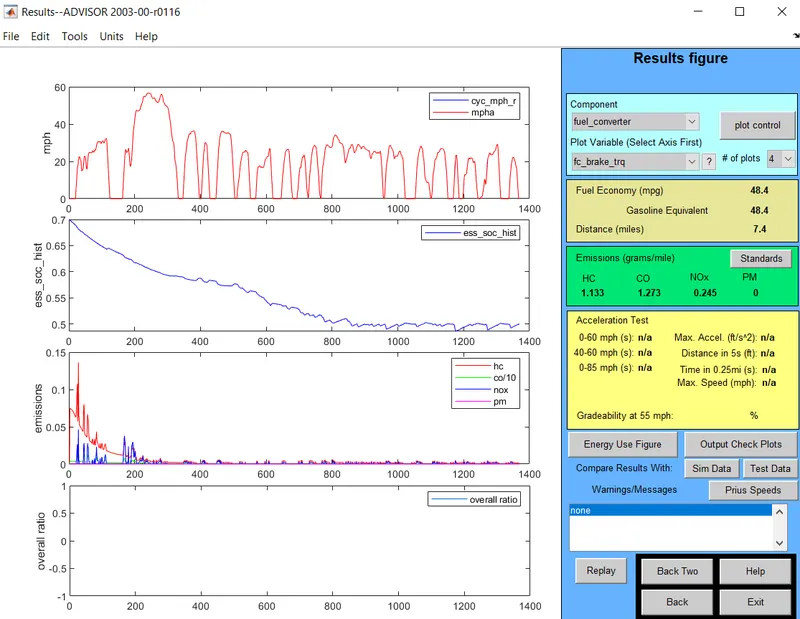
Varying the velocity we vary the grade percentage
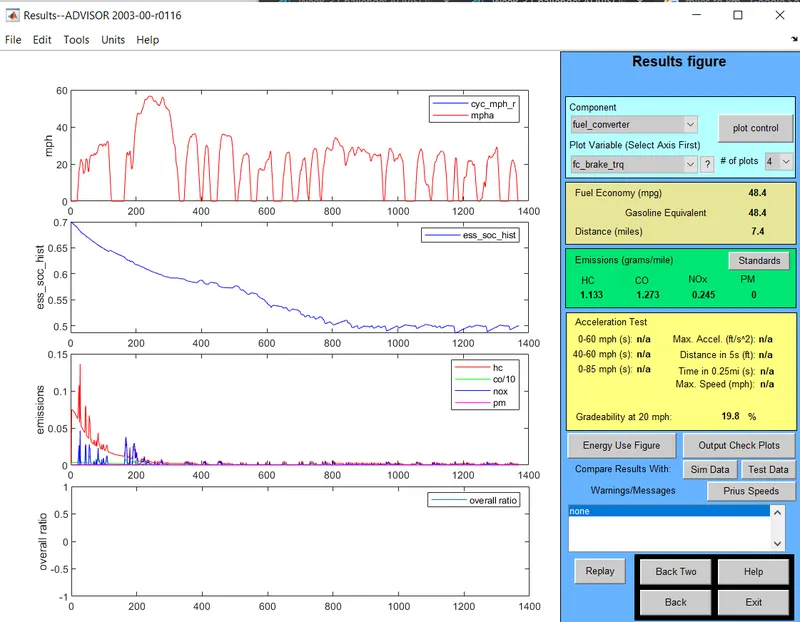
Now by varying the speed from 20mph to 45mph in steps of 5mph we get the following results
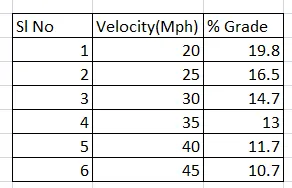
Hence we can conclude that by increasing speed there is a decrease in gradeability percentage.