Week-3 Challenge: ADVISOR Tool
1. AIM:
To observe through the ADVISOR tool if the EV vehicle model can travel 45 km with FTP driving cycle
OBJECTIVE:
To understand how to implement the vehicle dynamics through ADVISOR tool
PROCEDURE:
- Open ADVISOR tool through the required MATLAB code
- Select Metric unit system
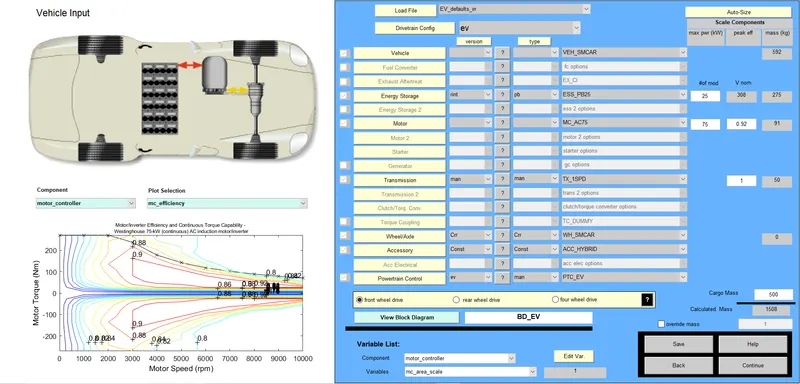
- When the configuration opens, select the vehicle model as EV_defaults_in
- Put the value of cargo mass as 500 kg
- Leave the other parameters unchanged
- Continue to the next page
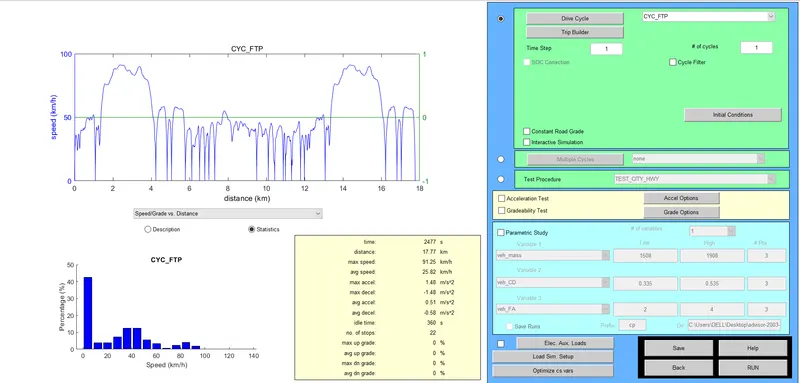
- Select the drive cycle as FTP and run the model for 1 drive cycle
- Observe the results
CONCLUSION:
As is evident from the speed-distance graph and the table, the vehicle travels 17.8 km for 1 drive cycle FTP. For 45 km travel, we will have to employ more number of cycles.
2. AIM:
To repeat the above simulation case study for changed battery capacity
OBJECTIVE:
To understand the effect of battery capacity on vehicle performance characteristics
PROCEDURE:
- In the energy storage column, leave the version and type of battery unchanged to rint and Pb respectively
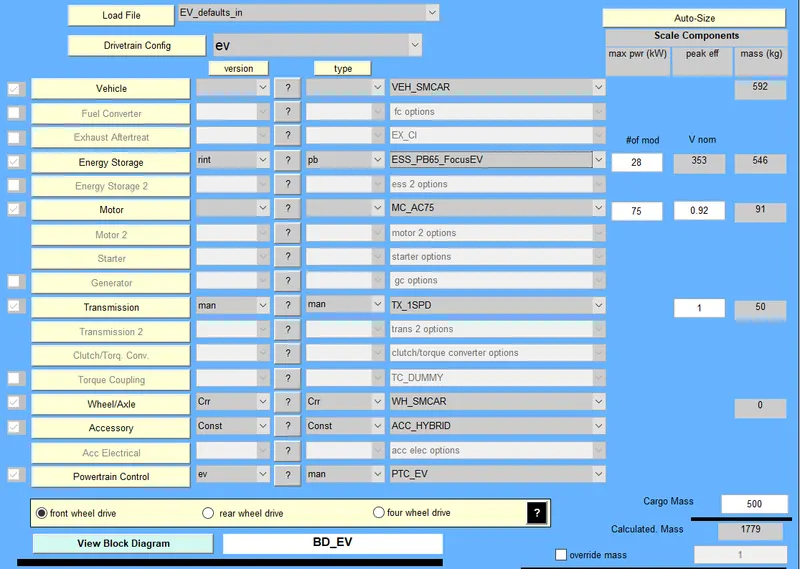
- Change the capacity to ESS_PB65_FocusEV
- The power rating and nominal voltage of the battery then changes to an increased value with respect to the previous value
- Continue to the next page and select the same drive cycle FTP
- Run the simulation for 1 cycle and observe the results
RESULTS:
Acceleration test result with default battery capacity and increased battery capacity:
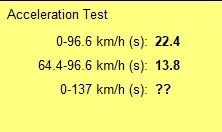
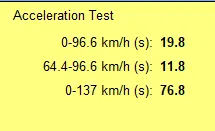
When we take higher battery capacity, the total vehicle mass inclusive of the battery weight increases. With higher capacity, the vehicle then reaches higher speeds and attains peak speed in lesser time. This is because of the increased torque capability.
SOC(State of Charge) and motor torque:
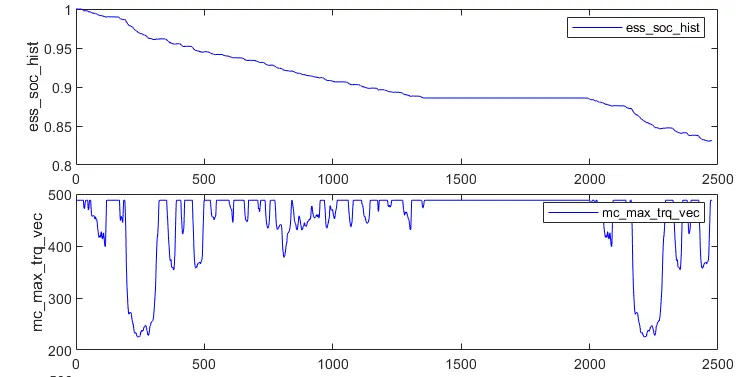
Battery SOC falls from 1 to a value of 0.8. At the instants of deceleration when regenerative braking is employed, battery SOC rises and falls when accelerating. The entire FTP cycle is completed in the duration of 2500 sec.
CONCLUSION:
With increased battery capacity, the nominal voltage and power rating of the battery rises. It becomes capable of delivering more voltage to the motor which ensures greater torque capabilities of the motor. This means higher speed and higher acceleration in lesser time.
3. AIM:
To perform gradeability test on PRIUS_Jpn_defaults_in vehicle model
OBJECTIVE:
To understand the significance of gradeability factor on vehicle dynamics through ADVISOR tool
PROCEDURE:
- Select the required vehicle model of PRIUS_Jpn_defaults
- Leave the other parameters unchanged and continue as before
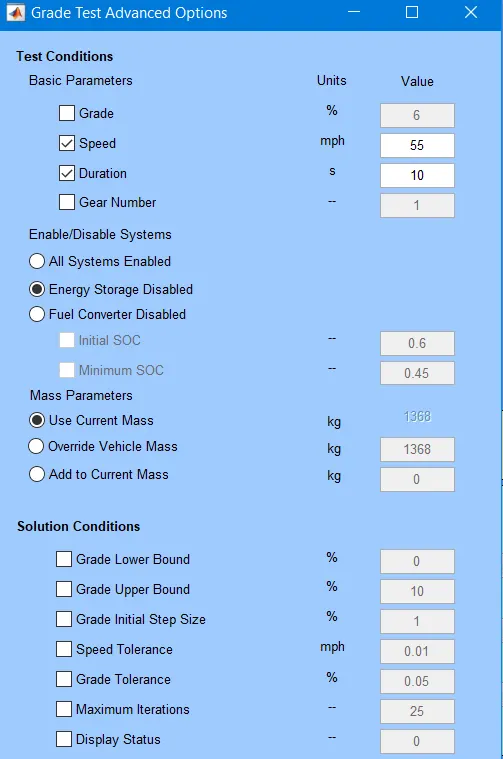
- Check the option of gradeability test and confirm the required grade options for the test
- Simulate and run the model and observe the results
RESULTS:

Under the default condition of attaining speed of 55mph in 10s, Gradeability at 88.5 km/hr came out to be 1.7%.
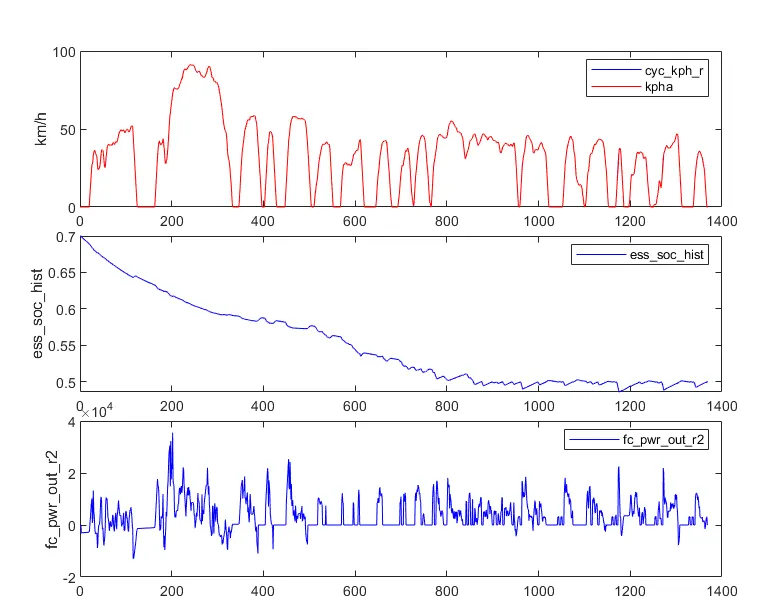
Speed, SOC and Power results:
Gradeability results for different cases:
| FINAL SPEED (mph) | TIME (s) | GRADEABILITY SPEED(km/hr) | GRADEABILITY (%) |
| 30 | 10 | 48.3 | 2.5 |
| 55 | 10 | 88.5 | 1.7 |
| 70 | 10 | 112.7 | 0.9 |
CONCLUSION:
As the final speed attained in a particular time rises, this indicates lower gradeabilty. The capability to attain that high speed in a particular duration means lesser tractive effort or lesser gradient force.