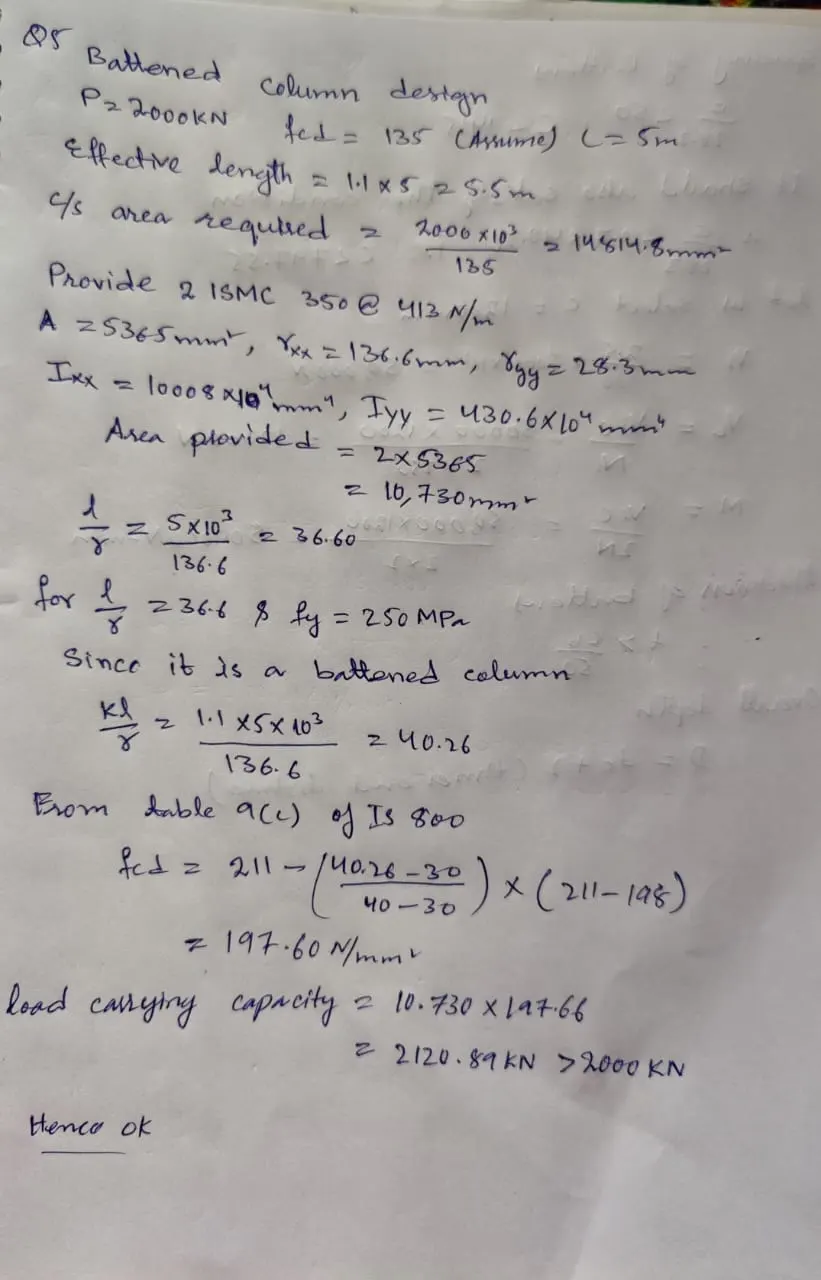
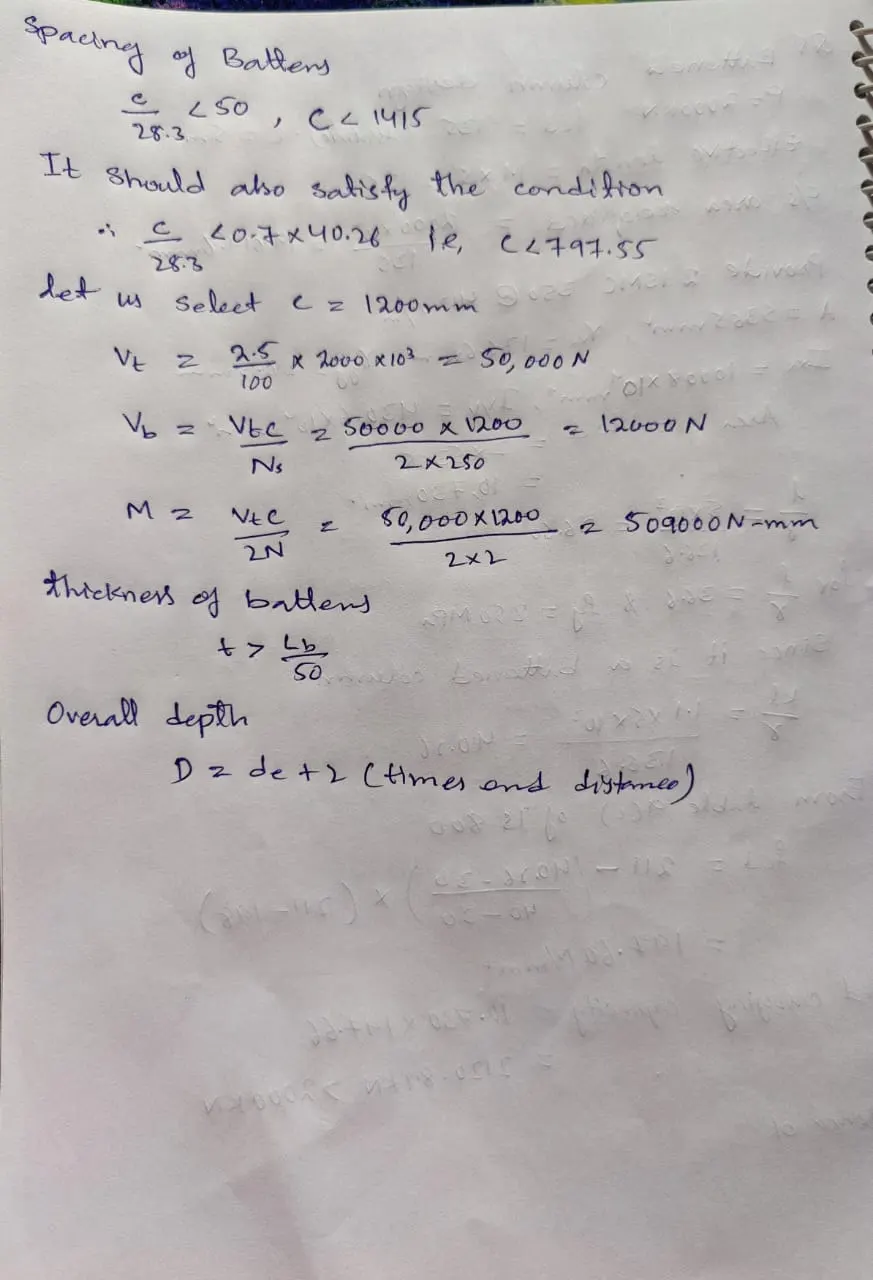
Week 3 Challenge
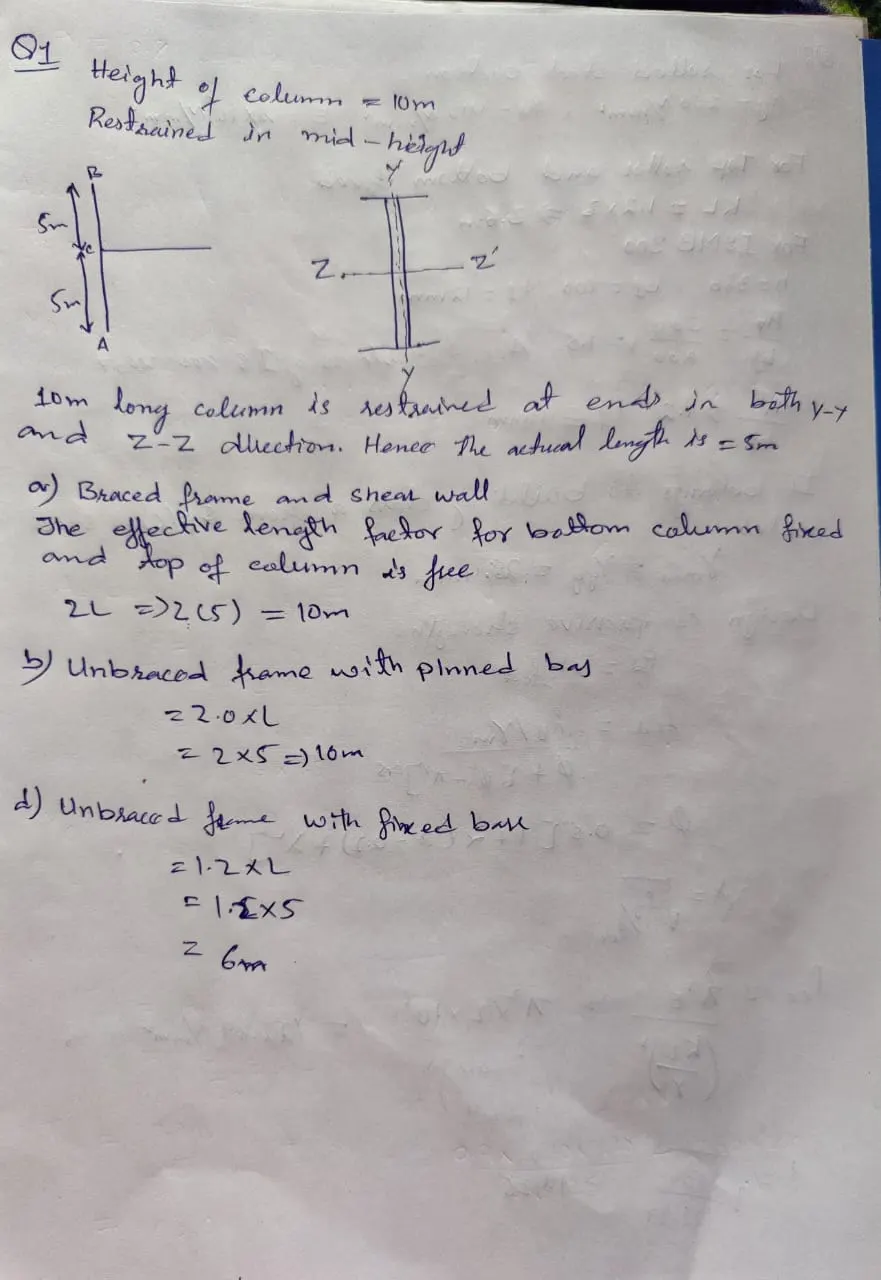
. Effective length factor determination problem
- Height of column is 10 m and it is effectively restrained in mid height in one direction (in Z direction) but free to move in other direction (Y direction). Bottom of column is Fixed and top of column is Free.
- Calculate effective length factor of columns in following cases
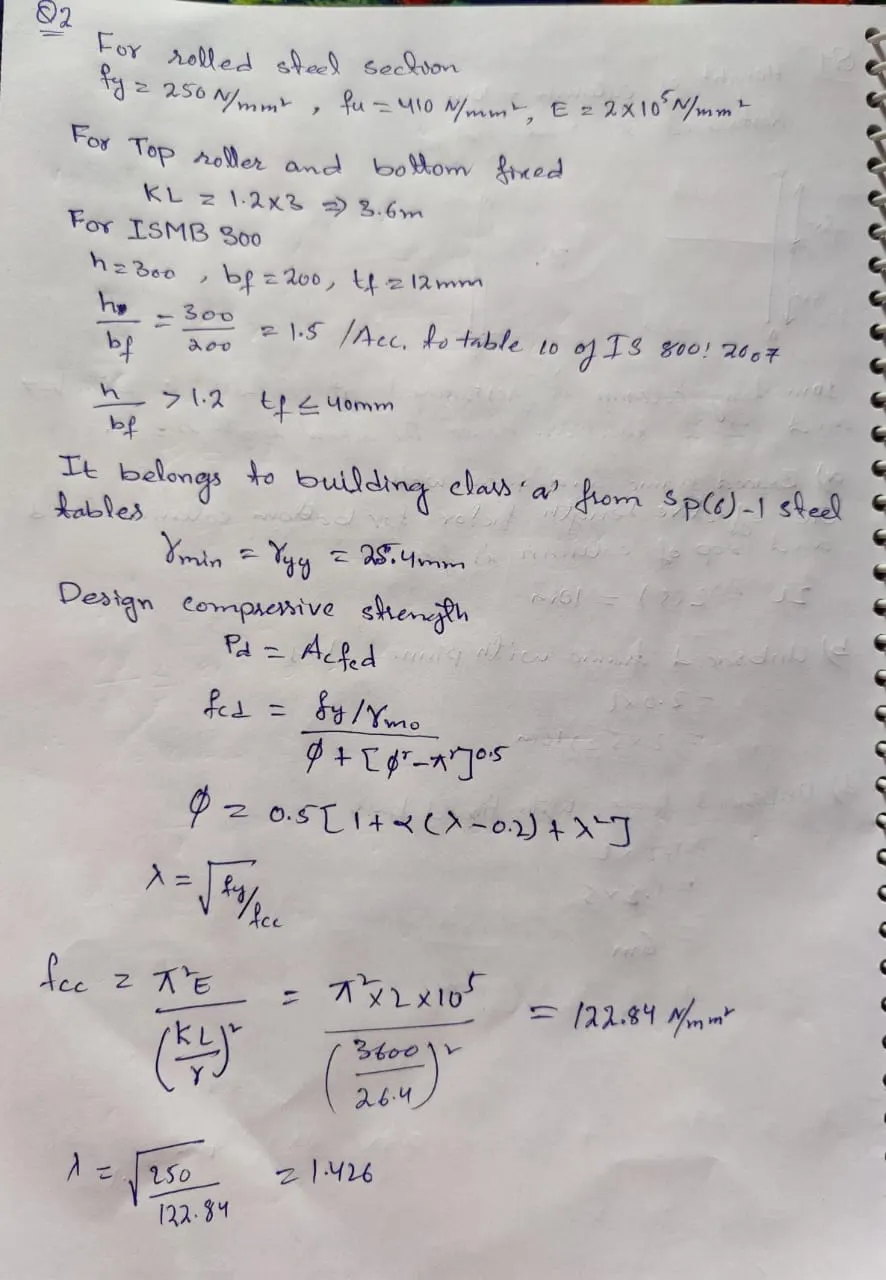
2. Design Axial strength determination of a column with its end conditions
Design 2 m long tubular strut member to carry factored axial load of 400 kN. Assume the ends of the member are simply supported and the yield strength fy=210 Mpa. Also find Equivalent Square hollow sections.
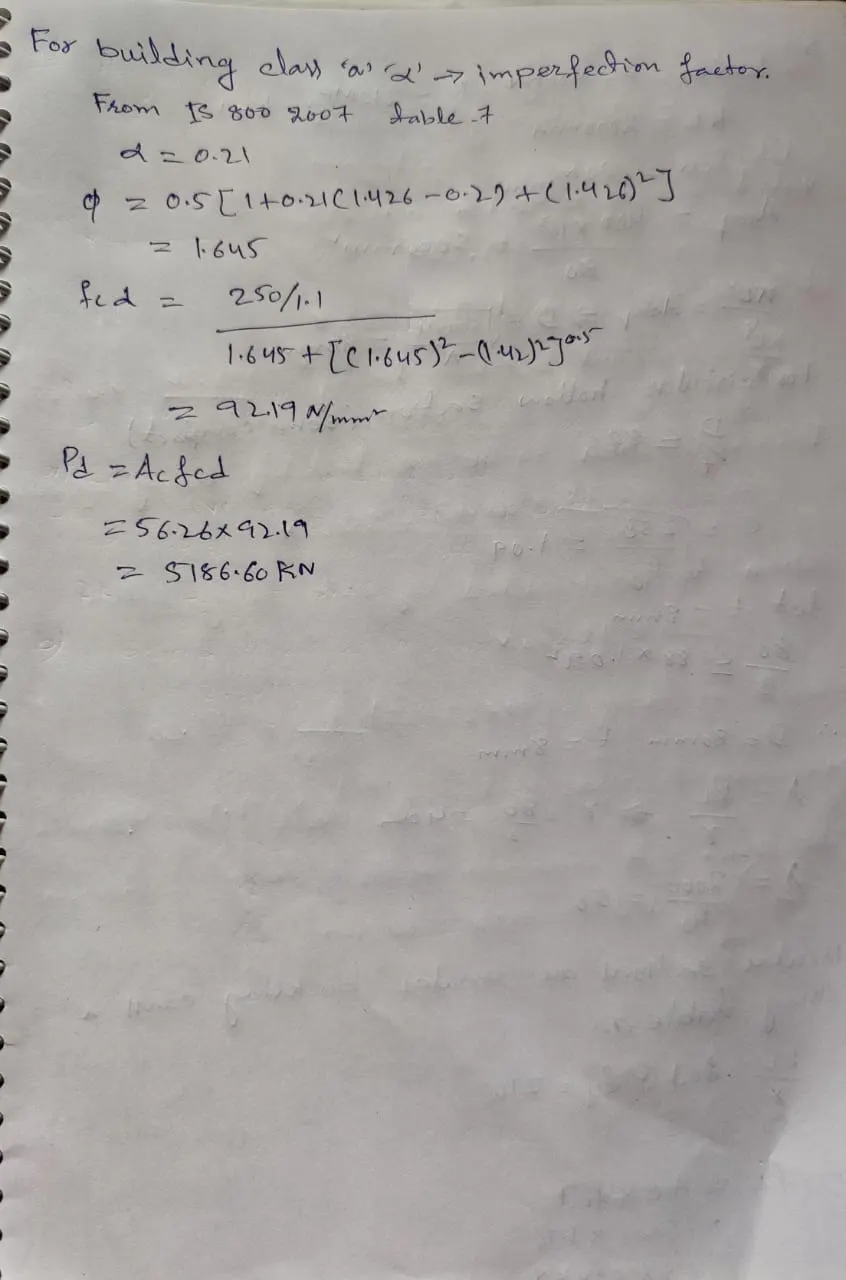
Calculate the Axial compressive capacity of Column made up of Hot rolled ISMB 300 with flange cover plate of 200x12 mm on each flange having length of beam as 3 m. Assume the bottom of the column is Fixed and Top as Roller (Rotation Fixed, translation free). Yield strength of material fy= 250 N/mm2
Tip Steps:
- Determine new radius of gyration of compound section
- Using Buckling curve classification & slenderness ratio using table 9c in code, calculate compressive strength
- Using compressive strength, calculate design strength multiplying the cross sectional area.
3. Design circular tube strut member for certain load
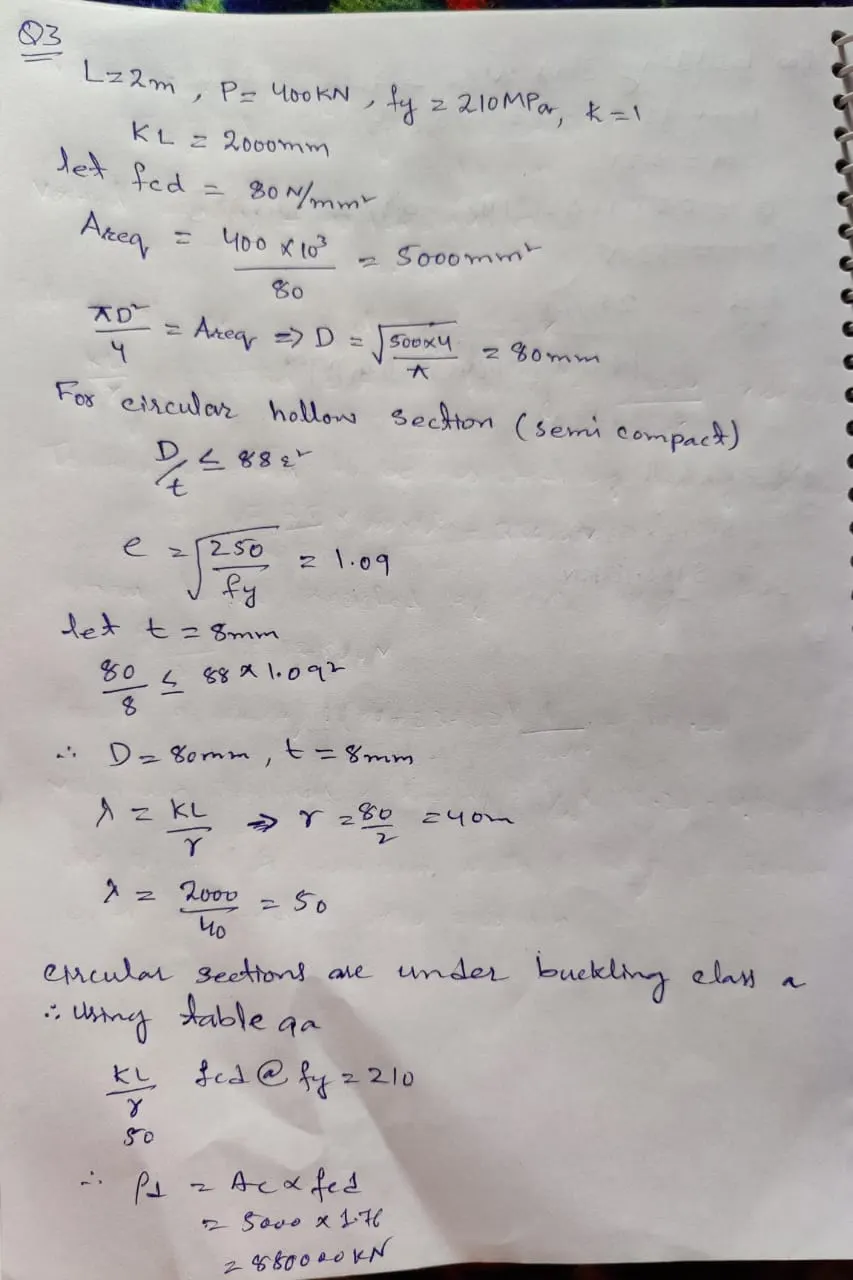
Design 2 m long tubular strut member to carry factored axial load of 400 kN. Assume the ends of the member are simply supported and the yield strength fy=210 Mpa. Also find Equivalent Square hollow sections.
Tip Steps:
- Calculate the area required from design compressive stress and Factored load on strut
- Choose a section satisfying the area calculated.
- Check limiting width to thickness ratio
- Find buckling class & slenderness ratio
- Using Buckling curve classification & slenderness ratio using table 9c in code, calculate compressive strength
- Using compressive strength, calculate design strength multiplying the cross sectional area.
. Effective length factor determination problem
- Height of column is 10 m and it is effectively restrained in mid height in one direction (in Z direction) but free to move in other direction (Y direction). Bottom of column is Fixed and top of column is Free.
- Calculate effective length factor of columns in following cases
2. Design Axial strength determination of a column with its end conditions
Design 2 m long tubular strut member to carry factored axial load of 400 kN. Assume the ends of the member are simply supported and the yield strength fy=210 Mpa. Also find Equivalent Square hollow sections.
Calculate the Axial compressive capacity of Column made up of Hot rolled ISMB 300 with flange cover plate of 200x12 mm on each flange having length of beam as 3 m. Assume the bottom of the column is Fixed and Top as Roller (Rotation Fixed, translation free). Yield strength of material fy= 250 N/mm2
Tip Steps:
- Determine new radius of gyration of compound section
- Using Buckling curve classification & slenderness ratio using table 9c in code, calculate compressive strength
- Using compressive strength, calculate design strength multiplying the cross sectional area.
3. Design circular tube strut member for certain load
Design 2 m long tubular strut member to carry factored axial load of 400 kN. Assume the ends of the member are simply supported and the yield strength fy=210 Mpa. Also find Equivalent Square hollow sections.
Tip Steps:
- Calculate the area required from design compressive stress and Factored load on strut
- Choose a section satisfying the area calculated.
- Check limiting width to thickness ratio
- Find buckling class & slenderness ratio
- Using Buckling curve classification & slenderness ratio using table 9c in code, calculate compressive strength
- Using compressive strength, calculate design strength multiplying the cross sectional area.
4. Design of laced column
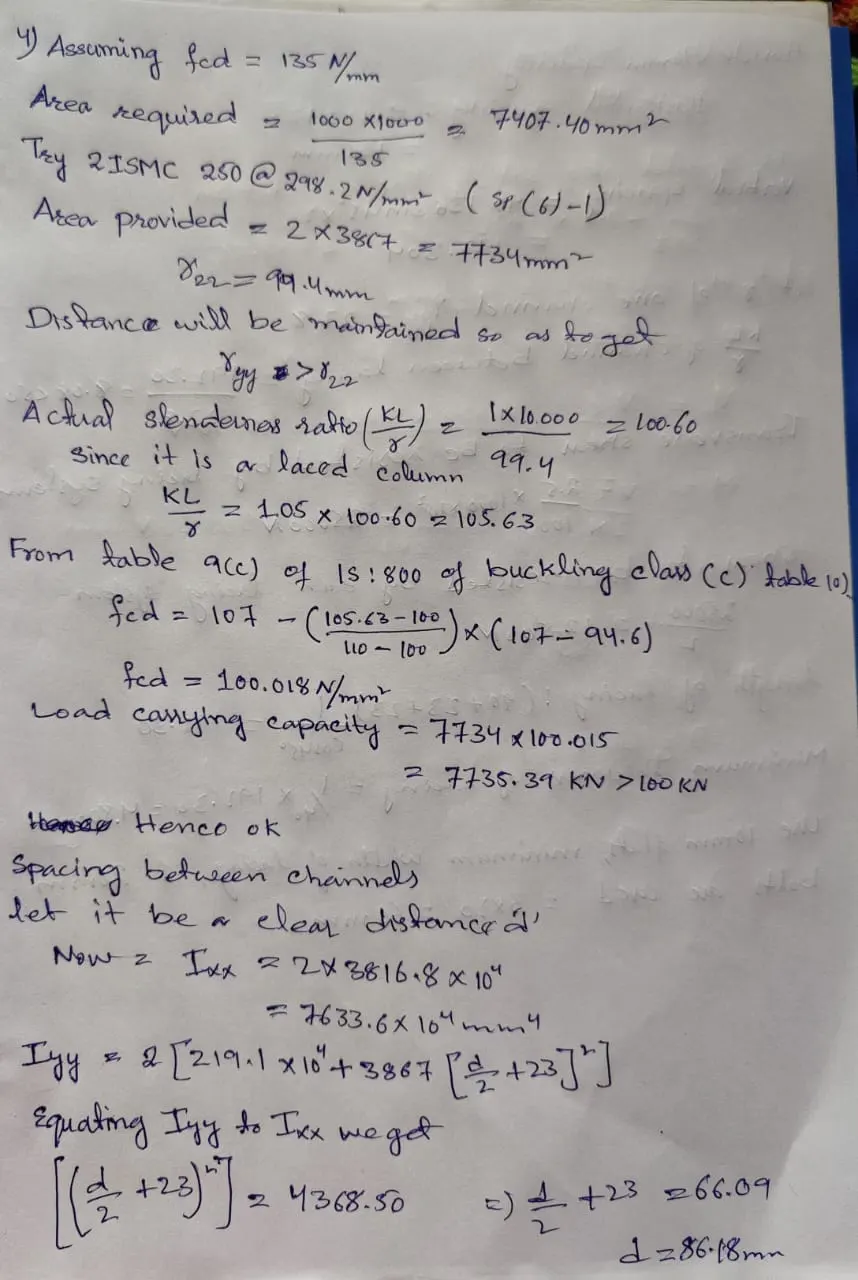
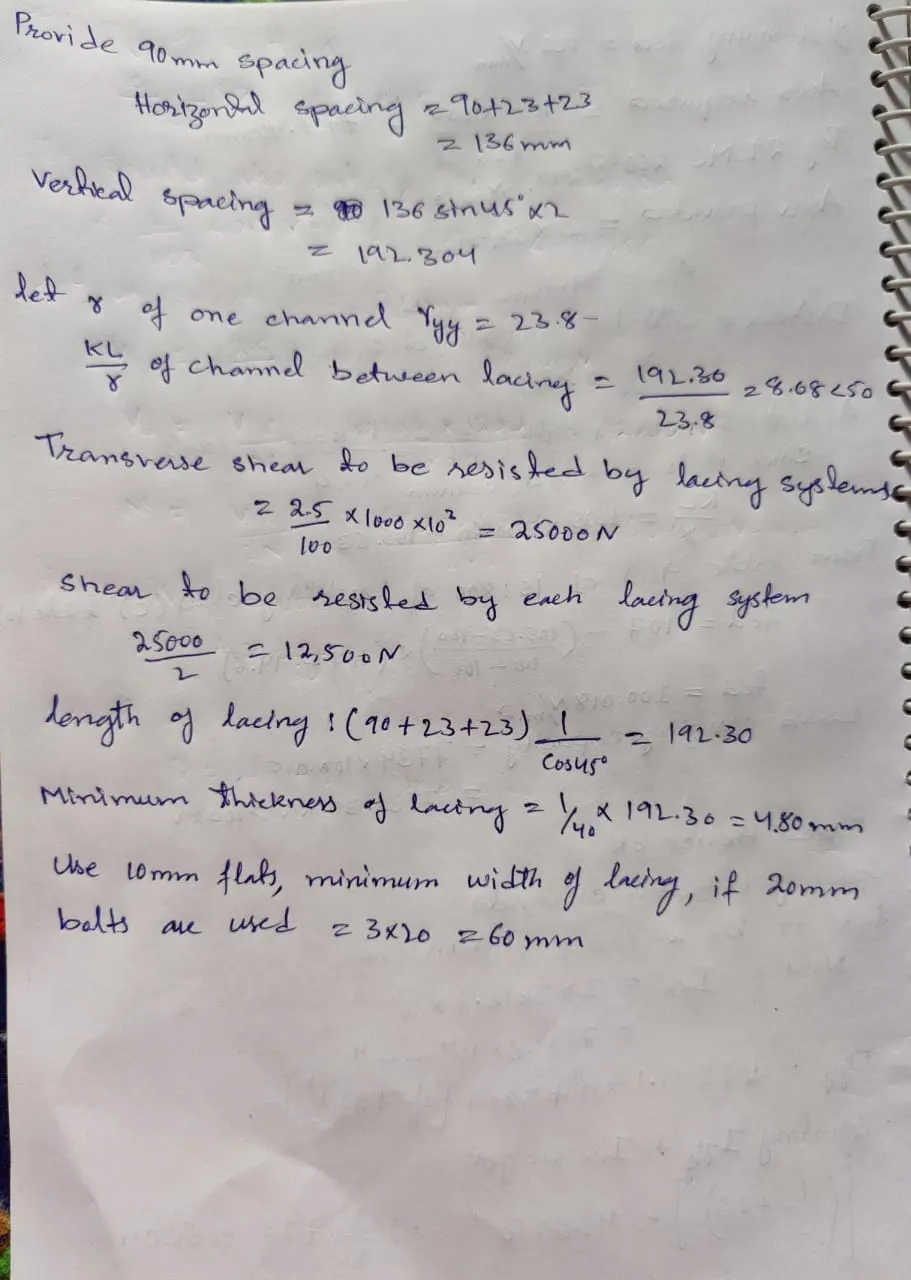
Design a single laced column made up of two channels back to back of 10 m height to carry factored axial load of 1000kN. The lacings are bolted. Design of bolted connection not required.
Tip Steps:
- Calculate required Cross section area
- Assume a channel section and calculate the compressive capacity
- Find the appropriate spacing of channel
- Find spacing of lacings
- Calculate design forces –Transverse, compressive force in lacing bars
- Check if the assumed lacings are safe for calculated design forces.
- Check if effective slenderness ratio is within limit
5. Design of battened column
Design a battened column made up of two channels back to back of 5 m height to carry factored axial load of 2000kN. The Battens are welded. Design of weld not required. Use Hot rolled channel sections.
Tip Steps:
- Calculate required Cross section area
- Assume a channel section and calculate the compressive capacity
- Find the appropriate spacing of channel
- Find spacing of battens & size of end/intermediate battens
- Calculate design forces –Transverse, longitudinal shear, Moment
- Check if the assumed battens are safe for calculated design forces.