Week 3 - 2D meshing for sheet metal
HOOD MODEL (Ansa)
AIM :
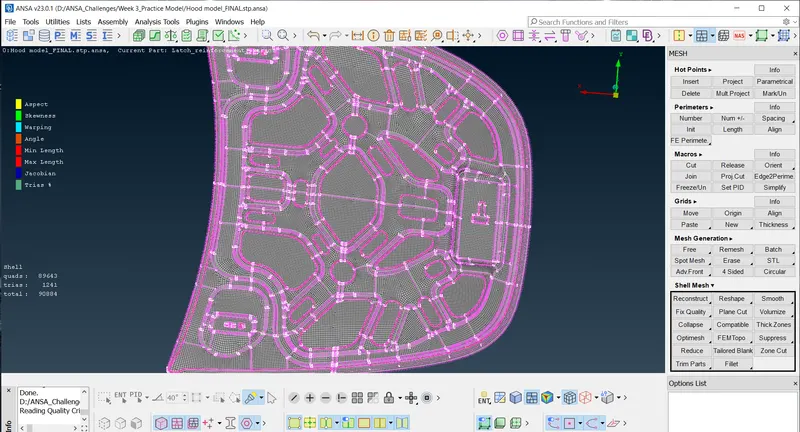
For the given CAD model (HOOD) we need to extract the mid surface and the do the preprocessing with the given mesh parameters.
|
S.No |
Quality Criteria |
Value |
|
1 |
Target/Average length |
5 |
|
2 |
Minimum Length |
2 |
|
3 |
Maximum Length |
7 |
|
4 |
Aspect |
3 |
|
5 |
Warpage |
15 |
|
6 |
Skewness |
45 |
|
7 |
Jacobian |
0.7 |
|
8 |
Minimum Quad Angle |
45 |
|
9 |
Maximum Quad Angle |
135 |
|
10 |
Minimum Tria Angle |
30 |
|
11 |
Maximum Tria Angle |
120 |
|
10 |
Tria Percentage |
15 |
PROCEDURE :
- Import the cad model in Ansa software.
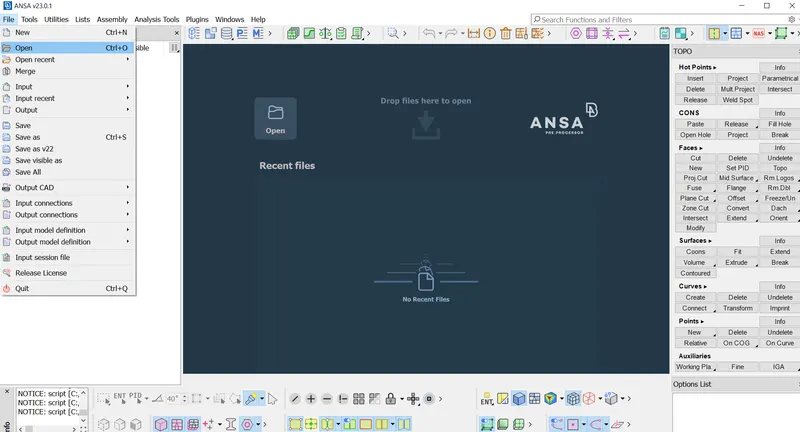
- After check the orient issues, grey is positive and yellow is negative
- check the errors with the check manager (geomentry)
- If you find any error in the geomentry, we must fix the geomentry and proceed to further processing as in the given Hood model there were no errors detected in geomentry clean up.
- Check the thickness for each component by measuring option please find the image on how to measure thickness.
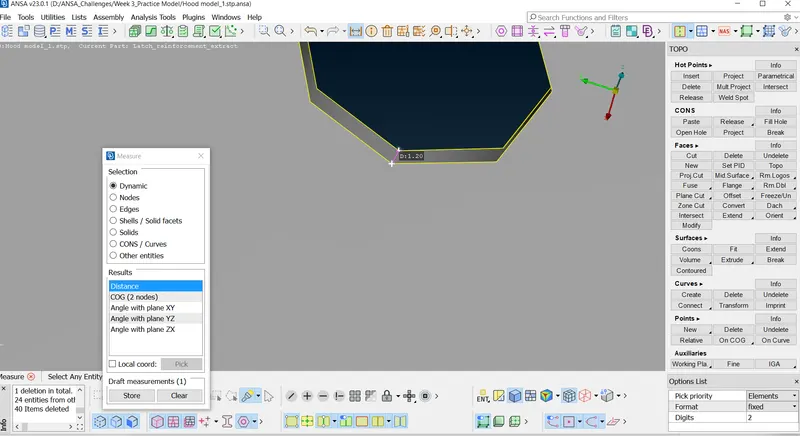
- After measuring the thickness extract.
- Iam using manual method by using offset (faces) bleow the images
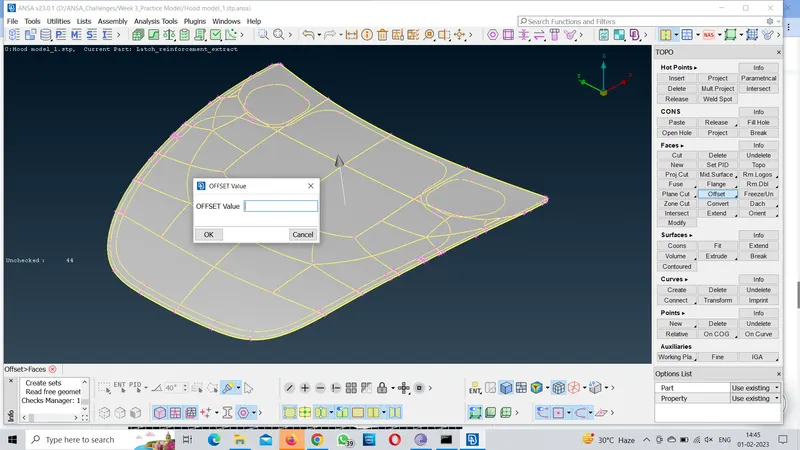
- Now comes the geometry clean up after Mid surface been extracted, we can find some geometrical errors.
- To remove the errors certain commands are used such as:
- Cut
- Topo
- Creating new surfaces if necessary
- Delete hot points at unnecessary places (to delete go to TOPO> Hot points>Delete(select the points))
- Now assign the quality criteria and mesh parameters
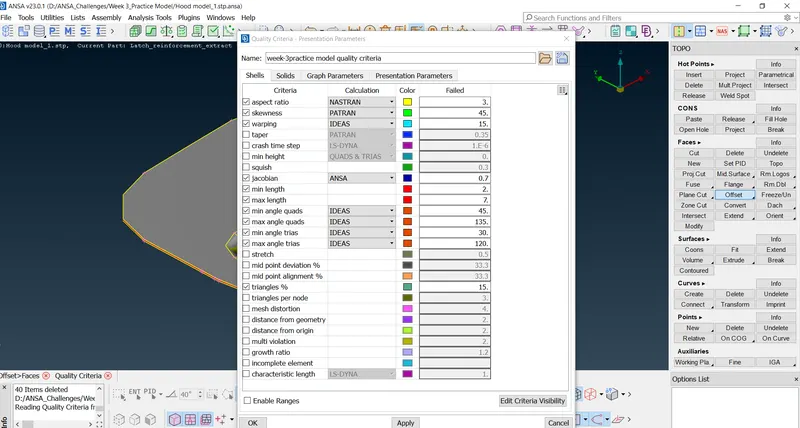
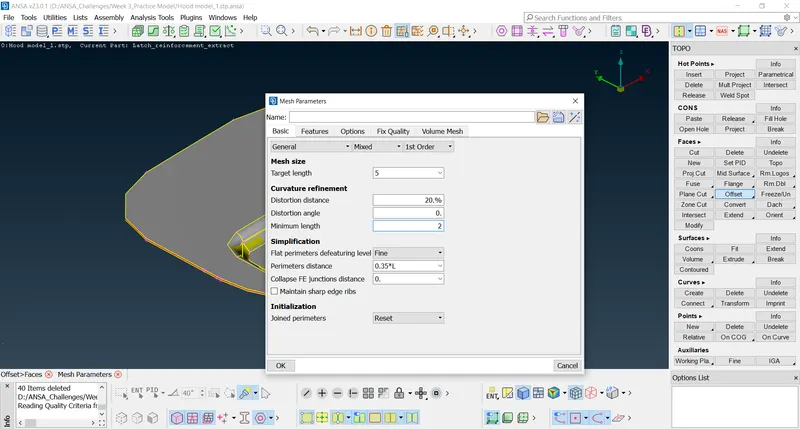
- Next go to classic mesh set to the perimeters (length).
- And delete the unwated hotpoins and unwated construction line and near to each other the constructions lines.
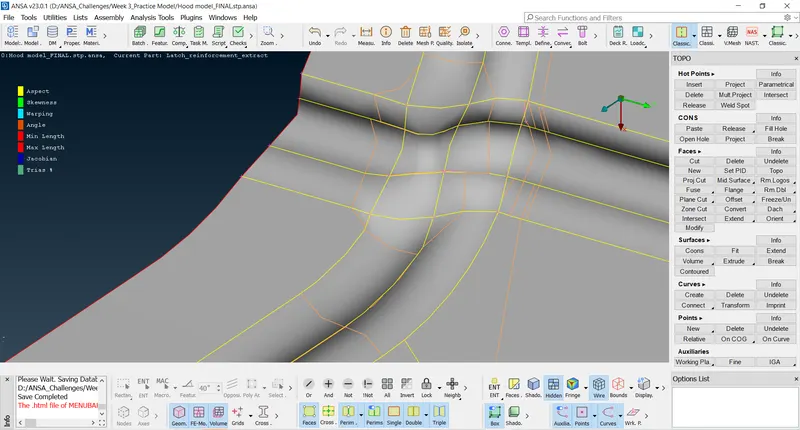
- Rearrange the construction depond upon mesh flow
- After meshing the midsurface
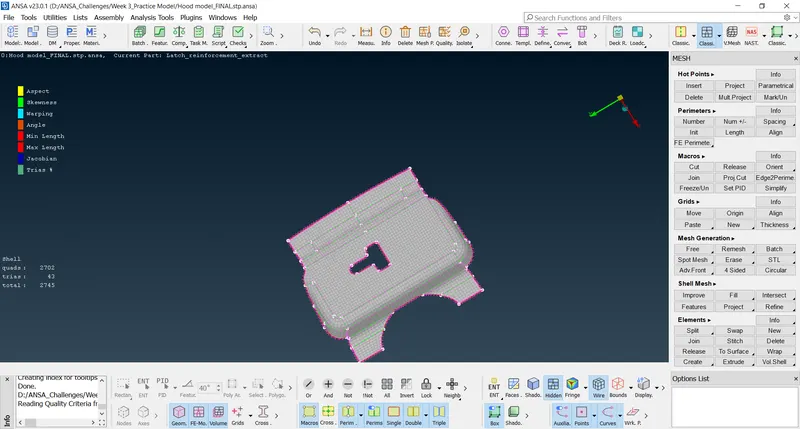
There are a few ways to handle the mesh flow:
- The Tria elements should never be opposite to each other
- No Tria elements should be connected back to back
- No Tria elements should be on the edge of the geometry
- No Tria elements should be near the holes
- No Tria elements should be on the feature and the fillets.
- There should be less Tria concentration, i.e., there should be a considerable distance between Tria elements.
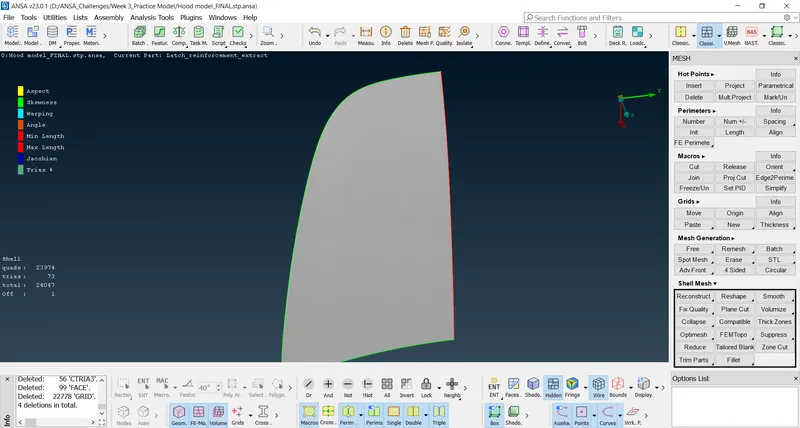
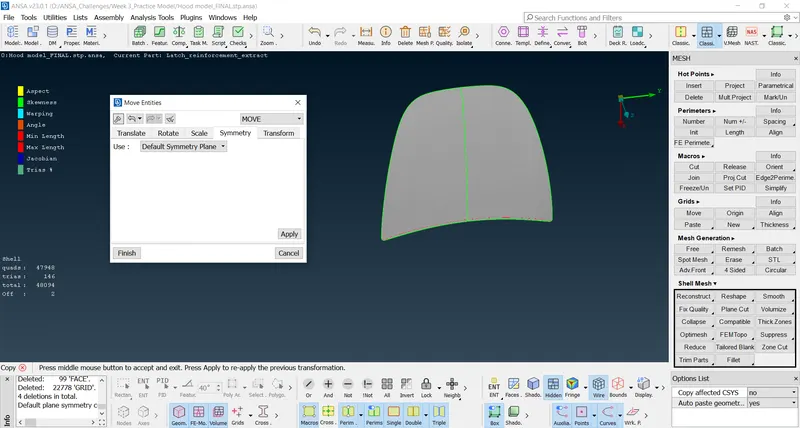
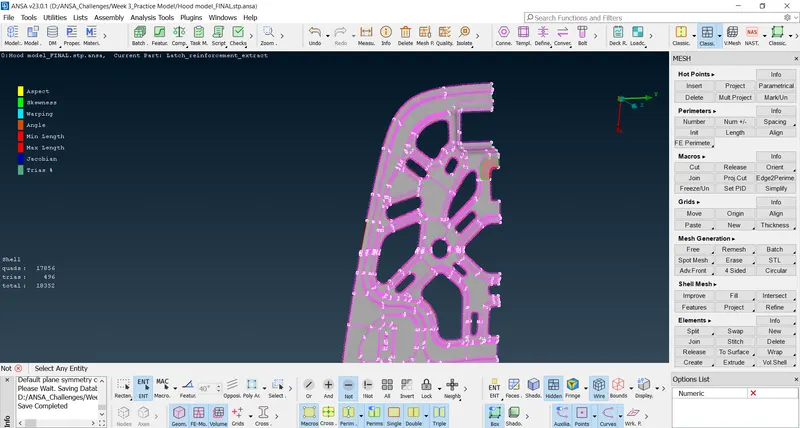
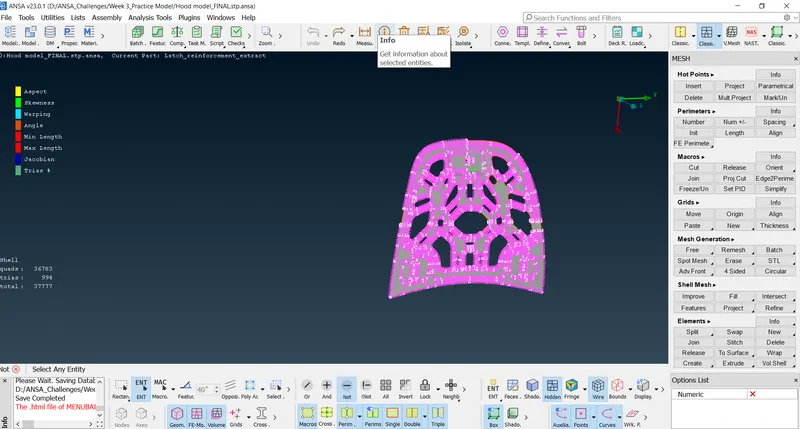
- Symentrical parts are deleting one half, after mesh one half transfer to the opposite
-
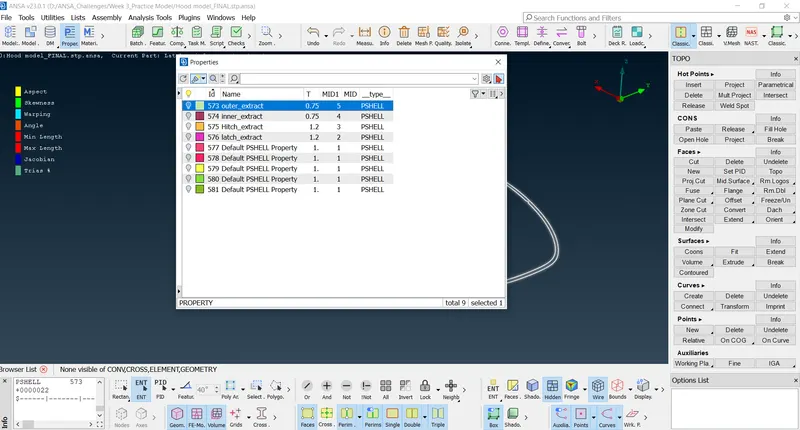
Now after completing the mesh we have to assign thickness for all five parts. Thickness is measured with the parent body part and added to the mid surfaced part.
Result:
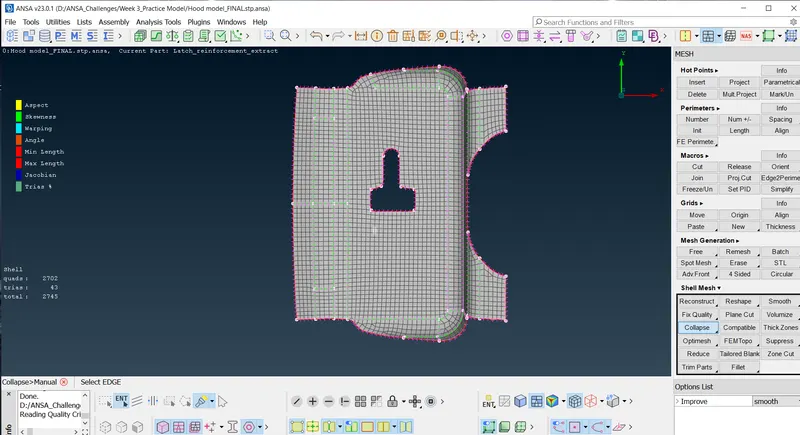
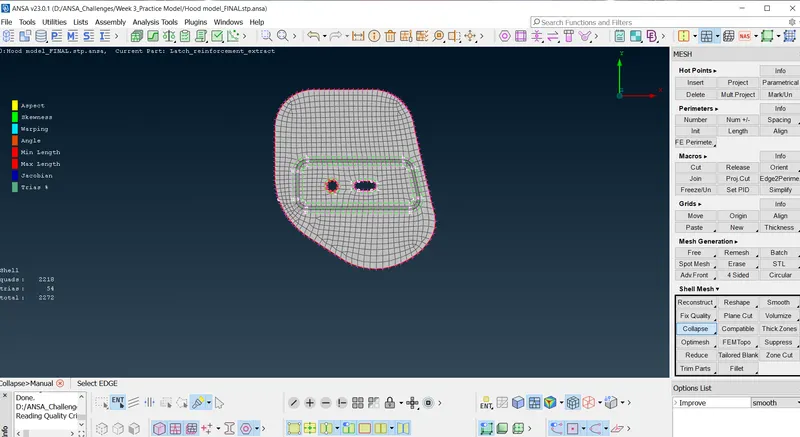
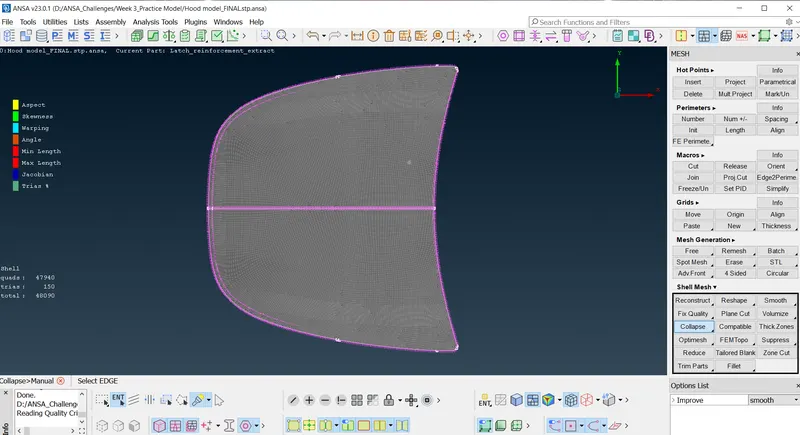
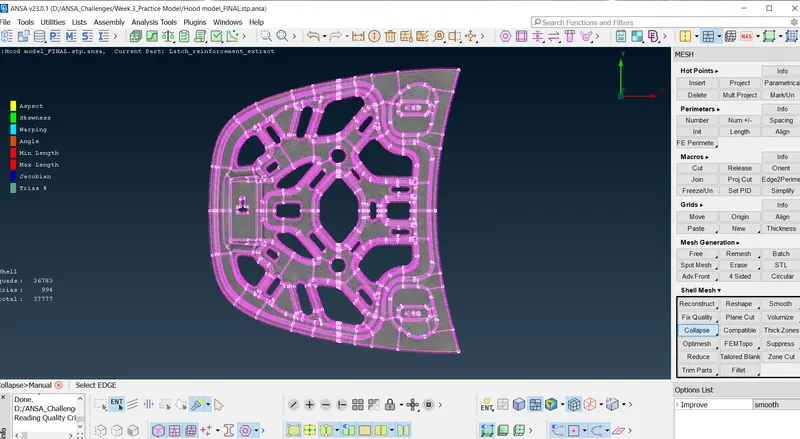
Few images below show the complex mesh model of hood parts as per the quality criteria and also the thickness has been assigned.