Week 3 - 2D meshing for sheet metal
AIM:
To perform meshing of Automotive hood after extracting mid surface and satisfying proper quality criteria using Ansa.
PROCEDURE:
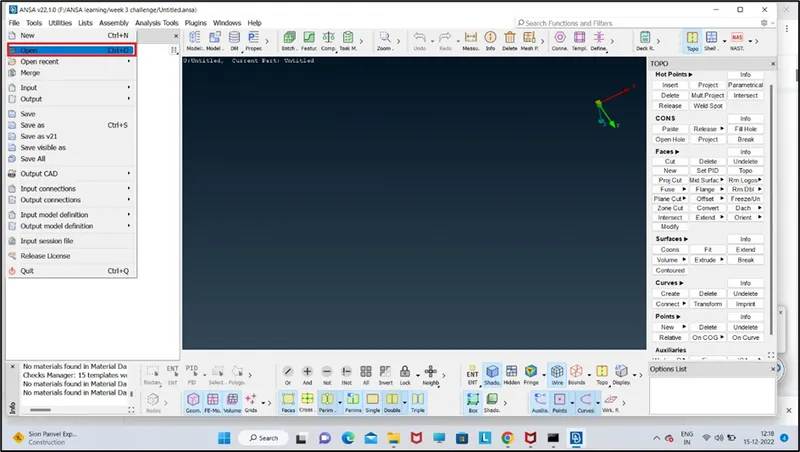
- Open the 3D geometry from Ansa as shown below.
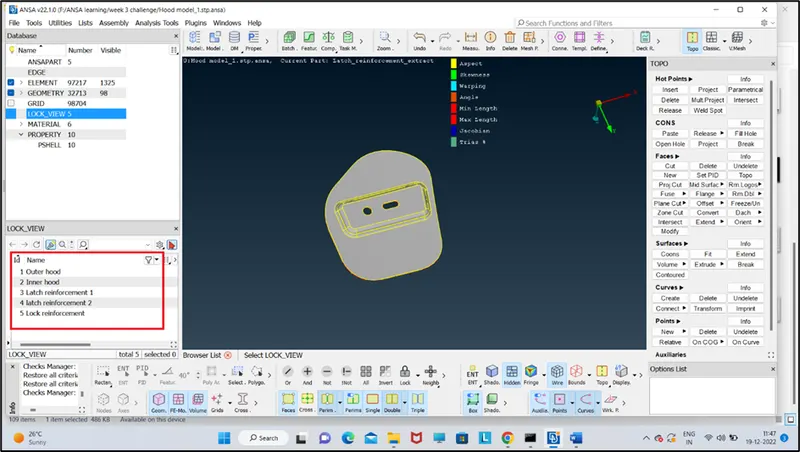
After analysing the geometry, it is observed that the geometry has basically 4 components having independent property id and has to be meshed separately. We perform topology clean up on each geometry one by one.
- Now Arrange each component one by one two separate lock views for topology clean-up as shown below. There are 5 lock views for 5 components.
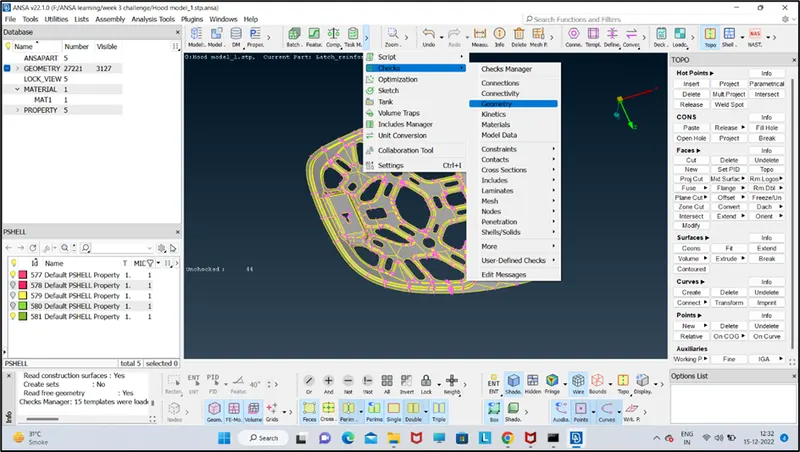
- From task manager open geometry from check ups and check for geometrical error.
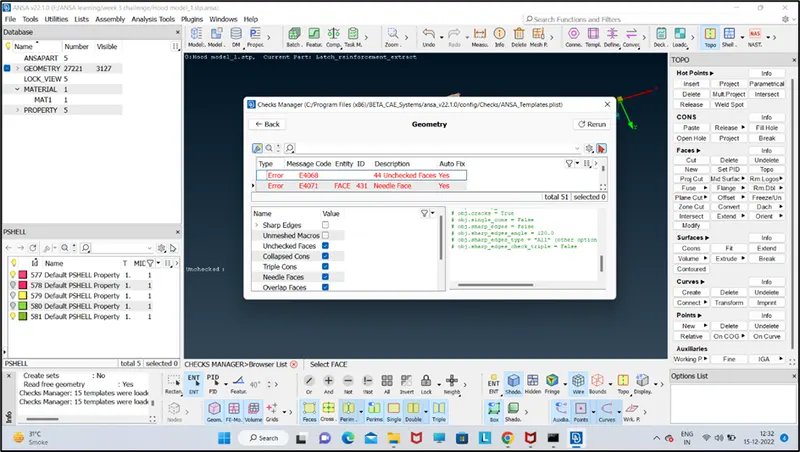
We can automatically solve the error by fixing all the errors from the window. The message after successfully cleaning up the geometry is given below.
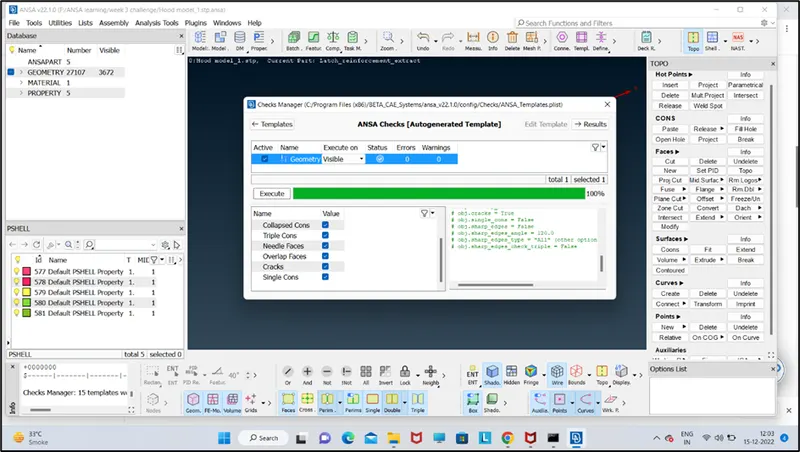
Similarly, for each of the component geometry clean up has been done successfully.
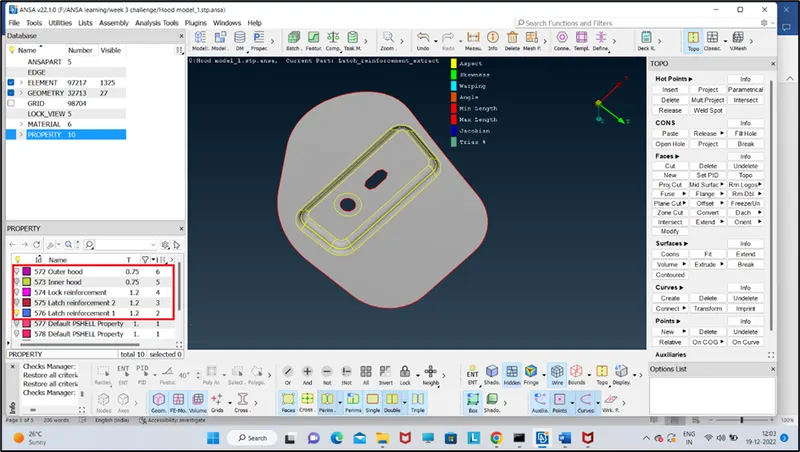
- Now proper mid surfacing has to be done on each component and assigning thickness to them. The thickness measurement for latch reinforcement, mid-surfacing and creating property card for the same is shown below.
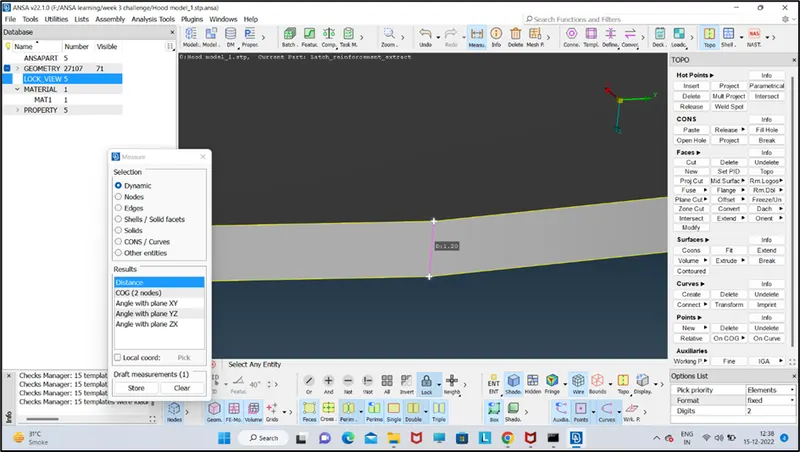
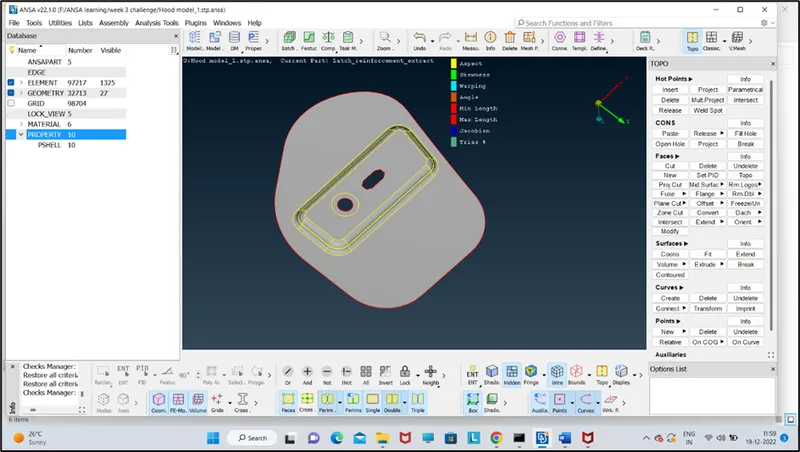
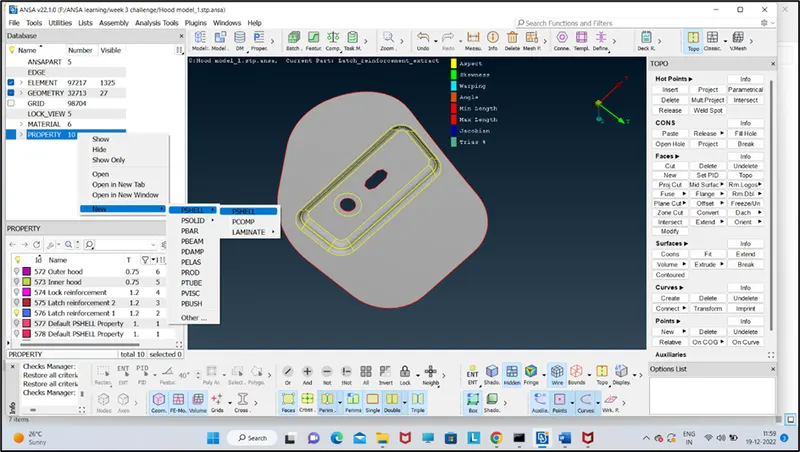
Similarly, mid surface has been extracted for all the components using skin technique as well as manual offsetting and the necessary property card and thickness measurement created is shown below.
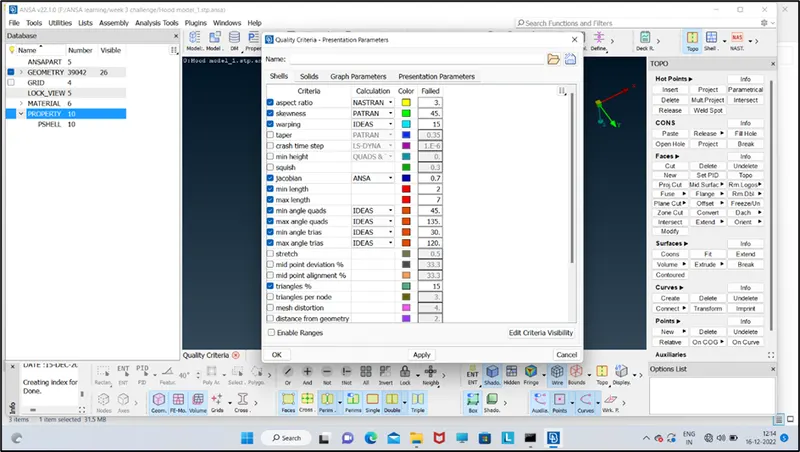
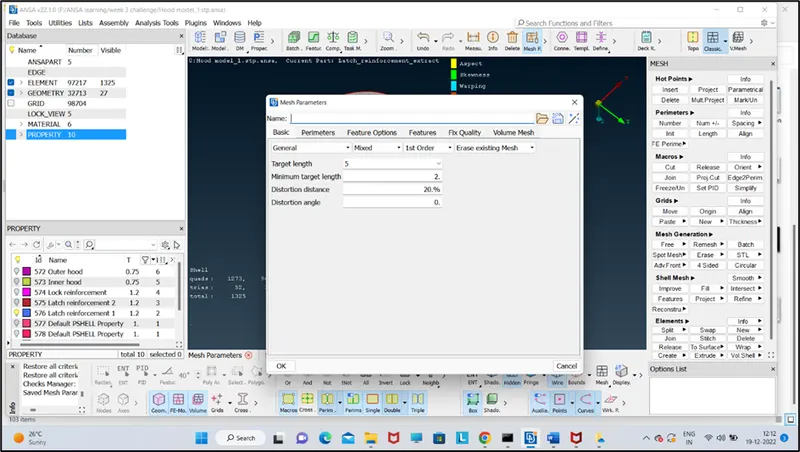
- Now before meshing quality parameters and targeted element length has to be provided by the user as shown below.
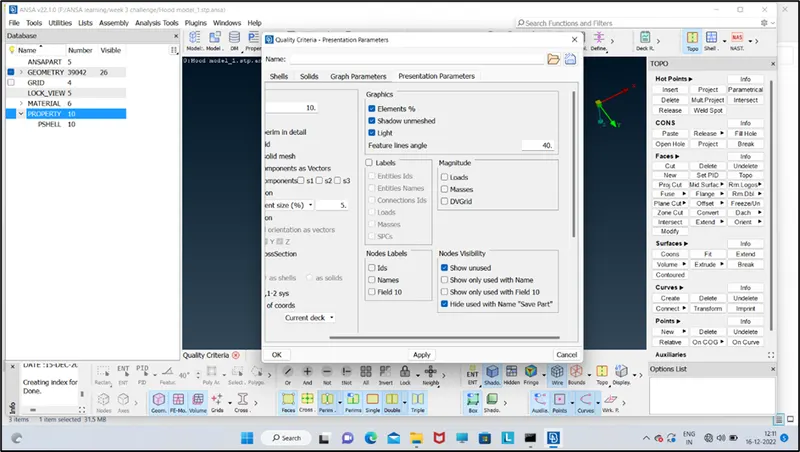
During meshing it important to check elements option and slide details to right side in presentation parameter option as shown below.
- Now we move from topo mode to classic mesh mode. Using best mesh option and reconstruct option we will generate smooth mesh flow over the component with minimum trias as shown below satisfying the quality criteria.
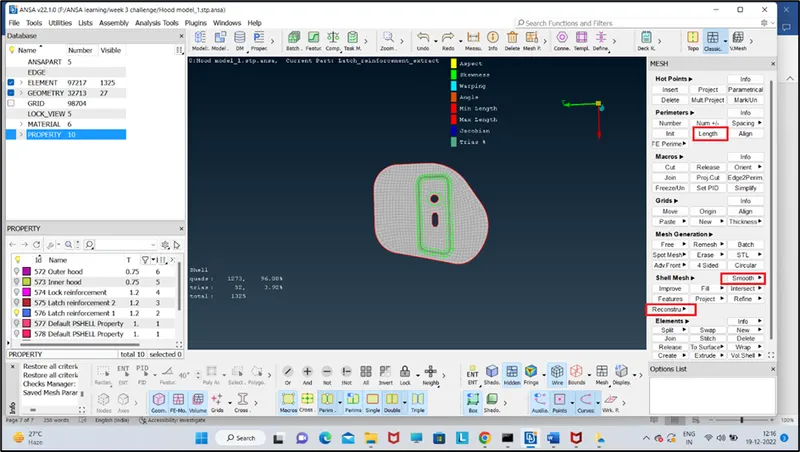
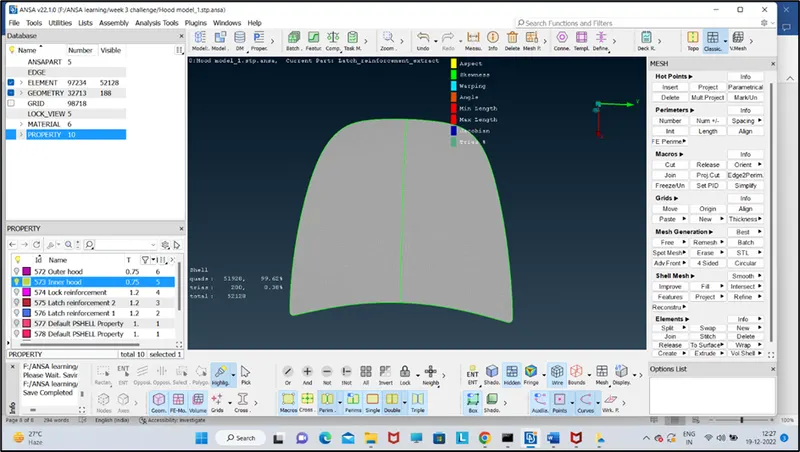
- For the meshing of inner hood, we use the principle of symmetry to reduce the effort as shown below.
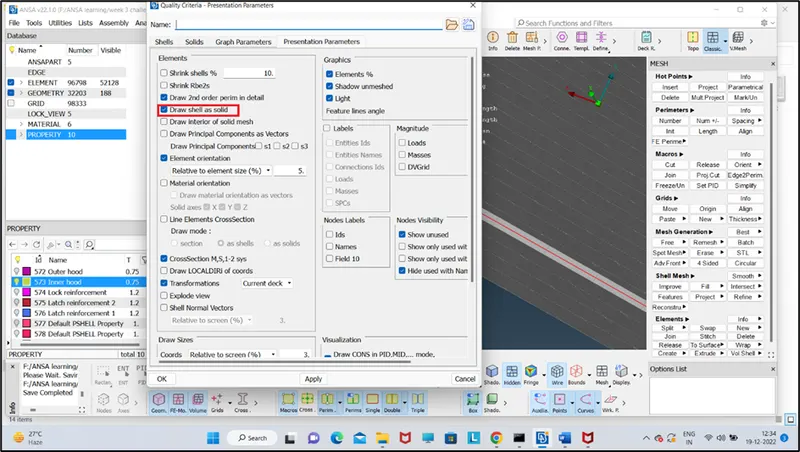
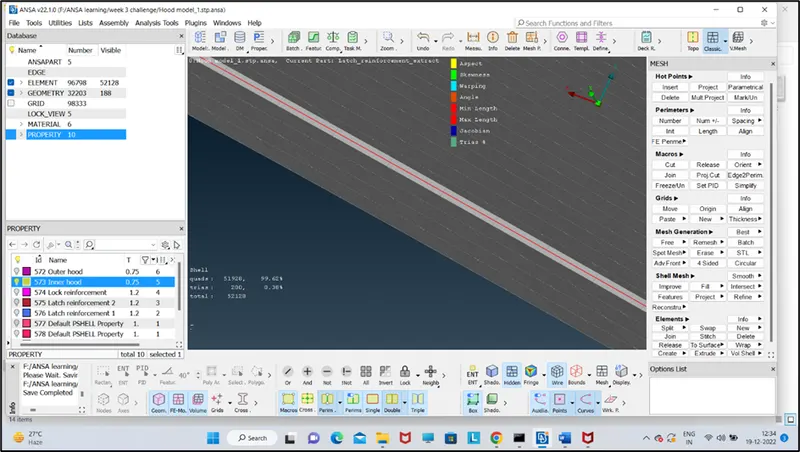
The mid surface after meshing and assigning the thickness is shown above using shell as solid command.
LEARNING OUTCOMES:
- Learned how to apply principle of symmetry to generate mesh more quickly.
- Suppressing of cones to get smooth flow of mesh accurately.
- Using paste, split option to convert tria to quads.
- Saving of quality parameters that can be used later.
CONCLUSIONS:
The given model was topologically cleaned, meshed as per the quality criteria and the finite element model can be used for subsequent analysis.