Week 2 Railwheel and Track
Objective: Perform a static structural analysis on the Railwheel and Track setup.
- Case 1: Multiply the bearing load by 5 times and compare the results with the load of 100000 N (As done in the week 2 video). Compare the Total Deformation, Equivalent stress, and the life under both the loads
- Case 2: Implement a User-defined result and calculate the Total Deformation from this result and check if it is the same as that obtained by the inbuilt result by ANSYS for a load of 100000 N.
Answer:
Setup: First we will open the ANSYS Workbench and start a new analysis of Static Structural. We will import the given model.
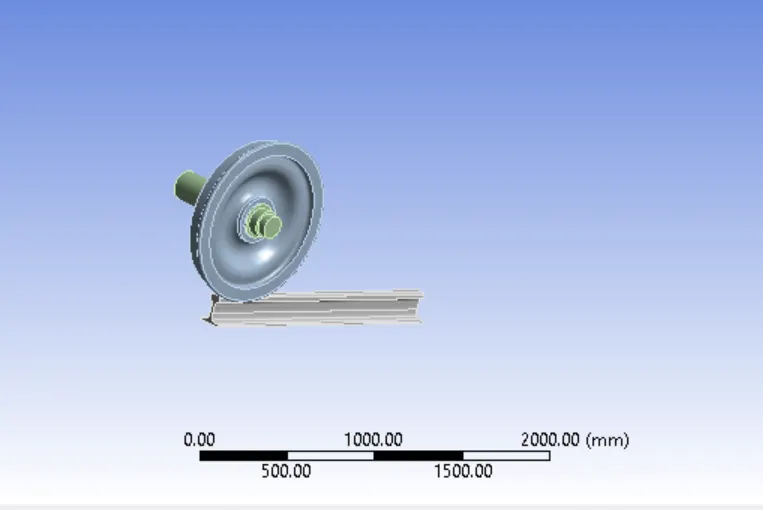
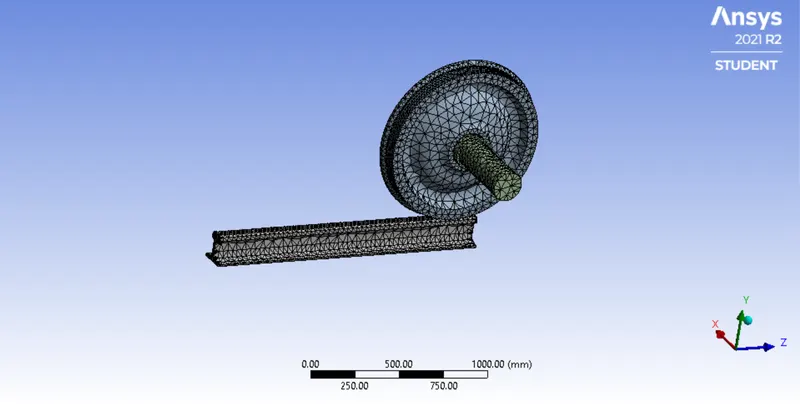
- Importing Geometry: The given model is Rail Wheel Track. The below image shows the initial image of the imported model:
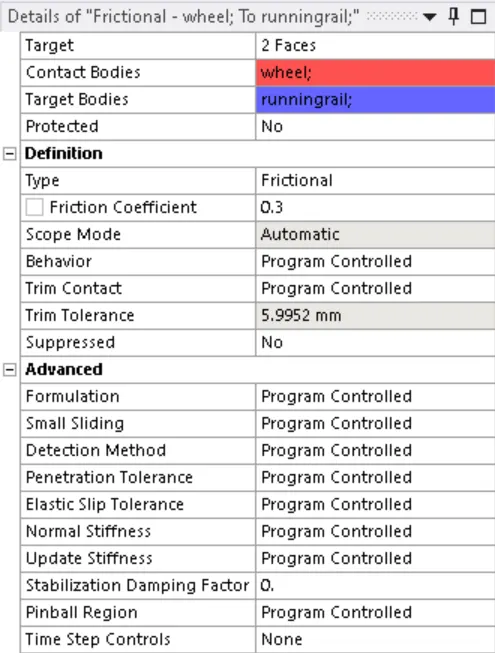
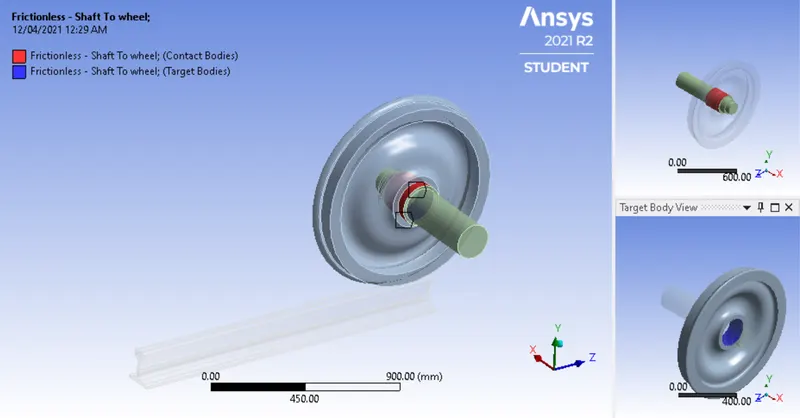
- Setting-up Connections: We will set up the connections and contacts for the moving components, i.e. Wheel and Track, and shaft and bearing. For analysis, we have selected the contact between Wheel and TR track as frictional with a Frictional Coefficient of 0.3, Below are the images o the same.
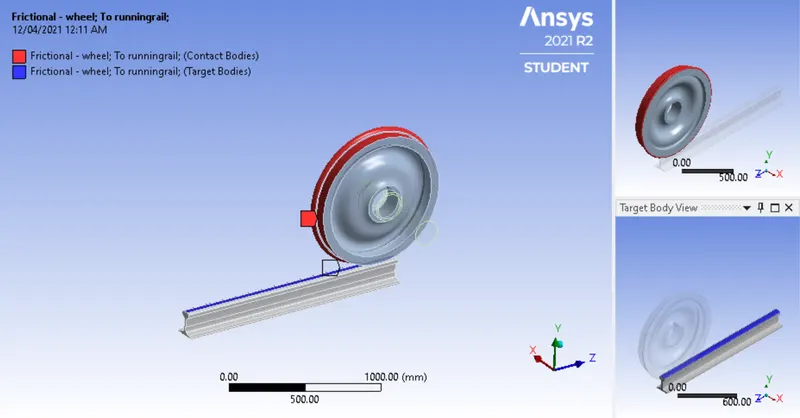
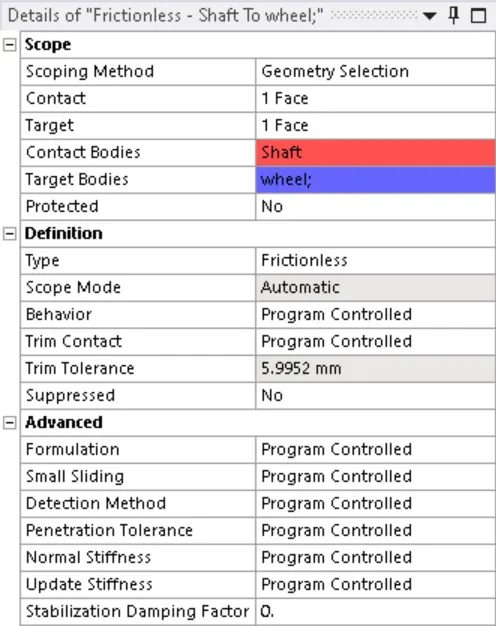
For Bearing and shaft we have taken it as a Frictionless contact.
Applying Joints:
Fixed Joint: For track fixed joint is applied, as it will not move throughout the analysis.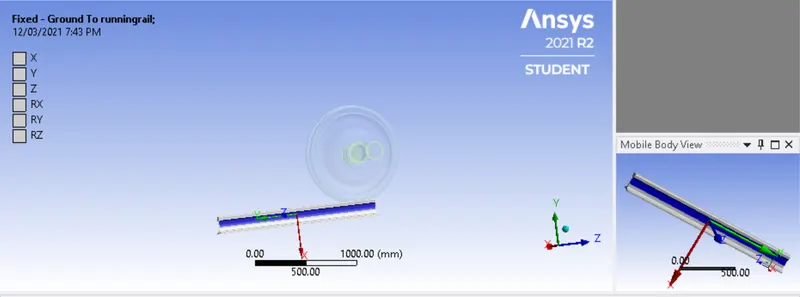
Translational Joint: As the shaft will be moving along with the wheel translational joint is used.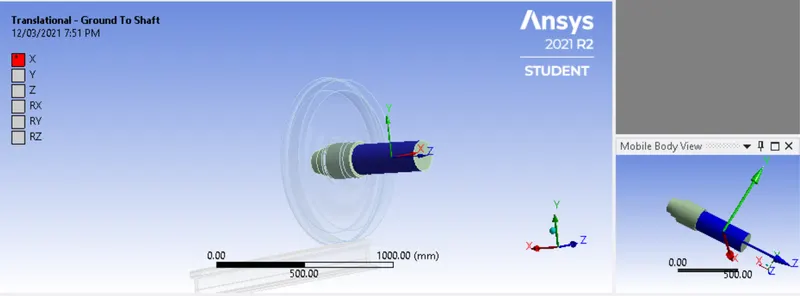
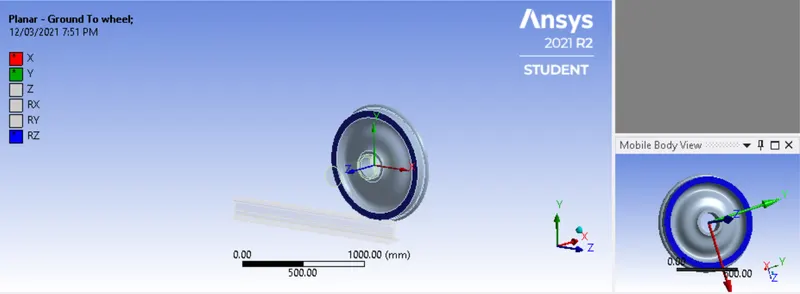
- Planar Joint: It is applied on the wheel side, which ensures the wheel moves only in one direction.
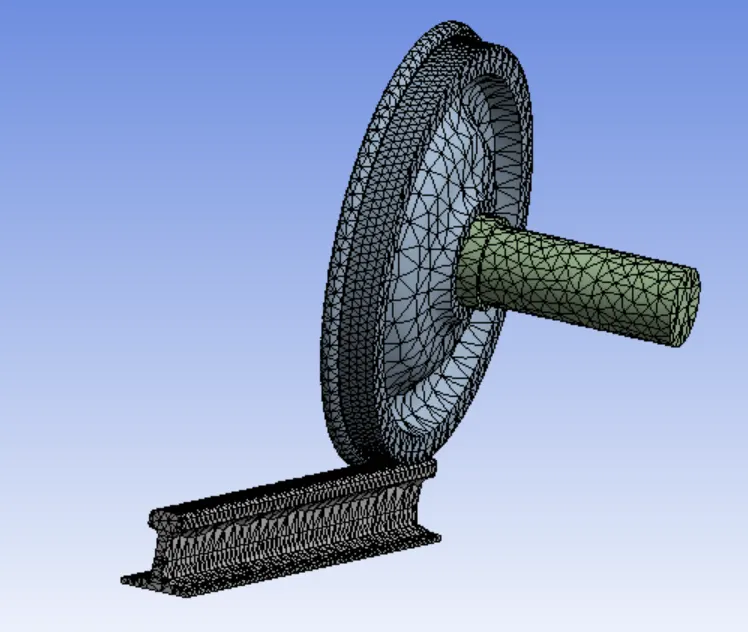
- Meshing: Here we will use the Face Meshing tool in order to get precise results in area of contacts, hence we used a mesh size of 30mm over other faces and 20mm on areas of contact the below image shows the same.
Face Meshing: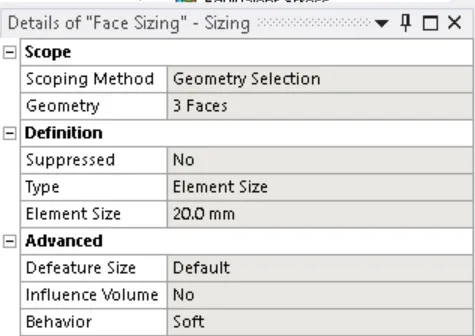
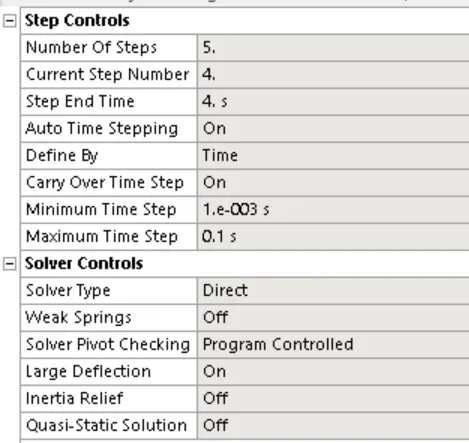
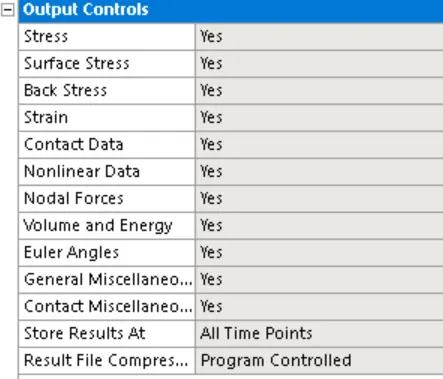
- Analysis Settings: In order to perform analysis on the given model we have divided it into 5 steps. The initial time is taken as 0.003s and the maximum time step is 0.1s. We have enabled all the output controls as shown in the image below:
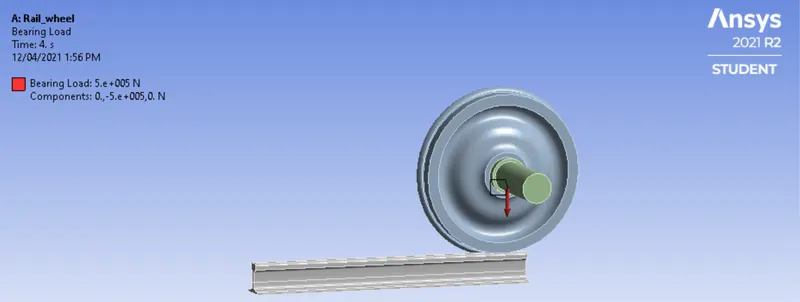
Bearing Load: When the shaft rotates there is a downward load on the wheel. For each case, we have kept it 1e+05N and 5e+05N. The setup is shown in the below image.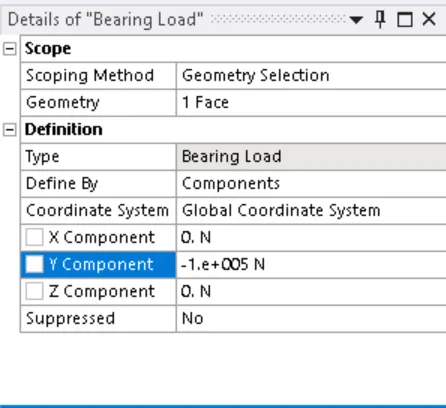
Displacement: IN order to define the distance which the wheel will be traveling during the analysis we will input the displacement in X-axis. Here for each step the displacement will be 100mm: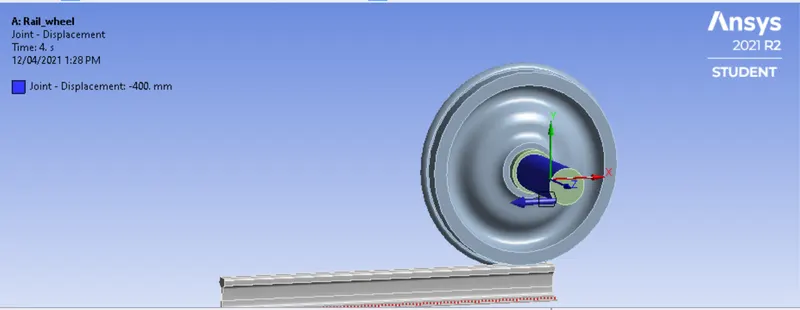
Solution for Case 1: Below are the comparison for the results of both the conditions:
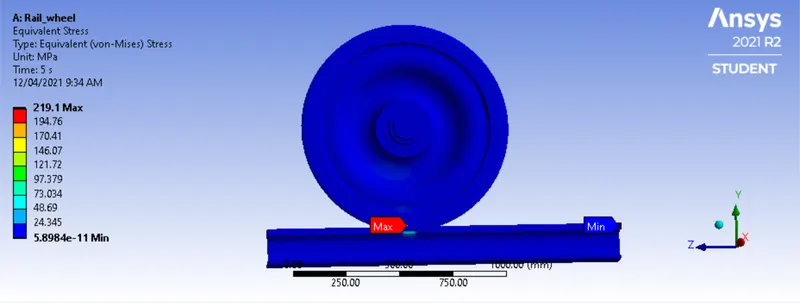
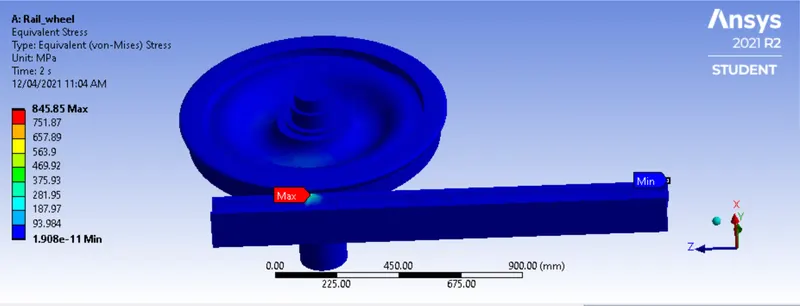
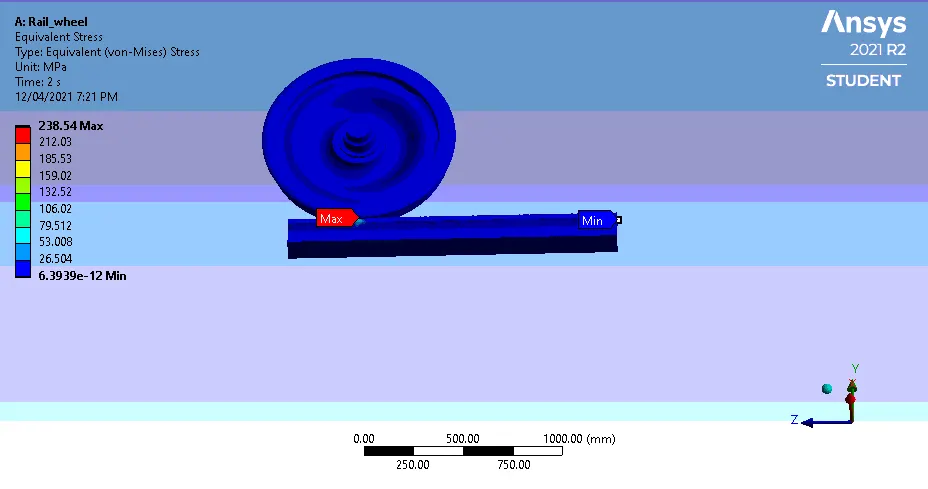
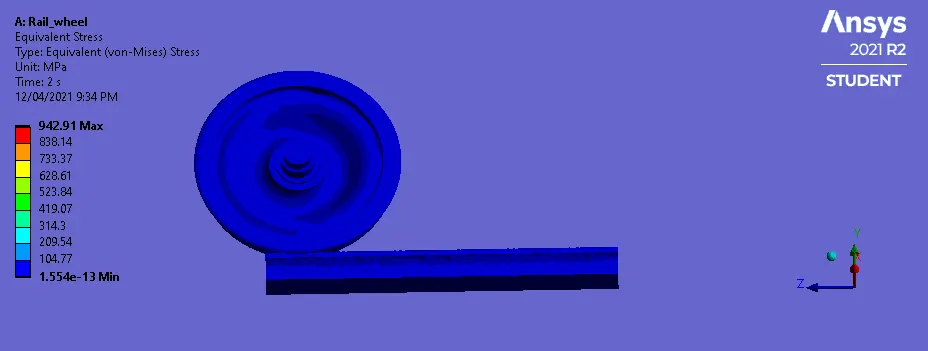
- Equivalent Stress:
For Bearing Load of 1e+5N:
For Bearing Load of 5e+5N:
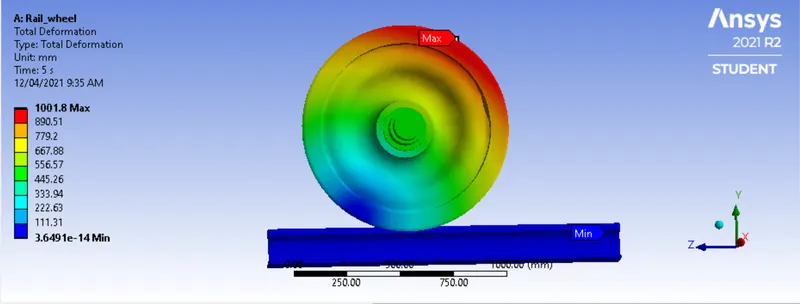
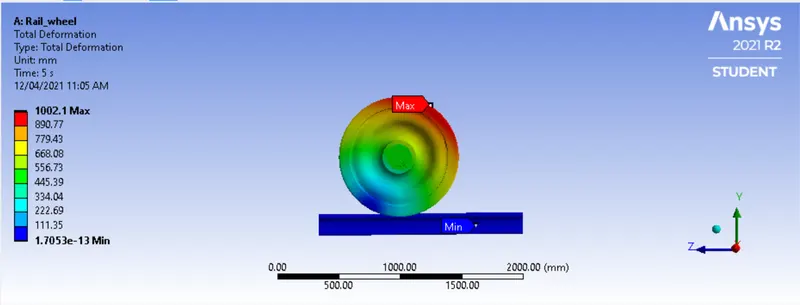
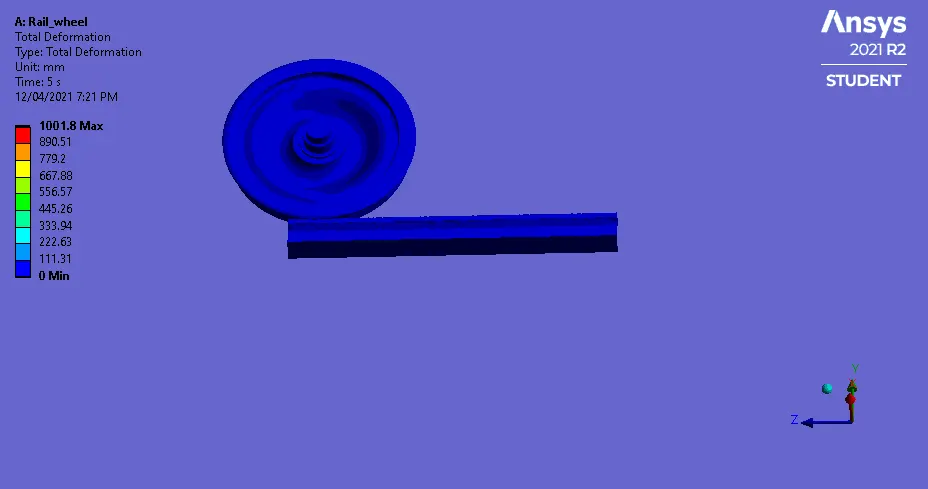
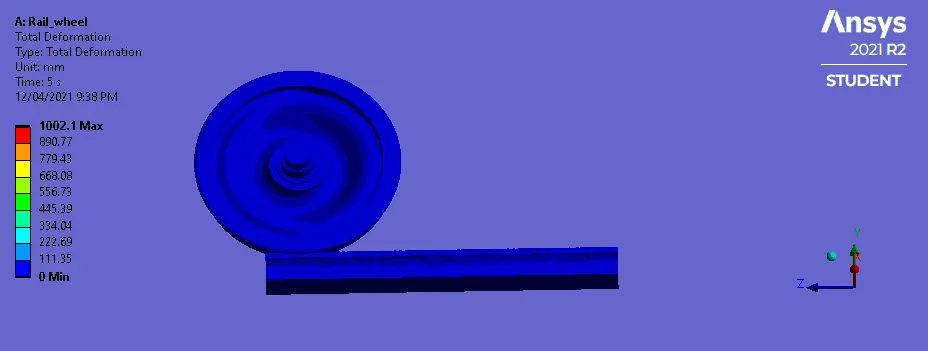
- Total Deformation:
For Bearing Load if 1e+05N:
For Bearing Load if 5e+05N:
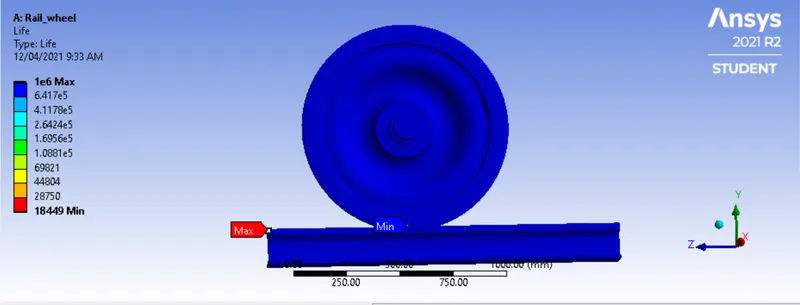
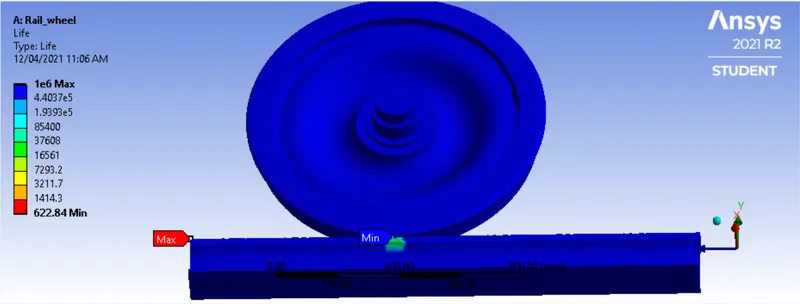
- Life:
For Bearing Load if 1e+05N:
For Bearing Load if 5e+05N:
- Animations:
Total Deformation:
1e+05N:
5e+05N:
Equivalent Stress:
1e+05N:
5e+05N:
Solution for Case 2:
User-Defined Result: As per the requirement we will have compared the total deformation of Solution generated and User Defined Result.
In order to get the User Defined resut we have to enter the expression in order to get the total deformation using the values of directional deformation along the three principal axis
"sqrt(Ux^2+Uy^2+Uz^2)"
Below images compares the results of both the results with Bearing load of 1e+05N:
Total Deformation:
Total Defromation for User Defined using the Expression: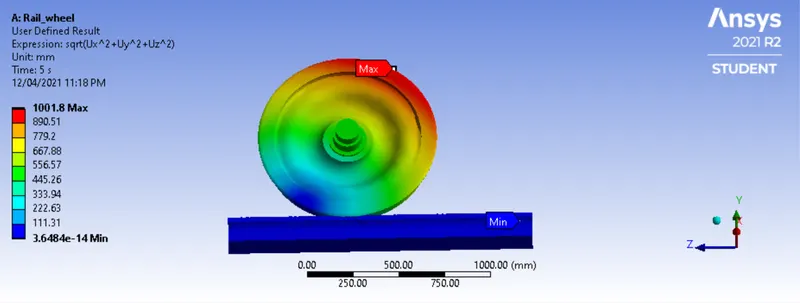
- Conslusion:
Case 1: By comparing the results of Bearing Load of 500000n and 100000n we can say that the with higher Bearing Load more the stresses devoped at 500000N are on higher side.
Also, the Min Life cycle with with 500000N is lesser at 6220 cycles when compared to 18449 cycles with load of 100000N.
However, when we compare the Total deformations on both the cases the difference is minimal for 5e+05N the total deformation is 1002.1mm and 1001.8mm for 1e+05N load.
Results for 100000N: Bearing Load: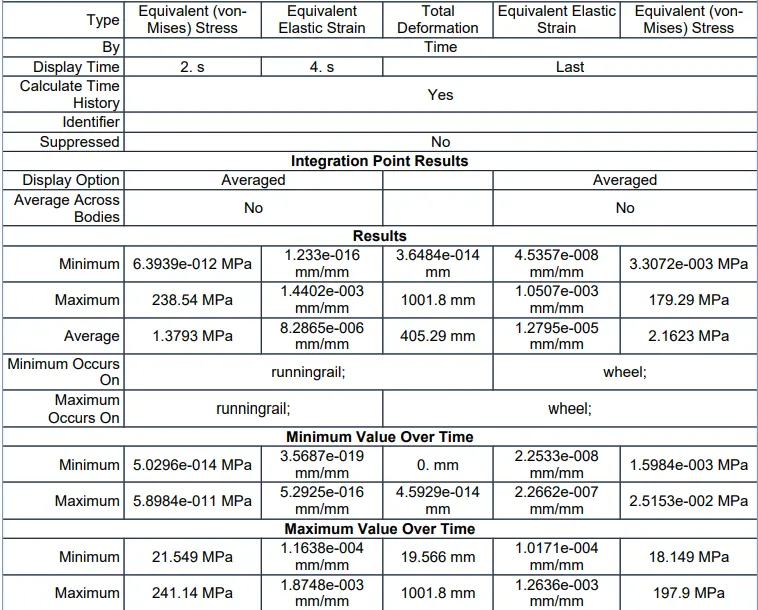
Results for 500000N: Bearing Load: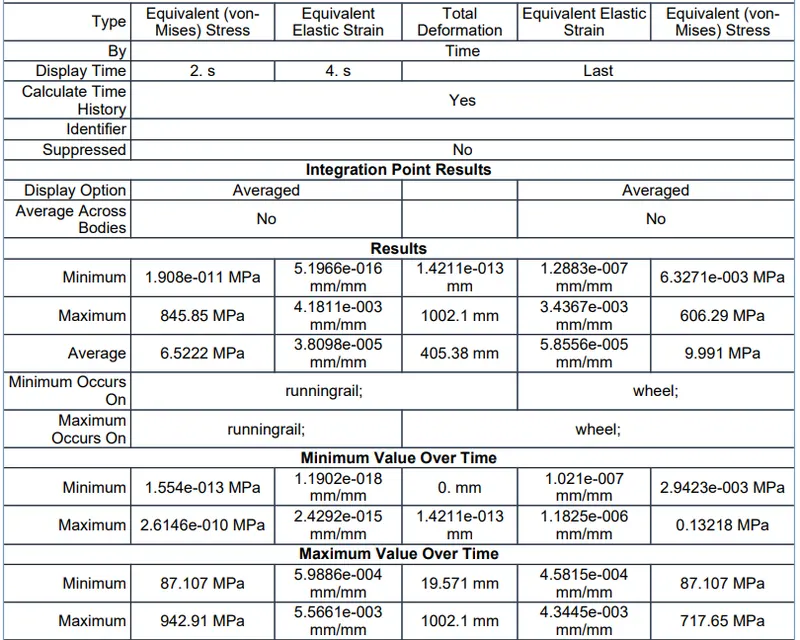
Case 2: By comparing the results of Total Deformation through general method and through User Defined method we can find that the results acheived were similar.
| Load | Total Deformation | Total Deformation Using UDF |
| 100000N | 1001.8mm | 1001.8mm |
| 500000N | 1002.1mm | 1002.1mm |