Week 2 - Flow over a Cylinder.
Flow over a cylinder
1.Objective
- To Simulate the flow with the steady and unsteady case and calculate the Strouhal Number for Re= 100.
- To Calculate the coefficient of drag and lift over a cylinder by setting the Reynolds number to 10,100,1000,10000 & 100000.
- To Discuss the effect of Reynolds number on the coefficient of drag.
2. Theory
Ansys is a very important tool in CFD domain, Ansys fluently facilitates modelling flow, turbulence, heat transfer and chemical reactions. With Ansys we can accomplice more in less time and with less training. In this study we will create Karman vortex street by simulating flow over cylinder.
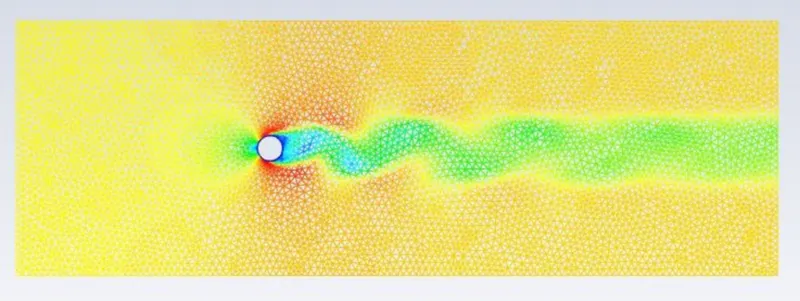
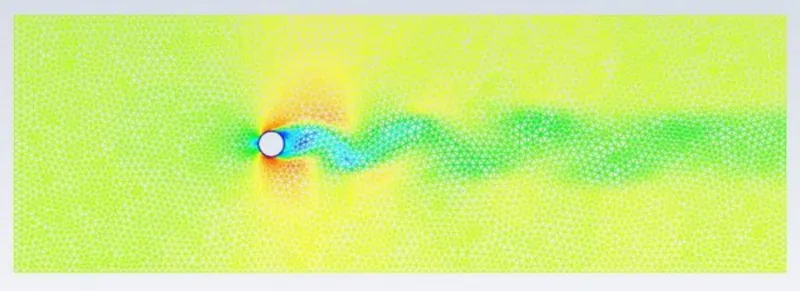
Vortex shedding is an oscillating flow that takes place when a fluid such as air or water flows past a bluff (as opposed to streamlined) body at certain velocities, depending on the size and shape of the body. In this flow, vortices are created at the back of the body and detach periodically from either side of the body forming a Von Karman vortex street. Karman vortex street is a repeating sequence of swirling vortex, caused by a process known as vortex shedding, which is responsible for the unsteady separation of flow of a fluid around blunt bodies.
Reynolds Number – it is a non-dimensional number, which is used to predict fluid behavior, whether fluid is steady or unsteady.
`Re = (rho*v*d)/(mu)`
`rho` = density of fluid(kg/m^3)
`v` = velocity of fluid(m/s)
`d` = characteristics length(m)
`mu` = kinematic viscosity (Kg/m*s)
Strouhal Number – it is a non–dimensional number, used to describe oscillating flow mechanism.
`St = (fL)/V`
f = frequency of vortex shedding
L = Characteristic length
V = fluid velocity
Drag – it is resistance offered by fluid. This force applies acting opposite towards the motion of the object which is moving submerged in a certain fluid
`D = 1/2*rho*A*V^2*c_d`
V = relative velocity
A = cross section area of body
Rho = fluid density
`c_d` = coefficient of drag
Lift – lift is a force generated perpendicular to the direction of travel for an object moving through a fluid. It is a vector quantity.
`L = 1/2*rho*A*V^2*c_l`
V = relative velocity
A = cross section area of body
Rho = fluid density
`c_l` = coefficient of lift
- Procedure and results–
Part 1 - Simulate the flow with the steady and unsteady case and calculate the Strouhal Number for Re= 100.
GEOMETRY SETUP
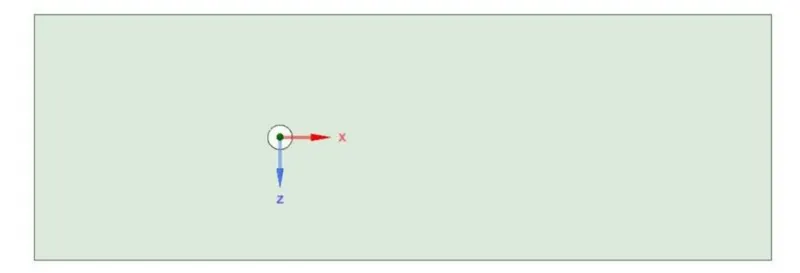
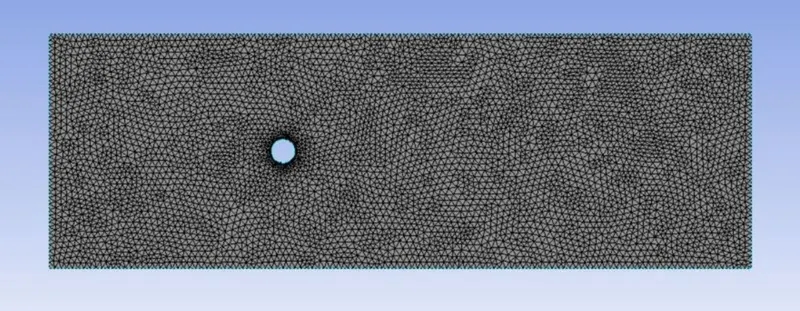
A two-dimensional cylinder and fluid zone is created.
Meshing
Mesh type - Triangular
Element size – 0.5
Number of inflation layers near feature- 6
Number of elements - 10540
Solver setup
Solver setup will be same for steady state and transient simulation.
Solver type – Pressure based
Solver model – Viscous-Laminar
Material – user defined
Reynolds number = 100
density = 1Kg/m^3
Viscosity = 0.02 Kg/m-s
Boundary conditions –
Inlet velocity = 1m/s
Postprocessing
Steady State -
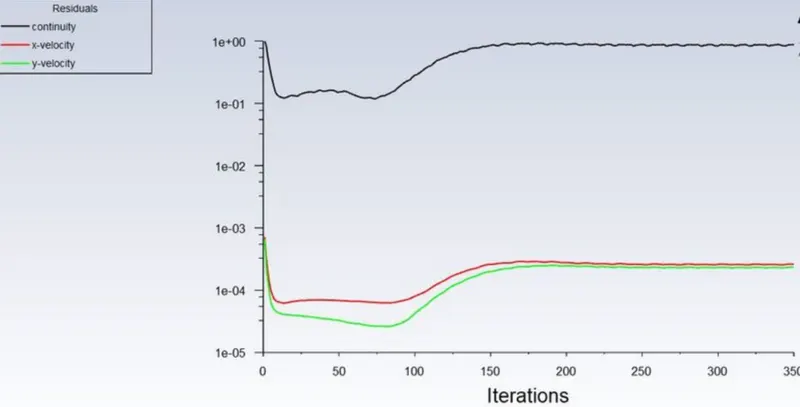
Residuals
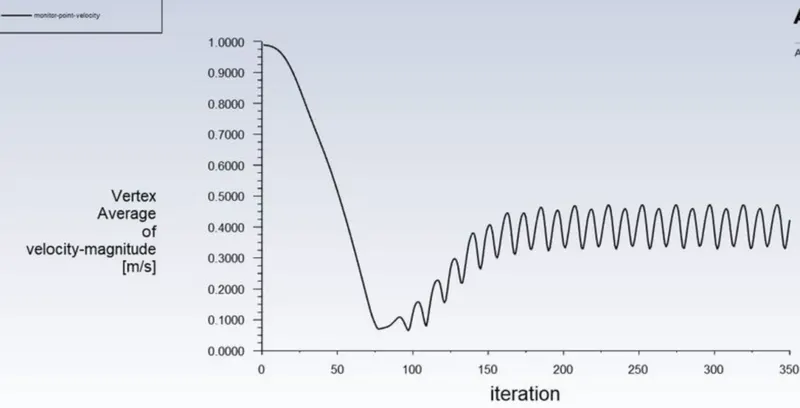
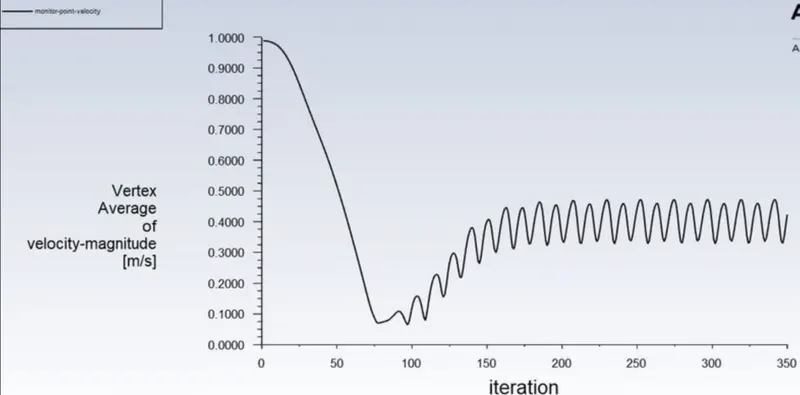
Velocity Magnitude
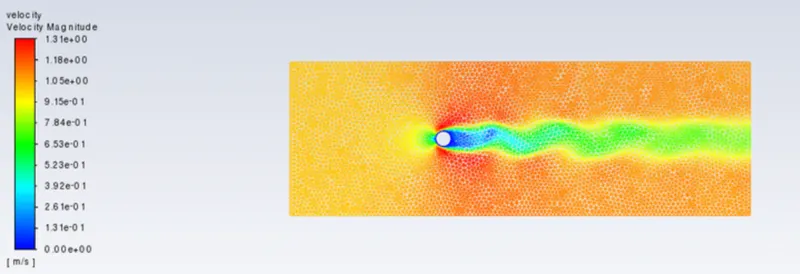
Von Karman vortex street
Strouhal Number –`(fl)/V`
l = 2m
f= `5/20` = 0.25
V = 1m/s
St = `(0.25*2)/1` = 0.5
Unsteady state
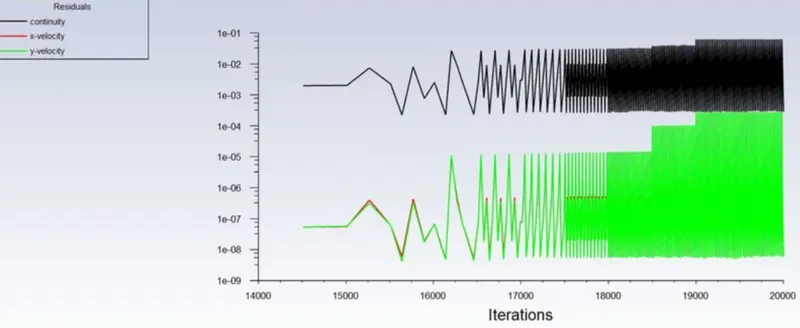
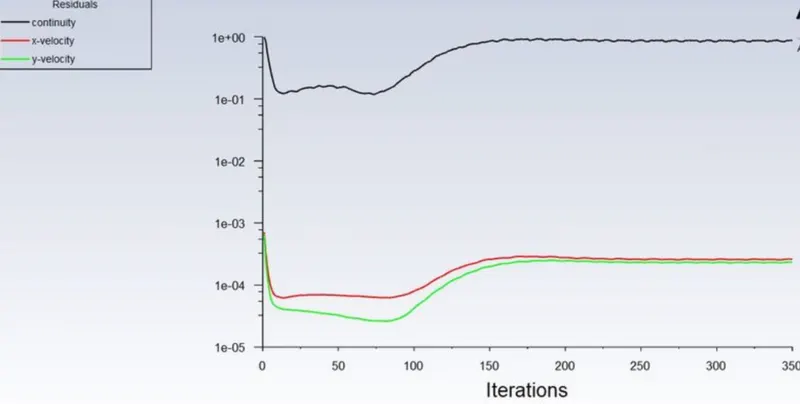
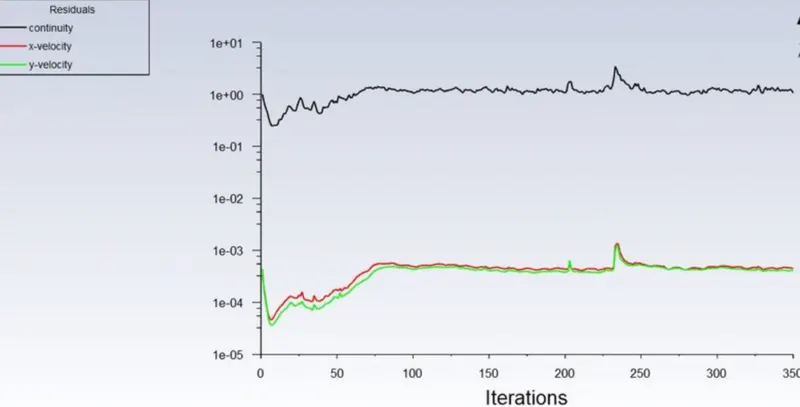
Residuals
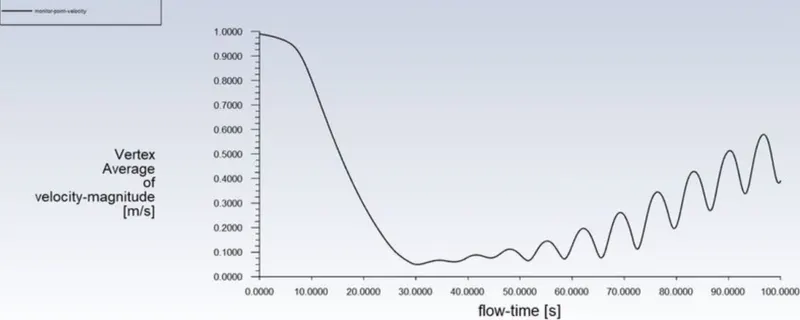
Velocity Magnitude
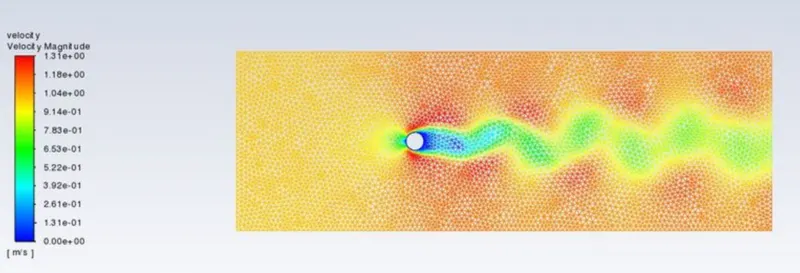
Von Karman vortex street
Strouhal Number – `(fl)/V`
l = 2m
f= `1.5/10` = 0.15
V = 1m/s
St = `(0.15*2)/1` = 0.3
Reynolds Number 10 100 1000 10000 100000
Viscosity 0.2 0.02 0.002 0.0002 0.00002
PART 2
In this part we need to find the coefficient of drag and lift for different Reynolds numbers. To adjust Reynolds number, we will change viscosity and the remaining setting will be same as used in part 1.
Results
Reynolds Number = 10
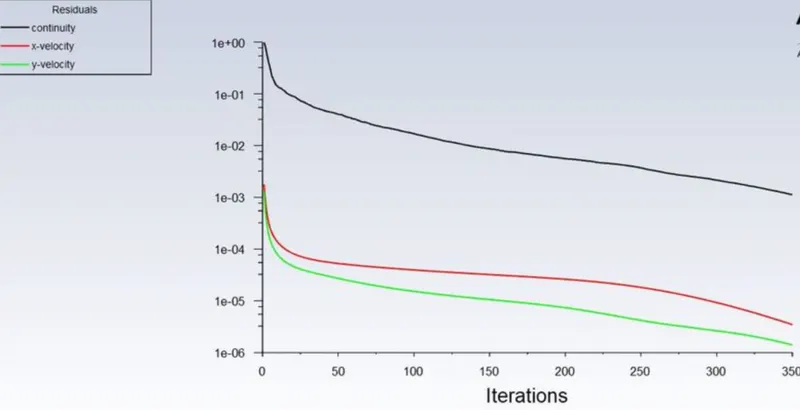
Residuals
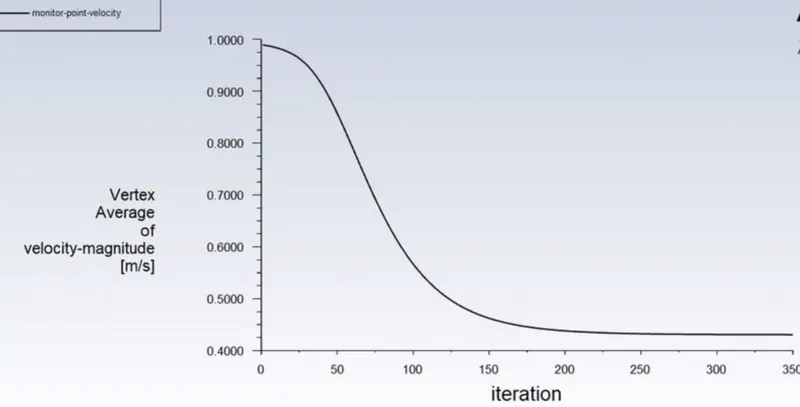
Velocity Magnitude
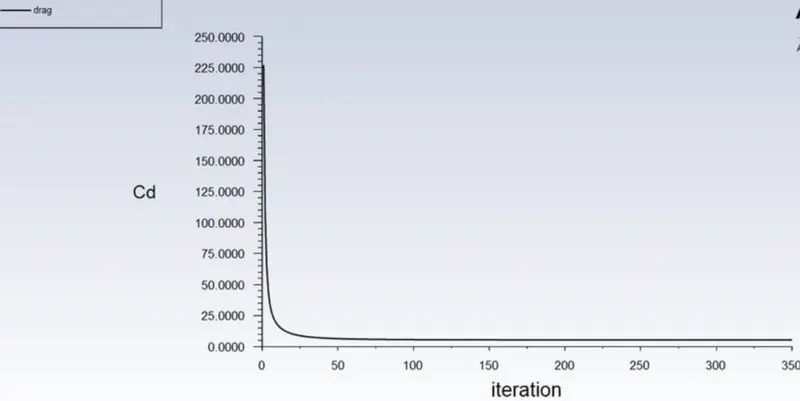
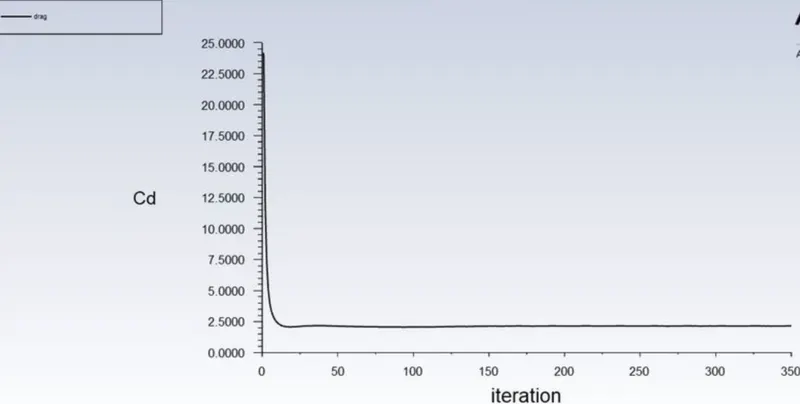
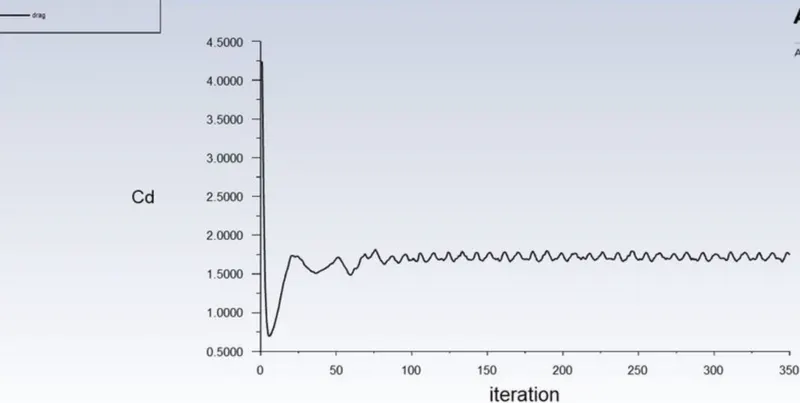
Coefficient of Drag
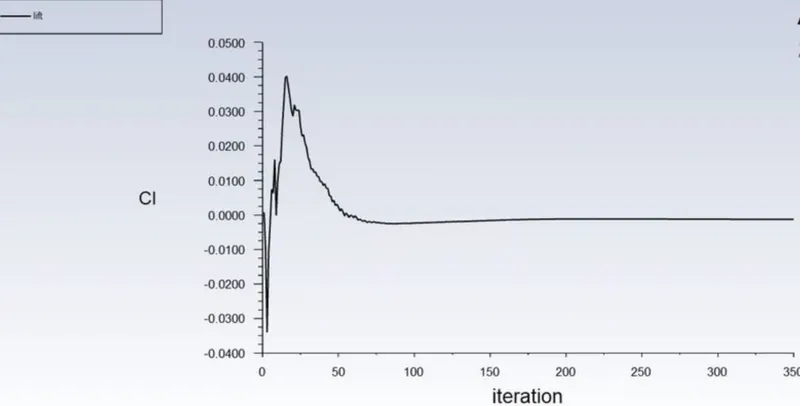
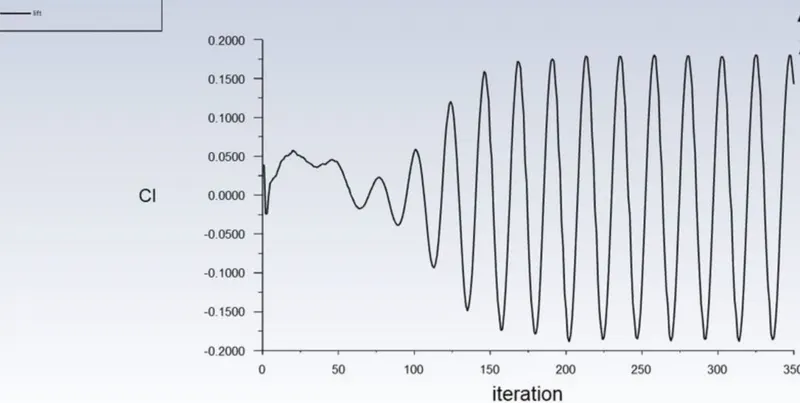
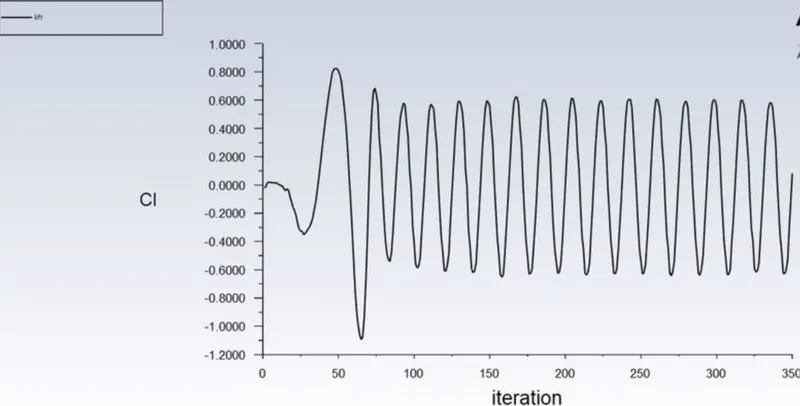
Coefficient of Lift
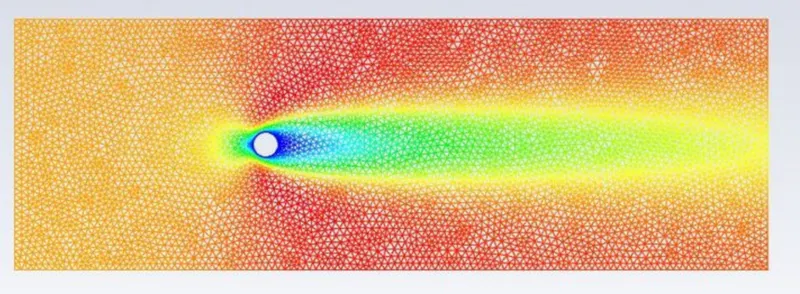
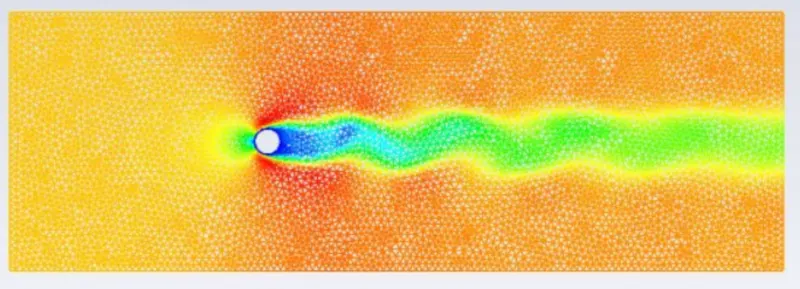
Von Karman vortex street
Reynolds Number = 100
Reynolds Number = 1000
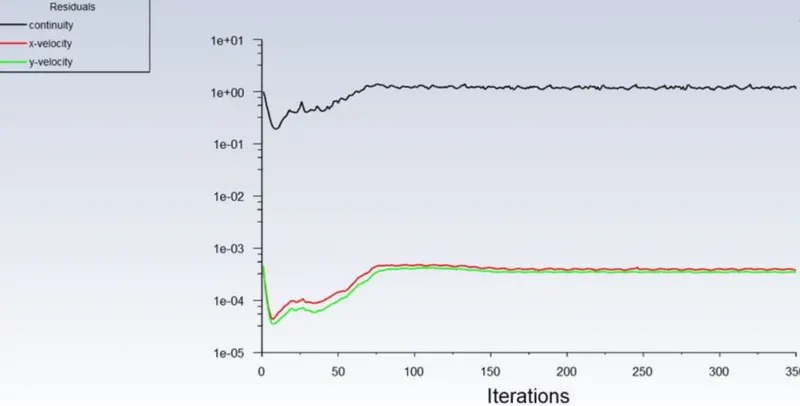
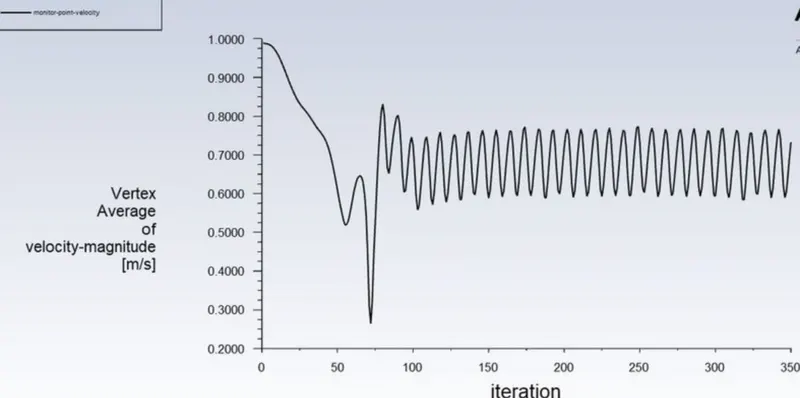
Reynolds Number = 10000
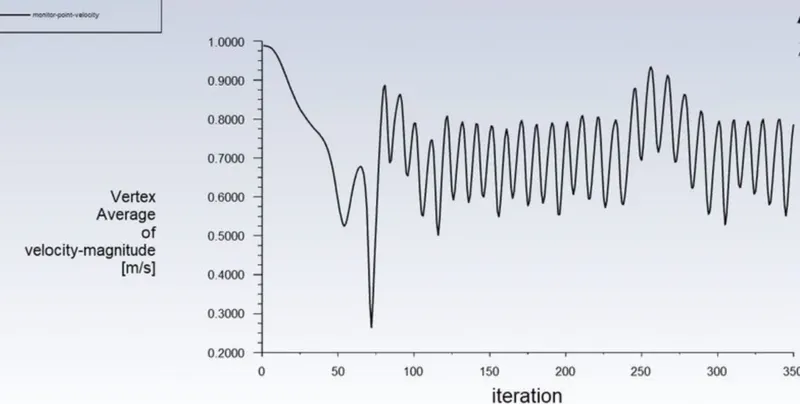
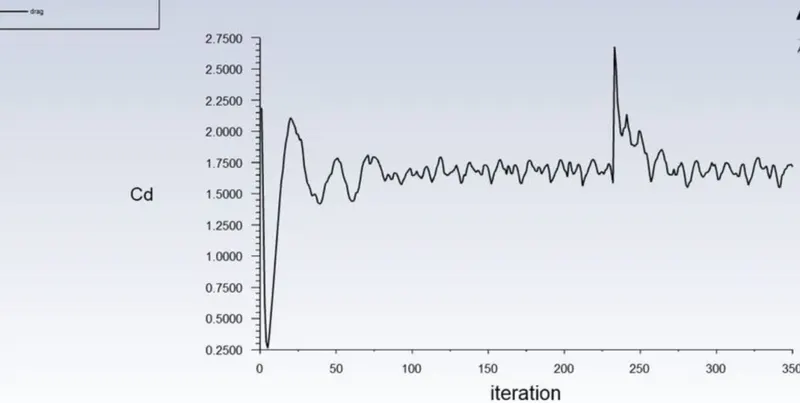
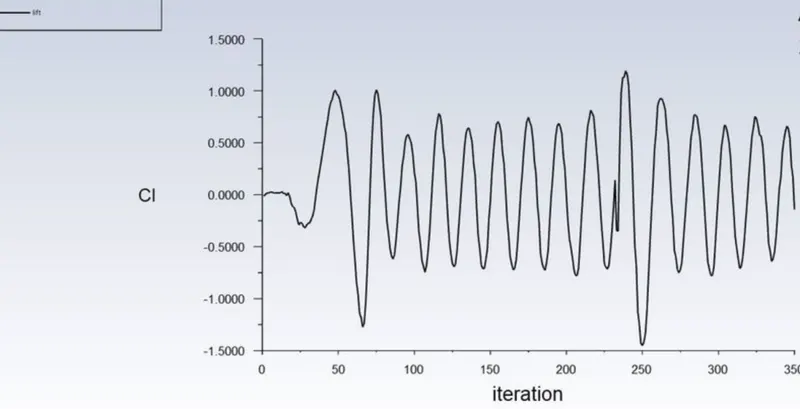
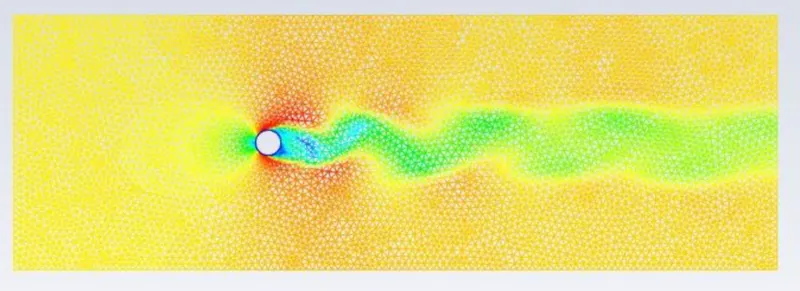
Reynolds Number = 100000
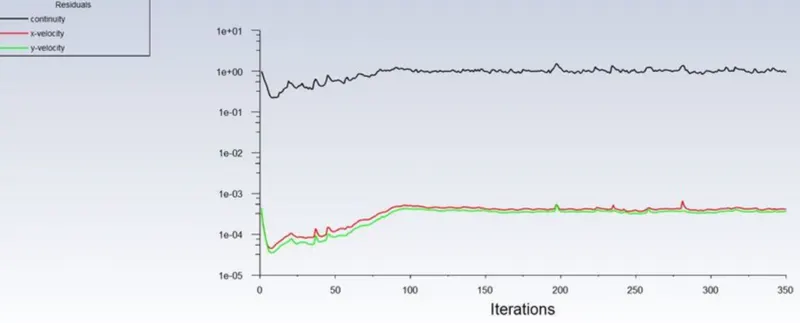
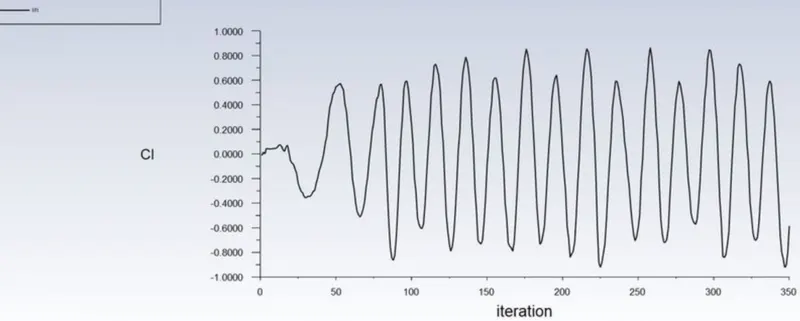
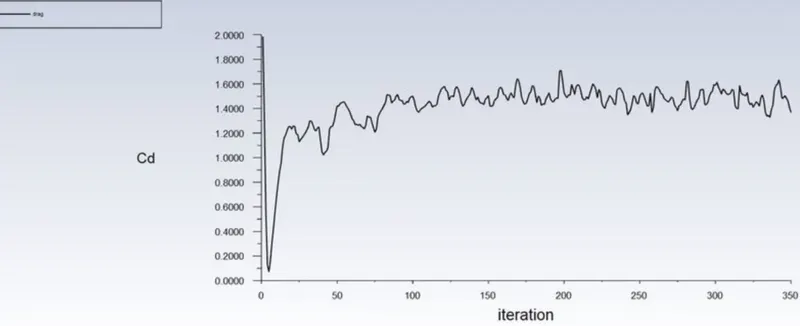
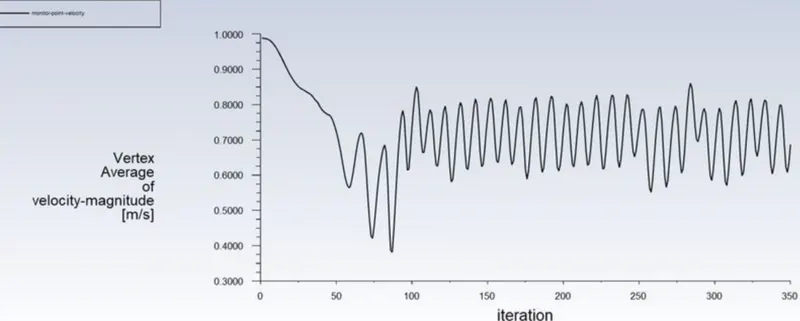
Effect of Reynolds number on coefficient of drag
The Reynolds number expresses the ratio of inertial forces to viscous forces and skin friction drag depends directly on viscous interaction of the object and the flow. So, every time increase or decrease in Reynolds number will affect drag and its coefficient. Our study proves it, we increased drag and generated drag coefficient. We can see the drug coefficient is decreasing with increasing Reynolds number except the last case. This is happening because with increasing Reynolds number the boundary layer gets thinner which results in lower drag.
Conclusion
Ansys is a very important tool in CFD domain and it makes tasks easy, by simulation with accuracy over 90%. In this we simulated flow over cylinder, understood what vortex shedding is and how to simulate it in Ansys fluently. We make a statement about how the Reynolds number affects the coefficient of drag.