Week 2 - Flow over a Cylinder.
FLOW OVER A CYLINDER
Aim :- To simulate the flow over a cylinder and to explain the phenomenon of Karman vortex street.
Objectives :-
- Simulate the flow with the steady and unsteady case and calculate the Strouhal number for Re = 100.
- Calculate the coefficient of lift and drag over a cylinder by setting the Reynolds number to 10,100,1000,10000 & 100000 (by running with steady solver).And to discuss the effect of Reynlods number on the coefficient of drag.
Introduction and Theory :-
Vortex shedding :- Vortex shedding is an oscillating flow that takes place when a fluid such as air or water flows past a bluff body at certain velocities,depending on the size and shape of the body.
Karman Vortex street :- A Karman vortex street or a Von karman vortex street is a repeating pattern of swirling vortices,caused by a process known as vortex shedding, which is responsible for the unsteady separation of flow of a fluid around blunt bodies.It is named after the engineer and fluid dynamicist 'Theodore Von Karman' . Karman vortex street is responsible for some phenomenon as the "singing" of suspended telephone or power lines and the vibration of a car antenna at certain speeds.
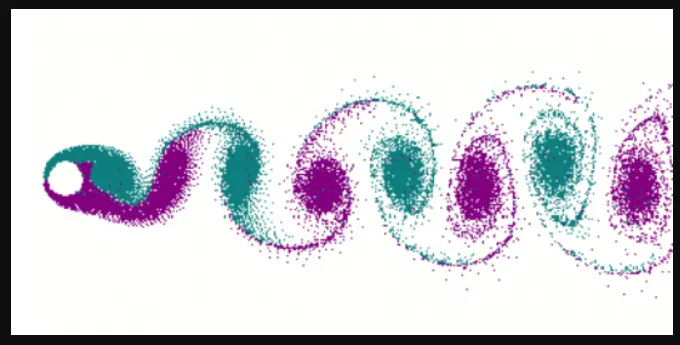
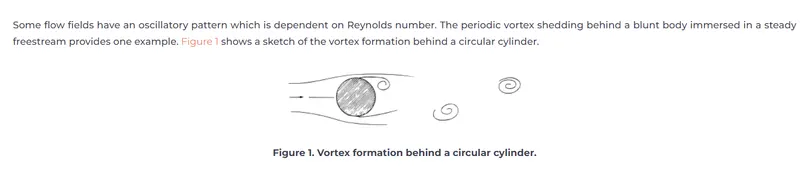
A vortex street will form only at a certain range of flow velocities,specified by a range of Reynolds number typically above 90.
Reynolds number(Re) :- Reynolds number for a flow is the measure of ratio of inertial forces to the viscous forces in the flow of a fluid around a body.
Re = rho*v*d/'mu'
where d = Characteristic length parameter of the body(diameter), v= flow velocity.
rho = Density of the fluid, mu = Dynamic viscosity of the fluid.
The Range of Re values will vary with the size and shape of the body from which the eddies are being shed,as well as with the kinematic viscosity of the fluid.
Strouhal number (St) :- Strouhal number is a dimensionless number describing the oscillating flow mechanisms. The Strouhal number is often given as St = f*d/U, where f is the frequency of vortex shedding, d is the characteristic length(diameter), U is the flow velocity.
Drag coefficient (Cd):- Cd = 2*Fd/(rho*v^2*A) where Fd is the drag force, rho = density of the fluid, v = flow velocity, A = cross sectional area
Lift coefficient(Cl):- Cl = 2*Fl/(rho*v^2*A) where Fl is the lift force,rho = density of the fluid, v = flow velocity, A = cross sectional area.
Procedure :-
Geometry :-
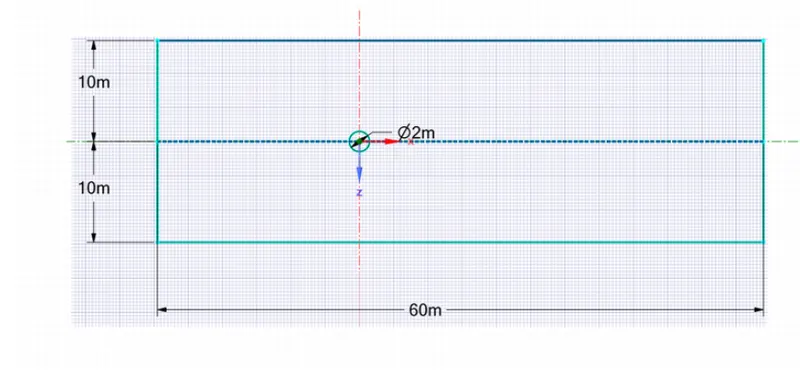
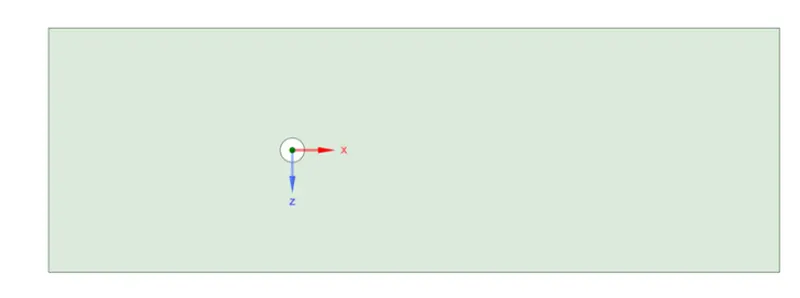
- The 2D geometry with the following dimensions has been constructed by using Geometry Tools available in ANSYS Spaceclaim.
- It consists of a rectangular fluid domain and a cylinder as an obstruction.The feature 'Surface pull' in SpaceClaim has been used to delete the cylinder surface.
Meshing :-
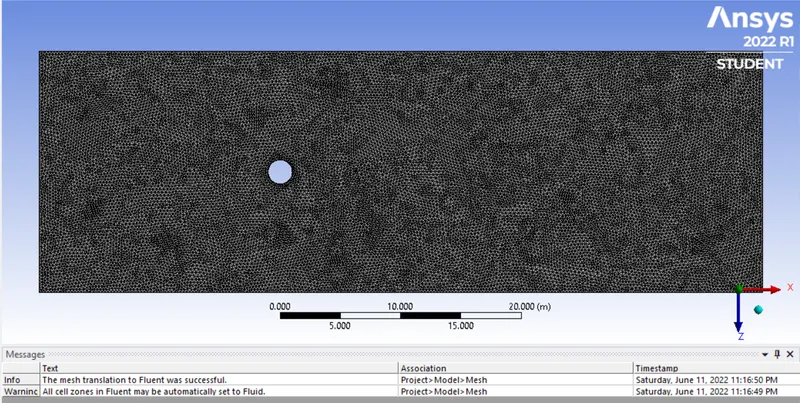
- The Meshing is done using the ANSYS meshing where the triangular mesh is applied for the body using methods.
- Element size : 0.25m
- Nodes : 20767
- Elements : 40642
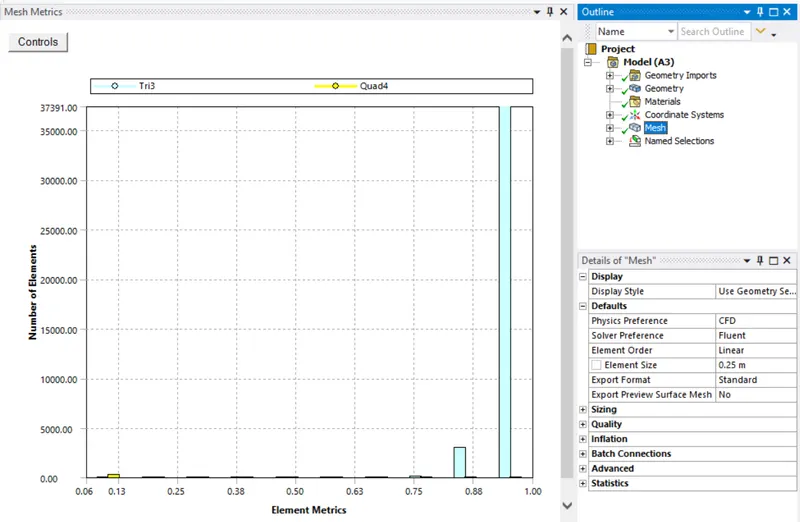
- The element quality has been shown below which describes that most of the elements have more than 90% quality.
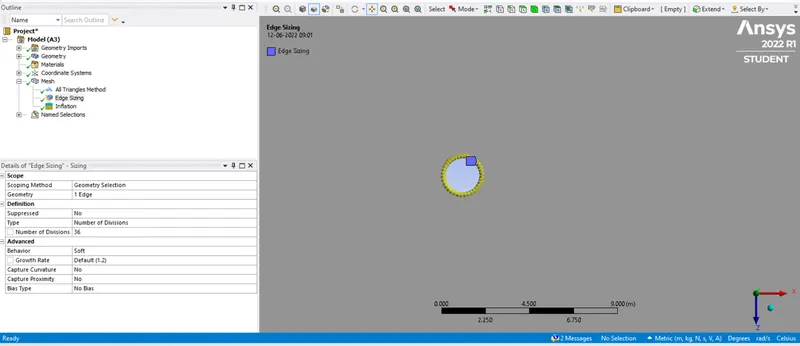
- Using 'Edge sizing' tool the smoothness of the circle edge is improved by setting number of divisons to 36.
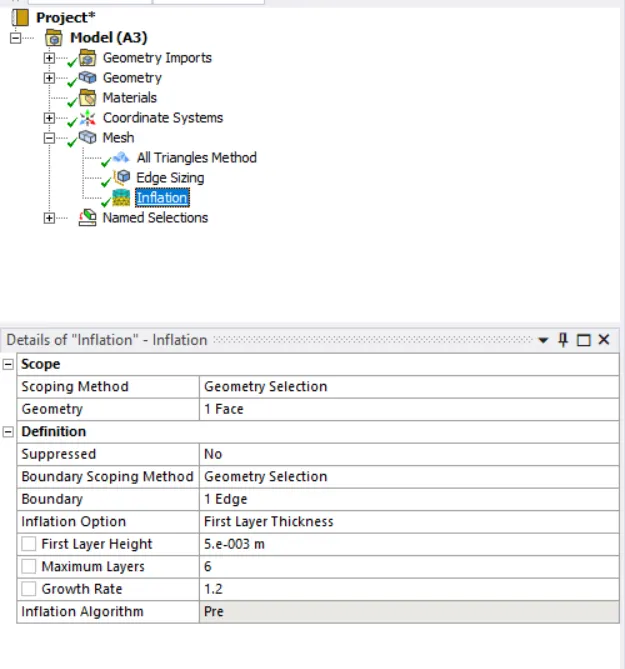
- Inflation option is used to create an inflation layer around the circle for the body fitted mesh with 6 layers to create high quality geometry to capture the physics near the cylinder wall accurately.
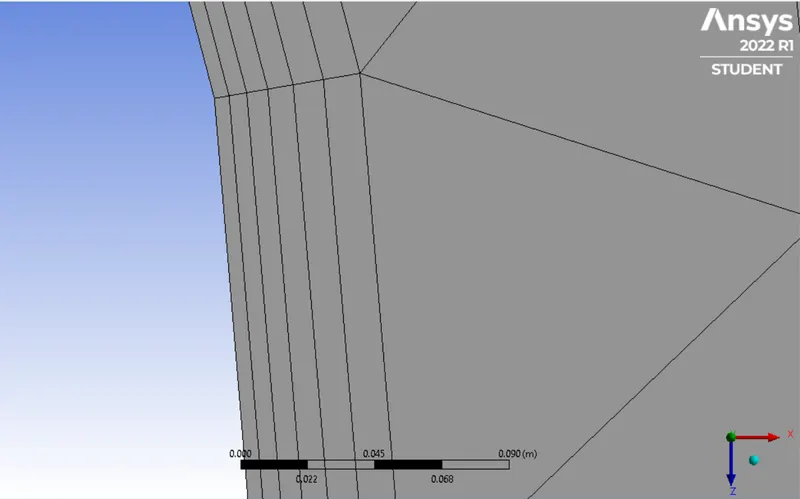
- Then the inlet,outlet,wall and symmetry boundaries are named for this meshed geometry which can be good for fluent setup.
ANSYS Fluent Set-up:-
1) Steady and transient state simulations at Re=100.
Set-up for Steady state simulation :
- 'Check mesh' option is used to check mesh quality in the domain.
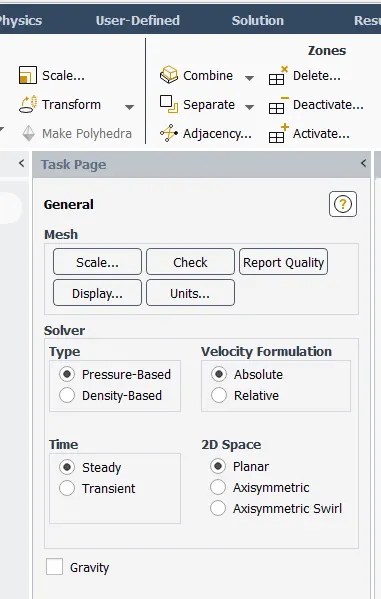
- In General tab the following set-up has to be set for steady state simulation.
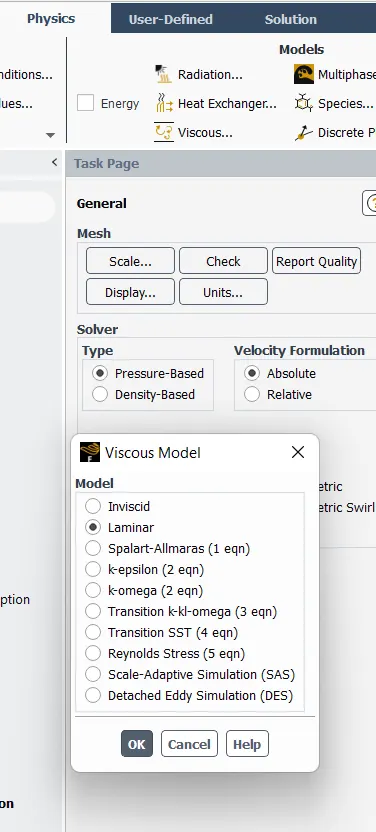
- Select the Viscous model and click on 'Laminar'
Material:- Fluid - air (user material)
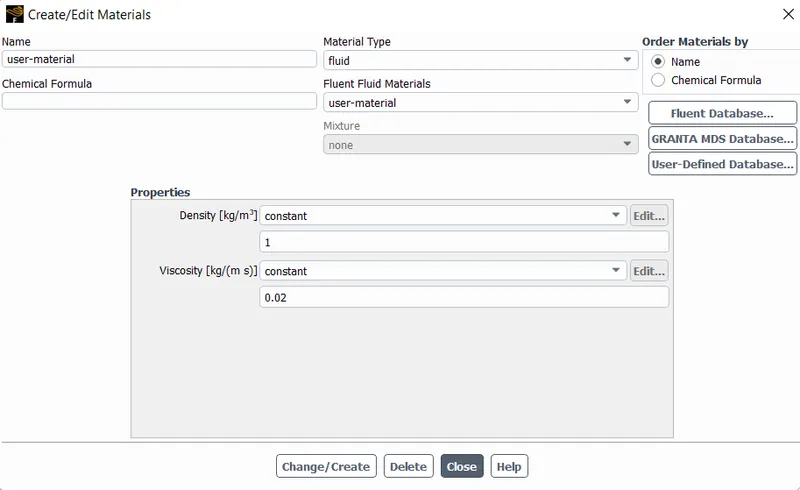
- where Reynolds' number Re = rho*d*v/'mu' = 1*2*1/0.02 = 100.
- Boundary conditions : 1) Inlet:velocity-inlet type,1m/s, 2) Outlet : Pressure-outlet type,zero gauge pressure, 3) Cylinder wall: type wall,no slip conditions 4) symmetry -symmetry type.
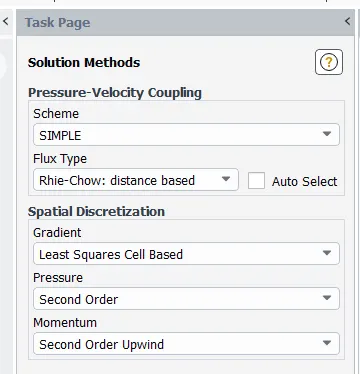
- Solution Methods :SIMPLE(Semi Implicit Method For Pressure Linked Equations)
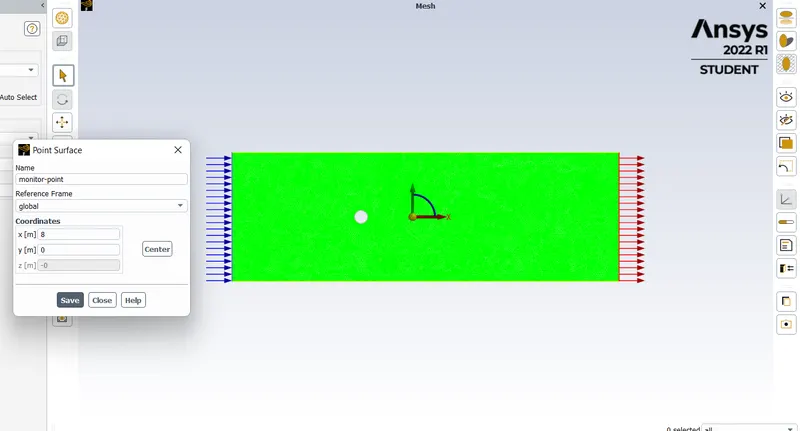
- To analyze the velocity of the flow at the cylinder wake, a monitor point is placed at a distance of 4D(where D is the diameter of the cylinder) which is 8m from the centre of the cylinder to behind.
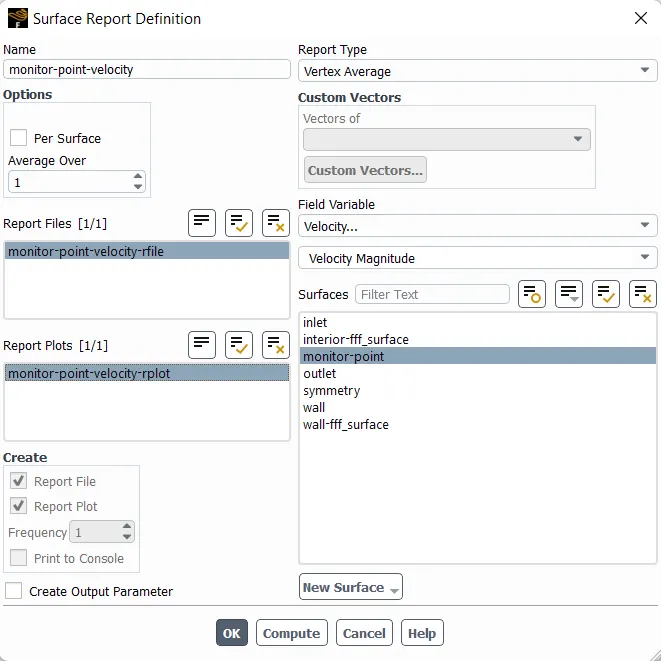
Then the velocity vertex average at this monitor point is calculated.
- Intialization:Hybrid,No.of Iterations = 650
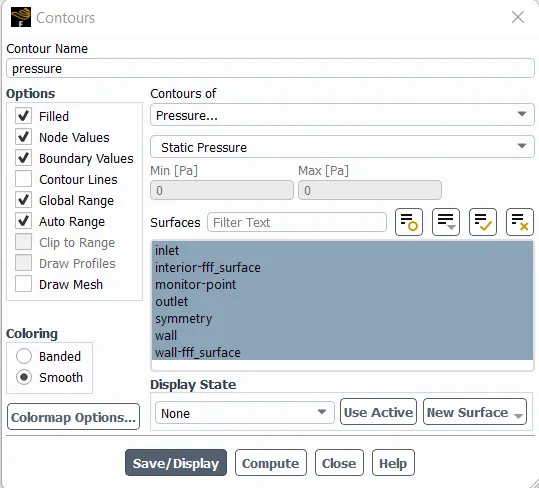
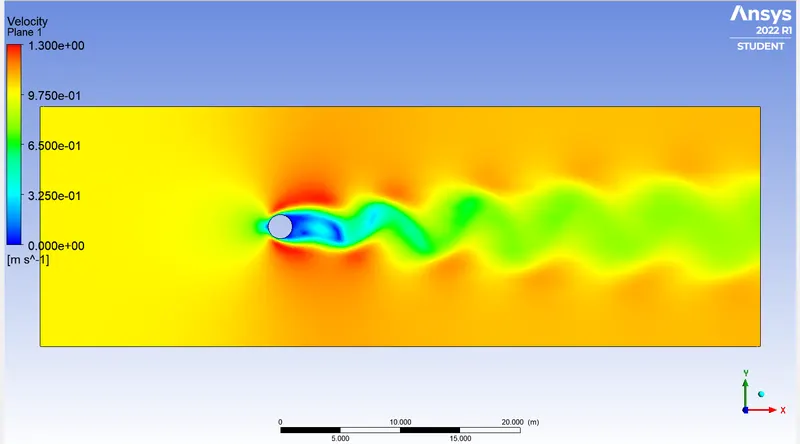
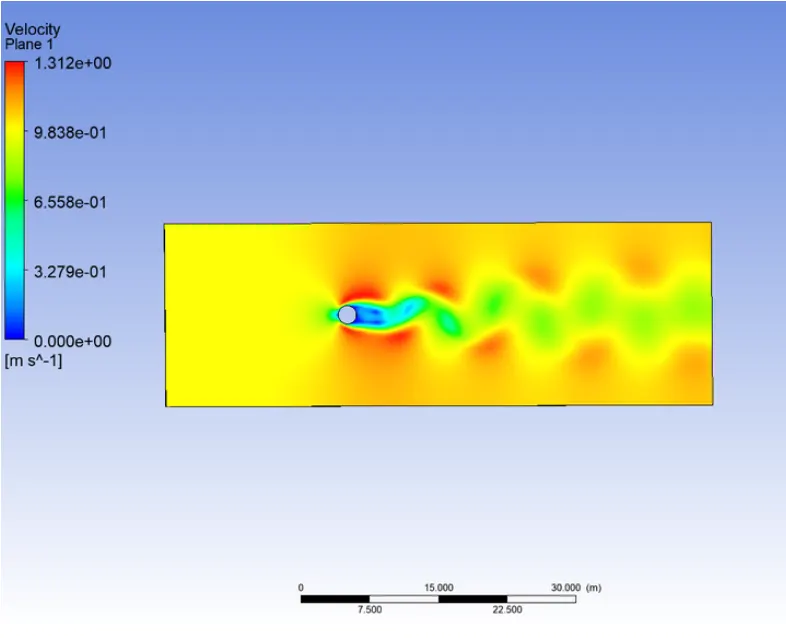
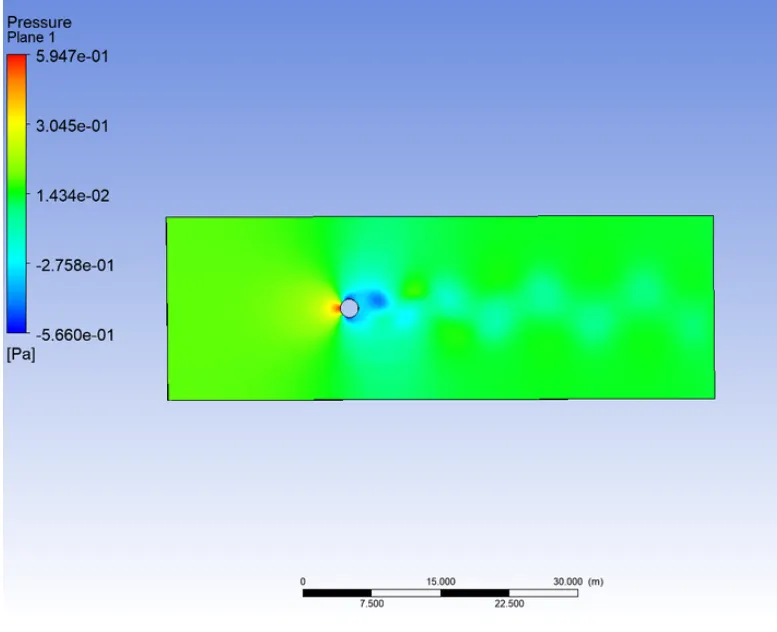
- Velocity and Pressure contours are created to visualize the vortex shedding phenomenon.
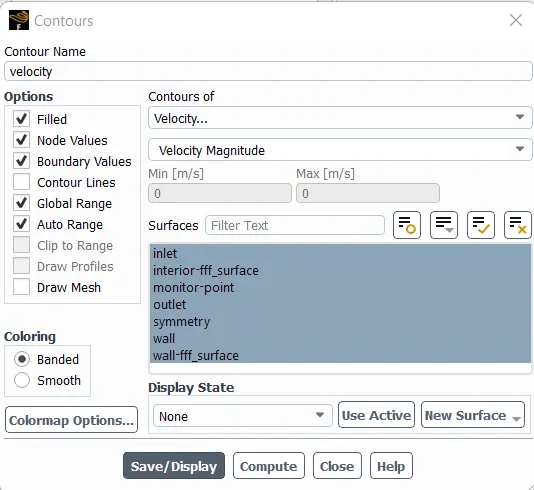
- Solution animation is created from the 'Activities' tab by selecting the contour plots.
Set-up for Transient state simulation :-
Solver time : Transient
Initialization : Hybrid
Time step size : 0.1s
Number of time steps : 1000
The monitor point is created at a distance of 3D(6m) from the cylinder in the axial direction.
Set-up to calculate the coefficient of drag and lift :-
Before calculating the coefficient of drag and lift,we have to set the reference values in ANSYS Fluent to compute from the inlet,this is done as shown below:
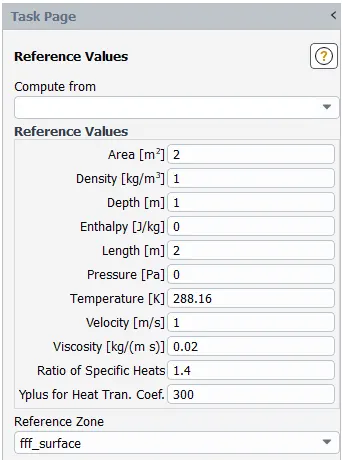
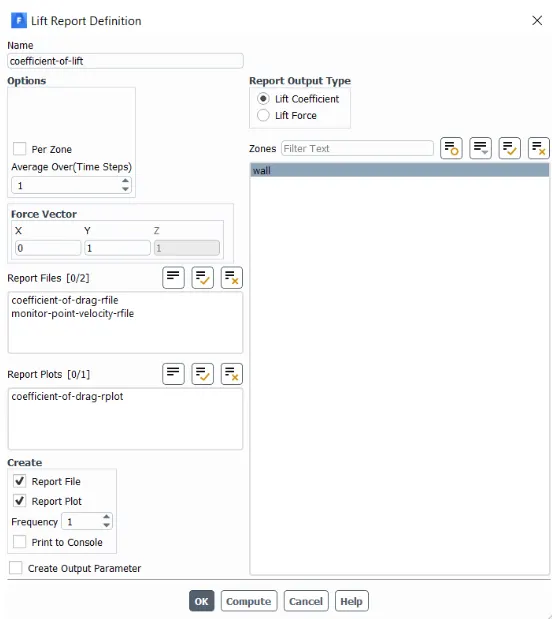
Then the drag and lift coefficients' plots are separately created under 'Definitions -> Force Report'. This will give the required plots.
Set-up to calculate the Strouhal number(Sr):-
- Strouhal number denoted by 'Sr' is a dimensionless number which is used to describe oscillating flow mechanisms such as vortex shedding.
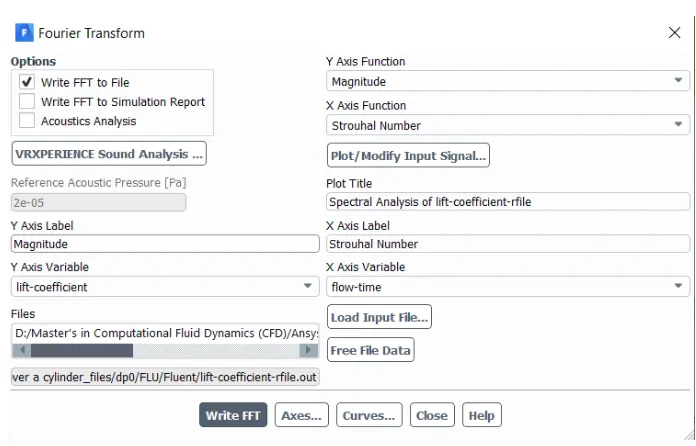
- The strouhal number is calculated by using the unsteady state simulations' results.The coefficient of lift values at each time step has to be loaded as an input file to calculate the strouhal number.
- A Fourier transform is done mainly to convert a squence of signals in the time domain to its frequency domain.FFT stands for Fast Fourier Transform, which is a Discrete Fourier Transform that takes in a sequence of values in space/time domain and converts it into a sequence of frequencies.
- The FFT in Ansys Fluent enables you to find the frequency of time data by considering a finite number of sampled data points.It uses the Fast Fourier Transform as it is comparitively faster than a Direct fourier transform.
- FFT is used to find the strouhal number, which will find the time dependent value of lift coefficient to the frequency domain.On the X-axis,Strouhal number is selected and on the Y-axis magnitude is selected.Then,load the coefficient values of lift coeffcient using 'Load input file' option.This set-up is shown below.
RESULTS :-
Steady state simulation at Re = 100
Scaled residuals :-
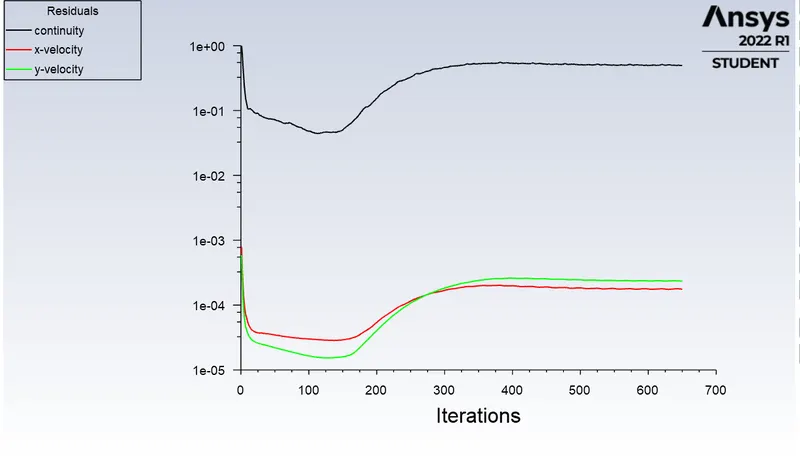
After around 450 iterations,the residuals don't change and giving constant values.
Vertex average velocity at the monitor point:-
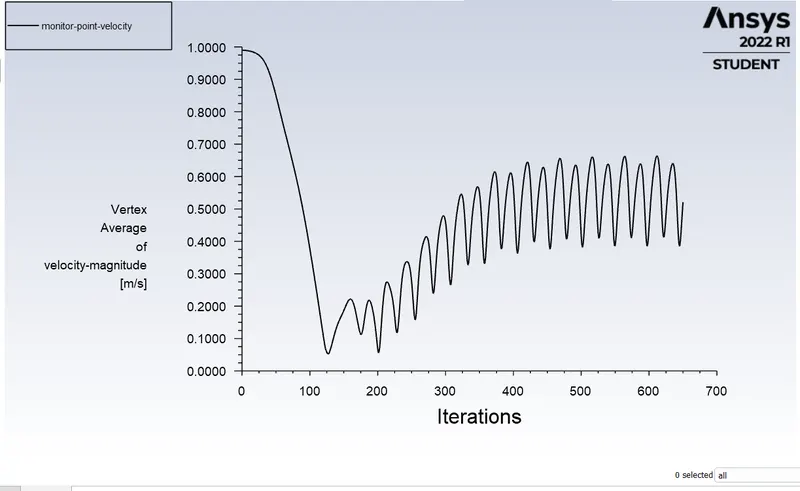
After observing both the residuals graph and vertex average velocity plot,we can conclude that the solution tends to converge after about 450 iterations.
Velocity Contour:-
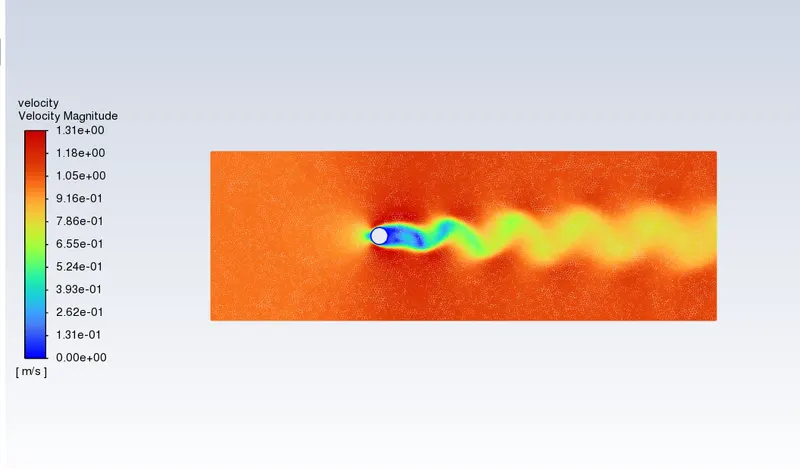
At CFD post :-
Pressure contour :-
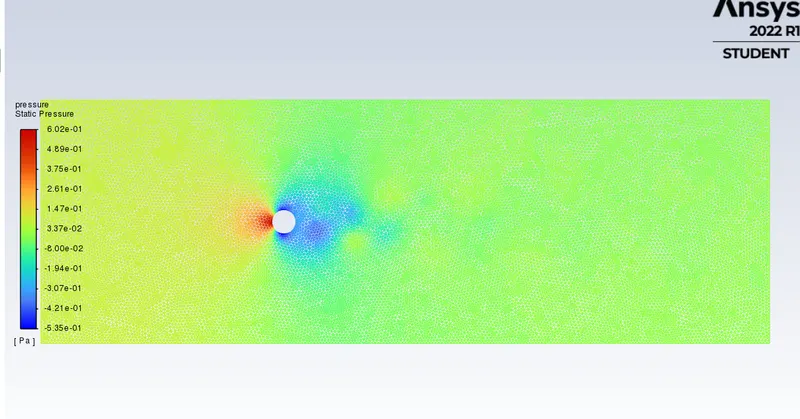
At CFD post:-
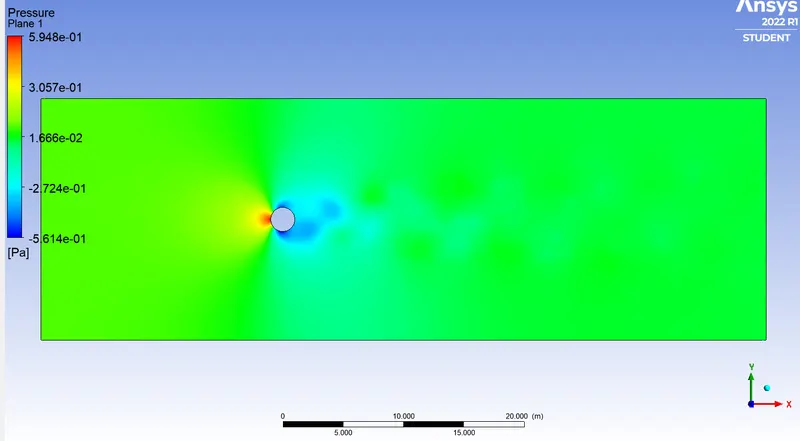
Transient State Simulations at (Re = 100 ):-
Scaled Residuals graph :
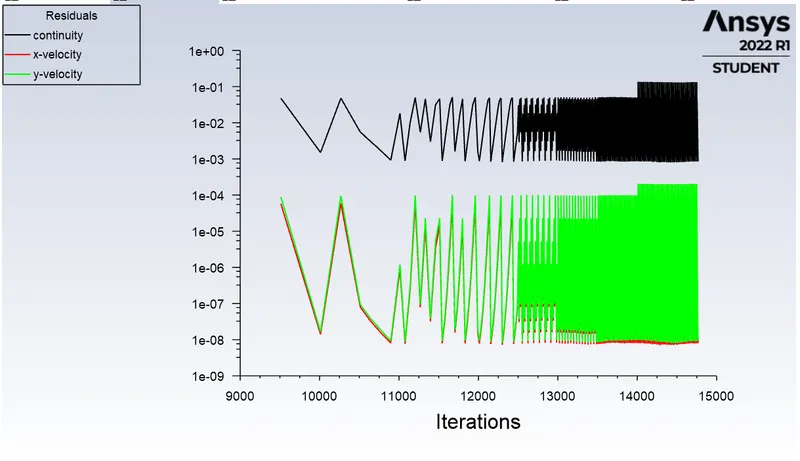
From the above plot we can see that the residuals variation doesn't hold the correct indication.It is changing for every 5000 iterations.
Vertex average velocity at the monitor point :-
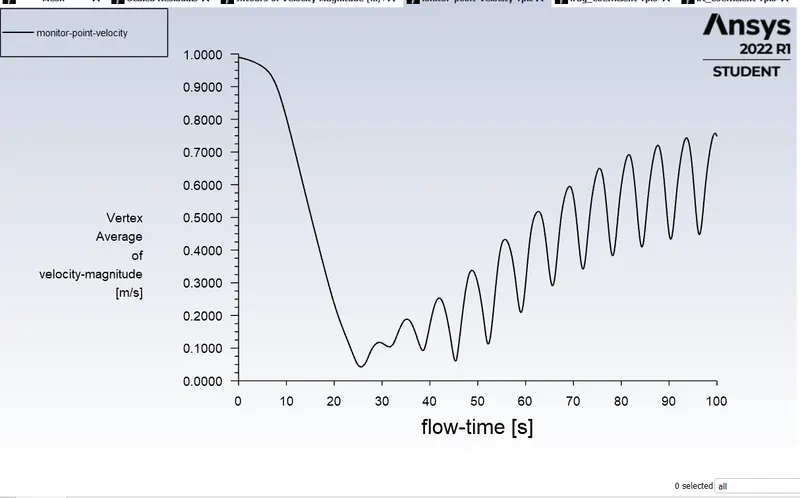
- The above monitor point velocity plot is obtained by observing the velocity at a monitor point created at a distance of 8m(4times the diameter of the cylinder) axially.
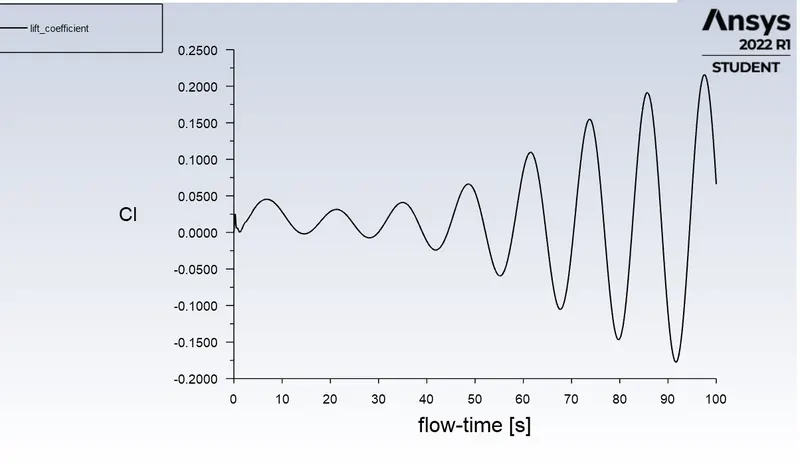
- After about 100s the oscillation is almost same.Hence we can conclude that the solution is converged around 15000 to 16000 iterations.
Coefficient of lift :-
Strouhal number :-
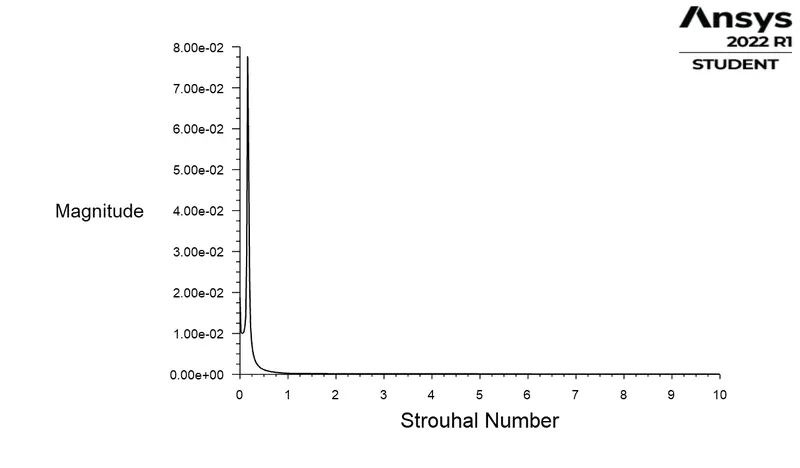
From the above graph, we got the Strouhal number (Sr) with case set-up 'Re' = 100 as 0.14435 corresponding to the highest magnitude value.
Exact Solution :-
Frequency of vortex shedding = no.of cycles/Time taken
f = 4/(95-40) = 0.07273Hz
Sr = f*D/v = 0.07273*2/1 = 0.145
Hence,the analytical calculated Strouhal number matches with the computational value.
Velocity :-
Pressure :-
Vortex shedding Animation :-
Coeffcient of Drag and Lift over a cylinder by setting the Reynolds number to 10,100,1000,10000 & 100000(steady state solver).
Varying the Reynolds' number(Re):- Re = Density*Flow velocity *D/'mu' where D= diameter and 'mu' = viscosity
By changing the velocity of the flow at the inlet we get the corresponding Re value.(D = 2m , 'mu' = 0.02kg/m.s , Density = 1kg/m^3) constants.
Re = (1 * 1 * 2)/0.02 = 100 (velocity = 1)
Re = (1 * 0.1 * 2)/0.02 = 10 (velocity = 0.1)
similarly for Re = 1000,10000,100000 the velocity = 10,100,1000 respectively.
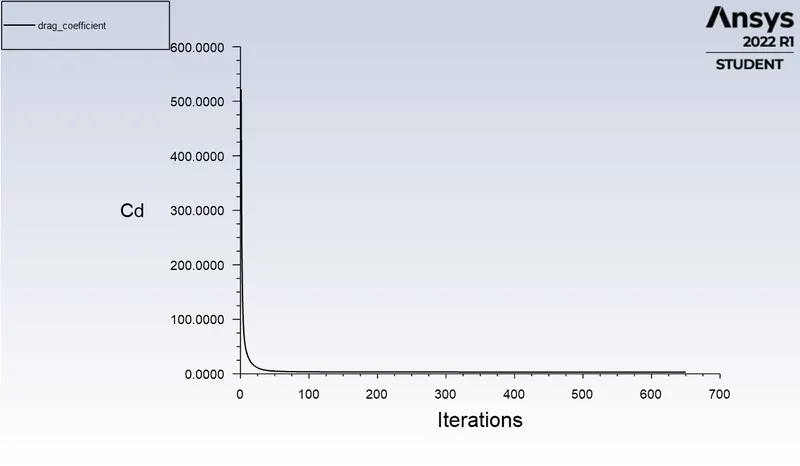
Cd at Re = 10
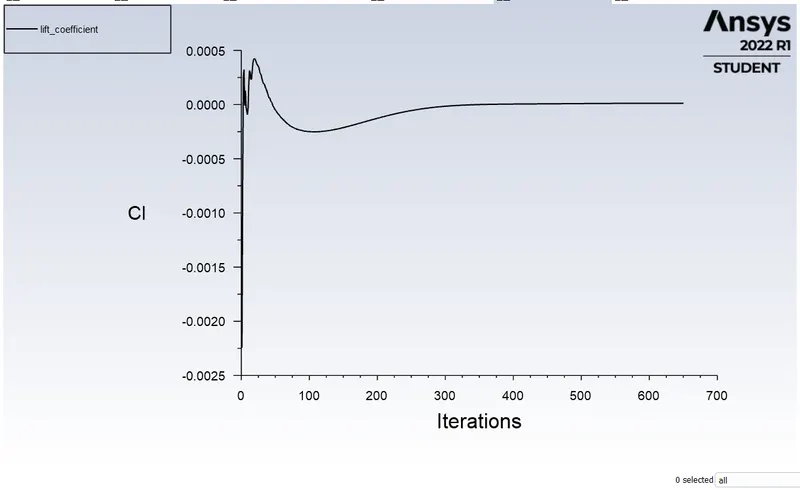
Cl at Re = 10 :-
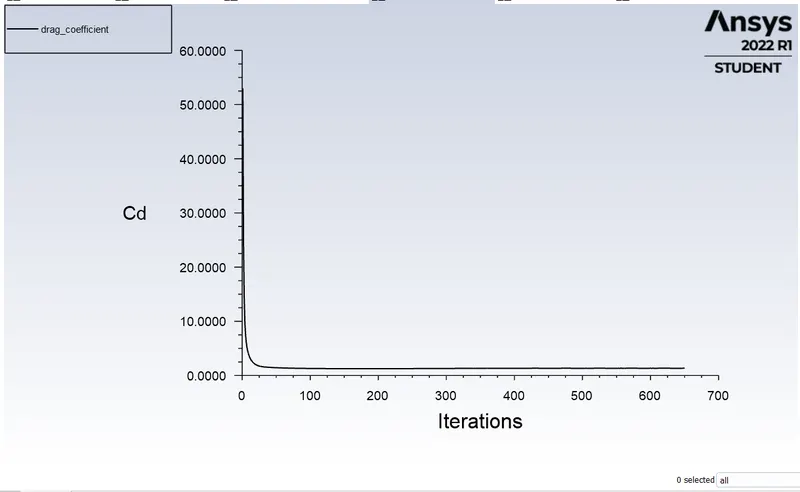
Cd at Re = 100 :-
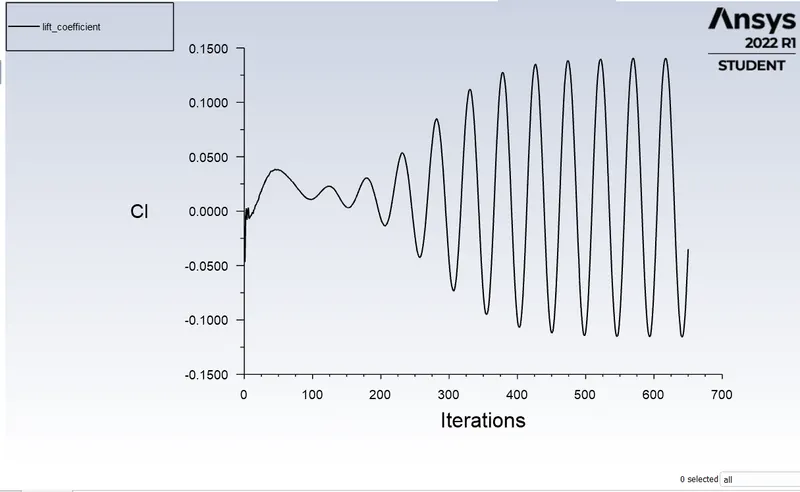
Cl at Re = 100 :-
Cd at Re = 1000 :-
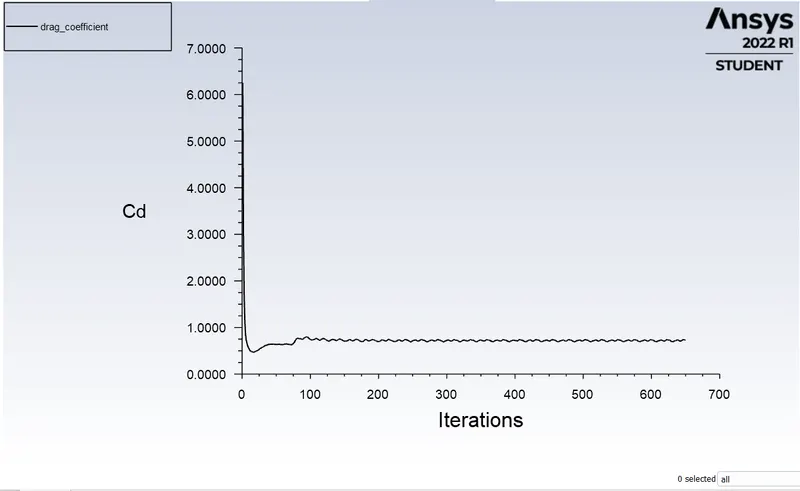
Cl at Re = 1000 :-
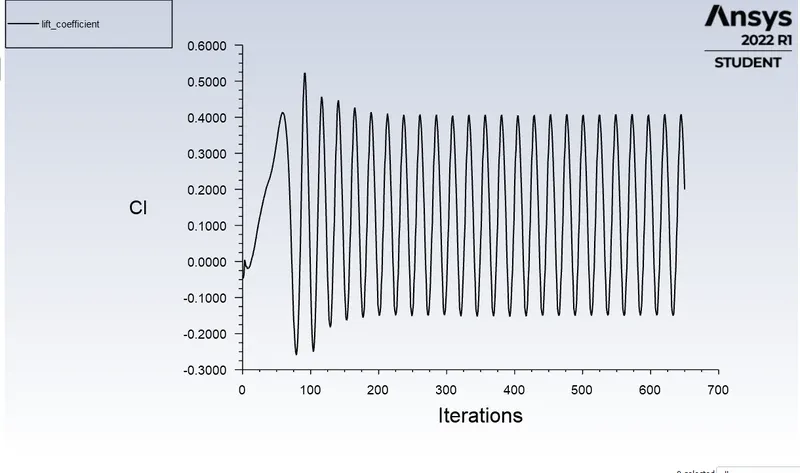
Cd at Re = 10000 :-
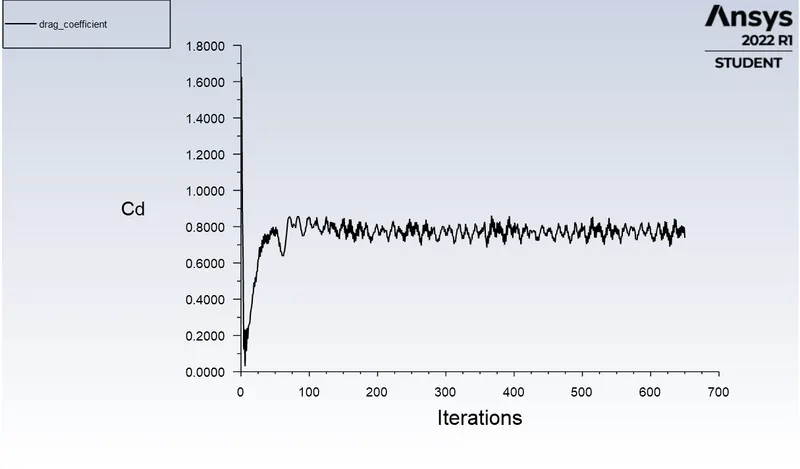
Cl at Re = 10000 :-
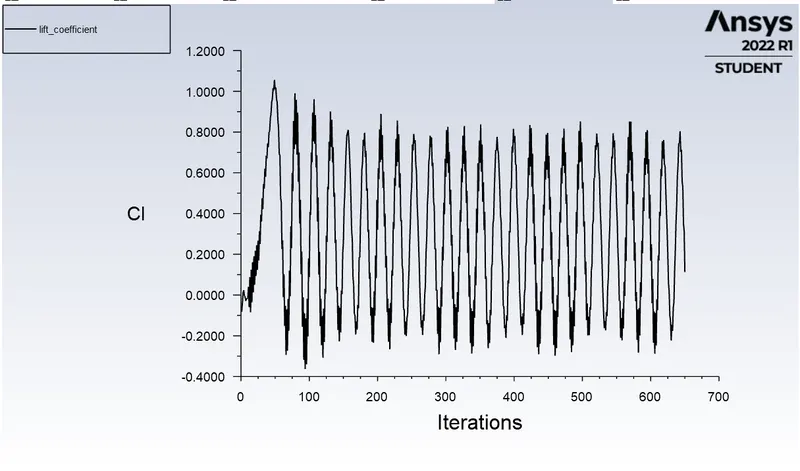
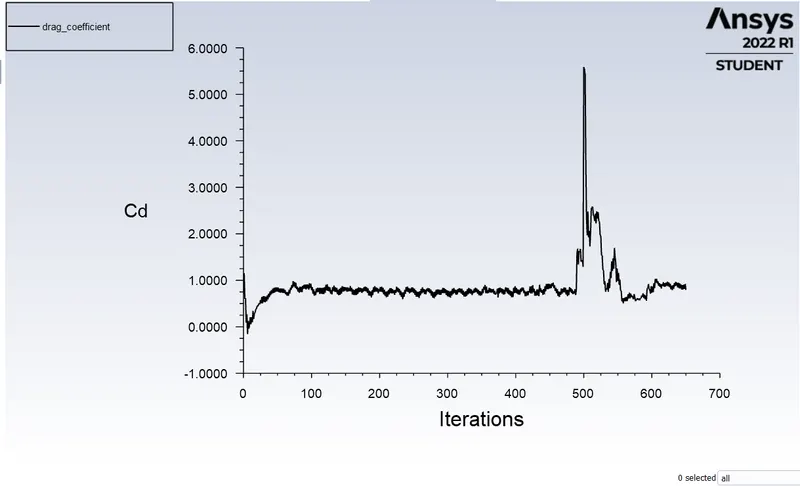
Cd at Re = 100000 :-
Cl at Re = 100000 :-
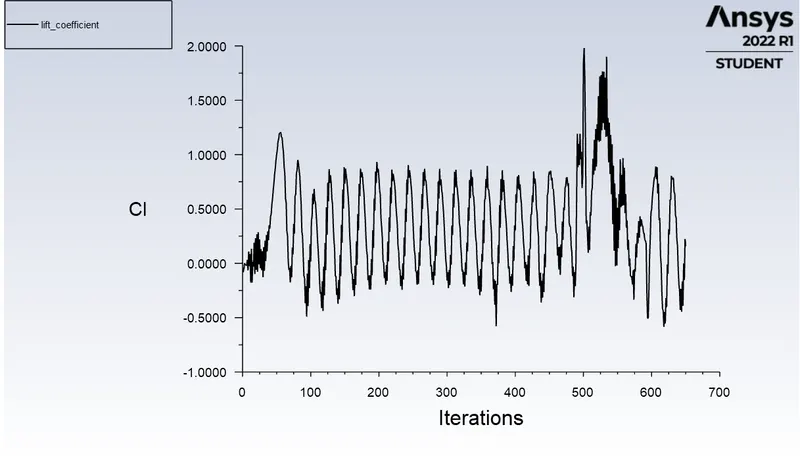
Result table for drag coefficient and lift coefficient for Reynolds number(10 to 100000) :-
| Velocity of flow (v) | Reynolds' number (Re) | Coefficient of drag (Cd) | Coefficient of lift (Cl) |
| 0.1 | 10 | 3.3252 | 0.001 |
| 1 | 100 | 1.3346 | -0.034 |
| 10 | 1000 | 0.7323 | 0.1996 |
| 100 | 10000 | 0.7383 | 0.1126 |
| 1000 | 100000 | 0.7944 | 0.1560 |
Conclusions :-
1.When a Fluid flows over a cylinder,wake region is formed next to cylinder due to decrease in pressure and the flow recirculates.
2.We are not able to observe flow separation at low reynolds number as the flow over cylinder is transient(time dependent).
3.The Van karman vortex street phenomenon has been observed successfully.
4.From the above table it is clear that the Reynolds' number is inversely proportional to the coefficient of drag
5.Strouhal number calculated for unsteady state with Reynolds' number = 100 is 0.145
6.The coeffcient of drag value at Re = 100 in the reference article is 1.3353 and we obtained the drag coefficient value as 1.3346 and the error was found to be less than 0.05%
7. Animation video link of Von Karman vortex street phenomenon
Reference research paper :-
https://www.sciencedirect.com/science/article/pii/S0307904X08000243