Week 2 Challenge
AIM: To Design of Tension members
Introduction:
Tension members are simple to design once the forces in these members have been determined. They occur in trusses used for bridges and roofs, towers, bracing systems, cables, and various other applications. A tension member carries only direct axial forces that tend to stretch it. The basic requirement in the selection of a tension member is that it provides enough cross-sectional area so that its maximum carrying capacity is equal to or greater than the designated capacity for a particular design method such as the allowable stress design (ASD) or load and resistance factor design
procedure:
1. Net Area for tension member calculation problem
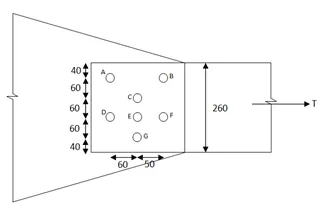
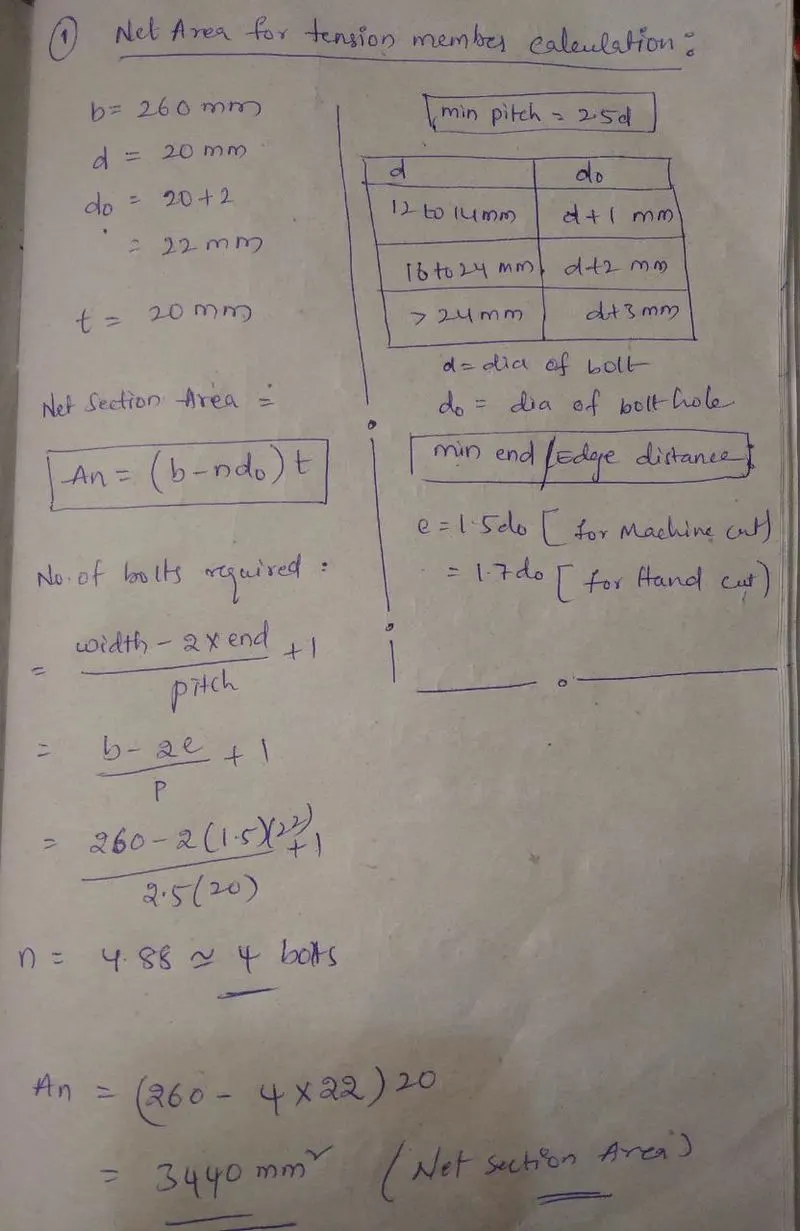
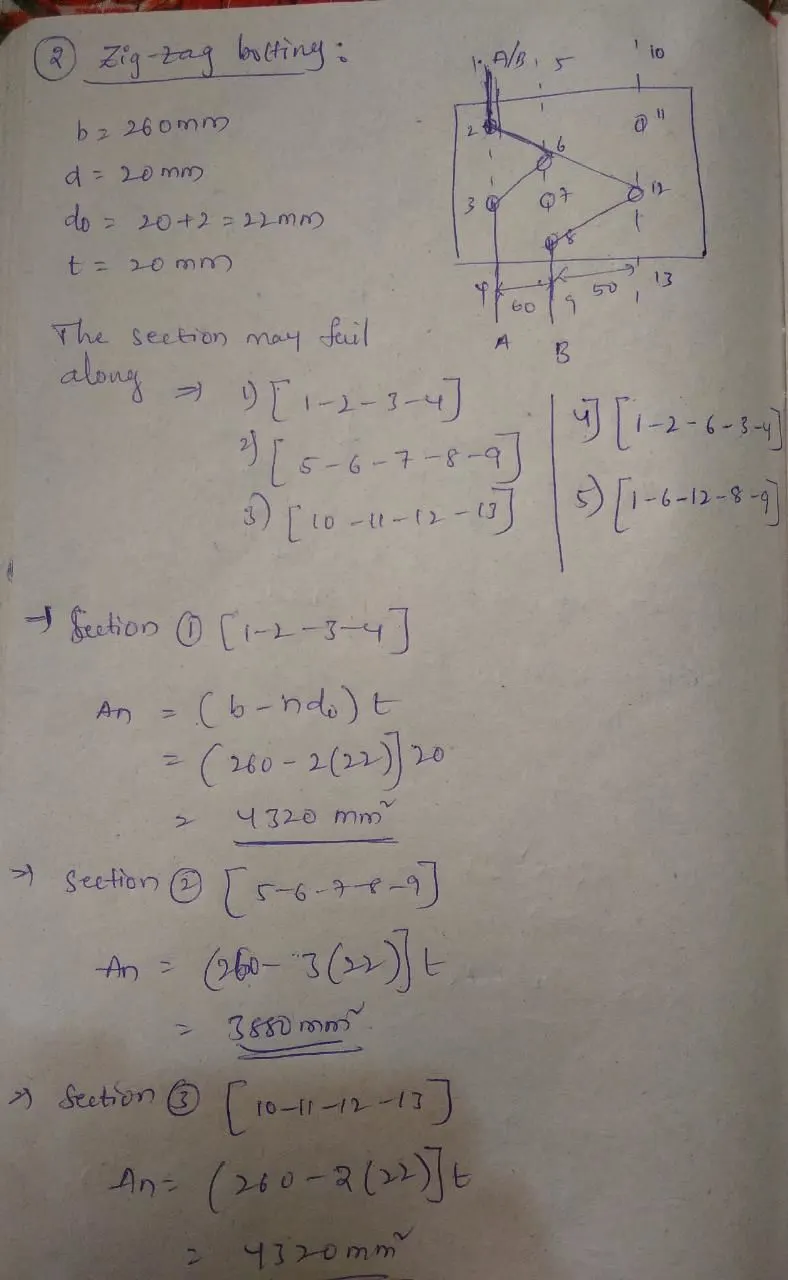
Calculate the net section area for the tension member as shown in Figure below. The plate size is 260 x 20 thick and Bolt size is 20 mm.
Plate – Drilled Hole
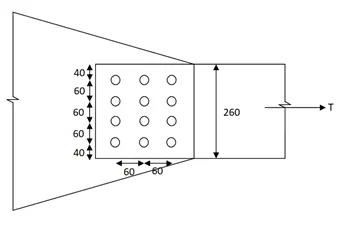
Plate – Zigzag bolting
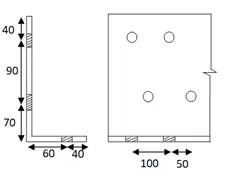
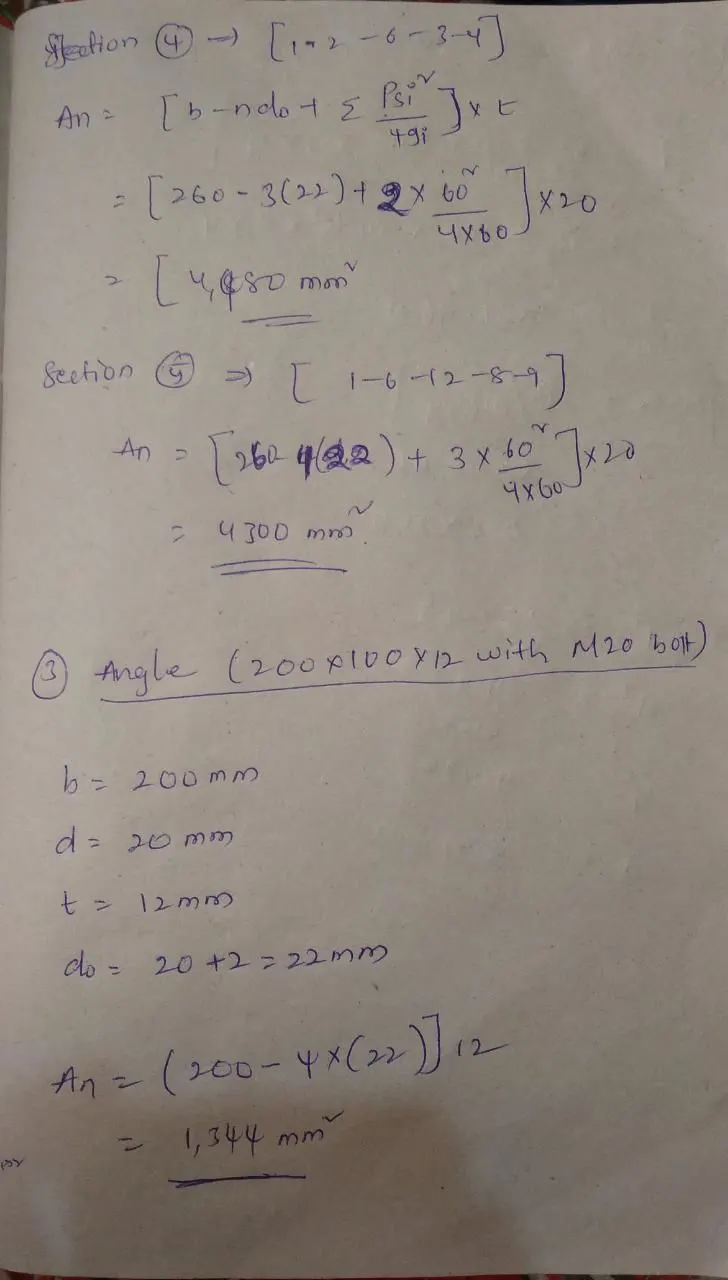
Angle (200 x 100 x 12 with M20 bolt)
2. Sag rod design problem
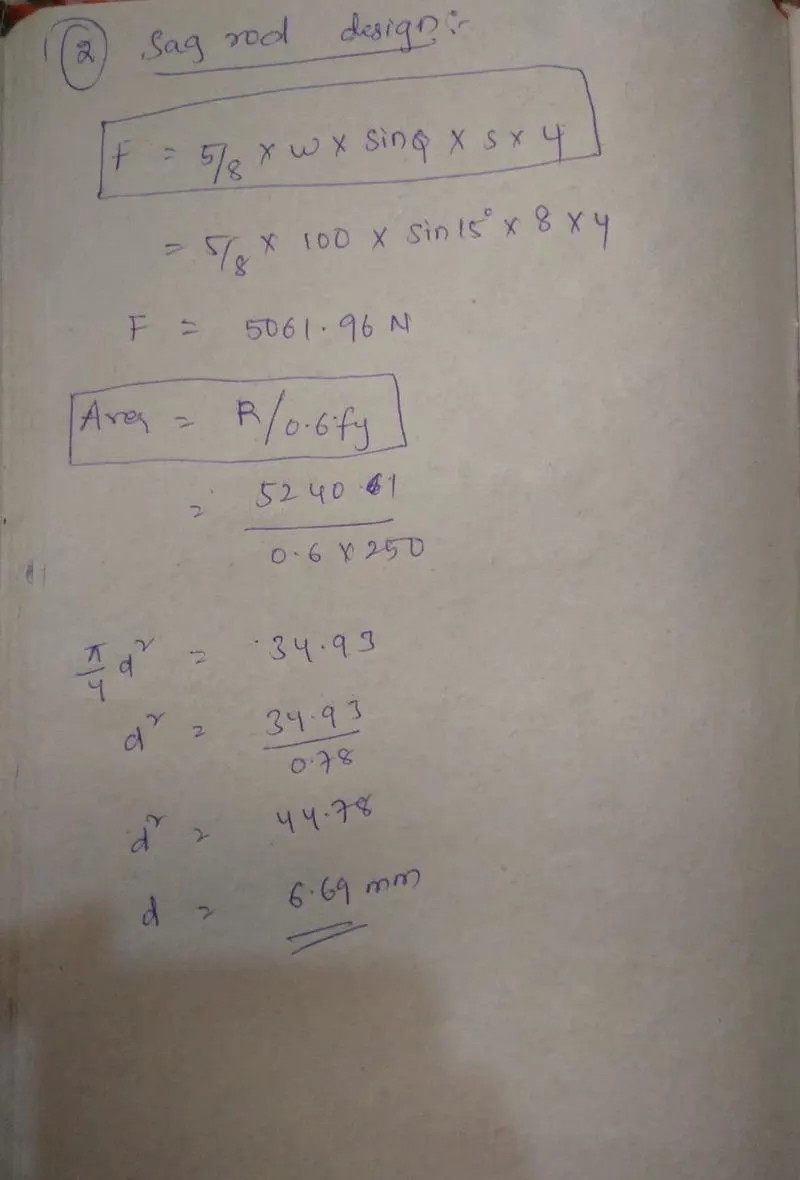
Design a sag rod as shown in Figure below. Purlins are supported at 1/3rd points by sag rods.
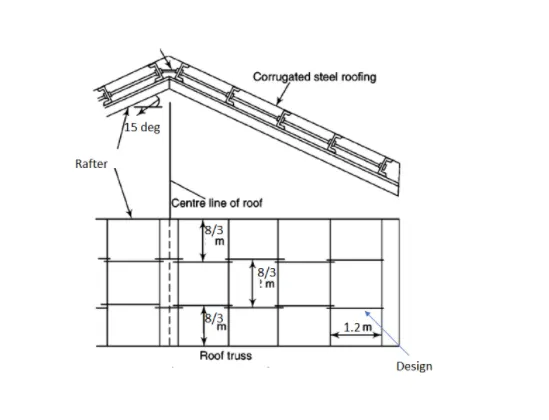
Assume centre to centre distance of Rafter spaced at 8 m , spacing of purlin = 1.2 m, Self weight of roofing (including thermal insulation)= 60 kg/m2 , Wind pressure intensity = 150 kg/m2,Slope of rafter = 15 degrees, Live Load =75 kg/m2. Assume self weight of purlin as 100 kg/m.
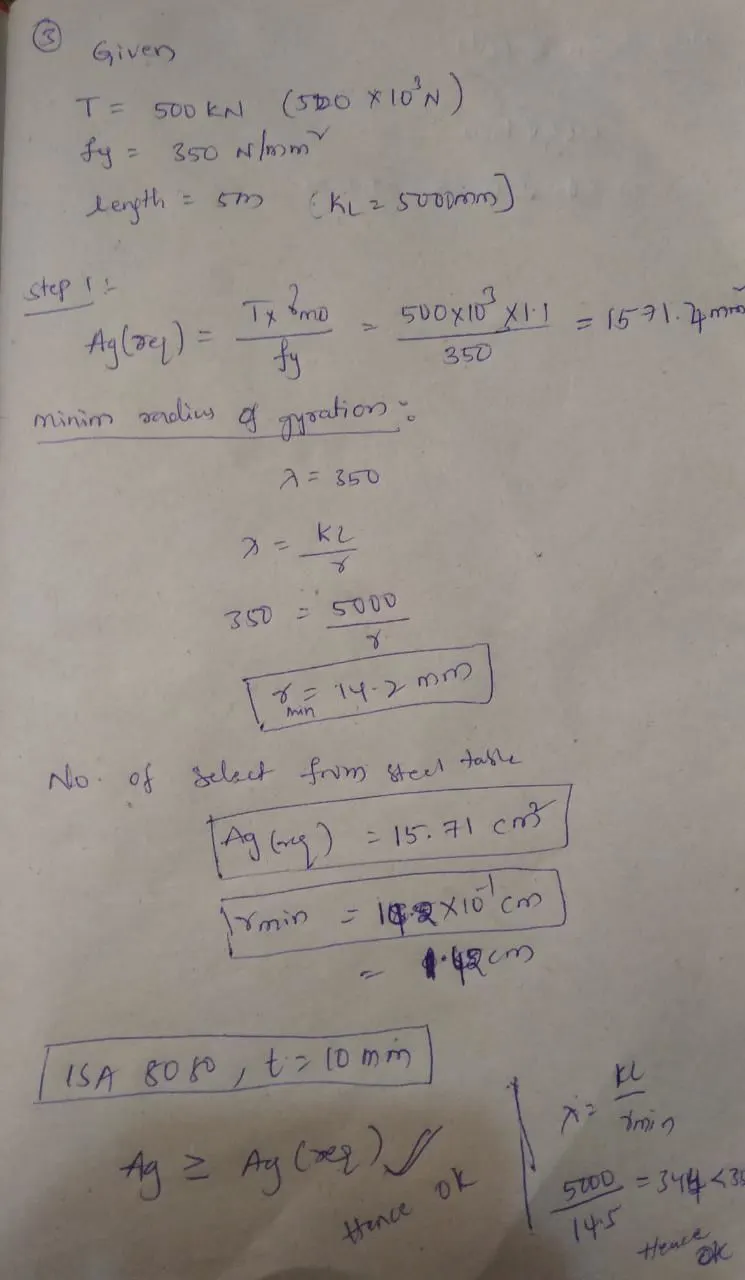
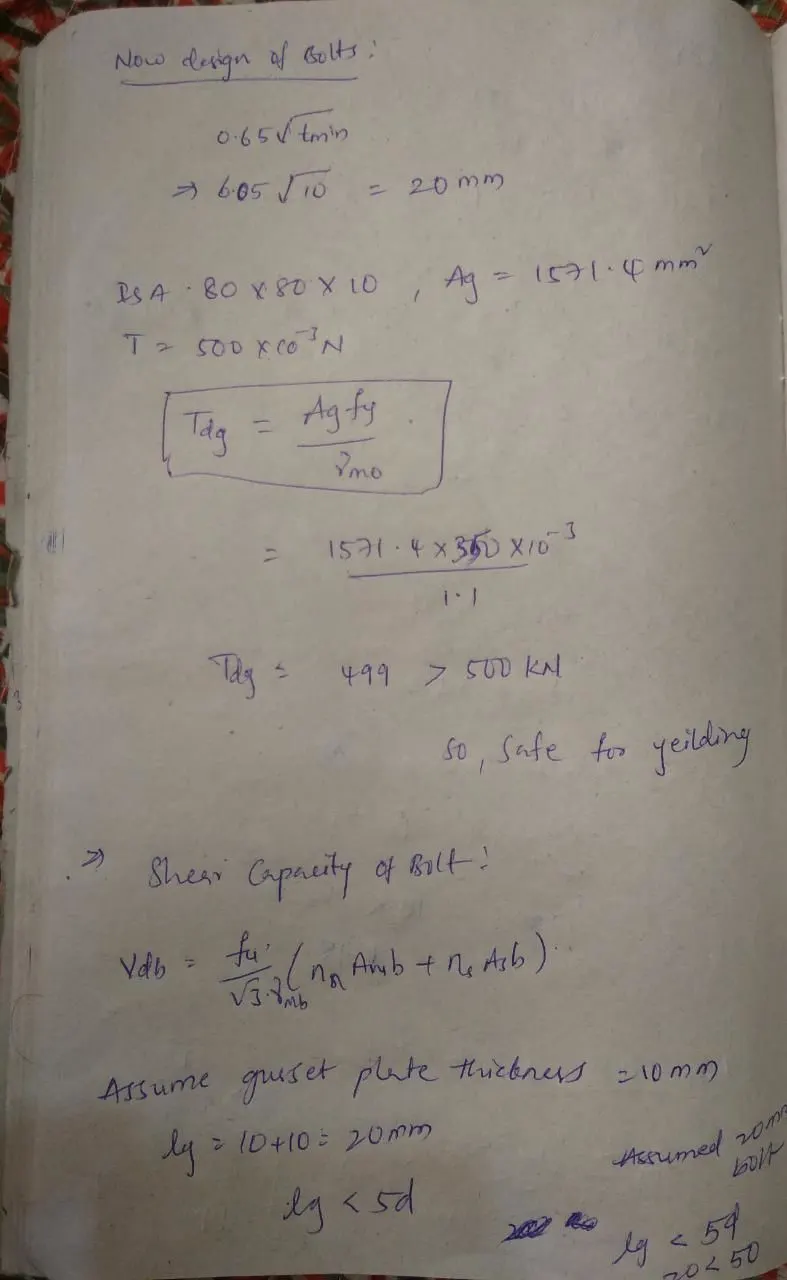
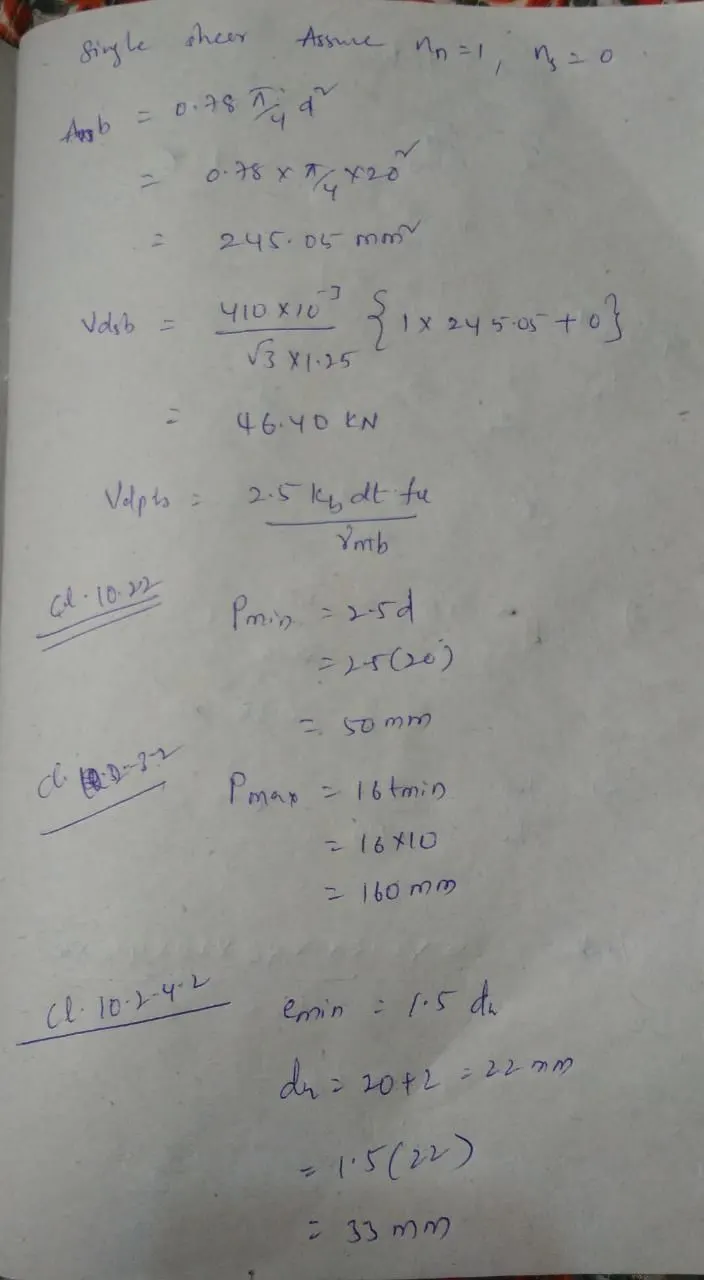
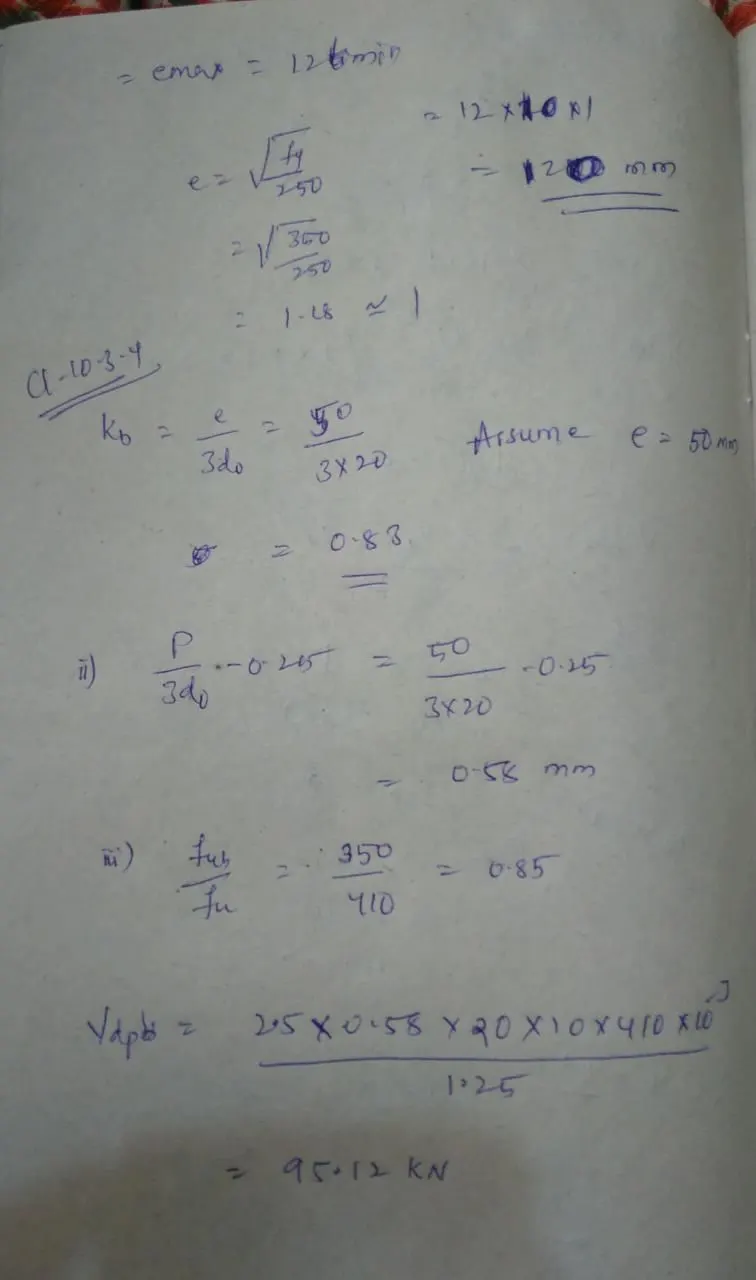
3. Determine section size for given tensile load
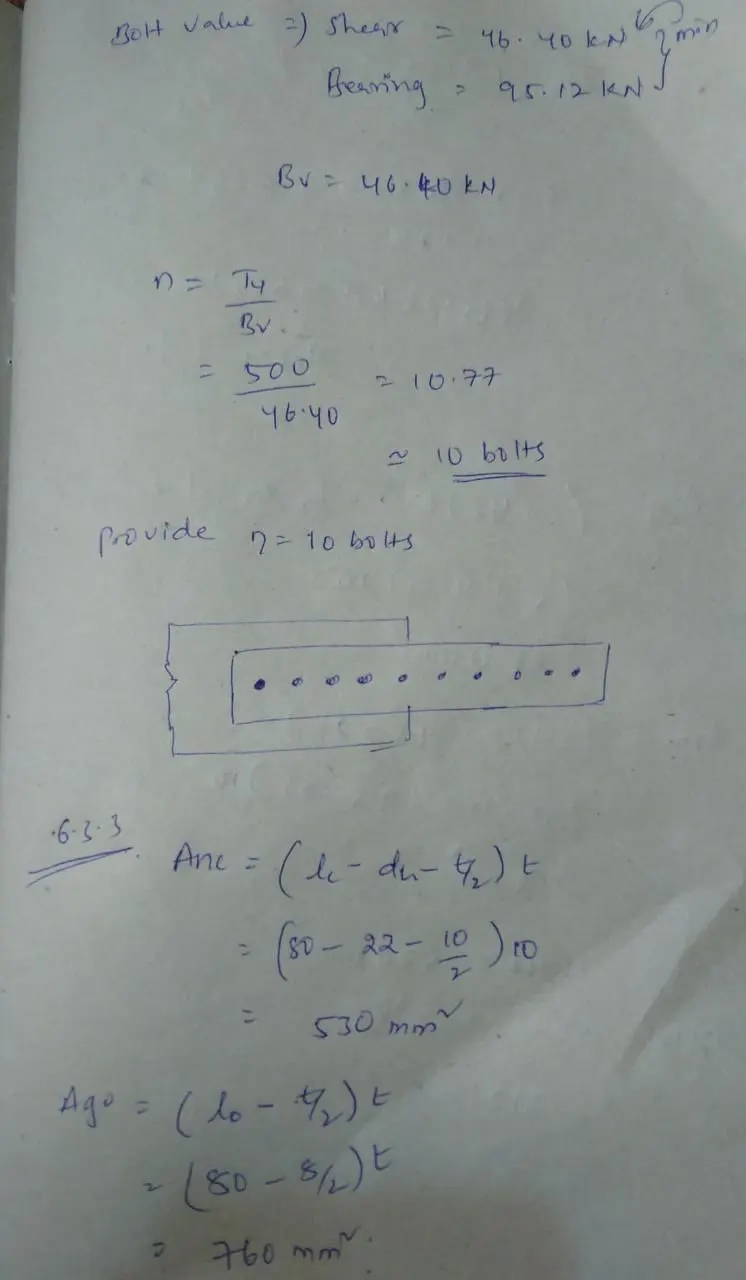
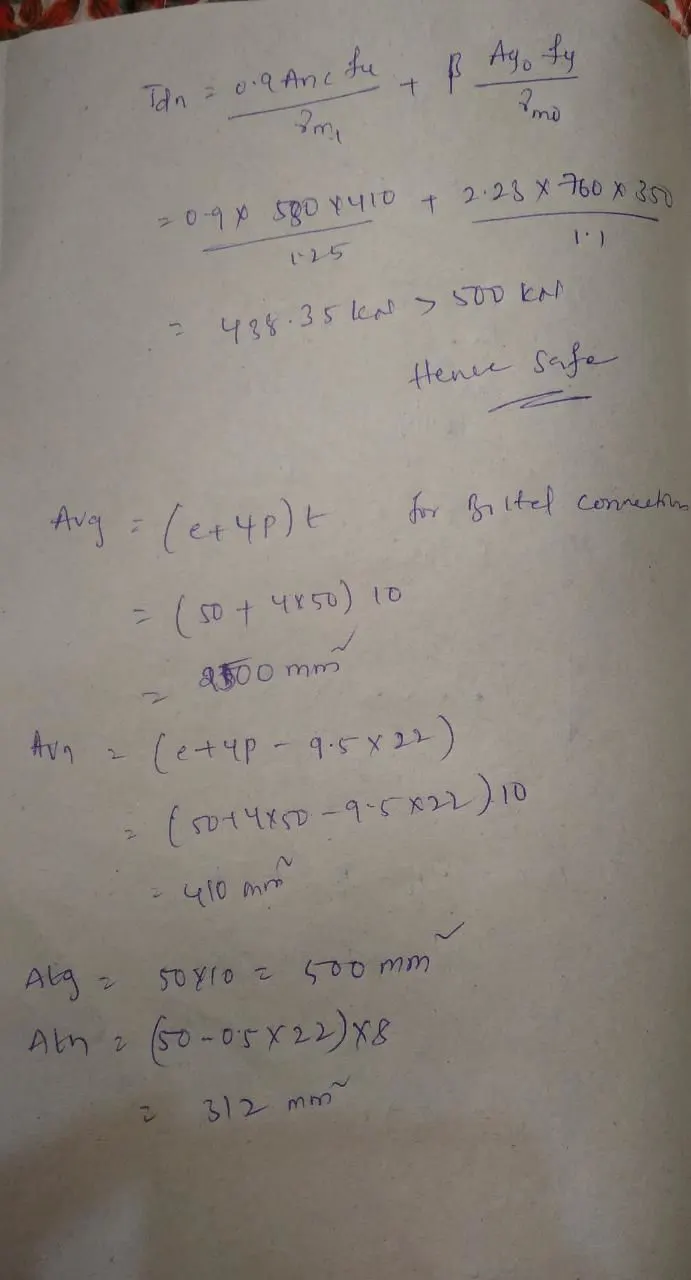
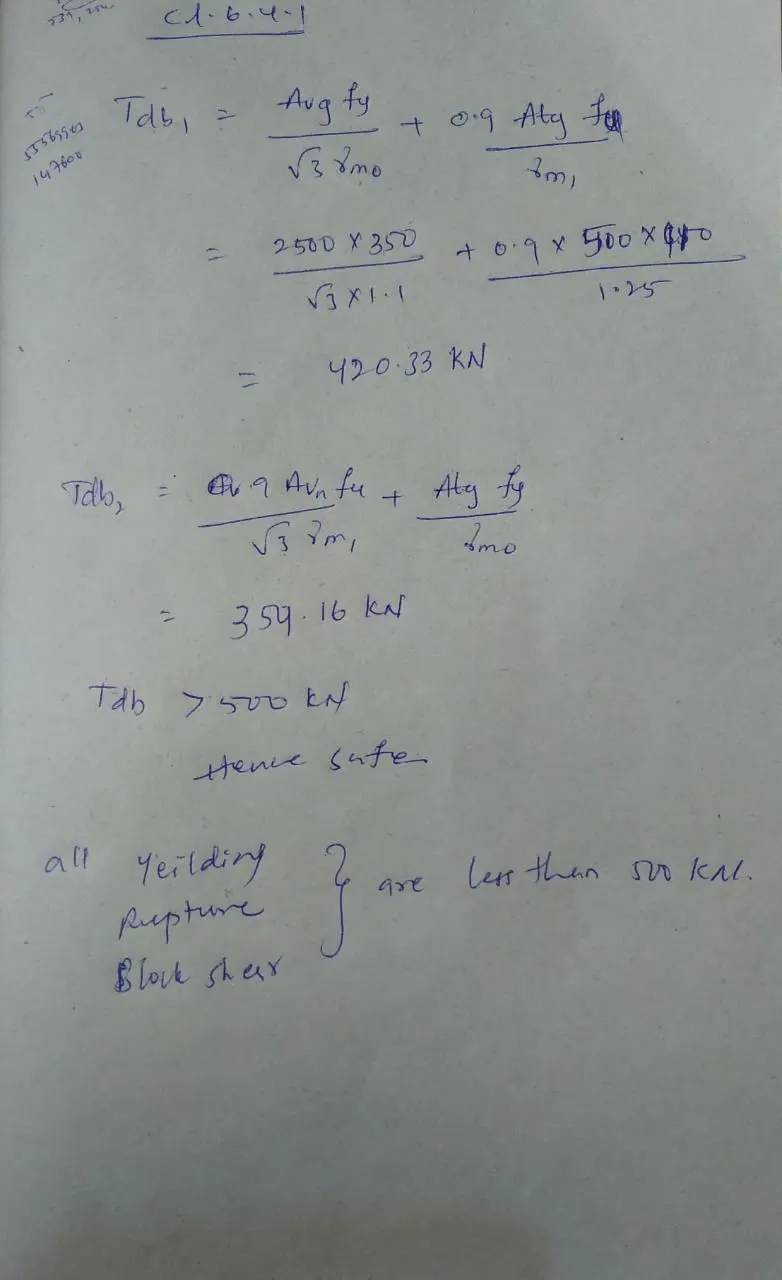
Design a single angle member of length 5m to carry axial tensile force of 500 kN. Yield strength fy of the material to be considered is 350 N/mm2.
result : Hence all the tension memebers are calucalted.