Week 2:- BiW Fixture Basics Challenge
- What is the process of project execution activity?
The project execution phase is usually the longest phase in the project life cycle; and the most demanding. In the project execution phase:
- Your team carries out all the planned activities, constructs deliverables, and presents them to project stakeholders
- Your focus, as a project manager changes to performing and supervising all activities to create deliverables as outlined in the project plan
- You’ll need to continuously track the project’s progress and ensure that the milestones and deliverables stick to the project schedule
- You need to step back a bit and let your team carry out the project plan
In project management, there might be hiccups along the way but if you catch them early on, it’s easy to course-correct. For this reason, the execution stage always happens in concurrence with the next phase–project controlling and monitoring.
The majority of the activities during the execution phase will be handled by your project team. It’s a fine line to tread because you need to give your team enough autonomy while taking care that everything goes according to plan.
In essence, the project manager has three main objectives during the execution phase:
- Managing people
- Managing processes
- Managing communication
The benefits of a well-executed project are threefold:
- The project can be completed on time and budget
- Team morale can be maintained
- Stakeholders are satisfied with overall project progress
2.What are the types of joining processes?
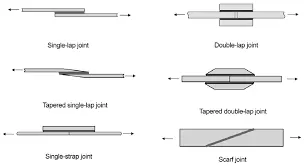
Joining processes include welding, brazing, soldering, mechanical fas- tening, and adhesive bonding Mechanical fastening can be used to provide either temporary or permanent joints, while adhesive bonding, welding, brazing, and soldering processes are mainly used to provide per- manent joints.
3.What is Resistance Welding & its application in the automotive sector?
Resistance welding is the method used to join two plain metal work pieces together by running an electrical current through them. The necessary welding heat is generated by the electrical resistance of the metals, by the contact resistance in between them and by the electrical current.
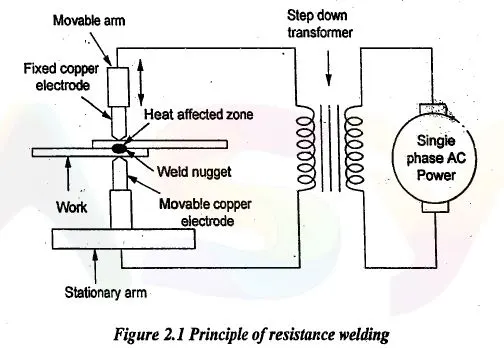
The process provides a strong weld even for a variety of thin and thick metals. Aluminum is well suited for MIG welding and is increasingly used for automotive applications for its high strength, lightweight, corrosion resistance, recyclability, and thermal and electrical conductivity.
4.What is fusion welding & types of fusion welding with its application in the automotive sector?
Fusion welding is a process that uses heat to join or fuse two or more materials by heating them to melting point. The process may or may not require the use a filler material.
7 Different Types of Fusion Welding
Fusion welding is a type of welding that joins two pieces of metal together by melting and fusing them. There are several different types of fusion welding, each with its own benefits and drawbacks. The 7 most common types of fusion welding are:
Oxyacetylene welding
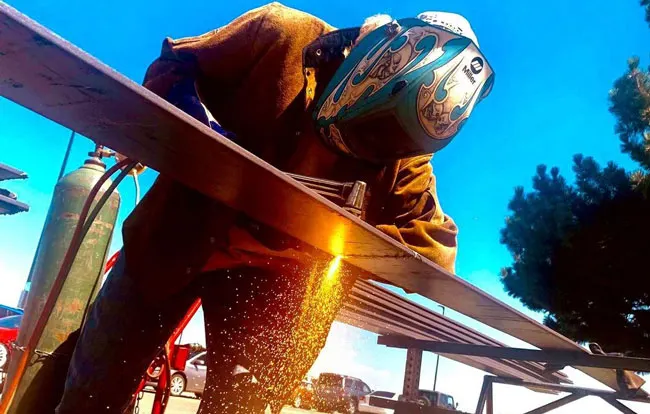
Oxyacetylene welding, also known as gas welding, uses a flame produced by burning a mixture of oxygen and acetylene to melt and fuse the metals together. This method of fusion welding is relatively inexpensive and easy to learn, but it is not very efficient and can be extremely hazardous if not done properly.
Arc welding
Arc welding, also known as stick welding, uses an electric arc to create heat that melts the metals being joined. This type of fusion welding is more efficient than oxyacetylene welding and is less likely to cause accidents, but it is more expensive and requires more training to learn.
Metal Inert Gas (MIG) Welding
MIG welding, or metal inert gas welding, uses a stream of argon or other inert gas to protect the weld from contamination. This type of welding is very efficient and produces high-quality welds, but it is also very expensive.
Metal Active Gas (MAG) Welding
MAG welding is a type of arc welding that uses a wire electrode to create an electric arc. The arc melts the metal and the filler material, which are then joined together. MAG welding is used in many industries, including automotive, aerospace, and construction.
Tungsten Inert Gas (TIG) Welding
TIG welding, or tungsten inert gas welding, uses a tungsten electrode to create the arc that melts the metals being joined. This form of fusion welding produces extremely high-quality welds, but it is also very difficult to learn and can be quite dangerous if not done properly.
Electron Beam Welding (EBW)
EBW is a fusion welding process that uses a high-energy beam of electrons to weld metals together. The beam melts the metals, which then flow together and form a strong bond. EBW is often used for welding thin sheets of metal together, as it can create very strong bonds without adding much heat to the surrounding area.
EBW is a very precise welding process, which makes it ideal for joining together delicate parts or components. It can also be used to weld metals that are difficult to weld using traditional methods, such as aluminum. EBW is often used in the aerospace and automotive industries, where precision and strength are essential.
Laser Beam Welding LBW
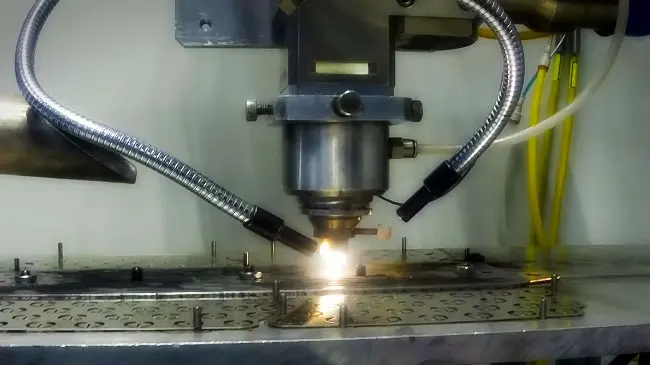
Laser beam welding is an advanced type of fusion welding that uses a laser to heat the material being joined. The laser beam is focused onto the surface of the material, causing it to melt and form a weld. LBW can be used to join metals, plastics, and other materials.
LBW is often used for joining thin pieces of metal together, as the laser beam can be focused onto a very small area. This makes it ideal for welding delicate parts or components that cannot be heated with traditional methods. LBW is also used for joining dissimilar materials, such as aluminum and steel. The high heat of the laser beam can melt both metals, allowing them to form a strong bond.
LBW is a versatile welding method that can be used in a variety of applications. It is most commonly used in industries where complex welding is required. This is also used in medical device manufacturing. LBW can be performed manually or automated, making it suitable for both small and large-scale production.
These are the different types of fusion welding that are available out there. It’s essential to consult an expert before choosing your desired welding method.
What are the Advantages of Fusion Welding?
Fusion welding is a process that joins two pieces of metal together by using heat to melt the metals at their joint. This type of welding has several advantages over other methods, such as resistance welding and oxy-fuel welding.
One advantage of fusion welding is that it can be used on a variety of metals, including aluminum, stainless steel, and cast iron. Moreover, it can also be used to weld plastic pipes. This makes it a versatile option for many different projects.
Another advantage of fusion welding is that it produces a strong bond between the two pieces of metal. The heat from the weld melts the metals and creates a molten pool where the metals mix together. As the pool cools, it forms a single piece of metal with a strong bond.
Fusion welding is also a relatively fast process. It can be completed in a matter of minutes, which is much faster than other methods such as oxy-fuel welding.
Overall, fusion welding is a versatile, strong, and fast method for joining two pieces of metal together. It has many advantages over other methods and is the preferred method for many different projects.
5.What is the 3-2-1 principle?
The 3-2-1 method is a work-holding principle where three pins are located on the 1st principle plane, i.e., either XY, YZ, ZX. And two pins are located on the 2nd plane perpendicular to the 1st plane, and at last, one pin on the plane is mutually perpendicular to the 1st and 2nd planes.
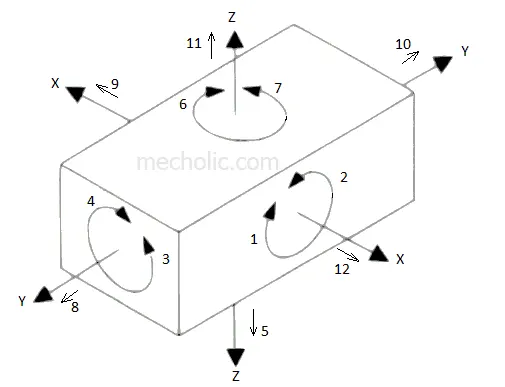
6.Define Body coordinate system?
Body coordinate system in BIW
The body coordinate system has been widely used in the automotive industry for drawing of body parts,Products and process design.
A coordinate system is a reference system consisting of a set of points,lines and surfaces,used to define the positions of points in space in either two or three dimensions.
In general BCS is also called as car line and body line.
X=Longitudinal direction [(Fore and After - F/A) or (Front O Line - FOL)]
Y=Transverse direction [(Cross car - C/C) or (Center O Line - COL)]
Z= Vertical Direction [(Up and Down - U/D) or (Bottom O Line - BOL)
- The origin of the body coordinate system (OX) is defined at the front center of a vehicle,It indicates a length of car and the coordinate system (OZ) is below its underbody indicates height of car,and the coordinate system (OY) its starting point is the center of car body indicates width of car.
- The above schematic figure shows the basic car geometry system used widely to specify the position of parts which is to be assembled to the car body. From the first part of the production line this coordinate system is used to specify its position. According to the CAD data some references are specified to the car body on the basis of which each and every part of the car body is assembled respectively.
- The fixture position is also defined with reference of these coordinate system. The fixture is installed on the basis of these reference point defined by CAD data according to which the fixture base plate and the accessories are installed. Each and every parts measurement is done with reference to this coordinate system. The deviation in the assembly of car body and the components is shown with respect to these coordinates. An individual part measurement is also done with respect to these coordinate system. Accuracy of the BIW is also defined by the final measurement report which are based on these coordinate system.
7.Elaborate Body plane system & its essentials?
BODY PLANES
Body planes are the reference planes in an automotive car.These planes are used to desfine the GD&T of all car parts in a automotive domain.
Body planes are 3 mutually perpendicular.Imaginary planes.These are genrally considered to be present at the driver position or sometimes at the engine location or at the front end of the car,depending on the customer.
The measurement from the body planes to the parts are called as bodyline dimensions
These body planes are called as
FOL Front O Line
COL Centre O Line
BOL Body O Line
The measurement along FOL or X axis is called as F/A Front Aft
The measurement along COL or Y axis is called as C/C Cross Car
The measurement along BOL or Z axis is called as U/DUP Down
Bodyline dimension are essential for the reasons stated below,
It defines the exact position of each product in the vehicle w.r.t a fixed origin.
It ensures flawless design for assembly.
While designing lines,All the designs are carried out relative to the bodyline,Fixtures,Turn tables etc.,
It assists in easy location of different parts in a vehicle.
It aims in creating a standardized system.
It assists in quality checks.