Week 2 : Basic Calibration of Single cylinder SI-Engine
A spark-ignition engine (SI engine) is an internal Combustion engine, generally a petrol engine, where the combustion process of the air-fuel mixture is ignited by a spark from a spark plug. This is in contrast to compression-ignition engines, typically diesel engines, where the heat generated from compression together with the injection of fuel is enough to initiate the combustion process, without needing any external spark.
Working of the SI Engine:
- The working cycle of both spark-ignition and compression-ignition engines may be either two-stroke or four-stroke.
- A four-stroke spark-ignition engine is an Otto cycle engine. It consists of following four strokes: suction or intake stroke, compression stroke, expansion or power stroke, exhaust stroke. Each stroke consists of 180 degree rotation of crankshaft rotation and hence a four-stroke cycle is completed through 720 degree of crank rotation. Thus for one complete cycle there is only one power stroke while the crankshaft turns by two OR MORE revolutions
Air–fuel ratio (AFR) is the mass ratio of air to a solid, liquid, or gaseous fuel present in a combustion process. The combustion may take place in a controlled manner such as in an internal combustion engine or industrial furnace, or may result in an explosion (e.g., a dust explosion, gas or vapour explosion or in a thermobaric weapon).
In an internal combustion engine or industrial furnace, the air-fuel ratio is an important measure for anti-pollution and performance-tuning reasons. If exactly enough air is provided to completely burn all of the fuel, the ratio is known as the stoichiometric mixture, often abbreviated to stoich. Ratios lower than stoichiometric are considered "rich." Rich mixtures are less efficient, but may produce more power and burn cooler. Ratios higher than stoichiometric are considered "lean." Lean mixtures are more efficient but may cause higher temperatures, which can lead to the formation of nitrogen oxides. Some engines are designed with features to allow lean-burn. For precise air-fuel ratio calculations, the oxygen content of combustion air should be specified because of different air density due to different altitude or intake air temperature, possible dilution by ambient water vapor, or enrichment by oxygen additions.
In theory a stoichiometric mixture has just enough air to completely burn the available fuel. In practice this is never quite achieved, due primarily to the very short time available in an internal combustion engine for each combustion cycle. Most of the combustion process is completed in approximately 2 milliseconds at an engine speed of 6,000 revolutions per minute. (100 revolutions per second; 10 milliseconds per revolution of crank shaft - which for a four stroke engine would mean typically 5 milli second for each piston stroke). This is the time that elapses from the spark plug firing until 90% of the fuel–air mix is combusted, typically some 80 degrees of crankshaft rotation later. Catalytic converters are designed to work best when the exhaust gases passing through them are the result of nearly perfect combustion.
CASE I: Run the case at 1800 rpm and list down important parameters??
- Air flow rate
- BMEP
- BSFC
- In-cylinder pressure
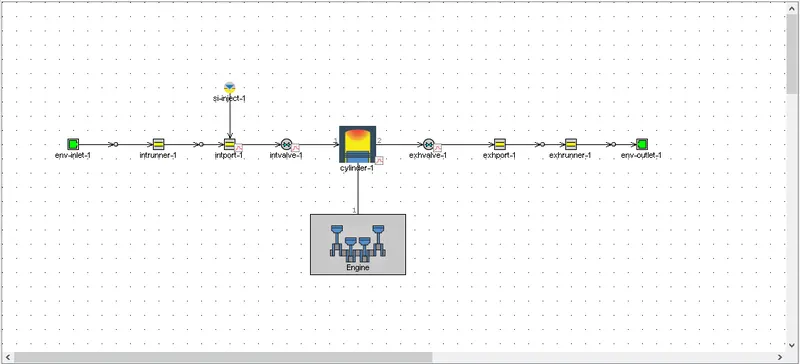
Simulation of the Single Cylinder engine at the 1800 RPM:
- The intake runner sucks the air from the ambient environment, further the air flows through the intake port, where the fuel is injected through the fuel injector and then by combine this. During the suction stroke both air and fuel mixture enter into the engine cylinder from the intake value, After the completing of combustion process of power stroke the burnt gases are removed from the exhaust value which are move out through the exhaust runner to the environment via exhaust port.
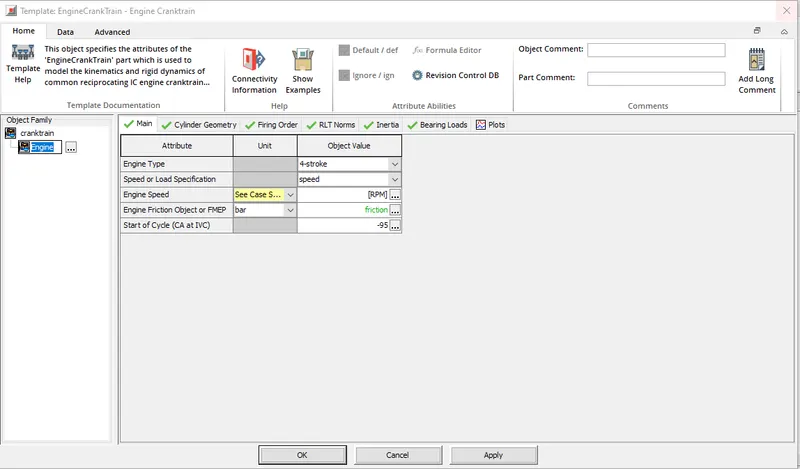
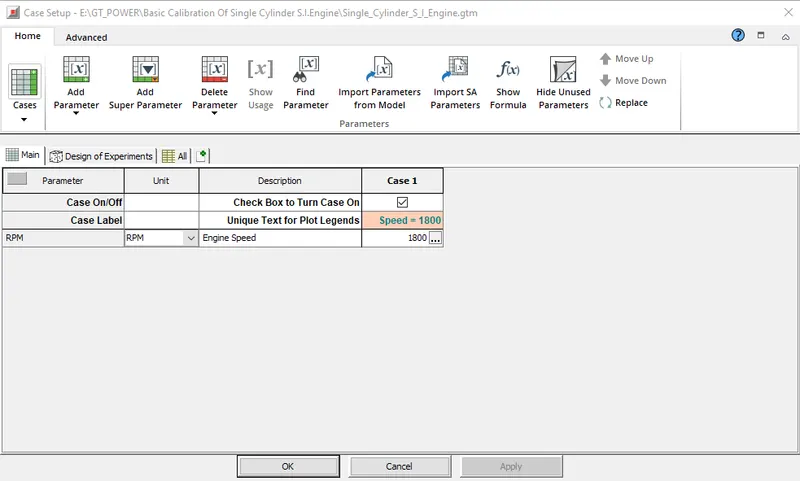
- The engine speed should be changed to 1800 RPM and put the remaining values default
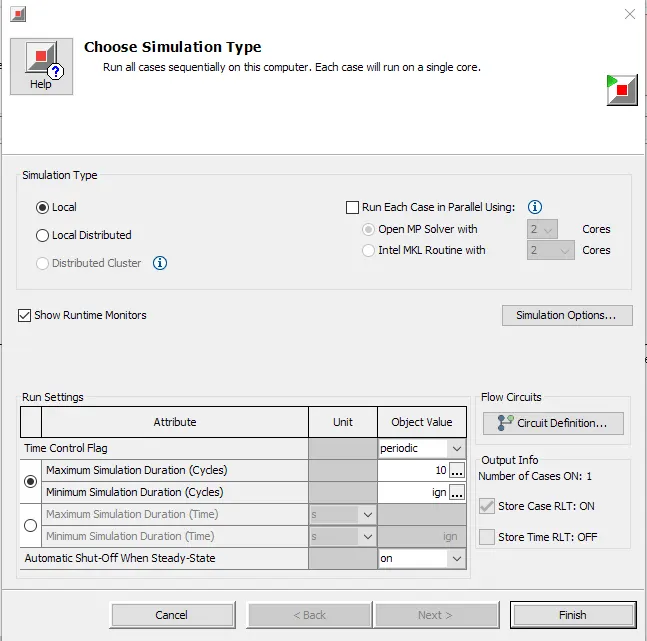
- Run the case and evaluate the results
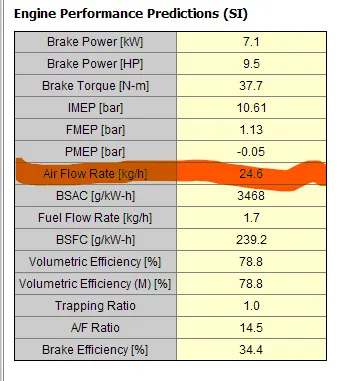
Air flow rate:
- The air flow rate is the mass of the air entering into the engine cylinder during the intake process.
- The air flow rate is 24.6 kg/h
Brake Mean Effective Pressure (BMEP):
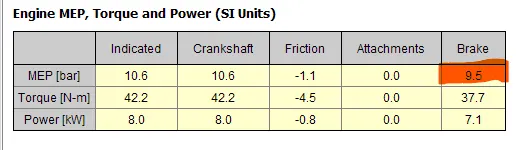
- Brake Mean Effective Pressure (BMEP) is essentially the average pressure forcing the pistons inside your engine down that provides the measured torque output.
- The Brake Mean Effective Pressure is 9.5 bar.
Brake-Specific Fuel Consumption (BSFC):
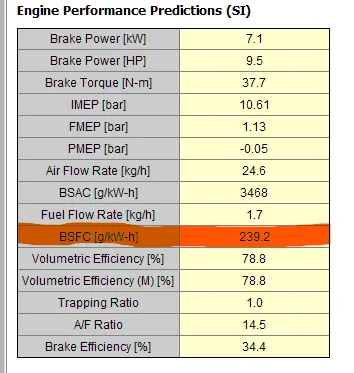
- Brake-specific fuel consumption(BSFC) is a measure of the fuel efficiency of any prime mover that burns fuel and produces rotational, or shaft power. It is typically used for comparing the efficiency of internal combustion engines with a shaft output.
- It is the rate of fuel consumption divided by the power produced. It may also be thought of as power-specific fuel consumption, for this reason. BSFC allows the fuel efficiency of different engines to be directly compared.
- Brake-specific fuel consumption(BSFC) is 239.2 g/Kw-h
In-cylinder pressure:
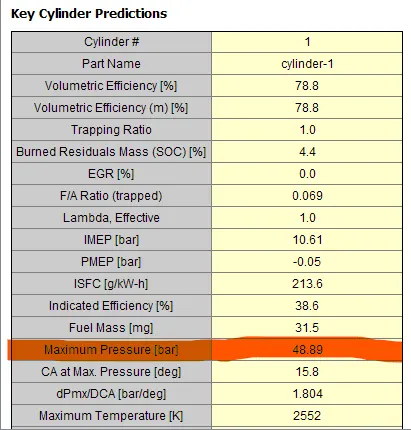
- Cylinder Pressure is the pressure in the engine cylinder during the 4 strokes of engine operation (intake, compression, combustion and expansion and exhaust). You could argue that pressure during expansion is the most important, because that is the cylinder pressure pushing on the piston to produce power. But the cylinder pressure during all 4 strokes is necessary for accurate engine performance prediction.
- In-Cylinder Pressure is 48.89 bar
Case II:
To Calibrate the Single Cylinder SI Engine with Speed of 3600 RPM:
- The intake runner sucks the air from the ambient environment, further the air flows through the intake port, where the fuel is injected through the fuel injector and then by combine this. During the suction stroke both air and fuel mixture enter into the engine cylinder from the intake value, After the completing of combustion process of power stroke the burnt gases are removed from the exhaust value which are move out through the exhaust runner to the environment via exhaust port.
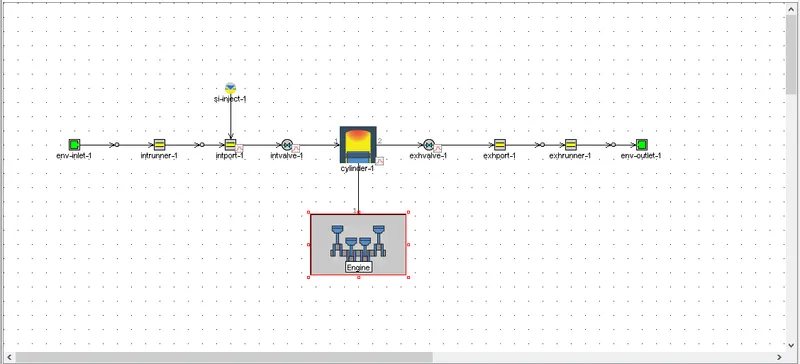
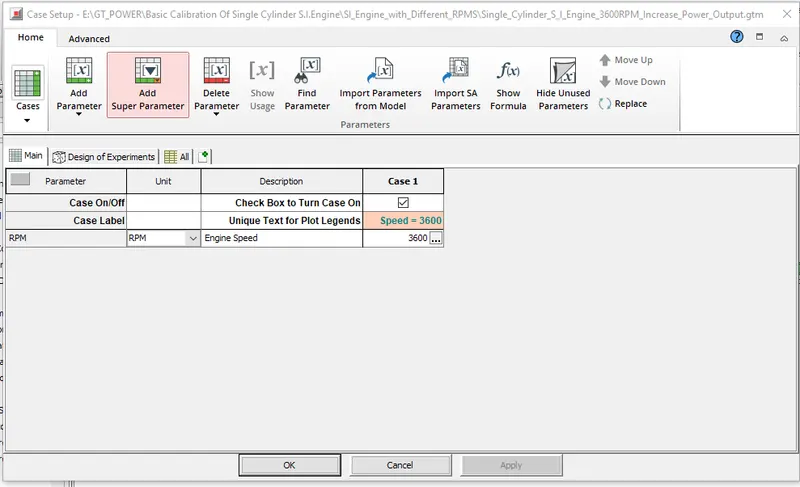
- The engine speed should be changed to 3600 RPM and put the remaining values default
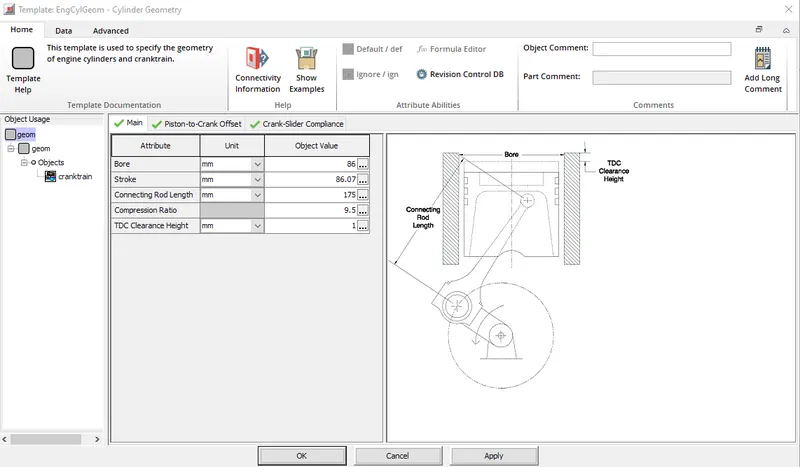
Engine Parameters:
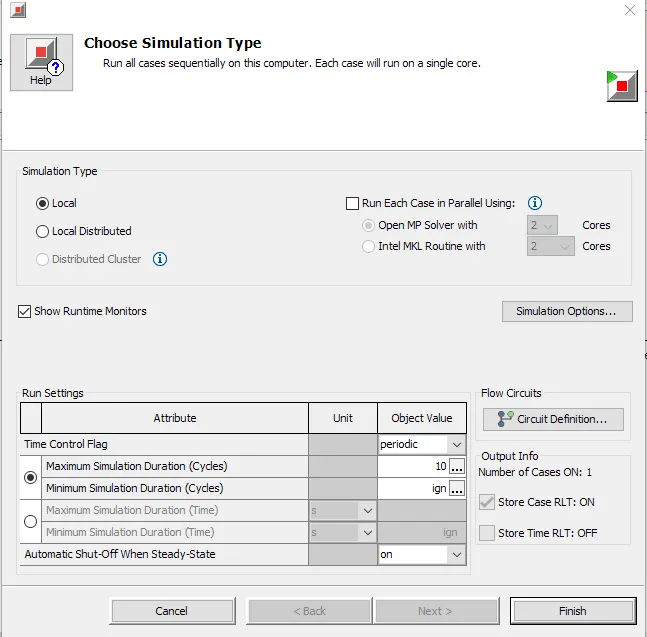
- Run the case and evaluate the results
Power output of the Engine at 3600 RPM:
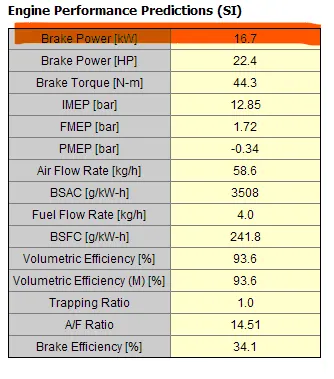
- The Brake power of the Engine with Speed of 3600 RPM is 16.7 KW.
Case III:
Increase the power output can be achieved by following the below factors:
- Increasing the compression ratio.
- Increasing the breathing capacity of engine (Supercharging/ Turbocharging)
- Increasing bore of engine.
- Increasingi ntake port size
- Adding more fuel.
To Calibrate the Single Cylinder SI Engine with Speed of 3600 RPM and increase the Power Output by 10%:
- The intake runner sucks the air from the ambient environment, further the air flows through the intake port, where the fuel is injected through the fuel injector and then by combine this. During the suction stroke both air and fuel mixture enter into the engine cylinder from the intake value, After the completing of combustion process of power stroke the burnt gases are removed from the exhaust value which are move out through the exhaust runner to the environment via exhaust port.
- The engine speed should be changed to 3600 RPM and put the remaining values must be changed in orer to increase the power output.
- Increased the bore diameter and Stroke Length and Connecting Rod Length and Compression Ratio in order to increase the power output of the engine.
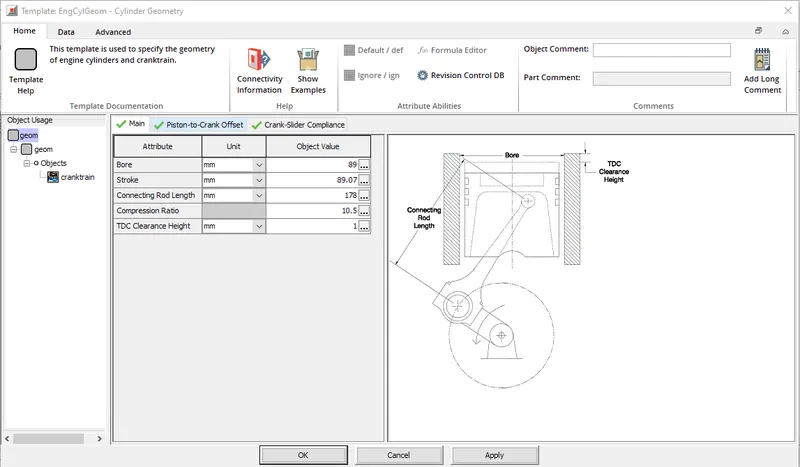
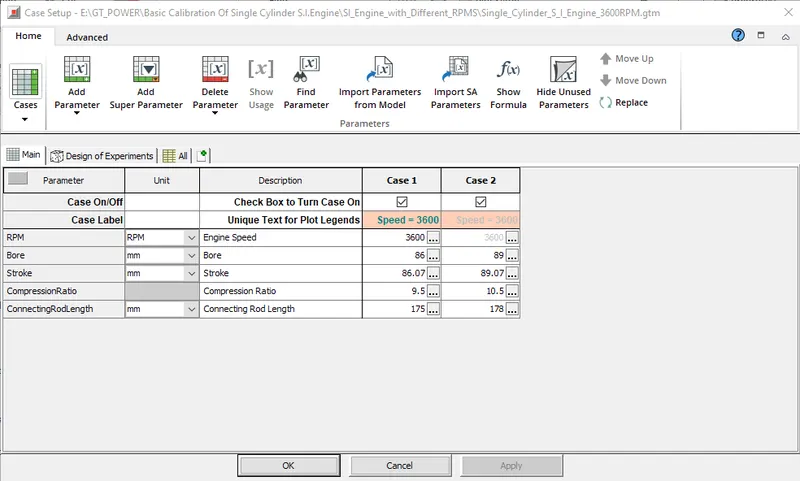
- Run the case and evaluate the results
Power output of the Engine:
- Thus we run the simulation with increasing the Bore Diameter,Stroke Length, Connecting Rod Length and Compression Ratio
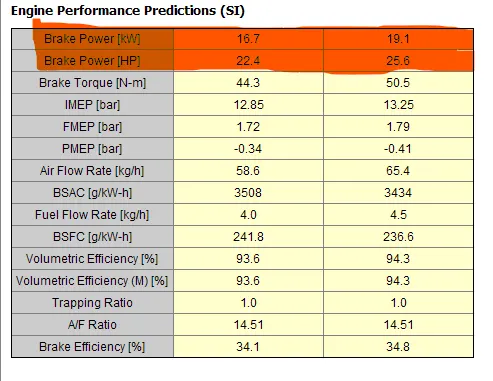
- From the above graph we can clearly observe that the power output of the engine is increased due to the increase in bore diameter, Stroke Length, Connecting Rod Length and Compression Ratio and the power output is 19.1 KW.
- From the above table before increasing the values we get the power output as 16.7 Kw and after changing some parameters we can see clearly there is peak in Power Output is 19.1 Kw.These are run at a Speed of 3600 RPM.
-

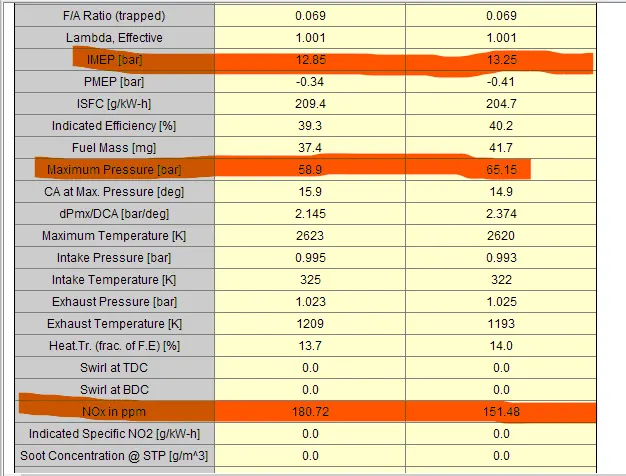
- The mean Indicated power and Maximum Pressure inside the cylinder are raised a lit bit and they are within limits and NOx emissions are gradually decreased in the changed of parameters.
- There is another way to increase the output power by increasing the number of cylinders in the engine but if we increase then it becomes more space and having heavy weight and the consumption of the fuel also becomes more due to heavy weight. I am considering only 10 % output power so I did not go Consider this.
- As the compression ratio increases, the fuel mixture is sufficiently compressed thereby increasing the thermal efficiency, so that less amount of fuel is required to produce the same amount of energy.
Conclusion:
- Successfully run the simulation with 1800RPM and find out all the Parameters like Airflow, BMEP, BSFC, In-Cylinder Pressure.
- Execute the power of the single cylinder engine with 3600 RPM and find out the Brake Power.
- Thus the power of the single cylinder engine can be increased by 14% by changing the Bore, Stroke, Connecting rod length and Compression Ratio. Thus it also reduces the NOx emissions and the inside cylinder pressure changes but they are within limits.