Week -2
1.
Theory:
Doorbell:
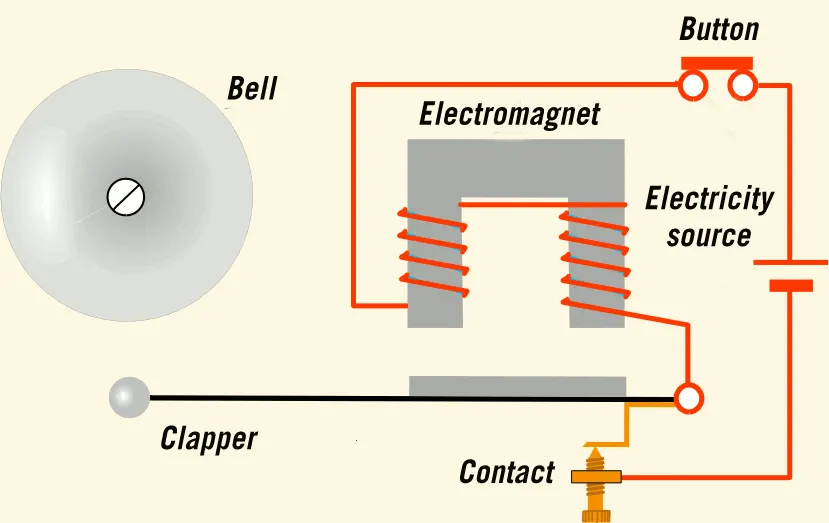
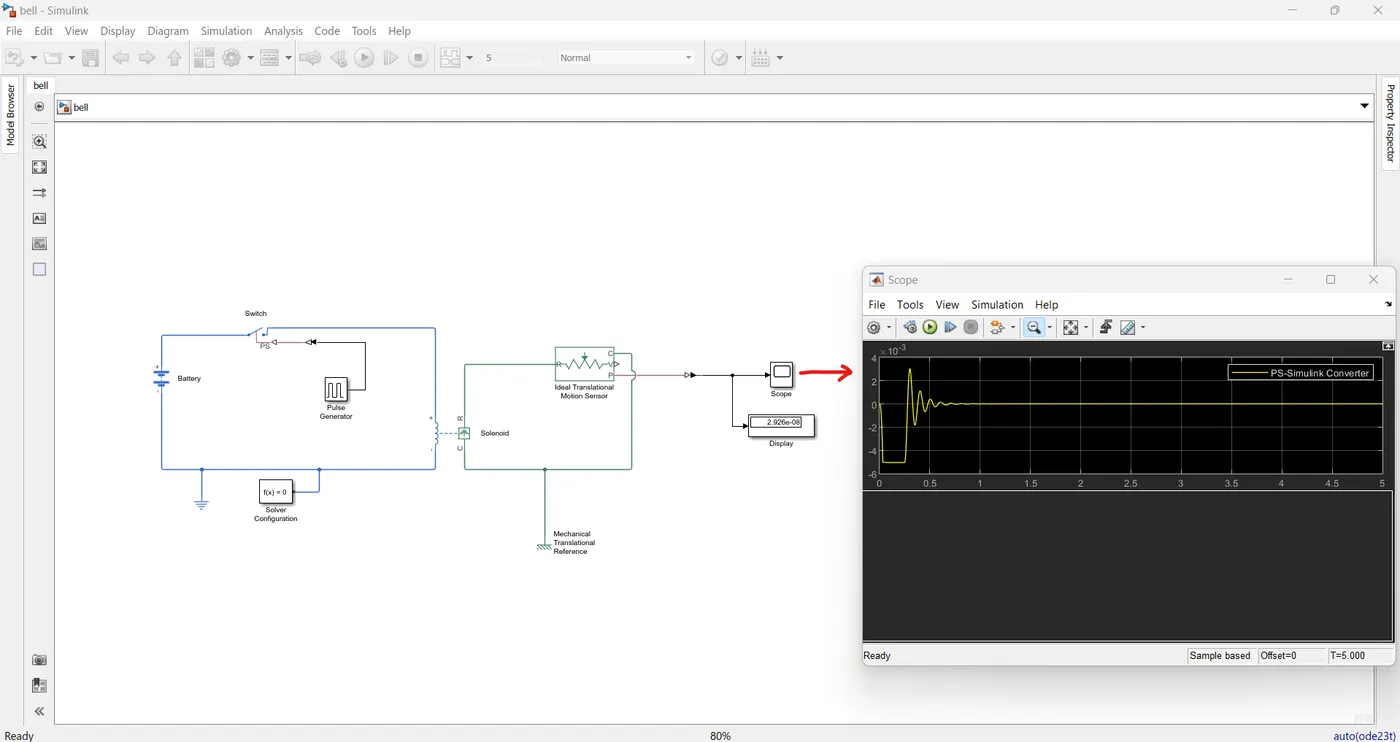
A doorbell is a signaling device typically placed near a door to a building's entrance. When a visitor presses a button the bell rings inside the building, alerting the occupant to the presence of the visitor. The heart of a doorbell is an electromagnet. Electromagnets are coils of wire wrapped around a small piece of magnetic metal. When electricity passes through the wire, it creates a magnetic field around the wire. When you press a doorbell button, you complete an electrical circuit that allows household electricity to flow through the doorbell's internal electromagnet. The magnetic field generated by the electromagnet is then used to power a mechanism that creates the doorbell sound.
Doorbells are low-voltage devices. This means they require relatively little energy to operate. An important part of a doorbell mechanism is the transformer. The transformer converts regular 120-volt household current to the lower voltage (usually somewhere between 6-16 volts) required by the doorbell.
Solenoid:
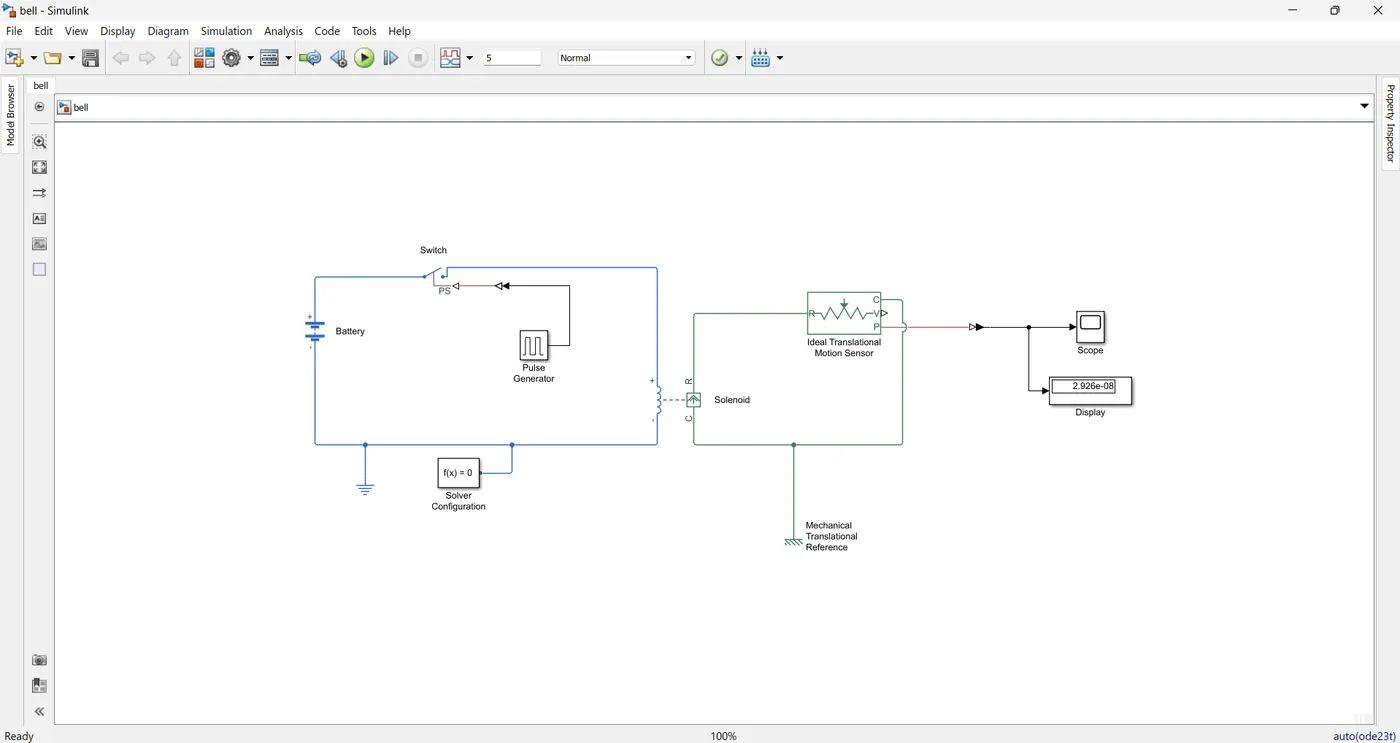
A solenoid is a 3-dimensional structure of wire. When this wire is wrapped around a metallic block in a coil and electricity is passed through it, it has some special magnetic properties. Electromagnetic induction makes it an electromagnet that can be switched on or off. The side in which the current appears to be passing clockwise is the South Pole, and the side in which the current seems to be passing anticlockwise is the Northern Pole. The solenoid works just like a bar magnet and therefore has many uses. This principle is used to create valves, among other things. Where the solenoid operates an electric switch, it is a relay.
Output
2.
Theory:
Thermistor:
A thermistor is defined as a type of resistor whose electrical resistance varies with temperature changes. Although all resistors’ resistance will fluctuate slightly with temperature, a thermistor is particularly sensitive to temperature changes.
Thermistors act as a passive component in a circuit. They are an accurate, cheap, and robust way to measure temperature. While thermistors do not work well in extremely hot or cold temperatures, they are the sensor of choice for many different applications.
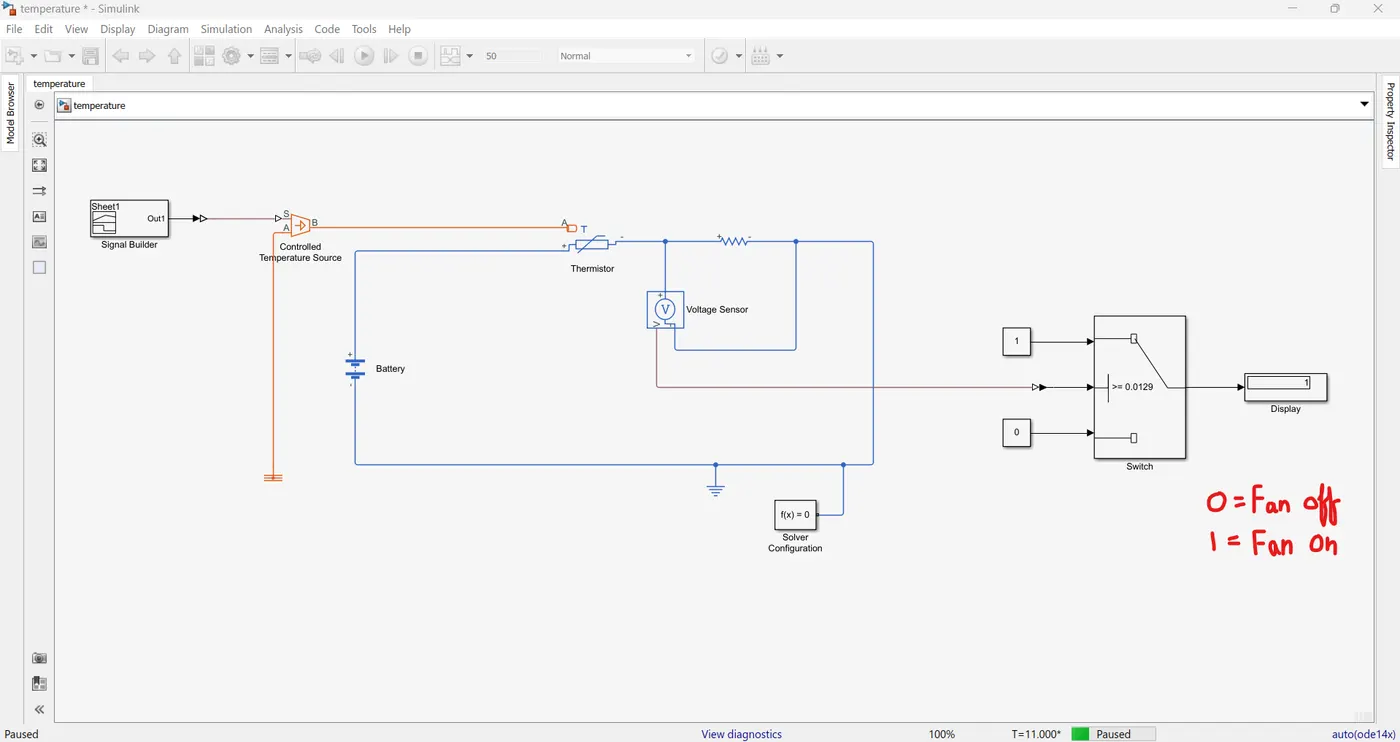
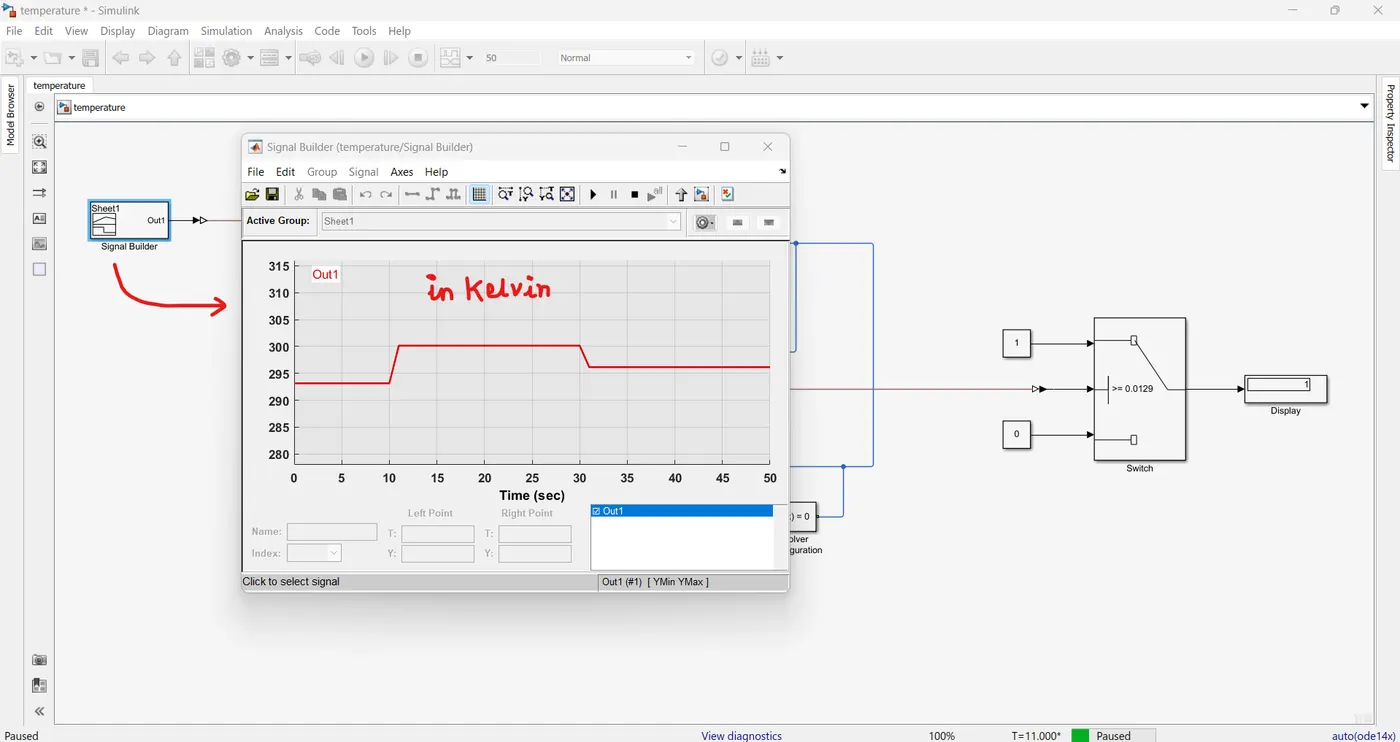
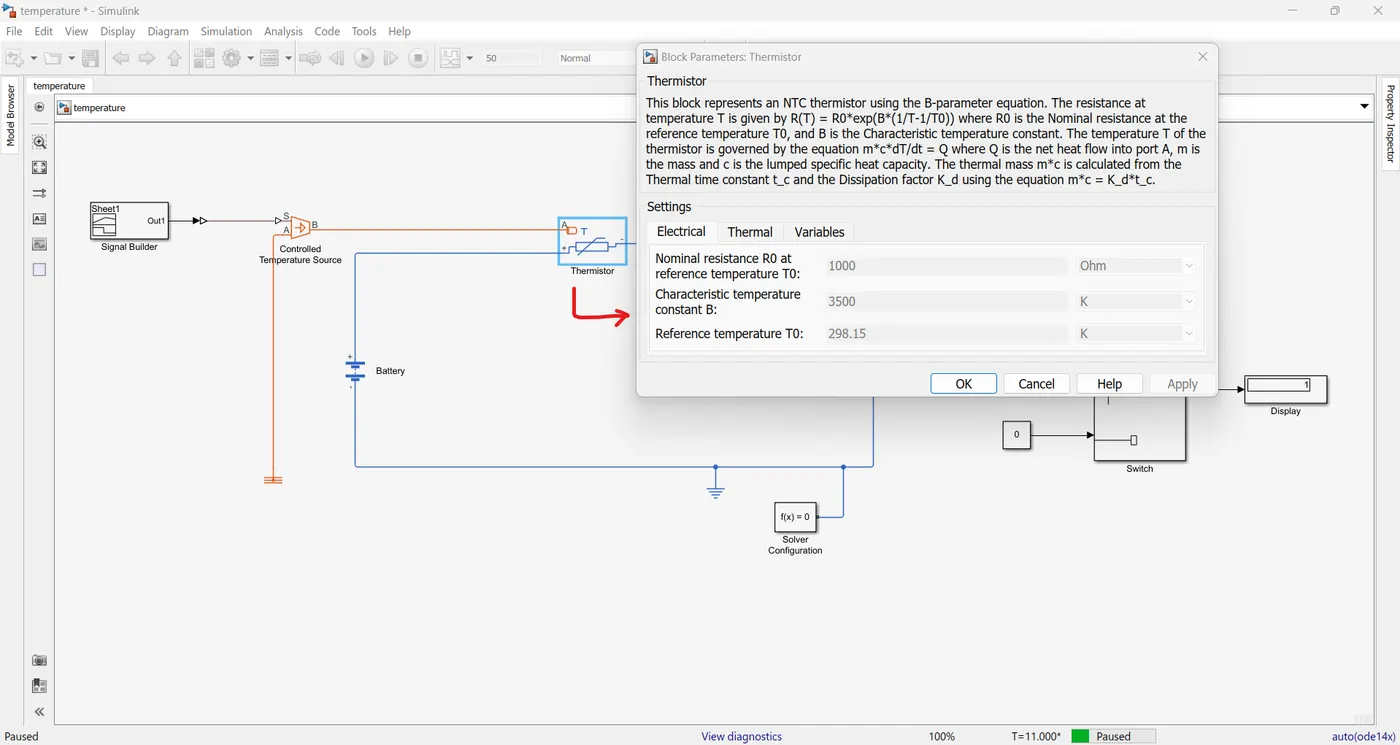
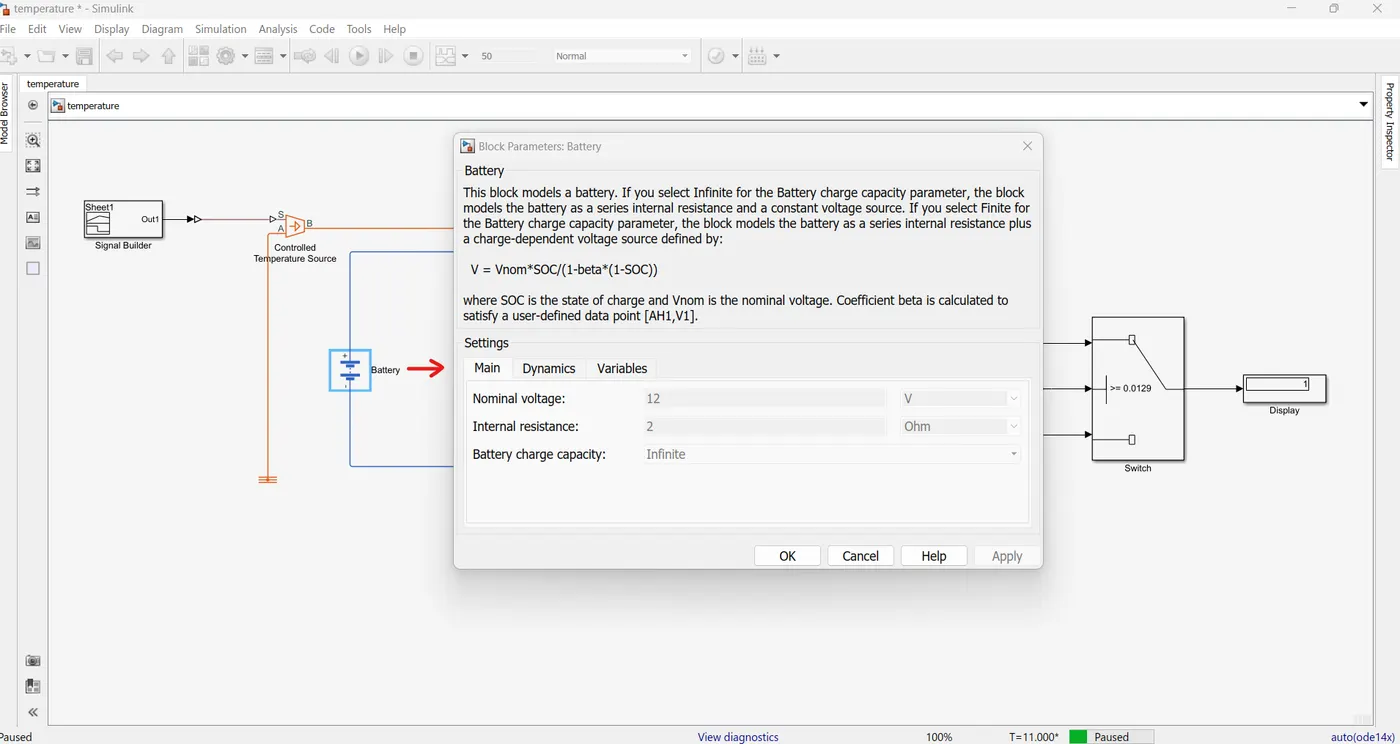
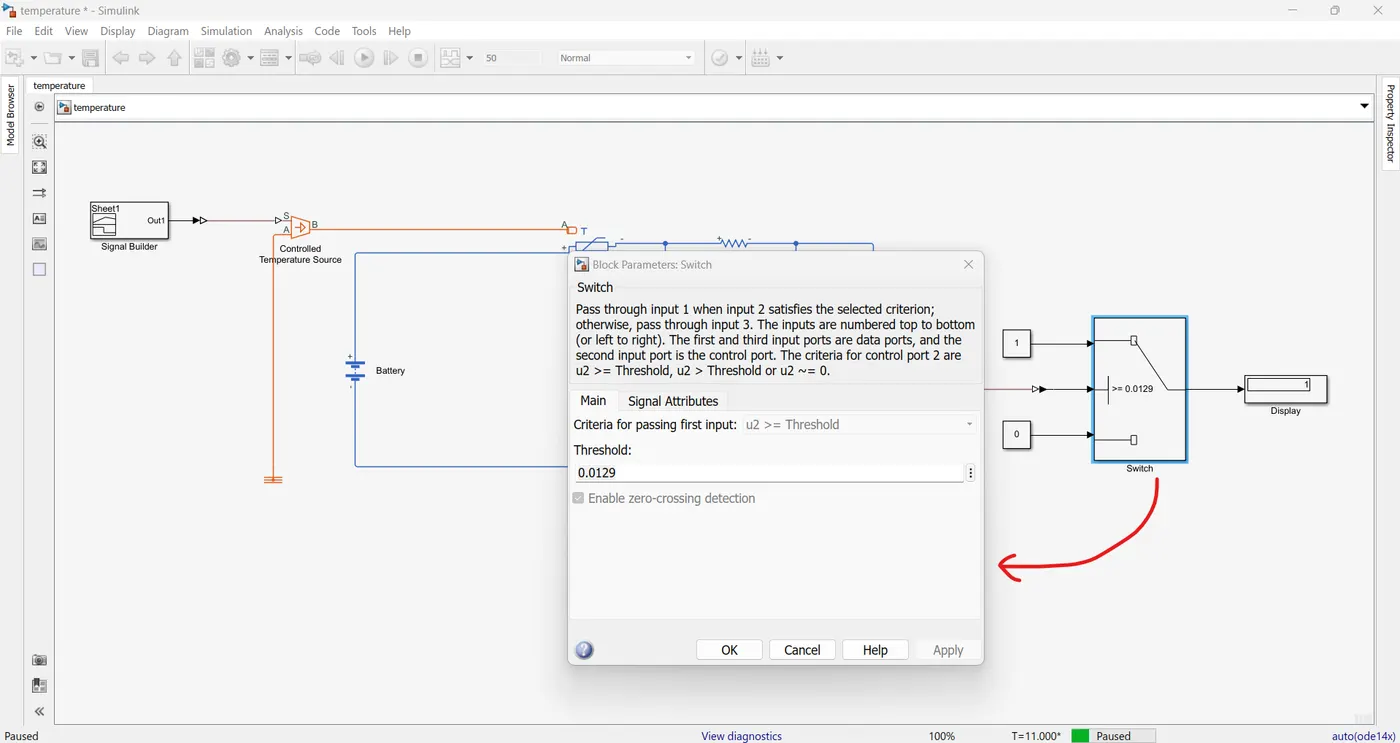
This figure shows the representation of thermistor connection which senses the temperature of a heater and passes the signal to a switch where a threshold limit is already set. If the temperature is above or equal to the threshold limit, then it gives "1" as output which is "Fan On". If the temperature is below the threshold limit, then it will give "0" as output which means "Fan Off". The input signal is generated with the help of a "Signal Builder" block. This signal is created according to the conditions given in this challenge. The conditions are as following:
Temperature source: 20 °C from 0 to 10 seconds
27 °C from 10 to 30 seconds
23 °C from 30 to 50 seconds
Fan conditions: ON if the temperature above 25 °C, OFF otherwise.
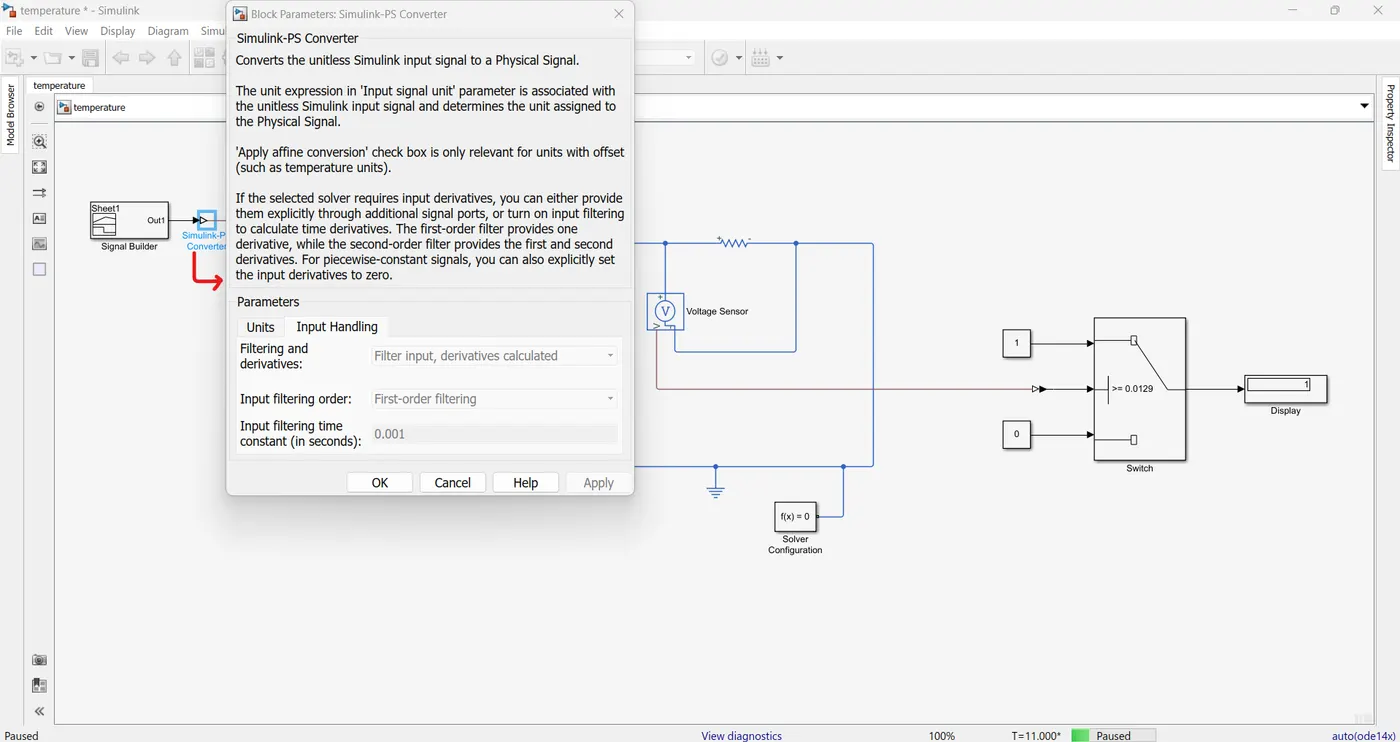
Here the temperature is converted in Kelvin from degree Celcius because the signal converter does not take °C value as input. I also have to set the signal unit as "Kelvin" in Simulink-PS Converter.
From 0-10 sec- Temperature is 293.15 K
From 10-30 sec- Temperature is 300.15 K
From 30-50 sec- Temperature is 296.15 K
Output