Week -2
Theory of doorbell
- A doorbell uses a specialized sort of electromagnet called a solenoid. A solenoid is just an electromagnet where the coiled wire surrounds a metal piston The piston contains magnetically conductive metal, so it can be moved backward or forward by the electromagnetic field.
- The solenoid piston consists of an iron core mounted to a non-magnetic metal bar. If there is no power flow through the electromagnet ,a spring pushes the piston to the left,and the iron core extends outside of the wire coil. when we turn the electromagnet on by pressing the doorbell button, the iron core is drawn to the magnetic field, so it slides into the center of the coiled wire.
- The iron core slides to the right, the end of the piston strikes the right-hand tone bar. Then the tone bar vibrates, and producing the "DING" sound if we hold the door bell button, the current will flow through the electromagnet and the piston will remain in the same position. But when we release the door bell button, the current flow through the electromagnet will stop and the magnetic field will collapse.The spring snaps the piston back to the left, where it hits the tone bar on the other side and produces the "DONG" sound.
The Principle behind Doorbell
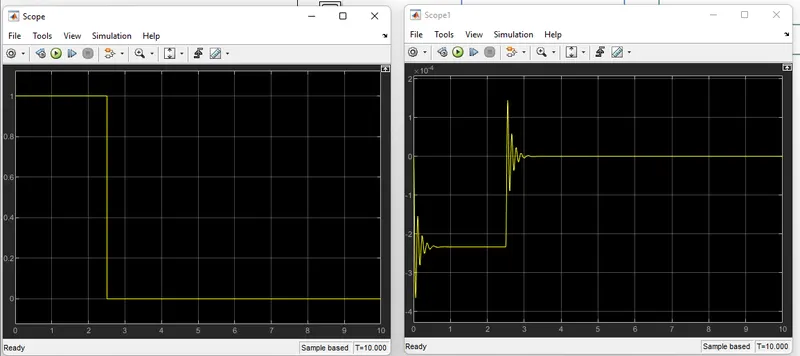
Output
Thermister
- Thermistor is also known as thermal resistor. it is defined as a type of resistor whose electrical resistance varies with changes in temperature. Although all resistor's resistance will fluctuate slightely with temperature, a thermistor is particularly sensitive to temperature changes.
- thermistor act as a passive component in a circuit. They are an accurate, cheap, and robust way to measure temperature. While thermistor do not work well in extremely hot cold temperatures, they are the sensor of many different applications.
Working principle of Thermistor
- The thermistor works on the simple principle of "Change in resistance due to a change in temperature". When the ambient temperature changes the thermistor starts self-heating its elements. Its resistance value is changed with respect to the change in temperature. This change depends on the type of thermistor used.
- We can measure the resistance of a thermistor using an "Ohmmeter".
Output