Week -2
Aim - 1)To make a Simulink model of doorbell using solenoid block.
2) To use a thermistor to sense the temperature of a heater & turn on or turn off the fan.
Objective - 1) To create a situation where the switch is closed for 2 seconds and then released, observe the physical movement of the plunger.
2) To sense the temperature of a heater by using some condition
given below
:- temperature source - 20°C from 0 to 10 seconds, 27°C from 10 to 30 seconds, 23°C FROM 30 to 50 seconds
Fan conditions: ON if the temperature above 25°C, OFF
Theory:
1. Doorbell
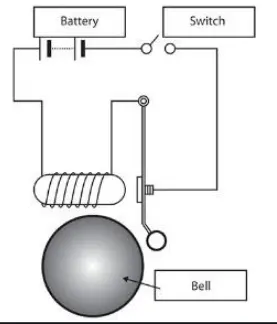
When you press a doorbell bottom, you complete an electrical circuit that allows household electricity to flow through the doorbell's internal electromagnet. the magnetic field generated by the electromagnet is then used to power a mechanism that creates the doorbell sound. Doorbells are low voltage devices
Solenoid
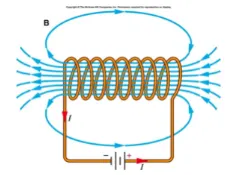
A solenoid is a three-dimensional structure of the wire is wrapped around a metallic block in a coil and electricity is passed through it. it has some special magnetic properties. electromagnetic induction makes it an electromagnet that can be switched on or off. The side in which the current seems to be passing clockwise is the south pole, and the side in which the current seems to be passing anticlockwise is the northern pole. the solenoid works just like bar magnet and therefore has many uses.
Working principle of the doorbell by using solenoid:
1) The switch is pressed and current flows through the circuit.
2) The electromagnet is powered and generates a magnetic field that attracts the iron strip towards it.
3) The striker strikes the gong (bell).
4) When the striking arm strikes the gong, the contact is broken currently is stop flowing through the circuit.
5) This causes the electromagnet to lose its magnetic field.
6) The connected spring arm returns the striker to its original rest position.
7) The contact is restored and current flows through the circuit
(provided the main switch is still pressed )
8) The process is repeated from the beginning.
Input :
Study explanation :
Input (pulse generator )
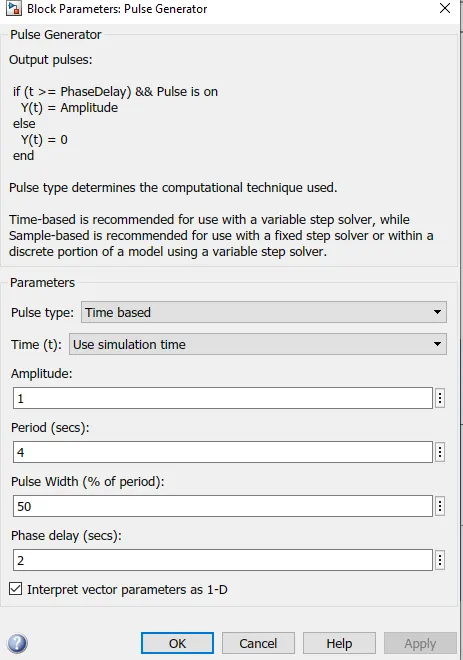
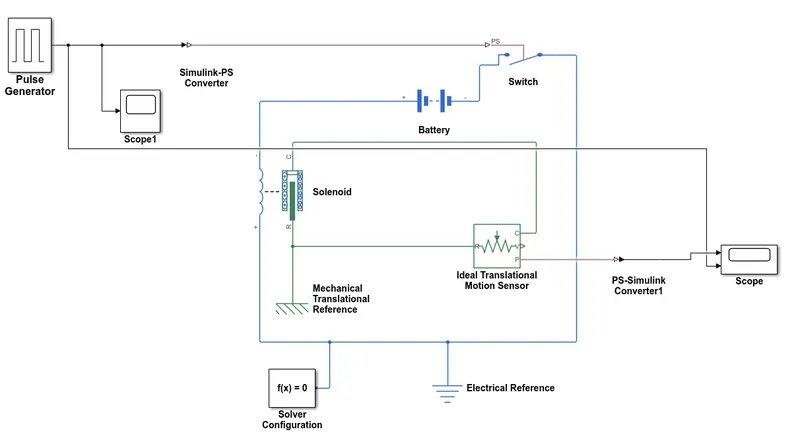
1) To create circuit input values are connected for power supply here pulse generator is used in the block. scope1 was connected to a pulse generator to execute the graph for input.
2) Simulink to ps-converter connects the pulse generator and switch block. One end of the switch is connected with the battery and the other with the solenoid.
3) The solenoid block represents the electrical characteristics and generated force for the solenoid. it converts the electrical characteristics to mechanical.
C - Case mechanical
R - Plunger mechanical
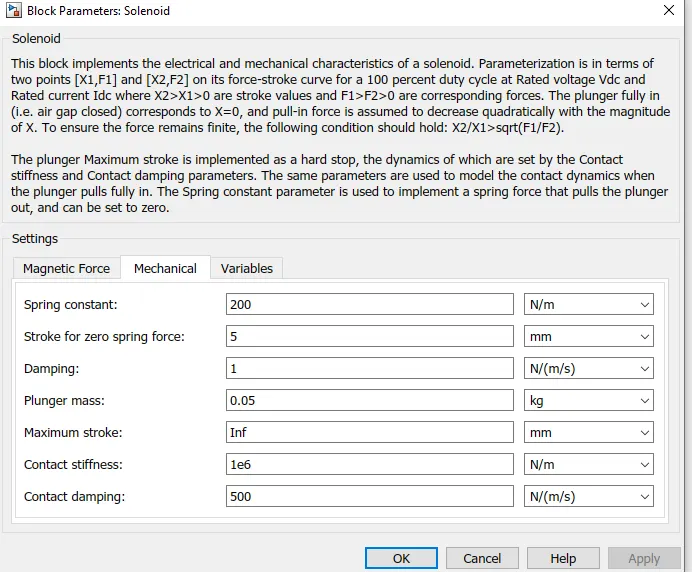
3) While we open the solenoid block the different variables are shown and modifications are also allowed to change the values (eg: by changing the mass-spring constant etc) in mechanical characteristics. solenoid blocks are shown below.
4) Now the plunger in the solenoid is connected to an ideal translation motion sensor. the block represents an ideal mechanical translation motion sensor that is a device that converts across variables measured between two mechanical translation nodes into a control signal proportional to velocity and position.
5) A case mechanical in the solenoid is connected to ideal translation. motion by the reference of mechanical translational the solver also connected in this circuit for executing circuit without error.
6) An output from the ideal translation motion sensor are connected with scope by using a ps-Simulink converter
7) Display block shows the resultant value of output but in this condition, it is not necessary to indicate that.
Output
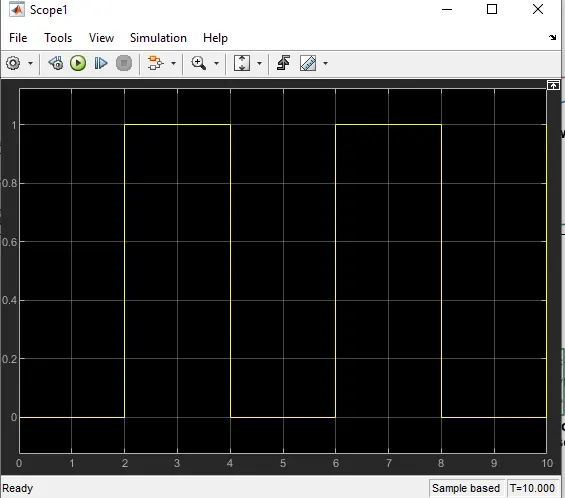
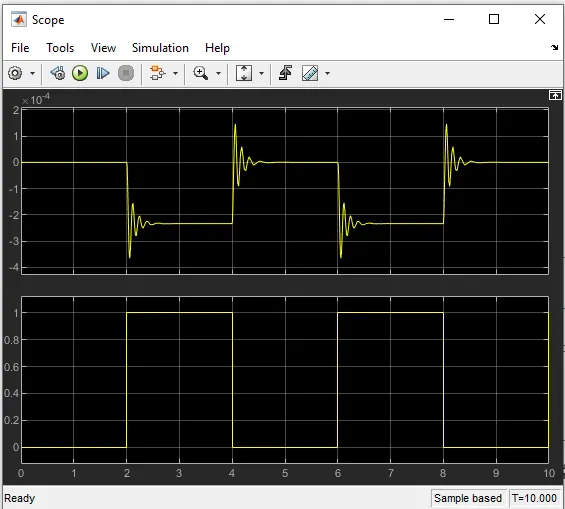
In the above results, the switch is closed the electromagnet receives electrical power from the battery and pulls the metal arms to hit the bell producing sound.
The motion of the plunger was simulated and recorded and plotted by using an ideal motion sensor and scope.
Results :
(Fan conditions ON if the temperature above 25°c OFF otherwise )
1) Thermistor is used to sense the temperature of a heater & turn on or off the fan as per the above conditions
2) Therefore the fan conditions are executed by switch block and plotted in scope block.
Thermistor :
A thermistor is a resistance thermometer or a resistor whose resistance is dependent on temperature. the term is a combination of thermal and resistor it is made of metallic oxides pressed into a bead disk or cylindrical shape and then encapsulated with an impermeable material such as epoxy or glass.
Thermistors are easy to use, inexpensive, sturdy, and respond predictably to changes in temperature. while they do not work well with excessively hot or cold temperatures they are the sensor of the choice for applications that measure temperature at desired base point. they are ideal when very precise temperatures are required.