Week -2
AIM:
- To make a Simulink model of doorbell using solenoid block.
- To use a thermistor to sense the temperature of heater and turn on or turn off the fan.
Objective:
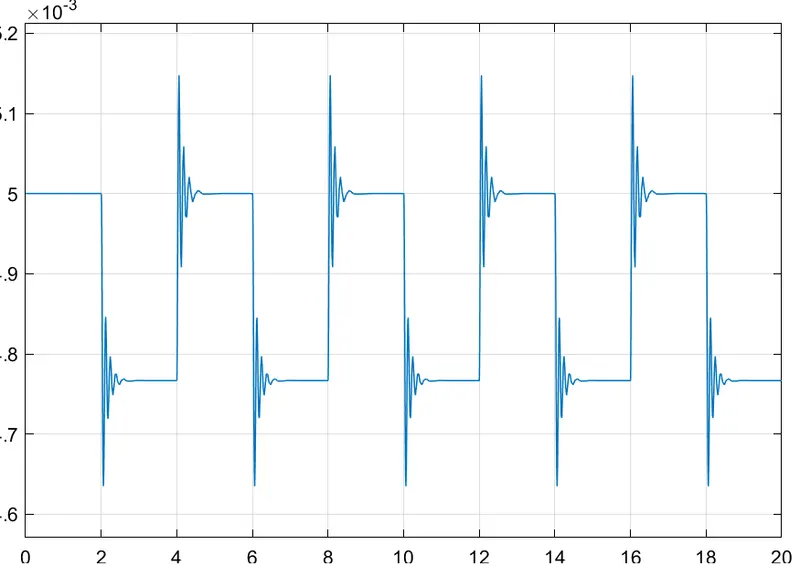
- To create a situation where the switch is closed for 2 seconds and then released. Observe the physical movement of the plunger.
- By using thermistor to sense the temperature of heater by using given conditions
Given condition:
20 deg Celsius from 0 to 10 seconds, 27 deg Celsius from 10 to 30 seconds, 23 deg Celsius from 30 to 50 deg Celsius.
Doorbell:
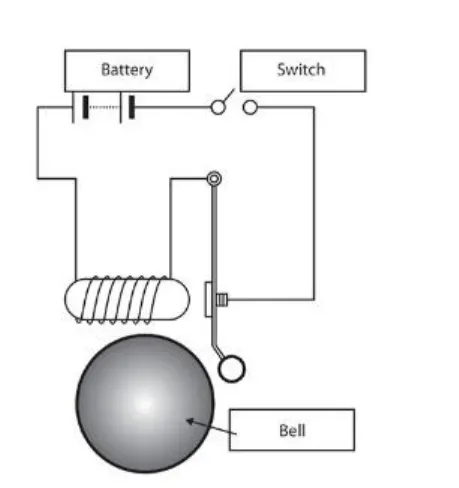
The most widely used form is the interrupter bell, which is a mechanical bell that produces a continuous sound when current is applied. The bell which is often in the shape of a cup or half-sphere, is struck by a spring-loaded arm with a metal ball on the end called a clapper, actuated by an electromagnet In its rest position the clapper is held away from the bell a short distance by its springy arm. When the switch is closed, an electric current passes from the battery. through the winding of the electromagnet. It creates a magnetic field that attracts the iron arm of the clapper, pulling it over to give the bell a tap. This opens a pair of electrical contacts attached to the clapper arm, interrupting the current to the electromagnet. The magnetic field of the electromagnet collapses, and the clapper springs away from the bell. This closes the contacts again, allowing the current to flow to the electromagnet again, so the magnet pulls the clapper over to strike the bell again. This cycle repeats rapidly, many times per second, resulting in a continuous ringing.
SOLENOID:
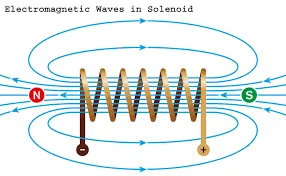
A solenoid is a long piece of wire which is wound in the shape of a coil. When the electric current passes through the coil it creates a relatively uniform magnetic field inside the coil. The solenoid can create a magnetic field from electric current and this magnetic field can be used to generate a linear motion with the help of a metal core. This simple device can be used as an electromagnet
Types of Solenoids
There are different types of solenoids available in the market, the classification is made based on material, Design and function.
- AC- Laminated Solenoid
- DC- C Frame Solenoid
- DC- D Frame Solenoid
- Linear Solenoid
- Rotary Solenoid
Simulink Model:
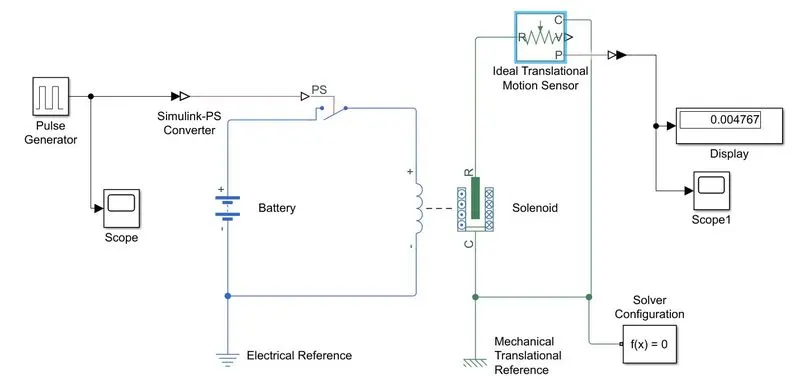
Model explanation:
Blocks used in this model
- Pulse generator
- Switch
- Simulink-ps convertor
- Solenoid
- Battery
- Electrical reference
- Ideal translational motion sensor
- Mechanical translational reference
- Ps-simulink convertor
- solverconfiguration
- Scope
- Display
- Pulse generator is used to create square waves at regular intervals.the block waveform parameters amplitude,pulse width, period and phase delay determines the shape of waveform.
- The signal from the pulse generator is converted to switch by using Simulink-ps converter.
- Switch block is connected to battery and solenoid respectively. If the external physical signal is greater than the threshold, thn the switch is closed , otherwise the switch is open.
- Solenoid converts electrical signals to mechanical signal.
- The ideal mechanical translational sensor is connected with the solenoid block r to observe the movement of plunger, the port c is connected with the mechanical reference. Scope is connected with the ideal translational sensor toget an output.
- The solver configuration block specifies the solver parameters that we need before start the simulation.
- Scope and display are used to obtain the output plot.
Output:
Question 2:
Thermistor
Thermistor is defined as type of resistor, whose electrical resistance varies with changes in temperature. Although all resistors resistance will fluctuate slightly with temperature, a thermistor is particularly sensitive to temperature vhanges.
There are two types of thermistors:
- Negative temperature coefficient(NTC) thermistor
- Positive temperature coefficient (ptc) thermistor
Given conditions:
20 deg Celsius from 0 to 10 seconds
27 deg Celsius from 10 to 30 seconds
23 deg Celsius from 30 to 50 seconds
Fan condition – ON if temperature above 25 deg Celsius, OFF otherwise
Simulink model
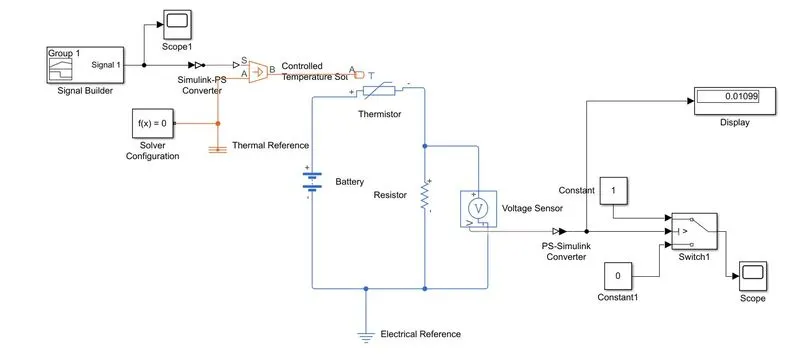
Model explanation
Blocks used in model
- Signal builder
- Simulink-ps converter
- Controlled temperature source
- Thermal reference
- Thermistor
- Battery
- Resistor
- Voltage sensor
- Electrical reference
- Ps-simulink converter
- Switch
- Constant
- Scope display
- A signal builder is given according to the given condition
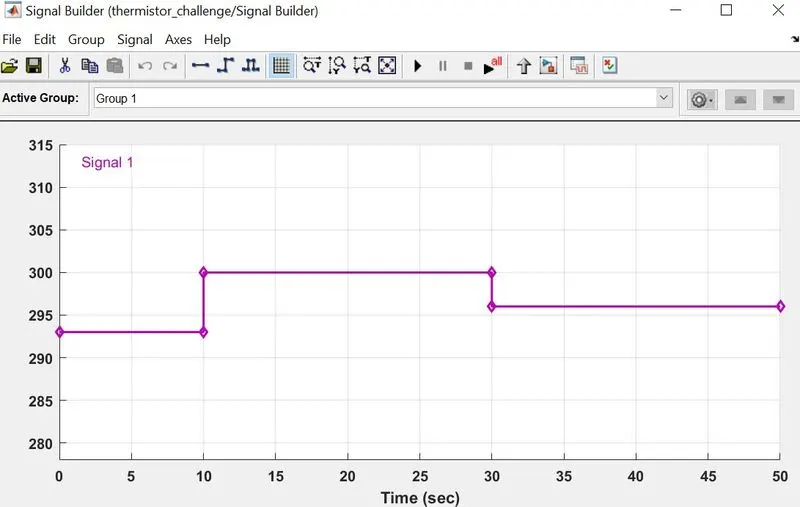
- Simulink-ps converter is used to convert the input signal into ohysical signal
- Controlled temperature source is an ideal energy source in a thermal network that can maintain a controlled temperature difference regardless of the heat flow rate
- Thermistor is a resistor whose electrical resistance varies with changes in temperature connected to battery and resistor
- Voltage sensor converts voltage measured between electrical connections into a physical signal proportional to the voltage
- Solver configuration block specifies the solver parameters that needs before the simulations begins
- Scope and display block is used to obtain the output.
Output :
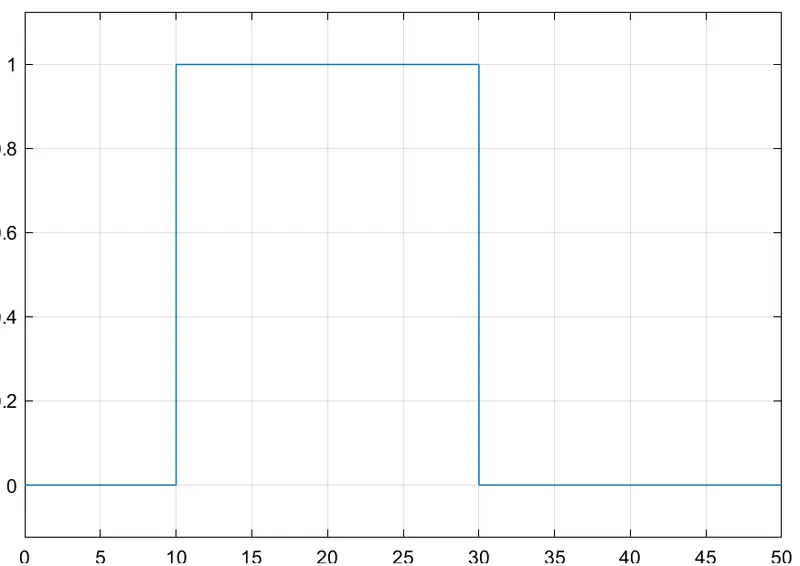
Result:
- Thermistor is used to sense the temperature of a heater & turn on or turen off the fan as per above condition
- Therefore, the fan conditions are executed by switch block and plotted in scope.