Week 12 - Symmetry vs Wedge vs HP equation
Symmetry vs Wedge vs HP equation
This is the continuation of the previous challenge simulation,
Tasks to be completed in this challenge.
- You should have results obtained from solving the Hagen Poisuelle's equation
- You should have results obtained from simulating the pipe flow with the wedge BC
- You should obtain results for the pipe flow with symmetry BC
- Write a Matlab program that takes an angle as input and generates a blockMesh file for the given angle.
EQUATION:
In standard fluid-kinetics notation.
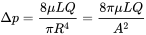
where:
- Δp is the pressure difference between the two ends,
- L is the length of pipe,
- μ is the dynamic viscosity,
- Q is the volumetric flow rate,
- R is the pipe radius,
- A is the cross-section of the pipe.
The equation does not hold close to the pipe entrance.
Given parameters.
- Angles to test 10,25,45
- The fluid is incompressible and the flow is laminar.
Expected Velocity Profile.
Assuming the following:
- The distance the fluid has to travel to become fully developed is given by the Entry Length formula.
- Given Reynolds's number is 2100. This implies flow is laminar.
- Hence Entry length formula for Laminar is given by
L d = 0.06 . R e - where L is effective length; d is dia of pipe and Re is Reynolds number.
- Assuming the dia of the pipe as 10mm; substituting the values, we get L = 1.2m;
Steps to follow
- First, the geometry is created in the blockMeshDict file, this is done by creating the file through the matlab code.
- The mesh is generated according to requirements.
- The velocity and pressure bc are applied
- The controlDict file is edited for Simulation run time and timestep;
- After the geometry is input, the simulation can be started by calling 'icoFoam' command in the terminal.
- 'paraFoam' command helps to open paraView
- The shear stress diagram is obtained by post-processing the velocity results obtained from Openfoam.
- The Velocity BC and Pressure BC are changed and the condition for front and back is changed from wedge to Symmetry.
Matlab program for automatically generate blockMeshDict file for a wedge angle provided by the user.
Angles to test 10,25,45
 clc
 clear all
 close all

 % variable values
 D = 0.01;
 r = D/2;
 L = 1.2;
 theta = input(' input the value of wedge angle='); % 10, 25, 45 are to be tested.

 % String for header,
 h1 =' /*---------------------------------*- C++ -*-------------------------------------------------*\ ';
 h2 =' | ==========      |                                                                           |';
 h3 =' | \\        /  F ield        | OpenFOAM: The Open Source CFD Toolbox                          |';
 h4 =' |  \\      /   O peration    | Version:  7                                                    |';
 h5 =' |   \\    /    A nd          | Web:      www.OpenFOAM.org                                     |';
 h6 =' |    \\  /     M anipulation |                                                                |';
 h7 ='  \*------------------------------------------------------------------------------------------*/ ';
 h8 =' FoamFile';
 h9 ='{';
 h10 ='     version        2.0;';
 h11 ='     format         ascii;';
 h12 ='     class          dictionary;';
 h13 ='     object         blockMeshDict;';
 h14 ='}';
 h15 =' // * * * * * * * * * * * * * * * * * * * * * * * * * * * * * * * * * * * * * * * * * * * * *  \\';

 conv ='convertToMeters 1;';

 sp1 = blanks(5);   %sp = space
 sp2 = blanks(10);
 sp3 = blanks(15);

 v_0 = [0 0 0];
 v_1 = [r*sind(theta/2) r*cosd(theta/2) 0];
 v_2 = [-r*sind(theta/2) r*cosd(theta/2) 0];
 v_3 = [0 0 L];
 v_4 = [r*sind(theta/2) r*cosd(theta/2) L];
 v_5 = [-r*sind(theta/2) r*cosd(theta/2) L];

 block ='hex (0 0 1 2 3 3 4 5) (1 50 200) simpleGrading (1 0.5 1)';
 edge1 ='arc 1 2';
 edge2 ='arc 4 5';

 e1 = [0 r 0];
 e2 = [0 r L];

 inlet = '(0 0 2 1)';
 outlet = '(3 4 5 3)';
 wedge1 = '(0 1 4 3)';
 wedge2 = '(3 5 2 0)';
 wall =' (4 1 2 5)';
 axis =' (0 3 3 0)';

 final = '// ************************************************************************************************************************************************** //';


 f1 = fopen('blockMeshDict','wt');

 fprintf(f1,'%s\n',h1);
 fprintf(f1,'%s\n',h2);
 fprintf(f1,'%s\n',h3);
 fprintf(f1,'%s\n',h4);
 fprintf(f1,'%s\n',h5);
 fprintf(f1,'%s\n',h6);
 fprintf(f1,'%s\n',h7);
 fprintf(f1,'%s\n',h8);
 fprintf(f1,'%s\n',h9);
 fprintf(f1,'%s\n',h10);
 fprintf(f1,'%s\n',h11);
 fprintf(f1,'%s\n',h12);
 fprintf(f1,'%s\n',h13);
 fprintf(f1,'%s\n',h14);
 fprintf(f1,'%s\n',h15);
 fprintf(f1,'\n');

 fprintf(f1,'%s\n',conv);
 fprintf(f1,'\n');


 fprintf(f1,'%s\n','vertices');
 fprintf(f1,'%s\n','(');
 fprintf(f1,'%s (%f %f %f) \n',sp1,v_0(1),v_0(2),v_0(3));
 fprintf(f1,'%s (%f %f %f) \n',sp1,v_1(1),v_1(2),v_1(3));
 fprintf(f1,'%s (%f %f %f) \n',sp1,v_2(1),v_2(2),v_2(3));
 fprintf(f1,'%s (%f %f %f) \n',sp1,v_3(1),v_3(2),v_3(3));
 fprintf(f1,'%s (%f %f %f) \n',sp1,v_4(1),v_4(2),v_4(3));
 fprintf(f1,'%s (%f %f %f) \n',sp1,v_5(1),v_5(2),v_5(3));
 fprintf(f1,'%s \n',');');
 fprintf(f1,'\n');


 fprintf(f1,'%s\n','blocks');
 fprintf(f1,'%s\n','(');
 fprintf(f1,'%s %s \n',sp1,block);
 fprintf(f1,'%s \n',');');
 fprintf(f1,'\n');

  fprintf(f1,'%s \n','edges');
  fprintf(f1,'%s \n','(');
  fprintf(f1,'%s %s (%f %f %f) \n',sp1,edge1,e1(1),e1(2),e1(3));
  fprintf(f1,'%s %s (%f %f %f) \n',sp1,edge2,e2(1),e2(2),e2(3));
  fprintf(f1,'%s \n',');');
  fprintf(f1,'\n');

   fprintf(f1,'%s \n','boundary');
   fprintf(f1,'%s \n','(');

  fprintf(f1,'%s %s \n',sp1,'inflow');
  fprintf(f1,'%s %s \n',sp1,'{');
  fprintf(f1,'%s %s \n',sp2,'type patch;');
  fprintf(f1,'%s %s \n',sp2,'faces');
  fprintf(f1,'%s %s \n',sp2,'(');
  fprintf(f1,'%s %s \n',sp3,inlet);
  fprintf(f1,'%s %s \n',sp2,');');
  fprintf(f1,'%s %s \n',sp1,'}');

   fprintf(f1,'%s %s \n',sp1,'outflow');
  fprintf(f1,'%s %s \n',sp1,'{');
  fprintf(f1,'%s %s \n',sp2,'type patch;');
  fprintf(f1,'%s %s \n',sp2,'faces');
  fprintf(f1,'%s %s \n',sp2,'(');
  fprintf(f1,'%s %s \n',sp3,outlet);
  fprintf(f1,'%s %s \n',sp2,');');
  fprintf(f1,'%s %s \n',sp1,'}');

   fprintf(f1,'%s %s \n',sp1,'front');
  fprintf(f1,'%s %s \n',sp1,'{');
  fprintf(f1,'%s %s \n',sp2,'type wedge;');
  fprintf(f1,'%s %s \n',sp2,'faces');
  fprintf(f1,'%s %s \n',sp2,'(');
  fprintf(f1,'%s %s \n',sp3,wedge1);
  fprintf(f1,'%s %s \n',sp2,');');
  fprintf(f1,'%s %s \n',sp1,'}');

   fprintf(f1,'%s %s \n',sp1,'back');
  fprintf(f1,'%s %s \n',sp1,'{');
  fprintf(f1,'%s %s \n',sp2,'type wedge;');
  fprintf(f1,'%s %s \n',sp2,'faces');
  fprintf(f1,'%s %s \n',sp2,'(');
  fprintf(f1,'%s %s \n',sp3,wedge2);
  fprintf(f1,'%s %s \n',sp2,');');
  fprintf(f1,'%s %s \n',sp1,'}');

   fprintf(f1,'%s %s \n',sp1,'wall');
  fprintf(f1,'%s %s \n',sp1,'{');
  fprintf(f1,'%s %s \n',sp2,'type wall;');
  fprintf(f1,'%s %s \n',sp2,'faces');
  fprintf(f1,'%s %s \n',sp2,'(');
  fprintf(f1,'%s %s \n',sp3,wall);
  fprintf(f1,'%s %s \n',sp2,');');
  fprintf(f1,'%s %s \n',sp1,'}');

   fprintf(f1,'%s %s \n',sp1,'axis');
  fprintf(f1,'%s %s \n',sp1,'{');
  fprintf(f1,'%s %s \n',sp2,'type empty;');
  fprintf(f1,'%s %s \n',sp2,'faces');
  fprintf(f1,'%s %s \n',sp2,'(');
  fprintf(f1,'%s %s \n',sp3,axis);
  fprintf(f1,'%s %s \n',sp2,');');
  fprintf(f1,'%s %s \n',sp1,'}');

  fprintf(f1,'%s \n',');');
  fprintf(f1,'\n');

  fprintf(f1,'%s \n','mergePatchPairs');
  fprintf(f1,'%s \n','(');
  fprintf(f1,'%s \n',');');
  fprintf(f1,'\n');
  fprintf(f1,'%s \n',final);

  fclose(f1);
blockMeshDict File:
1) Theta = 10,
 /*---------------------------------*- C++ -*-------------------------------------------------*\
 | ==========      |                                                                           |
 | \\        /  F ield        | OpenFOAM: The Open Source CFD Toolbox                          |
 |  \\      /   O peration    | Version:  7                                                    |
 |   \\    /    A nd          | Web:      www.OpenFOAM.org                                     |
 |    \\  /     M anipulation |                                                                |
  \*------------------------------------------------------------------------------------------*/
 FoamFile
{
     version        2.0;
     format         ascii;
     class          dictionary;
     object         blockMeshDict;
}
 // * * * * * * * * * * * * * * * * * * * * * * * * * * * * * * * * * * * * * * * * * * * * *  \\

convertToMeters 1;

vertices
(
      (0.000000 0.000000 0.000000)
      (0.000436 0.004981 0.000000)
      (-0.000436 0.004981 0.000000)
      (0.000000 0.000000 1.200000)
      (0.000436 0.004981 1.200000)
      (-0.000436 0.004981 1.200000)
);

blocks
(
      hex (0 0 1 2 3 3 4 5) (1 50 200) simpleGrading (1 0.5 1)
);

edges
(
      arc 1 2 (0.000000 0.005000 0.000000)
      arc 4 5 (0.000000 0.005000 1.200000)
);

boundary
(
      inflow
      {
           type patch;
           faces
           (
                (0 0 2 1)
           );
      }
      outflow
      {
           type patch;
           faces
           (
                (3 4 5 3)
           );
      }
      front
      {
           type wedge;
           faces
           (
                (0 1 4 3)
           );
      }
      back
      {
           type wedge;
           faces
           (
                (3 5 2 0)
           );
      }
      wall
      {
           type wall;
           faces
           (
                 (4 1 2 5)
           );
      }
      axis
      {
           type empty;
           faces
           (
                 (0 3 3 0)
           );
      }
);

mergePatchPairs
(
);

// ************************************************************************************************************************************************** //
2) Theta = 25
 /*---------------------------------*- C++ -*-------------------------------------------------*\
 | ==========      |                                                                           |
 | \\        /  F ield        | OpenFOAM: The Open Source CFD Toolbox                          |
 |  \\      /   O peration    | Version:  7                                                    |
 |   \\    /    A nd          | Web:      www.OpenFOAM.org                                     |
 |    \\  /     M anipulation |                                                                |
  \*------------------------------------------------------------------------------------------*/
 FoamFile
{
     version        2.0;
     format         ascii;
     class          dictionary;
     object         blockMeshDict;
}
 // * * * * * * * * * * * * * * * * * * * * * * * * * * * * * * * * * * * * * * * * * * * * *  \\

convertToMeters 1;

vertices
(
      (0.000000 0.000000 0.000000)
      (0.001082 0.004881 0.000000)
      (-0.001082 0.004881 0.000000)
      (0.000000 0.000000 1.200000)
      (0.001082 0.004881 1.200000)
      (-0.001082 0.004881 1.200000)
);

blocks
(
      hex (0 0 1 2 3 3 4 5) (1 50 200) simpleGrading (1 0.5 1)
);

edges
(
      arc 1 2 (0.000000 0.005000 0.000000)
      arc 4 5 (0.000000 0.005000 1.200000)
);

boundary
(
      inflow
      {
           type patch;
           faces
           (
                (0 0 2 1)
           );
      }
      outflow
      {
           type patch;
           faces
           (
                (3 4 5 3)
           );
      }
      front
      {
           type wedge;
           faces
           (
                (0 1 4 3)
           );
      }
      back
      {
           type wedge;
           faces
           (
                (3 5 2 0)
           );
      }
      wall
      {
           type wall;
           faces
           (
                 (4 1 2 5)
           );
      }
      axis
      {
           type empty;
           faces
           (
                 (0 3 3 0)
           );
      }
);

mergePatchPairs
(
);

// ************************************************************************************************************************************************** //
3) Theta = 45
 /*---------------------------------*- C++ -*-------------------------------------------------*\
 | ==========      |                                                                           |
 | \\        /  F ield        | OpenFOAM: The Open Source CFD Toolbox                          |
 |  \\      /   O peration    | Version:  7                                                    |
 |   \\    /    A nd          | Web:      www.OpenFOAM.org                                     |
 |    \\  /     M anipulation |                                                                |
  \*------------------------------------------------------------------------------------------*/
 FoamFile
{
     version        2.0;
     format         ascii;
     class          dictionary;
     object         blockMeshDict;
}
 // * * * * * * * * * * * * * * * * * * * * * * * * * * * * * * * * * * * * * * * * * * * * *  \\

convertToMeters 1;

vertices
(
      (0.000000 0.000000 0.000000)
      (0.001913 0.004619 0.000000)
      (-0.001913 0.004619 0.000000)
      (0.000000 0.000000 1.200000)
      (0.001913 0.004619 1.200000)
      (-0.001913 0.004619 1.200000)
);

blocks
(
      hex (0 0 1 2 3 3 4 5) (1 50 200) simpleGrading (1 0.5 1)
);

edges
(
      arc 1 2 (0.000000 0.005000 0.000000)
      arc 4 5 (0.000000 0.005000 1.200000)
);

boundary
(
      inflow
      {
           type patch;
           faces
           (
                (0 0 2 1)
           );
      }
      outflow
      {
           type patch;
           faces
           (
                (3 4 5 3)
           );
      }
      front
      {
           type wedge;
           faces
           (
                (0 1 4 3)
           );
      }
      back
      {
           type wedge;
           faces
           (
                (3 5 2 0)
           );
      }
      wall
      {
           type wall;
           faces
           (
                 (4 1 2 5)
           );
      }
      axis
      {
           type empty;
           faces
           (
                 (0 3 3 0)
           );
      }
);

mergePatchPairs
(
);

// ************************************************************************************************************************************************** //
- VELOCITY BOUNDARY CONDITIONS.
/*--------------------------------*- C++ -*----------------------------------*\
  =========                 |
  \\      /  F ield         | OpenFOAM: The Open Source CFD Toolbox
   \\    /   O peration     | Website:  https://openfoam.org
    \\  /    A nd           | Version:  7
     \\/     M anipulation  |
\*---------------------------------------------------------------------------*/
FoamFile
{
    version     2.0;
    format      ascii;
    class       volVectorField;
    object      U;
}
// * * * * * * * * * * * * * * * * * * * * * * * * * * * * * * * * * * * * * //

dimensions      [0 1 -1 0 0 0 0];

internalField   uniform (0 0 0);

boundaryField
{
    inflow
    {
        type            fixedValue;
        value           uniform (0 0 0.1869);
    }

    outflow
   {
        type            zeroGradient;
   }

    wall
    {
        type            noSlip;
    }

    front
    {
        type            symmetry;
    }

    back
    {
        type            symmetry;
    }

    axis
    {
        type            empty;
    }


}

// ************************************************************************* //- PRESSURE BOUNDARY CONDITIONS.
/*--------------------------------*- C++ -*----------------------------------*\
  =========                 |
  \\      /  F ield         | OpenFOAM: The Open Source CFD Toolbox
   \\    /   O peration     | Website:  https://openfoam.org
    \\  /    A nd           | Version:  7
     \\/     M anipulation  |
\*---------------------------------------------------------------------------*/
FoamFile
{
    version     2.0;
    format      ascii;
    class       volScalarField;
    object      p;
}
// * * * * * * * * * * * * * * * * * * * * * * * * * * * * * * * * * * * * * //

dimensions      [0 2 -2 0 0 0 0];

internalField   uniform 0;

boundaryField
{
    inflow
    {
        type            zeroGradient;
    }

    outflow
    {
        type            fixedValue;
        value           uniform 0.0638749;
    }

   wall
    {
        type          zeroGradient;
    }

   front
    {
        type            symmetry;
    }

   back
    {
        type            symmetry;
    }

   axis
    {
        type            empty;
    }
}

// ************************************************************************* //
Symmetry is used in front and back walls, This changes the
Wedge Geometry:
10 Degrees
25 Degrees
45 Degrees
RESULTS:
Conclusion:
- The percentage error decreases as the wedge angle decreases.
- Symmetry type BC is more accurate.
- Simulation time is greater in wedge condition than symmetry condition.