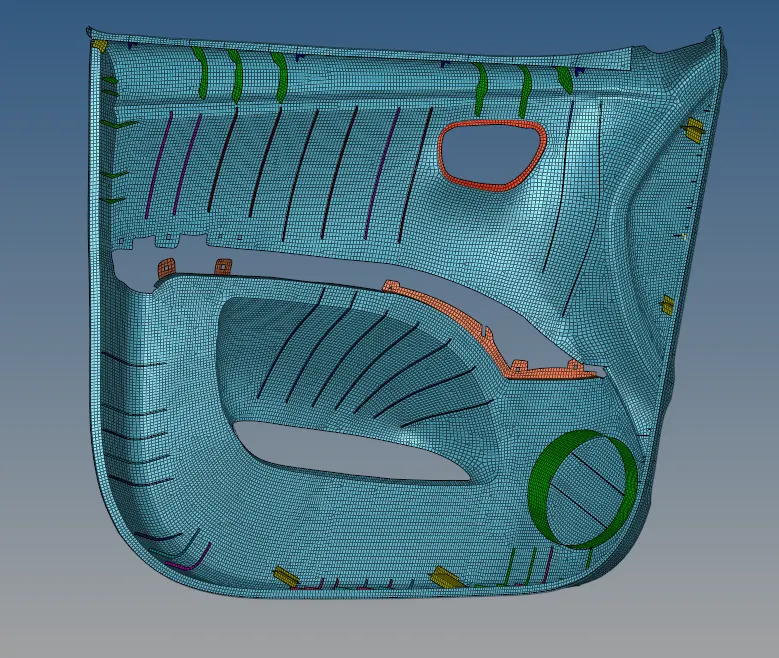
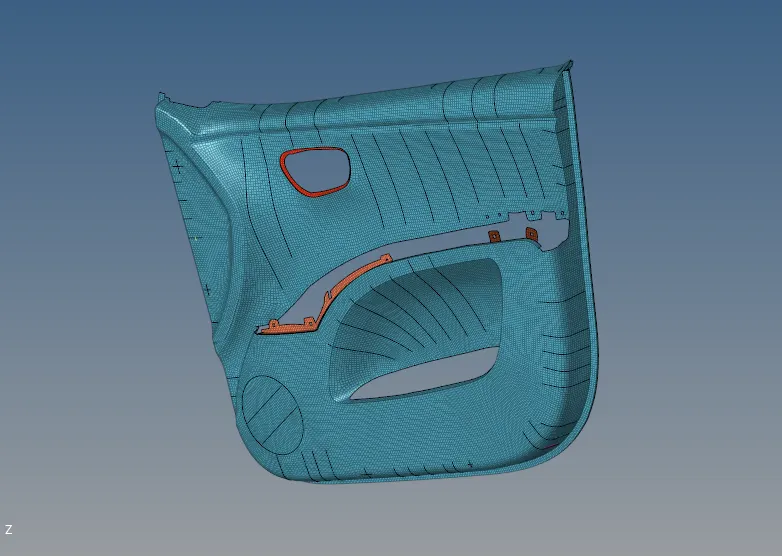
Week 12:Project-1-Meshing of Door Inner Panel Challenge
AIM: To Mesh the door inner panel (plastic component).
OBJECTIVE: To mesh the given component with the given criteria.
Target Element Length = 4 Units
| S.N | Quality Criteria | Value |
| 1 | Aspect Ratio | 5 |
| 2 | Skewness | 45 |
| 3 | Warping | 15 |
| 4 | Taper | 0.5 |
| 5 | Min. Length | 2 Units |
| 6 | Max. Length | 6 Units |
| 7 | Min angle Quad | 45 |
| 8 | Max angle Quad | 135 |
| 9 | Min angle Tria | 20 |
| 10 | Max angle Tria | 120 |
| 10 | Tria % | 10 |
THEORETICAL EXPLAINATION: -
- Door panels serve as an interface between the interior of the car and the inner workings of the door, and between vehicle occupants and the door shown in figure
- They are expected to meet a variety of design specifications regarding safety, aesthetics, and functionality. In addition, they are expected to continue the material theme of the dashboard and pillars while concealing intricate electrical and mechanical components for operating locks, windows, and other features.
- The door panel has evolved from a simple two-part system of latch and simple winding mechanism to a more sophisticated enclosure. Doors currently have an inner full-width panel consisting of electronic windows, central locking system, and speakers.These panels typically consist of a foamed core covered with either textiles or plastics shown in figure.
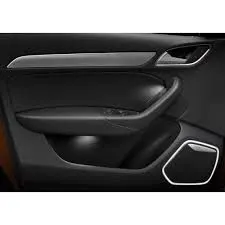
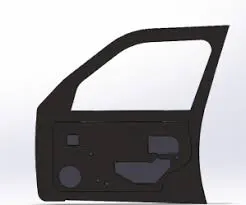
- Conventionally, door panels as shown in figure consisted of polyvinyl chloride (PVC) or polyurethane foamed core with appropriate textile fabric coverings. Subsequently, there was a shift toward thin-wall moldings of ABS or PP backed by textiles in order to manufacture a contour-backed panel with recesses.
- This is primarily because integrated injection-molded door panel assemblies reduce the need for other energy-absorbing materials, resulting in cost reduction for manufacturers due to simplification of door construction.
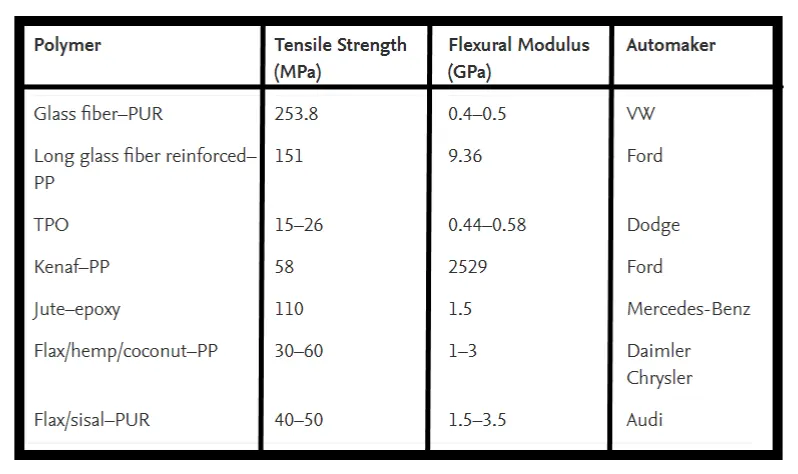
- Currently honeycomb-based plastics are attracting attention due to their tougher, lighter, and better acoustic properties. Figure gives a list of plastics used by various car manufacturers in making door panels.
Given component.
PROCEDURE:
- Import and cleanup the geometry.
- Then, check the thickness of the geometry since the component is plastic so, it will be having varying thicknesses at the different parts. To check the thickness go to Geo > Distance>Two points
Likewise check for the thickness at different regions if no points are available Go to > quick edit panel> add points
- Thickness of the given component seems almost same for the lower surface so, we can use surface offset option to extract the mid surface. To extract mid surface go to geo>surface edit>offset>select surface by face>offset
- For the remaining parts of the components which are having different thickness we can use surface pair option to extract the midsurface. for that go to geo>midsurface>final edit tool>surface pair>select surfaces >extract.
Extracted midsurface of the given component.
- Make the geometry cleanup to get a bettwe mesh quality. To mesh the component go to 2D>automesh>select surface>mesh. Before meshing set the quality criteria file as per the given parameters.
Meshed component.
Meshed component.
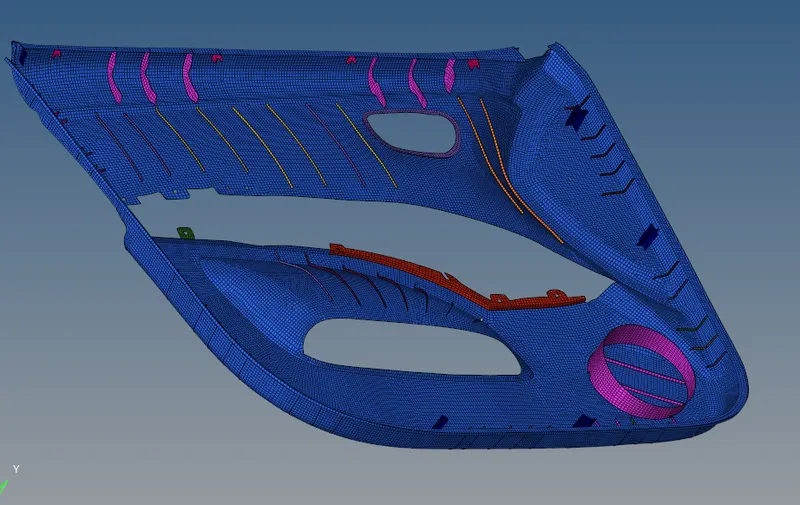
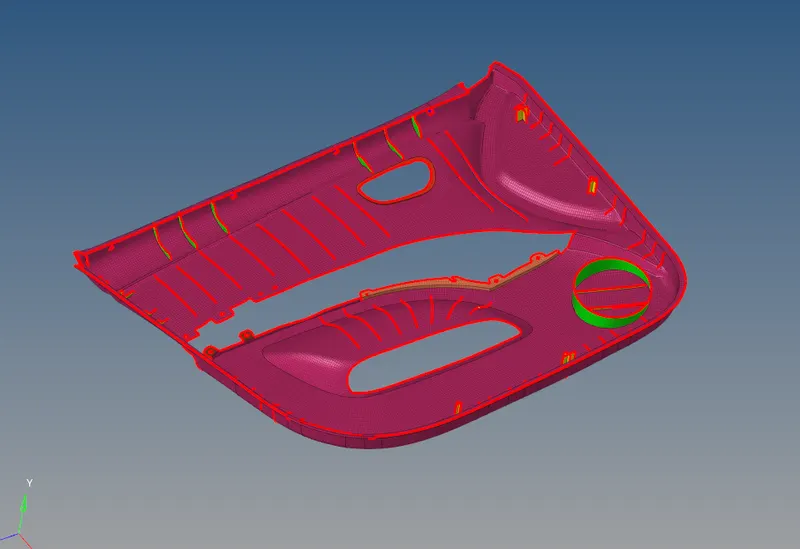
- Check for the Free edges
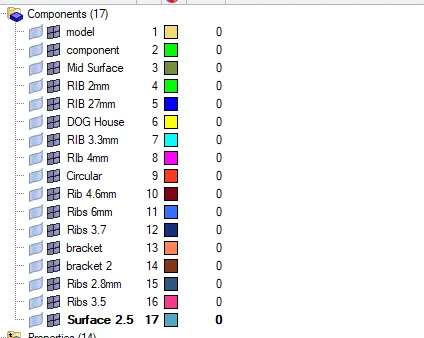
- After completing the meshing assign the thickness for particular ribs and other surfaces and parts of the component by measuring the particular parts thickness. To assign thickness create particular components and properties for particular parts of the component and in the property assign thickness.
Component after assigning thickness.
Finding Normals For the Final Product:-
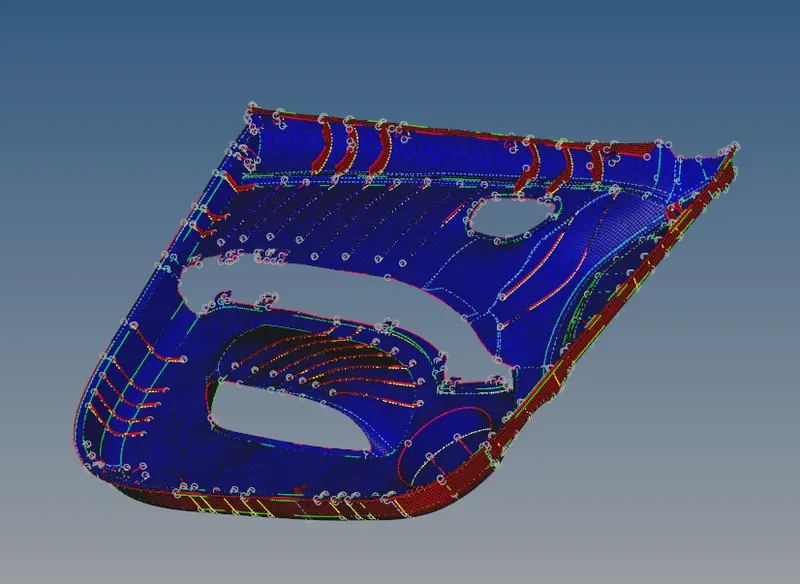
FINAL MODEL :-
\