Week 11 - Project - A pillar Design with Master Section
AIM
Create the A Pillar Plastic component through the given Class-A surface and master section and perform Draft analysis.
THEORY
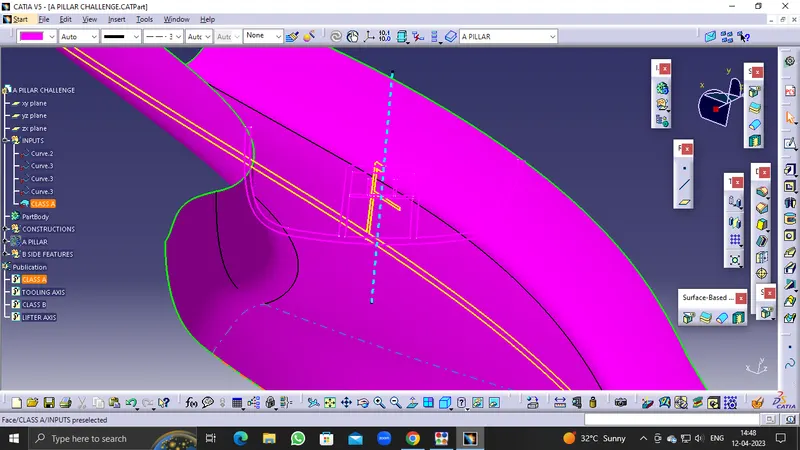
CLASS A SURFACE: Class A surface is a surface made by the designer specially in automotive design which is the aesthetic part of a body and is given as an input to the plastic designer to work on it.
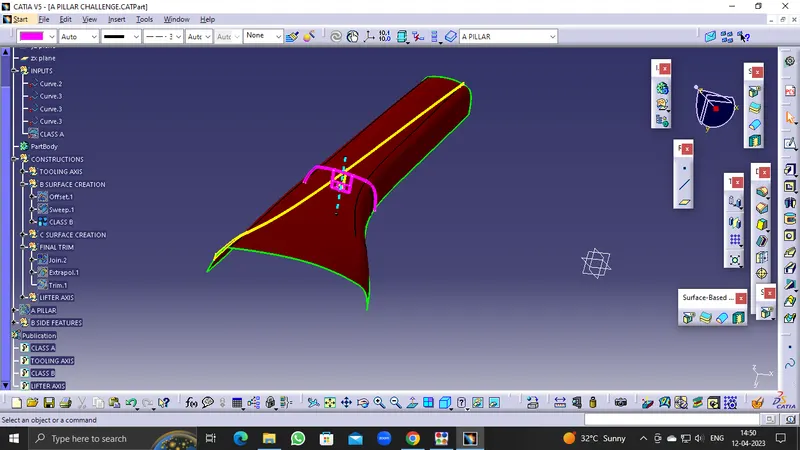
CLASS B SURFACE: It is a surface which comes below the class A surface with a particular thickness. This surface contains engineering features of a model.
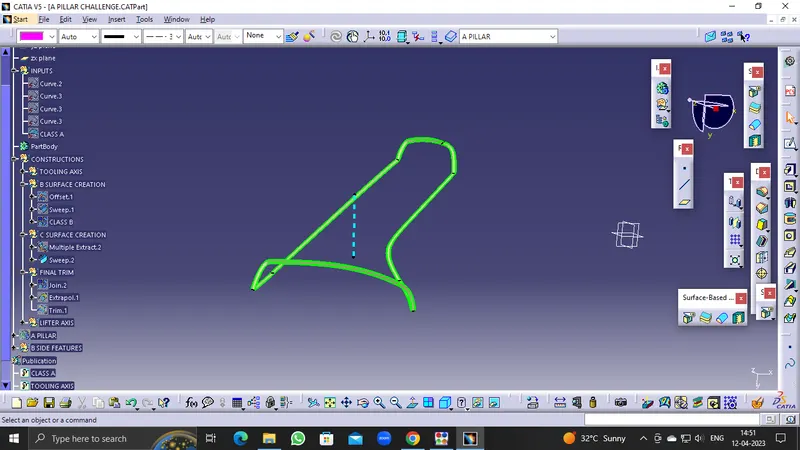
CLASS C SURFACE: It is the surface which joins class A with class B surface.
A PILLAR: A-Pillars straddle the windshield, B-Pillars are in the middle of the passenger compartment (just behind the front doors) and C-Pillars are those at the rear of the passenger compartment.
MASTER SECTION: Master sections are the guides for design requirements which decide the component packaging after technical (Styling, Concept or Class-A) surfaces. Creating this master section should need 5 to 6 years of experience. This helps you to decide the feasibility, clearance, the packaging and the fixation strategy before working it on a 3D.
TOOLING AXIS: Tooling axis is the direction in which the core and cavity opens. If we are using proper tooling axis, we can avoid adding side cores thus the cost of manufacturing the component can be reduced.
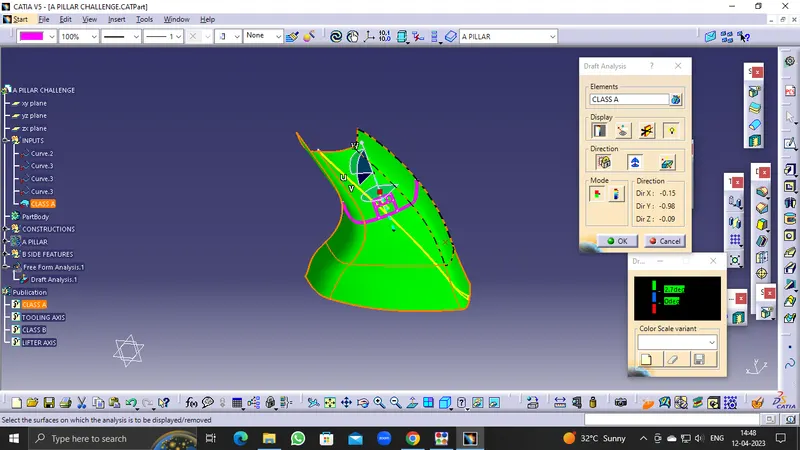
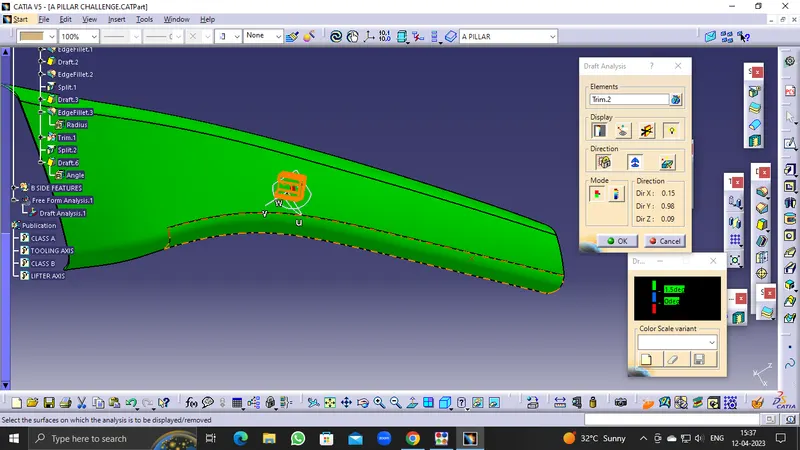
DRAFT ANALYSIS: From draft analysis, we can verify draft angles, examine the angle changes within a face, as well as locate parting lines, injection and ejection surfaces in parts.
DRAFT ANALYSIS FOR CLASS A SURFACE:
CLASS B SURFACE.
CLASS C SURFACE.
After creating CLASS A & B Surface we need to JOIN the CLASS A & CLASS C surface and then trim with CLASS B SURFACE to get a Close Body.
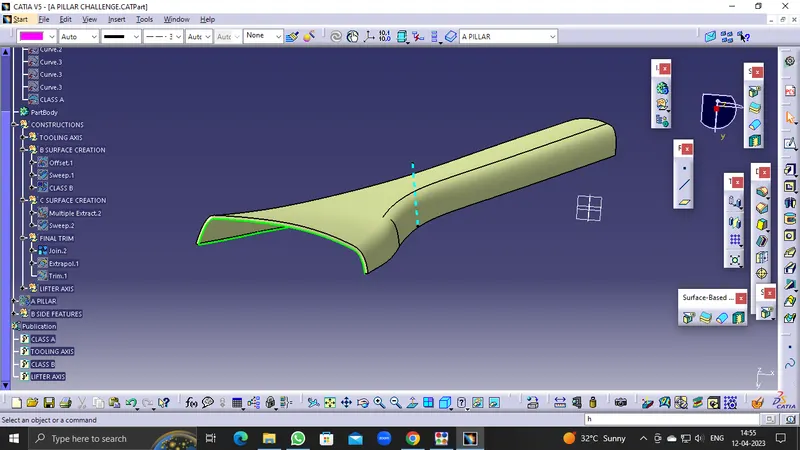
PART BODY.
At the end we need the body which is the component to create the B side features which is Dog House.
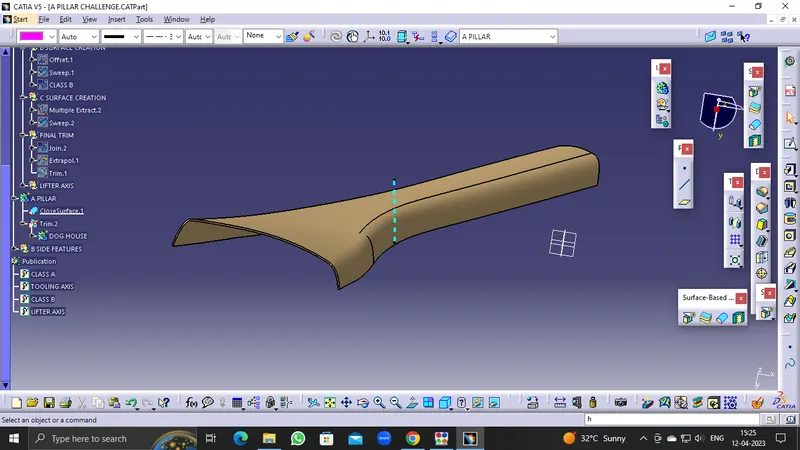
DOG HOUSE: It is an engineering feature used in plastic trim design. It is used as a supporting feature. By using dog house, we can support the other engineering features like heat stakes, screw boss and locators to locate them at a certain height where we cannot violate the design rules for the features. By using doghouse, we can avoid sink marks in class A surface.
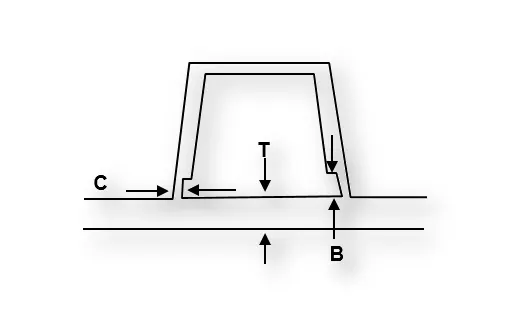
Doghouse wall thickness at the intersection of the part wall ( C ) should be 40% or less than the main wall stock ( T ).
The height of ( B ) should be between 3.0 – 6.0 mm
B SIDE FEATURES USING MASTERSECTIONS.
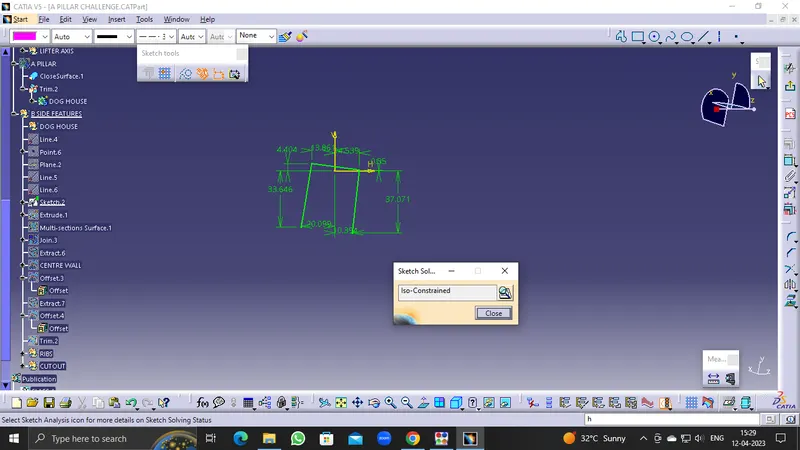
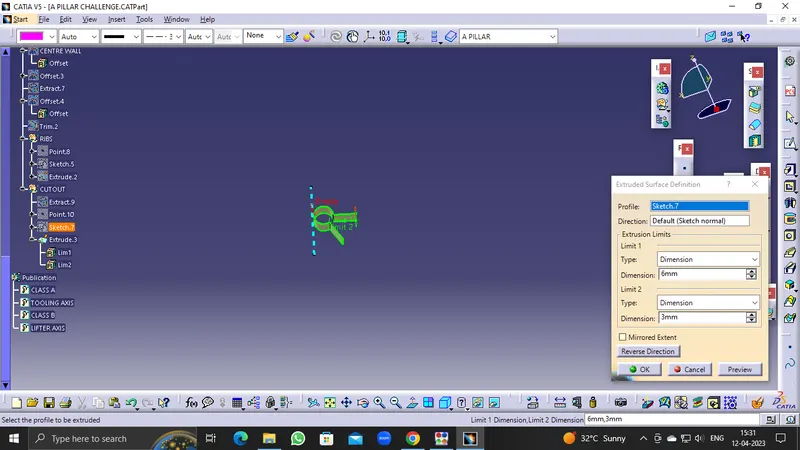
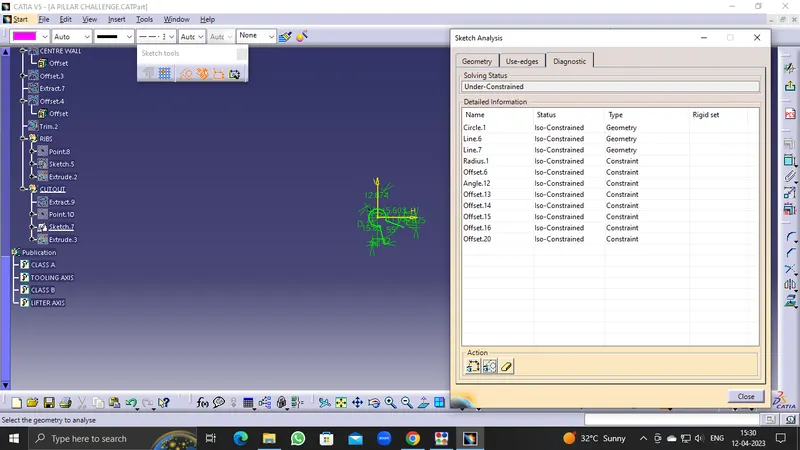
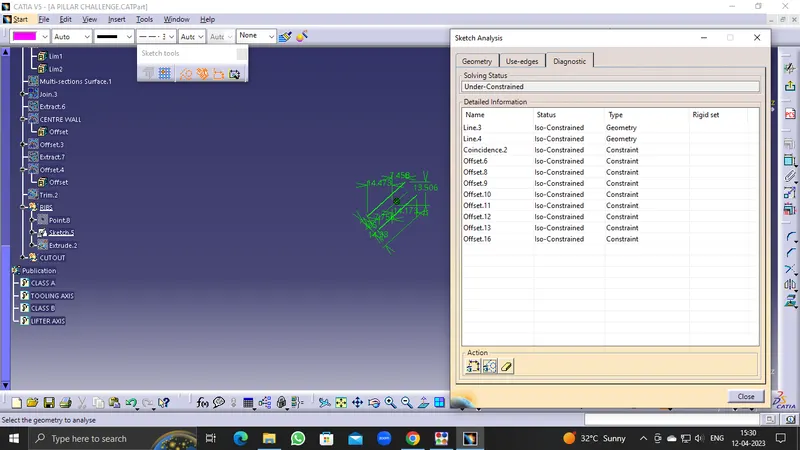
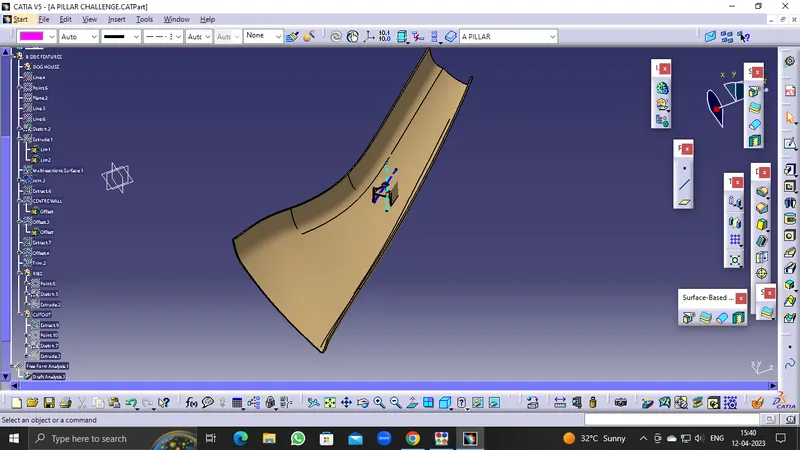
For the craetion of B Side features we use the mastersections to draw the sketch and dimensions of the component and the features, take that as a reference and draw the sketch of it and make all the sketch as isoconstrained, to create a dog house and the ribs and cutouts on that.
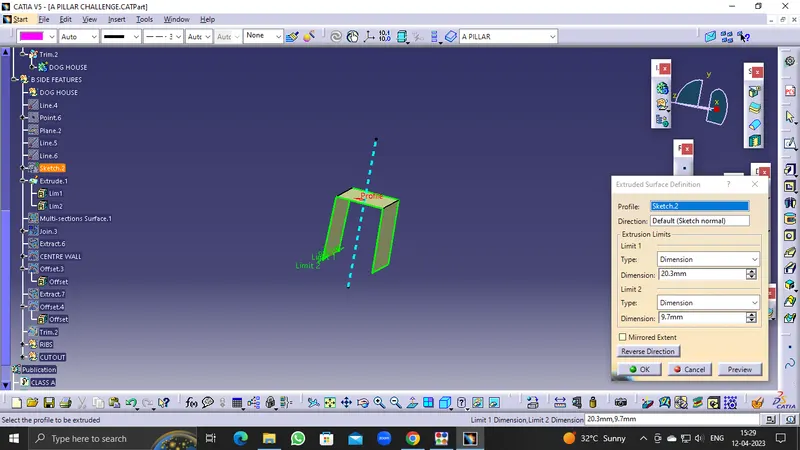
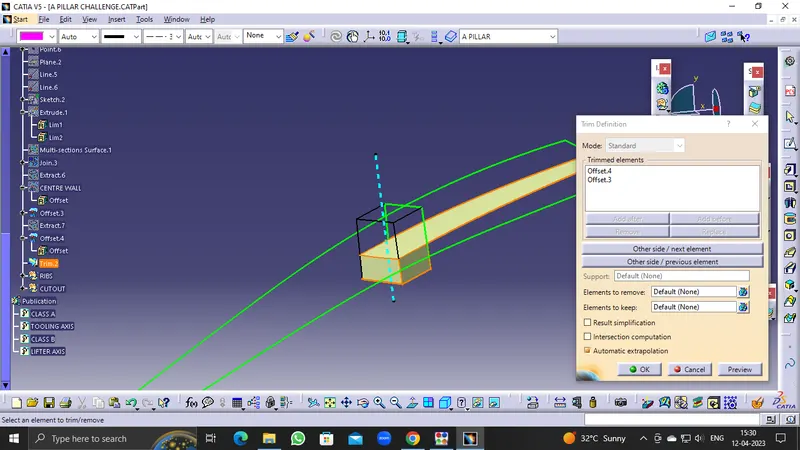
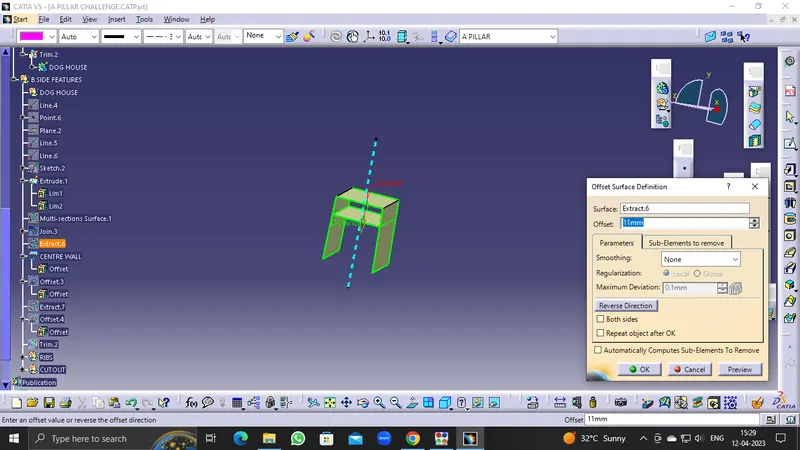
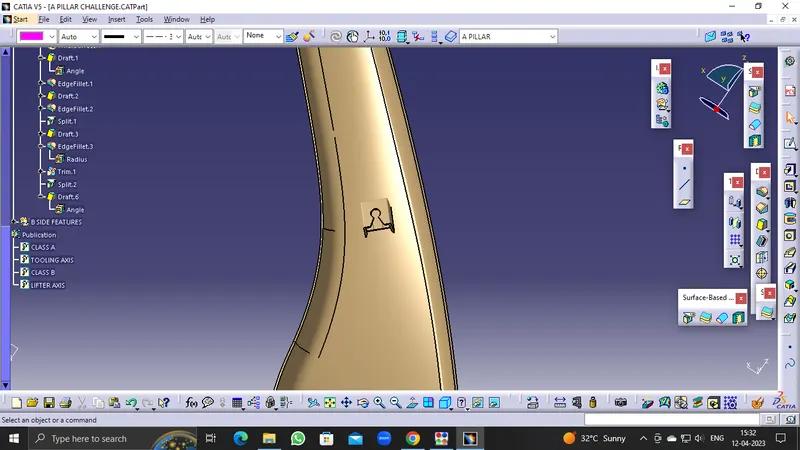
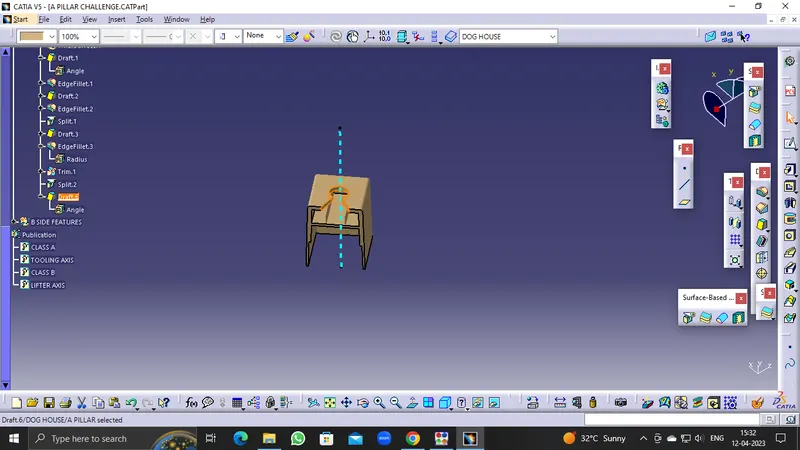
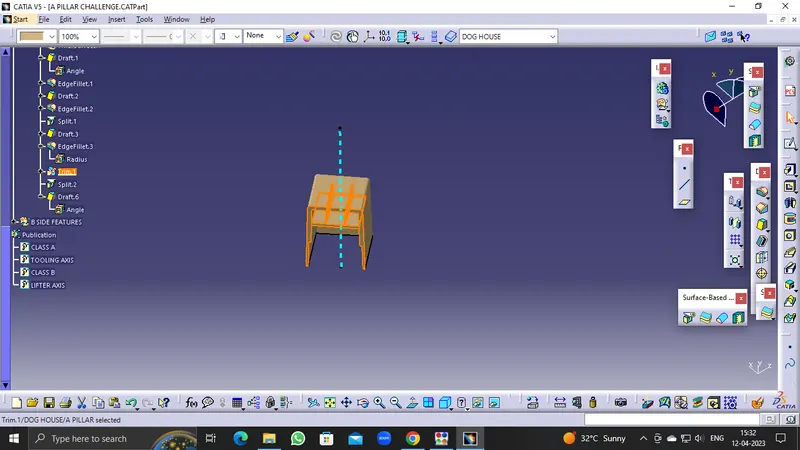
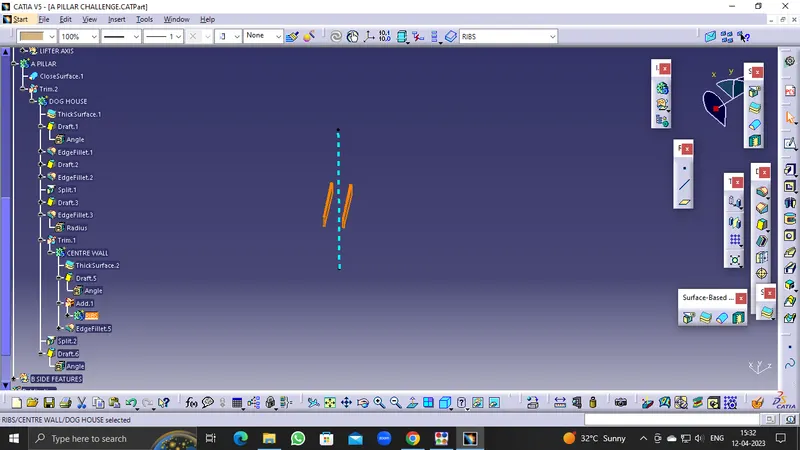
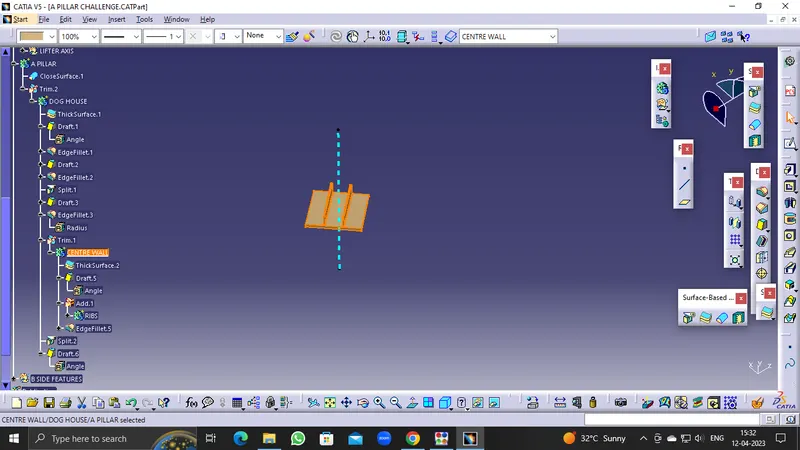
Draft Analysis Of Plastic Component
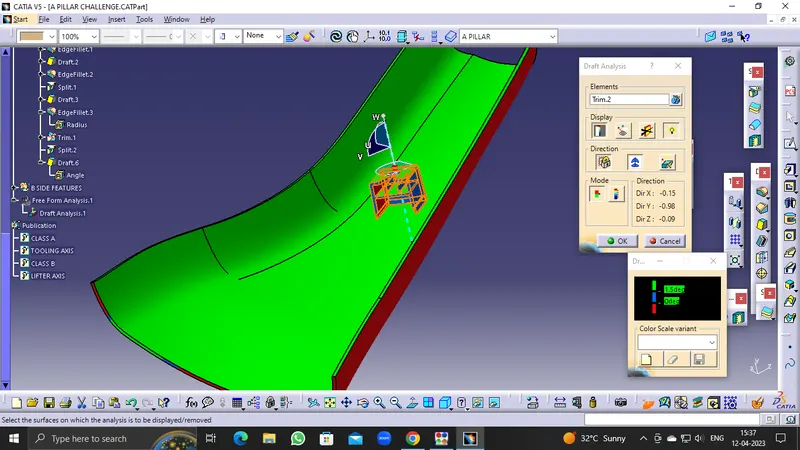
- The obtained part is draft analysed to check for the correctness of obtained model by following the draft analysis procedure mentioned above.
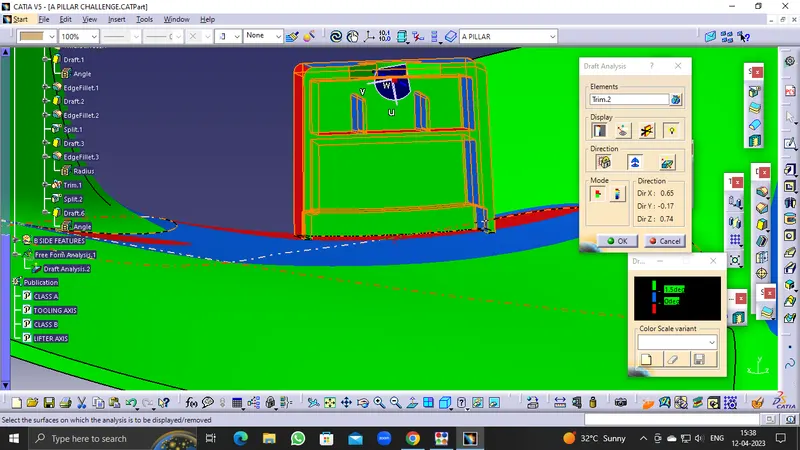
Side core has to be created for the doghouse to get ejected. So, a side core axis is also created for checking the draft analysis of the component.
Minimum of 0.5-degree draft is provided and the B side engineering features are analysed using the side core axis. Green colour is obtained in the draft analysis, which indicates that the draft provided all are in correct direction.
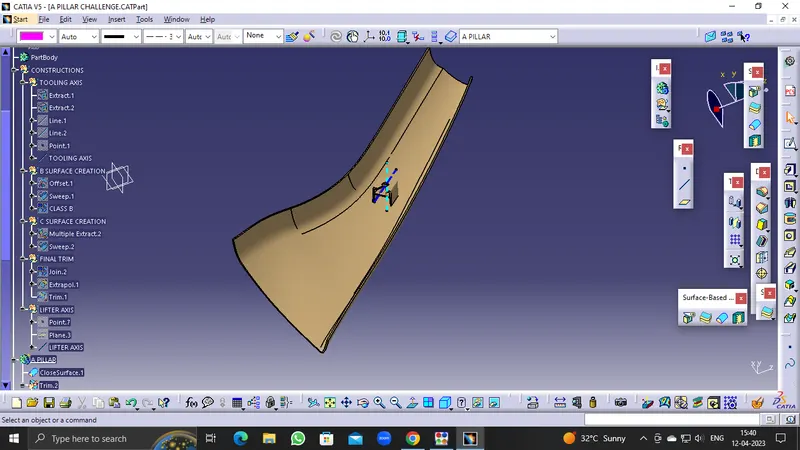
TREE STRUCTURE
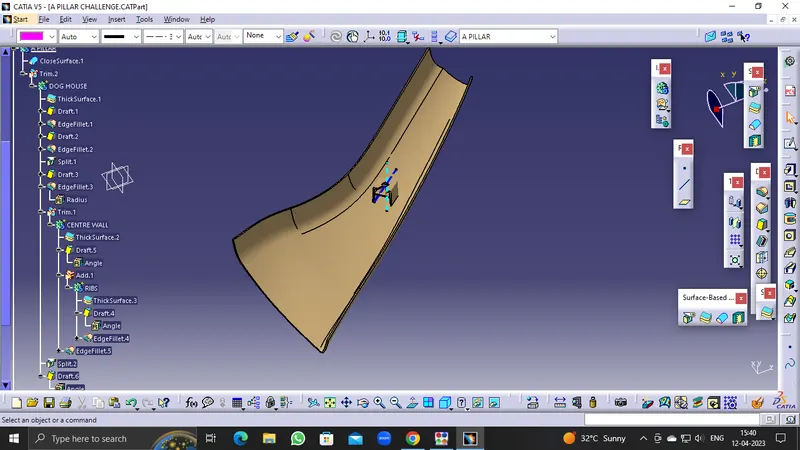
ONCLUSION
- Created Tooling axis
- Created Class B and Class C surface from provided Class A surface.
- Created solid part out of surface modelling.
- Created engineering features from the master section provided.
- Draft analysis of Class A surface and final part is also done.