Week 11: Project 2 - Emission characterization on a CAT3410 engine
Emission characterization on a CAT3410 engine
Objective
To simulate the CAT 3410 engine using diesel fuel and characterize the emission for open W piston and Omega Piston.
Simulation
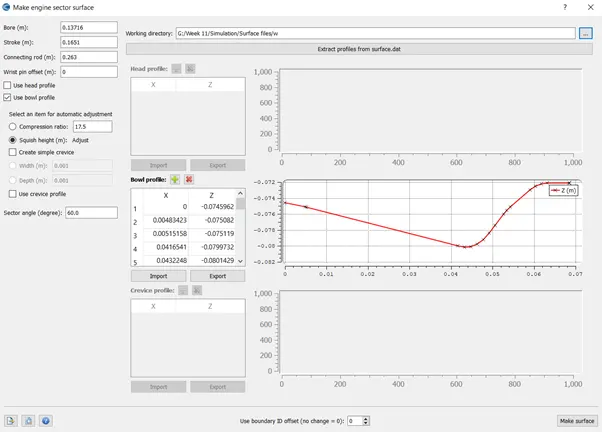
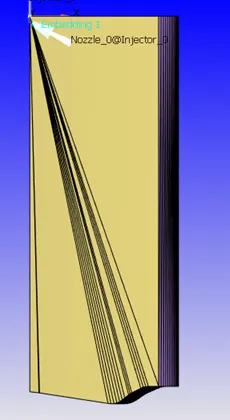
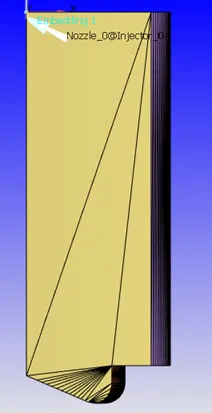
The geometry has been modified making it less heavy computationally. The given geometry has been transformed for sector simulation of 60deg. Converge sector surface creation tool has been used for both of the piston.
Open W piston
Omega Piston
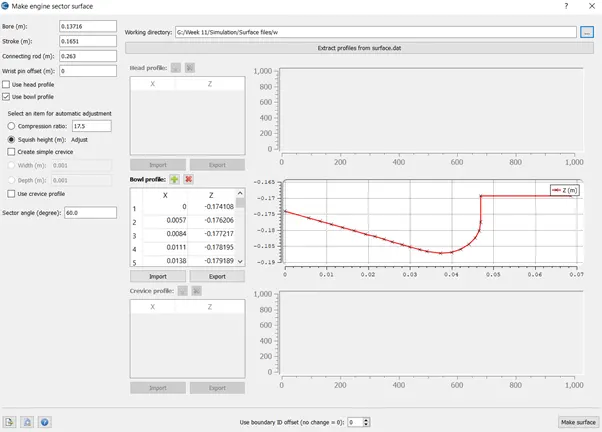
Sector geometry of both the pistons
Open W piston
Omega Piston
Crank Angle – based IC engine simulation has been chosen as the application type.
The length of stroke is specified as 0.1651m. Depth of bore is 0.13716m, the specified rpm is 1600 and connecting rod length is 0.263m.
Materials
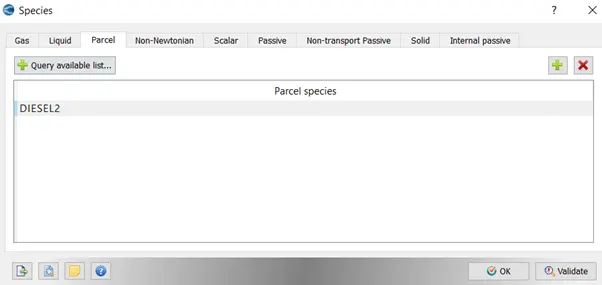
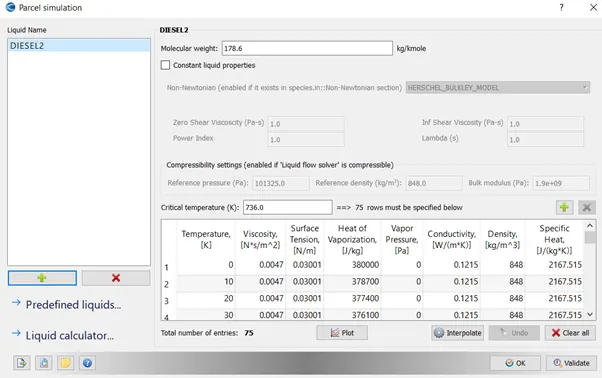
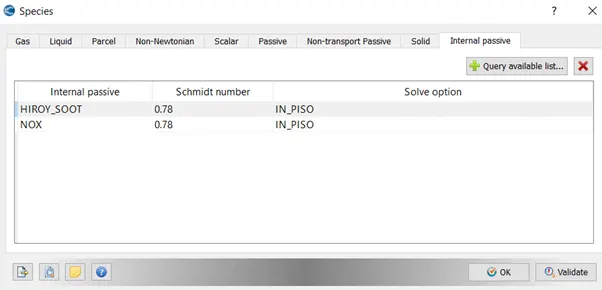
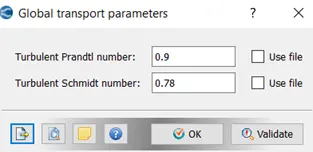
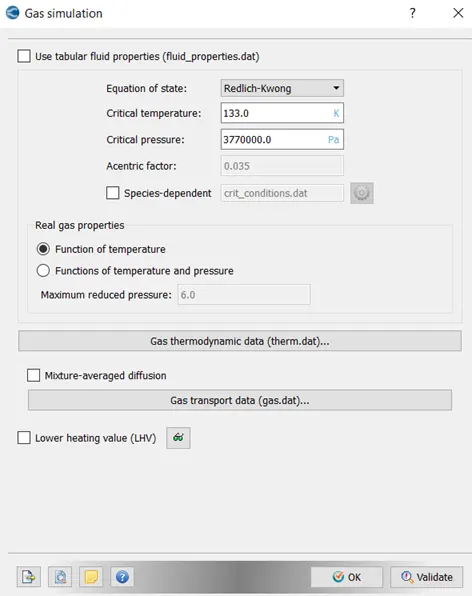
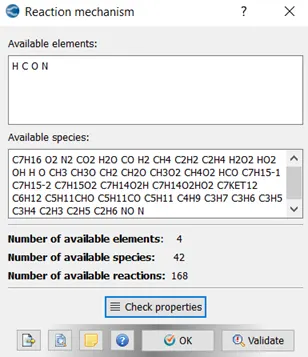
Run Parameters:
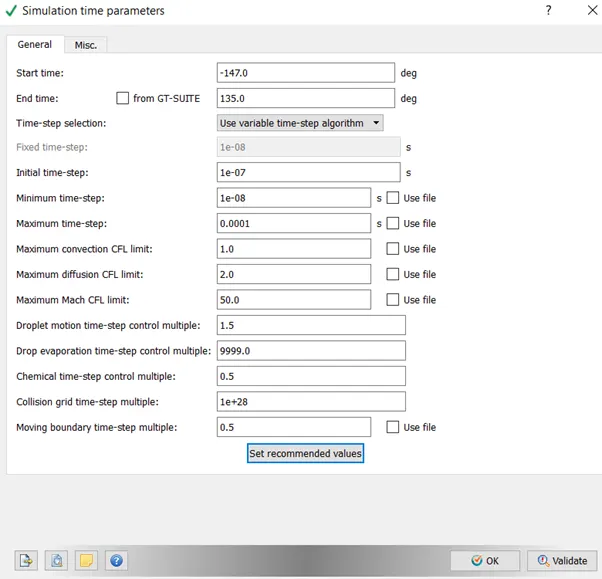
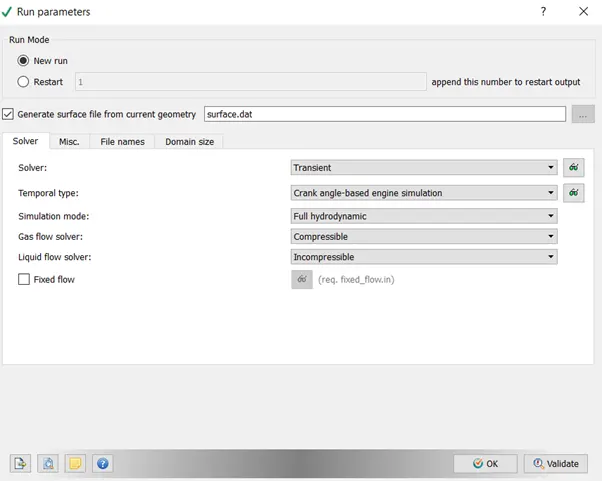
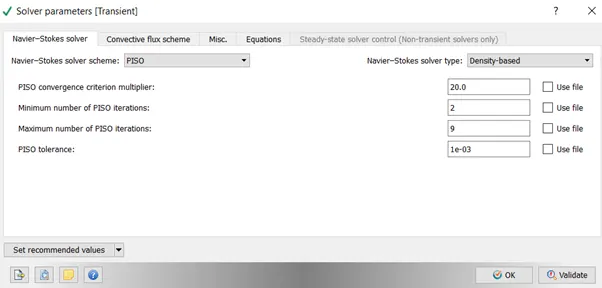
Regions:
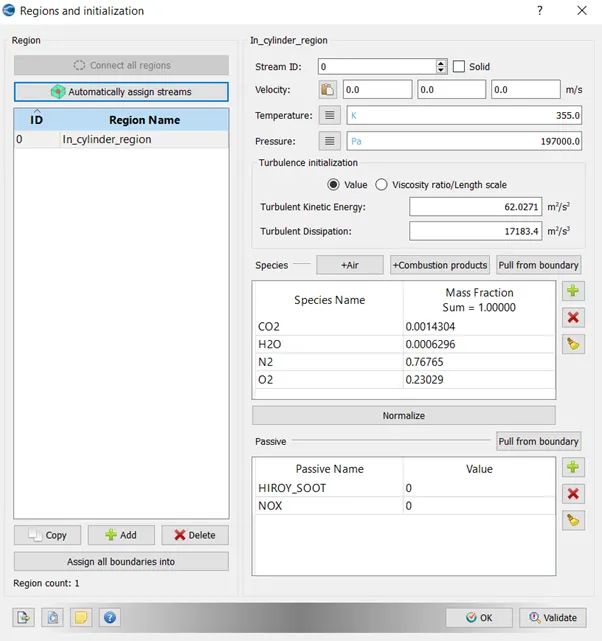
All the boundaries were assigned to the same regions.
Boundary Conditions:
Piston
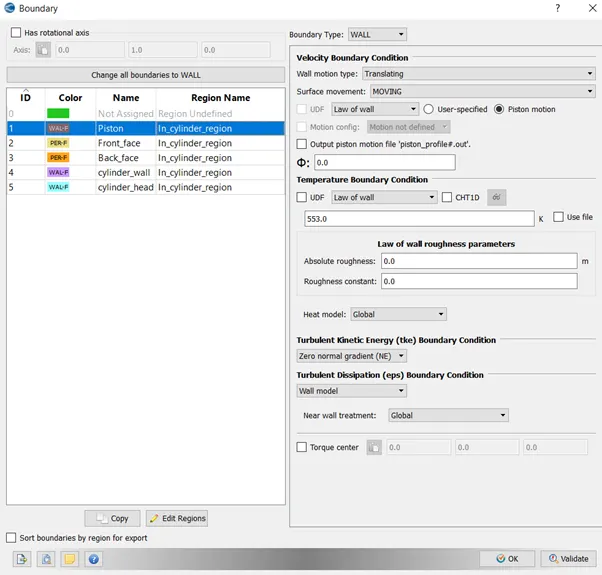
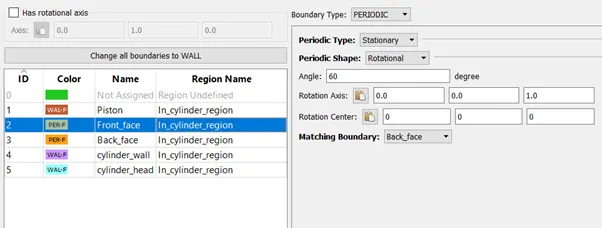
Front Face
Cylinder head
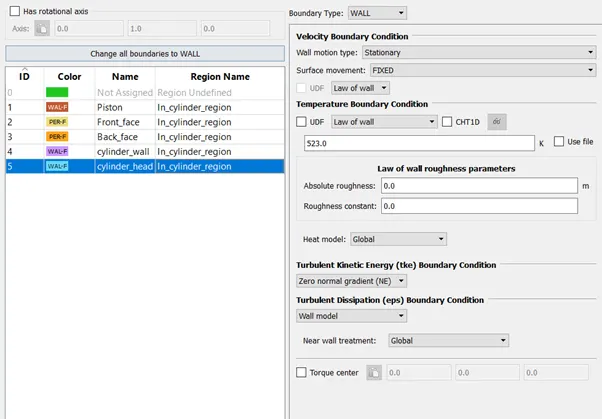
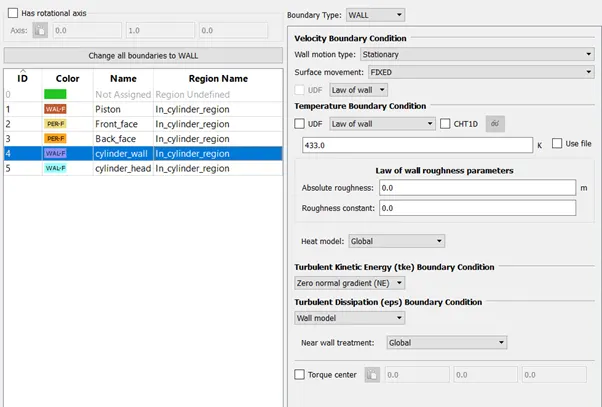
Cylinder wall
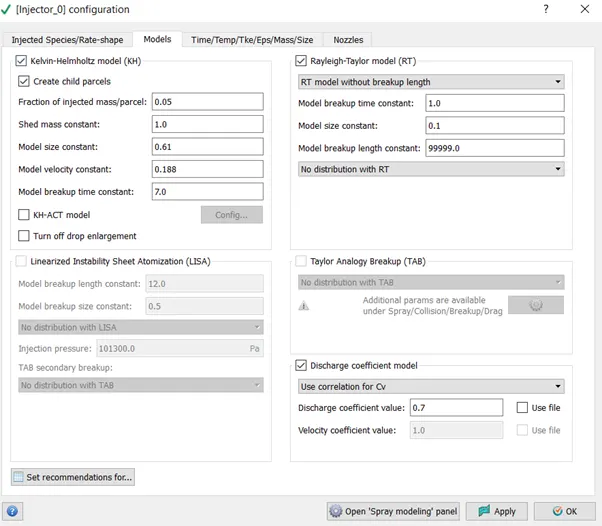
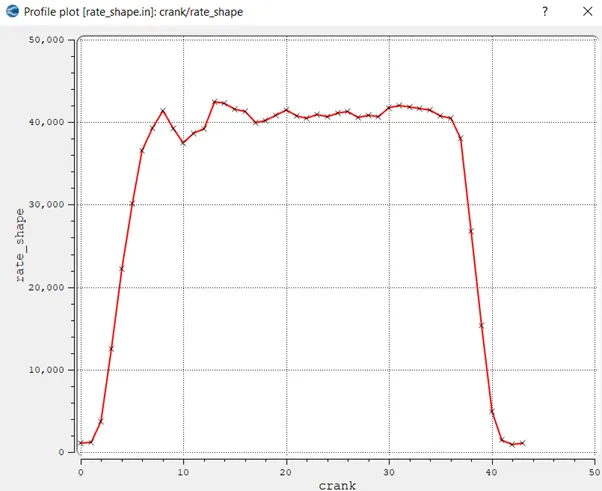
Spray Modelling:
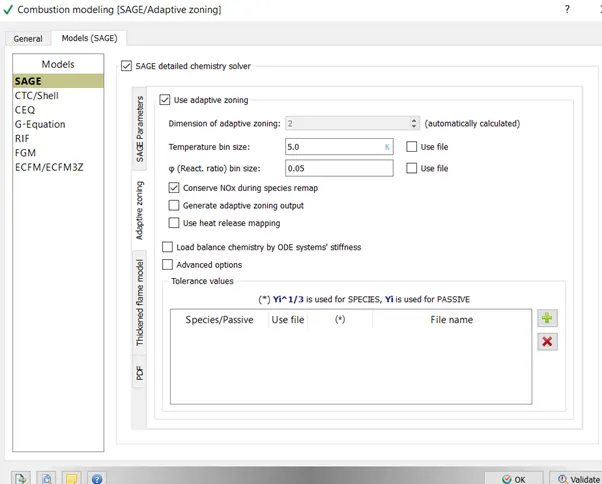
Combustion modelling
Turbulence Modelling
Default Rans k-epsilon model has been used.
Grid Control:
Cubic element of size 0.004 m has been used as default element size.
Adaptive Mesh Refinement:
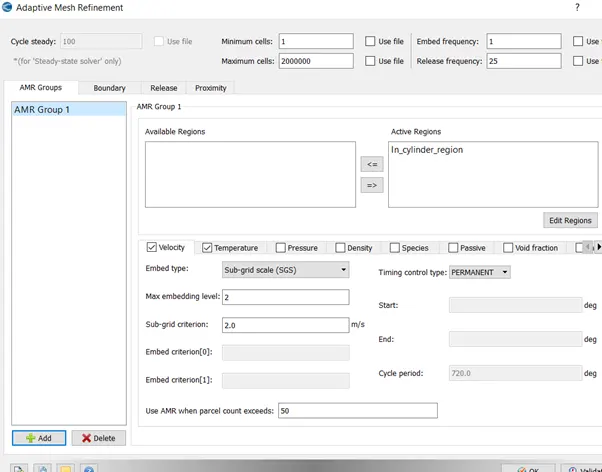
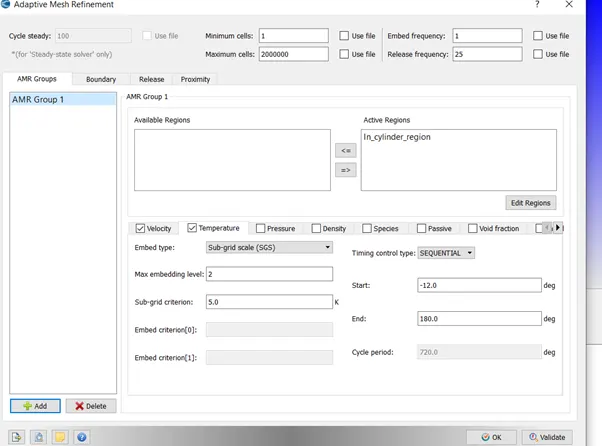
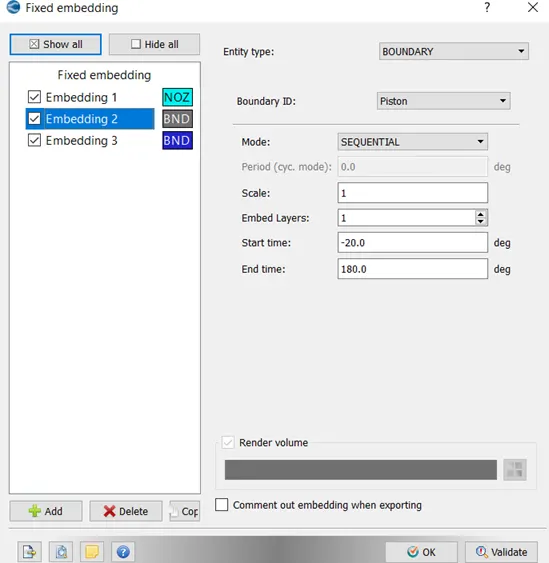
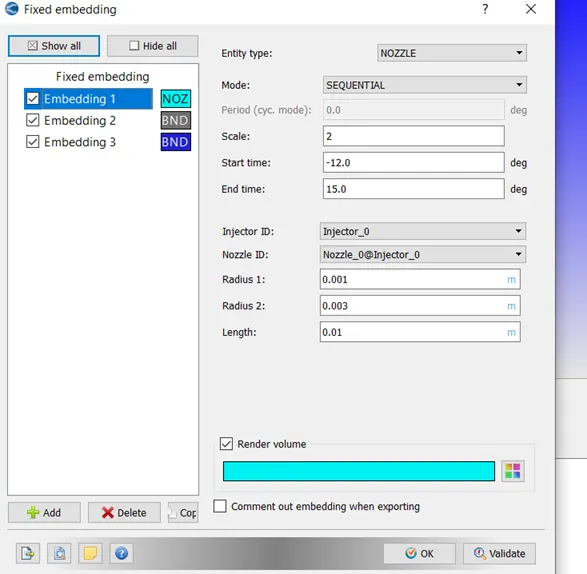
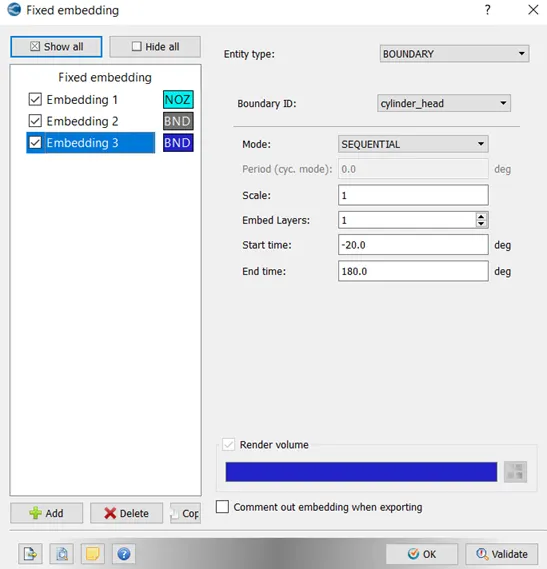
Embedding
Results and Discussion
Pressure Vs Crank Angle
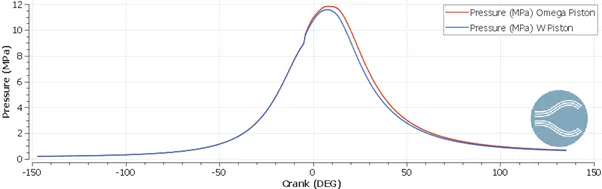
As it can be observed from the plot, the peek pressure for Omega piston is marginally higher than that of Omega piston.
Mean Temperature Vs Crank Angle
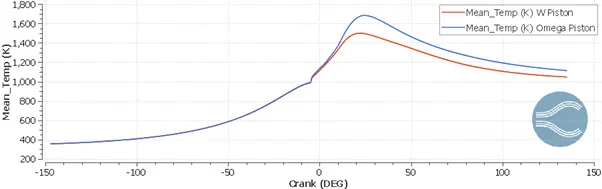
Mean temperature is higher in case of Omega type of piston as compared to that of open W type. Since the volume reduction for both the cases are same, it may relate to the unburnt particles in cylinder in case of open W type piston.
Integrated Heat Release Rate
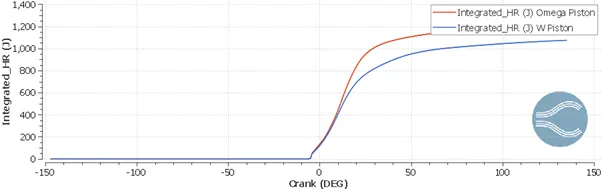
From the above plot, open W piston has less integrated heat output than the omega type piston.
Emission analysis
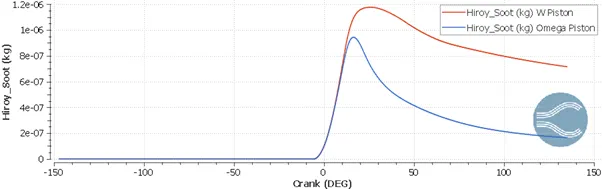
Comparison of Soot Formation
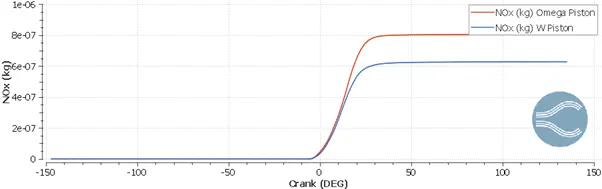
Comparison of NOx Formation
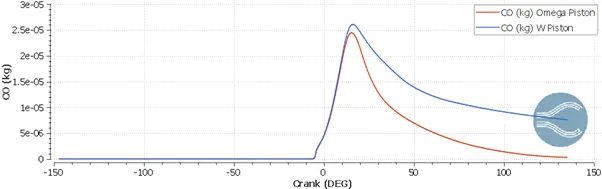
Comparison of CO formation
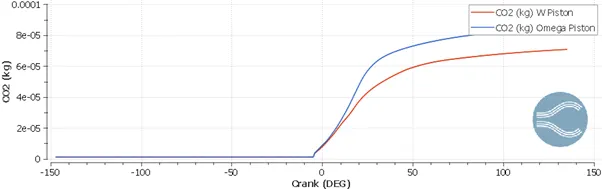
Comparison of CO2 formation
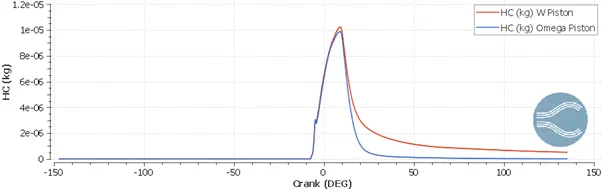
Comparison of Unburnt Hydrocarbons
Conclusions:
W piston has more soot formation, whereas much lower NOx formation. Also, open W piston has more CO emission as compared to omega piston. Omega piston has higher Co2 formation as compared to open W piston. Omega piston has slightly less unburnt fuel.
IMEP and Power Calculation
Engine Performance for Omega and W Piston
W piston

Power(P) = (2 * pi * N * T)/60
N = 1600rpm
~ 9600 deg/sec
Time taken to traverse 270.16 deg = 270.16/9600s = 0.028s
Power = Gross Work / time
- 846J/0.028 = 17.065Kw
Torque = (17065*60)/(2*3.14*1600) = 101N-m
Omega piston

Power = Gross Work / time
- 053j/0.028s = 19.609kw
Torque = (19609*60)/(2*3.14*1600) = 117N-m
Based on the above calculation and characteristics, Omega Shaped piston is more advantageous in both emission as well as power output.
Adaptive Mesh Refinement Simulation
Omega Piston Temeperature Simulation
Omega Piston NOX Simulation
Omega Piston CO Simulation
Open W piston Temperature Simulation
Open W Piston NOX simulation
Open W CO Simulation