Week 11 - Final project
PROJECT - Development of a Door Trim panel using CATIA with B-Side Features following Mastersection
The Objective of the project is to development of vehicle interior door trim panel by using CATIA V5 With given class-A surface along with the master seection. Also Create the side attachment feature as per design rules.
INTRODUCTION
The door panel is the interface between the interior of the car and the inner workings of the door. Generally the door panel is divided into parts for easy designing like Arm rest (Switch Panel), map pocket, lower substrate. These require one of the toughest requirement among the interior parts of the car. This should be designed to with stand the load and also to protect the occupants during collisions. Consisting of electronic windows, central locking system and speakers. These panels typically consists of a foamed core covered with either textiles or plastics.
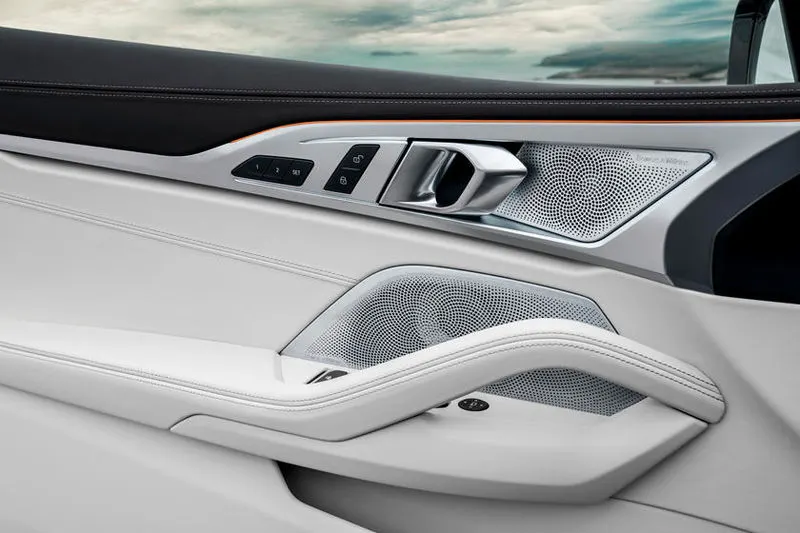
8 Series Convertible Door Handle
Class-A Surfaces
In automotive design a Class-A surface in any of a set of from surface of high efficiency and quality. Although strictly its nothing more than saying have curvature alignement to ideal aesthetical reflection quality, many people interpret class-A surface to have G2 or even G3 curvature continuity to one another. Class-A surface is creating by using computer Aided digital applications. Class-A surface modellers are also called digital sculptors in the industry.
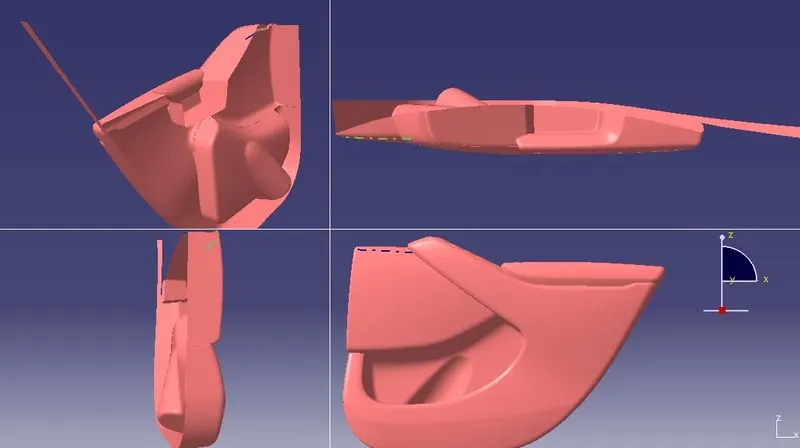
Class-B Surface
Class B surface are Engineering Surfaces which are invisible to the eyes or often on the back side of the Class A surface.
Creation of Class-B is done by offsetting of class A surface(Offset command) Class A surface is offset with a 3mm distance(Thickness).
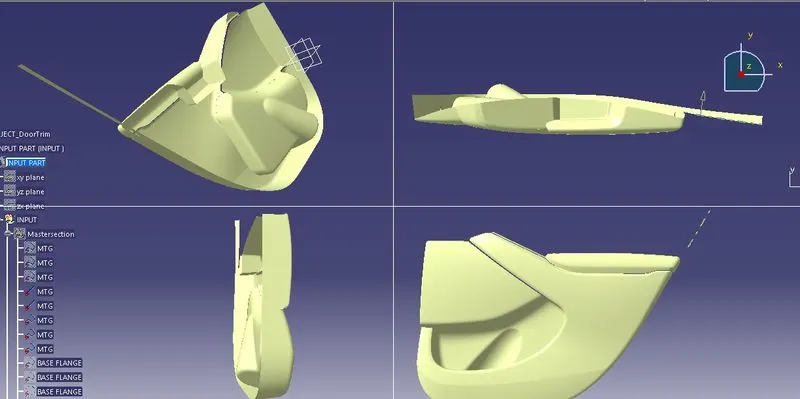
Class-C Surface
Using the Multiple extract commands, boundaries of class A surface were extracted. Class C surface joins class A and class B surfaces. It is created using the sweep command. Inputs for the sweep command were extracted boundary, class-A surface, angle value, and length of the sweep.
The join of Class A and Class C surface is trimmed with class B surface to create a closed surface.
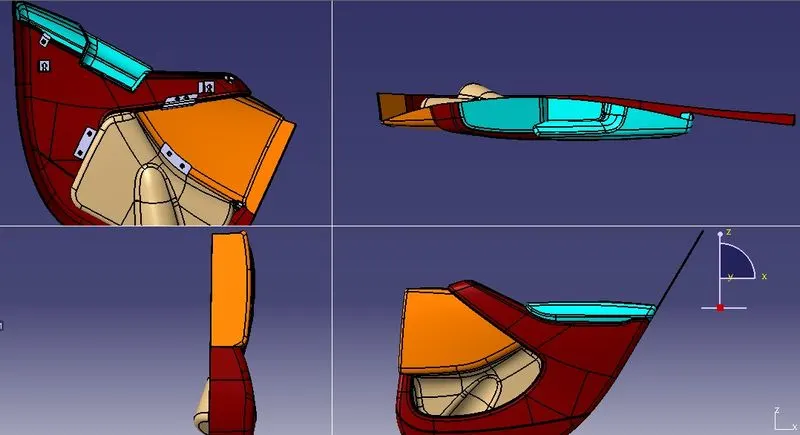
The figure above shows the closed body of Class A-B join Including the B- Side Features.
The following parts of the door panel
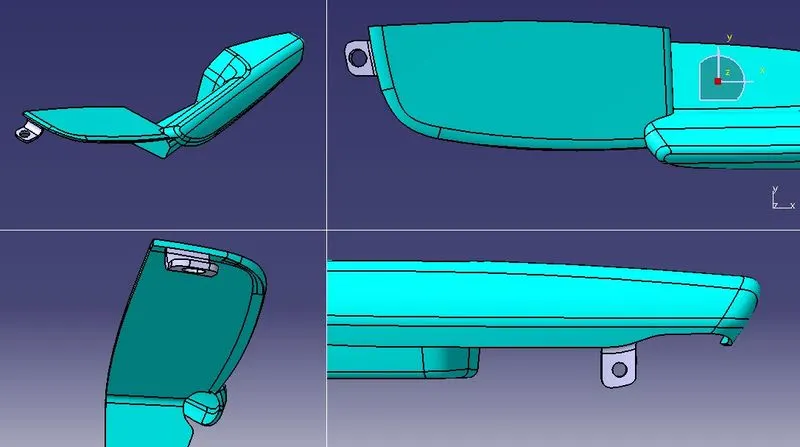
Door Arm Rest
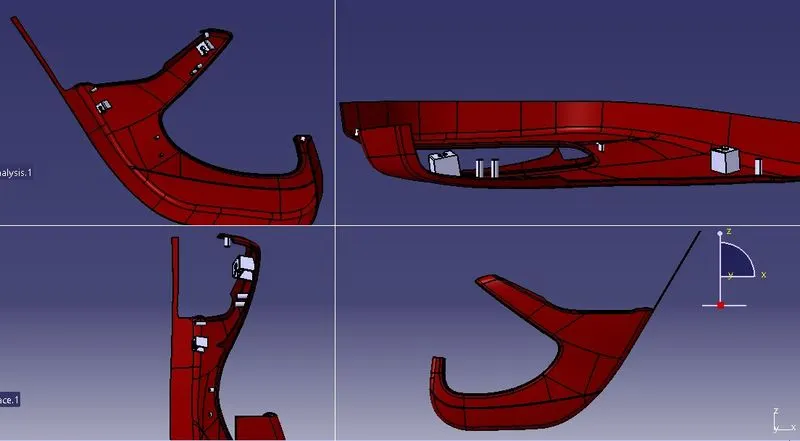
Door Lower Subsrate
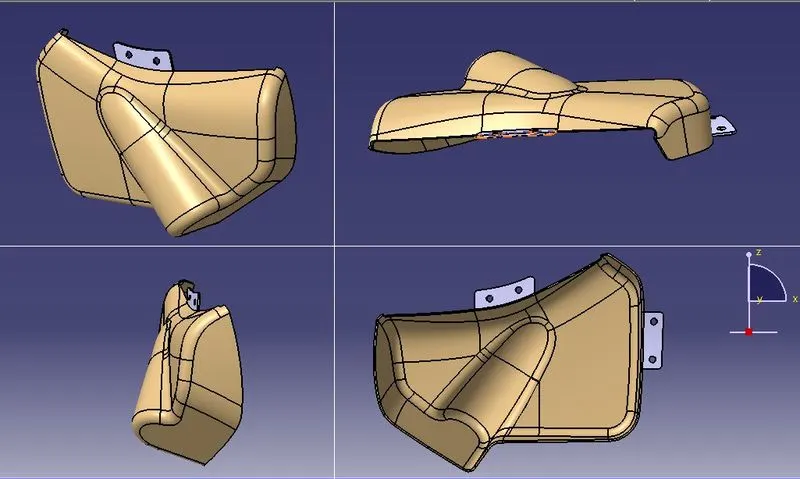
Bottle Holder
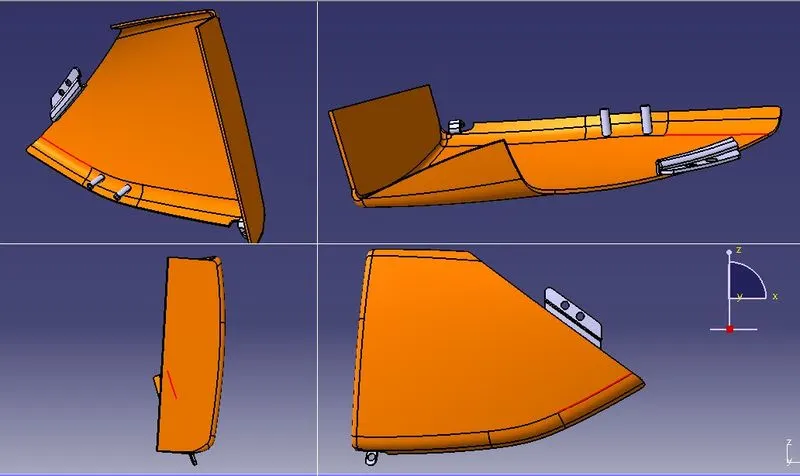
Door Outer Map Pocket
B- Side Features
- Flange
Flanges are the elements that are needed to join different components together. As by the Master section,flanges are design accordingly.
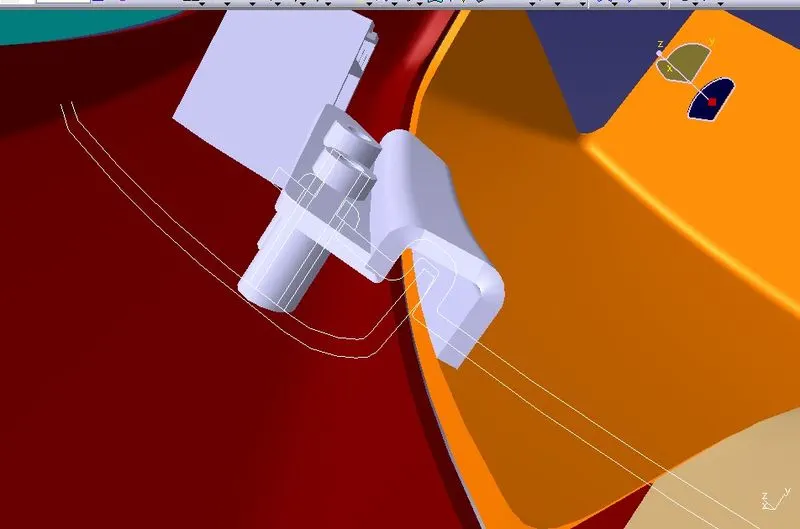
Dog House
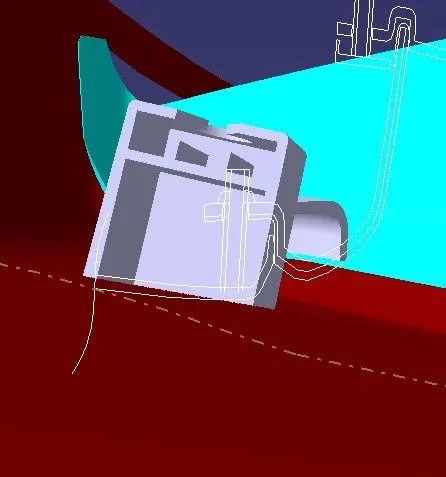
Dog house are used as supporting feature. Thwy are subjected to draft analysis to prevent breakage of the component during ejection from the mold cavity.
Dog House Design Parameters:
- Dog house dimensions can be taken as per requirement of length or height.
- Wall thickness at the base of the Dog house ‘C’ should be 40% or less than wall thickness.
Draft analysis on Door Trim Solid Body with attachment features With Respect to Tooling Axis
Draft angle = 0.4 - 3 Degree (Given minimum draft value)
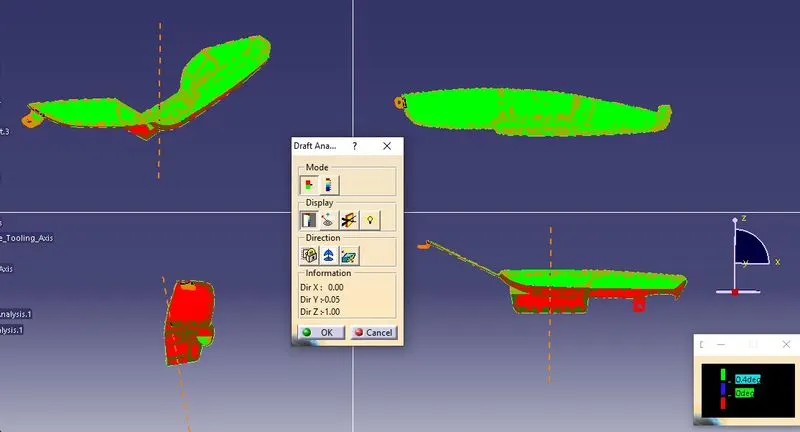
SOLID BODY DRAFT ANALYSIS - Arm rest
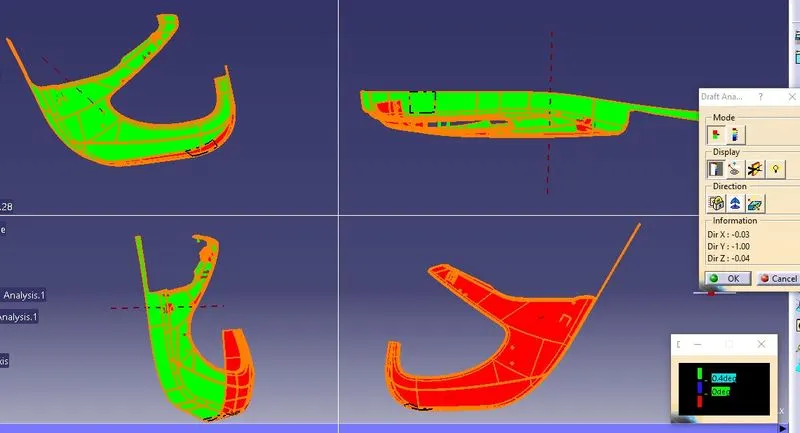
Door Lower Subsrate Draft Analysis
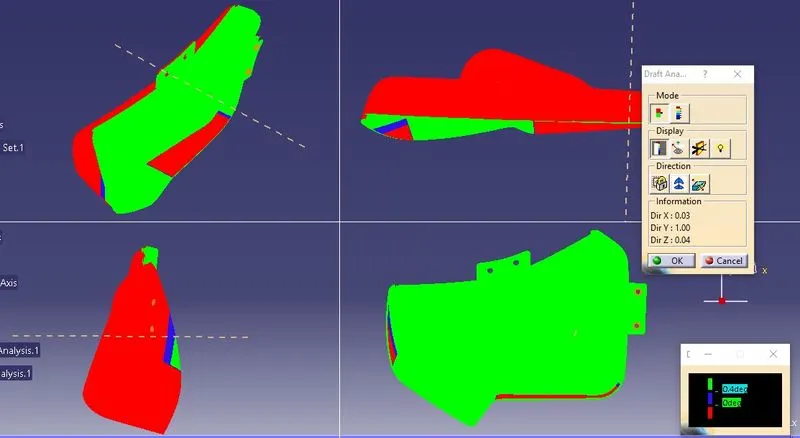
Bottle Holder Draft Analysis
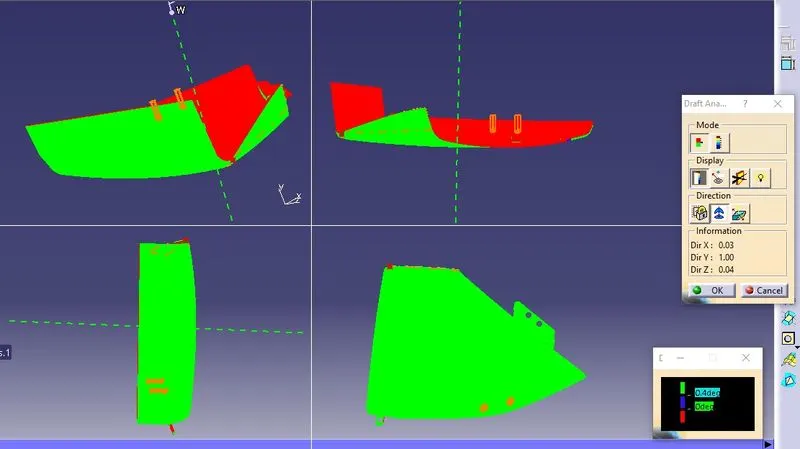
Outer Map Pocket Draft Analysis
CONCLUSION
The door Panel has been successfully designed from the inputs of class A surface along with master section, following OEM standards used in Automotive Industry, Design of B-side features is done and they are assembled successfully, The designed part meets all the defined objectives.