Week 11 - Final project
Creation of Door Trim Plastic with Master Sections of B Side features with Heat stake , Dog House and Ribs.
Lower Substrake
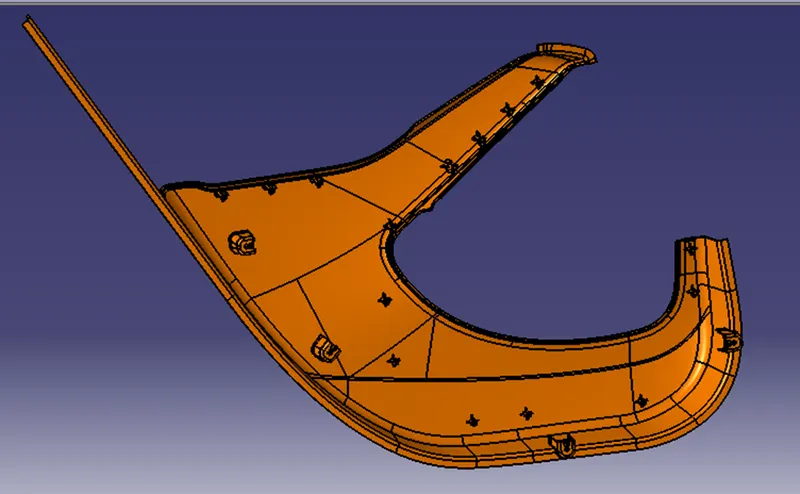
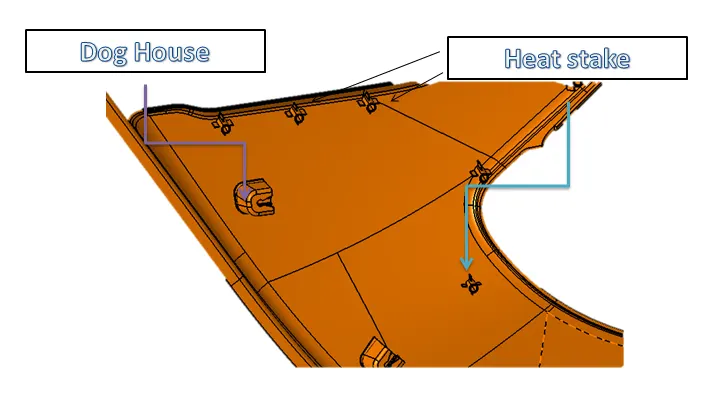
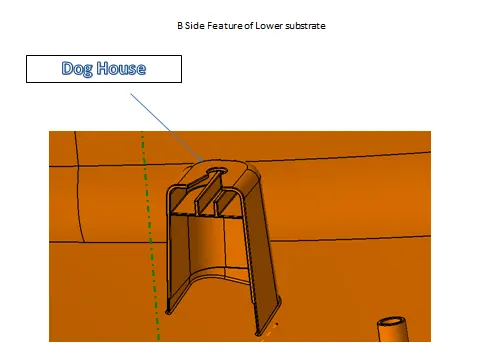
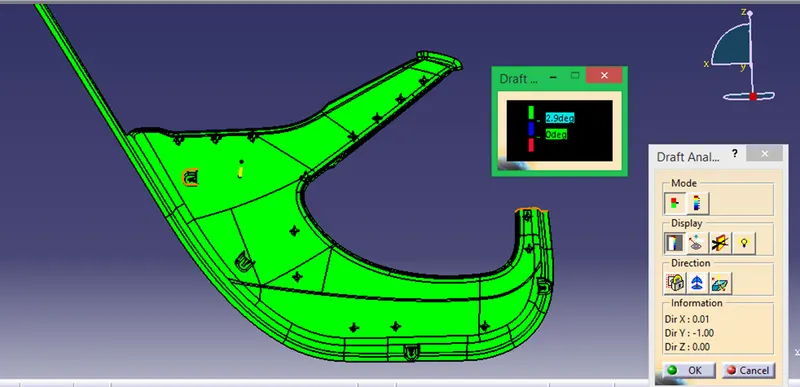
Draft Analaysis of Lower Substrake
Lower Map Pocket
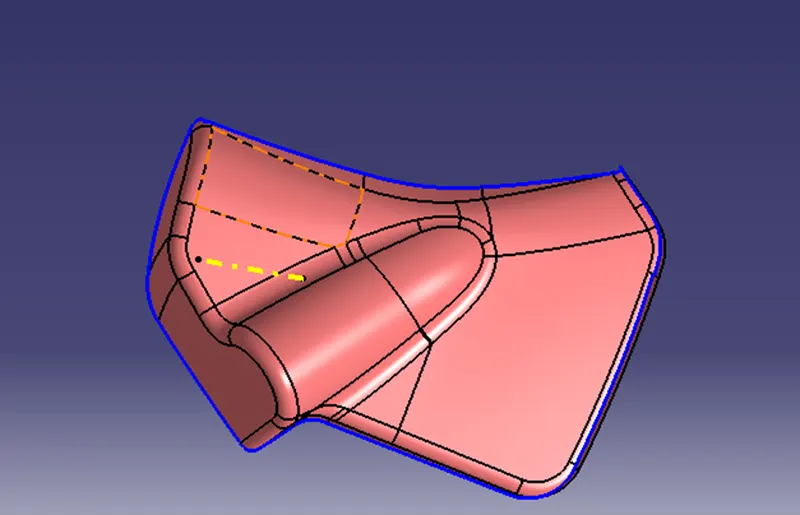
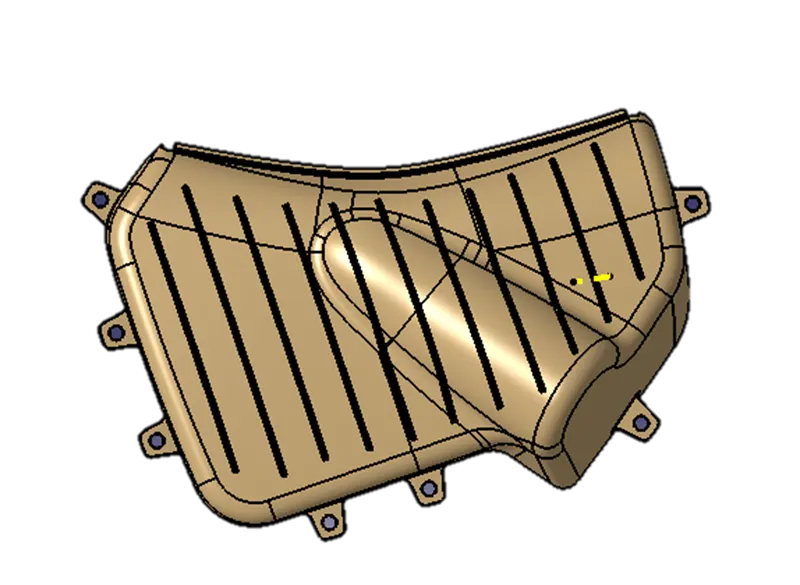
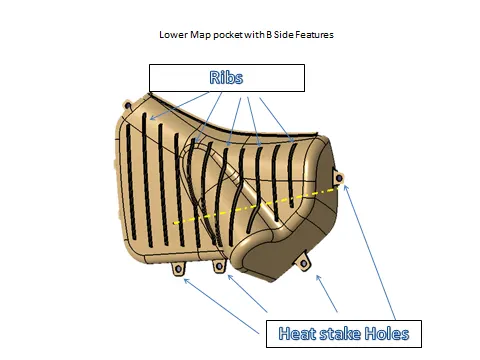
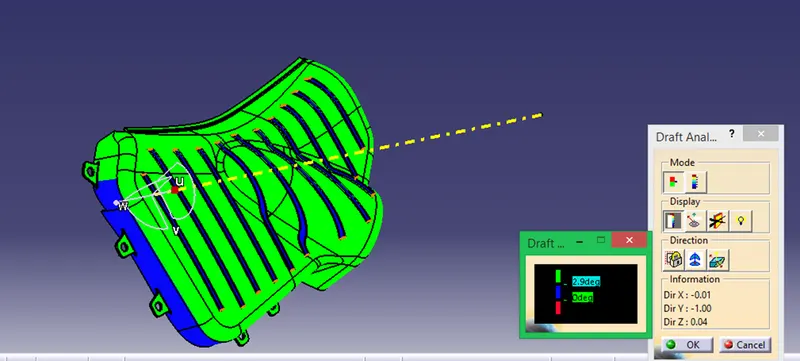
Draft Analaysis
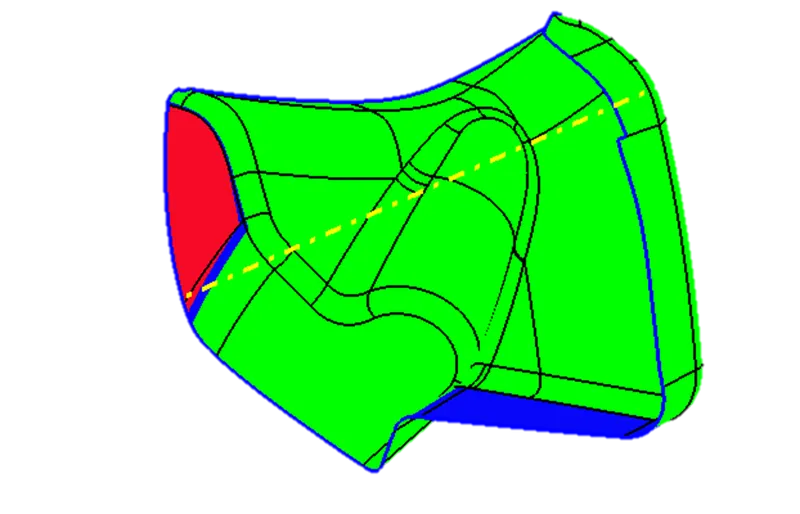
Draft Analysis with B Side features
Upper Map pocket
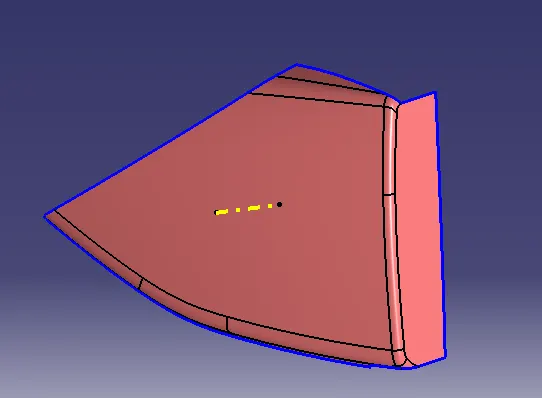
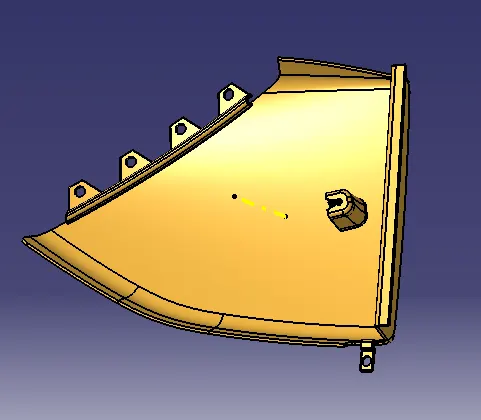
Draft Analysis of A Surface
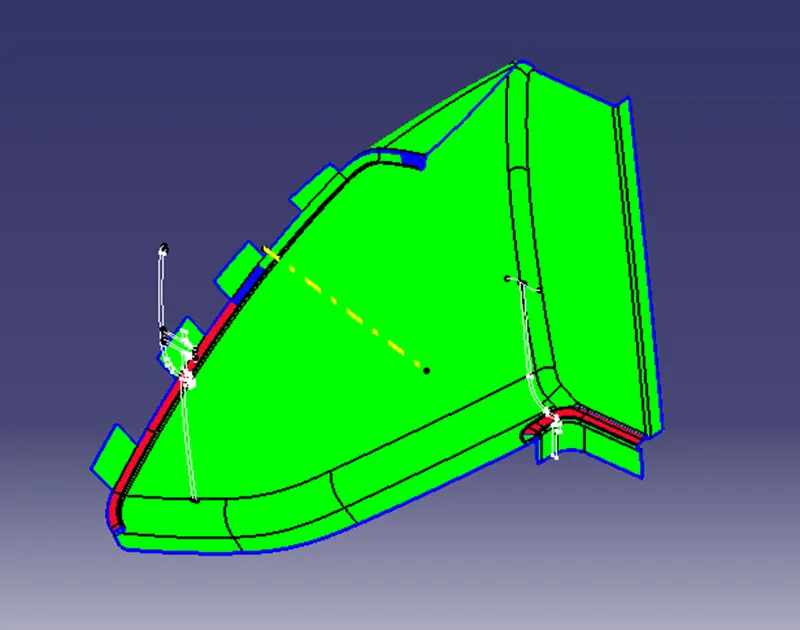
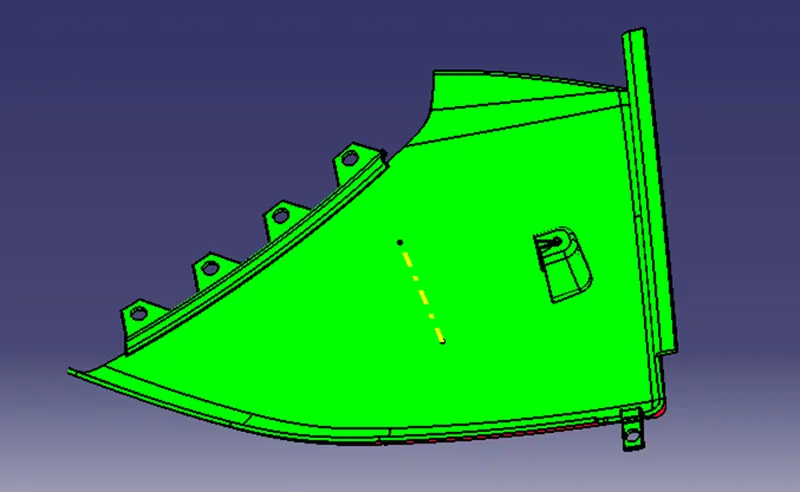
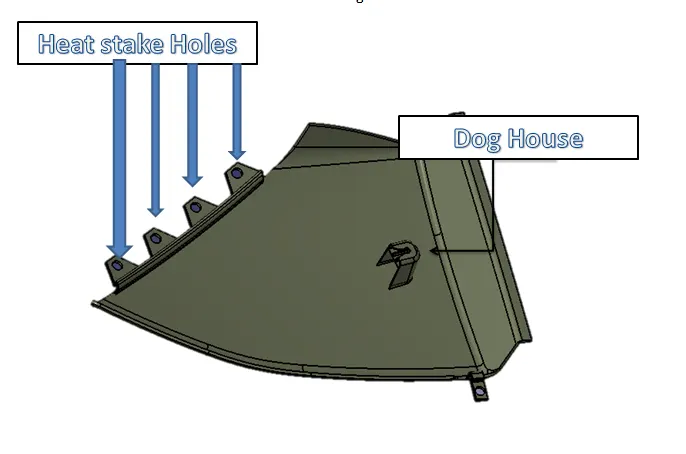
Upper Map pocket with B Side Features
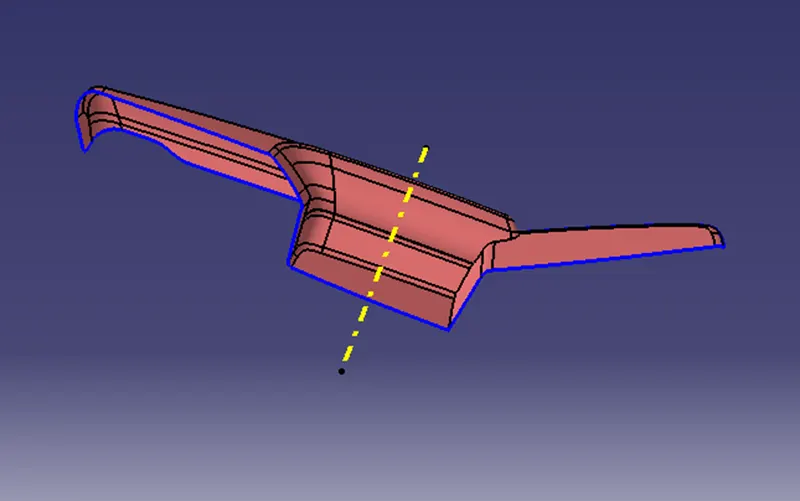
Arm Rest of Class A Surface
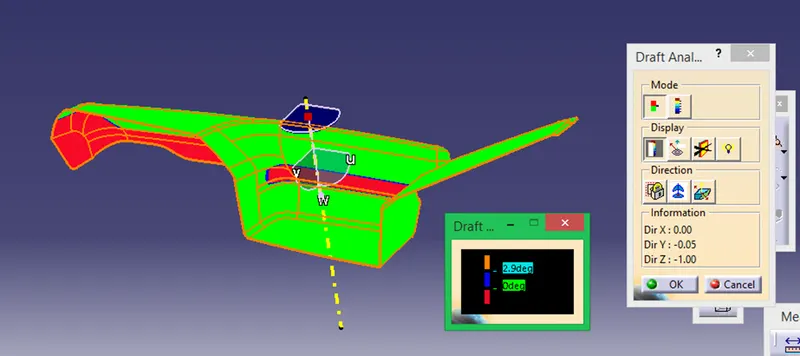
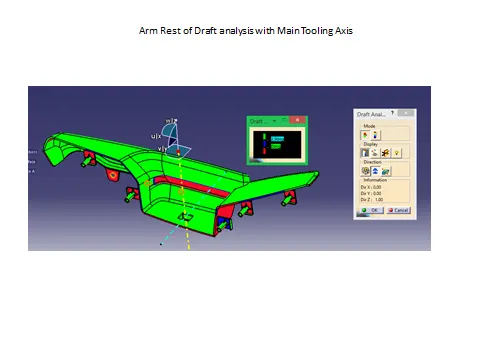
Draft Analysis of Class A Surface
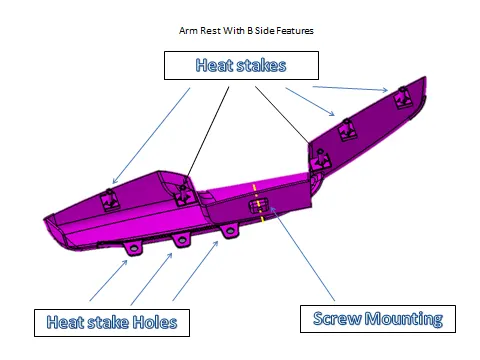
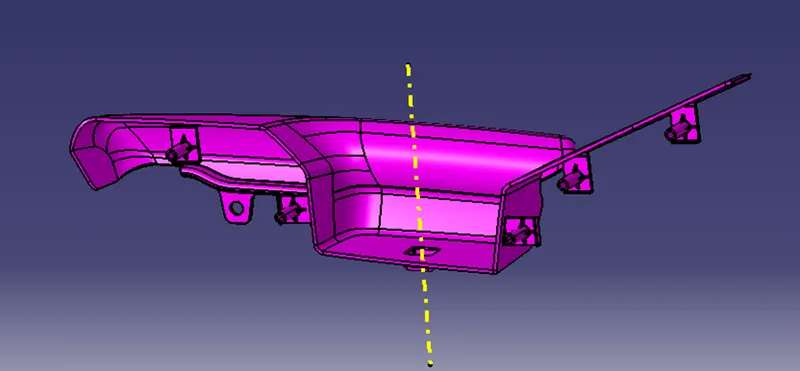
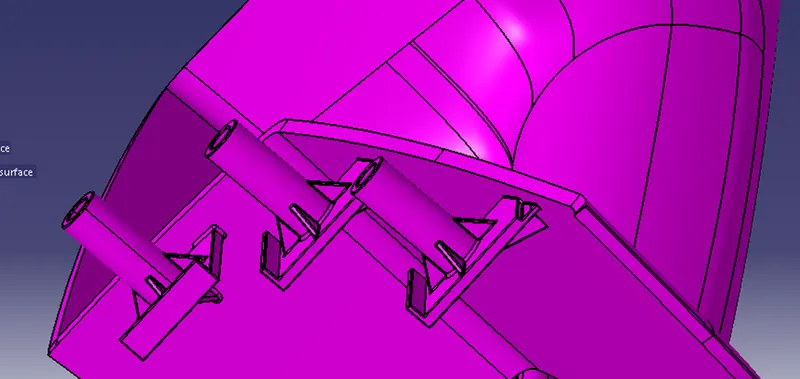
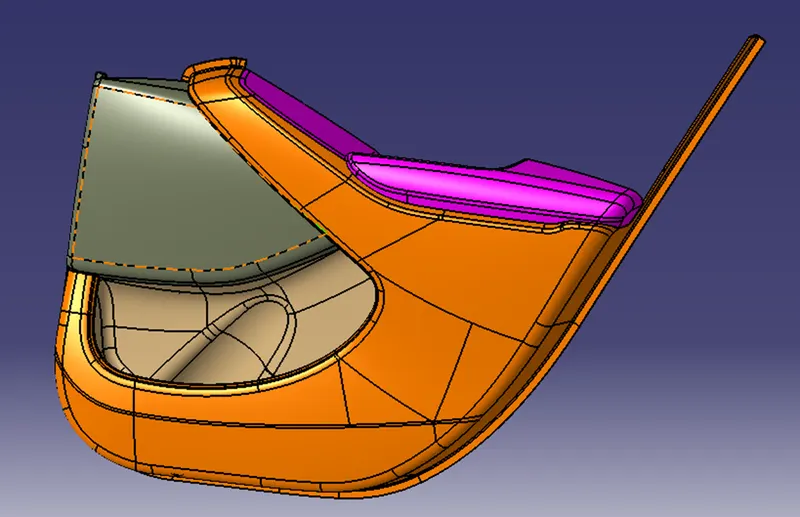
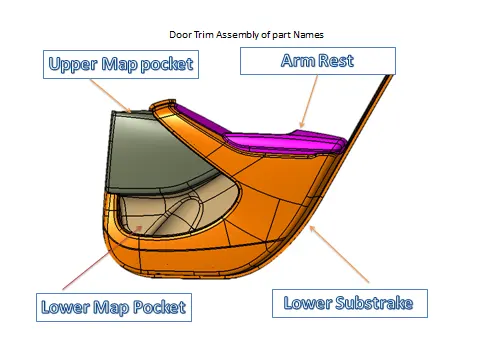
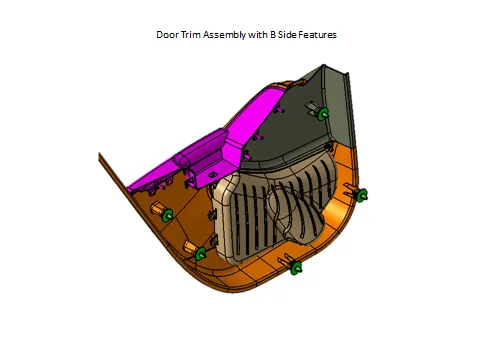
Door Trim Assembly
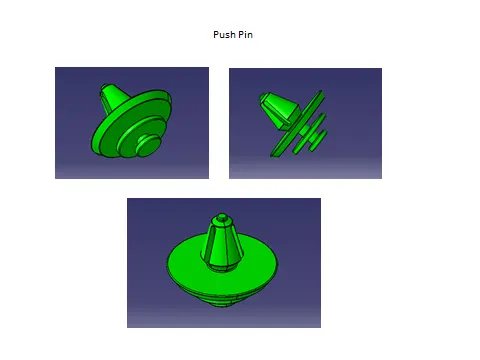
Heat stake materials
RIB
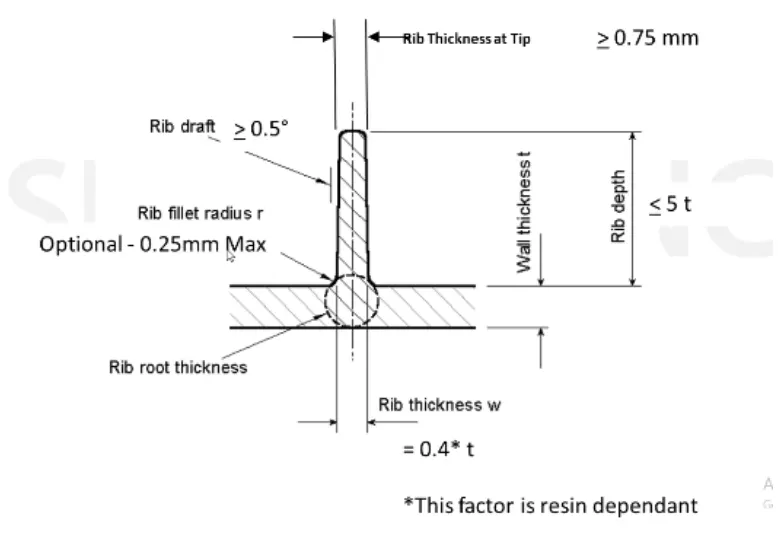
Ribs increase the bending stiffness of a part. Without ribs, the thickness has to be increased to increase the bending stiffness. Adding ribs increases the moment of inertia, which increases the bending stiffness. Bending stiffness = E (Young's Modulus) x I (Moment of Inertia). The rib thickness should be less than the wall thickness-to keep sinking to a minimum. The thickness ranges from 40 to 60 % of the material thickness. In addition, the rib should be attached to the base with generous radiusing at the corners. They are thinner than primary walls and are used to support these walls, as well as bosses, by running perpendicular to these structures. Ribs are often used to replace thick wall sections to avoid sink marks, warp, and voids.
SCREW BOSS
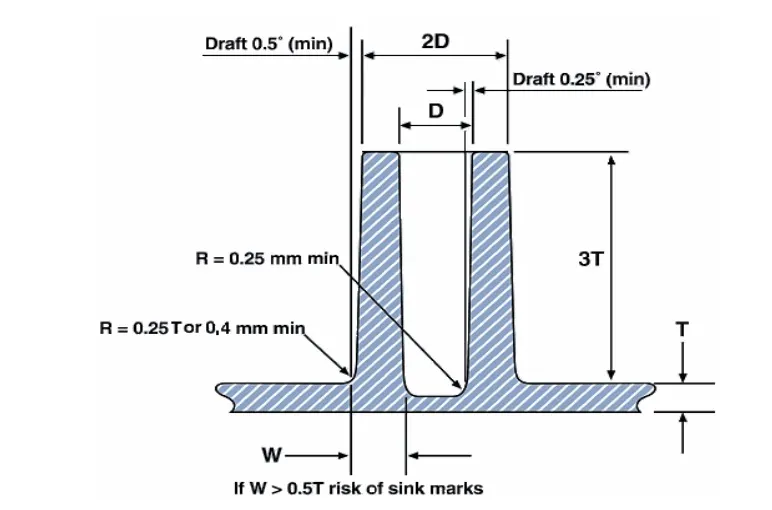
Bosses are used for the purpose of registration of mating parts or for attaching fasteners such as screws or accepting threaded inserts (molded-in, press-fitted, ultrasonically or thermally inserted).
The wall thicknesses should be less than 60 % of nominal wall to minimize sinking. However, if the boss is not in a visible area, then the wall thickness can be increased to allow for increased stresses imposed by self-tapping screws. screw boss its a engineering feature which have thread in so the screw can get insrted and hold its place tightly so the two part remain assebled. screw boss used to asemble two component with the help of screw.
HEAT STAKE
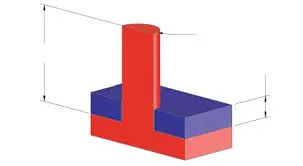
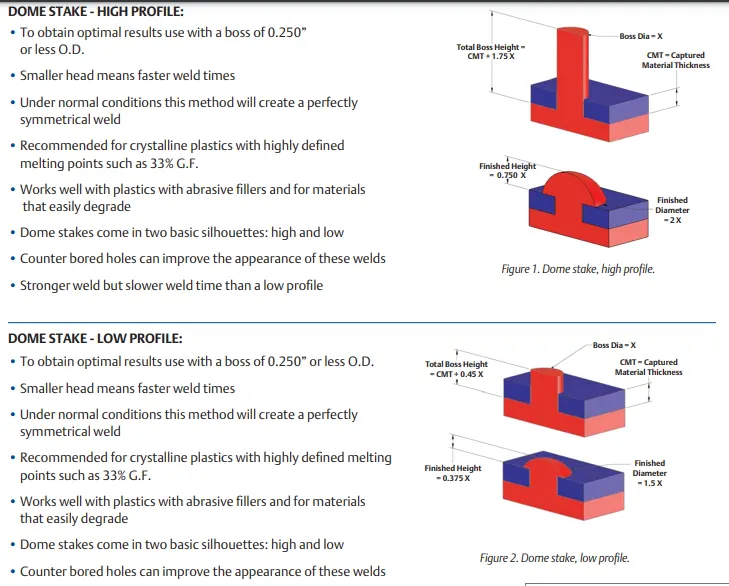
Heat stakes ate generally screw boss line structure without tread in it used to join to part each other by thermal staking. heate stake is go trough the conter part from its parent part and at the tip its heated so it can weld over the conter part and these two parts are get assembled with each other. ther is no such a design gudlines for the heat stakes but yes design it with the
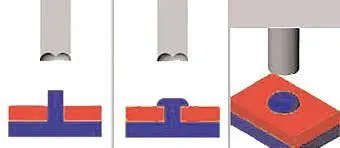
DOGHOUSE
Dog house is an engineering feature used in plastic trim design. Dog houses are used as supporting feature. Sometimes other engineering features like snaps; locators etc. are mounded on them to increase their
strength.
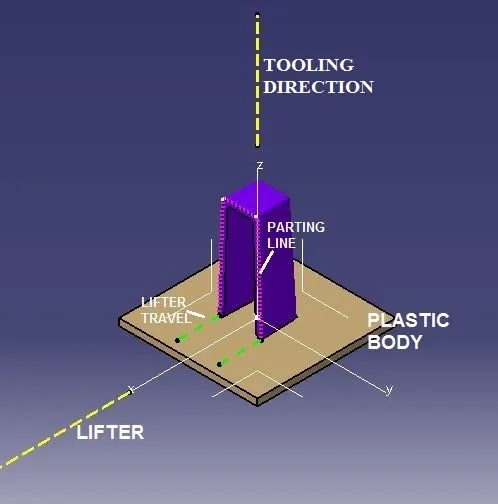
Design guidlines
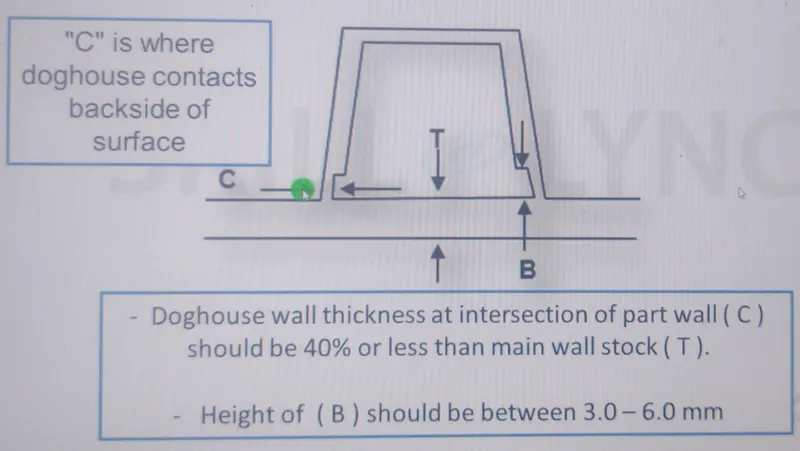
Wall thickness = 0.70 x Thickness of the plastic material
Fillet on the inner side = 0.25 x Thickness of the plastic material
Fillet on the outer side = 1.25 x Thickness of the plastic material
Fillet on the coring edges = 0.25 x Thickness of the plastic material
Coring thickness = 0.40 x Thickness of the plastic material
Draft angle 2deg to 3deg
LOCATORES
A 2-way locating pin restricts motion along 1 axis (or 2 degrees of Freedom), like a round pin in a slot. Likewise, a 4-way pin restricts 4 degrees of freedom along 2 axes. A round locating pin located concentrically in a hole is a common application of a 4-way pin, and helps to further secure the piece.
TOOLINNG AXIS / TOOLING DIRECTION
Tooling axis is a direction of mould opening and closing, in this part we used Y component as a Tooling direction for 3 part except the door arm rest because in this input is of the door arm rest is complex part it is not manufectured in one direction and we have to add to meany side core direction which will make the mould more costly. so we have to just inform the class a designer all the things.
the assembly in going to be in Y direction and it will make easy to create the enginnering features design